




In This Article
Manta staking enables Manta Network users to earn rewards by participating in its consensus. Manta Network uses a delegated proof-of-stake (DPoS) consensus mechanism that allows users to stake MANTA tokens in two ways – by becoming delegators or collators. This system creates approximately 7.6 MANTA tokens with each produced block, corresponding to an annual inflation rate of 2%.
The rewards are split between the collator responsible for producing the block and the delegators who have staked their tokens with that collator, including the collator’s self-bond. Two rounds later (approximately 12 hours), Manta staking rewards are distributed automatically directly to the collators and each delegator’s addresses. If you want to learn how and where to stake MANTA, keep reading.
Key Takeaways
- Manta Network uses the DPoS consensus mechanism, allowing users to earn rewards by delegating stakes or becoming block producers (collators).
- Collators earn 10% of staking rewards, while delegators share 90%. Rewards are distributed every 6 hours.
- Delegators must stake a minimum of 500 MANTA, while collators need to bond at least 400,000 MANTA to qualify for rewards.
- The unstaking period is 7 days, during which MANTA tokens cannot be used or withdrawn.
- Only the top 70 collators and top 100 delegators are eligible to receive staking rewards.
- Staking is available via the Manta dApp and through platforms like Bitget, BitMart, Binance, and Bifrost (for liquid staking).
Manta Staking: Summary
Manta Network uses a Delegated Proof-of-Stake (DPoS) consensus mechanism to enable its users to earn rewards by participating in its consensus. The staking process includes delegators and collators. The role of the delegator is to delegate their stakes to collators, who will be responsible for creating new blocks.
To be eligible for rewards, delegators will have to delegate a minimum of 500 MANTA, while collators will have to bond a minimum of 400,000 MANTA. As for staking rewards, 10% will go to collators, while 90% will be split between delegators.
This guide will explain how to stake MANTA tokens and discuss the main benefits and risks of staking MANTA. We’ll also compare Manta with Ethereum, Polkadot, and Solana staking to see how it stacks up.
What Is Manta Staking?
Manta Network is a multi-modular ecosystem tailored for ZK applications. Its ecosystem combines two networks, Manta Pacific and Manta Atlantic. The goal of these two networks is to use ZK cryptography to enhance the development and adoption of Web3 apps. Manta Network is powered by its native token, MANTA, which serves as a medium of exchange for governance, staking, and payment of transaction fees.
The main difference between the Manta Atlantic and Manta Pacific networks is that the former supports native staking, while the latter doesn’t. However, Manta Pacific supports yield-bearing tokens, which means that MANTA staking can be received as liquid staking tokens (vMANTA) and earned by participating in various DeFi protocols.
How Does Manta Staking Work?
As mentioned above, Manta Network combines two networks, each serving a different purpose. Manta Pacific is a layer 2 network on Ethereum designed for EVM-native ZK applications. Manta Atlantic is a Polkadot-based ZK-compliant layer 1 chain that supports modular on-chain compliance identities.
This means that Manta Atlantic provides a safe space for identity management by leveraging ZK technology. Manta Pacific doesn’t support native staking because this L2 solution relies on the consensus mechanisms of its underlying L1 network, i.e., Ethereum. It only supports liquid staking. In contrast, Manta Atlantic is an L1 blockchain that runs on Polkadot. Manta Atlantic supports native staking as it uses a DPoS consensus mechanism.
Take a quick look at our guide on Ethereum staking as well for a better understanding. The staking system includes two key players: collators and delegators. Collators produce new blocks, while delegators delegate their stakes to existing collators.
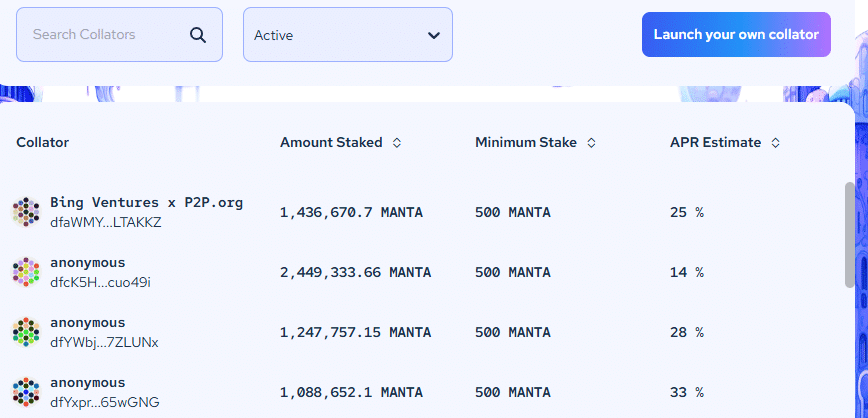
Only the top 70 collators will be able to create new blocks and earn rewards. Likewise, only the top 100 delegators will be eligible for rewards. Collators with the largest number of staked tokens received from delegators and self-bonds will be able to enter the top 70 list. Collators will have to bond a minimum of 400,000 MANTA to be eligible for rewards, while the minimum delegation requirement is 500 MANTA.
Manta staking rewards will be split between collators and delegators. The former will receive 10%, while the latter will get 90%. The rewards will be distributed every 6 hours.
How to Stake Using Best Wallet
While native staking options for MANTA may still be limited on certain platforms, you can still earn rewards from top proof-of-stake coins using Best Wallet. It is our #1 pick as a secure, non-custodial wallet, which is mobile-based for crypto users who value flexibility and control.
This sleek app gives you direct access to staking for many major tokens, and it’s likely to expand its support as the ecosystem grows. You can also use Best Wallet to participate in crypto presales, manage your portfolio, and earn additional perks with its native $BEST token. Consider reading our How to Buy Best Wallet Token guide here.
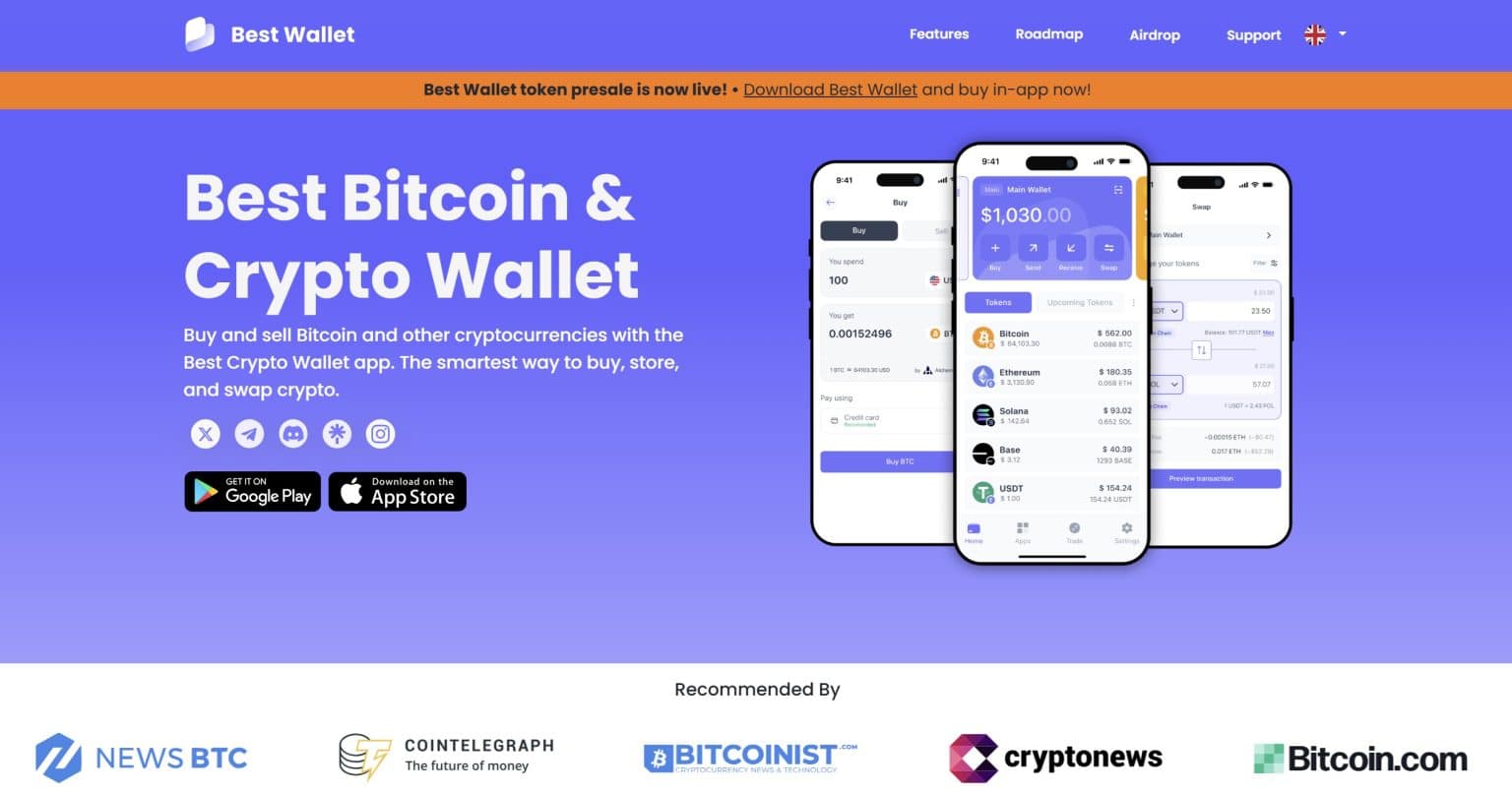
Best Wallet mobile wallet offers an all-in-one interface that includes staking, swapping, and DeFi tools without the need for KYC.
See our full Best Wallet Review 2026 to explore everything it can do.
Pros & Cons of Staking with Best Wallet
Pros
-
Non-custodial design ensures you control your private keys
-
Stake popular assets directly inside the app
-
No KYC required to use staking or DeFi features
-
Includes token swaps, presales, and a built-in DEX
-
Future-ready wallet that is expanding fast
Cons
-
Mobile-only access with no web or desktop version
Best Platforms For Staking Manta
‘Where to stake Manta tokens’ might be a simple question in your mind. Well, you can stake MANTA on the Manta dApp and popular crypto exchanges like Bitget, BitMart, Binance, and Bifrost. Here’s how these 5 crypto staking platforms compare:
1. Manta dApp
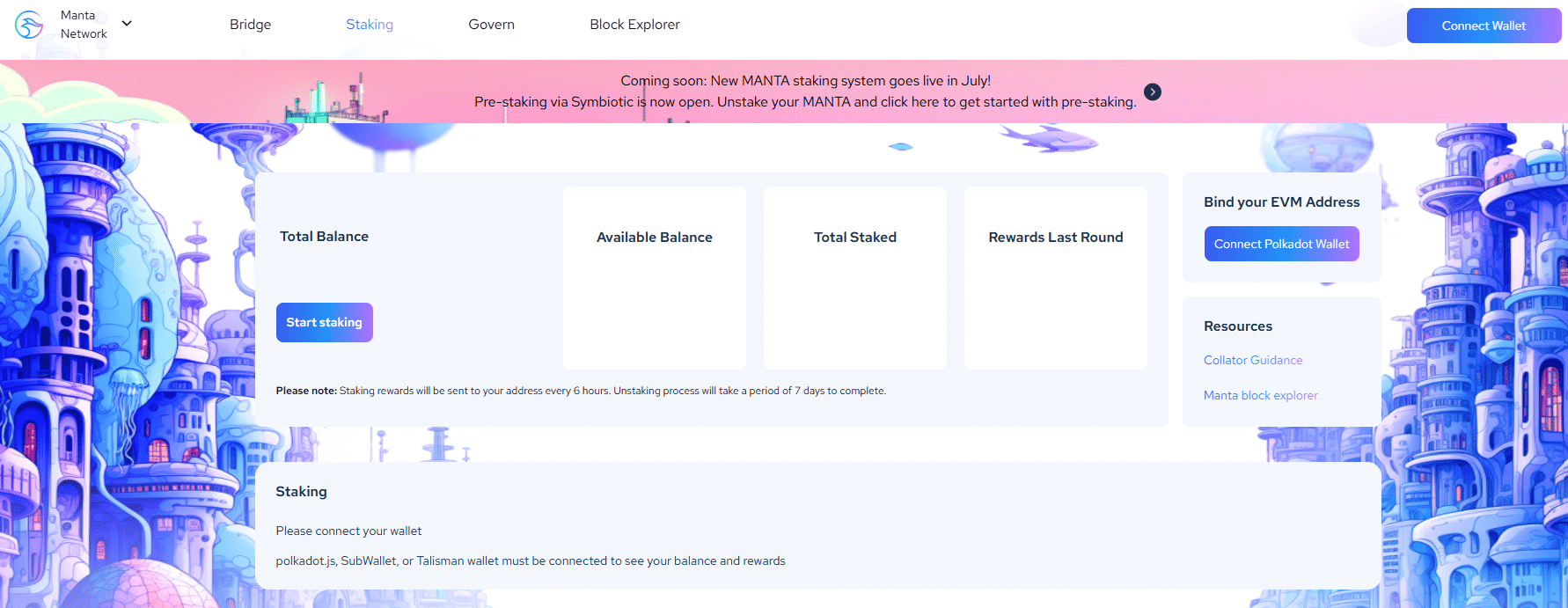
The best way to stake MANTA is via the Manta dApp. The staking process is quite simple. Users will have to connect their Polkadot wallets, like Manta Wallet or EVM wallets, like MetaMask wallet, to the Manta Network, select a collator from the list, and enter the amount they wish to stake (minimum 500 MANTA).
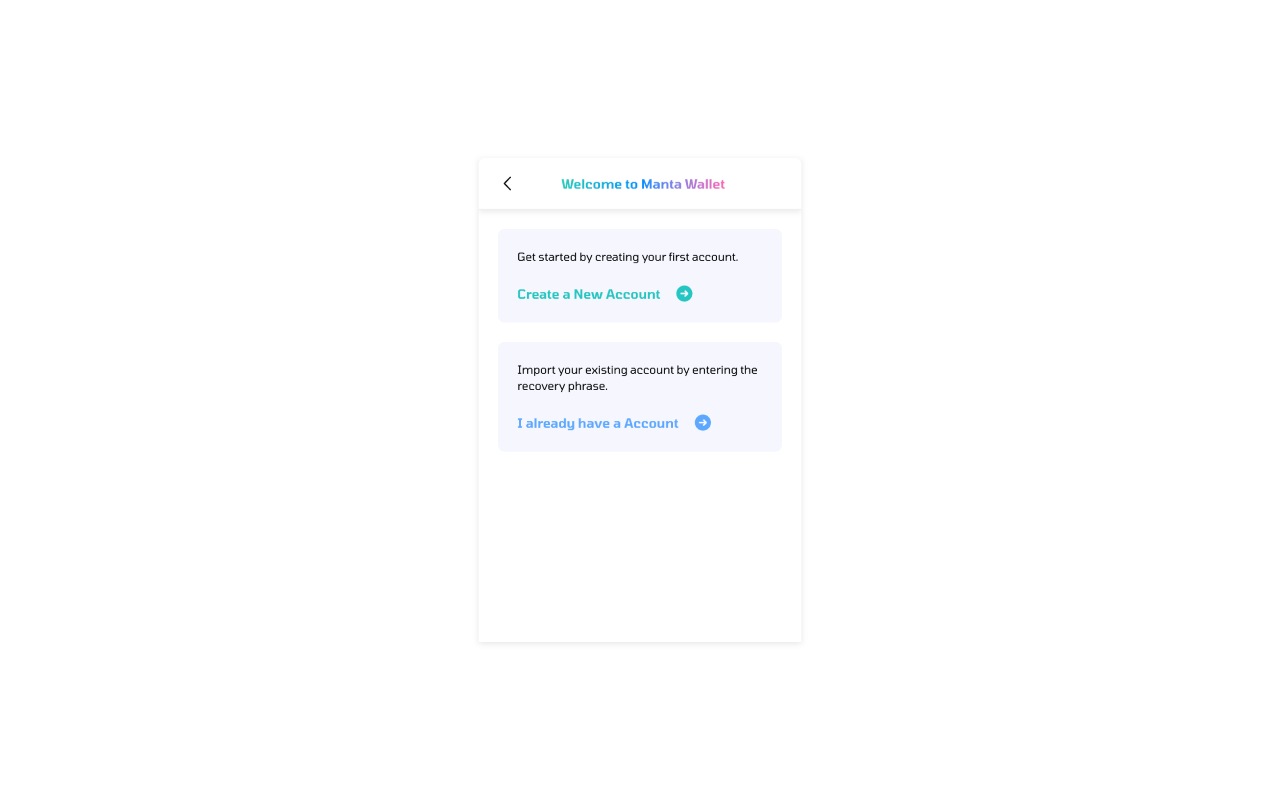
The rewards will be distributed periodically, i.e., every 6 hours. Staking MANTA on the Manta dApp will also enable users to gain voting rights.
The Manta dApp offers several features that will enhance the user experience. For example, users can stake their tokens on the Manta Network and the Calamari network. Collators and delegators can use the app to view their balance and monitor their rewards.
On January 9, 2025, Manta dApp started supporting pre-staking. Its users can now pre-stake their tokens through the Symbiotic pre-staking pool.
Manta dApp Key Features
- Management tools – Users will be able to view and manage their MANTA balance, delegated stakes, and rewards.
- Pre-staking – Manta dApp users can pre-stake their tokens through the Symbiotic pre-staking pool.
- Possibility of staking on two networks – Users can stake MANTA on the Manta Network and the Calamari network
Manta dApp Pros & Cons
Pros
-
Enables staking MANTA directly on the chain
-
User-friendly interface
-
Supports both Polkadot and EVM crypto wallets
-
Stakers will gain governance rights
Cons
-
Not available as a mobile app
2. Bitget
Bitget is a well-known centralized exchange known for its user-friendly interface, competitive APRs, and flexible redemption options. Users can stake MANTA tokens by creating a Bitget account, navigating to the Earn section, and tapping the Stake button. MANTA stakers on Bitget will earn an APR between 14% and 20%.
The Bitget platform enables its users to redeem their staked tokens in two ways: standard and express options. The former allows users to withdraw their staked tokens after a specific time period (usually 1 day). The latter will enable users to access their staked tokens in just 10 minutes. However, they’ll also have to pay a 10% service fee.
Bitget also provides a mobile app that is compatible with Android and iOS devices. Head to our detailed Bitget exchange review for more.
Bitget Key Features
- Standard and Express redemption – Users will be able to withdraw their staked tokens via the standard option (after 1 day) and the express option (for 10 minutes)
- Multiple Earn services – Bitget’s Earn program includes services like fixed and flexible savings, staking, loans, and dual investments.
- Bitget wallet – Bitget Wallet has integrated support for Manta Pacific. It also has a dedicated Manta zone that contains a large selection of popular dApps within the Manta Network ecosystem.
Bitget Pros & Cons
Pros
-
Competitive APRs
-
Hassle-free setup
-
Available as a mobile app
-
Staking rewards are distributed in real-time
Cons
-
If you use Express Redemption, you’ll have to pay a 10% service fee
3. BitMart
BitMart is a centralized exchange that allows users to stake MANTA tokens for a flexible or fixed staking period (30 days) through its Earn feature. The APY for MANTA tokens varies from 1% to 2%, depending on the staking duration. BitMart doesn’t charge fees for its staking operations, and users can earn rewards without the need to set up nodes.
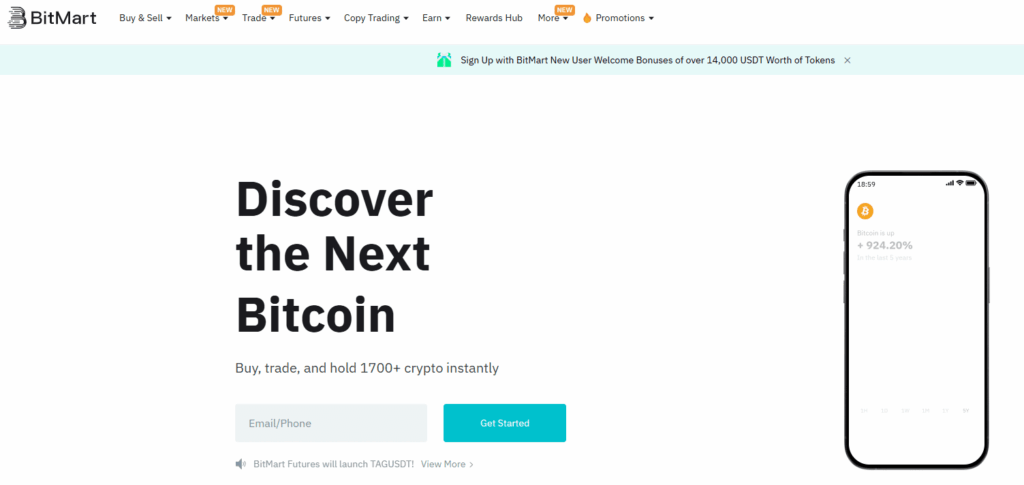
The staking process is user-friendly. It includes entering the Earn section, tapping the Staking button, and selecting Manta from the list of available assets. Users will then have to choose the staking duration (fixed or flexible) and tap the Stake button. Users can also take advantage of BitMart’s Rewards Hub to earn bonuses by completing different tasks.
BitMart Key Features
- Flexible and fixed staking – The first option allows users to withdraw their Manta tokens whenever they want, while the second option allows users to stake their tokens for a fixed period of 30 days.
- Auto-earn – Users can activate the auto-earn feature to maximize their returns. Once enabled, this feature automatically subscribes to flexible savings products every day.
- No staking fees- Users won’t have to pay fees for their staking operations.
BitMart Pros & Cons
Pros
-
Intuitive interface
-
Available as a mobile app
-
Many options to earn passive income
-
Stake to vote events
Cons
-
The Savings and Dual Investment services are not available for U.S. residents
4. Binance
Binance is the largest centralized crypto exchange in the world, whose daily trading volume exceeds $36 billion (as of March 4, 2025). Getting listed on Binance increases the visibility of crypto projects, which often leads to a spike in their prices.
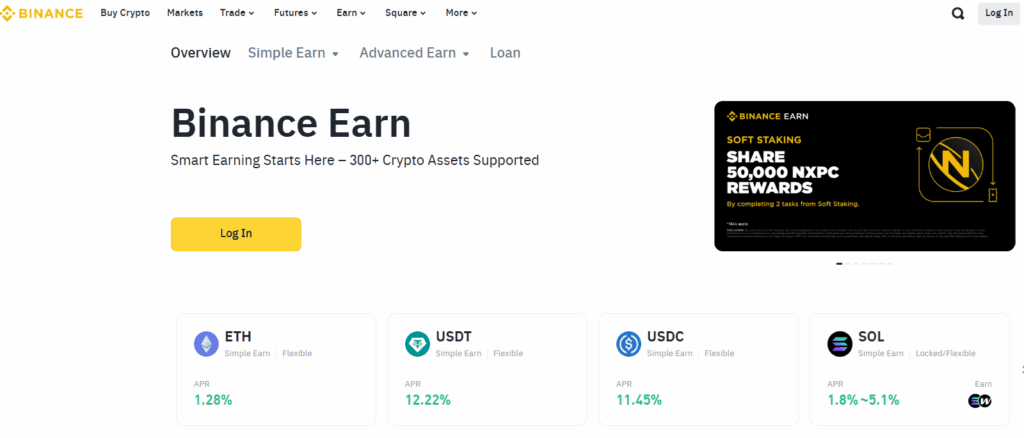
Binance users can earn passive income through its Earn service, which includes Simple Earn, Advanced Earn, and Loans options. Users can stake MANTA only through its Simple Earn service for an APR that currently stands at 0.61%. The staking duration is flexible, which means that you’ll be able to withdraw your tokens at any time.
U.S. residents will also be able to use Binance’s staking program. However, their options will be limited to a few selected cryptocurrencies, i.e., they won’t be able to stake Manta. Read our Binance exchange review for more information.
Binance Key Features
- Lite and pro modes – The Binance app allows users to choose between two modes: lite and pro. The former is tailored for beginners, while the latter is designed for experienced users and active traders.
- Binance Academy – This educational platform will enable users to earn free crypto by learning about blockchain technology.
- Auto-Invest – This feature enables users to automate their Manta investments and grow their holdings. To receive daily earnings, users must enter the amount they wish to buy and schedule a recurring plan.
Binance Pros & Cons
Pros
-
Suitable for both beginners and professional traders
-
Mobile and desktop app
-
Learn & Earn opportunities
-
Flexible staking options
Cons
-
U.S. residents won’t be able to stake Manta
5. Bifrost
Bifrost is a liquid staking platform that enables users to earn MANTA staking rewards while maintaining liquidity. By staking MANTA tokens, users will earn vMANTA tokens, which they can use in various DeFi applications to earn additional yield. They can also maximize their potential returns by farming vMANTA in the Bifrost app. At the time of writing, the APY for vMANTA is 20.02% (base APY + farming APY).
Users will be able to unstake vMANTA in two ways: through the full unstaking request or via the Lightning mode (i.e., by swapping vMANTA tokens for MANTA tokens at the current market price). The unstaking process on Bifrost lasts between 0 and 7 days.
Bifrost will automatically score validators based on their performance. This process is managed by a DAO, which ensures that the community is involved in the selection and replacement of validators.
Bifrost Key Features
- Bifrost app – Bifrost app users will be able to farm vMANTA tokens to earn additional yield.
- LoopStake – LoopStake is a leverage staking service designed for the Polkadot ecosystem. This service will enable users to earn higher staking rewards since they can set up a maximum leverage ratio of 4x.
- Automatic staking management – Bifrost’s staking services are built on its parachain pallets. This will enable users to earn staking rewards every 24 hours.
Bifrost Pros & Cons
Pros
-
Flexible unstaking period
-
Competitive APY
-
User-friendly app
-
Automatic reward distribution
Cons
-
Liquid staking may be challenging for beginners
Choosing a Wallet to Store MANTA?
If you’re staking MANTA but also want a decentralized crypto wallet that supports multi-chain assets, NFTs, or built-in swaps for altcoins, it’s worth checking out our Top 10 Crypto Wallets list.
How to Stake MANTA Crypto? Step-by-Step Guide
You can stake MANTA tokens on Manta Atlantic in the following way:
-
Open the Manta dApp
Open the Manta dApp and tap the Connect Wallet button.
-
Select a Wallet
Choose one of the following wallets: Best Wallet, Manta Wallet, Talisman, SubWallet, MetaMask, or polkadot.js, and tap the Install button.
-
Grant Access
Allow polkadot.js to access the dApp.
-
Start Staking
Click on the Start Staking button.
-
Choose a Collator
Choose a collator from the list and tap the Stake button.
-
Enter Amount and Stake
Enter the amount you wish to delegate (minimum 500 MANTA) and click the Stake button. The staking rewards will be distributed every 6 hours. However, they won’t be automatically compounded.
How Much Can You Earn by Staking Manta?
Collators who create a new block will earn 10% of the reward, while the delegates who selected them will share 90% of the reward between themselves, including the collator’s self-bond. Manta staking rewards will be distributed at the end of each round (every 6 hours). The rewards will be paid out automatically, i.e., after two rounds (max. 12 hours).
Each new block will create around 7.6 MANTA tokens or 2% of the total annual issuance. Your potential earnings will also depend on the APR/APY offered by the platform you used to stake MANTA. For example, staking MANTA on Bitget has the highest APR, which varies between 14% and 20%. BitMart users can earn an APY between 1% and 2%, while on Binance, the estimated APR for MANTA staking is 0.61%. On the other hand, users who stake MANTA on Bifrost will earn vMANTA tokens. vMANTA tokens currently come with an APY of 20.02%.
Pro Tip: If you want to explore other staking options besides Manta, check out our ‘staking coins guide.’
Tips and Strategies for Maximizing Manta Staking Rewards
- Choose a collator that consistently produces new blocks since only the top 70 collators will be eligible for rewards. If your selected collator fails to stay on the top 70 list, you won’t get rewards, so make sure to monitor your collators. You can also delegate your stakes to multiple collators to earn rewards from multiple sources.
- Don’t cash out your rewards, re-delegate them to increase your stake and potential returns.
- Avoid unstaking your tokens frequently since you’ll have to pay network fees for each unstaking and restaking transaction. Moreover, during the unstaking period, you won’t be able to earn rewards.
- The minimum delegation requirement is 500 MANTA, so ensure your delegation amount stays above this threshold.
- Stake MANTA using the Omni app on Manta Pacific to receive vMANTA tokens. vMANTA is a liquid staking token that will enable you to keep earning yield on your staked MANTA while providing liquidity.
Benefits and Risks of Staking Manta
Benefits
- Earning staking rewards that will be distributed every 6 hours.
- Participating in the Manta Network ecosystem and contributing to its growth and security.
- There are no slashing mechanisms, so delegators won’t be penalized if their collator misbehaves or fails to produce blocks.
- Collators will earn 10% of transaction fees per block, while delegators will share 90% of the block reward among themselves.
- Staked MANTA tokens can be used for governance voting.
Risks
- If collators drop out of the top 70 list, they won’t be able to earn rewards.
- The share of the rewards will drop if a large number of people delegate their tokens to the same collator.
- Unstaking (undelegating) MANTA tokens are subject to a 7-day waiting period, during which the tokens are illiquid and do not earn rewards.
Manta Atlantic Staking vs. Other Staking Networks
If you compare Manta’s staking mechanism with the staking protocol of other PoS networks, such as Ethereum, Solana, and Polkadot, you’ll notice that each blockchain uses a different consensus mechanism. For example, Manta Network uses DPoS, Ethereum and Solana use PoS, while Polkadot uses an NPoS consensus mechanism.
Here’s how the above-mentioned networks differ:
Minimum staking requirements:
- MANTA holders must delegate a minimum of 500 MANTA tokens to be eligible for rewards, while collators must self-bond at least 400,000 MANTA.
- Ethereum holders must stake a minimum of 32 ETH to earn rewards.
- The minimum staking amount for Solana amounts to 0.1 SOL.
- Nominators on Polkadot must stake at least 250 DOT, while joining a pool requires 1 DOT.
Staking rewards distribution:
- Manta Network distributes MANTA staking rewards every 6 hours.
- Ethereum distributes staking rewards once per week.
- Solana distributes staking rewards every 2-3 days
- Polkadot distributes staking rewards every 24 hours
Unstaking period:
- Unstaking on the Manta Network takes 7 days.
- Unstaking period on Ethereum will depend on the exit queue
- Unstaking period on Solana takes between 2-4 days, and one epoch
- Unstaking period on Polkadot takes 28 days
Manta and Solana don’t use slashing mechanisms, while Ethereum and Polkadot do. The situation is similar to compounding. The staking rewards on Solana and Polkadot are compounded automatically, while on the Manta and Ethereum networks, rewards must be claimed manually.
| Parameters | Manta | Ethereum | Solana | Polkadot |
| Consensus mechanism | DPoS | PoS | PoS | NPoS |
| Minimum staking requirement | 500 MANTA (delegators) and 400,000 MANTA (collators) | 32 ETH (solo staking) | 0.1 SOL | 250 DOT (to nominate) 1 DOT (to join a pool) |
| Staking rewards distribution | Every 6 hours | Once a week | Every 2-3 days | Every 24 hours |
| Unstaking period | 7 days | Depends on the exit queue | 2-4 days and one epoch | 28 days |
| Auto-compounding | No | No | Yes | Yes |
| Slashing risks | No | Yes | No | Yes |
Mistakes to Avoid When Staking Manta
Manta staking can be highly profitable if you avoid the following mistakes:
Best Practices to Stake Manta
Here’s how to maximize your potential returns:
- Choose reputable collators that are in the top 70 list. Base your choice on their past performance, uptime, and block production rates. You should also give an advantage to collators with a balanced stake distribution. Collators with too many stakes will offer lower staking rewards.
- Delegate your stakes to multiple collators. This will reduce the risk of losing rewards if one collator drops out of the top 70 list.
- Monitor your delegator status regularly to make sure you’re in the top 100 delegator list.
- Staking rewards won’t be compounded automatically. It means you’ll have to restake your tokens manually to increase your stake.
How To Unstake Manta?
Here’s the step-by-step guide to staking Manta in 2026
-
Open the Manta dApp
To unstake Manta, you’ll need to open the Manta dApp.
-
Tap Unstake
Tap the Unstake button.
-
Enter Amount
Enter the amount you wish to unstake and tap the Unstake button.
-
Confirm Transaction
Click on the ‘Sign the transaction’ button to confirm the transaction.
-
Wait for Unstaking Period
Wait for the unstaking period to end (7 days).
-
Withdraw or Restake
Withdraw your tokens or restake them.
Future of Manta Staking: Long-Term Trends to Watch
Manta Network recently partnered with Cobo, a well-known provider of digital asset custody solutions. This partnership enabled validators of the Manta Atlantic network to stake their MANTA tokens via Cobo’s custody service. Manta Pacific users will also benefit from this partnership. For example, they’ll gain access to Cobo Argus, an on-chain digital asset management solution that automates DeFi investments.
On January 9, 2025, Manta Pacific integrated Symbiotic to implement fast finality into their rollup. Fast finality will reduce transaction confirmation times and enable more efficient cross-chain communication. The Manta Network has also introduced pre-staking. This means that users will be able to contribute to its growth and security by retaking MANTA tokens on Symbiotic.
This not only demonstrates Manta’s commitment to adopting emerging technologies but also contributes to creating a more active and engaged community. The Manta Network could have a major impact on the future of decentralized finance if it continues to invest in its innovative staking solutions and strategic partnerships.
Conclusion: MANTA Staking
Manta staking has the potential to be very popular in 2026. It enables users to earn passive income every 6 hours by delegating their tokens to reputable collators. Token holders will also be able to participate in on-chain governance activities. Moreover, Manta Network doesn’t use slashing mechanisms, meaning that delegators won’t face any penalties. However, if collators misbehave or drop out of the top 70 list, they won’t earn Manta staking rewards, nor will their delegators. Delegators must also stay in the top 100 list to be eligible for rewards.
The Manta Network combines the Manta Pacific (a L2 network tailored for EVM-native ZK apps) and the Manta Atlantic (ZK L1 blockchain on Polkadot). The former supports native staking, while the latter supports liquid staking.
If you want to maximize your potential returns, choose a reliable collator, spread your stakes, and restake your rewards to increase your overall stake. The minimum delegation requirement is 500 MANTA; however, this figure will be higher if your collator has over 100 delegators.
DISCOVER:
- Crypto Exchange Promos & Discounts
- Crypto Wallet Promos & Discounts
- Harmony Staking: Best Way to Stake ONE in 2026
- Jupiter Staking: How to Stake JUP in 2026
- Cronos Staking: How to stake CRO in 2026
- TRON Staking: How to Stake TRX in 2026
- Injective Staking: Beginner’s Guide to INJ Staking
- Filecoin Staking: How to Stake FIL in 2026
FAQs
What is the staking rate for Manta?

The staking rate for Manta amounts to 2% of the initial supply allocated to stakers for the first year. On every produced block, about 7.6 MANTA tokens will be created.
Can I stake MANTA on Manta Pacific?
Manta Pacific supports liquid staking, which means that you will be able to stake MANTA in return for vMANTA tokens using the Omni app. You can also stake MANTA on Bifrost.
Is there any slashing risk in Manta Atlantic staking?
No, Manta Network doesn’t use slashing mechanisms. This means that delegators won’t face any penalties.
How often are MANTA staking rewards distributed?
Manta staking rewards are distributed at the end of each round, which is every 6 hours. Collators will earn 10% of the rewards, while delegators will share 90% of the rewards.
What Is the unstaking period for MANTA?
The unstaking period lasts 7 days. During this period, you won’t be able to transfer your tokens or earn staking rewards.
References
- Manta Network. Manta Staking dApp. https://app.manta.network/manta/stake.
- Polkadot Wiki. “Advanced Staking Concepts.” Polkadot Network, http://wiki.polkadot.network/docs/learn-staking-advanced.
- Mazieres, David. “The Stellar Consensus Protocol: A Federated Model for Internet-level Consensus.” Association for Computing Machinery (ACM), https://dl.acm.org/doi/10.1145/3211933.3211953.
- Manta Network. What is Manta? Manta Network Docs, https://docs.manta.network/docs/Introduction
- Manta Network (MANTA) Staking Rewards Calculator. Staking Rewards, https://www.stakingrewards.com/asset/manta-network

Why you can trust 99Bitcoins
Established in 2013, 99Bitcoin’s team members have been crypto experts since Bitcoin’s Early days.
Weekly Research
100k+Monthly readers
Expert contributors
2000+Crypto Projects Reviewed