




In This Article
- Filecoin Staking: Summary
- What is Filecoin Staking?
- How to Stake Filecoin: A Step-by-Step Guide
- Benefits and Risks of Staking Filecoin
- Filecoin Staking vs. Tezos Staking: A Comparative Analysis
- How to Unstake Filecoin: A Detailed Guide
- Future of Filecoin Staking: Long-Term Trends to Watch
- Conclusion: Is Staking Filecoin Worth It?
Filecoin staking offers a unique way to earn passive income by supporting decentralized data storage. Unlike traditional staking, FIL tokens are used as collateral by storage providers, and in return, users earn a share of the rewards. With APYs reaching up to 14%, staking FIL can be a lucrative addition to your crypto strategy.
In this guide, we’ll explain how staking Filecoin works, where to stake your FIL, and how to maximize your rewards in 2026. We’ll also highlight the benefits and risks associated with staking FIL, the most common mistakes that stakers make, and how to avoid them.
Key Takeaways
- Filecoin staking allows users to lend FIL to storage providers as collateral in exchange for a share of their generated rewards.
- Anyone with the right hardware, expertise, and FIL collateral can become a storage provider, though it’s challenging for the average staker.
- Top staking platforms for FIL include Filet Finance, Binance, BitMart, and Glif.
- APYs can reach up to 14% but vary across platforms.
- Maximizing rewards involves holding sufficient FIL tokens, balancing risk and reward, leveraging FVM staking protocols, and staying updated on network developments.
Filecoin Staking: Summary
This article is designed to help you learn what staking Filecoin is and how to do it, along with the platforms that offer Filecoin staking and their specific APYs. You’ll also discover the benefits and risks of staking FIL and the most common mistakes made when staking this crypto. Finally, we list several tips for maximizing your FIL rewards to help grow your portfolio after buying Filecoin.
What is Filecoin Staking?
Staking your Filecoin is an excellent way to support the network’s mission to decentralize the file storage system and earn rewards in the meantime. The token launched after a successful ICO of $205 million. Unlike traditional Proof-of-Stake networks, Filecoin does not have a native staking mechanism. Instead, FIL is used as collateral by storage providers (miners) to prove their reliability in storing and retrieving data.
In exchange, users receive a portion of the FIL rewards that the storage providers earn. This process is often called Filecoin “staking,” but it is more accurately described as FIL lending or mining rewards participation. The Filecoin network allows anyone with the necessary infrastructure to participate as a storage provider. The network decentralizes storage by creating an open marketplace where storage space is treated as a utility or commodity, separate from additional services like data retrieval and redundancy.
How Does FIL Staking Work?
The concept of staking Filecoin may not be exactly the same as in other Proof-of-Stake (PoS) blockchains, but it involves a mechanism tied to storage providers and their storage power on the network. Filecoin uses Proof-of-Storage, consisting of two different types of proofs:
Filecoin staking allows users to lend their FIL to storage providers as collateral, earning a share of the rewards in return. You can stake your FIL on a centralized exchange or use one of the decentralized protocols (dApps) enabled by the Filecoin Virtual Machine (FVM) launch.
How Does FVM Unlock Staking Protocols?
Since third-party staking protocols are built on top of FVM, token holders can effortlessly pool their digital assets and set terms and rules for how storage providers can access that collateral. Staking protocols can match token holders with storage providers who need collateral to run their operations, substantially improving the efficiency of the Filecoin economy.

To better evaluate risk and parameterize terms, staking protocols can use on-chain data points, like the history of slashing or longevity of an address, allowing storage providers to access collateral. This way, storage providers can secure upfront collateral costs required for Filecoin Plus deals while allowing FIL token holders to earn fees or block rewards.
Top Platforms for Staking FIL in 2026
Let’s explore the best places to stake this coin and their pros and cons.
Best Wallet – Overall Best Platform to Stake Filecoin
If you’re holding Filecoin (FIL) and want to put it to work, Best Wallet is our #1 choice for staking in 2026. Unlike many exchanges, Best Wallet integrates several cryptos directly or allows swapping into a non-custodial wallet in a mobile app. With the top wallet, you never hand over your tokens, as your private keys stay with you at all times.
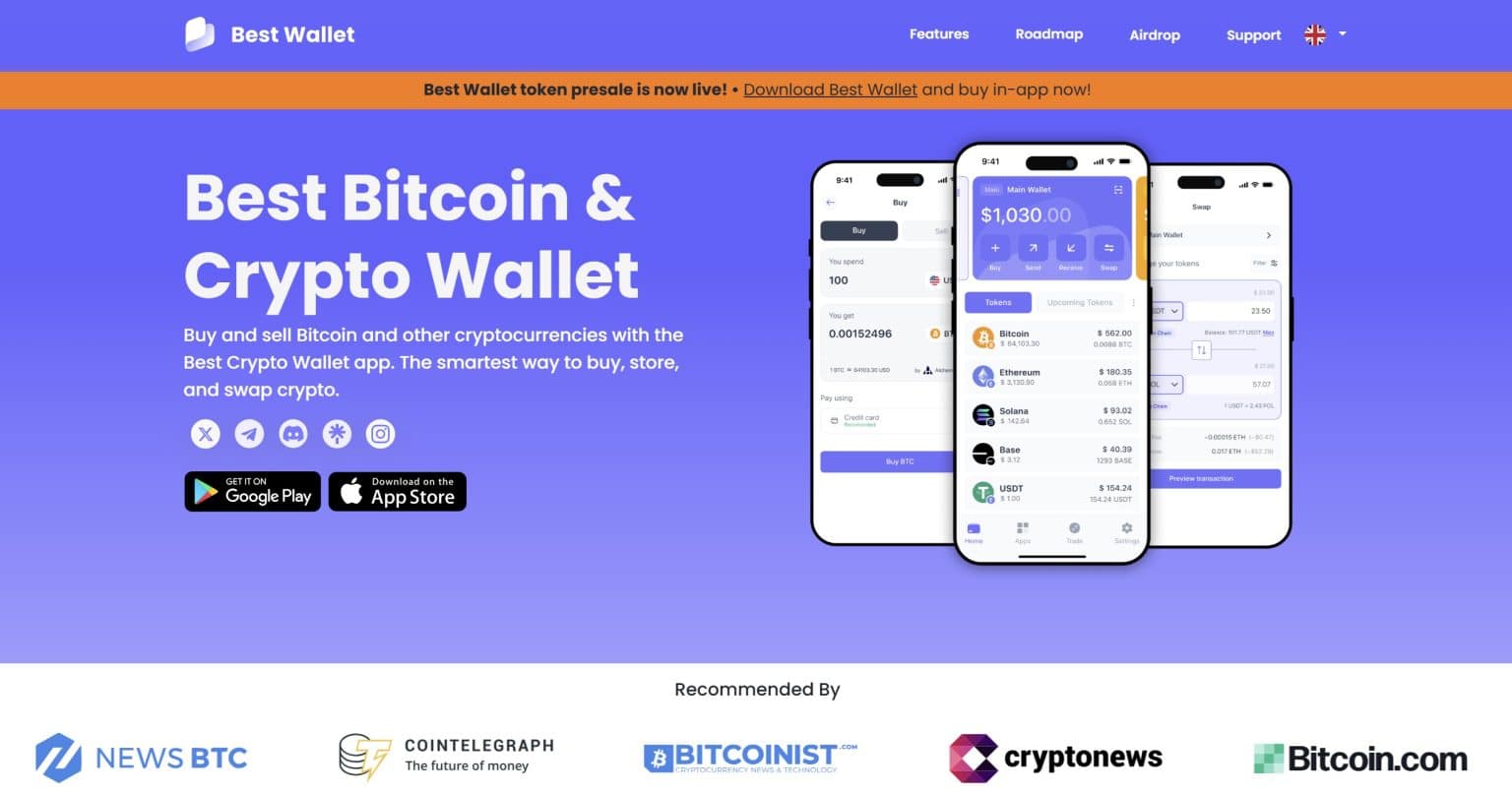
Filecoin was designed to reward storage providers, and Best Wallet takes this a step further with its built-in staking aggregator. Instead of being locked into one validator or exchange pool, you can compare real-time FIL staking options side by side and pick the highest APY. It’s like a price comparison site for yield without the middleman risk.
Best Wallet also makes Filecoin staking approachable for newcomers. There are no confusing dashboards or hidden lock-ups as you open the staking tab, select a pool, and start earning. And since Best Wallet supports over 60 networks, it’s easy to manage all cryptos alongside FIL with the rest of your portfolio in one app.
Understand here how buying $BEST token will add additional perks to your staking journey. Read our full Best Wallet Review 2026 for more details.
Best Wallet’s Key Features
- Direct staking with full self-custody
- Aggregated validator options for the best APYs
- Cross-chain support for 60+ networks
- Mobile-first design with simple navigation
- No KYC, keeping things private with fast setup
- Built-in swaps and top crypto presale access
Best Wallet’s Pros & Cons
Pros
-
Self-custodial Filecoin staking without exchanges
-
Staking aggregator sources the best FIL yields
-
Supports 60+ networks alongside Filecoin
-
No KYC, ensuring privacy and fast setup
Cons
-
Mobile-only app, no desktop version yet
-
First-time users may need time to explore all features
Filet Finance – Top Filecoin Staking Site
File Finance is a Filecoin mining power tokenization protocol that tokenizes Filecoin mining power and integrates it into a DeFi ecosystem to offer FIL holders improved staking services. This platform allows staking Filecoin on the Filecoin Chain.
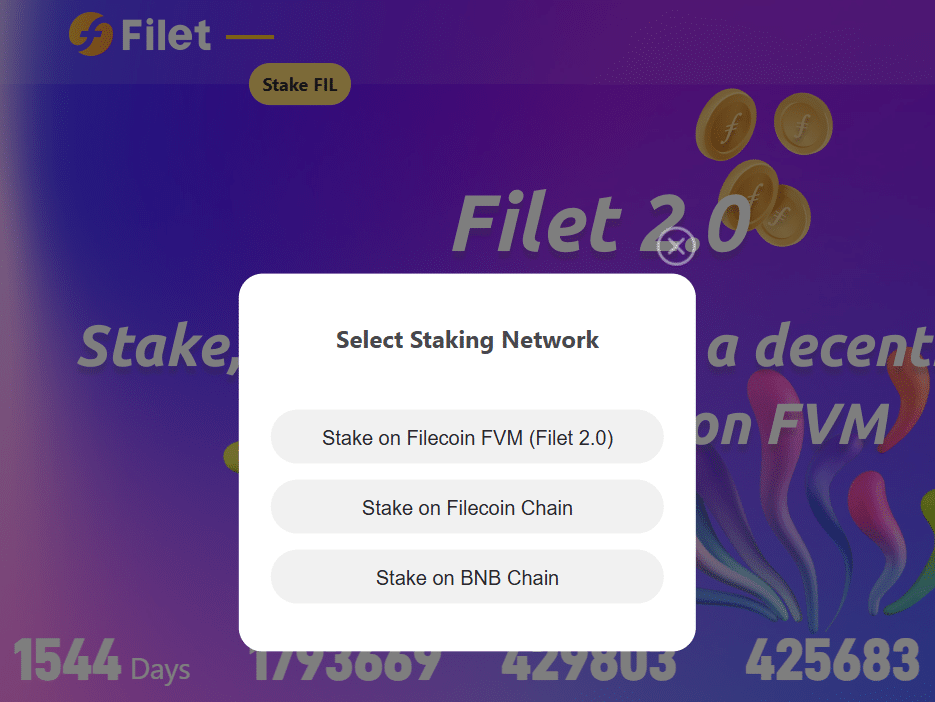
Filet Finance offers both flexible and fixed-term staking options. With the flexible staking option, you can withdraw your tokens anytime, but the APY is lower, typically around 4% to 8%.
You can choose a fixed-term staking option for higher rewards, which requires locking your tokens for 90, 180, or 360 days. The corresponding APYs for these periods are 13%, 11%, and up to 14%, respectively. Longer lock-up periods offer higher returns but reduce liquidity.
Filet Finance’s Key Features
- This mining power tokenization protocol tokenizes Filecoin mining power and integrates it into the DeFi ecosystem to offer improved staking services.
- There are one flexible and three locked options.
- The flexible option provides an APY of 4%+8%.
- You can lock your tokens for 90, 180, or 360 days.
- The locked option offers APYs up to 14%.
Filet Finance’s Pros and Cons
Pros
-
Integrates Filecoin mining power into the DeFi ecosystem, offering enhanced staking opportunities
-
Flexible and three locked options
-
APYs of up to 14%
Cons
-
Higher APYs come with a longer commitment period
Binance – Top Centralized Exchange to Stake Filecoin
Binance, known for its numerous trading features and frequent new Binance listings, also offers Binance Earn. The feature supports over 300 digital assets, including established coins and emerging tokens.
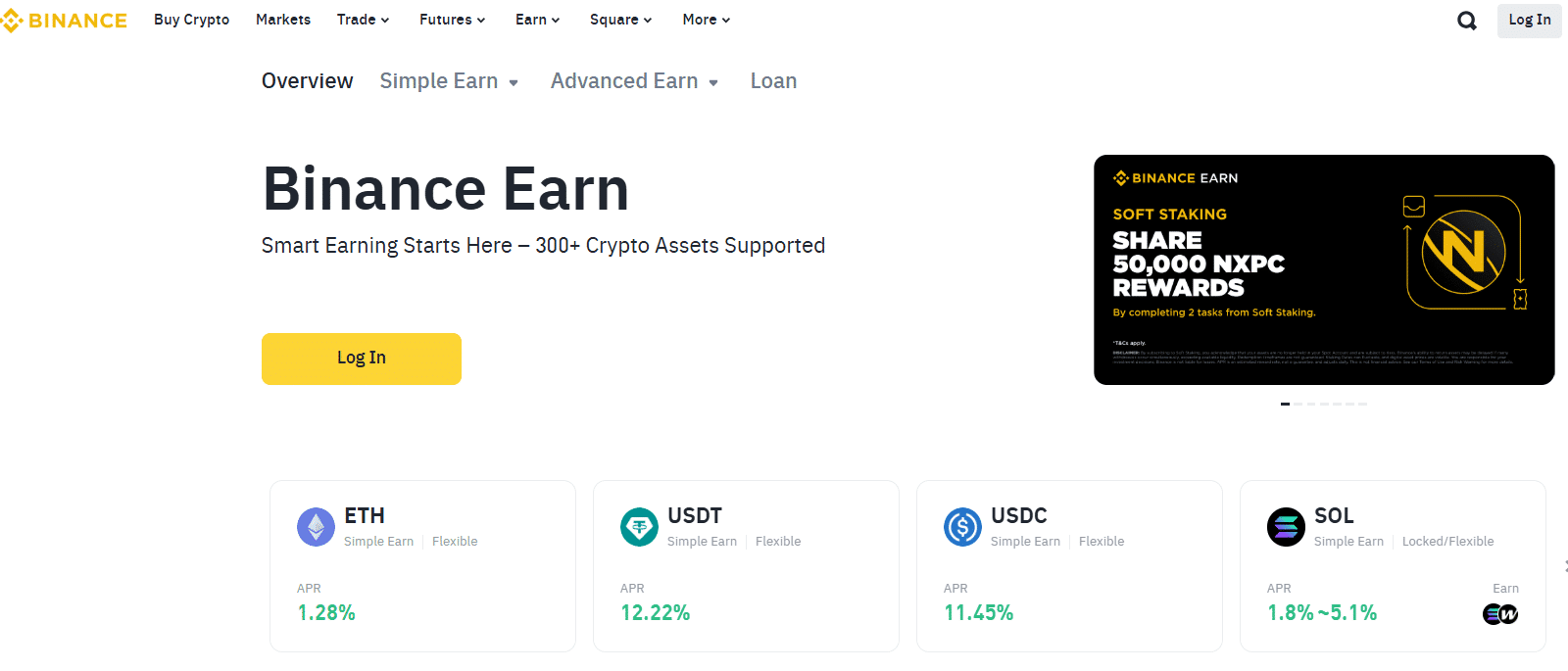
Users can stake Filecoin on Binance with five different options: one flexible and four locked.
The flexible option offers an APY of 1.77%. At the same time, users can lock their tokens for 30, 60, 90, or 120 days, with the APY increasing for longer lock-up periods. That said, the 30-day lockup has a 3% APY, the 60-day lockup provides a 3.30% APY, the 90-day lockup has an APY of 3.50%, and the 120-day lockup offers a 3.80% APY. Refer to our Binance Review and Binance Staking guide for more details.
Binance’s Key Features
- Binance Earn supports over 300 digital assets
- Users can stake FIL on Binance with five different options.
- The flexible option offers an APY of 1.77%.
- Users can lock their tokens for 30, 60, 90, or 120 days.
- The 120-day lockup has the highest APY of 3.80%.
Binance’s Pros and Cons
Pros
-
Both flexible and locked options
-
Five different staking options
-
Shorter lock-up periods than Filet Finance
Cons
-
Variety of staking options and differing APY rates can overwhelm new users
BitMart – Popular Staking Platform for Filecoin (FIL)
With BitMart, users can stake Filecoin and earn staking rewards without worrying about time lengths or setting up nodes. Moreover, BitMart doesn’t charge a fee on any staking operations upon launch.
The platform provides two options for staking Filecoin: a flexible and a locked one. The flexible option offers an APY of 0.60%, whereas the locked option requires users to lock their tokens for 30 days and earn rewards with an APY of 3%. The minimum locked amount is 0.1 FIL.
BitMart’s Key Features
- BitMart doesn’t charge a fee on any staking operations upon launch.
- The platform provides two options for staking Filecoin.
- The flexible option offers an APY of 0.60%.
- The locked option requires users to lock their tokens for 30 days and earn rewards with an APY of 3%.
- The minimum locked amount is 0.1 FIL.
BitMart’s Pros and Cons
Pros
-
No fee on staking operations upon launch
-
APY of up to 3%
-
Low entry requirement
Cons
-
Relatively low APY offered by the flexible option
Glif – Filecoin Staking Site For Advanced Users
Filecoin staking on Glif allows users, especially Storage Providers, to earn rewards by locking their FIL tokens. With a competitive APY of 10.910%, participants can deposit FIL and receive weekly rewards while using their existing pledge collateral to borrow more FIL.
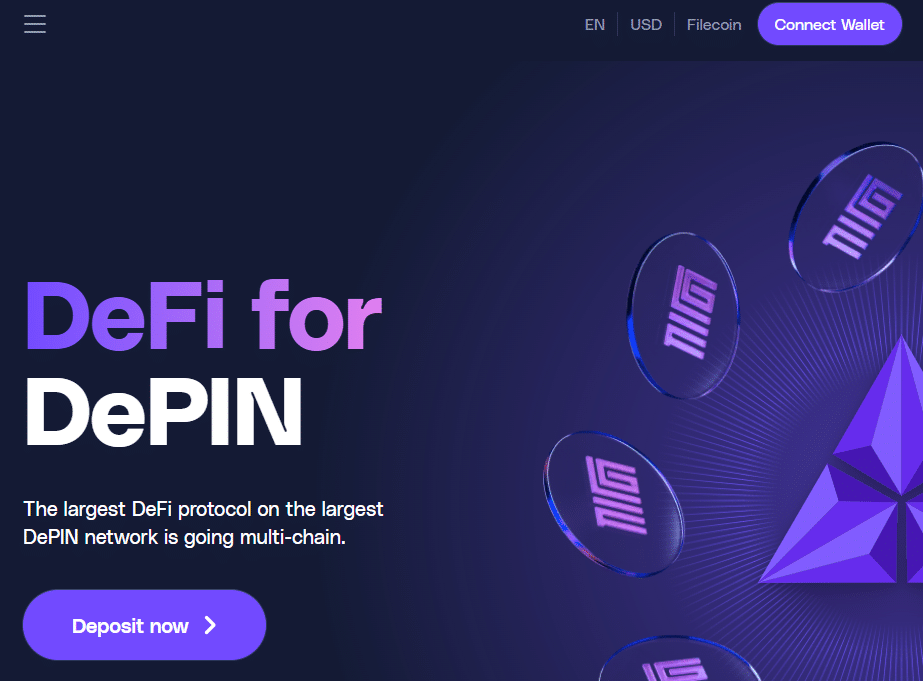
Glif offers a seamless borrowing and earning cycle, making it easy for storage providers to scale their operations by compounding rewards and using tools like the Glif Wallet and Filecoin nodes. The platform also enhances Filecoin’s DeFi network with features like the Infinity Pool and autonomous DataCap verification.
Glif’s Key Features
- Participants can deposit FIL and receive weekly rewards.
- They use their existing pledge collateral to borrow more FIL.
- The rewards come with a 10.910% APY.
- With Glif, storage providers can scale their operations by compounding rewards and using tools like the Glif Wallet and Filecoin nodes.
- The platform offers features like the Infinity Pool and autonomous DataCap verification.
Glif’s Pros and Cons
Pros
-
Competitive APY of 10.910%
-
Storage providers can scale operations by compounding rewards
-
Innovative features like Infinity Pool and autonomous DataCap verification
Cons
-
Requires deeper technical understanding, as it is designed primarily for storage providers
How to Stake Filecoin: A Step-by-Step Guide
Let’s go over the whole process of staking Filecoin step by step:
-
Get FIL Tokens
You can buy FIL tokens from popular crypto exchanges like Kraken, Binance, Coinbase or on a self-custodial wallet like Best Wallet.
-
Pick a Filecoin Wallet
After getting your tokens, pick a secure wallet to store them. It’s smart to use a hardware wallet, and Ledger Stax is a great option, providing security by keeping your tokens offline.
-
Choose a Staking Platform
Next, choose a staking platform to delegate your FIL tokens. We suggest using Best Wallet since it has one of the best security features.
-
Delegate Your Tokens
After choosing your wallet and staking platform, connect them and select a staking pool. By delegating your FIL coins, you merge them with other participating tokens, which increases the chance of successfully validating transactions on the Filecoin network. Follow the platform’s instructions to complete the process.
-
Earn Rewards
Rewards depend on the staking pool’s efforts to validate transactions and maintain network security. Remember that fees may be associated with staking, and earning returns on your staked FIL can take some time. Keep an eye on your staking platform for updates on your rewards and any changes in staking conditions.
How Much Can You Earn by Staking FIL?
The current reward rate for staking Filecoin ranges from 0.60% to 14%, meaning that you can potentially earn up to 14% per year. Filet Finance’s 360-day locked option provides the highest APY for staking FIL. Let’s put this into numbers. If we take the FIL price of $2.77, and you stake 1,000 FIL by locking them for 360 days, the 14% APY will reward you with $387.80.
However, staking rewards can change based on market conditions and network dynamics. That’s why keeping an eye on these rates is essential so that you know your potential earnings.
These are the top strategies for maximizing your rewards:Tips and Strategies for Maximizing Filecoin Staking Rewards
Mistakes to Avoid When Staking FIL
It’s common to make a few mistakes when staking FIL, especially if you are new to it. Let’s list them so that you can know how to recognize and avoid them:
- Falling for high yields: Stakers aren’t always aware that a high APY or APR doesn’t necessarily mean a high profit, given that other factors impact their earnings, like token price and inflation. Therefore, see our other high-risk, high return crypto coins as well.
- Not knowing how to pick a validator: The factors you should consider are validator reputation, performance, uptime, transparency, and commission.
- Paying high fees to staking platforms or services: These fees or commissions can cut down your net profit and investment return. Therefore, compare fees and commissions and pick the platform that offers the best value for money.
Best Practices to Stake Filecoin
Here are the best practices for staking FIL:
- Understand the staking mechanism: Make sure you understand every aspect of staking FIL, from its process to the requirements to unstaking.
- Assess the Filecoin staking rewards: Compare platforms and services in terms of APYs, duration, and any other incentives the network provides.
- Stay up-to-date about network updates: It’s always wise to follow the latest news, events, and developments regarding the Filecoin network, as changes or updates in protocols can affect your staking rewards.
Benefits and Risks of Staking Filecoin
Benefits:
- Passive income: This is a great option for people who want to earn passive income without actively trading or managing their assets. Staking simplifies investing and earning since tokens accumulate over time by only staking and holding them.
- High returns: Stakers can potentially earn an APY of up to 14%. That means that if you lock 1,000 FIL for 360 days, the 14% APY will reward you with $387.80.
- Network security: When staking FIL, users contribute to the stability and security of the network.
- Decentralized storage support: This contribution minimizes reliance on centralized services, improving the storage network’s security and resilience. By staking, users directly support the Filecoin network, which promotes data integrity and decentralization, contributing to broader goals of lowering centralized control in data storage.
- Long-term profitability: As FIL’s value potentially rises, the rewards earned from staking can substantially grow. This long-term perspective allows users to benefit from both the appreciation of their staked FIL and the rewards they generate, increasing their investment’s value over time.
Risks:
- Centralization risk: Staking Filecoin on centralized exchanges comes with the risk of reliance on the exchange. In cases of operational issues and bankruptcy, users may face financial losses.
- Missing investment opportunity: Locking tokens for staking means missing potential investment opportunities, as users’ tokens aren’t available for immediate trading during the lock-up period.
Expand Your Strategy
Filecoin staking is great for storage-focused investors, but diversification is key. Check our guide to the Best Crypto Staking Coins to see what other tokens can complement your Filecoin strategy.
Filecoin Staking vs. Tezos Staking: A Comparative Analysis
What’s first notable when comparing Filecoin to Tezos staking is that they use different consensus mechanisms: the former uses a proof-of-storage, while the latter operates on an LPoS consensus mechanism. They are similar in terms of requiring no minimum staking amount, offering governance, and flexible and locked options.
Rewards are calculated based on the platform, stake size, network conditions, and, in the case of Tezos, baker performance. Regarding APY, staking Tezos offers a higher APY of 18% compared to Filecoin’s 14%.
| Feature | Filecoin Staking | Tezos Staking |
| Consensus mechanism | Proof-of-Storage | Liquid proof-of-stake (LPoS) |
| Minimum stake | No minimum requirement | No minimum requirement |
| Governance | Yes | Yes |
| Duration | Flexible and locked options | Flexible and locked options |
| Reward calculation | Based on platform, stake size, and network conditions | Based on platform, stake size, and baker performance |
| APY | Up to 14% | Up to 18% |
How to Unstake Filecoin: A Detailed Guide
This process depends on the chosen staking platform. For this guide, we’ll explain the simple process of unstaking FIL on Binance:
-
Visit Your Staked Balances
Go to the section of your platform where your staked balances are displayed.
-
Select FIL
Click on the asset you want to unstake, in this case, FIL.
-
Click Unstake
Tap or click the “Unstake” option to start the process.
-
Enter the Amount to Unstake
Include the amount of FIL you want to unstake and click “Unstake.”
-
Review and Confirm
Review the transaction details and click “Confirm” to finalize the unstaking.
Future of Filecoin Staking: Long-Term Trends to Watch
The future of FIL staking looks promising, with several key trends. For one, liquid staking is becoming increasingly popular, allowing users to stake FIL while maintaining liquidity for DeFi activities.
This leads to higher participation. Also, advancements in the FVM provide more sophisticated dApps and smart contracts, increasing the utility of staked FIL.
Namely, as of December 2024, over 4,700 contracts have been deployed on FVM, allowing for more than 3M transactions. Considering all of this, we can expect growth in Filecoin staking, increased participation, and strong network health.
Conclusion: Is Staking Filecoin Worth It?
Filecoin staking enables storage providers to borrow FIL from users and use it as collateral. In exchange, users receive a portion of the FIL rewards that the storage providers earn. You can stake your FIL on a centralized exchange or use one of the decentralized protocols enabled by the Filecoin Virtual Machine launch.
Filet Finance’s 360-day locked option provides the highest APY (14%) when you stake Filecoin. That said, you can maximize your rewards by using strategies like having sufficient FIL tokens, finding the right balance between risk and reward, enjoying the flexibility of using the FVM staking protocols, and staying up to date with new developments.
DISCOVER:
- Crypto Exchange Promos & Discounts
- Crypto Wallet Promos & Discounts
- Uniswap Staking: How to Stake UNI in 2026
- Aave Staking Review
- Axie Infinity Staking Guide
- Tangem Staking Review 2026: Pros & Cons
- Gemini Staking Review 2026: Pros & Cons
FAQs
Is it possible to stake Filecoin?


Yes, it is. You can stake your FIL on a centralized exchange or use one of the several decentralized protocols enabled by the Filecoin Virtual Machine launch.
How much does Filecoin staking yield?
Staking Filecoin offers a range of APY rewards depending on the platform you are using. Generally you are looking around 14% and up.
How much money can you make with staking Filecoin?
Filet Finance’s 360-day locked option provides the highest APY for staking FIL – 14%. When we put this into numbers and take the FIL price of say $2.77, the 14% APY will reward you with $387.80 for staking 1,000 FIL by locking them for 360 days.
What is proof of storage in Filecoin?
Filecoin uses Proof-of-Storage, consisting of two types of proofs: Proof of Replication (PoRep) and Proof of Spacetime (PoST).
References
- Filecoin. “FIL Collateral.” Filecoin Docs. https://docs.filecoin.io/storage-providers/filecoin-economics/fil-collateral
- Filecoin. “Storage Model.” Filecoin Docs. https://docs.filecoin.io/basics/what-is-filecoin/storage-model
- Ethereum Foundation. “Proof-of-Stake (PoS).” Ethereum. https://ethereum.org/en/developers/docs/consensus-mechanisms/pos/
- Taylor, Benjamin A. “Staking Your Crypto: What Are the Stakes?” Journal of Business & Technology Law, vol. 17, no. 1, 2021, Article 5, https://digitalcommons.law.umaryland.edu/cgi/viewcontent.cgi?article=1372&context=jbtl

Why you can trust 99Bitcoins
Established in 2013, 99Bitcoin’s team members have been crypto experts since Bitcoin’s Early days.
Weekly Research
100k+Monthly readers
Expert contributors
2000+Crypto Projects Reviewed