




In This Article
Aptos is a Layer 1 blockchain that utilizes a Byzantine Fault Tolerance (BFT) PoS consensus mechanism to process transactions from users. Aptos’ native token, APT, is used for staking, governance, and paying network fees.
Crypto traders can participate in Aptos staking by delegating APT tokens to validators (node operators) or joining the validator set. This guide will explain how and where to stake Aptos and the benefits and risks of staking APT tokens. We’ll also share some insights into the future of APT staking.
Key Takeaways
- Aptos blockchain uses a Byzantine Fault Tolerance (BFT) PoS consensus mechanism with validators processing transactions.
- Employs a proposal-based staking rewards system, where rewards depend on staked amount, rewards rate per epoch, number of successful proposals, and total proposals.
- APT tokens can be staked directly on the Aptos staking dashboard or via exchanges such as Bitget, OKX, Binance, and Uphold.
- To join the validator set, a minimum of 1 million APT tokens and a maximum of 50 million APT tokens must be staked.
- No slashing mechanism is used, so staked tokens are safe even if the chosen validator is inactive or fails to follow network protocols.
Aptos Staking: Summary
When you read this article, you will learn how Aptos staking works, how to become a delegator or a validator, and how to stake APT tokens. We will also review the top 5 platforms for staking APT in 2026 and show you how to maximize your Aptos staking rewards and which mistakes to avoid.
In addition, we will discuss the main benefits and risks of staking Aptos and compare it with Solana, Ethereum, and Cardano staking to show you how these blockchains differ.
What is APT Staking?
Staking is a process that enables APT holders to participate in Aptos’ consensus by locking up their tokens in return for rewards. By participating in the staking process, token holders will contribute to the Aptos ecosystem’s stability, security, and sustainability. In addition to earning rewards for their contribution, token holders will also gain governance rights, enabling them to vote on how Aptos will develop. Well, before you learn more about Aptos staking, we would highly recommend checking out our “What is Aptos” article if you aren’t familiar with the coin.
How Does Aptos Staking Work?
The Aptos blockchain is made up of a set of validators who accept and process transactions using a Byzantine Fault Tolerance (BFT) PoS consensus mechanism. The validator’s role is to maintain network security and stability by ensuring that only legitimate transactions are added to the chain. Aptos bases its reward system on proposals. This means that validators will submit a vote on whether to accept the new block proposal or not.
Aptos also supports delegated staking. Delegated staking enables token holders to participate in the staking process without running a node. Instead, they can delegate their stake to a selected validator.
Anyone who wishes to join the validator set must stake a minimum of 1m APT tokens, and the maximum is 50M APT tokens. For delegators, this limit is much lower, at 11 APT.
Top Platforms For Staking Aptos in 2026
By staking APT, you not only earn passive income but also contribute to the overall security and decentralization of the Aptos blockchain. Below you will find some of the best APT staking platforms.
Best Wallet: The Overall Best Staking Wallet for Maximizing APYs
Best Wallet app is our #1 pick among crypto staking platforms overall. That’s because Best Wallet is built around one thing most platforms overlook: helping users find the highest APYs possible across dozens of supported blockchains.
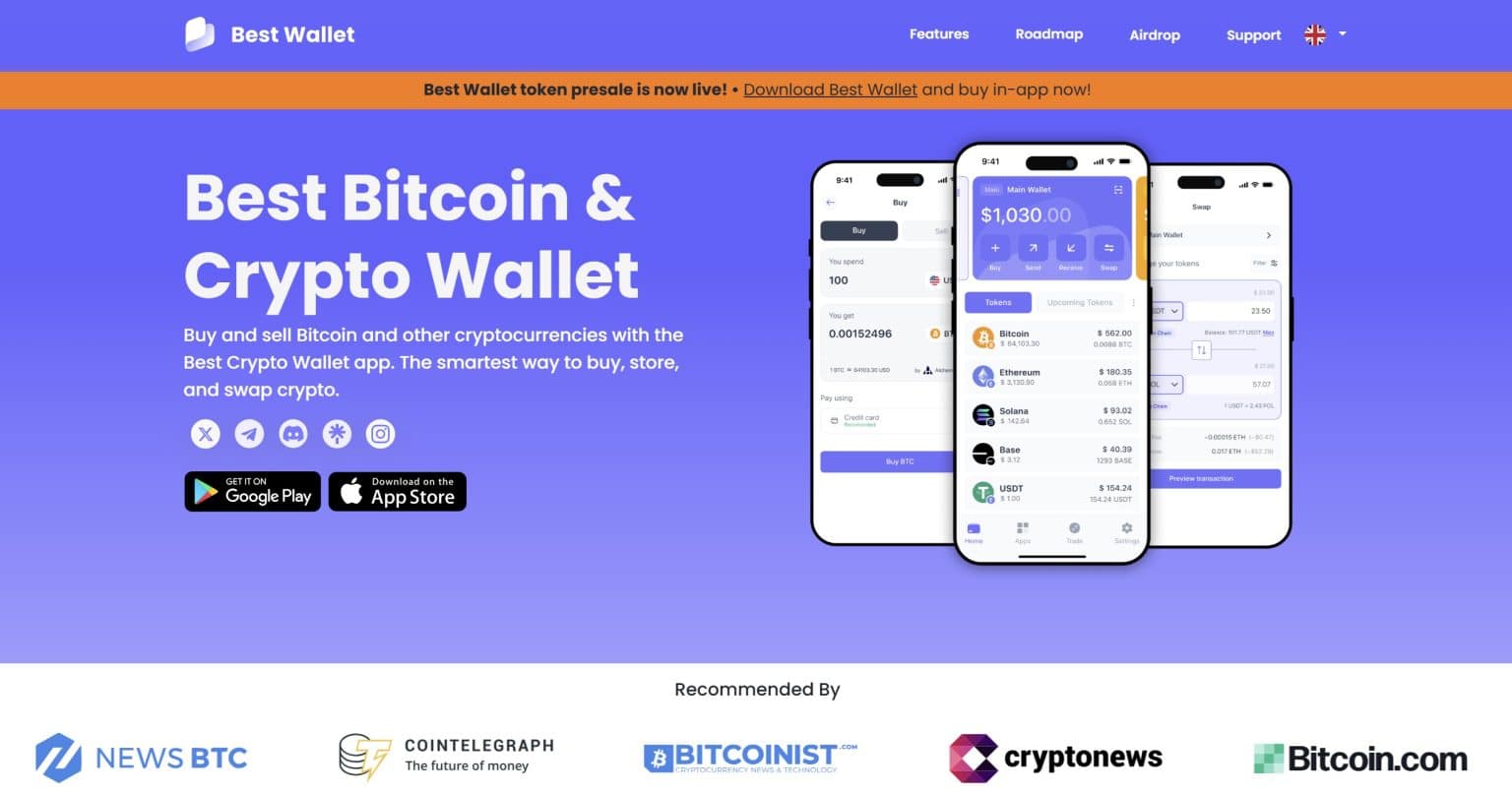
Instead of locking you into one validator or exchange pool, Best Wallet uses a staking aggregator that scans hundreds of providers in real time. Whether you’re staking ETH, SOL, POL, or stablecoins like USDT and staking USDC, the app surfaces the best reward rates and lets you stake directly without leaving the wallet. For investors who value maximizing yield, this is a huge advantage.
Best Wallet also keeps things private and secure. It’s a non-custodial app, meaning your private keys never leave your phone. There’s no KYC, and staking rewards are tracked right inside the interface. Even if you’re holding APT, you can use Best Wallet to manage the rest of your staking portfolio while benefiting from competitive APYs and diversified options across 60+ chains. If you wish to learn more, check out our Best Wallet review.
Best Wallet Key Features
- Real-time staking aggregator for the best APYs
- Supports 60+ networks and thousands of tokens
- Fully non-custodial: you keep your private keys
- No KYC: fast, private onboarding
- Built-in swaps, presales, and dApp access
- Extra staking perks for BEST token holders
Best Wallet Pros & Cons
Pros
-
Aggregator ensures the best available staking yields
-
Supports 60+ networks for portfolio diversification
-
Non-custodial with private keys stored locally
-
Extra rewards for BEST token holders
Cons
-
APT staking not yet directly supported
-
Mobile-only, no desktop interface available
You can also stake APT tokens on the Aptos Staking Dashboard and through exchanges like Bitget, OKX, Binance, and Uphold. The first option will enable you to stake APT directly from your wallet, giving you full control over your assets. On the other hand, staking through crypto exchanges is more convenient since the exchange will take care of the technical aspects of staking.
Aptos Staking Dashboard: Easy Way to Stake APT Tokens in 2026
APT Staking Dashboard enables Aptos holders to stake their tokens by joining staking pools. The staking process is straightforward. Users will have to connect their wallet (Martian, Petra), select a validator and the staking pool, and delegate their tokens.
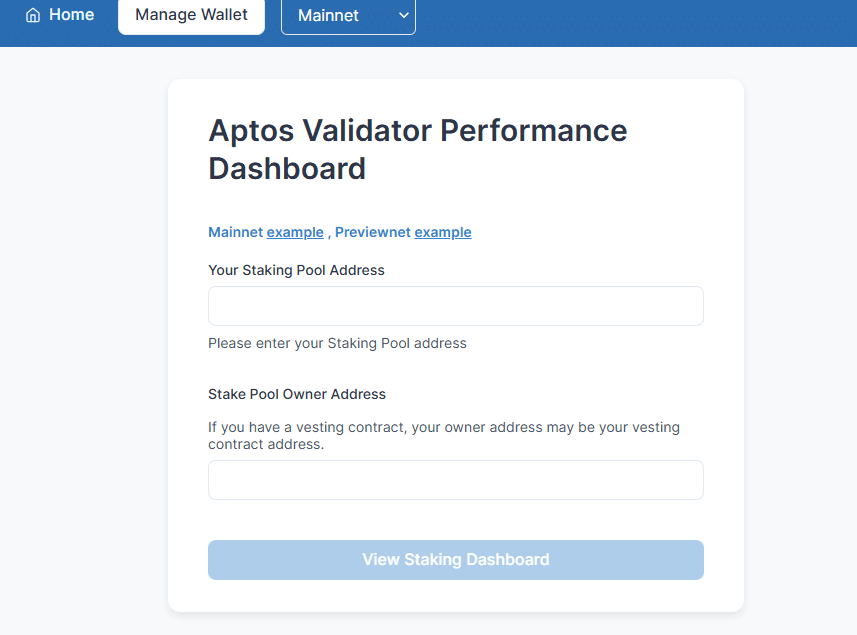
At the time of writing, the network APY is 7.25%, while the average commission fees are 9.19%. Users can delegate a minimum of 11 APT to be eligible for rewards. The staked tokens will be automatically restaked every epoch (each epoch lasts 2 hours). Users can undelegate a minimum of 10 APT tokens. The undelegation process usually takes 30 days. Undelegated tokens will keep earning rewards until the unlock date.
Aptos Staking Dashboard Features
- AptoStake Telegram bot. A tool that helps users track the performance of their validators on the Aptos network.
- APT Staking Dashboard can be integrated with Petra, Pontem, Martian, Fewcha, Rise, and Spika Wallet.
- Staked APT tokens will be automatically restaked every 2 hours.
Aptos Staking Dashboard Pros & Cons
Pros
-
User-centric interface
-
Low minimum delegation
-
Over 200 validators to choose from
-
Comprehensive validator performance metrics
Cons
-
Validators may charge high commission fees
Bitget: Reputable Aptos Staking Platform
Bitget is a reputable crypto exchange that allows users to earn passive income from 35 of the top staking coins, including APT. Start the staking process by creating an account on Bitget, navigating to the Earn section, and entering APT in the search bar. The lock-up duration is flexible, meaning you can stake and unstake your tokens at any time.
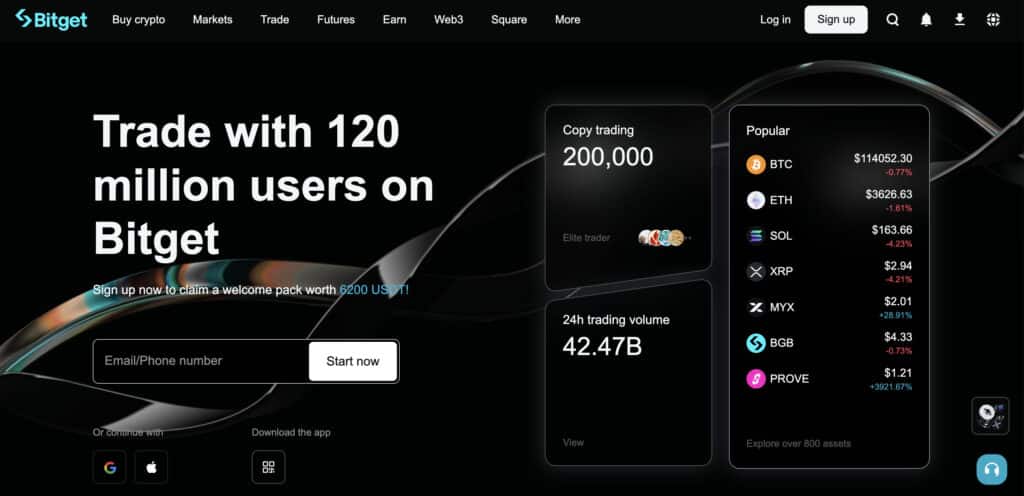
The Aptos staking APR on Bitget stands at 5.70%, the staking rewards are distributed daily, and there are no maximum staking limits.
Investors can also use Bitget’s trading bots to automate and diversify their trading strategies. In addition to staking, users will be able to use other Bitget’s ‘Earn’ products, such as Savings, Dual Investment, Shark Fin, Smart Trend, and Crypto Loans. However, only Crypto Loans support APT. You can learn about this exchange in detail in our separate Bitget exchange review.
Bitget Features
- Compound interest mode. This mode enables users to reinvest their earnings to earn interest on their initial investment and their previously accumulated interest.
- Spot auto-invest+. The bot will boost your income by depositing digital assets from your auto-invest bot into your Flexible savings account.
- Users can stake APT directly from the Bitget wallet.
Bitget Pros & Cons
Pros
-
Daily reward distributions
-
Flexible redemption
-
Secure fund custody program
-
No maximum staking limits
Cons
-
Not fully regulated in all jurisdictions
OKX: Aptos Staking Platform With Low Fees
OKX is a crypto exchange known for its fast transactions, low fees, and powerful APIs. OKX enables its users to stake 37 cryptos for competitive APYs that can go up to 30%, depending on the token. By staking Aptos on OKX, you’ll be able to earn an APY of 6.02%. The minimum staking requirement stands at 1 APT. The staking requirements are flexible, while the rewards will be distributed between 1 and 30 days.
The redemption period on OKX lasts between 1 and 30 days. During this period, you won’t be able to earn staking rewards. OKX charges a 7% service fee for APT staking, meaning you’ll receive 93% of the rewards. The platform also offers a powerful Web3 yield aggregator that automatically finds the best yield opportunities within the Aptos DeFi ecosystem. Learn more about this platform in our dedicated OKX review.
OKX Features
- OKX users will be able to earn rewards by participating in Learn & Earn campaigns.
- APT holders can maximize their yield by staking their tokens across various DeFi protocols within the Aptos ecosystem.
- Zero subscription limits. Users can stake APT tokens without any subscription limits.
OKX Pros & Cons
Pros
-
Flexible staking periods
-
User-friendly mobile app
-
Low minimum staking requirements
-
Staked APT tokens can be used in various DeFi protocols
Cons
-
OKX charges a 7% service fee for APT staking
Binance: Largest Aptos Staking Platform in 2026
Binance is the largest crypto exchange in the world. This CEX has a 24-hour trading volume exceeding $33 billion, while its registered users recently surpassed the 250 million mark. Binance is the first choice for a broad spectrum of traders, as it offers products and staking services tailored to different trading styles.
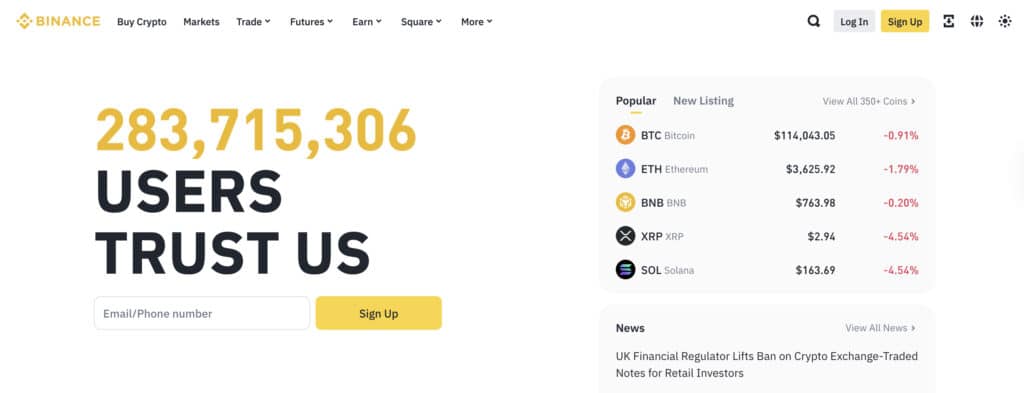
You can stake Aptos on Binance for a flexible or a fixed duration of 14, 30, 60, or 120 days. The APR on Aptos ranges between 0.36% and 7.1%, depending on the staking duration. Users will also be able to use their APT tokens as collateral through Binance’s loan service. They can borrow up to $700,000 for an annual interest rate of 3.96%. Dive deeper into this exchange in our comprehensive Binance review.
Binance Features
- If you use Binance’s Simple earn service to lock your BNB tokens, you’ll gain early access to a select Web3 projects before they get listed on Binance.
- Easily stake APT through your Binance account without setting up a validator or external wallet.
- Track your rewards, redeem anytime, and manage your stake directly from the Binance interface.
Binance Pros & Cons
Pros
-
Suitable for beginners and advanced traders
-
Competitive APYs
-
Flexible and fixed duration terms
-
APT tokens can be used as collateral
Cons
-
Binance charges a withdrawal fee of 0.008 APT
Uphold: Safest Platform to Stake APT Tokens
Uphold is one of the best crypto staking platforms that allows its users to pledge their APT tokens to a validator for an APY of 5%. The staking rewards are distributed every week (on Thursday).
The unstaking period for Aptos is 14 days, while the minimum staking requirement stands at 0.1 APT. To stake Aptos on Uphold, create a free Uphold Wallet account, tap the Earn button on the main menu, and select APT. Uphold is regulated by FinCen, which means that U.S. residents can use its staking services (except for residents of New York, Texas, Louisiana, Colorado, U.S. Virgin Islands, American Samoa, and U.S. Minor Outlying Islands). Learn more about it in our separate Uphold review.
Uphold Features
- Users can attend beginner, intermediate, and advanced courses to stay informed about the latest trends and developments in the blockchain world.
- Complete three simple challenges each month to unlock rewards.
- You can earn up to 4.40% APY on your USD balance by moving your funds to a USD Interest Account.
Uphold Pros & Cons
Pros
-
Staking rewards are distributed each week
-
Flexible staking terms
-
Staking services are available for U.S. residents
-
Available as a mobile app
Cons
-
Uphold charges a commission fee between 20% and 25% for its staking services
How to Stake Aptos: A Step-by-Step Guide
You can stake APT tokens in the following way:
-
Visit the APT Staking Dashboard
Go to the official APT Staking Dashboard in your browser.
-
Connect Your Wallet
Tap the “Connect Wallet” button and select your preferred wallet.
-
Open the Staking Pools
Click on the “Staking Pools” icon to view available options.
-
Choose a Staking Pool
Select a staking pool from the list and tap the “Stake” button. Ensure the pool has a performance rate close to 100%.
-
Enter the Amount to Stake
Tap “Stake Now” and input the amount of APT you want to stake.
-
Delegate and Confirm
Click the “Delegate” button and confirm your transaction in the wallet.
-
Start Earning Rewards
Your stake will begin generating rewards approximately 2 hours after staking.
How Much Can You Earn by Staking APT?
Aptos staking rewards are based on the current reward rate, staked amount, total number of proposals, and number of successful proposals. As of March 2025, the annual percentage yield on the APT Staking Dashboard amounted to 7.25%. However, if you stake ATP tokens on crypto exchanges, the APY will be based on the staking duration and the platform’s policies.
For example, if you stake APT on Bitget, you’ll earn an APY of 5.70%. The APY on OKX currently stands at 6.02%. On Binance, the APY ranges between 0.36% and 7.1%. On the other hand, Uphold will enable its users to earn an APY of 5% by staking their APT tokens.
Tips and Strategies for Maximizing Aptos Staking Rewards
Mistakes to Avoid When Staking Aptos
- Make sure that you meet the minimum staking requirements. On that note, the minimum staking requirement to join a validator set is 1M APT. The minimum delegation requirement amounts to 11 APT. However, if you stake Aptos on crypto exchanges, each platform will determine its own minimum staking requirement.
- Choose active validators with a strong performance history, reasonable commission rates, and high uptime. You can check the details about each validator by visiting the Validator Leaderboard.
- Understand the staking terms and conditions. Each crypto exchange will have different policies regarding the lock-up durations and undelegation.
Best Practices to Stake APT
- Monitor the performance of your validators. This will help you identify validators that consistently offer high rewards. If your validator is underperforming, consider switching to another one.
- Spread your stakes across multiple validators. This will reduce the risk of losing rewards if a single validator misbehaves.
- Reinvest your staking rewards. You’ll increase your initial stake by reinvesting your staking rewards, leading to higher returns over time.
Benefits and Risks of Aptos Staking
Benefits
- You can earn regular passive income. For example, if you stake 100 APT tokens (priced at $5.19 per token) for an APY of 7.25%, you’ll earn about 6.9 ATP tokens over a year (or $36.33).
- You can participate in its on-chain governance. For example, you can vote on the epoch duration and the minimum and maximum staking requirements.
- You can support the Aptos network and contribute to its decentralization. Staking will make the Aptos network more resistant to potential attacks.
- No slashing risks. Aptos doesn’t use slashing mechanisms, meaning you won’t lose your staked tokens if the validator is inactive or misbehaves.
- Liquid staking. You can stake APT tokens for rewards while maintaining liquidity on platforms like Ditto Finance, Amnis Finance, and Tortuga Finance.
Risks
- Staking rewards will be based on the validator’s performance. If the validator misbehaves, you won’t earn rewards.
- You’ll have to stake at least 1 million APT tokens to operate a validator node.
APT Staking vs. Other Staking Coins: A Comparative Analysis
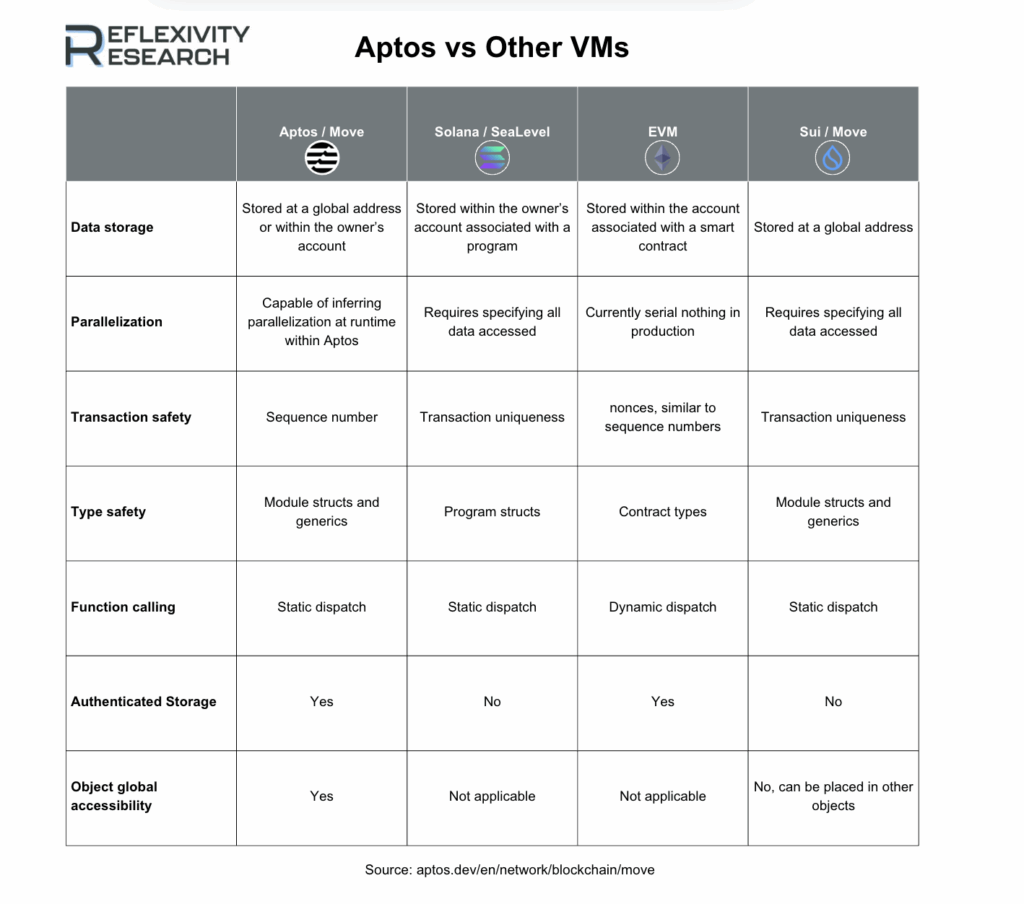
If you compare Aptos with other prominent Proof-of-Stake (PoS) blockchains, like Etherceum, Solana, and Polkadot, you’ll notice that each network employs different consensus mechanisms.
For example, Aptos uses the Byzantine Fault Tolerance consensus mechanism combined with PoS to achieve consensus. Ethereum uses a PoS consensus mechanism to select validators based on their amount of staked tokens. Solana combines PoS and PoH mechanisms to process transactions in parallel, while Polkadot staking uses the NPoS consensus to enable users to nominate validators.
When it comes to minimum staking requirements, validators must stake at least 1 million APT to join the validator set, while the minimum delegation requirement stands at 11 APT. On Ethereum, the minimum staking requirement to become a validator stands at 32 ETH, while on Solana, the minimum requirement stands at 0.1 SOL. Polkadot users must stake at least 250 DOT to become nominators and 1 DOT to join a pool.
Ethereum, Aptos, and Polkadot distribute their staking rewards per epoch, every 6.4 minutes, every 2 hours, and every 24 hours, respectively. Solana distributes its staking rewards every 2-3 days.
The unstaking period on Aptos can take up to 30 days. Polkadot has a similar unbonding period that lasts 28 days. On Ethereum, the unstaking period depends on the exit queue, while on Solana, it lasts between 2 and 4 days.
| Feature | Aptos | Ethereum | Solana | Polkadot |
| Consensus mechanism | PoS enhanced by Byzantine Fault Tolerance (BFT) | PoS | PoS with PoH | NPoS |
| APY | 7.25% | 3.3% | 7.94% | 11.75% |
| Minimum staking requirement | 1m APT (validators) and 11 APT (delegators) | 32 ETH (solo staking) | 0.1 SOL | 250 DOT (to nominate) 1 DOT (to join a pool) |
| Staking rewards distribution | Every 2 hours | Every 6.4 minutes | Every 2-3 days | Every 24 hours |
| Unstaking period | Can take up to 30 days | Depends on the exit queue | 2-4 days and one epoch | 28 days |
| Auto-compounding | Yes | No | Yes | Yes |
| Slashing risks | No | Yes | No | Yes |
Did You Know?
Aptos offers attractive staking opportunities, but it’s just one of many high-yield tokens out there. Check out our 14 Best Crypto Staking Coins guide to discover more assets to boost your staking returns.
How to Unstake Aptos: A Detailed Guide
Let’s go over the whole process of unstaking APT step by step:
-
Visit the APT Staking Dashboard
Go to the official APT Staking Dashboard in your browser.
-
Connect Your Wallet
Tap the “Connect Wallet” button and select your preferred wallet.
-
Open the Staking Pools
Click on the “Staking Pools” icon to view your active stakes.
-
Select Undelegate
Click the “Undelegate” button next to the staking pool you want to withdraw from.
-
Enter the Amount to Undelegate
Input the number of APT tokens you want to undelegate, leaving at least 10 APT in your stake.
-
Confirm Undelegation
Tap the “Undelegate” button again to confirm your choice.
-
Wait for Completion
The undelegation process can take up to 30 days to complete.
Future of APT Staking: Long-Term Trends to Watch
Although Aptos is a relatively new blockchain that went live in 2022, its ecosystem experienced a real renaissance in 2024. In just one year, its number of unique active accounts jumped from 1.6m in January to 10.1m in December. In addition to that, its number of delegators increased from 21.9k to 53.5k. Aptos’ TVL jumped from $117m in January to $1B in December, which represents a staggering increase of 750%.
Aptos’ success managed to draw the attention of financial institutions such as Franklin Templeton, BlackRock, and Bitwise. On that note, Franklin Templeton integrated the Aptos Network into its tokenized fund. BlackRock expanded its BUIDL Fund to Aptos, while Bitwise launched the first Aptos staking ETP. Aptos’ collaboration with prominent financial institutions will increase the demand for APT tokens.
At the beginning of 2024, the total stake on delegated nodes amounted to 118m APT (or 12.9% of the total stake), while 791m APT tokens (or 87.1%) were held in staking pools. By the end of 2024, the delegated stake increased to 339m APT, representing 37.7% of the total stake, while the stake within the staking pools dropped to 561m APT. This shows that there has been a shift in staking preferences, that is, that APT holders prefer to delegate their tokens. If this trend continues, Aptos will most likely introduce additional delegation pools to encourage broader participation.
Conclusion
Aptos staking enables users to participate in the network’s consensus in return for rewards. Anyone who stakes a minimum of 1 million APT can join the validator set. In 2023, Aptos introduced delegated staking to facilitate broader participation. Anyone who delegates a minimum of 11 APT tokens to a selected validator can earn rewards.
The Aptos staking rewards will be based on the staked amount, rewards rate, total number of proposals, and number of successful proposals. At the time of writing, the APY on the APT Staking Dashboard stands at 7.25%. Choose active validators with a strong performance history and high uptime to maximize your rewards. Remember that you won’t earn rewards if your selected validator misbehaves.
DISCOVER:
- Crypto Exchange Promos & Discounts
- Crypto Wallet Promos & Discounts
- 6 Best Aptos Wallets in October 2026
- What Are Non-Custodial Crypto Wallets? A Beginner’s Guide
FAQs
What is the reward rate for Aptos staking?

At the time of writing, the annual percentage yield on the APT Staking Dashboard amounts to 7.25%.
Can I unstake my APT tokens anytime?
Yes, you can. However, the undelegation process may take up to 30 days.
How much can I earn from staking Aptos?
The rewards will depend on the platform used and the duration of the staking. For example, if you stake APT on the Aptos Staking Dashboard, you’ll earn an APY of 7.25%. On the other hand, if you stake APT on Binance, you’ll earn an APY between 0.36% and 7.1%, depending on the staking duration.
Are there any minimum requirements for staking Aptos?
Yes. If you want to join the validator set, you’ll have to stake a minimum of 1 million and a maximum of 50 million APT tokens. On the other hand, delegators will have to stake a minimum of 11 APT tokens.
Is Aptos staking available on exchanges?
Yes, you can stake APT on crypto exchanges like Bitget, Binance, OKX, and Uphold.
How often are rewards distributed for Aptos staking?
The staking rewards are distributed at the end of each epoch (every 2 hours).
References
- Aptos Labs. “Delegated Staking.” Aptos Docs. https://aptos.dev/network/blockchain/delegated-staking
- Consensys. “Your Guide to Ethereum Validator Staking Rewards.” Consensys Blog. https://consensys.io/blog/your-guide-to-ethereum-validator-staking-rewards
- Aptos Labs. “Staking.” Aptos Docs. https://aptos.dev/network/blockchain/staking
- Taylor, Benjamin A. “Staking Your Crypto: What Are the Stakes?” Journal of Business & Technology Law, vol. 17, no. 1, 2021, Article 5, https://digitalcommons.law.umaryland.edu/cgi/viewcontent.cgi?article=1372&context=jbtl

Why you can trust 99Bitcoins
Established in 2013, 99Bitcoin’s team members have been crypto experts since Bitcoin’s Early days.
Weekly Research
100k+Monthly readers
Expert contributors
2000+Crypto Projects Reviewed