




In This Article
Staking on Uniswap isn’t done in the traditional manner. Instead, users provide liquidity to pools and earn yield in exchange. These pools differ in APRs, so it’s important to research them thoroughly to get the highest returns.
While Uniswap’s liquidity provision model presents many opportunities, it comes with risks like impermanent loss and fluctuating returns. This Uniswap staking review explores how staking on Uniswap works, offers a comparison to PancakeSwap in terms of reward rates, and outlines the advantages and drawbacks for liquidity providers.
In 2026, the platform continues to evolve as Uniswap onboards further L2 integrations and potential Uniswap V4 upgrades. Understanding fee tiers, token volatility, and pool incentives is critical for maximizing returns as a liquidity provider.
Key Takeaways
- Uniswap doesn’t offer traditional staking, but users can earn yields by providing liquidity to pools.
- ERC-20 tokens are exchanged by pooling them into smart contracts, with most trading occurring via these liquidity pools.
- The highest APR for liquidity pools on Uniswap V3 is 80.803% (ETH/ONDO).
- Liquidity providers earn a portion of transaction fees based on their contribution to the total pool size.
- Risks include regulatory uncertainty, impermanent loss, hacking, phishing threats, and smart contract vulnerabilities.
Uniswap Staking: Summary
Uniswap offers a unique approach to earning passive income through liquidity provision rather than traditional staking, allowing users to deposit token pairs into pools and earn a share of transaction fees. In 2026, the platform remains a leading decentralized exchange, with top pools like ETH/ONDO offering APRs as high as 80.803%.
While Uniswap provides flexibility with customizable fee tiers and eliminates counterparty risk, users should be aware of challenges such as impermanent loss, lower rewards compared to platforms like PancakeSwap, and smart contract vulnerabilities. Despite these risks, Uniswap’s decentralized model, deep liquidity for major tokens, and evolving L2 integrations make it a compelling choice for experienced DeFi participants looking to maximize yields.
How Does Staking on Uniswap Work?
As we mentioned in our Uniswap review, the platform is among the largest decentralized exchanges that allow users to trade their ERC-20 tokens directly from their crypto wallets. Uniswap doesn’t offer traditional staking, but users can earn yields by providing liquidity to Uniswap’s pools.
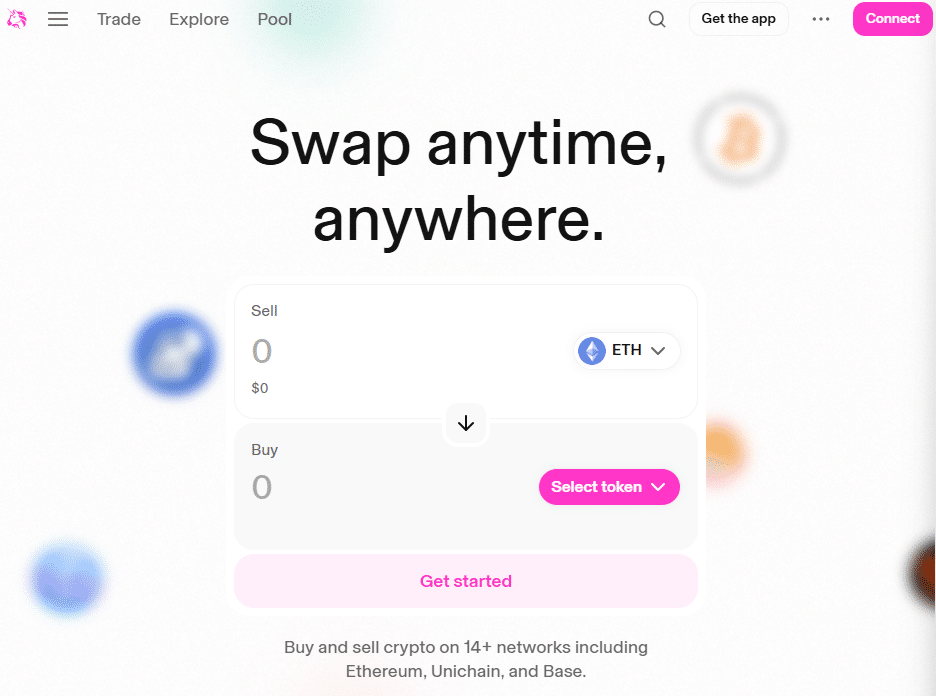
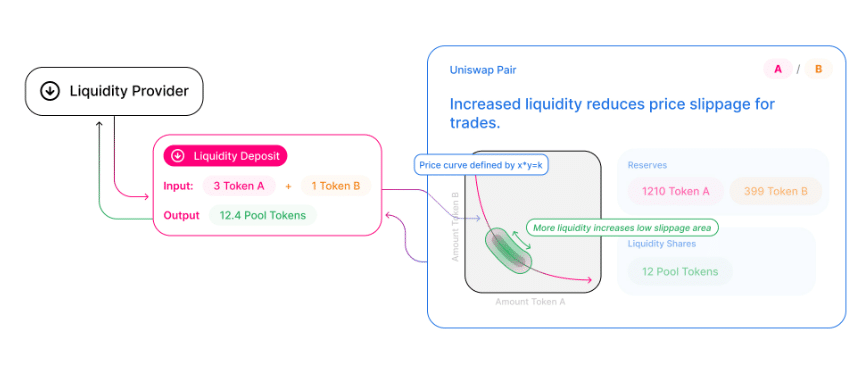
As a self-operating liquidity pool, U2niswap allows people to generate liquidity by trading ERC-20 tokens on the Ethereum network; instead of matching buyers with sellers, liquidity pools are funded by Liquidity Providers (LPs) to facilitate trades. By putting forward token pairs to the pools, LPs are incentivized by receiving a portion of the transaction fees. Users are able to trade instantly on this automated model, without waiting for a counterparty.
For those new to this, let’s explain the terms:
- Liquidity pools: The two-crypto pool enables traders to enter and exit trades without requiring another individual on the opposite side of the trade.
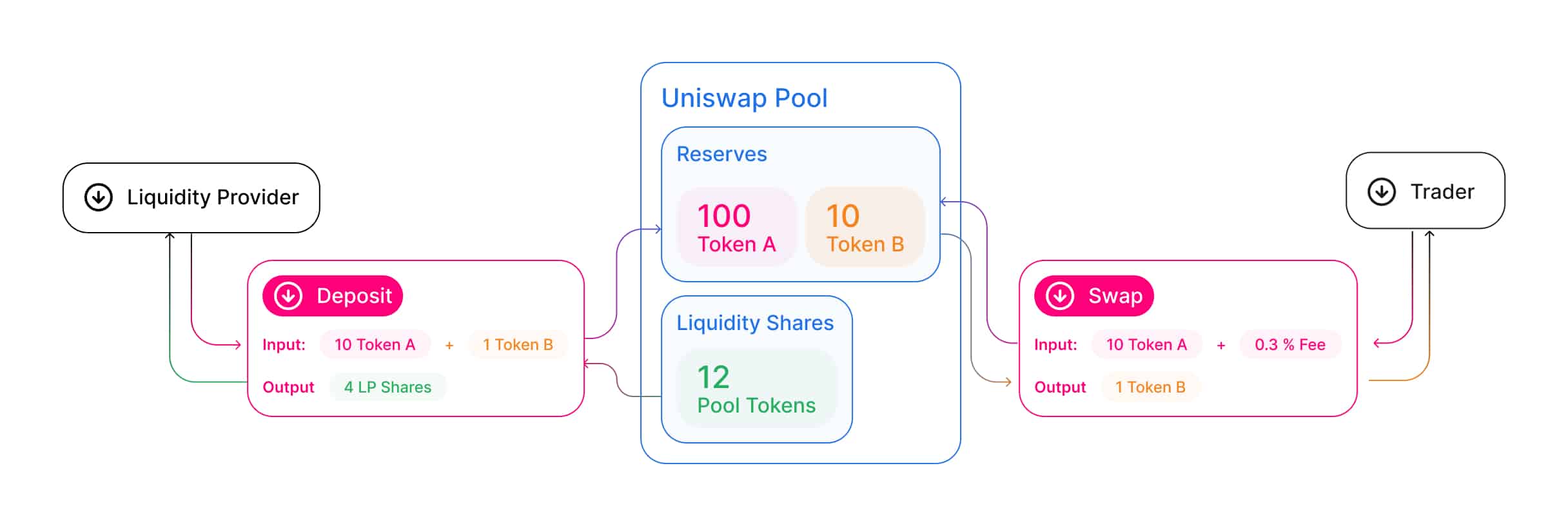
- Liquidity providers: LPs deposit tokens into a pool, and traders swap assets within that pool. When people use a liquidity pool, liquidity providers get incentives from fees. There is a 0.3% fee for swapping tokens, with the fee divided by liquidity providers in proportion to their contribution to liquidity reserves.
With Uniswap, users can exchange ERC-20 tokens by pooling the exchanged coins into smart contracts. Then, most users use the liquidity pools for trading. Anyone can add tokens to a fee-generating pool, with Uniswap letting users list or swap tokens. Every pool is a decentralized smart contract with no trading facilitator.
Uniswap uses two types of smart contracts, “Factory” and “Exchange” contracts, which are computer programs designed to do particular tasks when specific conditions are met. Factory contracts introduce new coins to the network, while Exchange contracts facilitate token swaps within each pool based on automated rules.
Uniswap smart contracts enable seamless token trading and liquidity management. Each smart contract oversees a liquidity pool comprising two ERC token reserves.
What Cryptocurrencies Can You Stake on Uniswap?
There are 100 liquidity pools on Uniswap V3. We’ll now list the top 20 regarding TVL (Total Value Locked).
Uniswap Staking Rates
The current top five APRs for liquidity pools on Uniswap V3 include:
How do Uniswap’s Staking Rewards Work?
Different staking pools provide different amounts of rewards, but it’s best for beginners to use the Uniswap site.
Liquidity providers earn a portion of the transaction fees the pool collects. The portion of fees they receive is based on the number of tokens they have contributed to the pool in relation to the total pool’s size.
How Competitive is Uniswap Staking APY?
Here, we’ve decided to compare Uniswap to PancakeSwap in terms of staking rewards. What’s first worth mentioning is that Uniswap offers greater liquidity, especially for major ERC-20 tokens.
When it comes to earning opportunities, PancakeSwap offers several options, such as staking CAKE, yield farming, and even lottery participation. On the other hand, Uniswap usually provides lower returns because of factors like impermanent loss and high gas fees when claiming rewards.
| Staking Asset | Uniswap | PancakeSwap |
| CAKE/USDT | 35.213% | 47.48% |
| DAI/USDC | 0.274% | 18.79% |
Is Staking on Uniswap Safe?
Buying Uniswap or staking, or more accurately, offering liquidity on the platform, is generally safe. Funds aren’t transferred to a third party or subject to counterparty risk because both parties are trading directly from their own wallets.
Uniswap is a well-audited and widely trusted DeFi platform where users don’t need to be concerned about smart contract security. Still, there are some risks associated with staking on this platform.
- Smart Contract Risks – There’s a risk of smart contract vulnerabilities or bugs. They can affect liquidity pools and user funds.
- Impermanent Loss – If a token price increases or drops after depositing in a liquidity pool, it is known as impermanent loss (IL). The more volatile the asset you provide liquidity for, the more exposed you will be to impermanent loss risk.
- Hacking and Phishing Risks – Every cryptocurrency exchange is a target for phishing attacks and hackers attempting to compromise the platform’s security. Unfortunately, after an exchange hack, stolen funds may not be recovered.
- Regulatory Risks – The global oversight of DeFi projects, including Uniswap, is increasing. Changes in regulation or government policies could impact Uniswap’s operation or restrict access to users in certain regions.
How to Stake on Uniswap?
This Uniswap staking article cannot be complete without discussing the required steps for providing liquidity on Uniswap:
-
Open the App and Connect Wallet
Open the Uniswap app, connect your wallet, and click on “Pool.”
-
Create a New Position
Click “New” and choose the first token from the drop-down menu.
-
Select the First Token
When selecting the first token, consider trading volume, Total Value Locked (TVL), and token pricing. You can find this information for existing pools on the Uniswap Explore page.
-
Select the Second Token
Pick the second token from the drop-down, then click “More.”
-
Select Fee Tier
Choose a fee tier for your liquidity and click “Continue.” Options on Uniswap v3 include 0.01%, 0.05%, 0.3%, and 1%. Existing pools at the chosen tier will include your liquidity; otherwise, a new pool will be created.
-
Choose a Price Range
Select a price range option:- Full range to add liquidity across all prices
- Custom range to set a specific maximum and minimum price.
If prices move outside the set range, your position becomes single-sided and stops earning fees. Click “Continue.”
-
Enter Token Amounts
Input the number of tokens you want to add or select “Max” to use all available tokens.
-
Review Details
Click “Review” to see your liquidity details.
-
Create Liquidity Position
Click “Create,” then approve token access in your wallet and confirm the transaction. Both actions will require network fees.
-
Receive Confirmation
After liquidity is added, you will receive a confirmation notification.
Uniswap Staking Pros & Cons
While staking on Uniswap provides several benefits, such as liquidity providers earning from transaction fees, choosing between several fee tiers and price ranges, and the no counterparty risk due to the platform’s decentralization, it also imposes some risks. They include the lower rewards compared to PancakeSwap and the impermanent loss risk.
Pros
-
Liquidity providers earn a share of the 0.3% fee from token swaps, proportional to their liquidity contribution
-
No counterparty risk, as Uniswap’s decentralized nature enables direct wallet-to-wallet trading
-
Customizable liquidity options with fee tiers and price ranges to optimize strategy based on risk and reward potential
Cons
-
Impermanent loss risk if token prices change significantly, potentially reducing asset value on withdrawal
-
Lower rewards than PancakeSwap due to higher gas fees and impermanent loss risks
Uniswap’s liquidity staking can be rewarding, but it comes with risks like impermanent loss. If you want safer options or higher yields, explore our best crypto staking coins list and compare top providers in our best crypto staking platforms guide.
Smart Move
Best Platforms to Stake Uniswap
Unlike some DeFi protocols, Uniswap does not let users stake the UNI token directly for yield. Instead, earnings on the platform come through liquidity provision, external incentive programs, or automated vaults. If you only want to hold UNI without becoming a liquidity provider, the only real option today is lending it on external money markets. Here’s how each method works.
Stake Your UNI V3 LP NFTs in Incentive Programs
When you deposit tokens into Uniswap v3 pools, you receive a Position NFT that represents your concentrated liquidity. Through the Uniswap V3 Staker, an official staking contract, you can stake this NFT into active incentives (e.g., liquidity mining programs). These incentives distribute rewards in other tokens (like ARB, OP, etc.) based on the time your liquidity remained “in-range” during the program period
Unichain Rollup Launches Native UNI Staking
A new paradigm came with Unichain, Uniswap Labs’ native Layer-2 rollup. As of early 2025, it’s live with a revenue-sharing model that allows UNI holders to stake directly in support of network validators and earn a share of the rollup’s net revenue. According to reports, 65% of net chain revenue is allocated to validators and stakers, offering a clear path for UNI holders to earn yield through network participation
This model is distinct from Uniswap v3’s liquidity model; here, you’re staking UNI in a classical sense to secure the network and earn yields tied to its performance.
Lending UNI on Money Markets
If you prefer not to provide liquidity, you can earn yield on UNI itself through lending markets like Aave or Compound. Here, UNI is deposited into a pool and borrowers pay interest, which is passed back to suppliers. Rates are usually lower and fluctuate with demand, but lending avoids exposure to impermanent loss or the need to manage liquidity ranges. It is important to note, however, that this is not a Uniswap feature—yields come from the lending protocol itself.
External Incentives through Merkl
In addition to standard trading fees, Uniswap liquidity providers can sometimes earn extra rewards through campaigns. These programs are powered by Merkl, a system designed to distribute incentives across Uniswap’s concentrated liquidity pools. Protocols or ecosystems launch campaigns to attract liquidity, rewarding participants in tokens such as ARB or UNI on top of swap fees. For example, Arbitrum’s long-term incentive program has previously funded Uniswap pools in this way. These rewards change over time, so it’s best to check Merkl’s live campaigns to see what is currently available.
Best Wallet: An Easier Alternative to Uniswap Liquidity Provision
While Uniswap offers some of the highest APRs through liquidity provision, it isn’t always the most beginner-friendly approach. Providing liquidity means dealing with impermanent loss, gas fees, and fluctuating pool incentives, which can erode profits quickly.
For those who want to earn staking rewards without the complexity of LPing, Best Wallet stands out as a powerful alternative. It’s a non-custodial wallet that is mobile-first, which automatically integrates a staking aggregator to source the best APYs across 60+ blockchains. That means you can stake assets like ETH, SOL, MATIC, and stablecoins directly in-app, without worrying about price ranges, fee tiers, or impermanent loss.
Best Wallet also offers additional yield opportunities such as crypto presales access and launchpad staking, with APYs that can surpass traditional DeFi pools. For many users, this makes Best Wallet the #1 pick for straightforward, high-yield staking in 2026.
Find our in-depth Best Wallet Review 2026 for more information.
Conclusion: Is Uniswap Staking Worth It?
Even though Uniswap doesn’t offer traditional staking, it continues to be one of the most popular platforms in the crypto space in 2026. Users can earn yields by providing liquidity to pools. The platform allows users to exchange ERC-20 tokens, which pool the traded tokens into smart contracts. Most users then trade using the liquidity pools.
Liquidity providers earn a portion of the transaction fees the pool collects, with the portion being based on the number of tokens they have contributed to the pool in relation to the total pool’s size.
Our Uniswap staking review finds that staking ETH/ONDO on Uniswap V3 offers the highest APR of 80.803%. While offering liquidity on Uniswap is generally safe, some risks include regulatory risks, impermanent loss risks, hacking and phishing risks, and smart contract risks.
DISCOVER:
- Crypto Exchange Promos & Discounts
- Crypto Wallet Promos & Discounts
- Tangem Staking Review 2026: Pros & Cons
- Gemini Staking Review 2026: Pros & Cons
- Bitvavo Staking Review 2026: Features & Rewards
FAQs
How to yield farm on Uniswap?

The steps include identifying yield farming opportunities, providing liquidity to incentivized pools, staking your LP tokens, and harvesting and compounding rewards.
Is Uniswap staking safe?
Staking on Uniswap, or offering liquidity, is generally safe. Funds aren’t transferred to a third party or subject to counterparty risk because both parties are trading directly from their own wallets. Moreover, you don’t have to worry about smart contract security, as Uniswap is a well-audited and widely used DeFi platform.
Is Uniswap staking profitable?
Yes, it is. The current top five APRs for liquidity pools on Uniswap V3 include:
ETH/ONDO: 80.803%
ENA/ETH: 64.208%
ETH/SOL: 38.707%
ETH/ENS: 38.146%
ETH/USDT: 35.772%
References
- Uniswap Labs. “Uniswap v3 Core.” Whitepaper. https://app.uniswap.org/whitepaper-v3.pdf
- Uniswap Labs. “Fees.” Uniswap Docs. https://docs.uniswap.org/concepts/protocol/fees
- Uniswap Labs. “Concentrated Liquidity.” Uniswap Docs. https://docs.uniswap.org/concepts/protocol/concentrated-liquidity
- Binance Academy. “Impermanent Loss Explained.” Binance Academy. https://academy.binance.com/en/articles/impermanent-loss-explained
- Uniswap. “What Is Impermanent Loss?” Uniswap Support. https://support.uniswap.org/hc/en-us/articles/20904453751693-What-is-Impermanent-Loss

Why you can trust 99Bitcoins
Established in 2013, 99Bitcoin’s team members have been crypto experts since Bitcoin’s Early days.
Weekly Research
100k+Monthly readers
Expert contributors
2000+Crypto Projects Reviewed