






In This Article
When the Ethereum blockchain launched in 2015, it introduced the world to smart contracts, paving the way for expanded capabilities in blockchain technology. However, the then-new network lacked a token standard for Ethereum-based tokens. Tokens for one project weren’t necessarily compatible with other protocols, limiting trading, token transfers, and interoperability. ERC-20 tokens brought a set of common characteristics in 2017. What are ERC-20 tokens, and how do they work?
In this guide, we’ll explore ERC-20 tokens in detail to learn how the standard improved the Ethereum network, helping the Ethereum ecosystem to grow into the largest smart-contract platform in the world. Let’s start with an overview of the ERC-20 token standard.
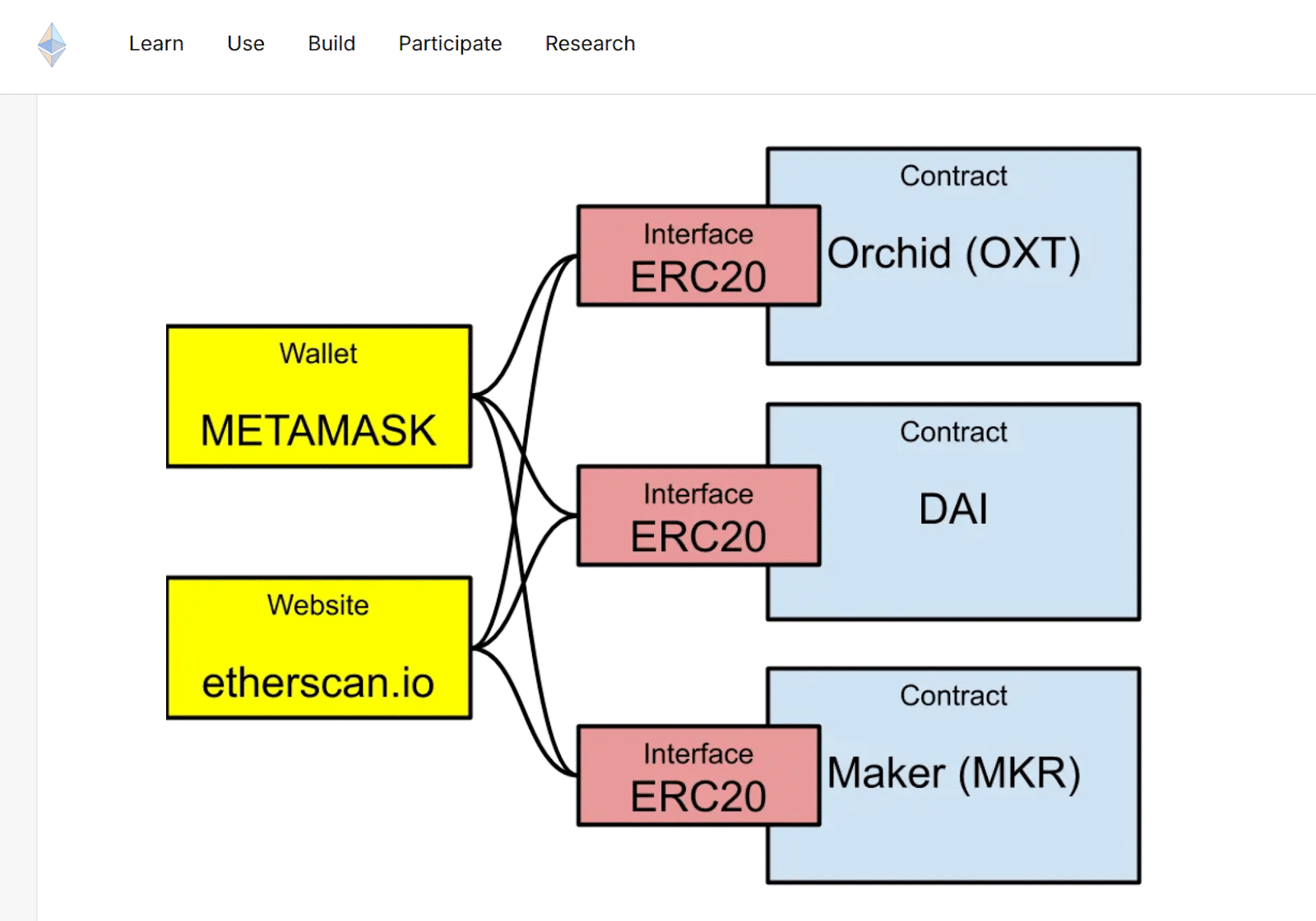
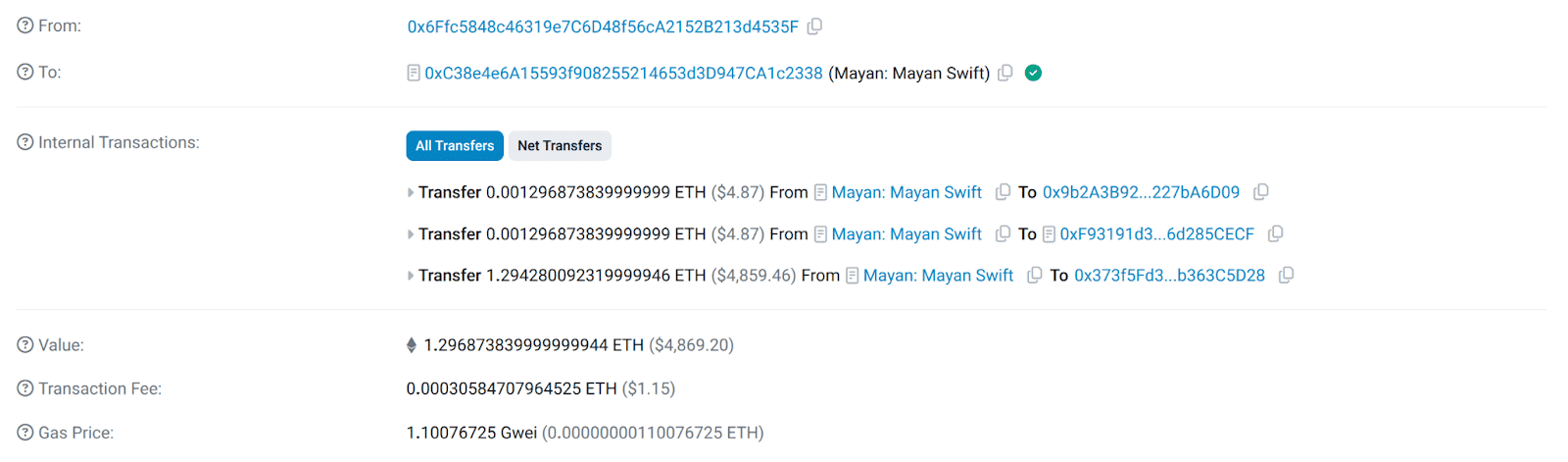
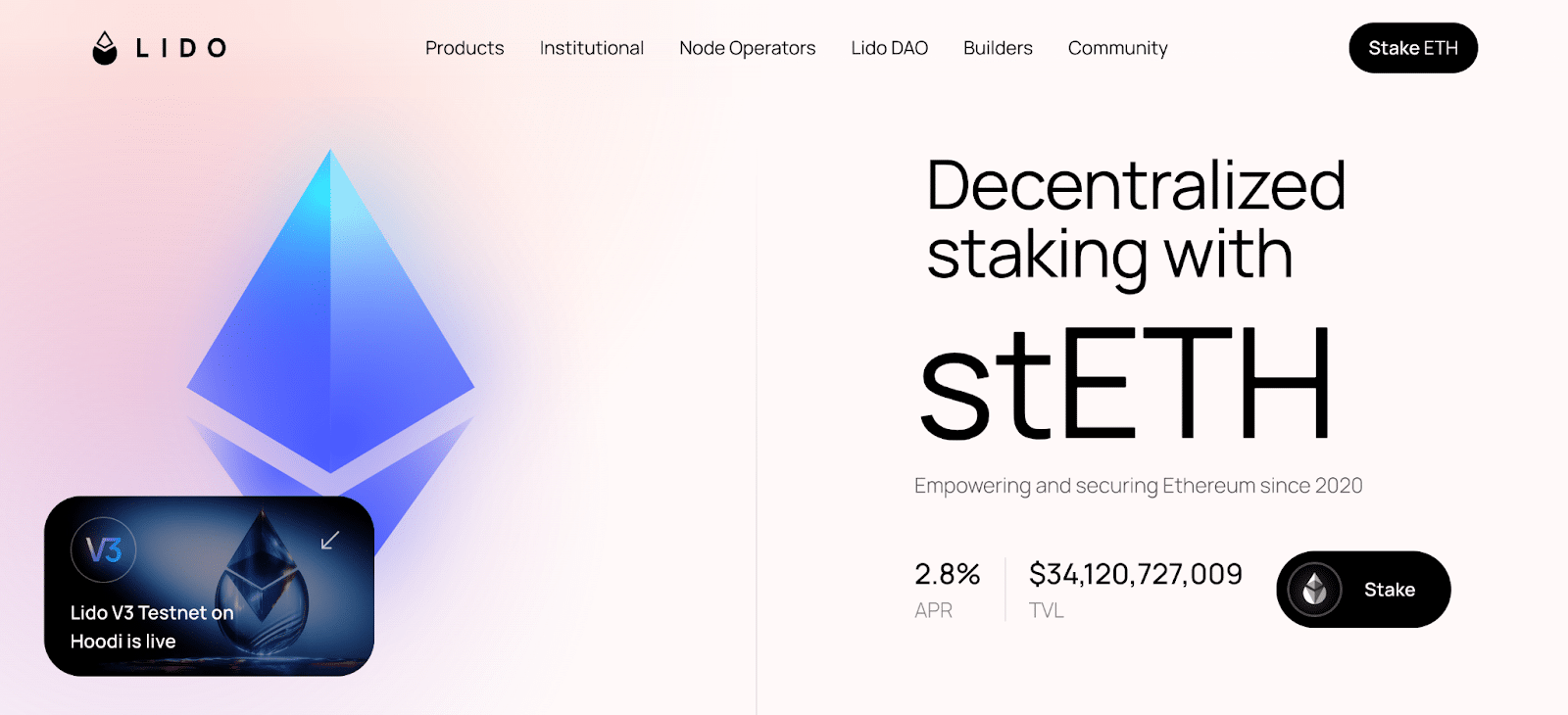
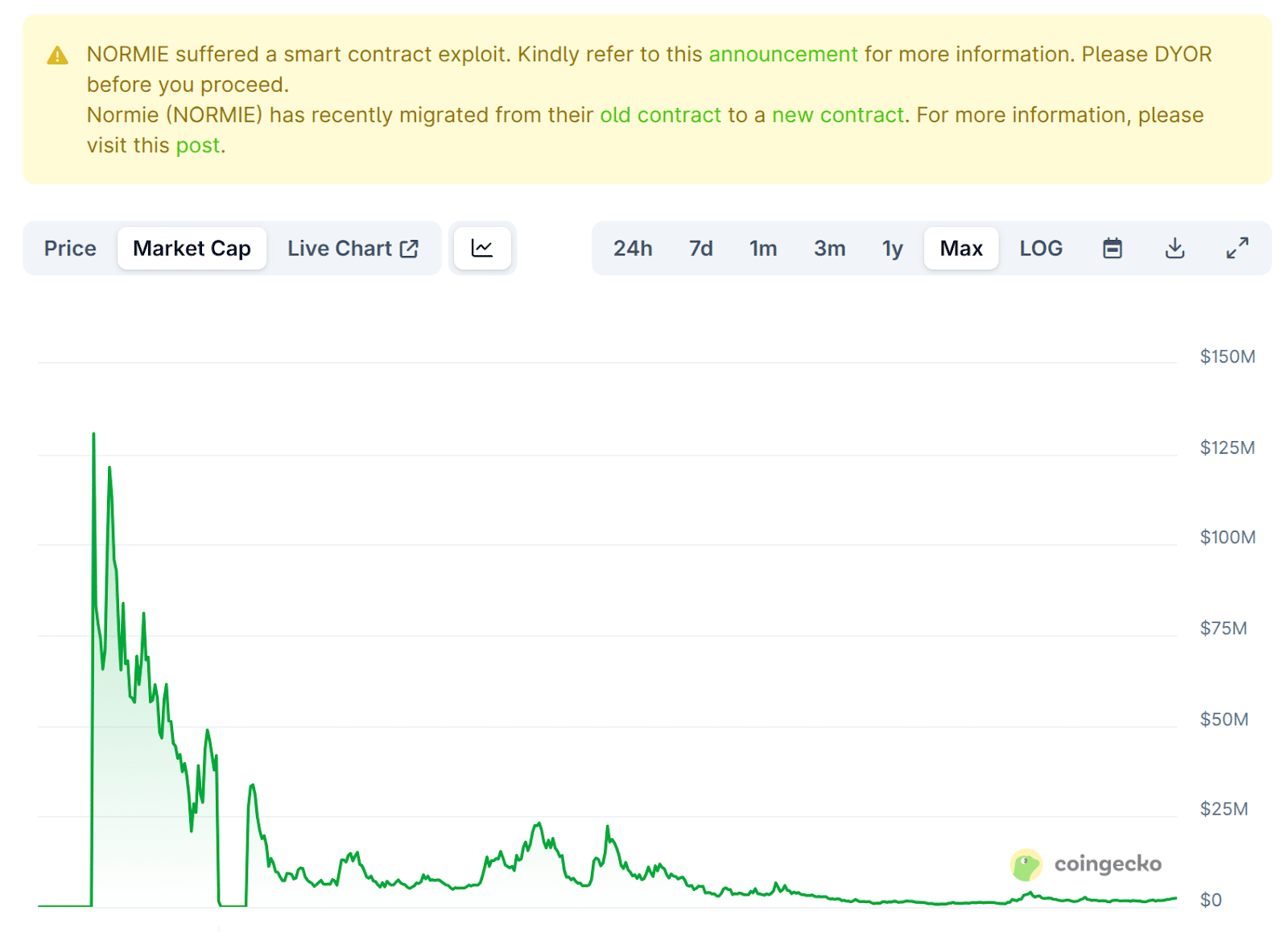
First things first—what is ERC? ERC stands for Ethereum Request for Comment. An ERC is a specific type of Ethereum Improvement Proposal (EIP) that focuses on smart contracts and similar functionality. The ERC-20 standard, which was the 20th such proposal in this category of improvement proposals, creates a uniform structure for fungible tokens. In the next section, we’ll discuss why this standard was essential. Still, the ERC-20 token standard helped the Ethereum ecosystem grow and is now in use on several notable sidechains and Layer-2 (L2) blockchains. These include Ethereum L2 chains, such as Arbitrum, and even Bitcoin sidechains, like Rootstock. Next, let’s discuss how ERC-20 tokens came to prominence on the Ethereum network. Although Ethereum launched on July 30th, 2015, the network lacked a token standard at the time. Ethereum-supported tokens, but each token became an island unto itself due to the lack of a standard. For example, the Augur (REP) token predated the ERC-20 standard. However, because each type of token was “custom-coded,” trading proved challenging. The process required either interacting with the token’s smart contract with technical commands or trading on a centralized exchange. The REP token has since migrated to the ERC-20 standard, making trading and other uses significantly easier. Ethereum developer Fabian Vogelsteller proposed the ERC-20 in 2015, followed by a lengthy discussion and refinement period. In 2017, the ERC-20 token standard was approved. Most early tokens migrated to the new standard, which later enabled trading on decentralized exchanges like Uniswap (launched in 2018). Before ERC20, even seemingly simple actions like storing tokens were challenging. Ethereum wallets had to support the specific smart contract for each token. ERC-20 solved this problem. Wallet apps could be built for ERC20, later adding support for some other key token standards that we’ll discuss later, such as ERC-721. What is ERC20 token? Several key characteristics make a token ERC-20 compliant, including six mandatory functions and two mandatory events. ERC-20 tokens also support three optional functions. These functions and events create a set of rules. These rules enable smart contracts to interact with ERC-20 tokens predictably. Let’s look at mandatory functions first. These functions determine how the token’s supply and balances are managed, forming the core logic. Mandatory events aren’t functions. Instead, they provide clarity and transparency, tracking the results produced by functions. The ERC-20 token standard creates a blueprint for the token and also provides three optional functions. These aid human readability and enhance accessibility. The ERC-20 token standard enables the creation of tokens that are compatible with a wide range of decentralized applications. The standard also galvanizes the development community around a specific set of defined functions that ensure interoperability. Ethereum wallet projects don’t have to build around the token contract for specific tokens. Instead, they can build support for all ERC-20 tokens, using optional functions such as name and symbol to differentiate between tokens for end-users. Similarly, dApps can support numerous ERC-20 tokens rather than being built around a specific token contract ERC-20 also enabled innovative dApps, such as decentralized exchanges (DEXs) and lending markets. Uniswap, the leading decentralized exchange, launched in 2018. Aave, the leading decentralized lending platform, launched in 2017. Neither of these popular applications nor the dozens of forked projects they inspired would have been viable without the ERC-20 standard. Reduced development time due to the standard equals cost savings, but can also reduce risk. The blueprint for ERC-20 tokens accelerates the development of token contracts as well as applications that utilize ERC-20 tokens. Broad wallet support helps ensure a better user experience, and users can easily swap tokens using decentralized exchanges or stake (or spend) tokens in dApps. ERC-20 acts as a super highway connecting users and protocols. The ERC-20 code has also been extensively reviewed, minimizing security risks for tokens without special functions. Tooling for the ERC-20 token standard is among the most extensive in the blockchain world. Tools like Hardhat and Truffle simplify deployment, eliminating the need for error-prone hand coding. Today, ERC-20 tokens play several roles in the Ethereum ecosystem, ranging from Initial Coin Offerings (ICOs) to governance tokens, to utility tokens, and even meme coins. Similar to cryptocurrency wallets, Ethereum smart contracts can hold ERC-20 tokens. This allows automation, programmable logic, and trustless transfers. For example, Uniswap uses an automated market maker to facilitate token exchanges. The price of each token varies depending on the remaining supply of each token in a pool, allowing users to swap token A for token B. Arbitrageurs keep pool prices in sync with the price outside of the pool. Standardization enables dApps like Uniswap by allowing them to source liquidity from multiple sources or make multiple hops to complete a transaction. Lending platforms like Aave allow users to borrow against collateral and create yield opportunities for lenders on the platform. Lenders deposit supported ERC-20 tokens and receive a newly minted ERC-20 token that represents their lending position on the platform. Protocols like Uniswap and Aave allow users to participate in decentralized, trustless transactions without using a centralized intermediary. What are ERC20 tokens used for? ERC-20 tokens represent some of today’s largest cryptocurrencies by market capitalization. While Ether (ETH) itself is not an ERC-20 token, Wrapped Ether is, making it compatible with smart contracts. Let’s explore some of the leading ERC-20 use cases. Stablecoins track the value of real-world currencies, such as the US dollar. Tether (USDT), which tracks the value of the dollar, initially launched as a Bitcoin asset using the Omni Layer Protocol. By 2017, Tether launched on Ethereum as an ERC-20 token. Across multiple blockchains, USDT now boasts a market capitalization of over $160 billion. Other popular ERC-20 stablecoins include USDC (centralized and backed by cash and treasuries) and DAI (decentralized and backed by cryptocurrencies). Although these digital assets use different strategies to maintain a $1 peg, both use the ERC-20 token standard to ensure interoperability in dApps. The recently passed Genius Act establishes a framework for regulated stablecoins, which is expected to expand the market for stablecoins significantly. ERC-20 tokens also play a prominent role in decentralized finance (DeFi) applications. Earlier, we mentioned Uniswap and Aave, both of which owe their success to the ERC-20 token standard. We also discussed DAI, which provides a crossover between DeFi and stablecoins. Users can deposit ERC-20 tokens, such as WETH, WBTC, and even USDC, as collateral to mint DAI in “Maker Vaults.” This over-collateralized stablecoin is pegged to the value of the US dollar. The MakerDAO project, now rebranded to the Sky Protocol, utilizes the Maker (MKR) ERC-20 token as its governance token, allowing token holders to vote on changes to the protocol and collateral assets. The ERC-20 standard also powers “liquid staking.” Protocols like Lido allow users to deposit ETH for staking in exchange for the stETH token, which represents the value of the staked ETH plus any accrued staking rewards. Tokens like stETH are commonly used as collateral for decentralized borrowing because their earnings can gradually reduce the debt balance over time, helping to mitigate liquidation risk. Decentralized Autonomous Organizations (DAOs) refer to community-governed projects, such as MakerDAO, Aave, and Compound, another lending dApp. Holders of governance tokens vote on proposals for the protocol, giving protocol users a voice in shaping how the dApp operates and its future direction. These proposals often follow a similar written structure to EIPs, although Ethereum upgrades and governance utilize a “rough consensus” rather than a strict mathematical majority rule. Although the ERC-20 token standard helps ensure interoperability, these tokens aren’t without risks. In fairness, some of the primary risks associated with tokens are better attributed to the blockchain itself or to smart contracts. Let’s explore some of these in more detail. Scalability is better described as a blockchain issue, more so than a token standard issue. However, the proliferation of ERC-20 tokens can contribute to network congestion. As network demand rises, gas prices on Ethereum and Layer-2 chains also increase. Smart contracts are computer programs that run on the blockchain. Token contracts are a special type of smart contract that control how the token behaves and interacts with other contracts. Like all computer programs, smart contracts can be susceptible to bugs. More accurately, they may be exploitable, meaning the contract can be manipulated to perform in unexpected ways. For example, the $NORMIE memecoin on the Base network suffered an exploit due to non-standard features built into the project. In short, someone discovered a way to mint additional tokens and sell them into the market. Following the exploit, the token’s market capitalization plummeted from nearly $50 million to less than $1,000. The strength of ERC-20 tokens lies in their interoperability and fungibility (one token is the same as the next). However, this makes them less suitable for assets that have unique characteristics. In the next section, we’ll discuss some Ethereum token standards that are better suited to unique assets. Uniform assets play a crucial role in the Ethereum ecosystem, but the need for unique assets led to additional token standards for non-fungible tokens (NFTs) and semi-fungible tokens. Let’s examine these briefly. Several chains now support the Ethereum Virtual Machine (EVM) as an execution layer, including the BNB Smart Chain (BSC). However, some have adapted the consensus method to their own needs as well as the token standards. BEP-20 replaces ERC-20 on BSC, offering enhanced cross-chain compatibility with the Binance Bridge and other blockchain utilities. The ERC-20 token standard made storage for Ethereum tokens much easier. Generally, all popular Ethereum wallets support all ERC-20 tokens. However, in some cases, you may need to add the token’s contract address manually or toggle a specific token’s visibility in your wallet app. Broadly speaking, there are two ways to store (and transfer) ERC-20 tokens: software wallets and hardware wallets. The real story entering 2025 and beyond lies in what’s coming next for Ethereum; namely, Fusaka, Glamsterdam, and the evolving roadmap toward mass scaling and usability. Fusaka is expected to deliver significant improvements to Layer 1 and L2 by the end of 2025. Although the specifics are still being worked out, this hard fork establishes the framework for a faster upgrade schedule that aims to deliver at least two significant improvements annually. In daily wallet interactions, it seeks to improve user experience, lower gas prices, and increase scalability. On the horizon, Glamsterdam (anticipated in 2026) offers the intriguing EIP-7919 (Pureth). Although the proposal’s exact parameters are still being worked out, it is generally considered to be a significant step in the process of scaling Ethereum for mainstream corporate use. As can now be seen, Ethereum is shifting to a more purposeful, quicker-paced evolution from a gradual, incremental upgrade paradigm. Ethereum revolutionized how we interact with blockchains with its Ethereum Virtual Machine. In turn, the ERC-20 token standard helped Ethereum reach market-leading adoption, which now includes institutions and even corporate treasuries. Ethereum’s success hinged on token standards like ERC-20, ERC-721 (NFTs), and served as inspiration for similar smart-contract-enabled networks. The ERC-20 standard ensures broad compatibility with decentralized applications, easy storage, and intuitive token transfers. These now indispensable characteristics enable Ethereum to maintain its position as the second-largest cryptocurrency by market capitalization and the largest by total value locked. See also: You can code an ERC-20 token contract using tools like Hardhat. However, several no-code applications, such as SmartContracts Tools, allow you to create a token in minutes without coding. Yes. Modern Ethereum wallets support all ERC-20 tokens. However, you may need to manually add the token’s contract address to the wallet for less common tokens. Modern Ethereum wallets provide multiple UI options for receiving tokens, although they all do the same thing. At a minimum, the wallet interface should display the wallet’s public wallet address, which is used for receiving tokens. Many wallet apps can also generate scannable QR codes, reducing the chance of sending/receiving errors. Established in 2013, 99Bitcoin’s team members have been crypto experts since Bitcoin’s Early days. Weekly Research Monthly readers Expert contributors Crypto Projects ReviewedERC-20 Tokens Explained
How ERC-20 Became the Standard for Ethereum Tokens
What Makes a Token ERC-20 Compliant?
Key Features and Benefits of ERC-20 Tokens
Interoperability Across Ethereum-Based Platforms
Ease of Creation and Deployment
Flexibility for Use Cases
ERC-20 Tokens and Smart Contracts
Popular Real-World ERC-20 Token Use Cases
Stablecoins
DeFi Applications
Governance and DAOs
Risks and Limitations of ERC-20 Tokens
Scalability and Gas Fees
Smart Contract Vulnerabilities
Fungibility Limitations
ERC-20 vs Other Ethereum Token Standards
ERC-20 vs. BEP-20 Token Standard
How to Store and Transfer ERC-20 Tokens
A Glimpse Into What’s Next for Ethereum: Fusaka, Glamsterdam, and Beyond
Fusaka: Autumn Upgrade with Impact
EIP-7919 & Glamsterdam: 2026 Prospects
Conclusion
FAQs
How do I create my own ERC20 token?

Can any ERC20 tokens be sent to an Ethereum address?
How to receive ERC20 tokens?
References:

Why you can trust 99Bitcoins