






In This Article
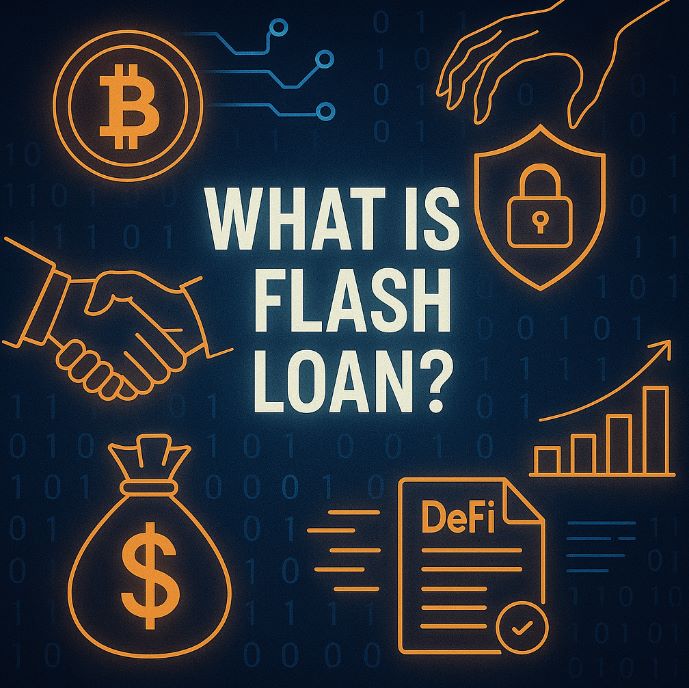
A flash loan in crypto is an uncollateralized DeFi loan that allows users to borrow cryptocurrency and repay it within a single blockchain transaction. There’s no credit check, no upfront collateral, and no approval process. In the polite corners of finance, the phrase sounds like a children’s book, Flashy the Friendly Loan, some sanitized fable about responsible borrowing and prudent repayment. In the crypto trenches, though, a flash loan is closer to a surgical strike: Flash loan explained for beginners means teaching someone how a single, perfectly timed blockchain transaction can yank millions of dollars through a protocol before the rest of the market realizes what happened. A crypto flash loan is the purest expression of decentralized finance’s arrogance, instant access to borrowed funds, no credit check, no upfront collateral, no permission, no apologies.
It’s brilliant on paper and brutal in reality. Some use flash loans to arbitrage price gaps, while others use them to test the fragility of a protocol. That’s why flash loans sit at the center of DeFi’s mythology, half innovation, half loaded weapon, always honest about who understands the system and who doesn’t. Read ahead to understand all about what is a flash loan in crypto.
Key Takeaways
- Flash loans are instant, uncollateralized loans executed within a single blockchain transaction using smart contracts.
- Traders use flash loans for arbitrage, collateral swaps, liquidations, and restructuring leveraged positions across DeFi markets.
- If the borrower fails to repay the borrowed amount plus a small fee in the same transaction block, the entire transaction simply reverts.
- Flash loans power innovation in DeFi, but they also enable flash loan attacks, oracle manipulation, and large-scale exploits.
- Only users with a deep understanding of how flash loans work should attempt them; they are powerful financial tools with significant risks.
Flash Loan in Crypto: Summary
This article explains what a flash loan in crypto is, how these instant, uncollateralized DeFi loans work, and why they can move millions of dollars in a single blockchain transaction. You’ll learn how flash loans are used for arbitrage, liquidations, and collateral swaps, and why they’re also behind some of the biggest DeFi exploits. Read on to understand how flash loans work, where they’re used, and who should (and shouldn’t) touch them.
What Is a Flash Loan?
Flash loans were intended to be a democratized financial tool for anyone smart enough to utilize them. They let you borrow assets, reshuffle liquidity across different markets, extract profit from differing exchange rates, and then repay the loan, all within the same transaction block. If the entire transaction fails to return the borrowed amount, the smart contracts simply revert the universe back to zero. Unlike traditional loans, there’s no banker lecturing you about risk, no underwriting committee pretending they understand your business, and no collateral agent ready to torch your house when the borrower fails. In DeFi, failure just means the chain shrugs and deletes your sins.
But this is crypto, where elegant innovations often give rise to unintended monsters. The same mechanics that fuel flash loan arbitrage, collateral swaps, and leveraged positions also enable flash loan attacks, price oracle attacks, and the occasional protocol meltdown that vaporizes user deposits while the engineers reassure everyone that “the code behaved as intended.” If you build a playground where someone can take out a flash loan for millions of dollars in a few seconds, don’t be surprised when a malicious actor shows up with a PhD in blockchain technology and a grudge against your DeFi platform.

For a clearer look at how arbitrage works in practice with flash loans, check out our guide on understanding Bitcoin arbitrage.
Flash loans sit at the beating heart of the DeFi ecosystem, a symbol of everything intoxicating and infuriating about the cryptocurrency space. They make markets more efficient, more liquid, more composable. They also give the unhinged geniuses of crypto a loaded gun in the same transaction where they promise to pay back the lender. Sometimes they build, sometimes they burn, but they always reveal who actually understands this industry and who is just clicking buttons in apps they don’t deserve to use.
Flash loans aren’t good or bad. They’re honest. They expose brittle protocol design, lazy risk teams, fragile DeFi users, and DeFi protocols cosplaying as banks. They reward those with a deep understanding of how flash loans work, and they punish everyone else with ruthless indifference.
Common Uses of Flash Loans
If you strip away the drama, the memes, and the smoking craters left behind by the occasional flash loan attack, the day-to-day reality is simple: most people use flash loans to move money faster than the market can blink. In the DeFi market, speed is sovereignty. A flash loan just hands you more of it.
- Flash Loan Arbitrage: The Original Sin
Every degen’s first temptation is the same, exploit arbitrage opportunities. When two different exchanges quote different prices for the same asset, a trader can borrow more funds than they actually own, buy at a low price, sell at a high price, and repay the loan in the same blockchain transaction. No collateral, no guilt, just cold math taking advantage of differing exchange rates. It’s clean, elegant, and the closest thing to legal financial pickpocketing you’ll ever see.
- Collateral Swaps Without the Panic Sweat
In traditional finance, swapping collateral usually requires lawyers, signatures, and the emotional stamina of a Zen monk. In DeFi, you use a flash loan to yank out your borrower’s collateral, replace it with something else, and settle everything within the same transaction. You can unwind bad positions, re-risk good ones, or sidestep liquidations, all without posting upfront collateral. Traders call it efficiency. Risk teams call it heartburn.
- Refinancing Leveraged Positions
Flash loans let traders restructure leveraged positions on-chain with surgical precision. Need to escape a toxic interest rate? Want to roll your position into a more favorable collateralization ratio requirement? Take out a flash loan, shuffle the debt stack, and settle it all before anyone realizes you just rearranged half your balance sheet.
- Liquidations and Unwinding Debt
Everyone loves a good liquidation, except the poor bastard being liquidated. Third-party liquidators use flash loans to scoop up under-collateralized positions the moment they dip below a certain collateralization ratio requirement. With a flash loan, they can borrow assets, seize the collateral, sell it, repay the lender, and pocket the difference. It’s ruthless, automated mercy killing for the DeFi ecosystem.
- Deep-Pockets Governance Attacks (the Spicier Side)
Governance tokens with low liquidity and bad design become playgrounds for flash-loan-powered influence. A user borrows governance tokens in a flash loan, votes on a proposal in a single transaction block, and returns everything before the protocol realizes it just handed voting power to a ghost. It’s not noble, but neither is governance in traditional finance. At least on-chain, you can see who robbed you.
- Oracle Nudging, If You’re Feeling Naughty
Some traders use flash loans to manipulate thin-liquidity pools that certain protocols rely on for pricing. Move the price, trigger a cascade, extract value, and exit. This is where price oracle attacks begin, the dark arts of DeFi, performed by those who understand that most protocols hold themselves together with optimism and rubber bands.
How Do Flash Loans Work?
To understand how flash loans work, forget everything traditional finance taught you about credit, collateral, or the slow bureaucratic dance between lenders and borrowers. A flash loan is a single transaction, a self-contained universe of intent and execution. Either the math checks out, or the entire transaction disappears like it never existed. No harm, no foul, no lender chasing you down because you missed an email.
This magic sits in one thing: smart contracts. They enforce the rules with the cold indifference of a machine that doesn’t care about your excuses. They allow you to borrow assets, use them for certain functions, and repay the loan instantly, all within the same transaction block. If the borrower fails to return the borrowed amount plus a small fee, the chain simply hits “undo.” That’s why a flash loan is an uncollateralized loan that isn’t really a loan at all. It’s more like being briefly entrusted with a loaded weapon. If you mishandle it, the gun resets, and the blockchain pretends you never touched it.
Here’s the general flash loan process, stripped down:
-
User borrows funds
A DeFi protocol that supports flash loans hands the borrower a stack of assets with zero upfront collateral. The protocol isn’t being generous; it knows the rulebook guarantees safety.
-
Borrower executes their plan in a short period
Inside this same transaction, the user can perform multiple steps:- flash loan arbitrage
- collateral swaps
- leveraged rebalancing
- liquidations
- anything that can fit in one blockchain transaction
This is where creativity or catastrophe happens.
-
Borrower pays the lender back
Before the transaction closes, the borrower repays the lender the borrowed amount, plus any applicable fees. If even one wei is missing or misrouted, the whole thing collapses.
-
If anything goes wrong, simply revert
That’s the beauty (and danger) of the system. If prices shift, if your arbitrage leg fails, if your routing bot malfunctions, or if a malicious actor within your protocol emerges, the entire transaction reverts automatically. No partial fills. No IOUs. No mercy.
The reason this all works is that everything happens within the same transaction block. The blockchain doesn’t advance until the contract verifies that all steps are executed cleanly. A flash loan never exposes the lender to risk because the blockchain guarantees repayment before state changes finalize.
It’s as if you walked into a bank, grabbed a suitcase of cash, ran through a casino hitting tables at light speed, returned the suitcase with an extra chip on top, and the bank smiled and thanked you for your business. But if you tripped once on the casino floor, or a dealer blinked the wrong way, the timeline rewound, and no one remembers you were ever there.
That’s how flash loans work: perfect logic, zero trust, and no room for hesitation.
Benefits & Risks of Crypto Flash Loans
Flash loans are the purest expression of what decentralized finance wants to be: permissionless, instantaneous, and ruthlessly efficient. They also reveal every crack, flaw, and delusion baked into the DeFi ecosystem. The same financial tool that gives a sharp trader god-mode access to liquidity can give a malicious actor the leverage they need to detonate a protocol. Beauty and violence, held together in a single transaction block.
Let’s start with the part the evangelists love to shout about.
- Instant access to more funds than you actually own
Flash loans let DeFi users borrow far more capital than their balance sheet should logically allow, without collateral or credit checks. - Efficient arbitrage across different markets
Because borrowing and repayment happen in the same transaction, traders can exploit price differences across exchanges with machine precision. - No upfront collateral and no liquidation threat
If repayment fails, the blockchain simply reverts the transaction, eliminating margin calls and liquidation spirals. - Flexibility for collateral swaps and refinancing
Users can reshuffle collateral, refinance debt, and rebuild leveraged positions inside a single atomic maneuver. - Improving liquidity in the DeFi market
Flash loans help stabilize pricing by enabling arbitrage, liquidations, and liquidity backstopping.
- Flash loan attacks are always one clever line of code away
Attackers exploit weak smart contracts, thin liquidity pools, and flawed price oracles. - Millions of dollars can evaporate in seconds
One miscalculation can allow attackers to extract massive value before a single block finalizes. - High complexity requires deep technical understanding
Flash loans demand mastery of smart contracts, execution order, and DeFi mechanics. - Hidden risks surface only at scale
Missing slippage checks, flawed accounting, and broken assumptions are exposed instantly. - A controversial reputation limits adoption
Many protocols avoid flash loans entirely, treating them as liabilities rather than tools.
Top 5 Platforms Offering Flash Loans
Not every protocol in the crypto space has the guts (or the engineering talent) to offer flash loans. Most DeFi teams are aware that their contracts are one clever exploit away from public humiliation. The platforms that do offer flash loans either operate with industrial-grade confidence or blissful ignorance about the risks. Sometimes both.
Here are the five ecosystems where you’ll find the most battle-tested flash loan platforms, along with the sharp edges they conveniently downplay.
Aave – The Elder God of Flash Loans
Aave didn’t invent flash loans, but it perfected them. It remains the largest, most liquid, and most widely trusted source of instant crypto loans. Developers gravitate here because the infrastructure is mature, the tooling is clean, and the liquidity is deep enough to move millions of dollars in a single breath.
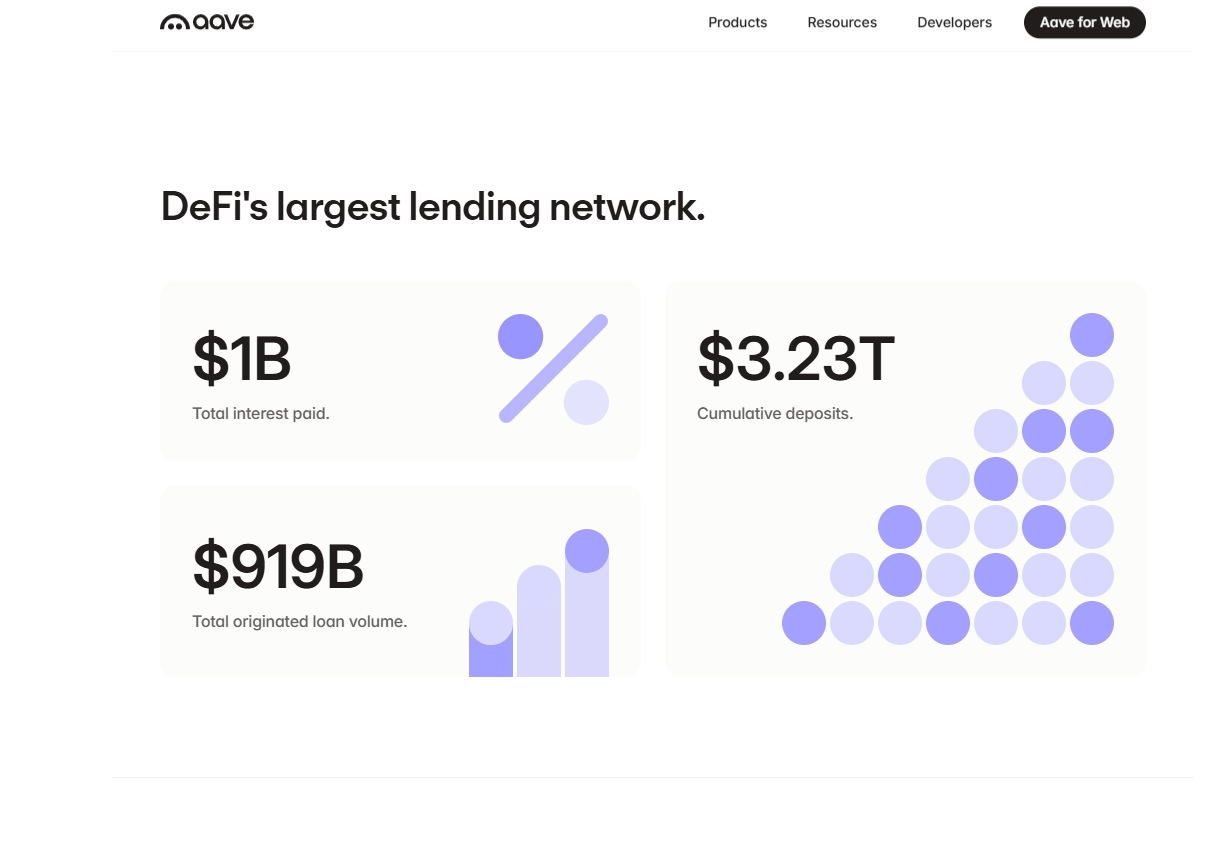
Aave enables borrowers to take out a flash loan, route it through multiple markets, execute arbitrage, unwind positions, and repay the loan before the block finalization. If you want the default Flash loan meaning in DeFi, you start with Aave.
It’s also the favorite hunting ground for anyone testing a flash loan exploit.
The cost of power is always visible.
Balancer – The Weighted Playground for Arbitrage Artists
Balancer is a DEX masquerading as a laboratory for liquidity experiments. Its funky pool weights and customizable AMMs create natural mispricings, fertile ground for flash loan arbitrage and collateral swaps.

Flash loans on Balancer allow traders to reshuffle liquidity, rebalance pools, arbitrage price gaps, and test the structural integrity of complex AMM designs. When Balancer gets hit with an exploit, it’s rarely because someone brute-forced the system, it’s because someone used a flash loan to highlight a flaw Balancer wished no one had noticed.
The chain doesn’t lie, and neither do incentives.
dYdX – Flash Loans for the Serious Adults in the Room
dYdX caters to traders who aren’t clicking buttons blindly. Its architecture enables flash loans specifically for leveraged positions, liquidations, and more advanced DeFi protocols that require precise balance-sheet manipulation.
Because dYdX plays closer to the “professional trading” aesthetic, its flash loans serve more legitimate purposes: arbitrage, risk rebalancing, and third party liquidators cleaning up underwater positions. It’s fast, efficient, and brutally honest. If your strategy is sloppy, dYdX won’t save you.
If anything, it will expose you.
Uniswap (via external providers) – The Liquidity Ocean
Uniswap itself doesn’t issue flash loans directly, but it’s the liquidity sink where most flash loan strategies arrive to die, or thrive. Crypto flash loan providers regularly route their borrowed capital through Uniswap pools to exploit differing exchange rates or force temporary dislocations in thin liquidity positions.
Every major flash loan attack worth telling stories about has some connection to Uniswap. Sometimes as the target, sometimes as the weapon, sometimes as the innocent bystander whose pool pricing got bent until the oracle snapped.
Uniswap provides the battlefield. Flash loans provide the artillery.
MakerDAO (Indirect Flash-Liquidation Mechanics)
MakerDAO doesn’t offer first-class flash loans, but its liquidation framework is a playground for advanced flash-loan behavior. Liquidators frequently use flash loans to acquire DAI, repay vaults, seize collateral, and flip it, all without touching their own capital.
This transforms Maker’s liquidation engine into a venue where the most efficient and aggressive capital always prevails. Flash loans compress the liquidation process into a single transaction, removing friction and ensuring that every inefficiency gets exploited instantly.
DeFi pretends this is a feature, not a warning.
Who Should (and Shouldn’t) Use Flash Loans?
Flash loans are not built for the average retail tourist stumbling through crypto apps like they’re browsing a duty-free shop. They are powerful, volatile, and brutally indifferent to anyone who lacks precision. Whether they elevate you or destroy you depends entirely on whether you understand the machinery humming under the surface of a single transaction block.
Let’s be blunt.
Who Should Use Flash Loans
1. Traders who actually understand market structure
If you can map liquidity across different markets in your head, recognize when differing exchange rates open a window, and execute a multi-step route within the same transaction, flash loans are your playground. They give you instant access to more funds than your wallet balance deserves and let you turn efficiency into profit.
2. Developers who know how to build with smart contracts
Flash loans are a dream for builders who understand blockchain technology at the bytecode level. They enable sophisticated DeFi processes, refinancing, liquidations, collateral swaps, leveraged restructuring, or automated volatility harvesting. If you know how to wield them, you can build robust applications normal users never see coming.
3. Liquidators and arbitrageurs who live off inefficiency
Flash loans exist for the predators of DeFi’s food chain:
- third-party liquidators
- MEV searchers
- arbitrage bots
- oracle guardians
If you’re part of this tribe, flash loans aren’t optional, they’re competitive edge. They allow you to absorb debt, execute a liquidation, offload collateral, and repay everything in a few seconds.
4. Risk engineers who want to stress-test protocols
If you work in protocol security or economic modeling, flash loans are the battering ram you use to expose sloppy assumptions before a villain does. A responsible exploit is still an exploit, just one that saves users instead of bankrupting them.
Who Should Not Use Flash Loans
1. Anyone who learned the word “DeFi” last week
If you needed to Google “Flash loan guide,” you’re not ready. Flash loans demand a deep understanding of execution order, slippage, gas dynamics, and state changes. One incorrect assumption and the entire transaction collapses, if you’re lucky. If not, you’ll trigger a vulnerability you didn’t know existed and become the main character on crypto Twitter.
2. Retail users chasing quick profits
This is not a slot machine. Flash loans aren’t built for “try it and see.” They are engineered precision tools, like scalpels. Scalpel plus amateur equals bloodshed.
3. Protocol teams pretending their contracts are safe
If your development team “thinks” your math is correct, but has never tested it against adversarial flash-loan behavior, you have no right enabling Flash loan DeFi interactions. Turn it off. Don’t wait to become another “we were exploited, but the funds are SAFU” post-mortem.
4. Anyone who doesn’t understand revert logic
If the phrase “simply revert the transaction” doesn’t immediately conjure a mental model of state changes, atomicity, and the flow of borrowed assets, stop. Leave flash loans alone. This part of DeFi does not care about your good intentions.
5. Users who struggle with risk
Flash loans compress complexity into a tiny window. There is no time for doubt. If your palms sweat when approving a swap, you are not psychologically built for commanding millions in transient liquidity.
Are Flash Loans Safe?
Safety in DeFi is a marketing slogan, not a feature. Flash loans prove it every day. On paper, they’re one of the cleanest financial constructions ever built an uncollateralized loan executed inside a single transaction block, enforced entirely by smart contracts. You borrow assets, do whatever dark magic you had in mind, and if you don’t repay the loan plus the small fee before the entire transaction ends, the chain doesn’t scold you. It simply reverts the universe back to its pre-crime state. No harm. No foul. No banker breathing down your neck.
The flash loan itself is perfectly safe. Everything around it is not.
Flash loans are the stress test traditional finance wishes it had. They expose brittle collateral assumptions, lazy risk modules, and protocols whose idea of security is “eh, good enough.” That’s why every headline-grabbing flash loan attack isn’t the loan’s fault, it’s the protocol’s fault for building a fortified castle on a foundation made of wet cardboard.
Weak price oracles? Flash loans will twist them until math cries. Shallow liquidity? Flash loans will overwhelm it in milliseconds. Poorly modeled collateralization ratio requirements? Flash loans will bulldoze them. Dev teams relying on “users won’t do that”? Flash loans will do exactly that.
Millions of dollars can be marshaled for a few seconds to warp prices, trigger liquidations, perform collateral swaps, or unwind entire markets within the same transaction. That is why flash loans have a controversial reputation, not because the loans are unsafe, but because they allow attackers to automate chaos at the speed of computation.
So, are flash loans safe? For lenders: yes, the contract enforces repayment. For borrowers: mostly, unless you misunderstand the execution order and nuke yourself. For protocols that support flash loans: only if your engineers understand adversarial finance and don’t cut corners. For the DeFi ecosystem: they’re both disinfectant and flamethrower, revealing rot while occasionally burning the house down.
Flash loans aren’t dangerous. They’re honest. They clearly identify which protocols are worthy of existence and which ones should never have handled user funds in the first place.
Flash Loans vs Crypto Loans vs Traditional Bank Loans
This comparison shows how flash loans differ from traditional crypto loans and bank loans in terms of collateral, speed, risk, and real-world use cases, making it clear why flash loans are unique to DeFi.
| Feature | Flash Loans (DeFi) | Traditional Crypto Loans |
Traditional Bank Loans
|
| Collateral & Credit | No collateral, no credit checks | Collateral required, no credit checks |
Collateral and credit checks required
|
| Loan Duration | One blockchain transaction | Days to months | Months to years |
| Repayment & Failure | Instant repayment or transaction reverts | Scheduled repayments, liquidation possible |
Fixed schedule, legal recovery on default
|
| Access Speed | Instant | Moderate | Slow |
| Borrowing Limits | Limited by protocol liquidity | Limited by collateral value |
Limited by creditworthiness
|
| Lender Risk | Near zero | Moderate | High |
| Technical Complexity | Very high | Low to medium | Low |
| Primary Use Cases | Arbitrage, liquidations, collateral swaps | Leveraged trading, yield strategies |
Personal, business, mortgage loans
|
| Permission & Approval | Permissionless | Platform approval | Bank approval |
| Market Impact | Instant and large | Gradual |
Slow and systemic
|
Conclusion
Flash loans are the purest expression of what crypto was always meant to be: raw, unfiltered financial power wired directly into the hands of anyone bold enough to use it. No permissions. No collateral. No groveling before some TradFi gatekeeper who needs three committee meetings and a colonoscopy report before approving a loan. In DeFi, you either make the math work within the same transaction block, or the chain flushes your masterpiece down the toilet like it never existed.
That’s the beauty. That’s the brutality.
Flash loans don’t care about your intentions, your credentials, your “responsible innovation” press releases, or your Medium posts on “building safer DeFi.” They reward competence and punish delusion. They elevate those who understand smart contracts, liquidity flows, arbitrage opportunities, and execution order. And they expose every protocol team that thought “good enough” security would survive a world where anyone can summon millions of dollars in borrowed funds for a few seconds to test their assumptions.
Traditional finance dies by paperwork. Crypto dies by hubris. Flash loans are the guillotine.
They’ve enabled flash loan arbitrage, optimized liquidations, rescued bad positions, juiced market efficiency and yes, they’ve also detonated protocols built by developers who didn’t respect the physics of adversarial finance. That’s not a flaw. That’s the entire point. Innovation without consequence is a museum exhibit. DeFi is a war zone, and flash loans separate the real engineers from the PowerPoint engineers.
So what is a flash loan, really?
A mirror.
A weapon.
A stress test.
A warning.
A reminder that in crypto, we don’t rise to our aspirations, we sink to our architecture.
If your protocol withstands a flash loan, congrats, king, you’ve earned your place in this ecosystem. If it crumples, good. Better to fail now than pretend you were ever decentralized finance’s future.
Flash loans aren’t good or bad. They’re the truth delivered at block speed.
See Also:
- What is ATH (All-Time High) in Crypto?
- What Is The Bitcoin Mempool – A Beginner’s Explanation
- What is Grayscale Investments?
- FUD (Fear, Uncertainty & Doubt) Meaning in Crypto
- What is Index Fund in Crypto?
FAQs
What is a flash loan attack?

A flash loan attack is when a malicious actor uses borrowed funds inside a single transaction block to distort prices, exploit weak oracles, or break a protocol’s assumptions long enough to extract profit before the system realizes it’s been played. The flash loan isn’t the crime, the protocol’s sloppy design is.
How to get a flash loan?
You don’t “apply” for a flash loan like some TradFi peasant begging a banker. You call a flash loan function on a DeFi protocol that offers them, specify the borrowed amount, execute your strategy, and repay everything before the transaction ends. If your logic fails, the whole thing reverts and you walk away with nothing except a gas bill and bruised ego.
How to prevent a flash loan attack?
You can’t stop flash loans, you can only stop building protocols dumb enough to be broken by them. Use resilient price oracles, deep liquidity sources, time-weighted pricing, audited math, and collateral rules that can’t be gamed within the same transaction. If your design collapses under atomic liquidity, the problem isn’t the attacker. It’s your architecture.
Do I need collateral for a flash loan?
No. Flash loans are uncollateralized by design. The loan is secured by the transaction itself, repay instantly or the chain erases your entire plan. No collateral, no credit check, no human approval. Just code and consequences.
Are flash loans legal?
A flash loan is just a smart contract function. There’s nothing illegal about borrowing and repaying funds inside the same transaction. What you do with that liquidity, arbitrage, swaps, liquidations, or exploits, determines whether regulators start sharpening their knives.
Who can take a flash loan?
Anyone with a wallet, gas money, and enough technical competence not to self-immolate. There’s no bank manager to impress, and no minimum balance to flash. Flash loans are open to every DeFi user, but only those who actually understand the flash loan process should be touching them.
References
- FinTech Research Lab. DeFi Lending: Flash Loans In-Depth. University of Texas at Austin, 27 Oct. 2021, https://sites.utexas.edu/fintechresearchlab/2021/10/27/de-fi-lending-flash-loans-in-depth/
- Berkeley RDI. Lecture 6: DeFi. UC Berkeley, https://rdi.berkeley.edu/berkeley-defi/assets/material/Lecture%206%20Slides.pdf
- Blockchain Council. DeFi Flash Loans. Blockchain Council, https://www.blockchain-council.org/defi/defi-flash-loans/
- Congressional Research Service. Oversight of Digital Assets and Emerging Financial Technology. 2024, https://www.congress.gov/crs-product/R47997
- Bank of Canada. DeFi, Liquidity, and Financial Stability. Staff Discussion Paper 2025-6, 2025, https://www.bankofcanada.ca/2025/03/staff-discussion-paper-2025-6/

Why you can trust 99Bitcoins
Established in 2013, 99Bitcoin’s team members have been crypto experts since Bitcoin’s Early days.
Weekly Research
100k+Monthly readers
Expert contributors
2000+Crypto Projects Reviewed