





Index funds in crypto offer an easy and safe way to gain exposure to Bitcoin (BTC), Ethereum (ETH), and other promising blockchain projects. They are similar to traditional index funds in the stock market, but are designed specifically for the crypto market.
In this article, we will explain what crypto index funds are and identify the best crypto index funds in the market today.
Key Takeaways
- Crypto index funds provide diversified exposure to multiple digital assets through a single investment, reducing the need to pick individual tokens.
- These funds track an underlying crypto market index and are passively managed.
- In December 2025, the Bitwise 10 Crypto Index Fund (BITW) became the second crypto index fund approved by the U.S. SEC and began trading on NYSE Arca.
- A crypto index fund is classified as an ETF after receiving regulatory approval to list and trade on a traditional stock exchange.
- Always compare management fees, liquidity, and how closely the index fund tracks its index before investing.
What are Index Funds in Crypto?
A crypto index fund is an investment product that gives investors diversified exposure to multiple cryptocurrencies through a single investment.
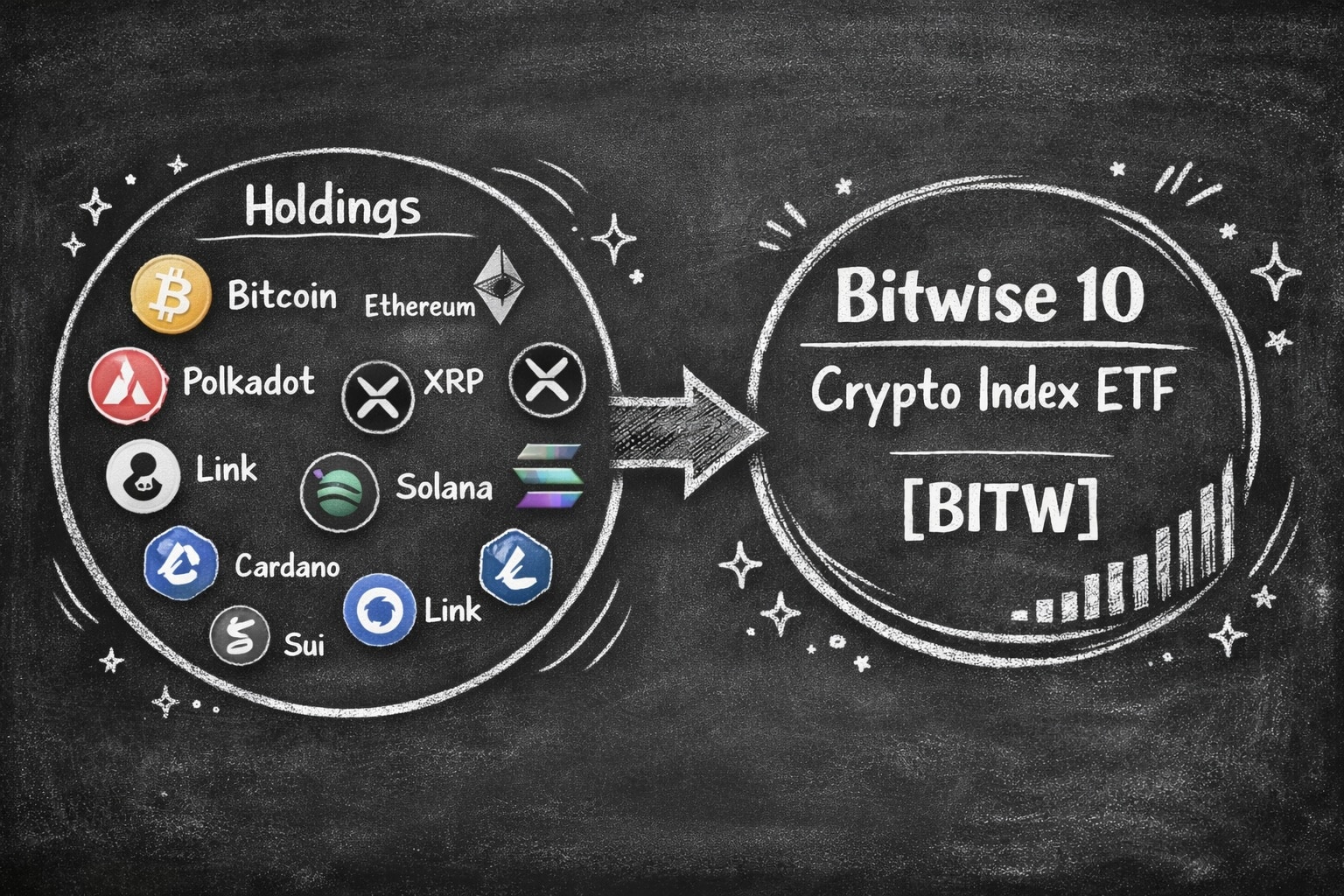
Crypto index funds track the performance of a specific index that features more than two cryptocurrencies. For example, the Bitwise 10 Crypto Index ETF [BITW] is a fund that tracks the performance of the Bitwise 10 Large Cap Crypto Index, which features the top 10 cryptocurrencies by market capitalization at a given time.
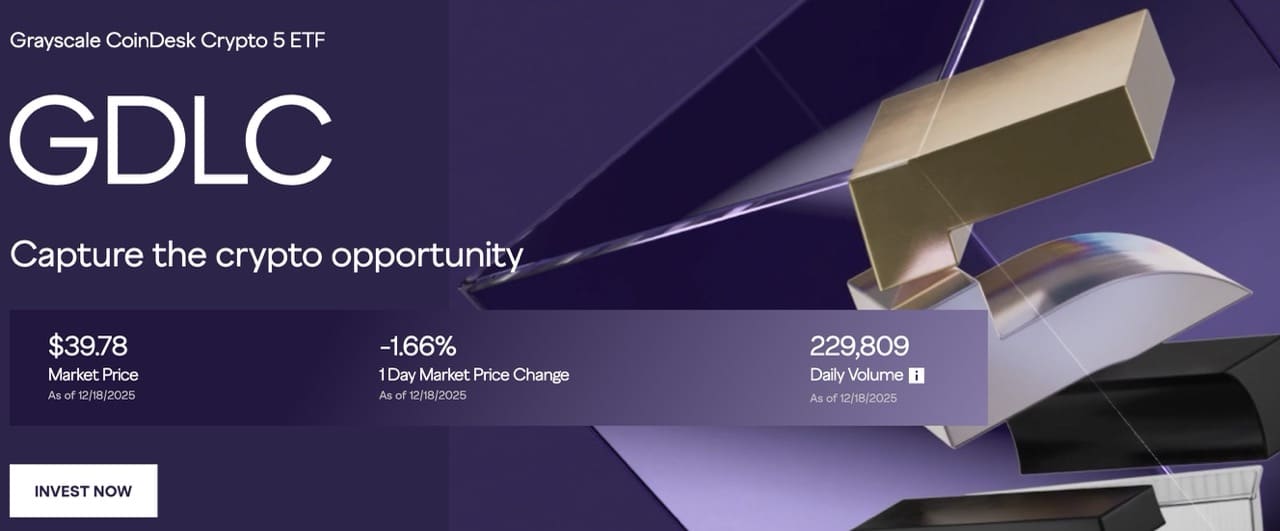
Similarly, the Grayscale CoinDesk Crypto 5 ETF [GDLC] tracks the performance of the CoinDesk 5 Index, which features the five biggest cryptocurrencies by market cap.
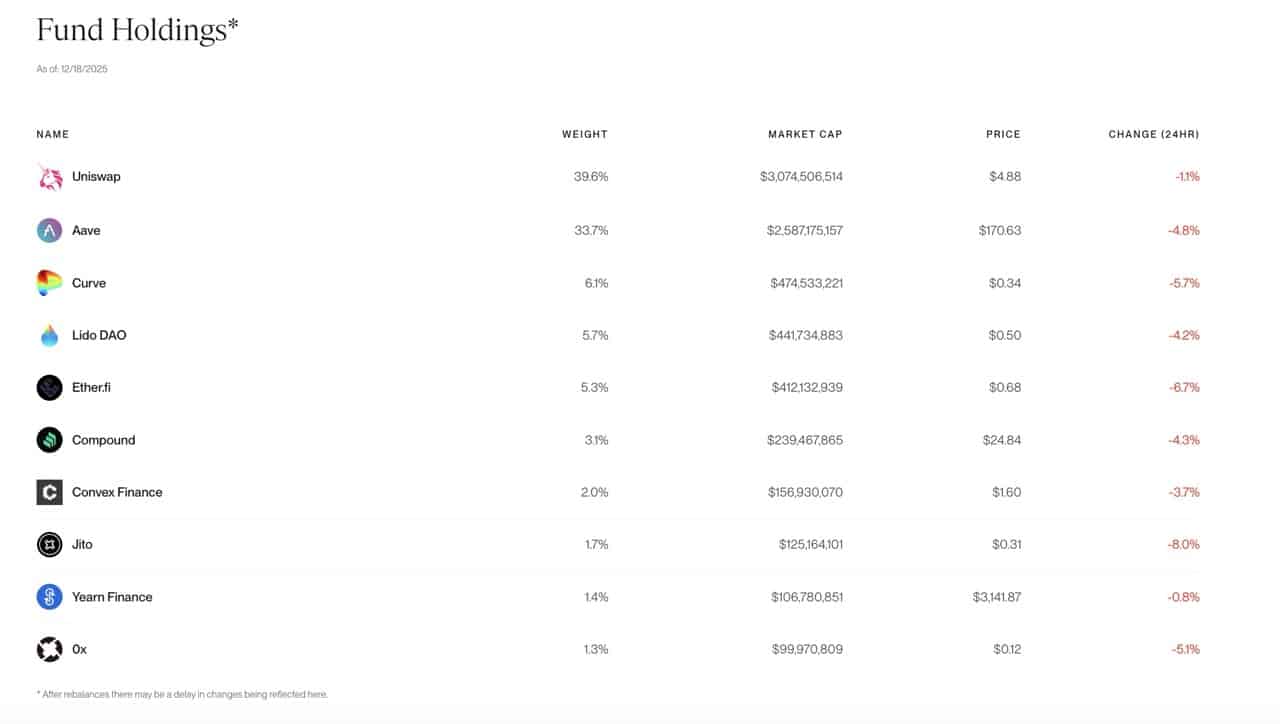
Interesting crypto index funds include the Bitwise Blue-Chip NFT Index Fund, which gives investors exposure to the world’s largest and most-established non-fungible tokens (NFTs), and the Bitwise DeFi Crypto Index Fund, which tracks a portfolio of native crypto tokens of decentralized finance (DeFi) protocols such as Uniswap [UNI] and Aave [AAVE]
The main advantage is diversification. Investors gain exposure to multiple blockchain and Web3 digital assets without buying or managing individual cryptocurrencies. Matt Hougan, CIO of U.S.-based digital asset management firm Bitwise, says,
Most investors we meet are convinced crypto is here to stay, but they don’t know who the winners will be or how many will succeed. The index approach is a way for people to invest in the thesis without having to predict the future.
Types of Crypto Index Funds
Crypto index funds differ based on how their holdings are selected and weighted.
Here is a table featuring some of the top 10 crypto index funds in the market. The table summarizes each fund’s provider, structure (public or private), index methodology, and the type of crypto exposure offered. A crypto index fund always tracks a specific index and follows a passive strategy. A crypto ETF may track an index or be actively managed by a fund manager, similar to some equity or bond ETFs in the stock market. Crypto index funds typically hold multiple digital assets in one product. For example, the Galaxy Crypto Index Fund provides exposure to Bitcoin, Ethereum, Solana [SOL], Ripple [XRP], and several other assets. By contrast, some crypto ETFs offer single-asset exposure, such as BlackRock’s iShares Bitcoin Trust ETF [IBIT] or iShares Ethereum Trust ETF [ETHA]. A crypto index fund will be considered an ETF if it is trading on traditional stock exchanges. As of December 2025, only 2 crypto index funds – Bitwise 10 Crypto Index ETF and Grayscale CoinDesk Crypto 5 ETF – were approved by the SEC to trade on the NYSE Arca as an ETF. To help you better understand the concepts, here is a table to summarize the differences between Crypto Index Fund vs. Crypto ETFs: Feature Read our easy-to-understand guide on What are Bitcoin ETFs? to learn more about crypto ETFs. Crypto index funds work by bundling multiple cryptocurrencies into a single portfolio. They track the performance of an underlying index, which is a predefined group of cryptocurrencies selected and weighted using specific rules such as market capitalization, liquidity, sector, or theme. These funds are passively managed, meaning cryptocurrencies are only added, removed, or reweighted when the index rules require it. For example, if a token grows into the top 10 by market value or drops out, it is automatically included or excluded during the next rebalance. In December 2025, the Bitwise 10 Crypto Index Fund (BITW) became the second crypto index fund approved by the SEC and began trading on NYSE Arca. This allowed retail investors to buy crypto index exposure through traditional brokerage accounts. Below is a step-by-step guide to buying the BITW crypto index fund. You can buy BITW through a regular brokerage account, like Fidelity, Charles Schwab, E*TRADE, Interactive Brokers, or Robinhood. Create an account if needed, complete identity checks, and link your bank. Tip: Use the same legal name and details as your bank to avoid funding delays. Deposit funds via ACH/bank transfer or supported payment options. Type “BITW” in the search bar and open the fund page. Look at the index tracked, top holdings, rebalancing approach, and fees. Pick a market order for speed or a limit order to control your entry price. If the bid/ask spread looks wide, a limit order is usually safer. Choose how much to invest based on your risk tolerance. Tip: Many investors start small and add over time to reduce timing risk. Submit the order, then check your positions to confirm the purchase. Track performance and review your overall portfolio allocation periodically. Even if BITW rebalances internally, you should rebalance your portfolio if crypto exposure grows too large. Crypto index funds offer a simple way to invest in digital currencies through a single product that holds multiple assets and tracks a broader market index. Compared with picking individual tokens or a traditional mutual fund, they provide clearer exposure, a visible track record, and less day-to-day decision-making. Many investors also find them easier to understand because they behave more like products traded in the stock market. Before choosing the right index fund for crypto, investors should compare management fees, index rules, and the role of the fund manager. It’s also worth checking liquidity, regulation, and how closely the fund tracks its index. As adoption grows, expect more cryptocurrency index funds to enter the market, providing investors with more choices and flexibility. See Also: Yes. There are crypto index funds. A crypto index fund is an investment product that tracks a basket of cryptocurrencies (like the top-10 by market cap), giving you diversified exposure without buying each coin individually. Bitwise 10 Crypto Index Fund is a crypto index fund that provides exposure to the top 10 cryptocurrencies by market capitalization through a single investment instrument. Crypto index funds reduce single-coin risk through diversification, but still carry crypto market volatility and regulatory risk. Returns follow the overall crypto market and vary by index composition, timing, and market cycles. For most investors, yes. They simplify investing and reduce risk compared to picking individual cryptocurrencies. Established in 2013, 99Bitcoin’s team members have been crypto experts since Bitcoin’s Early days. Weekly Research Monthly readers Expert contributors Crypto Projects Reviewed
Popular Crypto Index Funds and Providers
Provider
Crypto Index Fund
Private/Public
Ticker
Index Tracked
Exposure
Bitwise Asset Management
Bitwise 10 Crypto Index Fund
Public
BITW
Bitwise 10 Large Cap Crypto Index (top 10 by market cap)
Top 10 largest cryptocurrencies, weighted by market cap
Bitwise Asset Management
Bitwise Blue-Chip NFT Index Fund
Private
NA
Bitwise Blue-Chip NFT Collections Index
Exposure to top NFT collections such as BAYC and Cryptopunks
Bitwise Asset Management
Bitwise DeFi Crypto Index Fund
Private
NA
Bitwise DeFi Index
Tracks an index of the largest decentralized finance crypto assets, such as UNI and AAVE
Grayscale Investments
Grayscale Digital Large Cap Fund
Public
GDLC
CoinDesk Large Cap Select Index (large-cap crypto basket)
Largest five cryptocurrencies, market cap-weighted
21Shares
21Shares Crypto Basket Index ETP
Public
HODL
21Shares Crypto Basket Index (top 5 by market capitalization)
Five largest cryptocurrencies, market cap-weighted
Hashdex
Hashdex Nasdaq Crypto Index ETF
Public
HASH11
Nasdaq Crypto Index (NCI)
Multiple major cryptocurrencies (market cap-weighted)
CoinShares
CoinShares Physical Top 10 Crypto ETP
Public
CTEN
CoinShares-Compass Top 10 Crypto Market Index
Top 10 cryptocurrencies, capped at 35% per asset
Invictus Capital
CRYPTO20 Index Fund
Private
C20
CRYPTO20 Index (top 20 by market cap, 10% cap per asset)
20 largest cryptocurrencies, with a 10% cap on each
Virtune AB
Virtune Crypto Altcoin Index ETP
Public
VRTA
Virtune Vinter Crypto Altcoin Index
Equal-weighted exposure to up to 10 major altcoins (excluding BTC & ETH)
Charles Schwab
Schwab Crypto Thematic ETF
Public
STCE
Schwab Crypto Thematic Index
Provides exposure to publicly-listed crypto companies involved in mining, staking, trading, and more.
Crypto Index Fund vs. Crypto ETF
Crypto Index Fund
Crypto ETF
Structure
Always tracks an underlying crypto index
May or may not track an underlying crypto index
Listed on stock exchange
No
Yes
Access
Private funds are only accessible to institutional and accredited investors
Easily accessible to retail investors through traditional brokerage accounts
Trading
Bought or redeemed at NAV (not intraday)
Trades intraday like a stock
Custody
May hold spot crypto or synthetic exposure
Typically holds spot crypto (or futures, depending on ETF)
Regulation
Lightly regulated or offshore in many cases
Heavily regulated (e.g., SEC-approved ETFs)
Minimum Investment
Can be high for private funds
No minimum investment
Fees
Often higher (management + custody)
Relatively lower and more transparent
Tax Treatment
Varies by jurisdiction and structure
Clearer tax reporting in most markets
How Crypto Index Funds Work?
Benefits & Risks of Investing in Crypto Index Funds
Pros
Cons
How to Invest in a Crypto Index Fund
Buy Crypto Index Fund through a traditional brokerage
Open or log in to your brokerage account
Fund your account
Search for BITW and verify the product
Review what the fund tracks and its costs
Choose an order type
Decide your position size
Place the trade and confirm it filled
Monitor and manage your exposure over time
Conclusion
FAQs
Is there a crypto index fund?

What is Bitwise 10 Crypto Index Fund?
Are crypto index funds safe?
What’s the return on crypto index funds?
Are crypto index funds better than buying individual coins?
References

Why you can trust 99Bitcoins