






In This Article
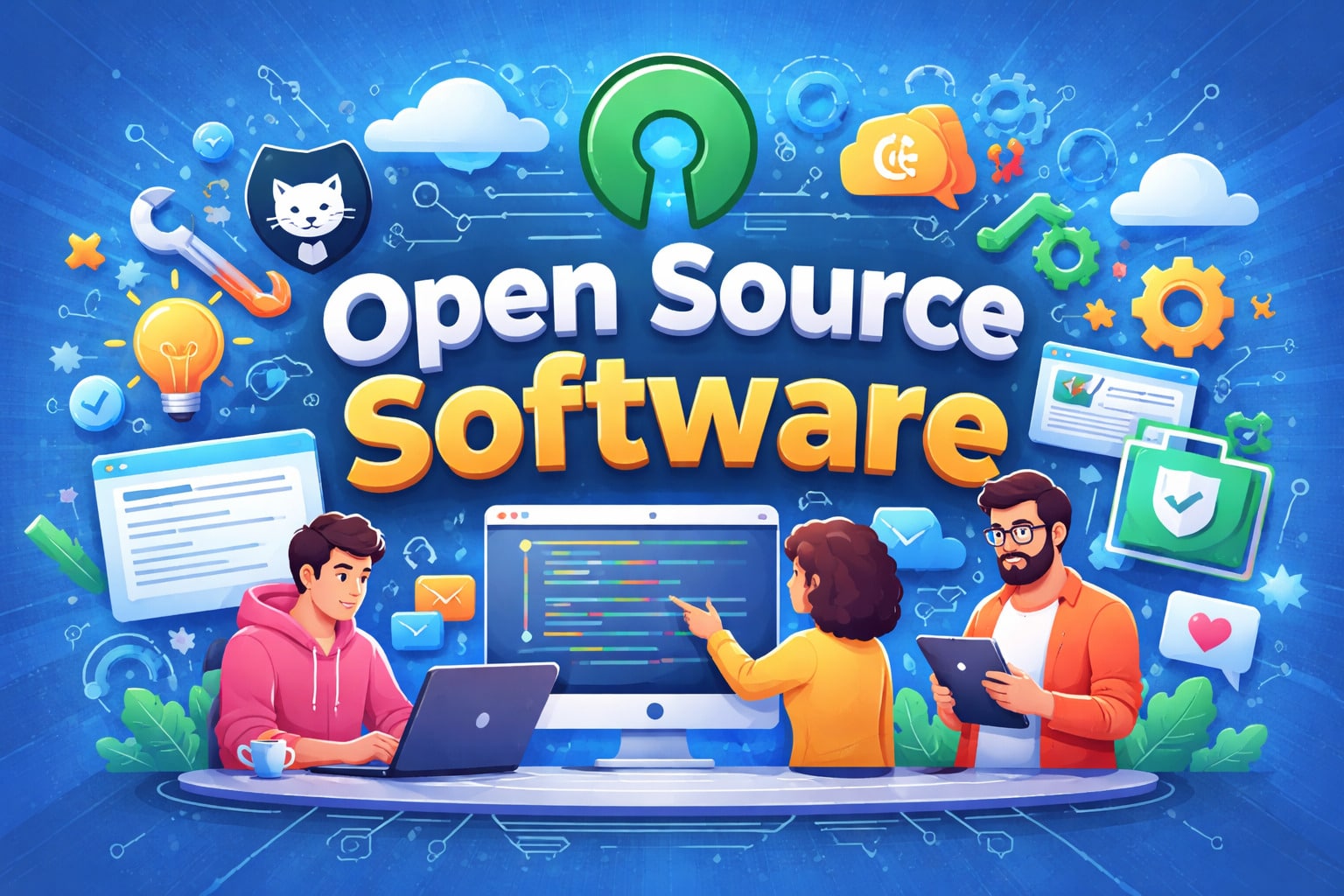
Open source is software whose source code is open for anyone to see, use, change, and share. Instead of being owned and controlled by one company, open source software is built in a transparent way where developers and communities work together to improve it over time.
This helps create more innovation, flexibility, and trust, because users can understand how the software works and customize it if needed. Today, open source supports many of the technologies we use daily, including websites, mobile apps, and cloud services. It is estimated that open-source components make up 70-90% of any given modern software stack.
Key Takeaways
- Open source software makes its source code publicly available for anyone to view, modify, and share.
- It is built through global collaboration rather than being controlled by a single company.
- Open source promotes transparency, flexibility, and innovation in software development.
- Many widely used technologies, including websites and cloud systems, rely on open source.
- Users and businesses can customize open source tools to suit their specific needs.
Quick Facts About Open Source Software
What is Open Source?
Open source is a way of building software that focuses on openness, shared progress, and long-term sustainability. Instead of relying only on internal teams, projects grow through ongoing input from developers, researchers, and organizations around the world.

This model has helped accelerate technological progress by making it easier to experiment, build, and scale new solutions. From startups to large enterprises, many rely on open source frameworks to speed up development and reduce barriers to innovation across industries.
Popular Examples of Open Source Software
Open source software is used across many parts of the modern digital ecosystem, from websites and browsers to mobile devices and servers. Some of the most widely adopted technologies today are built on open source foundations. Here are some of the popular software that are open-sourced,
These examples highlight how open source software supports essential technologies across the web, mobile, and cloud environments.
Key Principles of Open Source
Open source is guided by a set of core principles that shape how software is created, improved, and shared. These principles help ensure that development remains open, inclusive, and focused on long-term progress.
Transparency
Open source software is developed in an open environment where its development process, updates, and decisions are visible. This openness builds trust and allows users and developers to clearly understand how the software evolves over time.
Collaboration
Open source encourages people from different backgrounds and regions to contribute ideas, improvements, and solutions. This shared effort helps projects grow faster and benefit from diverse expertise.
Accessibility
Open source makes technology more accessible by allowing individuals, businesses, and organizations to adopt and build upon existing solutions without major barriers.
Community-Driven Development
Many open source projects are guided by active communities rather than a single organization. These communities help shape the direction of the software through feedback and contributions.
Continuous Improvement
Because open source projects receive input from many contributors, they often evolve steadily through updates, refinements, and enhancements over time.
Open Source vs. Closed Source Software
Both open source and closed source software are widely used today, but they differ in how they are developed, managed, and shared. Understanding these differences helps users and businesses choose the right type of software based on their needs.
Feature
Open Source Software
Ownership
Managed by communities or multiple contributors
Transparency
Development process is open and visible
Customization
Can be adapted for different use cases
Flexibility
Suitable for varied environments
Innovation
Grows through shared contributions
Accessibility
Widely accessible for adoption
Cost Structure
Often free or low-cost
Updates
Driven by community and maintainers
How Open Source Software Works? Step-by-Step Explanation
Open source software develops through a collaborative process where contributors work together to improve and expand a project over time. Instead of being built privately, it evolves through shared input, testing, and ongoing updates from a wider developer community.
-
Code is Created and Shared
A developer or team creates software and makes the source code publicly available so others can access it.
-
Community Reviews the Code
Developers from around the world examine the code to understand how it works and identify possible improvements.
-
Contributions are Suggested
Contributors propose updates, fixes, or new features to enhance the software.
-
Changes are Tested
Suggested improvements are reviewed and tested to ensure they function properly and do not introduce issues.
-
Updates are Approved
Project maintainers approve useful changes and integrate them into the main software.
-
New Versions are Released
The improved software is updated and made available to users, continuing the cycle of development.
This process allows open source software to evolve continuously through collaboration and shared effort.
Open Source Licenses Explained
Open source licenses define how software can be used, modified, and shared. They set the legal rules that protect both the original creators and the people who use or build on the software.
Different licenses offer different levels of freedom and responsibility. Some allow almost unlimited use, while others require users to share any changes they make. Here are some of the most common types:
Permissive Licenses
These licenses give users more freedom with fewer restrictions. They allow modification and use in both personal and commercial projects. Examples include the MIT License and Apache License.

Copyleft Licenses
These licenses allow modification but require that any updated versions remain open and are shared under the same license. A well-known example is the GNU General Public License (GPL).
Weak Copyleft Licenses
These fall between permissive and strict copyleft licenses. They allow some flexibility while still protecting openness in certain parts of the software. An example is the Mozilla Public License. Licenses help maintain fairness by ensuring that open source software can continue to be shared and improved while respecting the rights of contributors.
Benefits & Challenges of Open Source Software
Open source software offers several advantages, but it also comes with certain challenges that users and organizations should consider before adopting it, especially when exploring areas like what is open source AI and how it applies to modern technologies.
Benefits
- Cost-effective since many solutions are free to use
- Highly flexible and adaptable for different use cases
- Encourages innovation through shared contributions
- Promotes transparency in development
- Reduces dependency on a single vendor
Challenges
- May require technical skills to manage effectively
- Limited dedicated support compared to commercial software
- Quality can vary between projects
- Users may need to handle updates and maintenance
Is Open Source Always Free?
Open source software is often thought of as free, but the term “open source” does not necessarily mean zero cost. It refers to the freedom to use, modify, and share the software, not its price.
Many open source tools are available at no cost, especially for individuals or small teams. However, organizations may still incur expenses depending on how they use the software. For example, companies might charge for:
This model is commonly known as the open-core approach, where the core software remains open, but additional capabilities are offered as paid options. Businesses using open source at scale may need to invest in maintenance, infrastructure, or skilled professionals to manage deployments. So, while open source software is often free to access, using it in real-world environments can involve operational costs.
Conclusion: What is Open Source Software?
Understanding what is open source software helps explain why it has become such an important part of today’s technology landscape. It represents a collaborative way of building digital tools that encourages shared progress and wider participation in development.
Open approaches are also reflected in areas like what is open source intelligence, where publicly available information is used to generate insights and support decision-making. Together, these concepts show how openness can improve access to knowledge and innovation. As technology continues to evolve, open source models are expected to remain central to building flexible, scalable, and future-ready solutions.
See Also:
- What are dApps (Decentralized Applications)?
- What is a Bull Market in Crypto? – Definition for 2026
- What is Stablecoin 2.0 in 2026?
- What are Virtual Asset Service Providers (VASP)?
- What is Immutable Data Storage?
FAQs
What is open source intelligence?

Open Source Intelligence (OSINT) is information gathered from publicly available sources like websites, social media, news, and public records, then analyzed to produce useful insights for security, research, or decision-making.
What is open source accounting?
Open source accounting refers to accounting software whose source code is publicly available, allowing users to use, modify, and customize it freely to suit their financial management needs.
What is an open source operating system?
An open source operating system is software whose source code is publicly available, allowing anyone to view, modify, and distribute it freely.
What is open source programming?
Open source programming is the practice of creating software with publicly available source code that anyone can view, modify, and improve.
Who regulates open source software?
Open source software isn’t regulated by a single authority. It’s governed by licenses (like MIT, GPL, Apache) and supported by foundations such as the Open Source Initiative (OSI) and the Linux Foundation.
What are open standards?
Open standards are publicly available rules or guidelines that ensure different systems and technologies can work together and communicate easily.
References
- Penn State Open Source. What Is Open Source Software? The Pennsylvania State University, https://opensource.psu.edu/project/what-is-open-source-software/
- Johns Hopkins University. What Is Open Source Software? Johns Hopkins Open Source Programs Office, June 2024.
https://ospo.library.jhu.edu/wp-content/uploads/sites/60/2024/06/OSPO-Explainer_-What-is-Open-Source-Software-Slides.pdf - University of Maryland, Robert H. Smith School of Business. The Pros and Cons of Open Source.
https://www.rhsmith.umd.edu/research/pros-and-cons-open-source - Bennett University. Advantages and Applications of Open Source Developments,
https://www.bennett.edu.in/media-center/blog/open-source-development-examples-benefits-and-applications/

Why you can trust 99Bitcoins
Established in 2013, 99Bitcoin’s team members have been crypto experts since Bitcoin’s Early days.
Weekly Research
100k+Monthly readers
Expert contributors
2000+Crypto Projects Reviewed