




In This Article
Choosing the best crypto options trading platform means balancing speed, control, and risk management. Some platforms focus on fast execution and leverage, while others offer deep analytics, strategy builders, and smoother settlement. This guide breaks down the most top-rated options trading crypto exchanges, covering everything from simple call-and-put contracts to complex multi-leg tools.
We’ll review each of the leading options trading sites for crypto so you can compare features, fees, and flexibility, without wasting time digging through marketing fluff.
Key Takeaways
- Crypto options let you speculate on price without holding the underlying coin
- Beginner-friendly platforms like KuCoin and MEXC offer simple calls and puts
- Advanced traders get analytics, margin tools, and strategy builders on OKX and Bybit
- Some platforms use cash-settled contracts so you don’t need a wallet to get started
- You can use demo modes, capped-loss trades, or high-leverage setups depending on the platform
- This guide walks you through how to trade crypto options online, what to expect, and where to begin
Crypto Options Trading Apps: Summary
We will walk you through how to trade crypto options online, starting with what these contracts are and where you can trade them.
We highlight which platforms offer demo trading, beginner guides, or anonymous trading with no KYC, and which ones are better suited for pro-level execution with tighter spreads and portfolio margin. We also show you how to sign up for crypto options trading, pick the right contract, and manage your trades step by step.
Whether you’re making your first call or preparing to trade volatility full-time, this guide will help you discover a platform that matches your trading style, experience, and goals.
Here’s a quick look at the top-rated options trading crypto exchanges covered in this guide:
Prefer video format? Check out our video on the top crypto options trading platforms below:
Top-Rated Sites to Trade Crypto Options
To trade crypto options online, you require a reliable and easy-to-use platform that suits your skill level. This list includes a mix of simple interfaces and advanced features, as well as the top decentralized crypto options platform for those wanting full control.
These picks also cover everything from beginner-friendly tools to full-featured crypto leverage trading platforms that also offer crypto margin trading and high-risk derivatives.



Use the links to compare and choose the setup that works best for you.
1. CoinFutures
CoinFutures offers a unique, gamified experience that simulates the high-stakes environment of derivatives trading without the real-world risk. It’s designed for beginner-level crypto users who want to explore leveraged trading but find traditional platforms too complicated or intimidating.
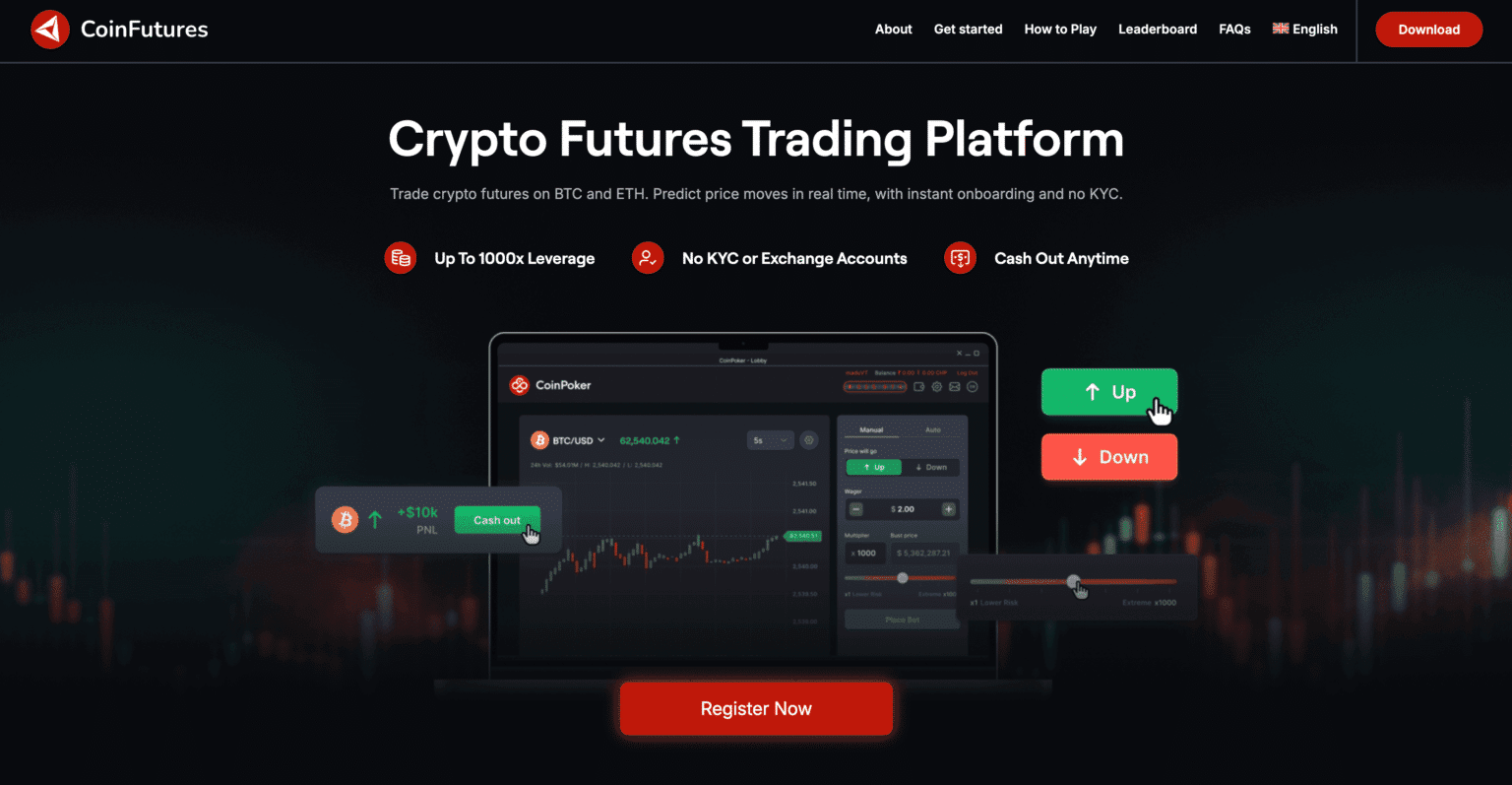
There’s no need to connect any crypto wallet, submit ID, or manage real funds. You simply log in, select a popular asset like Bitcoin, Ethereum, DOGE, LTC, or TRX, and open a position using up to 1000× leverage. The platform uses live price feeds from major exchanges to mirror market conditions, but trades are settled against the system, not against other users.
It’s a good starting point for people who are new to crypto trading, who want to explore options trading without getting overwhelmed by the complexity of traditional platforms. You’re not placing orders on a public order book or risking actual capital. Instead, CoinFutures lets you practice managing trades in real time, complete with tools like stop-loss, take-profit, and liquidation tracking. CoinFutures also supports up to 1000x leverage crypto, making it one of the highest-leverage platforms available today for contract-based speculation.
It’s a simple way to understand how margin, leverage, and risk management work in crypto markets. While it lacks advanced features like technical indicators or charting tools, that’s part of the appeal for beginners looking to get a feel for derivatives trading.
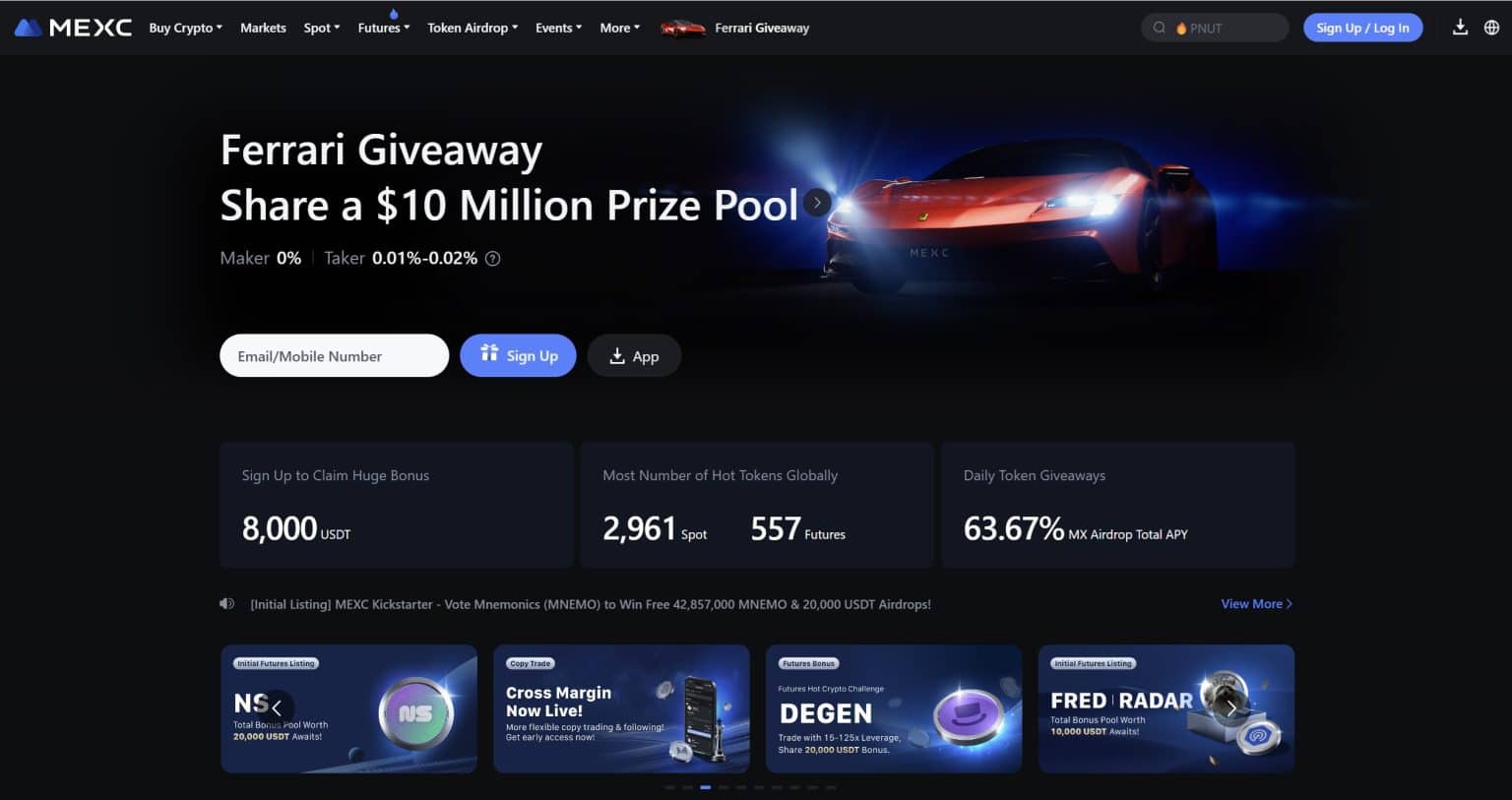
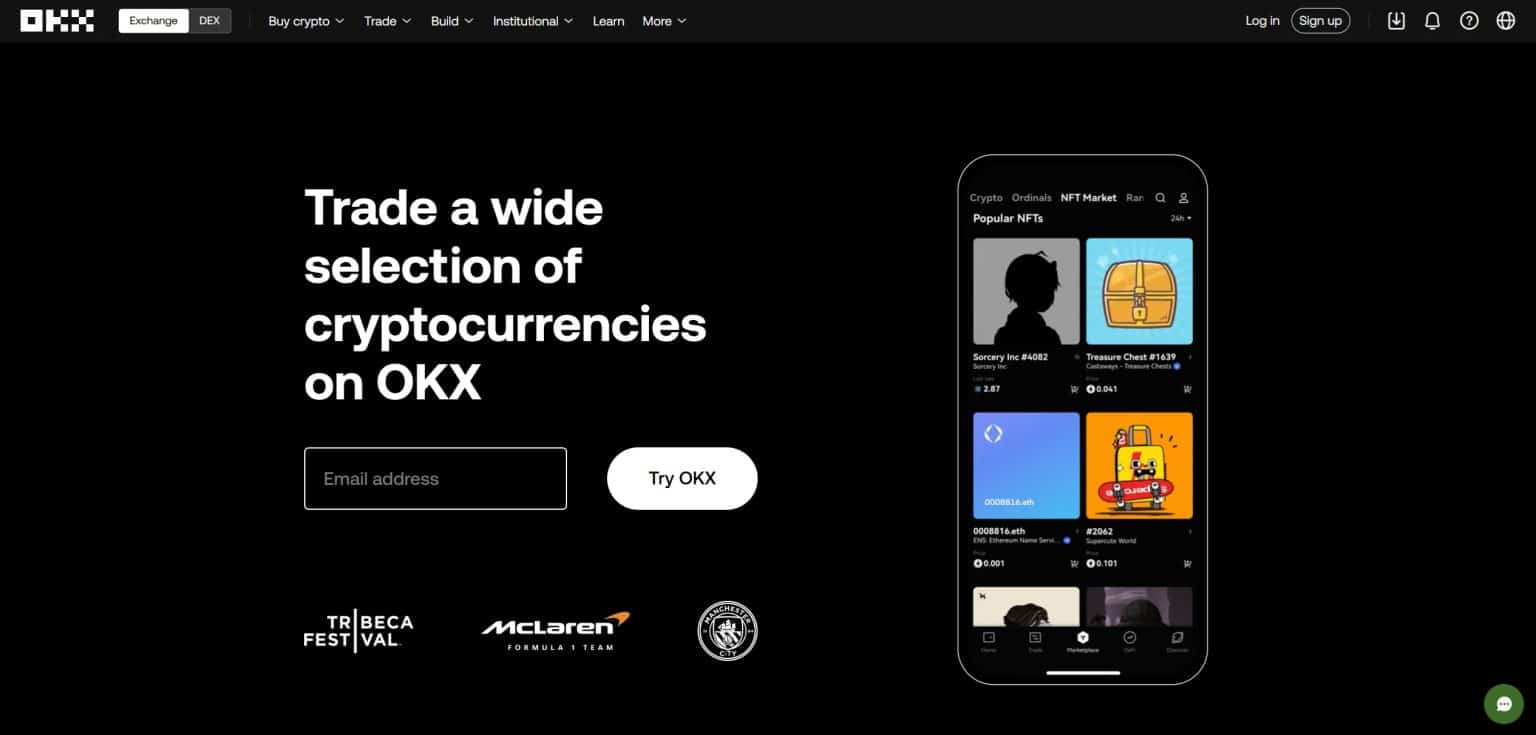
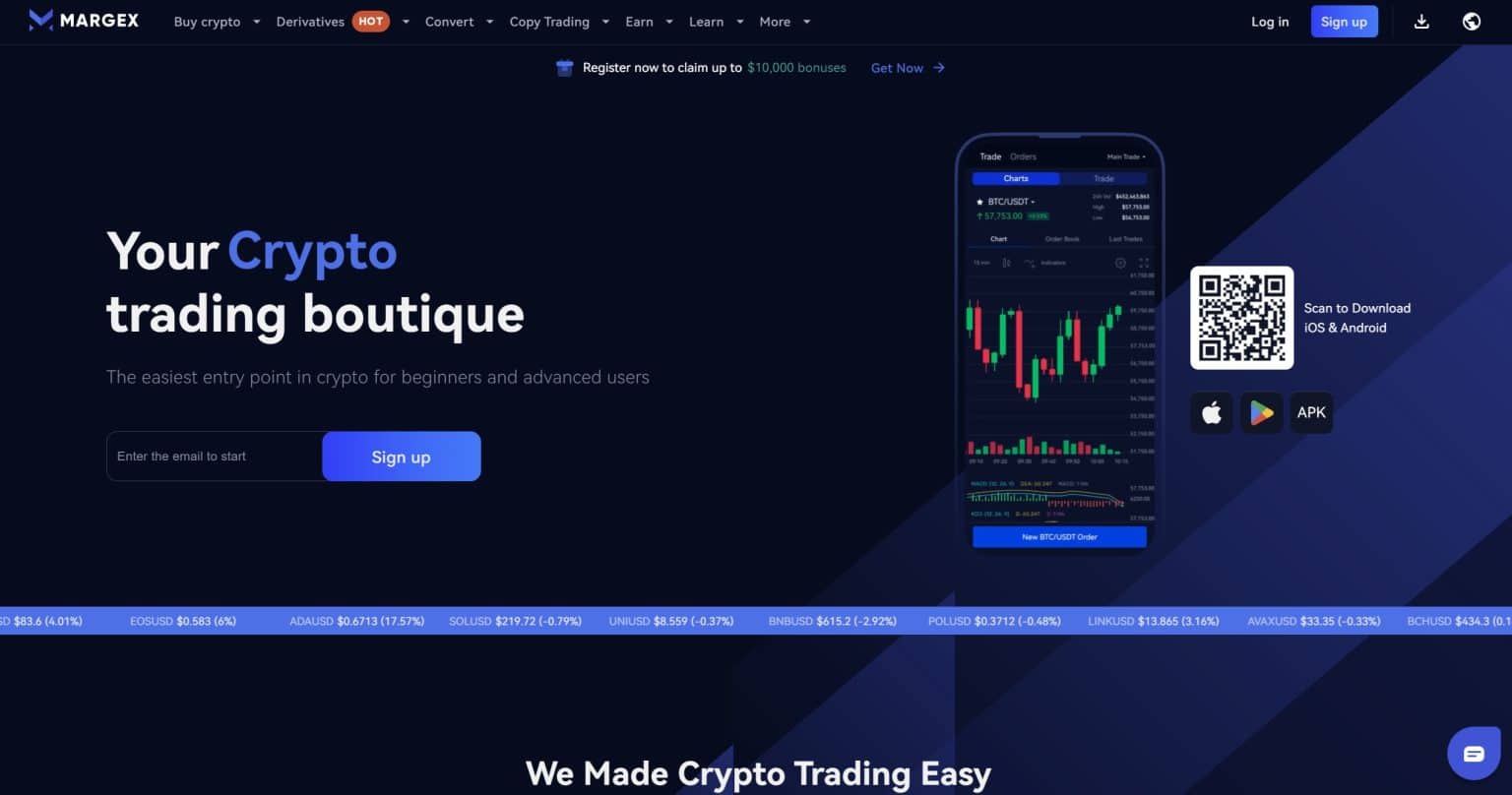
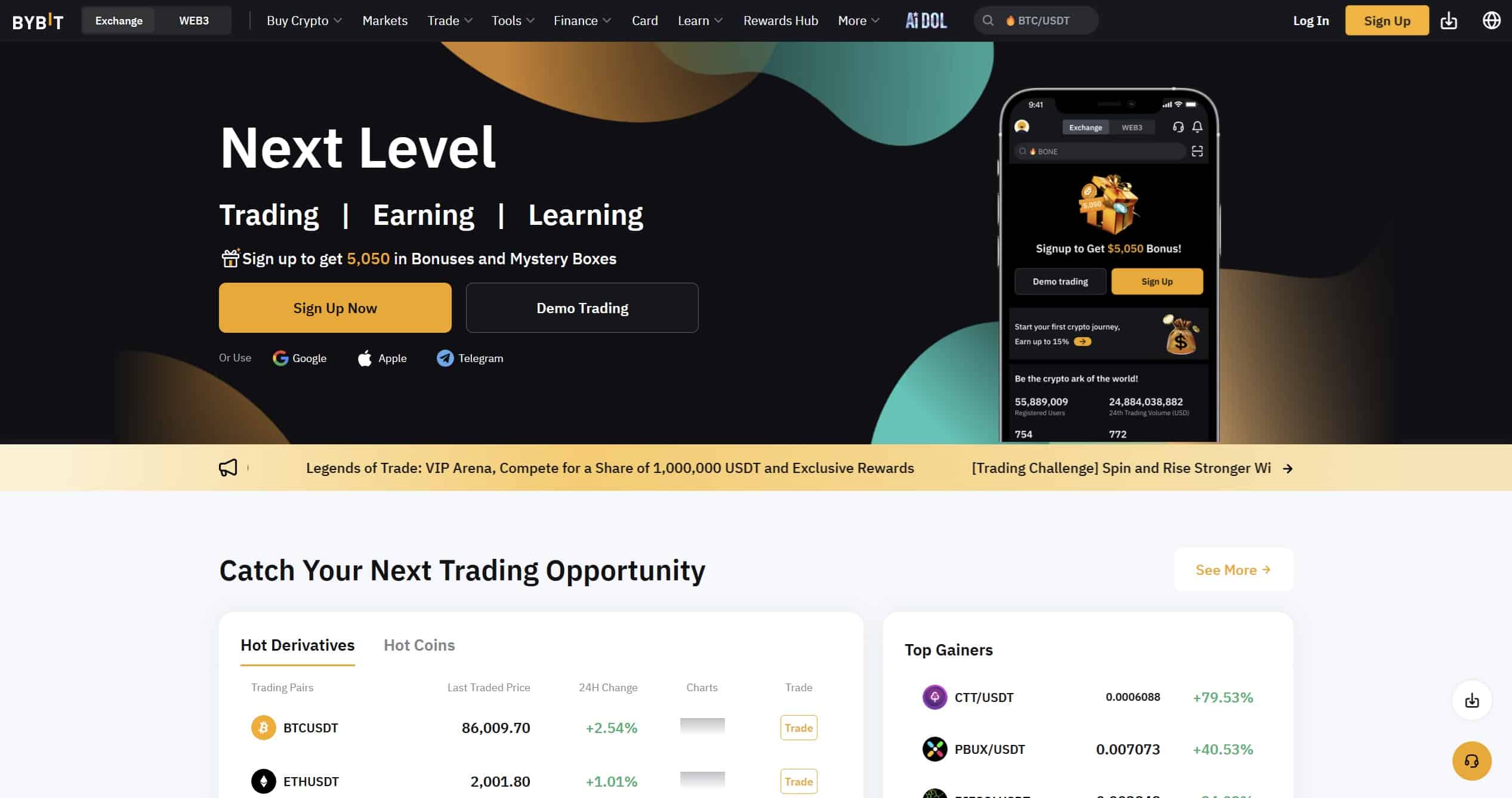
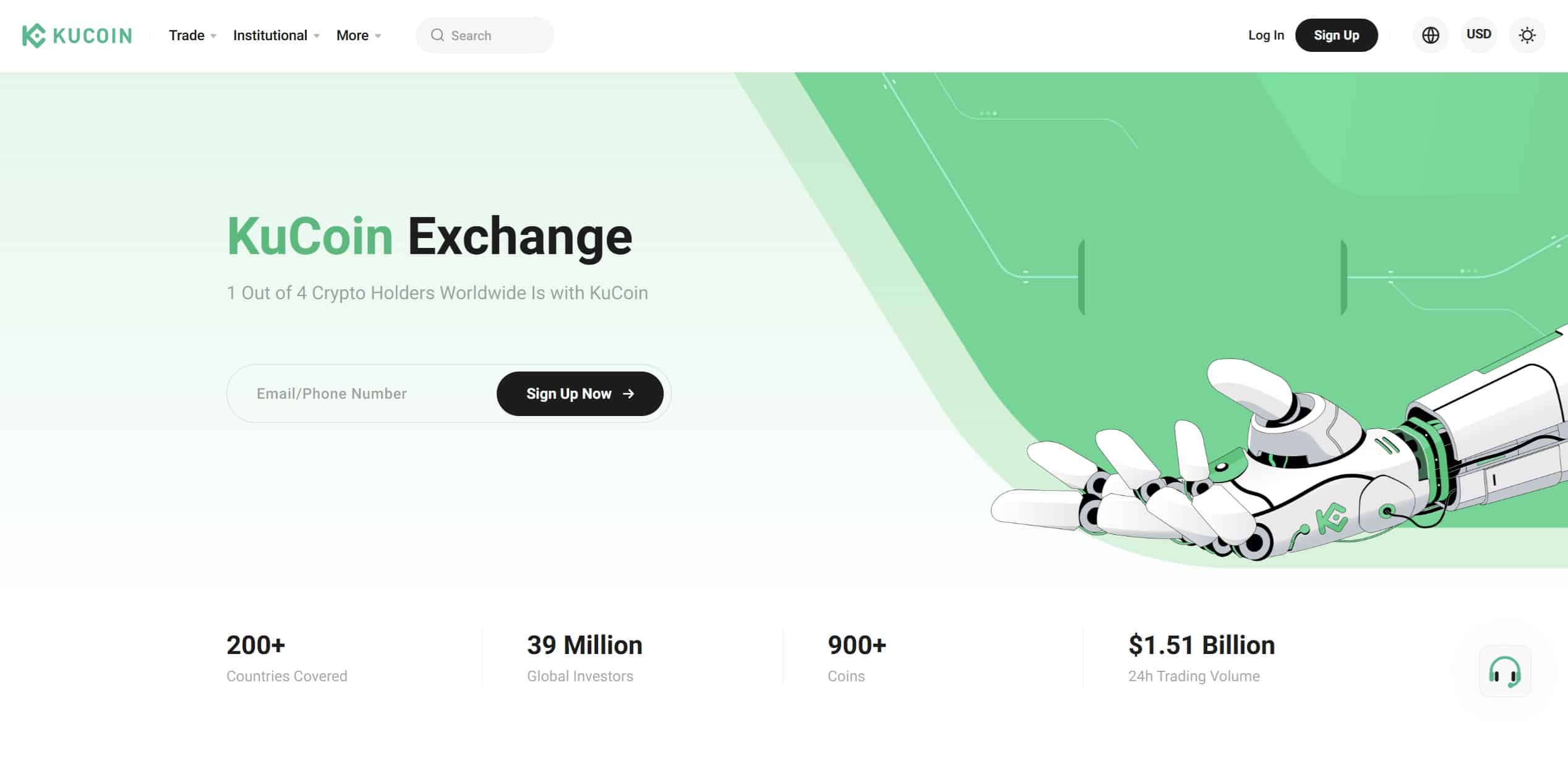
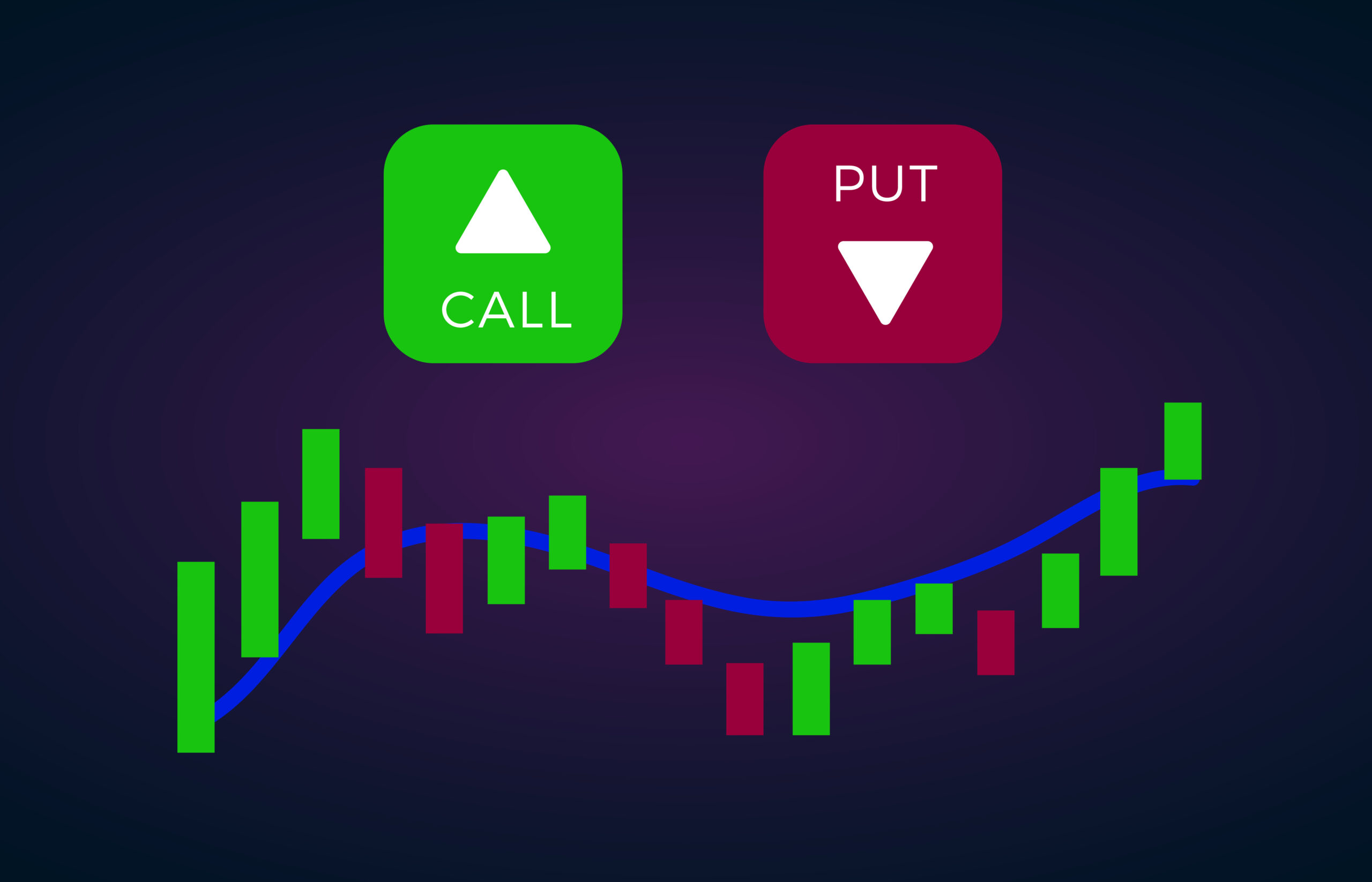
CoinFutures strips away the complexity and throws you straight into the action. If you like the idea of quick, high-stakes decisions without needing a full exchange setup, this platform hits the mark. You’re not buying crypto, you’re making calls on price direction, plain and simple. It’s fast, private, and built for bold moves. Just keep in mind, it’s not for everyone. The leverage is intense, the coins are limited, and it’s not the place for long-term plays or regulated trading. But for fast-paced speculation with minimal setup, CoinFutures brings a unique twist to crypto day trading. To learn more, check out our dedicated CoinFutures review. MEXC has been around since 2018, and by now, it’s built itself into a packed all-in-one exchange. You’ve got spot, futures, staking, copy trading, and even NFTs, all under one roof. In 2024, they added crypto options to the mix. These are straightforward call and put contracts, great for trying out simple strategies without needing to learn complex options theory. It’s still early days for this feature, and while it works fine for basic trades, don’t expect advanced tools or huge liquidity just yet. MEXC’s options platform is a decent place to dip your toes into options trading, especially if you’re already using it for spot or futures. The fees are low, the platform is familiar, and the tools get the job done. Just keep in mind that this isn’t built for advanced strategies or heavy trading. It’s still new, so expect some growing pains, but for simple directional bets, it’s got everything you need to get started. Want to know more? Head straight to our MEXC review. Binance is one of the few large exchanges that lets you trade crypto options right alongside spot, crypto margin trading, and futures. It uses European-style contracts that settle in USDT or USDC, with a structure that’s easy enough for beginners but deep enough for more experienced traders. You can switch between Explore, Easy, or Pro views depending on how much control you want. It’s not as specialized as something like Deribit, but for anyone already using Binance, the built-in options tool is an easy way to dip into options trading without starting from scratch. Binance also offers 100x leverage crypto trading. If you’re already on Binance and want to try crypto options, you don’t need to go anywhere else. It’s not the most advanced platform out there, but it covers all the basics well and gives you a clean way to get started. You get solid tools, enough contracts to play with, and smooth integration with the rest of your Binance activity. Just keep in mind that this isn’t for complex strategies, it’s more of a straightforward, beginner-friendly setup. Learn more about this centralized exchange in our dedicated Binance review. OKX is one of the few exchanges that lets you trade crypto options without needing a separate account or app. It’s packed with features, European-style BTC and ETH contracts, flexible margin settings, and three different ways to place trades depending on your skill level. Whether you just want to make a quick directional bet or you’re into full-blown strategy building, OKX gives you a lot to work with. Still, payouts happen in crypto only, and the learning curve can be steep for anyone not used to more complex trading setups. OKX is a good options trading platform with enough depth for pros but enough flexibility for newcomers too. If you’re fine with payouts in BTC or ETH and don’t mind navigating a few advanced features, it’s worth checking out, especially if you want everything in one place. That said, casual traders or those with lower balances may find the portfolio tools out of reach for now. Learn more about this platform in our separate OKX review. Margex keeps things simple on the surface but gives you a lot to work with under the hood. Based in Seychelles, it lets you trade crypto options without making the whole thing feel overwhelming. You can build multi-leg strategies like spreads or condors, or just stick to basic calls and puts. The demo mode is great if you’re still figuring things out, and the TradingView interface helps you stay on top of your positions. It’s not the biggest platform out there, and liquidity is still catching up, but if you’re looking to learn or try new strategies in a clean setup, Margex gets the job done. Margex is a crypto exchange that brings a balanced mix of accessibility and flexibility to crypto options trading. You get a simple entry point, a clean interface, and enough advanced tools to try real strategies. Liquidity’s still growing, and it’s not built for large-scale institutional use yet, but if you’re trading solo and want to dive into options without getting overwhelmed, it’s a good option. It’s also a good choice if you’re interested in crypto options trading without KYC. Get to know more about this exchange in our Margex review. Bybit is an exchange that gives you access to crypto options trading using cash-settled contracts tied to USDC. These are European-style, meaning they settle at expiry and don’t involve actual delivery of BTC, ETH, or SOL. You’ve got a range of expiry options, daily all the way to quarterly, and three interface modes (Explore, Easy, Pro) that match different experience levels. So whether you’re just starting or already deep into options, there’s a setup that fits. The platform ties everything together with a unified account. That means you can use the same balance across options, futures, and spot trading. Add real-time data like Greeks and volatility metrics, and you’ve got a setup that’s flexible, data-rich, and designed to handle serious strategies. Bybit gives traders a clean way into crypto options with flexible expiries, cash settlement, and a well-integrated setup. If you’re already using Bybit for other trades, the switch to options is seamless. While it doesn’t support a huge variety of tokens or American-style contracts, the platform’s balance of usability and analytics makes it worth exploring, especially if you’re looking for an all-in-one trading environment. Learn more about this platform in our Bybit review. KuCoin makes it possible to trade crypto options with European-style contracts on BTC and ETH, all settled in USDT. You choose your strike price and expiry, and the most you can ever lose is the premium you pay up front. It’s designed to be beginner-friendly with built-in quizzes, charts that help you spot breakeven points, and a clear layout that walks you through the process. The options tool sits within KuCoin’s larger platform, which includes spot, futures, bots, staking, and P2P markets. So it’s convenient if you’re juggling different types of trades in one place. That said, only BTC and ETH are available so far, and the liquidity isn’t as deep as more established futures markets. It’s also not available in the U.S. and a few other countries. KuCoin is a solid way to dip your toes into crypto options. It’s low-cost, beginner-friendly, and built into a full-featured trading platform. The main trade-off is the limited selection of contracts and lower volume, but for simple strategies or learning the ropes, it does the job well. Want to know more? Head straight to our KuCoin review. Choosing the right platform can make a big difference when you’re getting into cryptocurrency options trading. Some focus on quick access and simplicity, while others give you the tools to go deeper with advanced strategies. The table below compares the most relevant crypto options trading platforms to help you find the right fit. Each of these crypto options exchanges offers a unique approach to the market. If you’re just starting out, platforms like MEXC or KuCoin offer a smooth introduction to crypto options for beginners. For more seasoned traders, OKX and Bybit are among the best crypto options platforms, thanks to their analytics and contract variety. When searching for the best platforms to trade crypto options in 2026, it’s easy to get distracted by ads and hype. But smart traders, especially those learning how to choose a crypto options platform, need more than promises. They need real protections, clear risk disclosures, and tools that actually help. We evaluated dozens of crypto options trading platforms based on what truly matters: security, leverage, execution, fees, and usability. Whether you’re a first-timer or an experienced trader, the right platform should protect your account, support your goals, and clearly show what to expect with every trade. Here’s what we looked for: By scoring each crypto options platform across these categories, we narrowed the field to the most secure, transparent, and flexible services available. Whether you’re exploring how to choose a crypto options platform, looking for beginner-friendly crypto options platforms, or ready to place high-leverage trades, the platforms we selected provide the structure, tools, and protections needed to succeed in today’s market. Crypto options trading is a type of trading derivatives strategy that gives you the right, but not the obligation, to buy or sell a specific amount of a cryptocurrency at a predetermined price (called the strike price) before or on a set expiry date. Unlike buying crypto outright or trading spot, options allow you to speculate on price movement or hedge existing positions using a more flexible risk structure available on many exchange platforms. These contracts are available on dedicated crypto contract trading platforms like Binance, OKX and Bybit. There are two main types of options: calls and puts. A call option allows you to buy the asset at the strike price, while a put option allows you to sell it. For example, if you buy a Bitcoin call option with a strike price of $60,000 and the price rises to $65,000 before the option expires, you could buy Bitcoin at $60,000 and profit from the difference, minus the premium you paid. You see how it is different from Bitcoin futures? In crypto, options contracts are typically cash-settled and don’t involve physical delivery of coins. That means you don’t need to actually hold BTC or ETH to trade options on them. Some platforms offer monthly expiries, while others offer weekly or flexible durations. These are part of the broader derivatives market built around cryptocurrency products. Leverage trading is different to regular spot trading by the way. Spot markets involve direct crypto ownership. Futures let you trade contracts speculating on price, often with leverage. Platforms offering crypto contract trading and crypto margin trading give access to both — useful for traders who want flexible strategies. Unlike regular spot trades, options contracts are popular on any advanced crypto contract trading platform that supports hedging, speculation, or strategies like how to short crypto. Options are traded on both dedicated crypto options trading platforms and large exchanges like Binance, OKX, and Bybit. To get started, you often need to create a new account, submit a request to enable options trading, and move funds into a designated wallet. Some platforms also allow you to configure trigger settings to automate entries or exits. Pro Tip: Wondering what is leverage in crypto or what is margin trading crypto? Check out our margin trading guide here: Bitcoin Margin Trading Options for Beginners (2026Updated). And, if you are based in the UK, you might want to take a look at our Top-Rated Crypto Futures Trading Platforms in the UK Traders turn to cryptocurrency options for several reasons, including speculation, risk management, and strategic positioning. For instance, a trader holding Ethereum may buy a put option to hedge against a drop in price. If the price falls, the option increases in value and can offset losses. Options also allow traders to take advantage of non-directional strategies. For example, you might use a basket order strategy or a straddle if you expect the market to stay within a certain range. Advanced traders may automate such setups using developer tools. You can also use options to delay entry into a market. Instead of buying Bitcoin at spot, you could buy a call option with a strike price above the current market and risk only the premium. Some platforms include smart trigger features that allow you to execute trades based on predefined conditions. For newcomers, education is key. Many platforms now offer tutorials, glossaries, and demo environments for users exploring their first contact with options trading. These resources are valuable for understanding how derivatives function and how to make them part of a complete trading plan. On a side note, if Canada is your base, don’t miss our breakdown of the leading crypto futures trading platforms in Canada. To start trading, you first decide whether to buy or sell a call or put option. Buying a call means you believe the price will rise above the strike price. Buying a put means you expect the price to fall below it. Selling options exposes you to greater risk, so it is usually done by advanced traders or those with sufficient fund reserves. When you open an options trade, you’ll pay a premium. This is the cost of the contract, and it’s calculated based on the asset’s market price, the strike price, time until expiry, and expected volatility. Platforms with detailed data and analytics help you assess value more effectively. For example, let’s say Ethereum is trading at $3,000. You buy a call option with a strike price of $3,200 and an expiration in 14 days. If ETH rises to $3,400, your contract becomes profitable. If it stays below $3,200, the option expires worthless, and your only loss is the premium. Most crypto options are cash-settled, meaning your profit or loss is paid out in USDT, USDC, or BTC without needing to move the underlying coin. This simplifies execution and aligns with the compliance policies enforced by regulated exchanges that follow local regulations and legal standards. Advanced features like trigger automation, multi-leg builders, and integrated dashboards are more common on platforms built for pro traders. Others include simplified flows and built-in education to help beginners get started confidently. Tip: Keep your trading toolkit diverse. If you’ve mastered options, contracts trading can open up new opportunities. Check out our contracts trading platforms guide to see where to start. Trading crypto options is very easy and convenient if you understand the basics of derivatives trading. For this step-by-step guide below, we have chosen CoinFutures because it is one of the fastest-growing futures trading platforms that is also quite popular among investors. Head to CoinFutures’ official website. Sign up in just a few clicks. Once registered, you will be ready to play in minutes. Top up your account using cryptocurrencies like USDT, BTC, or ETH. You can also make quick and easy deposits with your credit card. After logging in, navigate to the “Crypto Futures” section from the main menu to access the game interface. Pick your preferred coin, predict whether the price will go up or down, set your multiplier, and jump into the action. There are different ways to get started with crypto options, and the best choice depends on what you’re trying to do. If you’re experimenting with small positions, a clean interface and solid demo mode can make a big difference. If you’re building serious strategies, you’ll want tools like Greeks, multi-leg builders, and fast settlement. The key is to focus on what actually matters to you. Some traders care about low fees and tight spreads. Others value flexible margin settings or access to advanced analytics. There’s no single right answer, just the one that fits how you trade and how you manage risk. Once you find a crypto leverage trading platform that matches your goals, the next steps are straightforward. Sign up for crypto options trading, double-check your funding setup, and explore a few test trades before committing real size. Whether you’re in it for directional plays, hedging, or volatility strategies, the platforms we’ve covered give you everything you need to move forward with clarity. DISCOVER: Yes, several exchanges let you trade options on assets like Bitcoin and Ethereum. These contracts allow you to bet on price movement without owning the coin itself. Platforms like MEXC, KuCoin, and Binance’s Easy Mode offer simple layouts and guided steps, making them easier for beginners to learn the basics of options trading. Most centralized platforms require KYC before you can trade. Decentralized platforms usually don’t, but they may have fewer features and less liquidity. Yes, all crypto options have an expiration date. Your profit or loss depends on the asset’s price at that time unless you close the trade early. Yes, platforms like Lyra and Rage Trade let you trade options directly from your wallet without needing an account or KYC. European options can only be exercised at expiry. American options let you close the trade at any point before the expiry date. Yes, you can buy options without using leverage. Leverage is usually used when selling options or combining strategies, and it increases both risk and reward. Options give you the right, not the obligation, to buy or sell. Futures require both parties to complete the trade at expiry, no matter the price. You usually pay a premium for the option, plus trading fees when opening or closing. On decentralized platforms, you’ll also pay gas fees for each transaction. At its core, what is leverage trading crypto? Leverage means borrowing funds to increase your exposure, allowing for bigger profits (and losses) with less upfront investment. For example, 10x leverage allows you to control $1,000 worth of crypto with just $100. You can short crypto by buying put options (which gain value when the price drops) or opening a short futures position on platforms that support crypto margin trading. Spot trading is buying the asset itself, while futures crypto contracts let you gain or lose on price movements without holding the coin. Established in 2013, 99Bitcoin’s team members have been crypto experts since Bitcoin’s Early days. Weekly Research Monthly readers Expert contributors Crypto Projects ReviewedCoinFutures Key Features
CoinFutures Pros and Cons
Pros
Cons
2. MEXC
MEXC Key Features
MEXC Pros and Cons
Pros
Cons
3. Binance
Binance Key Features
Binance Pros and Cons
Pros
Cons
4. OKX
OKX Key Features
OKX Pros and Cons
Pros
Cons
5. Margex
Margex Key Features
Margex Pros and Cons
Pros
Cons
6. Bybit
Bybit Key Features
Bybit Pros and Cons
Pros
Cons
7. KuCoin
KuCoin Key Features
KuCoin Pros and Cons
Pros
Cons
Crypto Options Trading Platforms Compared
Platform
Options Type & Assets
Best For
Key Strengths
Major Drawbacks
CoinFutures
Simulated futures (not real options), BTC/ETH/DOGE/LTC/TRX
Fast, high-leverage speculators
Instant access, no KYC, 1000× leverage
Not real options, limited coin support
MEXC
Basic calls and puts, BTC/ETH
All-in-one traders and beginners
Low fees, clean UI, demo mode
Low liquidity, no advanced strategies
Binance
European-style, BTC/ETH
Existing users seeking options access
Strong liquidity, flexible UI, integrated tools
No early exercise, not available in all regions
OKX
European-style, BTC/ETH
Institutional-grade traders
Real-time analytics, margin setups, advanced tools
Payout in crypto only, more complex UI
Margex
Calls/puts and multi-leg, BTC/ETH
Testing strategies, clean layout
Multi-leg builder, tutorials, TradingView tools
Thin markets, offshore setup
Bybit
European-style, BTC/ETH/SOL
Retail and semi-advanced users
Unified balance, strong metrics, expiry variety
Limited asset selection, region-restricted
KuCoin
European-style, BTC/ETH
Learning and smaller trades
Beginner tools, risk-capped, low entry amount
Few contracts, moderate liquidity, restricted regions
How We Chose the Safest Crypto Options Trading Sites (Methodology)
What is Crypto Options Trading?
Why Traders Use Crypto Options?
How Does Crypto Options Trading Work?

Key Features to Look For in a Crypto Options Platform
Benefits & Risks of Trading Crypto Options
Pros
Cons
How to Trade Crypto Options: Step-by-Step Guide
Register at CoinFutures
Make a Deposit
Open the Crypto Futures Tab
Start Playing
Conclusion: Crypto Options Trading Platforms
FAQ
Can you trade options on cryptocurrencies?

What’s the best crypto options trading platform for beginners?
Do I need to complete KYC to trade crypto options?
Do crypto options expire?
Are crypto options available on decentralized platforms?
What’s the difference between European and American-style options?
Are crypto options available without leverage?
What is the difference between crypto options and futures?
What fees are involved in crypto options trading?
What is leverage in crypto?
How to short crypto using options?
Spot vs futures crypto, what's the difference?
References

Why you can trust 99Bitcoins