





In This Article
- Contract Trading Platforms for Crypto: Summary
- Platforms For Crypto Contract Trading Compared
- How We Chose Best Contract Trading Crypto Platforms (Methodology)
- How to Start Trading Crypto Contracts: Step-by-Step Guide
- How to Choose Right Platform to Trade Crypto Contracts?
- Conclusion: Crypto Contract Trading Platforms
There’s no handholding in this market. No participation trophies. Just winners and exit liquidity. If you’re still clicking around spot markets like it’s 2017, you’re missing the real action. Today, the sharpest traders don’t just trade spot, they trade crypto contracts. They’re playing both sides, long and short, stacking sats off volatility, not vibes. And when the dust settles? It’s the best crypto contract trading platforms that separate the gamblers from the assassins.
Contracts trading in crypto isn’t for the faint of heart. But if you’ve got the risk tolerance of a degen and the discipline of a monk, this is where the big plays happen. Leverage. Liquidity. Limitless potential and yeah, losses too if you’re not careful.
So let’s break it down. No fluff, no shills masquerading as advice. Just the raw truth on the five platforms actually worth your time.
Key Takeaways
- Crypto contract trading allows you to profit from both rising and falling markets using leverage.
- The best crypto contract trading platforms offer deep liquidity, low fees, and advanced trading tools.
- Some platforms support non-KYC accounts, letting you trade crypto contracts with privacy and speed.
- High leverage can amplify gains but also magnify losses. Risk management is essential.
- You can trade perpetual contracts, futures, and crypto options depending on the platform.
- Choosing the right exchange means comparing taker fees, margin requirements, UI/UX, and supported crypto assets.
Contract Trading Platforms for Crypto: Summary
Everyone’s a genius in a bull market. But when the candles turn red and the bid vanishes, only the platforms that actually work matter.
This piece isn’t a love letter to crypto exchanges. It’s a breakdown. Five platforms that dominate the arena when it comes to crypto contract trading. No influencer fluff, no airdrop bait, no “click here to learn Web3” handholding.
We’ll walk through the execution layer for the traders who move size and the degenerates chasing that 1000x tick. Doesn’t matter if you want raw leverage, zero-KYC speed, or tools that don’t crash mid-trade, we’ve got the receipts.
MEXC. Margex. OKX. Binance. Each one has its edge. Each one has its flaws. Let’s get into it.
MEXC – Most Secure Crypto Contract Trading Site
MEXC isn’t here to entertain you; it’s here to keep your funds safe while you play in the deep end.
MEXC is a bunker for crypto traders as it has been long-standing and has a great reputation within the crypto industry. Cold storage, risk engine, anti-phishing codes, multi-layered security, and a track record that most crypto trading platforms can’t touch. This is one of the few contract trading exchanges that still feels like someone’s watching the doors.
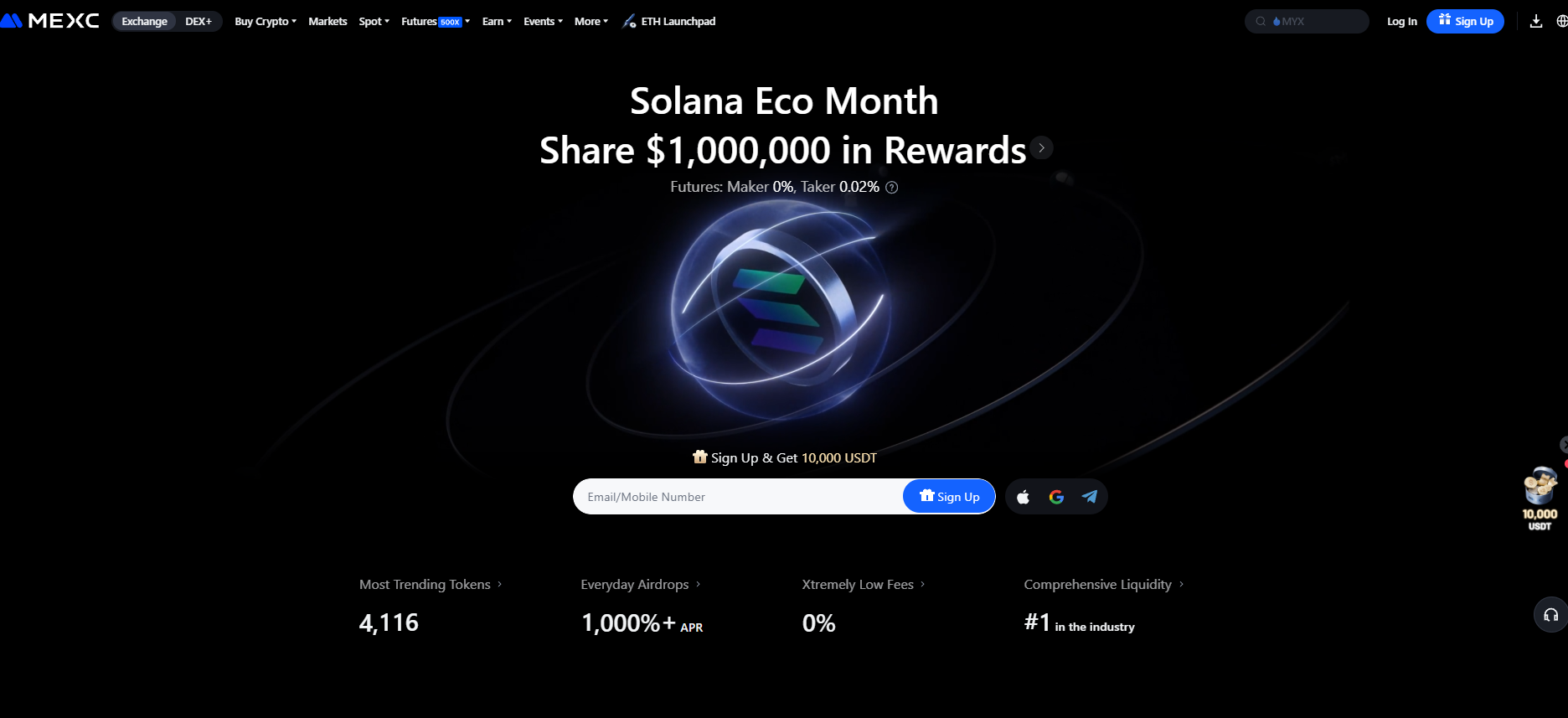
You get access to 200x leverage, deep order books, and a suite of advanced trading tools designed for experienced traders, not influencers. Futures, options, perpetuals, it’s all here, with a competitive fee structure and solid API performance for trading bots to rip through.
They support over 1,000 crypto assets, offer demo trading, and have one of the few mobile apps that doesn’t feel like a downgrade from desktop. No marketing gimmicks. Just scale, uptime, and muscle. Read more about it in our comprehensive MEXC review.
MEXC Pros & Cons
Pros
-
Up to 200x leverage on a massive list of crypto contracts
-
Rock-solid security with anti-phishing and cold wallet integration
-
0% maker fees and low taker fees on futures trading
-
Mobile app with full contract trading functionality
-
Supports over 1,000 digital assets for spot and futures
Cons
-
Interface can feel bloated for beginners
-
KYC required for higher withdrawal limits
-
Support response times can be hit or miss
Margex – Top Crypto Contract Trading Exchange
Some traders want max leverage. Others want protection from liquidation wipeouts. Margex gives you both without turning into a clown show.
This platform built its name on one idea: control. While the rest of the industry chases clout and copy trading, Margex rolled out MP Shield, a system that blocks price manipulation by hiding the order book from sketchy whales. That means no mystery wicks, no hunting stops with spoofed orders. Just clean execution on real crypto contracts.
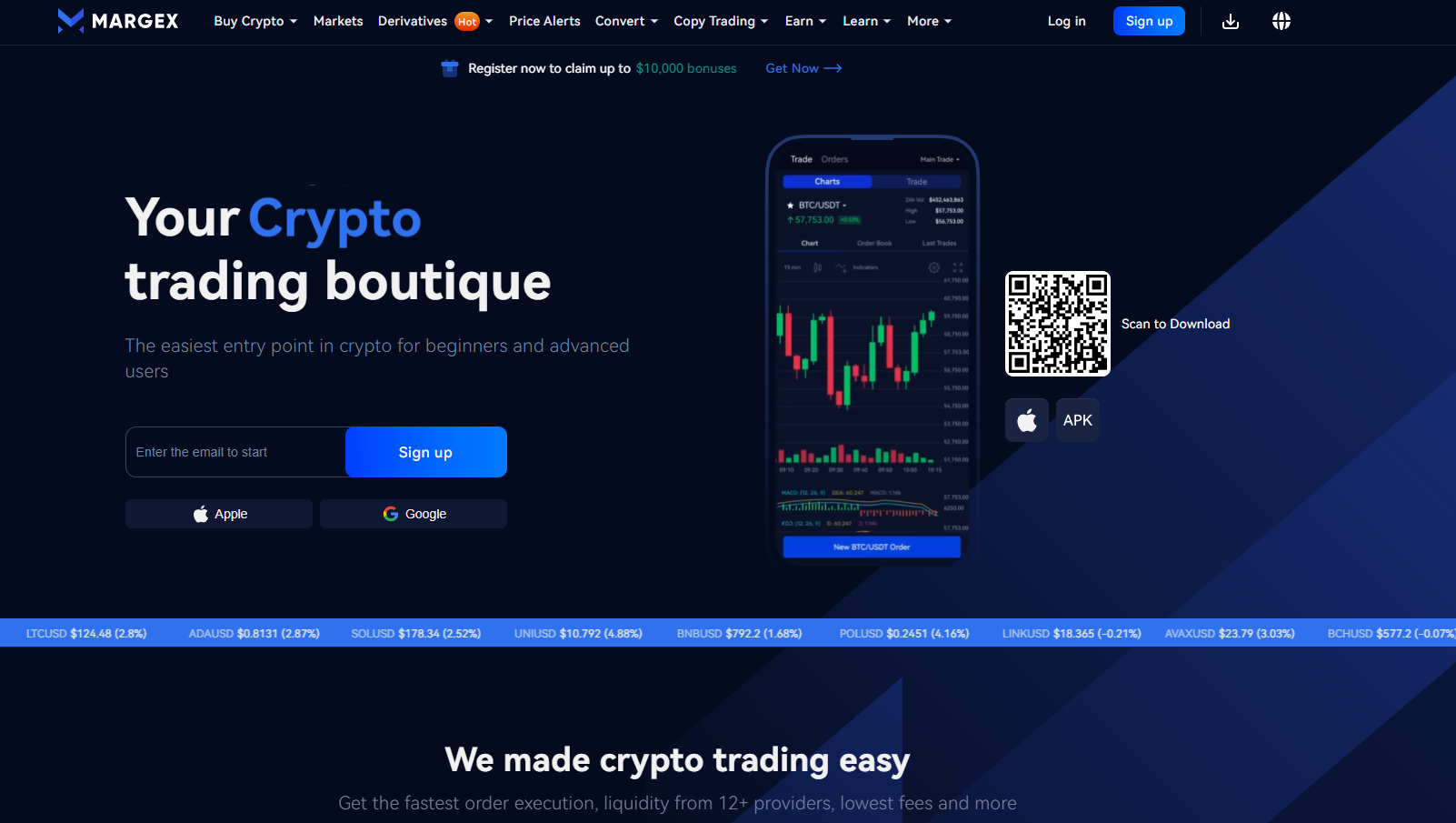
You can trade crypto futures with 100x leverage, deposit via bank transfer or crypto, and execute with a UI built for speed, not distractions. There’s also no slippage on market orders during normal conditions, which feels like cheating when the market’s on fire.
If you’re looking to trade crypto contracts without feeling like you’re in a casino run by bots, this is your quiet weapon. Check out this platform’s details in our separate Margex review.
Margex Pros & Cons
Pros
-
MP Shield prevents price manipulation and protects retail traders
-
Supports margin trading with up to 100x leverage
-
Clean, fast interface with minimal distractions
-
No slippage on market orders under normal market conditions
-
Fiat deposits via bank transfer or card available
Cons
-
Limited selection of trading pairs
-
No native token or trading fee discounts
-
Lacks advanced features like trading bots or copy trading
OKX – Popular Crypto Contract Trading App
Most trading apps are glorified tickers. OKX is a damn war room. This platform doesn’t just let you trade crypto futures it hands you an arsenal: copy trading, grid bots, options contracts, and a full-stack derivatives suite that runs just as smooth on mobile as it does on desktop. That’s rare. And it matters.
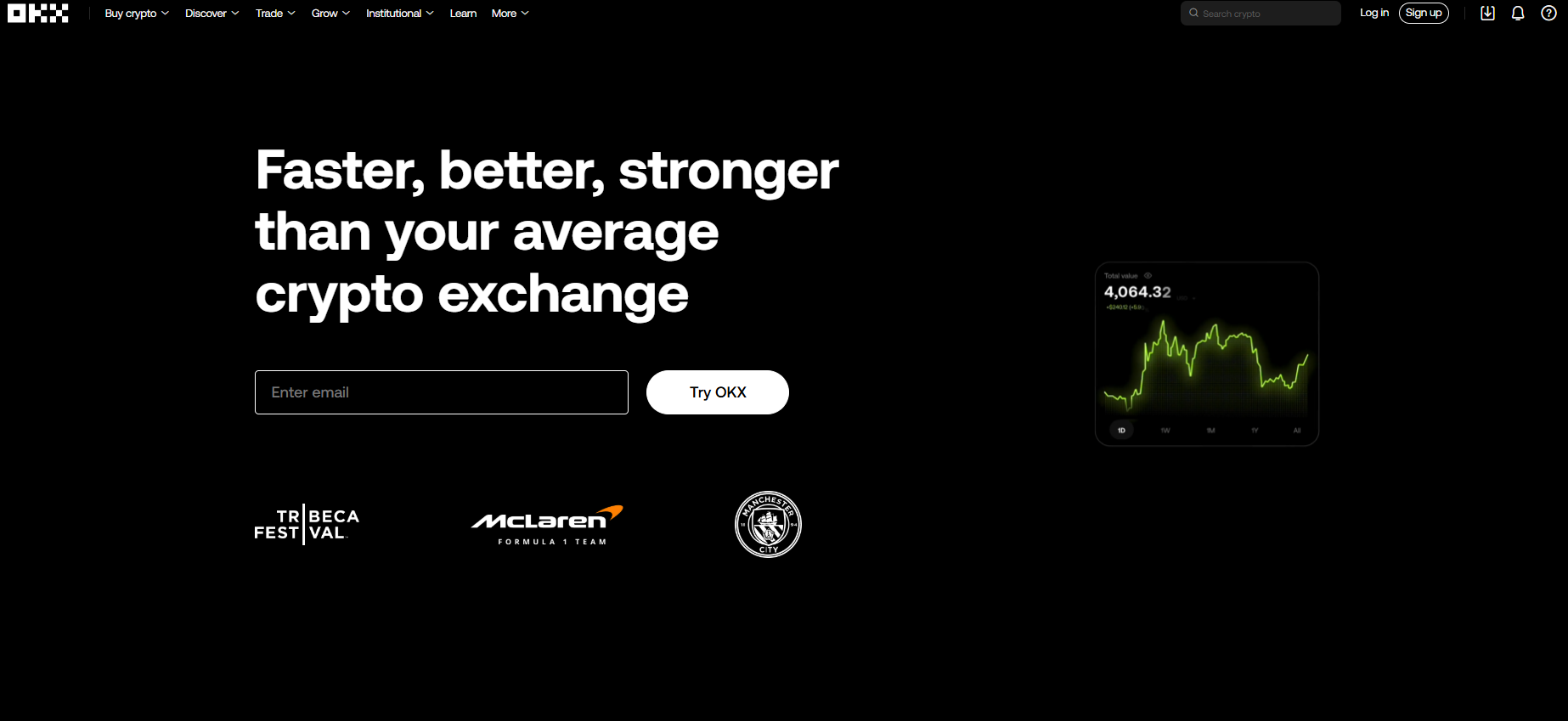
You get access to 125x leverage, deep liquidity, and nearly every crypto trading product under the sun like perpetual contracts, futures, options, and even DeFi integrations for when you’re feeling extra degenerate. All of it backed by slick execution, low taker fees, and an interface designed for speed, not spectacle.
If your trading doesn’t stop when you leave the desk, OKX is your pocket-sized powerhouse. One of the only mobile apps you’d actually trust to handle your crypto contract trading mid-flight, mid-coffee, or mid-dump. Read more about it in our dedicated OKX review.
OKX Pros & Cons
Pros
-
Full-featured contract trading on mobile and desktop
-
Access to perpetuals, options, and structured products
-
Low trading fees with additional VIP discount tiers
-
Advanced tools like trading bots and copy trading built in
-
Strong liquidity across major crypto contracts
Cons
-
KYC required for most trading features
-
Complex interface may overwhelm beginners
-
Heavily geo-restricted in some countries
Binance – Contract Trading Crypto Platform With High Liquidity
There’s a reason every new crypto trading platform markets itself as “the next Binance.” It’s because Binance already ate their lunch and is halfway through dessert.
This is the undisputed heavyweight of crypto contract trading. Binance Futures moves more volume than most competitors combined, with unmatched deep liquidity, a massive selection of trading pairs, and every contract type imaginable: perpetual futures, crypto options, coin-margined contracts, you name it.
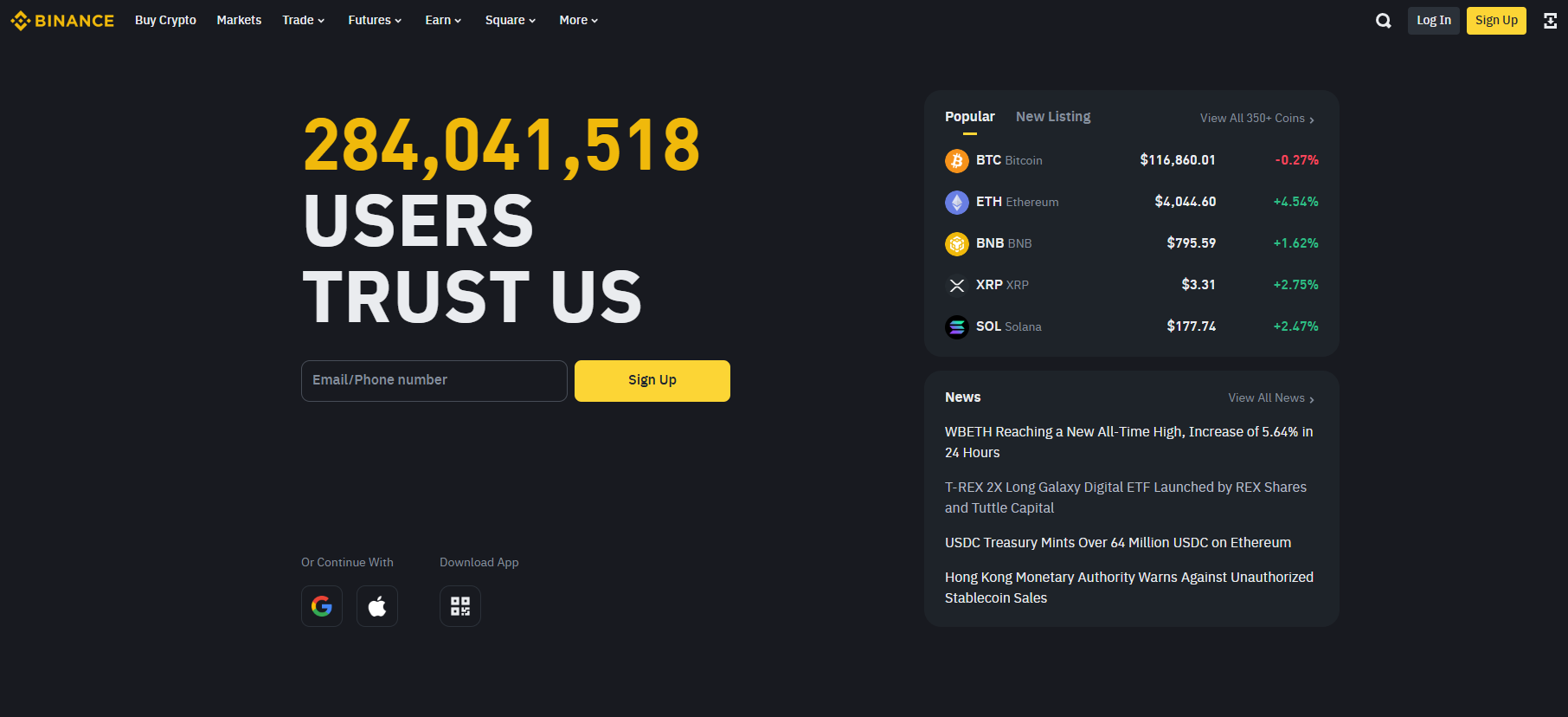
It offers up to 125x leverage, low taker fees, and real tools for experienced traders including advanced order types, hedge mode, and one of the best risk engines in the space. Oh, and if you’re hunting highly volatile microcaps or simply want to trade crypto contracts on assets no one else touches? They’ve probably listed it.
Binance isn’t perfect. It’s regulated to hell in some regions, KYC is unavoidable, and the UI is an actual jungle if you’re new. But for sheer firepower, this is the one to beat. Take a look at our Binance review for more.
Binance Pros & Cons
Pros
-
Largest selection of crypto contracts and trading products
-
Deep liquidity across all major futures pairs
-
Low taker fees with rebates for BNB holders
-
Access to options, perpetuals, and leveraged tokens
-
Professional-grade tools, from hedge mode to charting packages
Cons
-
Mandatory KYC for all users
-
Overwhelming interface for new traders
-
Not available in the U.S. or other restricted regions
Platforms For Crypto Contract Trading Compared
Not all crypto contract trading platforms are created equal. Some let you ape into perpetual contracts with zero ID, others hand you advanced trading tools that require a PhD to operate. And while every exchange loves to promise “low fees” and “deep liquidity,” most can’t deliver both without compromise.
So here’s the truth:
- MEXC is a bunker. Regulated, liquid, loaded with pairs, and built for traders who want security and scale without marketing gimmicks.
- Margex is surgical. Small but sharp, with protections in place to stop price manipulation and protect your initial investment from ghost wicks.
- OKX is the toolbox. From copy trading to crypto options contracts, it’s the platform for traders who want power in their pocket.
- Binance is the monster. You come here when size matters, when you want to trade crypto contracts at scale, and when you don’t mind navigating a maze to find gold.
They all have flaws. But in this market, you don’t need perfect. You need precision. Pick the one that matches your trading style and don’t look back.
How We Chose Best Contract Trading Crypto Platforms (Methodology)
We didn’t Google “best exchanges” and copy someone else’s list. Every platform here was stress-tested under real conditions: volatile markets, liquidity crunches, liquidation cascades, and fat-fingered entries. We traded. We withdrew. We rage quit. Then we came back for more.
Here’s what made the cut:
No pay-to-play. Just platforms that can handle a real trader’s velocity.
What is Crypto Contract Trading?
Crypto contract trading isn’t about owning the coin, it’s about owning the price action. You’re not buying Bitcoin. You’re buying the right to bet on whether Bitcoin goes up, down, or sideways. The asset itself? That’s just the underlying asset. You’re here for movement. Volatility. The kill.
Contracts in crypto mimic the structure of traditional derivatives: futures, perpetuals, and options contracts. Each one allows you to speculate on price movements without holding the asset itself. No crypto wallets. No swaps. Just execution.

The kicker? You don’t need to cough up the full position size. With leverage, you can control massive exposure with a smaller initial investment. That’s the power and the danger. Gains get multiplied. So do margin calls.
Unlike spot trading, contract markets are designed for velocity and aggression. Want to trade crypto contracts that expire on a future date at a predetermined price? You’re talking futures. Want to long or short until your soul gives out? That’s a perpetual contract.
And if you want the option, but not the obligation to buy or sell at a certain price, that’s the world of crypto options. The bottom line? Crypto contract trading is for those who understand the risk and want to weaponize it.
Types of Crypto Contracts You Can Trade
Welcome to the derivatives pit. Here’s what you’ll be slinging:
1. Perpetual Contracts: No expiry. No settlement date. Just raw, open-ended exposure to the crypto market. You hold the position as long as your margin lasts. These dominate most crypto contract trading platforms for a reason, speed, flexibility, and the chance to bleed or moon without a timer.
2. Futures Contracts: These are time bombs. You agree to buy or sell an underlying asset at a predetermined price on a future date. Great for hedging. Deadly for anyone who forgets what date the fuse runs out. You’ll find standard futures on Binance, OKX, and MEXC. If you want to trade these contracts, check out our list of futures contracts trading platforms.
3. Options Contracts: You’re buying the right, but not the obligation, to trade an asset at a certain price. Think of it as a tactical nuke expensive to misfire, devastating when used correctly. Crypto options trading is gaining ground with platforms like Deribit and OKX pushing deeper into the space. To trade options, you can take a look at our list of top crypto options trading platforms.
4. Coin-Margined Contracts: Instead of settling in USDT or stablecoins, you settle in the coin you’re trading. More risk, more reward. Get the trade wrong, you lose position and coin value. Get it right, you stack coin while riding price up. High risk, highly volatile, zero training wheels. According to Brookings,
Warren Buffett has famously analogized derivatives – financial instruments whose value depends on and thus is “derived” from the value of some other underlying security, such as a stock or a bond or the current price of a commodity – as “financial weapons of mass destruction.”
How Crypto Contract Trading Works?
You’re not here to HODL. You’re here to trade crypto contracts, weaponize volatility, and extract profit from chaos. So here’s how it actually works.
You open a position, long if you think the price is going up, short if you think it’s going to bleed. You’re not buying the asset itself. You’re speculating on its price movements using a futures contract, perpetual contract, or options contract.

Then comes leverage. With 10x, 50x, 1000x, your initial investment is just a fraction of the position size. Control $10K with $100? Sure. But that knife cuts both ways. If price moves against you by 1% on 100x? You’re liquidated. Gone. Margin calls don’t send emails they just pull the plug.
You place orders like market, limit, or stop, on your chosen crypto trading platform. Most platforms use USDT or another stablecoin as margin, but some offer coin-margined contracts too. Once filled, your P&L updates in real time. The trade runs until you close it… or it closes you.
The best part? You can trade crypto futures any time. 24/7. No open bell. No banker holidays. Just pure, relentless markets.
Crypto Contract Trading vs. Crypto Spot Trading
Spot trading is kindergarten. You buy crypto, you sell crypto, you hope the price goes higher than you paid. Simple. Safe. Boring.
Crypto contract trading is a different animal. You’re not buying the asset, you’re betting on price movements. That means you can profit when the market rips up or dumps down. You can use leverage to turn a small stake into a massive position. You can hedge spot bags or speculate purely on volatility.
Key differences:
Spot is investing. Contracts are war.
Benefits & Risks of Crypto Contract Trading
Trade contracts like you’re carrying live ammo. Respect the tool, or it’ll take you out. Lets dive in:
Benefits Risks
How to Start Trading Crypto Contracts: Step-by-Step Guide
If you’re new to contracts trading, platforms like MEXC make it surprisingly easy to get started. Here’s a practical walkthrough of how to open and manage your first crypto contract trading account using MEXC’s intuitive interface.
Step 1: Set up and Secure your Account
Before you can trade contracts, you need a verified account.
- Register: Sign up on the MEXC website or mobile app using your email or phone number.
- Enable 2FA: Go to Security and enable Google Authenticator or SMS verification. This is non-negotiable for protecting your funds.
- Complete KYC: While MEXC often allows basic functions without it, completing Identity Verification (KYC) is usually required to unlock full futures trading features and higher withdrawal limits.
Step 2: Fund your Futures Wallet
Your main funds usually land in your “Spot” wallet first. You must move them to the “Futures” wallet to trade contracts.
- Deposit crypto (like USDT) into your MEXC Spot account.
- Go to Wallet > Transfer.
- Select From [Spot] To [Futures].
- Choose the amount (USDT is the most common collateral) and confirm.
Step 3: Access the Futures Interface
- On the top navigation bar, hover over Futures.
- Select USDT-M (USDT-margined). This is the simplest version for beginners because your profits and losses are calculated in USDT.
- If it’s your first time, you may need to click “Open Futures Account” and pass a short risk quiz.
Step 4: Configure your Trade Settings
Before opening a position, look at the top right of the trading panel to set your “safety” parameters:
- Margin Mode: * Isolated: Limits your risk to just the money you put into that specific trade. (Recommended for beginners).
- Cross: Uses your entire futures balance to prevent liquidation.
- Leverage: Start low (e.g., 2x to 5x). While MEXC allows up to 200x, high leverage significantly increases the risk of losing your entire investment in a minor price swing.
Step 5: Open a Position
Decide which way you think the market is going:
- Long (Buy): You profit if the price goes up.
- Short (Sell): You profit if the price goes down.
Order Types:
- Market Order: Executes immediately at the current price.
- Limit Order: You set a specific price at which you want to enter the trade.
Step 6: Set a Stop-Loss and Take-Profit
This is the most important step for risk management.
- Take-Profit (TP): Automatically closes the trade when you’ve made a certain amount of profit.
- Stop-Loss (SL): Automatically closes the trade if the price goes against you, preventing further losses.
Pro Tip: Never trade futures without a Stop-Loss. It is your only safety net against liquidation.
How to Choose Right Platform to Trade Crypto Contracts?
Conclusion: Crypto Contract Trading Platforms
The crypto market doesn’t care about your feelings. It rewards precision and punishes hesitation. The platforms we’ve just walked through are where traders go when they’re done pretending spot trading is enough.
Crypto contract trading isn’t a casual game. It’s leverage, volatility, and the constant risk of significant losses if you blink at the wrong time. But for those who can control the impulse to overtrade, who respect the math and manage the downside, contracts are a weapon that can change your trading journey.
Whether you want the anonymity of no-KYC contract trading, the muscle of the largest exchanges, or a platform stacked with advanced trading tools, the choice is yours. Just remember, every futures contract you open is a deal with the market. It will keep its side of the bargain. Will you?
DISCOVER:
- Crypto Exchange Promos & Discounts
- Crypto Wallet Promos & Discounts
- Popular Crypto Futures Trading Platforms in the U.S.
- Ethereum Futures Trading Platforms for 2026
- Top-Rated Crypto Futures Trading Platforms in the UK
- TRON Futures: TRX Trading Guide for 2026
- Litecoin Futures: LTC Trading Guide for 2026
- Top-Rated 1000x Leverage Crypto Trading Platforms
FAQs
What is a crypto contract trading platform?

A crypto contract trading platform is a trading platform that lets you speculate on price movements of crypto assets without owning them directly. You trade futures contracts, perpetual contracts, or options contracts tied to an underlying asset, often with leverage.
Can beginners use crypto contract trading platforms?
Technically, yes. Practically, most shouldn’t. These platforms are built for more experienced traders who understand leverage, margin calls, and market volatility. Beginners should start small, many exchanges offer demo trading to practice before committing real funds.
What is leverage in crypto contract trading?
Leverage lets you control a larger position than your initial investment. For example, 10x leverage means $100 controls $1,000 worth of contracts. It amplifies potential profits and significant losses because even small price changes can liquidate your position.
Is contract trading in crypto risky?
Yes. Leverage plus a highly volatile cryptocurrency market equals a high chance of rapid liquidation. Without strict risk management, it’s easy to lose more than you intended.
Are contract trading platforms and derivatives platforms the same?
Yes crypto contract trading platforms are a type of crypto derivatives trading platform. Both terms refer to exchanges offering products like futures, perpetual contracts, and options contracts.
What’s the difference between futures and perpetual contracts?
Futures contracts have a set future date and predetermined price for settlement. Perpetual contracts have no expiry, you can hold them indefinitely, paying or receiving funding fees based on price movements.
Can I use trading bots on crypto contract trading platforms?
Many platforms, including OKX and Binance, support built-in trading bots or allow third-party API connections. Bots can automate strategies, but they won’t save a bad setup from liquidation in a volatile market.
References
- FINRA. “Security Futures.” FINRA, https://www.finra.org/rules-guidance/key-topics/security-futures
- “Leverage.” OptionsTrading.org, https://www.optionstrading.org/introduction/terms-phrases/leverage/
- “Option Contract.” Legal Information Institute, Cornell Law School, https://www.law.cornell.edu/wex/option_contract
- “Options.” Yale Law School, https://openyls.law.yale.edu/server/api/core/bitstreams/b7029700-c6c5-4831-bfac-e5a08c11d044/content
- “Options.” Defense Acquisition University, https://www.dau.edu/acquipedia-article/options

Why you can trust 99Bitcoins
Established in 2013, 99Bitcoin’s team members have been crypto experts since Bitcoin’s Early days.
Weekly Research
100k+Monthly readers
Expert contributors
2000+Crypto Projects Reviewed