




In This Article
The best perp DEX trading platforms make it possible to trade perpetual futures straight from your wallet, without relying on a centralized exchange to hold your funds. They use smart contracts to enable leverage, long and short positions, and continuous pricing, usually backed by on-chain liquidity pools or virtual AMMs. Because traders keep custody of their funds and trades are executed transparently on the blockchain, perpetual DEXs appeal to users who want advanced derivatives trading.
This guide breaks down the top perpetual trading DEX options based on how they feel to trade on, covering execution, fees, and liquidity, so you can quickly see which ones make sense for your style.
Key Takeaways
- Perpetual DEX platforms differ a lot in how they handle execution, liquidity, and fees
- Order-book platforms usually suit active traders, while pool-based designs work better for simpler directional trades
- Leverage, funding payments, and liquidation rules have a bigger impact than flashy features
- Non-custodial trading keeps you in control but puts more responsibility on your own risk management
- The best perp DEX is the one that feels steady and predictable once real money is on the line
Perp DEX Trading Platforms for Crypto Derivatives: Summary
This guide will walk you through the main perpetual DEX trading platforms and how they are likely to feel when you actually start trading. You will see how order-book platforms like dYdX and Hyperliquid compare to pool-based options like GMX, and where higher-risk, high-leverage platforms like Aster fit in. You will also get a sense of why Lighter appeals to traders who care most about keeping costs down.
By the end, you should have a clearer idea of which type of perp DEX will match your trading style. Whether you trade often, trade occasionally, or just want more control over your funds, this overview will help you narrow your options and choose a platform that feels manageable and predictable once trades are live.
Best Perp DEX Trading Sites in October 2026
Perpetual DEXs let you trade crypto futures straight from your crypto wallet, without handing control to a centralized exchange. If you already use a self-custody option like Best Wallet to manage your funds, these platforms will feel familiar.
In this section, we’ll look at the top perpetual DEXs and what each one does best, so you can quickly see which platform fits how you trade.
dYdX
dYdX is a decentralized platform made for people who trade crypto using perpetual futures. It’s built for traders who want speed, flexibility, and control over their money without relying on a traditional exchange to hold their funds.
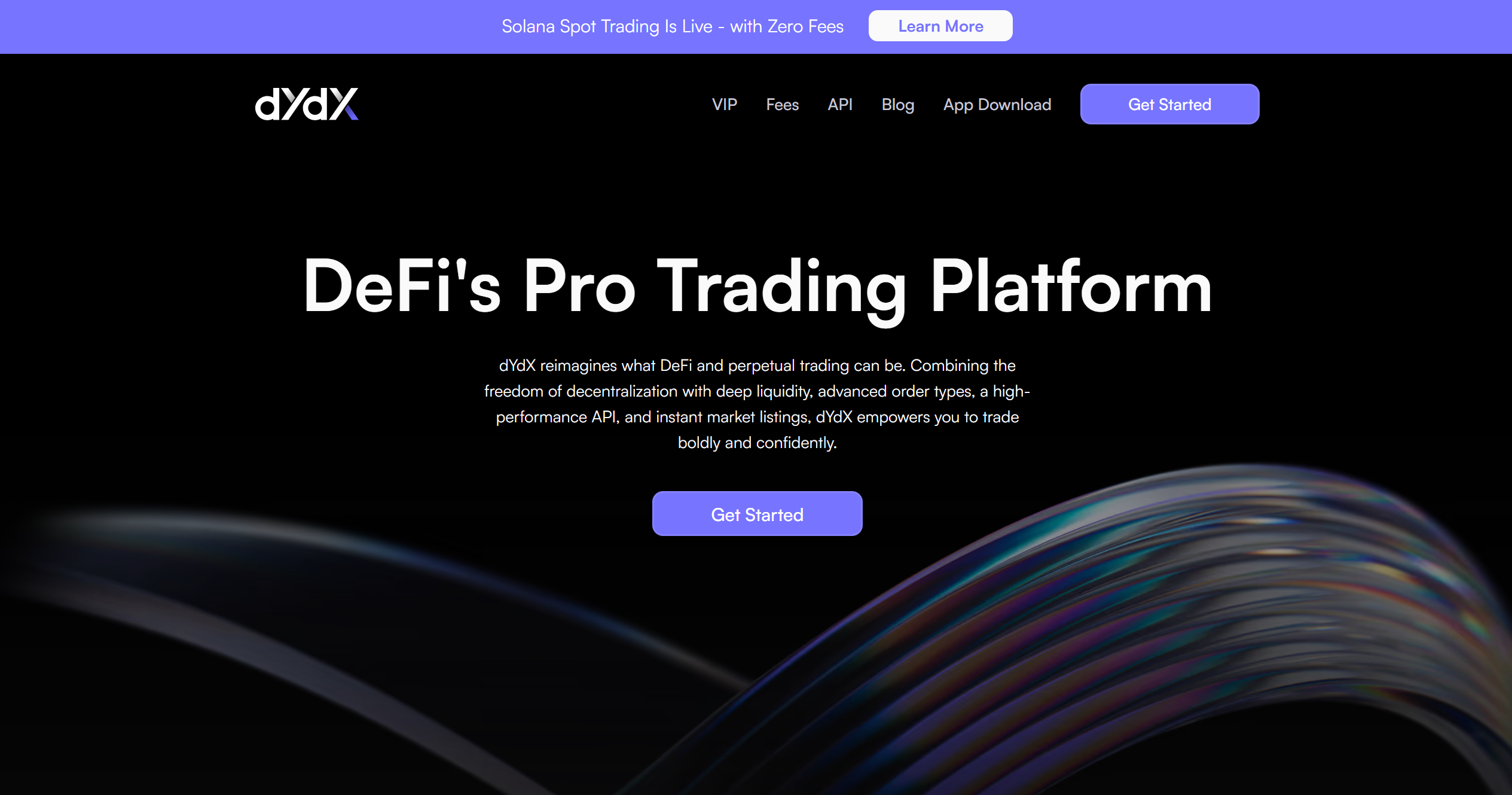
You can trade popular markets like Bitcoin and Ethereum, along with a decent range of altcoins, and use leverage that goes up to around 25× on the main pairs.
dYdX offers a decentralized order-book mechanism that delivers centralized-exchange speed with full self-custody. The platform runs on its own blockchain, which makes everyday trading feel smoother. You can place and cancel orders freely without worrying about gas fees every time you click a button, and your funds stay in your control the whole time. On the big markets, trades usually go through cleanly and prices stay close to what you expect, even when things get busy.
Fees depend on how much you trade over a 30-day period and whether you’re adding orders to the book or taking existing ones. The more active you are, the lower your fees tend to be, and some high-volume traders can even earn small rebates. Like all perpetual platforms, dYdX uses funding payments between buyers and sellers to keep prices in line with the regular market, which means holding positions can come with extra costs or payouts depending on conditions.
dYdX makes the most sense for traders who already understand leveraged trading, people who trade often enough for fees to matter, and anyone who prefers a self-custody setup instead of trusting a centralized exchange with their crypto.
Pros
-
Strong liquidity and reliable execution on major markets
-
Lower fees for active traders, with maker rebates at higher volumes
-
Non-custodial trading with gasless order placement
Cons
-
Smaller market selection than large centralized exchanges
-
Leverage and funding rates can catch newer traders off guard
GMX
GMX is a decentralized crypto trading platform that lets you trade spot markets and perpetual trades straight from your own wallet. Instead of matching buyers and sellers through an order book, GMX uses a shared liquidity pool, which helps keep fees low and trades smooth.
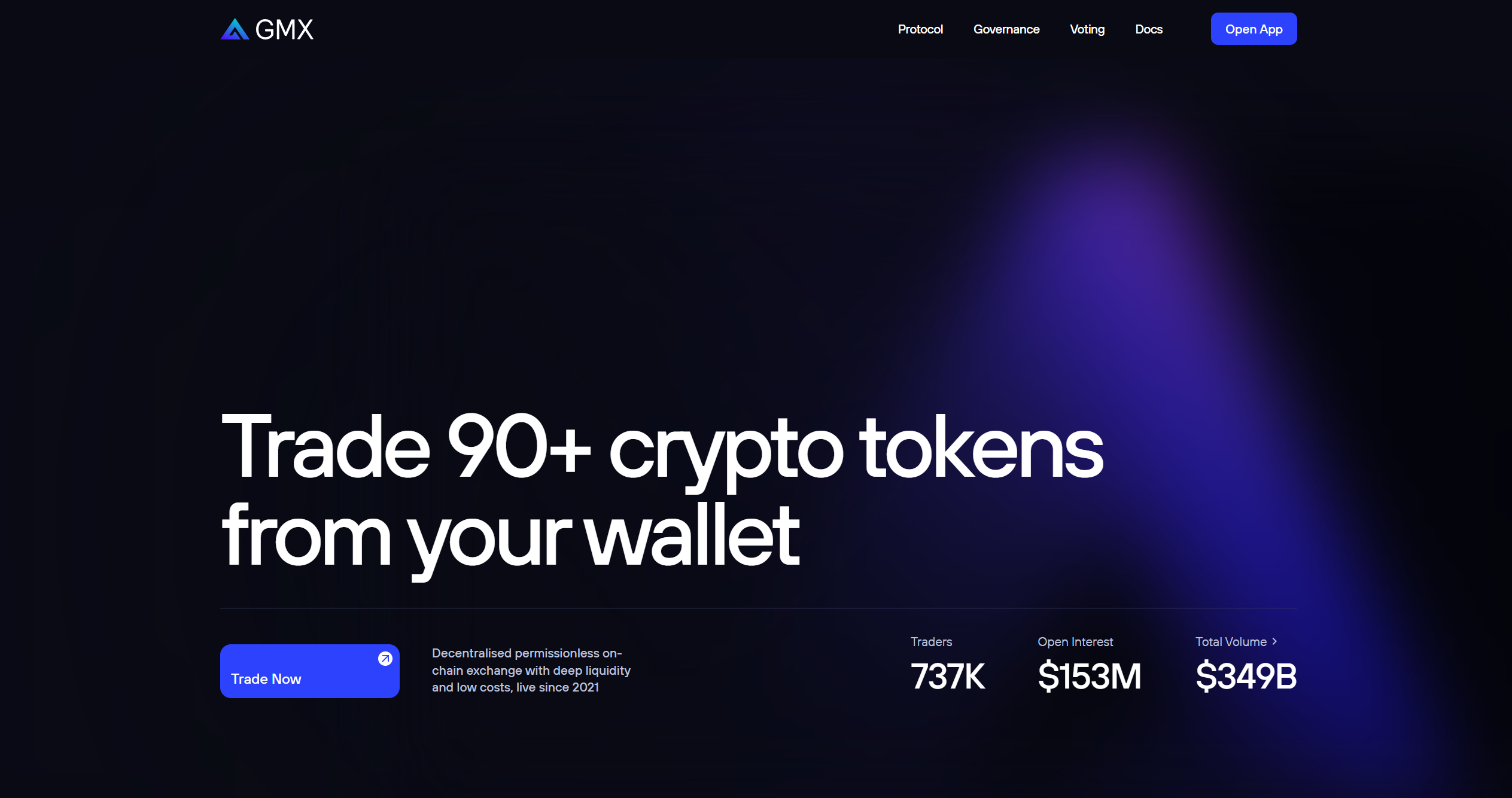
You can go long or short on major assets like Bitcoin and Ethereum, with leverage that can reach up to around 50× on supported markets.
GMX runs mainly on Arbitrum and Avalanche, giving users faster trades and lower costs than older Ethereum-based platforms. You stay in control of your funds the entire time, and trades are priced using reliable market data feeds rather than manual matching. The available markets focus on the most traded assets, with support depending on how the liquidity pool is set up.
Fees are generally a small percentage of your trade size and vary depending on the network and the type of trade you place. Instead of traditional funding rates, GMX uses a system where costs change based on how much of the shared liquidity pool is being used. This means holding trades can cost more or less depending on demand, but pricing stays predictable and transparent.
GMX works best for traders who want access to leverage without using a centralized exchange, people who prefer keeping their crypto in their own wallet, and traders who already understand the risks that come with leveraged trading.
Pros
-
Simple decentralized setup with leverage up to around 50×
-
Low fees and smooth pricing thanks to shared liquidity pools
-
Non-custodial trading directly from your own wallet
Cons
-
Smaller range of assets compared to large centralized exchanges
-
High leverage adds risk and may not suit brand new traders
Hyperliquid
Hyperliquid is a decentralized trading platform focused on perpetual futures and spot trading, built on its own custom blockchain. The idea is simple, you trade directly from your wallet, everything stays transparent on-chain, and trades execute fast enough to feel closer to a centralized exchange than most DeFi platforms.
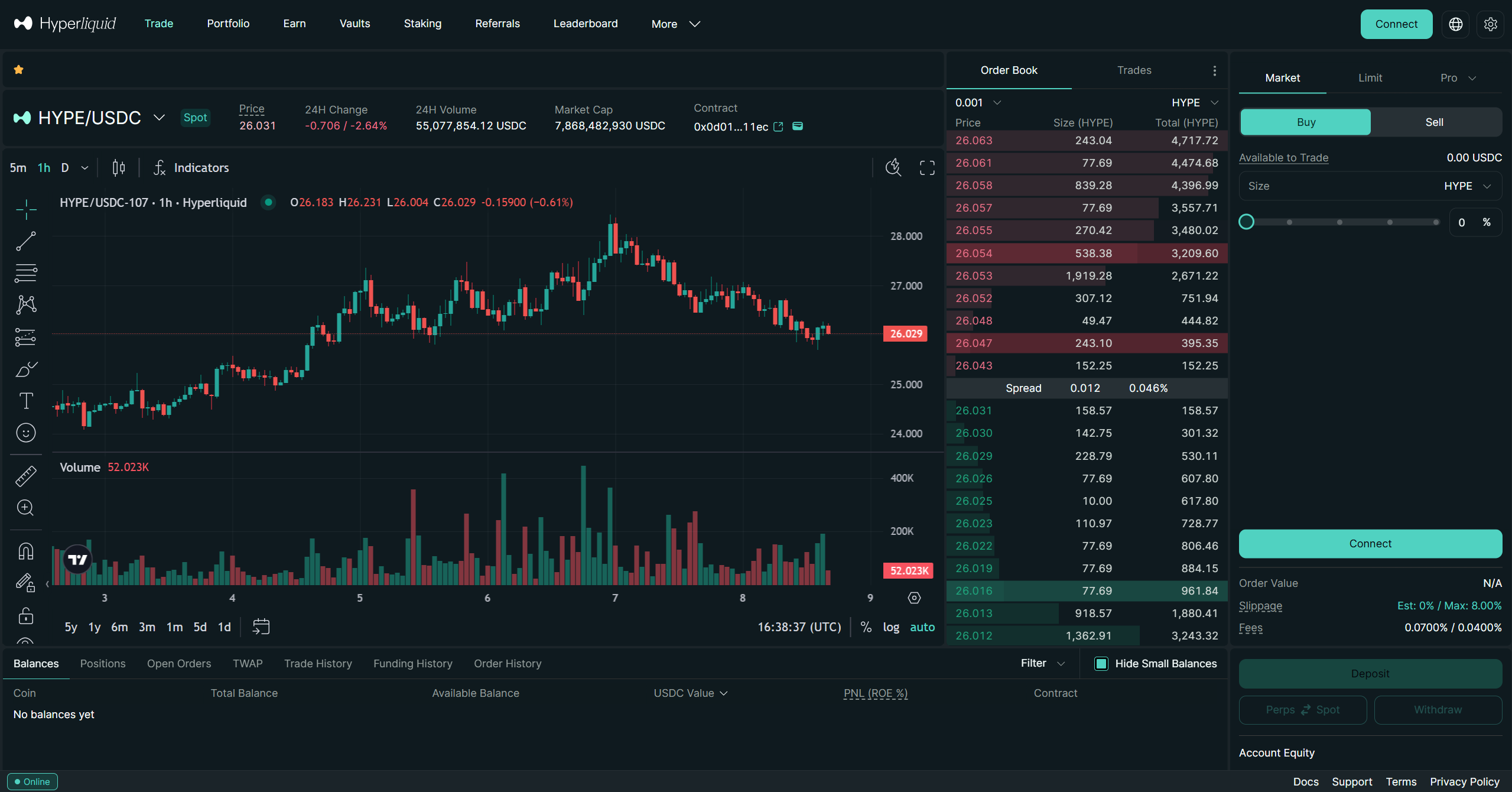
Hyperliquid is known for its ultra-fast execution and deep liquidity, making it suitable for high-frequency trading. The platform also supports a large number of markets, including major assets like Bitcoin, Ethereum, Solana, and Avalanche, plus a long list of other tokens. Some markets even launch early, before they appear on bigger exchanges. Liquidity on the main pairs is strong, which helps trades go through cleanly without big price jumps.
Leverage can go quite high, usually up to around 40× on major markets, with some situations allowing more depending on conditions. Fees are low by default and drop further as trading volume increases. Active users and stakers can unlock additional discounts, and in some cases, fees fall to levels that are hard to beat elsewhere. Funding payments happen regularly, usually about once per hour, and adjust based on how prices compare to the wider market.
All of this makes Hyperliquid a good choice for experienced traders who trade often, people who care about low fees and fast execution, and anyone who wants access to deep markets without handing custody of their funds to a centralized exchange. If you want to know more, take a look at our dedicated Hyperliquid review.
Pros
-
Very deep liquidity across a wide range of perpetual markets
-
Low fees with extra discounts for active traders and stakers
-
Fast trading while keeping everything on-chain and transparent
Cons
-
High leverage can lead to fast losses for inexperienced traders
-
Spot markets and mobile support are still limited compared to large exchanges
Aster
Aster is a crypto trading platform where you trade straight from your own wallet. There’s no need to deposit funds or trust the platform to hold your money. You connect your wallet, pick a market, and trade.
Aster works across several networks, including BNB Chain, Arbitrum, Ethereum, and Solana, which makes it easier to access different markets without jumping between platforms.
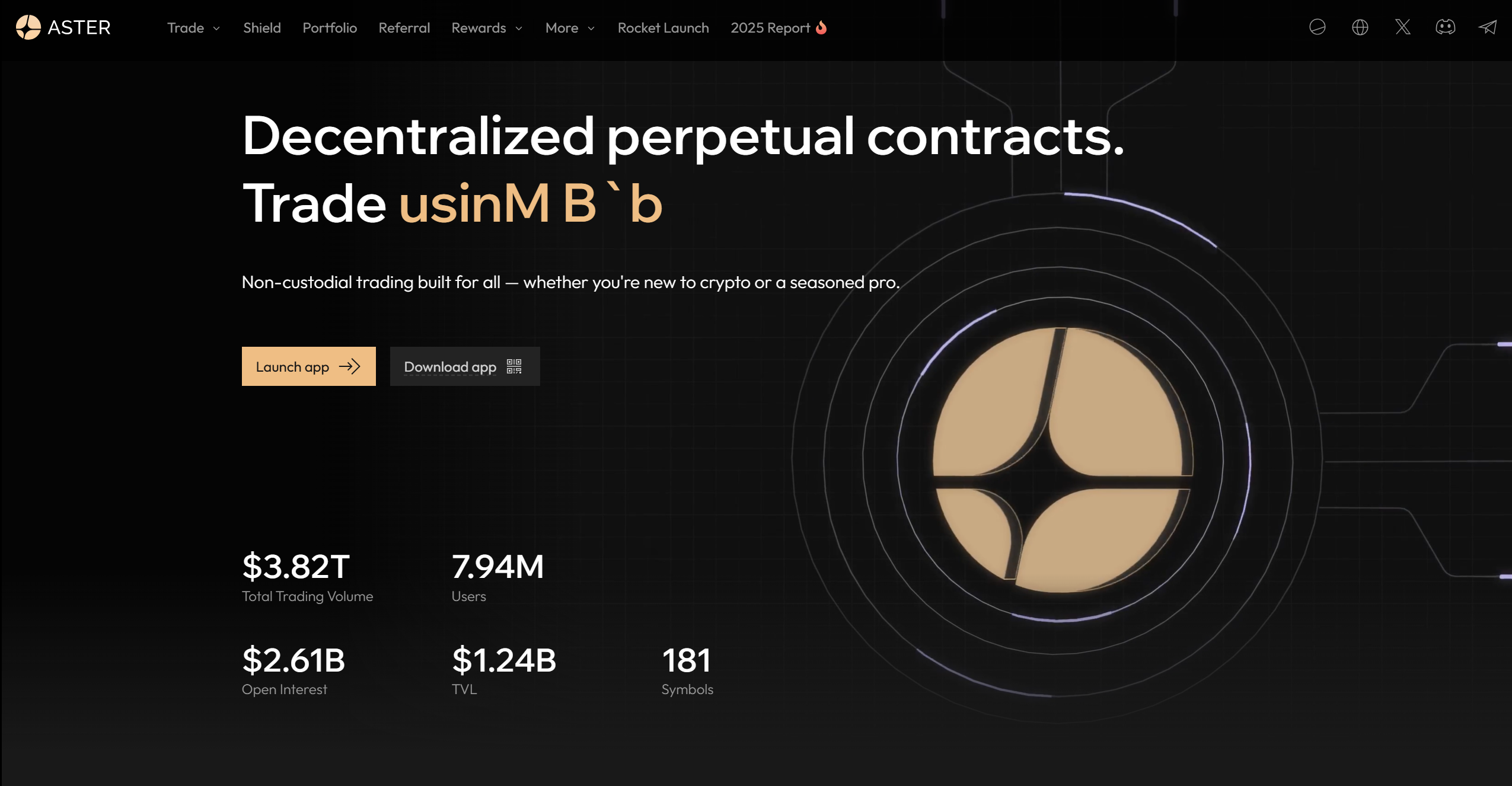
You can trade major coins like Bitcoin and Ethereum, and in some cases even markets linked to traditional assets. The platform gives you two layouts to choose from, a simple one for quick trades and a more detailed one if you want extra control.
Where Aster really grabs attention is with trade size. On some markets, it allows extremely high leverage, with reports of up to 1001×. That means small price moves can turn into big gains or big losses very quickly.
Fees start low, around 0.01% for maker trades and 0.035% for taker trades, and they can be reduced further if you choose to pay fees using the ASTER token. Prices are kept close to the wider market using regular updates behind the scenes, so trades stay in line even when activity spikes.
Aster makes the most sense for active traders who trade often, like having both a simple and advanced view, and understand the risks that come with using very high leverage.
Pros
-
Trade directly from your own wallet
-
Extremely high leverage available, up to 1001× on some markets
-
Low fees starting around 0.01% maker and 0.035% taker
Cons
-
Very high leverage can lead to fast losses
-
The advanced layout can feel overwhelming at first
Lighter
Lighter is a decentralized perpetual futures exchange built on Ethereum using zero-knowledge rollup technology. The focus is on fast execution, very low trading costs, and transparent trade handling, while keeping everything fully non-custodial.
Because it runs as an Ethereum Layer 2, traders can use leveraged perpetual markets without paying mainnet gas fees on every trade. Order matching and liquidations are provable on chain, which means trades can be verified instead of relying on opaque systems.
The platform supports perpetual markets for major assets like BTC, ETH, and other actively traded pairs. All trades ultimately settle back to Ethereum through its zk-rollup setup.
Leverage goes up to around 50x on major perpetual markets, which is in line with most competitive perpetual platforms today.
Fees are advertised as very low, and for many users they can be close to zero depending on activity levels and any rewards or points programs running at the time. Funding rates follow the standard perpetual model, with periodic payments between long and short positions to keep prices aligned with the underlying market. Exact rates depend on each individual market.
This works best for active perpetual traders, high-volume or high-frequency traders focused on keeping costs down, and traders who want non-custodial control with execution and risk clearly visible on Ethereum.
Pros
-
Very low or near-zero trading fees for many users
-
Fast order matching with verifiable execution and liquidations
-
Non-custodial trading with settlement anchored to Ethereum
Cons
-
Still a newer platform compared to long-established DEXs and centralized exchanges
-
Perpetual trading and funding mechanics can be difficult for newer traders
DEX vs. CEX for Perpetual Trading
Perpetual DEX platforms are ideal for traders who value self-custody and on-chain execution. However, if you prioritize deep liquidity, fiat support, or a more beginner-friendly setup, centralized platforms may be a better fit. To see how the top centralized options compare, check out our “Best Crypto Exchanges” overview.
Comparison Table – Top Perp DEX Platforms at a Glance
Here is a simple way to see how the main perp DEXs compare without overthinking it. The idea is to help you quickly figure out which one feels right for how you trade, based on leverage, fees, where trades run, and who usually uses each platform.
Platform
Max Leverage
Fees (Typical)
Chains / Settlement
Best For
dYdX
Up to 25×
Volume based maker and taker fees, rebates at higher tiers
dYdX Chain (Cosmos based)
Active traders, high volume traders
GMX
Up to 50×
Low flat trading fees, pool-based costs
Arbitrum, Avalanche
Wallet first traders, directional traders
Hyperliquid
Up to 40× (higher in some cases)
Very low maker and taker fees, volume discounts
Hyperliquid native L1
Scalpers, high-frequency traders
Aster
Up to 1001×
0.01% maker, 0.035% taker, token discounts
BNB Chain, Arbitrum, Ethereum, Solana
Aggressive traders, advanced users
Lighter
Up to 50×
Very low or near zero for many users
Ethereum Layer 2 (zk rollup)
High volume traders, cost-focused traders
Each of these ends up suiting a different kind of trader. Some make more sense if you trade all the time, others feel better if you want things simple and wallet-based, and a few are clearly built for people who like pushing leverage hard.
The right Perp DEX usually comes down to how often you trade, how much risk you’re comfortable taking, and how hands-on you want to be without a central exchange in the background.
How We Ranked the Best Perp DEX Trading Apps (Methodology)
Perpetual DEXs all promise speed, low fees, and self-custody, but the differences only show up once you start placing real trades.
This ranking was built by looking past feature lists and focusing on how each platform behaves during actual trading sessions, especially when markets are moving quickly.
Here’s what we looked at:
The platforms that ranked highest were the ones that stayed reliable during real trading, kept costs and risk easy to understand, and delivered tools that actually help once positions are live.
The goal was to surface platforms built for trading, not just watching charts.
Choosing the Right Wallet for Perpetual DEX Trading
Unlike centralized exchanges, perpetual DEX platforms require traders to connect a non-custodial wallet. Your wallet doesn’t just store funds, it authorizes trades, signs transactions, and directly impacts security. You can maybe take a look at Best Wallet, a top self-custodial wallet of 2026. However, if you want more options, do check out our roundup of “Top Crypto Wallets“
How to Choose the Right Perp DEX?
Picking a perpetual dex gets easier when you focus on trading outcomes. Your best fit among best-perp dex trading platforms depends on how you enter and exit perpetual markets, how sensitive your approach is to fee structure, funding rates, and funding payments, and how much you rely on CEX-level execution during fast moves in derivatives markets.
But wait, before you move further, we must ask you to take a look at our “What is Perp DEX” article to have a better understanding of the subject matter.
A platform that feels smooth for high-frequency traders doing perp trading can feel pricey after funding payments on longer holds, and a venue that feels perfect for major pairs can feel thin for smaller native assets.
Focus on Market Liquidity
Liquidity on the pairs you trade matters more than how nice a platform looks, especially in perpetual futures trading where leverage makes bad fills hurt quickly.
On perpetual futures contracts, good liquidity means tight spreads, enough depth to handle your size, and low slippage when you enter or exit. On order book platforms, this comes down to visible depth, reliable matching, and steady volume during fast markets. These platforms try to feel like centralized exchanges, which helps if you rely on limit orders and clean exits.
When it comes to pooled designs, instead of an order book, trades go through liquidity pools. Pricing depends on pool balance and usage, so slippage can increase when activity spikes. This can still work well for directional trades and smaller positions, as long as you keep size under control and accept that fills may vary.
A simple way to check liquidity is to test it yourself. Open a small trade on a major pair, place a few limit orders, then exit quickly. Pay attention to how fast orders cancel, how partial fills behave, and how closely prices track the wider market. If execution feels messy here, the rest of the platform matters much less.
Understand All-In Costs, Trading Fees and Funding
All-in cost is the main reason two perpetual exchange venues can feel totally different for the same strategy. In trade perpetual futures contracts flows, fees rarely stop at the trading fee. Many platforms use a maker-taker model, and your tier can change based on rolling trading volume, so low fee outcomes often depend on how you execute.
Some DEXs like dYdX and Hyperliquid offer low or zero gas fees on their dedicated chains. Funding is the second big cost driver in perpetual trading and perpetual contracts. Funding rates and funding payments keep perpetual futures prices anchored to spot, but they also change the math on holds.
When you compare venues, get two clear answers for every market you trade: what it costs to get in and out, and what it costs to hold. If you hold positions for hours or days, funding payments can dominate PnL even when zero-fee trading headlines sound tempting.
Also, keep an eye on the hidden friction: gas fees on certain chains, plus any platform-specific costs tied to pool usage or liquidation events. Cheap entry fees mean less if exits eat low-cost trades savings through price impact.
Check Margin Controls, Liquidation Behavior & How Risk Spreads
Margin design changes how risk behaves when trades move against you. Cross margin trading shares collateral across positions, which can help smooth temporary drawdowns, but it also increases overall risk exposure because one bad position can threaten the rest of the account. An isolated margin keeps a trade more contained, which many retail traders prefer for experimentation and clearer downside limits.
Available leverage on decentralized exchanges can vary widely, from conservative to extreme levels, but most perpetual DEXs typically offer leverage from 5x to over 100x, depending on the platform. However, when comparing perpetual dexes, don’t focus solely on max leverage. Look at maintenance margin, liquidation thresholds, and how the platform’s risk engines behave in fast markets.
Also keep the bigger picture in mind: counterparty risk and custodial risk differ across venues. centralized exchanges can offer strong execution, but they come with different custody and platform risks. Decentralized exchanges remove custody from the platform, but they introduce protocol and smart contract risks you need to respect.
Verify Pricing Inputs, Oracle Design & Failure Modes
Perp pricing lives on data inputs. On decentralized derivatives venues, pricing often depends on oracles and index data delivered into smart contracts via price feeds. You want clear documentation on data sources, update frequency, and how index price, mark price, and liquidation price are calculated.
You are looking for safeguards that reduce manipulation risk: diversified data sources, sane update intervals, and transparent logic around liquidations. Oracle issues can create ugly outcomes like surprise liquidations or temporary mispricing, especially in derivatives markets during sharp moves. Treat unclear pricing logic as a real risk factor, not a minor detail.
Factor In Security And Platform Maturity
Audits, clear documentation, and visible risk disclosures matter, especially on newer platforms. Even with strong security, smart habits still matter. Start small, avoid overexposure, and do not rely on a single venue for all activity.
Do A Short Live Trial
Before committing, trade the way you normally would. Track slippage, fees, funding, and how quickly you can exit. The right perp DEX is the one that feels predictable and controllable when things move fast.
DEX Perpetual Trading Strategies for 2026
Perp trading in 2026 still comes down to the same reality: leverage magnifies everything, and the market charges you in more ways than one. The edge usually comes from execution quality, cost awareness, and risk controls that keep you alive through the messy parts of perpetual futures trading and futures trading.

On order book platforms, limit orders often give better entries and lower costs, especially when maker fees are discounted. Market orders make more sense for exits or fast reactions. On pool-based platforms, sizing and timing matter more, since large trades during busy periods can move the price against you.
Build Funding Into Every Trade Plan
Funding can quietly shape profitability. Short-term trades may barely feel it, but longer holds can see funding outweigh trading fees. Before entering, check funding direction and size, then decide if the trade needs a shorter horizon, lower leverage, or better entry to justify the carry.
Treat Leverage As A Dial
Leverage works best when it is adjusted per setup, not locked at a high number. Start with how much you are willing to lose, then calculate leverage that fits that risk with room for volatility, funding, and imperfect exits. If leverage needs to be extreme for the trade to work, the setup is usually weak.
Focus On Two Core Trade Types
Most perp trades fall into trend or range setups. Trend trades work better when entered on pullbacks with clear invalidation levels, not by chasing. Range trades rely on tight stops and fast exits when the range breaks. On perps, avoiding one oversized loss matters more than squeezing every move.
Use Perps For Simple Hedging
Perps can offset spot exposure without selling. A short position can reduce downside during uncertain periods, but hedges should be sized calmly and reviewed often. Funding still applies, so hedges are not set and forget trades.
Keep Risk Management Boring
Set a clear loss limit per trade, watch correlated exposure, and reduce leverage when conditions turn messy. The most consistent perp traders in 2026 are not chasing maximum leverage, they are managing costs, controlling risk, and staying in the game long enough for good trades to add up.
A strong perp approach ends up feeling calm and almost dull. Trades are planned, costs are known upfront, leverage stays reasonable, and bad days stay manageable. That consistency is what keeps accounts alive over the long run.
How to Trade Perpetual Futures? Step-by-Step Guide
Perpetual futures trading on Hyperliquid feels familiar once you reach the trading screen, but onboarding has a few extra steps. This flow follows Hyperliquid’s own rules and works as a template for most perp DEXs.
-
Connect Your Wallet And Enable Trading
Connect your wallet and approve the request. Click “Enable Trading” and sign the gasless message to activate trading permissions.
-
Deposit Collateral (USDC For Perps)
Perps use USDC as collateral. Deposit USDC directly or send a spot asset and convert it into USDC, USDH, or USDT. Confirm the transaction in your wallet.
-
Pick The Market And Direction
Choose the perp you want to trade. Go long if you expect the price to rise, short if you expect it to fall. Check the funding rate before entering.
-
Choose Margin Mode
Cross margin shares collateral across positions. Isolated margin limits risk to one position. Some assets only support isolated margin.
-
Set Size And Leverage
Position size equals leverage multiplied by collateral. Higher leverage lowers required margin but increases liquidation risk.
-
Place Orders And Controls
Use market or limit orders, plus stop and take variants. Reduce-only prevents flipping positions. Add take profit and stop loss if needed.
-
Check Fees, Funding, And Liquidation
Fees depend on 14-day volume. Funding is paid hourly based on perp price versus the oracle. Monitor liquidation price closely.
-
Close And Withdraw
Exit by trading the opposite side and use reduce-only if needed. Withdraw funds from the Portfolio page once settled.
After a few trades, this becomes routine. Size the position, set leverage, define exits early, then monitor funding, fees, and liquidation.
Conclusion
Picking the best DEX to trade perpetuals really comes down to how you trade day to day. Some platforms feel great if you trade often and care about tight spreads and clean fills. Others keep things simpler and work better if you like trading straight from your wallet without overthinking it.
If order books and predictable execution matter most to you, dYdX and Hyperliquid are usually solid picks. For those of you who prefer pool-based pricing and a more straightforward setup, GMX tends to feel easier. Traders who like pushing leverage hard may gravitate toward Aster, while those focused on keeping costs as low as possible often look at Lighter.
There is no single platform that works best for everyone. The right choice is the one that makes your trades feel controlled, your costs easy to track, and your risk clear. Once those pieces line up, everything else matters a lot less.
See Also:
- Risks Behind MicroStrategy’s Bitcoin Bet Explained
- Top Polymarket Alternatives in 2026
- 99Bitcoins’ Q4 2025 State of Crypto Market Report
FAQs
Which perp DEX has the lowest fees?

Hyperliquid and Lighter tend to be the cheapest for active traders, with fees that can approach zero at higher volumes. Aster also starts low, but funding and slippage still affect total cost.
What leverage levels are available on decentralized perpetual exchanges?
Most platforms offer 20x to 50x on major markets. Some, like Aster, go much higher on select pairs, which greatly increases liquidation risk.
How to connect your Web3 wallet to a perpetual DEX
Click “Connect Wallet,” approve the connection, enable trading by signing a message, then deposit collateral if required. You trade directly from your wallet.
Which perpetual DEX has the highest liquidity?
Hyperliquid currently has the deepest liquidity on major perp markets. dYdX is also strong on core pairs.
What is the safest decentralized platform for perpetual trading?
No platform is risk free. Safer options tend to be those with audited contracts, clear liquidation rules, and transparent on-chain execution.
Do Perp DEXs have hidden costs?
No hidden fees, but funding rates, slippage, gas fees, and liquidation penalties can add up.
Are funds recoverable on Perp DEXs if something goes wrong?
Trade losses and liquidations are final. Recovery from platform issues depends on the protocol and any insurance or compensation mechanisms it has.
References
- Cornell SC Johnson College of Business. “Perpetual Futures Contracts and Cryptocurrency.” Cornell University, business.cornell.edu/article/2025/02/perpetual-futures-contracts-and-cryptocurrency/.
- Code the Change Stanford. “Zero-Knowledge Proofs.” Stanford University, codethechange.stanford.edu/guides/guide_zk.html.
- Chainlink. “What Is a Zero-Knowledge Rollup?” Chainlink, chain.link/education-hub/zero-knowledge-rollup.
- U.S. Commodity Futures Trading Commission. “Futures Market Basics.” CFTC.gov, https://www.cftc.gov/LearnAndProtect/AdvisoriesAndArticles/FuturesMarketBasics/index.htm.

Why you can trust 99Bitcoins
Established in 2013, 99Bitcoin’s team members have been crypto experts since Bitcoin’s Early days.
Weekly Research
100k+Monthly readers
Expert contributors
2000+Crypto Projects Reviewed