




So you want to dance with leverage in the land of the free? Welcome to the jungle of crypto futures trading platforms U.S. style. Where volatility’s a feature, not a bug, and risk is the admission ticket. If you’re an American looking to trade crypto futures, good luck navigating the regulatory minefield, fake-out platforms, and endless “verification successful waiting” screens that freeze just when Bitcoin rips 10%. But don’t worry we’ve sifted through the noise.
This guide tears into the best crypto futures trading platforms in the United States for 2026. Not the ones with influencer giveaways or TikTok ads. The real ones. The ones with deep liquidity, razor-tight spreads, and enough security muscle to make a government-grade infosec team nod in approval. If your platform keeps teasing you with sign-ins, verification loops, and email confirmations while your position dangles over the abyss, strap in.



Key Takeaways
- Top crypto futures trading sites in the U.S. vary wildly in fees, leverage, and regulatory status, choose wrong, and you’ll bleed.
- Most U.S.-compliant crypto futures exchanges require full KYC and account verification before you can trade.
- Coinbase stands out with liquidity, responsive support, and a massive library of trading products and features.
- Users will need to fund their account, verify their identity, and set strong passwords to trade securely.
- Tax on crypto futures trading in U.S. applies to every completed position, track it or get burned later.
- The best crypto futures platforms for Americans also offer tools, pro-level dashboards, and mobile apps to stay in control.
We’ll expose the top crypto futures brokers in the U.S., lay out the pros without the fluff, and give you the tools to spot U.S.-compliant crypto futures exchanges that won’t block your account the second you try to withdraw gains. You’ll get the real scoop on: platforms to trade Bitcoin or Ethereum futures in the U.S. How to open, download, and complete your setup on legit apps. The difference between noise and signal in the crypto margin trading U.S. scene. And what strategies work when you’ve got leverage but no second chances
We will also discuss topics that some may shy away from, like the tax consequences of crypto futures trading in the U.S. and what to do if your connection fails during a trade, leaving you with just a Ray ID and a frustrating “try again” message.
If you’re looking for an SEO-drenched brochure, move along pleb. This is a trader’s map to the real battleground of Bitcoin futures trading platform in U.S. soil. Because when you’re going pro, the platform you choose is your life raft. Your plan. Your edge. You ready? Let’s proceed.
Futures Trading Crypto Platforms USA: Summary
We’re not talkin your cousin’s bag-holding strategy. We’re talking U.S. crypto futures exchanges built for real traders. Platforms that offer deep liquidity, allow real leverage, and don’t collapse when the market decides to breathe fire. According to Harvard Business School,
While it might sound complicated, a derivative is simply any financial instrument that gets its value from the price of something else. And because it’s a derivative, the value of this agreement is based on the predetermined and current price of the “something else.” Financial derivatives come in three main varieties: Forward contracts, Futures contracts, and Option contracts.
In 2026, the line between regulated cryptocurrency futures platforms in U.S. and offshore chaos is razor-thin. You either trade on a venue that’s U.S.-compliant, or you roll the dice on getting blocked, liquidated, or worse, ghosted mid-trade with nothing but a Ray ID and a support ticket that no one reads. Every platform reviewed is accessible to U.S. residents either directly or through compliant, verified routes. And we’ve tested each one from sign-up, email verification, password setup, wallet deposit, you name it.
This is the short list. The ones that won’t leave you hanging mid-trade. Now let’s break each one down.
Best Crypto Futures Exchanges in the U.S.
Let’s stop pretending this market’s fair. The guy who gets filled faster, pays less in fees, and doesn’t get rugged by UI lag? That’s the guy who wins. Welcome to the battleground of crypto futures trading platforms U.S. style. Where milliseconds matter, and verification successful waiting is just a polite way of saying you’re already liquidated.
This section is for traders who want futures, not friction. You’ve got skin in the game, you’ve got a plan, and now you need a platform that doesn’t choke when the market goes full psycho. These are the best leveraged crypto trading platforms U.S. traders can actually access without VPN gymnastics or legal gray zones.
We’ll review each U.S.-compliant crypto futures exchange the way a trader would: Can I get in fast? Can I pull my profits out faster? Is my account safe when I sleep? And does the platform deliver when the market doesn’t?
Coinbase – Best Overall Crypto Futures Trading Site for Americans
Coinbase takes first place on our list because it gives U.S. traders regulated access to leveraged crypto futures through a household name. Coinbase offers crypto futures through Coinbase Financial Markets, a CFTC-registered futures commission merchant, giving American traders a compliant route into one of the most volatile corners of crypto.
You can trade over 150+ crypto perpetuals and futures contracts, including major markets such as Bitcoin and Ethereum, plus selected altcoin futures. It also supports nano BTC, nano ETH, nano SOL, and nano XRP perpetual-style futures with a five-year expiration date, making Coinbase one of the most accessible crypto futures platforms for U.S. traders who want regulated exposure without diving into gray zones.
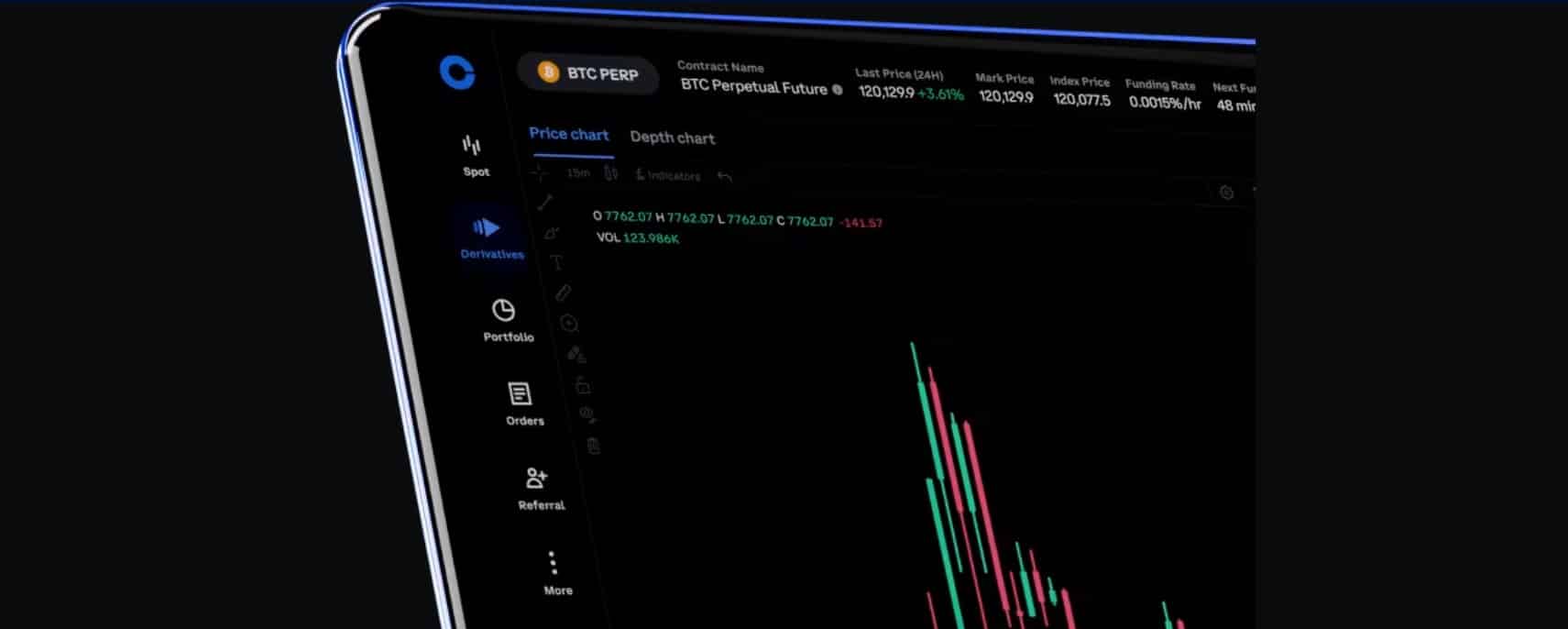
The fee structure is competitive, with futures trading fees listed at 0.020% maker and 0.040% taker. Maximum leverage is capped at 10x, which is lower than some rivals, but that is also part of Coinbase’s appeal for beginners and compliance-minded traders. The platform is built around regulated access, straightforward account controls, and a familiar interface rather than maximum degen leverage.
Coinbase has also added or plans to add perpetual-style futures for Shiba Inu, Avalanche, Bitcoin Cash, Cardano, Chainlink, Dogecoin, Hedera, Litecoin, Polkadot, SUI, and Stellar.
Coinbase is the choice for trading perpetual futures, especially if you’re a beginner. Read more in our full Coinbase review.
Pros
-
Regulated by the CFTC through Coinbase Financial Markets
-
Trade over 150+ crypto perpetuals and futures contracts
-
Supports nano BTC, ETH, SOL, and XRP perpetual-style futures
-
BTC, ETH, SOL, and XRP futures markets are open for trading 24/7
-
Competitive futures fees and strong daily futures volume
Cons
-
Low maximum leverage compared to some exchanges
-
Full account verification is required for regulated access
Kraken – Serious Player in Crypto Futures
Kraken is the other serious regulated name U.S. traders should look at. It has been around since 2011 with an excellent reputation for security, and has invested heavily in derivatives infrastructure.
For U.S. clients, Kraken Derivatives US provides access to regulated futures products. Kraken users have access to CME-listed Bitcoin, Ether, equity index, FX, and commodity futures through Kraken Derivatives US. That gives American users a way to trade futures from within a platform they may already use for spot crypto.
Kraken is best suited to traders who care about order execution, account security, and a mature trading interface, and Kraken Pro gives active users more advanced order types, better charting, and, in our opinion, a cleaner experience than the standard retail app.
U.S. clients should check product eligibility inside their own account, because availability depends on verification, location, and the specific derivatives product.
Kraken’s futures offering can feel less flashy than some venues, and you will not find the same easy “125x on everything” marketing. But you might call that a strength. Kraken’s value is not reckless levels of leverage, but about regulated access, infrastructure, and a more serious trading environment.
Pros
-
Regulated U.S. futures access through Kraken Derivatives US
-
Long operating history and strong security reputation
-
Good fit for users already trading on Kraken Pro
-
Access to CME-listed futures products for eligible U.S. clients
-
Cleaner regulatory footing than offshore futures platforms
Cons
-
Derivatives availability depends on account eligibility and location
-
Less aggressive leverage than offshore perpetual futures venues
-
May feel more complex for complete beginners
OKX – Top Crypto Futures Broker in U.S.
OKX used to be the kind of platform U.S. traders had to sneak into like it was some speakeasy for degens. Not anymore. As of 2024, OKX officially supports U.S. users through its dedicated U.S. onboarding portal. No VPN, no Ray ID errors, no TOS-dodging footwork just a clean sign-up, fast email verification, and you’re inside.
And once you’re in? It’s easy to see why OKX has earned a spot among the best crypto futures trading platforms in the United States. The platform is sleek, responsive, and stacked with features that don’t sacrifice speed for polish. You get deep liquidity on BTC and ETH, plus solid altcoin coverage. Charts move in real time. Leverage goes up to 125x on selected pairs. And the backend? Industrial-grade.
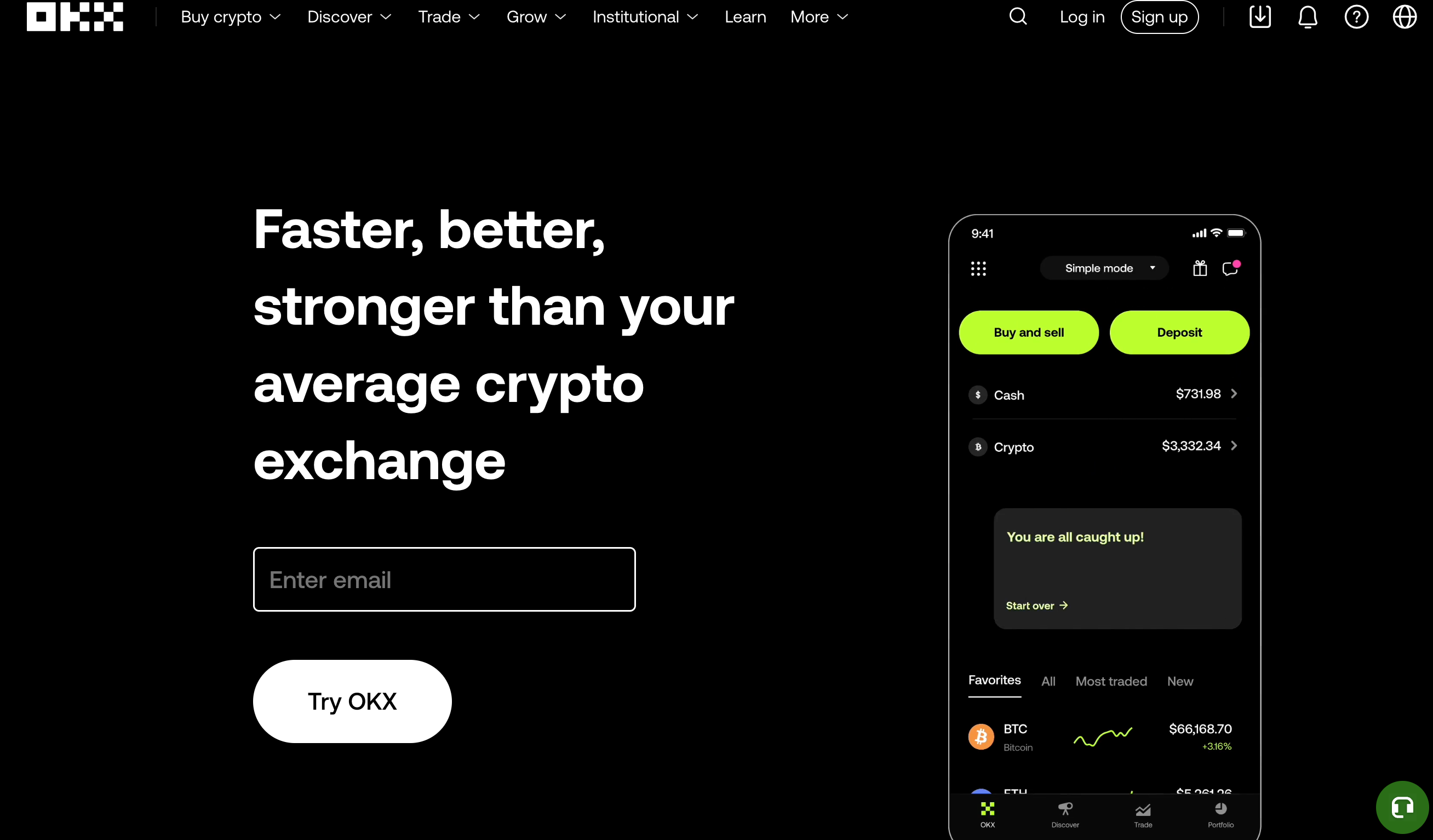
There’s also a powerful mobile app, which means you can babysit your positions, adjust margin, or take action mid-flight without fumbling through a web interface. Still, it’s not all sunshine. Their support team can be slow to respond during high volatility, and while trading fees are competitive, they’re not the cheapest unless you’re holding their native token or climbing the VIP tiers. New users won’t get hit with high costs upfront, but don’t expect zero fees either.
If you’re planning to trade crypto futures regularly from the U.S., and want a trusted, battle-tested exchange with pro-level tools that doesn’t feel like it was built for beginners, OKX might be your move. Read more about it in our separate OKX review.
OKX Pros & Cons
Pros
-
Now fully supports U.S. users through official onboarding
-
High leverage, advanced charting, and stable infrastructure
-
Deep liquidity across major and mid-cap futures pairs
-
Slick mobile app with full-featured trading tools
Cons
-
Customer support can be slow during peak volatility
-
Futures fees are average unless you’re a VIP or token holder
-
U.S. product lineup is still expanding and lacks some features from global version
Bitbase – New Player Rates High on Trust and Fees
Bitbase is a newer global exchange competing on product range, onboarding, and trading access. It supports spot trading and crypto futures products, including USDT/USDC-margined contracts, and offers a wide range of services along with futures.
Crypto spot trading is on offer, along with USDT-margined (USDT-M) and USDT-margined (USDC-M) perpetual futures, and it all lives under one account, so you can jump between sections without needing separate platforms. Futures are settled in stablecoins, making trading simpler.

Bitbase began with 325+ trading pairs, spot and futures access under one account, and a very clean interface. Its futures fees are competitive, with 0.02% maker and 0.06% taker fees.
For traders who want a platform with futures access and a broad product set, Bitbase is worth watching.
Pros
-
Supports spot and crypto futures products under one platform
-
325+ trading pairs gives users a broad market list
-
Competitive futures fees compared with many retail exchanges
-
Clean interface and simple onboarding flow
Cons
-
Newer exchange with a shorter public track record
-
Users should verify futures availability in their own jurisdiction
BloFin – High-Leverage Crypto Futures Platform in U.S.
BloFin clocks in as a futures-first exchange brimming with features: over 530 USDT‑margined perpetual contracts, up to 150× leverage, integrated trading bots, copy trading, demo mode, and serious backend security via Fireblocks. It stands out among top crypto futures brokers in the U.S. – if you can actually get in
Not all of the U.S. is welcome, though. Despite marketing itself broadly, BloFin currently restricts U.S. access in many states. American users report needing a VPN to proceed, a red flag for compliance-minded traders (and a possible tactic to get blocked). That said, if you manage to register, the trading experience checks many boxes.
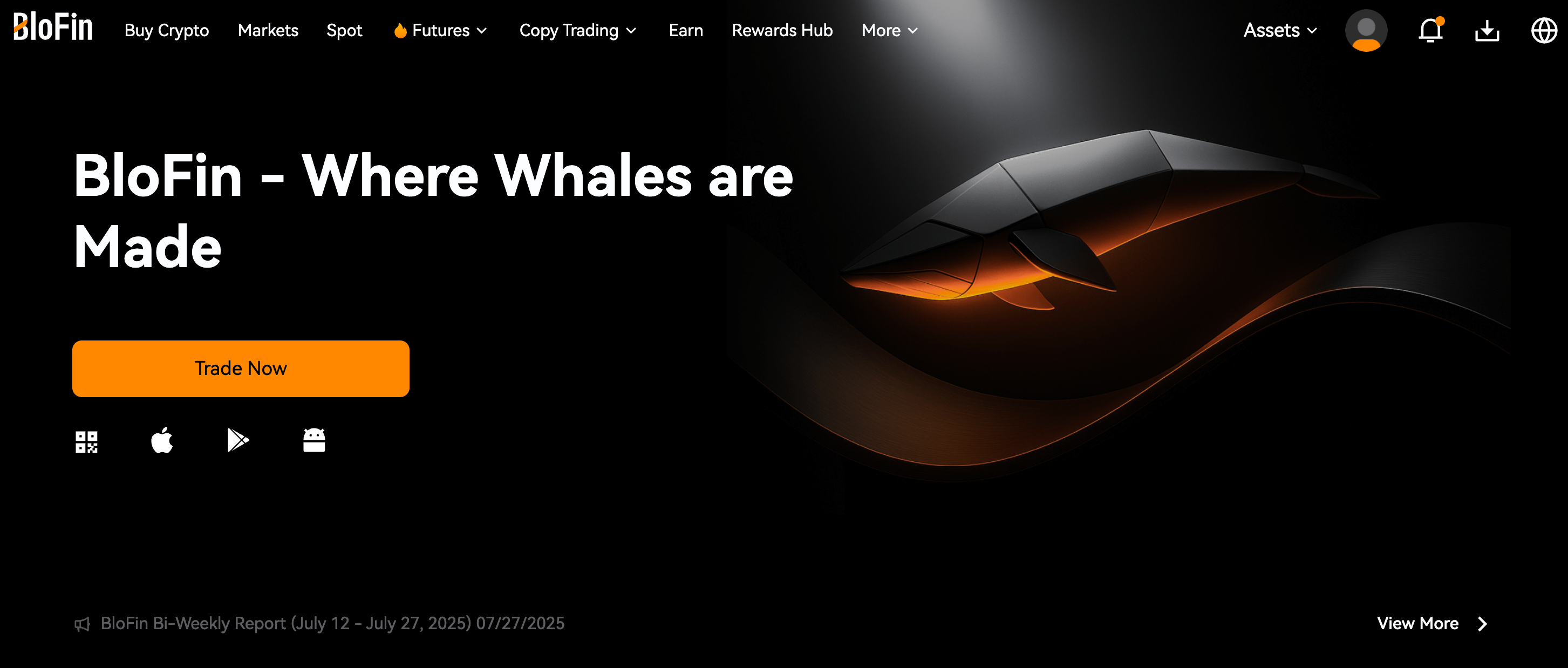
You sign up with email, verify optionally (KYC kicks daily withdrawal limit from $20K up to $2M USDT), and you can start trading futures. The platform allows deep liquidity on majors like Bitcoin and Ethereum, diverse alt pairs, and a clean interface powered by TradingView charts, TP/SL orders, and TWAP or signal bots. A demo account helps cut your teeth with virtual USD balances.
Still, downsides linger. No on‑ramp for U.S. fiat withdrawals. Limited staking options. Non-U.S. regulatory alignment makes tax reporting murky for Americans. And if your IP changes, you might see “blocked” or a Ray ID, and have to clear cookies to keep using the site. U.S. traders should weigh risk, compliance, and access before diving in. Learn more about this centralized exchange in our BloFin review.
BloFin Pros & Cons
Pros
-
Massive futures pair coverage 530+ contracts with up to 150× leverage
-
Strong security via Fireblocks custody and ISO 27001 certification
-
Advanced trading features: demo mode, TWAP bots, copy trading, demo account
-
Tiered fee structure, can reach zero maker fees at higher VIP levels
Cons
-
Access restricted or blocked for many U.S. IPs, requires VPN or workarounds
-
No direct fiat withdrawal, crypto only
-
KYC optional but needed for larger withdrawal limits and full access
Most Secure Crypto Futures Trading Sites in U.S. Compared
| Platform | U.S. Access | Max Leverage | Notable Feature | Compliance & Security |
| Coinbase | Fully available | 10x | 150+ crypto perpetuals and futures contracts | CFTC-registered futures access through Coinbase Financial Markets |
| Kraken | Available to eligible U.S. clients | Depends on product | Kraken Derivatives US access | Regulated U.S. futures products for eligible clients |
| OKX | Check product eligibility | Varies by product | Advanced trading tools and global liquidity | KYC/AML controls; U.S. product access varies |
| Bitbase | Check jurisdiction | Varies by contract | Spot and futures under one account | MPC-based custody and hot/cold wallet separation |
| BloFin | Partial/restricted | Up to 150x | 530+ contracts, trading bots | ISO 27001, proof-of-reserves, Fireblocks custody |
How We Selected Best Futures Trading Apps in U.S. (Methodology)
No fluff. No influencer-tier partnerships. We picked each crypto futures trading platform U.S. traders can access based on real-world functionality Here’s how we broke it down:
Leverage, Liquidity, and Execution Speed
It’s not enough to offer futures, you need deep liquidity so you’re not trading against shadows. We measured max leverage, how quickly trades complete, and how tight the spreads were, especially on high-volume pairs like Bitcoin and Ethereum.
Security Standards
Any platform storing your assets needs to prove it’s not one tweet away from implosion. We looked at Fireblocks integration, ISO certifications, 2FA, password protocols, and KYC infrastructure. The most secure crypto futures trading sites in U.S. didn’t just say they were safe, they showed it.
Trading Experience & Tools
We actually used them. Mobile apps, browser dashboards, copy trading, demo accounts, bot integrations, if the UX felt broken or built by interns, it didn’t make the cut. This included testing deposit flows, support response times, and ease of setting leverage or managing open positions.
Fee Structures & Promotions
From zero fee promotions to tiered maker-taker rates on BloFin and OKX, we examined real costs. That includes hidden slippage, withdrawal fees, or bait-and-switch “free trading” claims. If it wasn’t transparent, it was out.
Support & Human Interaction
When stuff breaks, and it will, can you talk to a human? We tested email and live chat support across all platforms. We noted response times, clarity, and whether or not the agent just copied a FAQ page.
Reputation & Track Record
We reviewed past hacks, regulatory actions, and user reports from forums like Reddit, TrustPilot, and even Telegram. If a platform had a history of vanishing rewards, shady verification lockouts, or long withdrawal delays, we noted it.
In short: we don’t care what platforms say, they had to show us.
Pro Tip: Choosing the right futures platform is important, but it’s not the only route available. You can also consider contract trading, which offers its own set of benefits and risks. Our contracts trading platforms guide can help you decide which suits your style best.
What is Crypto Futures Trading in U.S.?
If you’re new to this, here’s the blunt truth: crypto futures trading isn’t investing. It’s calculated gambling with tools sharp enough to cut both ways. You’re not buying Bitcoin to hold. You’re betting on whether it’ll pump or dump, and if you’re right, you get paid big. If you’re wrong, the market takes your lunch money and probably your rent too. On a side note, some of the platforms included above also offer crypto options trading in the U.S.

Well, crypto futures are derivative contracts that let you speculate on the price of digital assets like Bitcoin, Ethereum, or altcoins without actually owning them. You enter a position, long or short, with the help of leverage. That means you’re putting up a small slice of capital to control a much larger trade. What is leverage trading crypto? A 10x position? A 1% move in the market means a 10% swing in your account balance. This is where fortunes are made and liquidations get live-streamed.
In the U.S., futures trading in crypto is regulated by the CFTC, in theory. In practice, many U.S.-compliant crypto futures exchanges offer limited leverage, slower onboarding, and conservative trading options. That’s why platforms like Coinbase, Kraken, OKX, and BloFin have carved out niches. They combine execution with enough flexibility to actually implement real strategies.
But the rules matter. If you’re trading on offshore platforms without proper verification, you’re exposing yourself to all kinds of risk from sudden account blocks to tax-time nightmares. Tax on crypto futures trading in U.S. is treated like capital gains or income, depending on how and where you trade. The IRS won’t care about your password resets or VPN connection logs; they care about your profit. So while the upside is real, so is the downside. Well, if you’re not based in the U.S. and happen to be in Europe or the UK, be sure to check out our guide on the Top-Rated Crypto Futures Trading Platforms in the UK.
Pros & Cons of Trading Crypto Futures in U.S.
Crypto futures are the sharpest tool in your trading arsenal if you know how to wield them. Used right, they multiply opportunities. Used incorrectly, they magnify mistakes. Here’s the breakdown of what you’re signing up for when you decide to trade crypto futures:
Pros
-
Potential for high profits with small capital thanks to leverage
-
Ability to go long or short on Bitcoin, Ethereum, and altcoins
-
Some platforms offer zero-fee or low-fee trading incentives
-
Access to advanced strategies like hedging and cross-margining
-
Fast-paced markets for active traders with pro-level tools
Cons
-
High risk of liquidation, especially for inexperienced traders using high leverage
-
U.S. regulatory environment limits access to global platforms
-
KYC, verification delays, and limited product offerings on U.S.-compliant exchanges
-
Tax complexity, every completed futures trade could be a taxable event
-
VPN or offshore platform use can lead to blocked accounts or lost funds
How to Choose Top Crypto Futures Trading Site in U.S.?
Picking a crypto futures trading platform that U.S. traders can actually use isn’t just about who has the most banners or the loudest influencer. It’s about survival, strategy, and whether the platform can keep up when volatility kicks in. Here’s what separates the real from the rug-pull:
Check U.S. Access First
Before you even click download, make sure the platform is U.S.-compliant or realistically usable. Some like Coinbase and Kraken are upfront about regulated U.S. access. Others? You’ll be stuck refreshing your screen while it throws Ray ID errors or asks for a VPN workaround.
Verify KYC and Security
If you can’t verify your account or reset a password without waiting days for an email, you’re asking for trouble. Look for platforms with fast onboarding, 2FA, cold asset storage, and proof-of-reserves. Security is the baseline.
Look at Leverage, But Don’t Chase It Blindly
High leverage isn’t always a flex. Make sure the platform offers flexibility like isolating margin or adjusting positions quickly. If a sudden wick hits and your UI freezes, all the leverage in the world won’t save you.
Fees, Funding Rates, and “Zero Fees” Fine Print
Everyone says “zero fees.” Rarely do they mean it. Check the actual maker-taker structure. Look at funding rates on perpetuals. See what happens when you try to withdraw. And always compare across platforms, what’s free at first may get expensive fast.
Mobile App vs. Web Experience
Trading on the go? The app better be solid. If the mobile version lacks core functions like stop-loss orders, margin control, or deposit visibility, that’s a deal-breaker.
Support and Responsiveness
When something breaks (because it will), you want a human to respond. Whether it’s through live chat, email, or even Twitter DMs, support should be real and fast.
Final Check: If you’re planning on using advanced strategies, stacking rewards, or getting in and out fast, the platform has to match your style. Don’t force a square peg into a round UI. Choose a site that fits how you trade, not how they want you to trade. Oh, by the way, if you are based in Canada, take a look at the best crypto futures trading platforms in Canada.
How to Trade Crypto Futures in U.S. – Step-by-Step Guide
Trading crypto futures in the U.S. is straightforward. In the example below, we have selected Coinbase because it is our top overall pick for U.S. traders who want regulated access to crypto futures.
-
Register on Coinbase
Go to Coinbase and create your account in just a few clicks. You’ll need to complete the required account verification before accessing regulated futures products.
-
Make a Deposit
Fund your account with crypto like USDT, BTC, or ETH, buy crypto with a debit card, or deposit fiat via bank account. Coinbase supports a familiar account funding experience for users coming from either crypto or fiat.
-
Open the Trading Interface
Once you’re logged in, access Coinbase Advanced or the futures trading section from the main menu. This is where the game begins: real-time trading meets real-time strategy.
-
Start Trading
Choose your futures contract, review the margin requirements, set your order, and manage the position carefully. Note that leverage increases risk and users should understand the risk of leverage and margin trading before using it.
Tips for Safe Crypto Futures Trading in U.S.
Leverage is a drug. Used responsibly, it sharpens your edge. Misused, it’s financial fentanyl. These tips will keep your account alive long enough to learn something.
- Start Small, Scale Smart – Don’t go full 50x on your first trade. Start with low multipliers, test your reflexes, and learn how the platform handles volatility. Survival is the first win.
- Enable Every Security Setting – Activate 2FA. Use a strong, unique password. Set up withdrawal whitelists if the exchange supports them. If someone gets in, they shouldn’t get out with your assets.
- Know When to Use Demo Mode – Platforms generally offer a practice environment. Use it. Master the interface, run test strategies, and understand order behavior before going live.
- Track Your Trades and Taxes – Every position you open, close, or reverse on a U.S.-accessible platform could be a taxable event. Use tools or spreadsheets. Don’t assume the IRS is too busy to notice.
- Respect the Platform, Not Just the Market – Even when your calls are right, poor execution can wreck you. Always check spreads, latency, and liquidity depth. A fast market with a slow platform is a bad match.
- Avoid Greed and Revenge Trades – The leaderboard isn’t worth blowing your bankroll. Losses happen. What matters is sticking to your plan, not YOLOing.
- Watch for Blocked Access or Geo-Restrictions – Some platforms look fine until they don’t. If your session gets flagged or you see a Ray ID, clear cookies, re-verify, or switch to a compliant platform. Don’t chase trades through unreliable tunnels.
- Stay Human – Use alerts, take breaks, and don’t trade when tired or emotional. This isn’t a casino. It’s chess with capital.
Conclusion: Crypto Futures Trading in U.S.
The curtain’s up. You’ve got the leverage, the list, and the lay of the land. You know the platforms that’ll welcome your trades and the ones that’ll block your IP mid-position and leave you staring at a Ray ID while your liquidation plays out in real time.
This game isn’t for tourists. Crypto futures are a weapon. In skilled hands, they cut clean. In reckless ones, they amputate. Most traders lose because they don’t know what they’re trading or worse, where.
You want to trade in the U.S.? Then pick your venue like it’s a battlefield. If it’s compliant, stable, and tested under fire maybe it’s your edge. If it’s offshore, unregulated, and offering 200x on memecoins, treat it like a poker game in a burning building: fun, but don’t get comfortable.
You’ve been briefed. The risk is real. The tools are sharp. The market won’t wait. Now load your wallet, set your stops, and take your shot. Because no one remembers the trader who sat it out.
DISCOVER:
- Crypto Exchange Promos & Discounts
- Crypto Wallet Promos & Discounts
- Top-Rated Crypto Day Trading Platforms in 2026
- XRP Futures: Ripple Trading Guide
- Solana Futures: SOL Trading Guide for 2026
- Most Trusted Binary Options Trading Platforms in 2026
- Popular 100x Leverage Crypto Trading Platforms
FAQs
Is crypto futures trading legal in the U.S.?

Yes crypto futures trading is legal in the U.S., but only through platforms that are registered and compliant with regulatory bodies like the CFTC. U.S. residents are restricted from using many offshore exchanges due to jurisdictional enforcement, so always verify if a platform is cleared for U.S. use before trading.
Are U.S. crypto futures platforms regulated?
Yes, but regulation is fractured. Most U.S.-compliant crypto futures exchanges operate as Money Services Businesses (MSBs) and follow CFTC guidance on derivatives. They’re required to enforce KYC, monitor for suspicious activity, and limit access to products like high-leverage perpetuals. You won’t get 200x leverage here but you will get stability, legal access, and a recourse path if something breaks.
What’s the difference between crypto spot and futures trading?
Spot trading is simple, you’re buying and holding actual crypto. You own the asset. Futures trading is synthetic, you’re trading contracts that track the price of an asset without owning it. Futures let you long or short, use leverage, and often settle in USDT or USD, not in crypto itself. Spot is buying BTC. Futures is betting on where BTC is going.
Can I use Binance or Bybit for crypto futures in the U.S.?
Not officially. Binance and Bybit restrict U.S. users from accessing their futures platforms. You can use Binance US, but it offers limited futures products. Trying to access global versions with a VPN violates terms of service and risks account blocks, asset freezes, or worse. Trade smart. Don’t mix leverage and legal gray zones.
What fees should I expect with crypto futures trading in the U.S.?
Fees vary by platform, but most maker/taker fees fall between 0.02% and 0.06% per trade. Always check funding rates, spread slippage, and hidden costs because “low fees” often hide in the fine print.
Which U.S. crypto futures platform is best for beginners?
Coinbase is the top choice for U.S. users as it is professional yet friendly enough for traders who don’t want to read a manual before their first position.
References
- Harvard Business School Online. “Understanding Financial Derivatives: Forwards, Futures, and Options.” Harvard Business School Online, 20 Sept. 2022, https://online.hbs.edu/blog/post/understanding-financial-derivatives-forwards-futures-options.
- 7 U.S. Code § 6 – Regulation of Futures Trading. Cornell Law School Legal Information Institute, https://www.law.cornell.edu/uscode/text/7/6.
- Commodity Futures Trading Commission. Global Markets Advisory Committee Meeting: Bitcoin Overview. 9 Oct. 2014, https://www.cftc.gov/sites/default/files/idc/groups/public/@aboutcftc/documents/file/gmac_100914_bitcoin.pdf.
- U.S. Securities and Exchange Commission. Funds Trading in Bitcoin Futures—Investor Bulletin. Investor.gov, 23 June 2021, https://www.investor.gov/introduction-investing/general-resources/news-alerts/alerts-bulletins/investor-bulletins/funds-trading-bitcoin-futures-investor-bulletin.
- Commodity Futures Trading Commission. Who Trades Bitcoin Futures?. Nov. 2021, https://www.cftc.gov/sites/default/files/2021-11/WhoTradesBTC_V2_ada.pdf

Why you can trust 99Bitcoins
Established in 2013, 99Bitcoin’s team members have been crypto experts since Bitcoin’s Early days.
Weekly Research
100k+Monthly readers
Expert contributors
2000+Crypto Projects Reviewed