




In This Article
Margin trading is the financial equivalent of strapping a rocket booster onto your portfolio. When it works, you feel untouchable. When it fails, it ends in an epic crash. At its core, margin lets you borrow money to trade with more firepower than you actually own, amplifying both your wins and your wipeouts. Think of it like driving a sports car with the gas pedal welded to the floor: thrilling when the road is straight, catastrophic when you hit a curve.
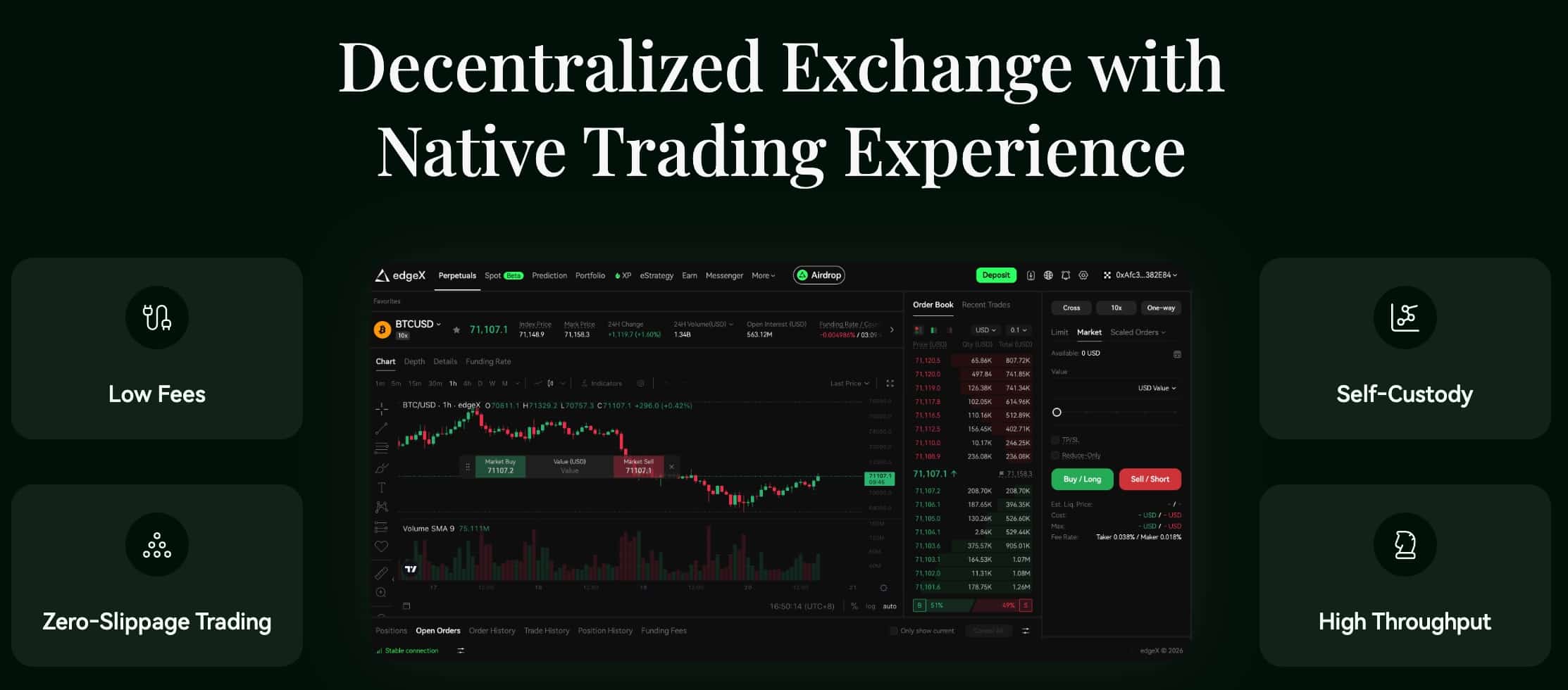
If you want to jump straight into the action and bookmark this page to read for later, here are the best places for anyone looking to margin trade:



In stocks, crypto, or futures, leverage has become the go-to weapon for traders who want bigger moves without waiting weeks for the market to catch up. But it’s a tool that demands respect. One wrong candle, one liquidation wick, or one bad CPI print can erase your entire account faster than you can refresh the chart.
This guide breaks down margin trading from the ground up: what it is, how it works, and why brokerages and crypto exchanges happily lend you money while warning you that you might lose everything. You’ll learn the meaning of initial margin, maintenance margin, margin calls, and how to think about leverage like a pro instead of a gambler.
But wait up. Before you jump into 5x, 10x, or 50x trades, praying for that “instant win,” slow down. We’ll walk through the real risks, the real rewards, and how to use leverage without letting it use you. Let’s get into it.
Key Takeaways
- Margin trading allows you to amplify your buying power by using borrowed money from a brokerage firm.
- To begin, you must open a margin trading account and meet the initial margin requirement set by the exchange or broker.
- Trading on margin involves risks like margin calls and forced liquidation if your account value drops below the maintenance margin.
- Margin trading is common in crypto, forex trading, and traditional markets but should be approached with a sound trading strategy.
- While it can increase potential gains, margin investing also exposes you to significant losses and interest charges.
- Platforms like CoinFutures offer risk-based margin tools and a user-friendly interface for beginners entering leveraged trading.
Margin Trading Guide: Summary
Margin trading is the practice of using borrowed funds to increase the size of a trade. Instead of relying solely on your own cash, you open a margin trading account with a brokerage firm, which lets you borrow money (known as margin loans) to buy or short financial instruments like stocks, cryptocurrency, or futures contracts.
This margin trading guide explores how margin accounts work, the risks involved, and how to develop a safe trading strategy. You could be diving into crypto margin trading or buying on margin in traditional markets, understanding margin requirements and managing interest charges are key to avoiding significant losses.
What is Margin Trading?
It is a strategy that allows traders to use borrowed money, usually from a brokerage firm, to purchase securities or short sell an underlying asset. Instead of paying the full purchase price upfront, you deposit a portion of the trade’s value, called the initial margin, and borrow the rest. The goal? Increase your buying power and magnify your potential gains. According to the SEC,
A “margin account” is a type of brokerage account in which the broker-dealer lends the investor cash, using the account as collateral, to purchase securities. Margin increases investors’ purchasing power, but also exposes investors to the potential for larger losses.
However, margin means more than just borrowing. It also introduces more risk. The money borrowed must be repaid with interest charges, and if the market conditions move against your position, your margin account could face a margin call. That’s when your account value dips below the maintenance margin and your broker demands additional funds, fast. If you fail to act, the broker can force a sale of your assets.
In the world of crypto margin trading, where price movement can be extreme, this kind of leveraged trading is especially high-stakes. Still, for experienced traders who understand how margin trading works, it can be a powerful trading strategy.
Types of Margin Trading
Margin trading comes in a few different flavors, depending on the asset class and platform. While the mechanics are similar like borrowing funds to purchase securities or trade financial instruments, the specifics vary between markets like stocks, crypto, and forex.
1. Stock Margin Trading
In traditional finance, buying on margin is common when trading stocks. You open a margin account with a brokerage firm, deposit an initial investment, and borrow money to purchase stock. The Financial Industry Regulatory Authority (FINRA) enforces rules such as the initial margin requirement (typically 50%) and minimum margin levels.
2. Crypto Margin Trading
This is where things get volatile. Crypto margin trading lets you borrow to take larger positions in digital assets like Bitcoin or Ethereum. Platforms like CoinFutures allow traders to go long or short with up to 1000x leverage. While this can boost potential gains, it also amplifies risks involved, especially during market volatility.
3. Forex Margin Trading
Forex markets operate with incredibly high leverage. Since currency pairs tend to move in fractions of a percent, brokers offer margin loans with leverage ratios as high as 500:1. Here, understanding margin requirements and account value thresholds is crucial to avoid a forced liquidation.
Each type has its own margin interest charges, collateral value rules, and trading strategy implications. Whether you’re trading crypto, stocks, or currencies, you must manage your trading account responsibly.
How Does Margin Trading Work?
To understand how margin trading works, imagine this: You want to purchase securities worth $10,000 but only have $5,000 in your brokerage account. Instead of walking away, you open a margin trading account and borrow the remaining $5,000 from your brokerage firm. Your initial deposit becomes the collateral, and the full $10,000 position is yours to trade.
This is trading on margin, using a small amount of your own capital plus borrowed money to open a position larger than your account value would normally allow. If the price movement goes in your favor, your potential gains are amplified. But if it swings against you, losses are magnified too.
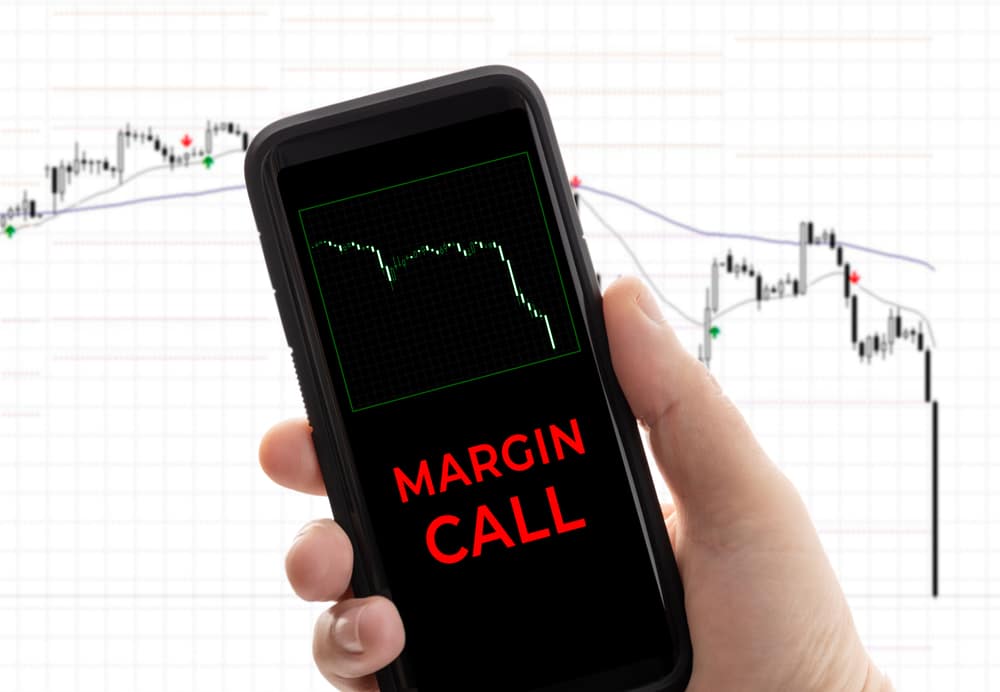
When your account falls below the maintenance margin, the broker issues a margin call which is a warning that you must deposit additional funds or sell part of your position to restore the minimum amount of equity required. Ignore the call, and your broker may initiate a forced liquidation.
And let’s not forget the interest charges. You’re not borrowing money for free. You’ll pay margin interest charges on the loan until the position is closed and the money borrowed is returned.
In fast-moving markets like crypto or forex trading, the stakes are even higher. The key is managing risk, watching your account value, and understanding your platform’s margin requirements at all times.
Margin Trading vs. Leverage Trading
While many use the terms interchangeably, margin trading and leverage trading are not exactly the same thing. Think of margin as the how, and leverage as the what.
Margin trading involves borrowing money to open a larger position than your own cash would allow. You deposit an initial margin, which acts as collateral, and the broker covers the rest. The size of your trade relative to your deposit determines your leverage.
Leverage trading, on the other hand, simply refers to using any means (margin included) to control more capital than you physically possess. For instance, 10x leverage means you control $10,000 worth of an underlying asset with just $1,000 in initial investment. So:
- Margin = The mechanism (borrowing funds from a broker)
- Leverage = The outcome (amplified exposure)
In crypto margin trading, platforms like CoinFutures make this process seamless, letting users choose their desired leverage sometimes up to 1000x. But remember: higher leverage means higher risk, especially in volatile environments.
Knowing the difference is crucial when crafting your trading strategy. Whether you’re in equities, forex, or crypto, failing to understand the risks involved in leveraged trading can lead to significant losses.
Benefits of Margin Trading
Margin trading opens the door to opportunities that would otherwise be out of reach for traders limited by their own cash. By using borrowed money, you can scale up your positions and potentially amplify your profits without needing to deposit the total value of a trade.
Here are some key benefits:
While the upside is real, every dollar borrowed comes with strings attached, including interest rates, margin requirements, and the looming threat of a margin call.
Risks of Margin Trading
Margin trading might promise greater potential gains, but it also comes with high risk. If you don’t fully understand how margin trading works, you could lose more than your initial investment, fast.
Here’s what makes it risky:
In short: margin investing is a double-edged sword. Yes, it can boost returns, but without sufficient funds, a sound trading strategy, and discipline, it can also wipe you out.
Top Platforms That Support Margin Trading
Not all platforms are created equal when it comes to margin trading. Some offer better margin requirements, others offer higher leverage, while a few stand out for user experience and safety. Picking the right brokerage firm or crypto exchange is critical to executing your trading strategy effectively and avoiding costly surprises.
One standout is CoinFutures, a gamified crypto margin trading platform designed for both beginners and advanced traders. It offers customizable leverage options up to 1000x, support for futures contracts, and real-time risk metrics that help you monitor your margin account. It’s built with a clean UI and lightning-fast execution, making it a top pick for anyone exploring leveraged trading in crypto. You can get to know more about it in our dedicated CoinFutures review.
Other platforms offer competitive interest rates, better asset coverage, or low minimum margin requirements, but the options can be overwhelming.
Another good option to consider is Bitpanda, a regulated all-in-one brokerage that offers trading on 10,000+ stocks, ETFs, ETNs, 650+ cryptocurrencies, precious metals, commodities, and more. Bitpanda supports up to 10x leverage on 120+ cryptocurrencies as well as leveraged crypto contracts for difference (CFDs). The platform is very beginner-friendly and offers competitive fees for margin trading along with features like crypto staking, instant deposits, and limit orders, all of which are covered in our Bitpanda review.
Want to compare the best platforms side by side? Check out our full crypto margin trading platforms guide.
How to Start Margin Trading: Step-by-Step Guide
If you’re new to margin trading, platforms like CoinFutures make it surprisingly easy to get started. Here’s a practical walkthrough of how to open and manage your first margin trading account using CoinFutures’ intuitive interface.
Step 1: Choose Your Market
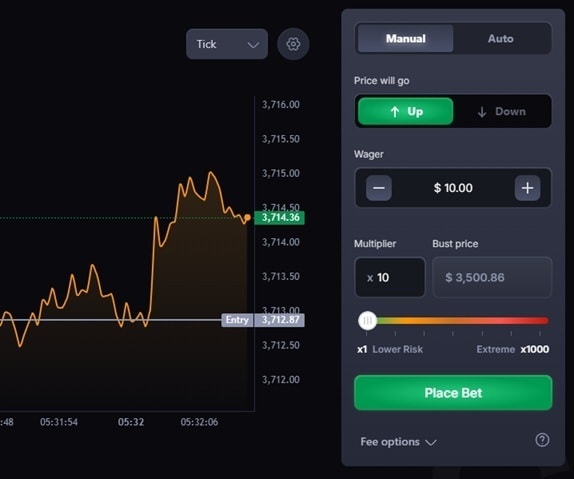
Once you’ve signed into CoinFutures, head to the Crypto Futures section. Select the trading pair you want to speculate on, for this guide, we’ll use ETH/USDT. You’ll also need to decide if the price will go Up (long) or Down (short), depending on your trading strategy.
Step 2: Set Your Wager and Leverage
Enter your wager, this is your initial investment, or how much of your own cash you’re risking. Then set your multiplier, which determines your leverage. A 10x multiplier means you’re controlling 10 times your wager by borrowing the difference.
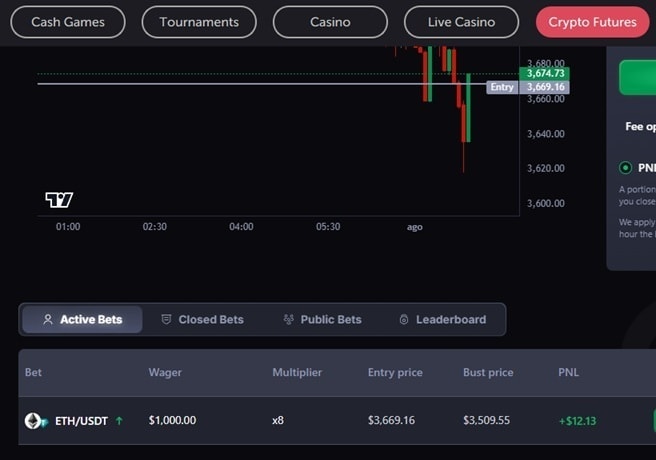
The platform will automatically display your bust price (liquidation level) and show you the risk level on a color scale. The more leverage you use, the closer your bust price is to your entry, and the more likely you’ll face a margin call or forced liquidation.
Step 3: Confirm Entry and Place Your Trade
Double-check your entry price, multiplier, and bust level. If everything looks right, hit Place Bet to open your position. At this point, you’ve officially started trading on margin using borrowed money through your CoinFutures margin account.
Step 4: Track Your Trade in Real Time
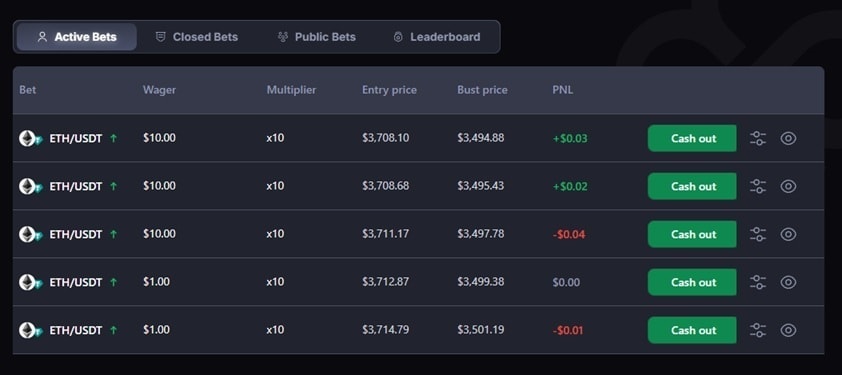
Once the position is open, head to the ‘Active Bets’ tab. You’ll see your real-time PNL (Profit and Loss), along with live updates on the entry price, current price, and bust price. You can cash out your position manually at any time before liquidation.
Step 5: Review Your Trade History and Earnings
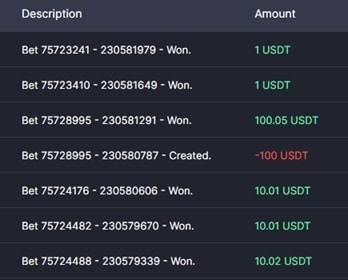
After closing your trade, you can check your full transaction history, including wagers, exit prices, and final payouts. This is key for improving your margin trading strategy and managing your performance over time.
That’s it, your first margin trade is complete. Remember: margin investing is powerful, but risky. Always monitor your account value, understand your margin requirements, and avoid overextending during periods of high market volatility.
Tips for Safe and Responsible Margin Trading
Margin trading isn’t just about chasing profits, it’s about managing risk like a pro. Without discipline, it’s easy to fall into the trap of over-leveraging and blowing up your margin trading account. Here are some tips to help you trade smarter and avoid unnecessary pain:
Use these tips to protect yourself from significant losses and stay in the game longer. Margin can be a double-edged sword, but with the right approach, it doesn’t have to cut you on the way down.
Conclusion: Margin Trading Guide
Margin trading can supercharge your portfolio or detonate it. With the ability to control larger positions using borrowed money, traders gain the flexibility to amplify both potential gains and losses. Whether you’re dipping your toes into crypto margin trading, experimenting with forex, or using leverage in equities, understanding how margin trading works is non-negotiable.
Before jumping in, make sure you understand margin requirements, how to avoid a margin call, and what triggers forced liquidation. Always be aware of the interest charges, risks of market volatility, and the psychological pressure that comes with leveraged trading.
Platforms like CoinFutures make it easy to get started, especially for those looking to learn how to margin trade without the usual friction. But ease of use doesn’t mean margin trading is safe. It means you need to be smarter, sharper, and more disciplined than the average trader.
If you’re going to play the margin game, know the rules or risk being another cautionary tale.
DISCOVER:
- Crypto Exchange Promos & Discounts
- What is Open Source?
- Ethereum Futures: ETH Trading Guide for 2026
- Solana Futures: SOL Trading Guide for 2026
- Top-Rated Crypto Day Trading Platforms in 2026
- Most Trusted Binary Options Trading Platforms in 2026
- TRON Futures: TRX Trading Guide for 2026
- What is Stablecoin 2.0 in 2026?
FAQs
What is margin trading and how does it work?


Margin trading is when you use borrowed money from a brokerage firm to buy or short more assets than your own cash would allow. You deposit an initial margin (collateral), and the platform lends you the rest. If your account value drops below a certain level (maintenance margin), you may face a margin call or forced liquidation. It’s a way to increase buying power, but also your exposure to risk.
Can I lose more than I invest in margin trading?
Yes. Since you’re trading with borrowed funds, you can lose more than your initial deposit if the trade moves against you. This is why margin trading is considered high risk especially during periods of market volatility or if you don’t have sufficient funds to cover losses.
What does a margin call mean?
A margin call happens when your margin account balance falls below the minimum margin requirement. Your broker will ask you to deposit additional funds or sell assets to restore the required collateral value. If you fail to act, your position may be closed automatically (forced liquidation).
Is margin trading legal?
Yes, margin trading is legal in most countries, though it’s regulated by agencies like the Financial Industry Regulatory Authority (FINRA) in the U.S. and requires a verified brokerage account. Always check your local laws and regulations, especially for crypto margin trading.
Which platforms offer margin trading?
Many exchanges and brokers offer margin trading, including CoinFutures, Binance, Bybit, Kraken, and Bitfinex. Each platform has different leverage limits, interest rates, and margin requirements, so it’s best to compare before choosing.
What is isolated margin vs. cross margin?
Isolated Margin limits your risk to a single trade. If the position goes south, only the funds allocated to that trade are affected. Cross Margin shares your entire account balance across multiple trades. It can help avoid liquidation, but it also means more of your total value is at risk.
Is margin trading good for short-term or long-term strategies?
Margin trading is generally better suited for short-term strategies, such as scalping, swing trading, or reacting to news events. Holding leveraged positions long-term can be risky due to interest charges, market conditions, and the possibility of forced liquidation.
References
- Financial Industry Regulatory Authority. “Margin Accounts.” FINRA, https://www.finra.org/rules-guidance/key-topics/margin-accounts
- U.S. Securities and Exchange Commission. “Investor Bulletin: Margin Accounts.” SEC, https://www.sec.gov/investor/alerts/ib_marginaccounts.pdf
- Barber, Brad M., et al. “Drivers and Implications of Retail Margin Trading.” Stanford Graduate School of Business, https://www.gsb.stanford.edu/faculty-research/publications/drivers-implications-retail-margin-trading
- U.S. Securities and Exchange Commission. “Investor Bulletins.” Investor.gov, https://www.investor.gov/introduction-investing/general-resources/news-alerts/alerts-bulletins/investor-bulletins-29

Why you can trust 99Bitcoins
Established in 2013, 99Bitcoin’s team members have been crypto experts since Bitcoin’s Early days.
Weekly Research
100k+Monthly readers
Expert contributors
2000+Crypto Projects Reviewed