






In This Article
Ripple (XRP) has remained one of the top 10 cryptocurrencies by market cap due to its instant transactions and real-world use case for cross-border payments. Built on the XRP Ledger (a decentralized, open-source blockchain), XRP is a bridge currency that accelerates cross-border money transfers.
Whether you’ve just learned about XRP or are looking to add to your crypto portfolio, this guide will explain everything you need to know about ideas, terminology, what XRP is, how it’s different than Ripple, the recent SEC lawsuit settlement, and detailed instructions on how and where to buy XRP step-by-step safely.
Key Takeaways
- XRP remains a top 10 cryptocurrency by market cap due to its speed, low cost, and utility as a bridge currency for cross-border payments via the XRP Ledger.
- Best Wallet offers a secure, non-custodial way to buy, store, and trade XRP while keeping full control of your private keys.
- Unlike Bitcoin, XRP is pre-mined with a fixed supply of 100 billion coins, and each XRP Ledger account requires a 10 XRP reserve to deter spam accounts.
- Ripple’s settlement with the SEC in 2025 reduced legal uncertainty, confirming that XRP sold on public exchanges is not a security in the U.S.
- You can buy XRP through various payment methods, including debit/credit cards, bank transfers, and PayPal, then transfer it to a secure non-custodial wallet for safekeeping.
Best Wallet: A Non-Custodial All-in-one Crypto Platform
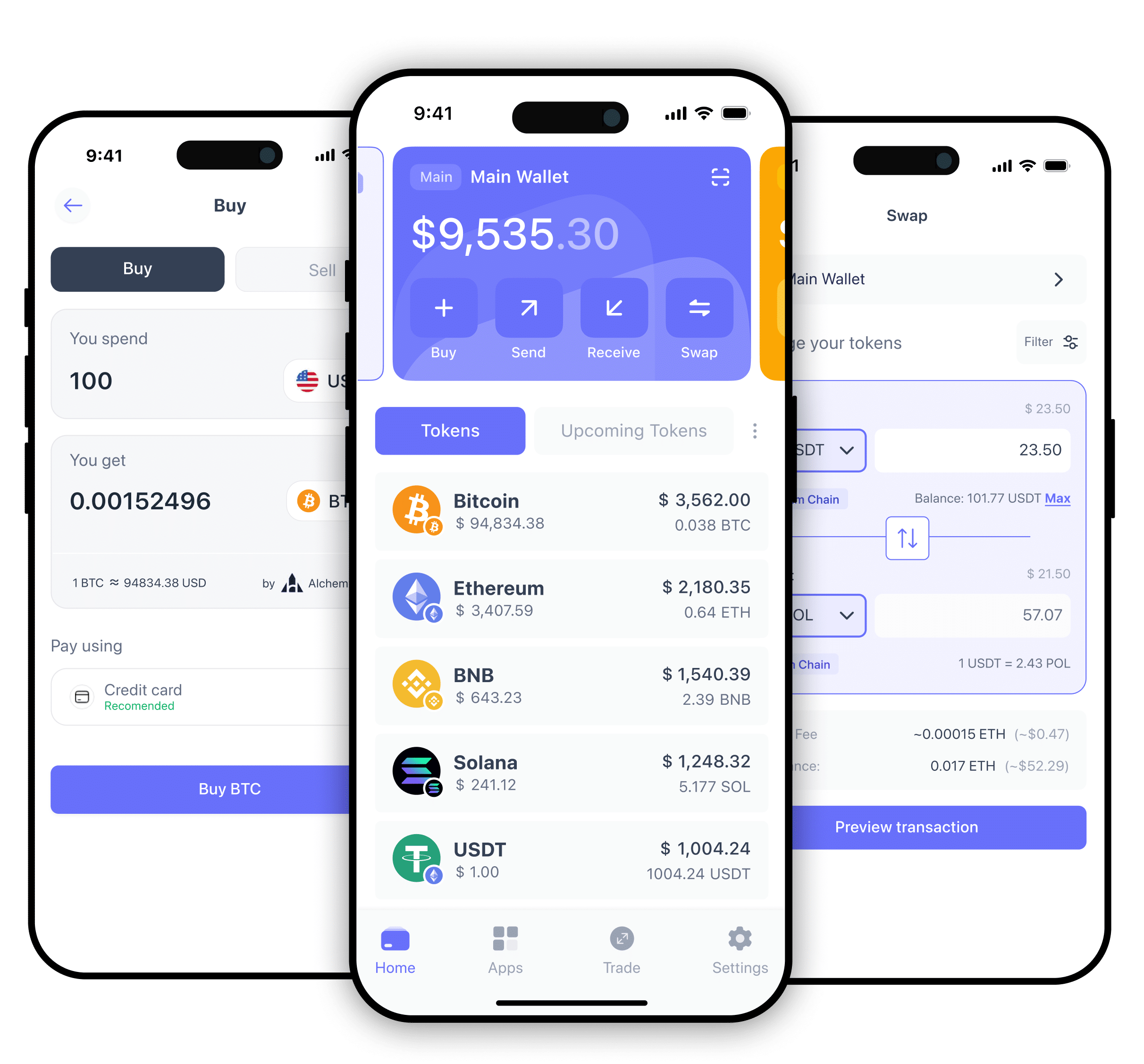
Best Wallet is our top pick for the best way to both buy and store Ripple XRP. Best Wallet is a non-custodial crypto wallet that allows you to buy, sell, and store XRP tokens while maintaining complete control over your cryptocurrencies.
The main advantage of using Best Wallet for your XRP tokens is that the platform stores private keys to your crypto locally, meaning that only you can control them. In contrast, when you keep XRP tokens on a crypto exchange platform, you are essentially giving up control over your tokens to the exchange operator and trusting them to act honestly. Such a setup exposes users to risks of censorship and exchange failure.
Other advantages of using Best Wallet include multi-blockchain support, strong network security, low cost, and seamless onchain transactions. Best Wallet features an in-built decentralized exchange (DEX) aggregator and a token launchpad.
Learn more about this non-custodial crypto wallet in our Best Wallet review.
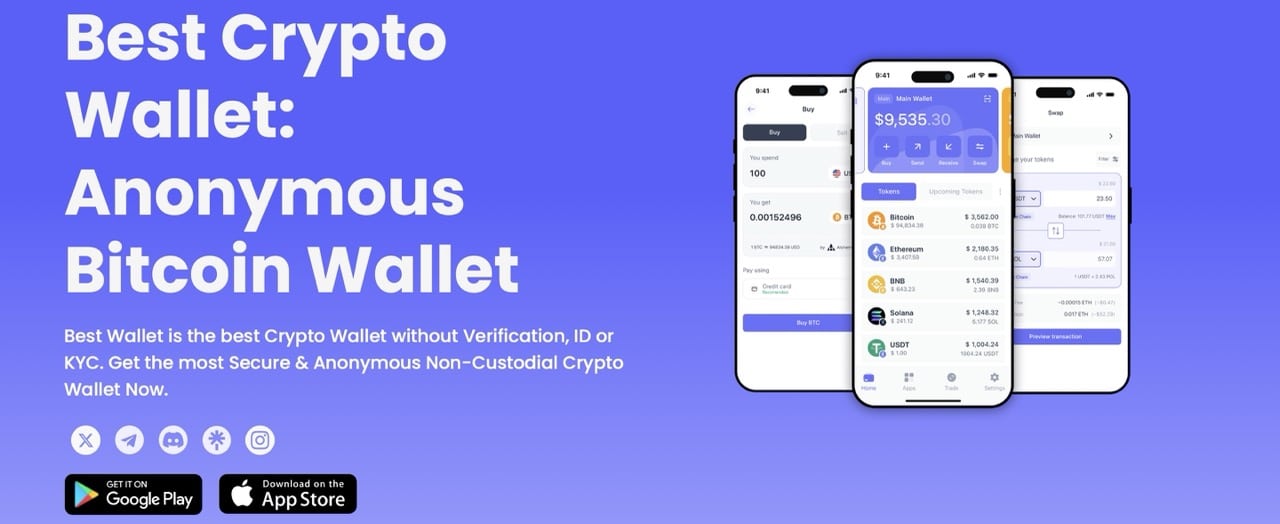
How to Buy XRP on Best Wallet For Free?
Here’s how you can buy XRP on Best Wallet for free.
-
Download Best Wallet
Get the Best Wallet app from the App Store or Google Play. Tap “Get Started” and follow the prompts to create your wallet.
-
Back Up Your Wallet
Write down your recovery phrase and store it somewhere safe. You can also back up your wallet to iCloud or Google Drive for extra security.
-
Tap Buy on the Home Screen
From your main wallet card, tap the Buy button to begin.
-
Select XRP
Choose XRP from the list of available cryptocurrencies. Note that Best Wallet does not support the XRP Ledger at the moment. However, you can buy XRP tokens that are on BNB Chain and wrapped XRP coins on Ethereum.
-
Enter Purchase Amount
Enter the amount of XRP you want to buy. The app will display an estimated cost in your chosen currency.
-
Choose a Payment Method
Pick your preferred option, such as credit/debit card, Apple Pay, Google Pay, or bank transfer.
-
Pick a Provider
Best Wallet will suggest the most competitive on-ramp provider automatically. You can compare fees, processing times, and KYC requirements before proceeding.
-
Complete the Purchase
Review your order, then tap Buy XRP. You’ll be redirected to the provider’s page to finalize the payment.
-
Confirm and Wait
Once payment is processed, your XRP will be sent straight to your Best Wallet.
-
View Transaction History
Open the Trade tab and go to History to see the status and details of your XRP purchase.
Best Wallet Pros & Cons
Pros
-
Non-custodial wallet that gives user full ownership of their XRP tokens.
-
Supports multiple blockchains.
-
Comes with an in-built DEX aggregator for easy and cheap crypto trading.
-
Supports multiple fiat onramping options to fund your account.
-
Interface is user-friendly, setup is simple, and it does not charge high fees.
-
No need to hold an initial 10 XRP deposit as required by the XRP Ledger.
-
No KYC required to buy tokens.
Cons
-
Only available as a smartphone application. It does not have a desktop app or browser extension.
-
The platform has limited customer support.
-
Does not support the XRP Ledger at the moment. However, you can buy XRP tokens that are on BNB Chain and wrapped XRP coins on Ethereum.
Don’t Want to Hold XRP?
While most investors choose to buy and hold XRP directly, some prefer not to manage wallets, private keys, or long-term storage. If your main goal is to profit from XRP’s price fluctuations rather than own the asset itself, futures trading can be a convenient alternative. CoinFutures, one of the best futures trading platforms for beginners, lets you speculate on XRP’s price without actually holding the coin. This way, you get exposure to the market while avoiding the complexities of storage and transfers. Learn more about this platform in our dedicated CoinFutures review.
What is XRP, XRP Ledger, and Ripple?
Are XRP and Ripple interchangeable? No. Ripple is the company, and XRP is the coin. XRP is the base currency of the XRP Ledger, an open-source, distributed blockchain developed by Ripple Labs, a US technology firm. XRP acts as a bridge currency in cross-border payments, enabling the conversion of one currency to another efficiently and cheaply. The XRP transactions are recorded and visible on the XRP ledger, similar to other blockchain networks. XRP is unlike Bitcoin, which is still being mined, since XRP was pre-mined with a total supply of 100 billion coins. Ripple (XRP) is available on most crypto exchanges.
The XRP Ledger mainly caters to developers, businesses, and governments who have to use blockchain technology for payments, custody, stablecoin, real-world tokenization (RWA), and central bank digital currency solutions. The project has collaborated with Standard Chartered, Amazon, and the Government of Bhutan, among others.
Remember that every account on the XRP ledger requires an initial 10 XRP deposit to prevent the creation of fake accounts. You won’t be able to access this deposit after your initial purchase. However, this may not be true if you have an exchange-hosted wallet.
You may have heard about Ripple (XRP) in the news, and that is probably because they have been in a long battle with the Securities and Exchange Commission (SEC) for the past few years.
Ripple vs. The SEC
In December 2020, the U.S. Securities and Exchange Commission (SEC) filed a lawsuit against Ripple Labs. The agency alleged that Ripple had raised more than $1.3 billion through an unregistered securities offering by selling XRP tokens. This case quickly became one of the most important legal battles in the crypto industry, with significant consequences for how digital assets are defined and regulated in the United States.
Key Issues in the Case
- The SEC argued that XRP should be classified as a security under federal law.
- Ripple maintained that XRP is a digital currency, not a security.
- The lawsuit questioned the relevance of outdated securities laws in the context of blockchain technology.
- Many in the crypto community saw the case as an example of regulatory overreach.
- The case sparked widespread discussion about the future of crypto regulation in the U.S.
Legal Developments and Outcome
A court ruling determined that XRP sold on public exchanges does not qualify as a security. However, XRP sold to institutional investors was found to be subject to securities regulations. After more than four years of legal proceedings, Ripple reached a settlement with the SEC. As part of this settlement, Ripple agreed to pay a reduced fine of $50 million, down from the original amount of $125 million sought by the SEC. Importantly, Ripple did not admit to any wrongdoing in this case. Additionally, the SEC dropped its appeal regarding the ruling on public sales, while Ripple withdrew its appeal concerning institutional sales.
Broader Significance
The case is considered a turning point for the future regulation of digital assets. It established a partial precedent, indicating that not all cryptocurrency transactions should be treated equally under securities law. The outcome may promote greater clarity and flexibility in upcoming crypto regulations. Also, the SEC’s approach seems to be evolving, reflecting changes in leadership and an increasing recognition of the need to modernize oversight frameworks.
Thus, the Ripple case brought long-standing regulatory questions to the forefront and helped define how certain types of crypto transactions are treated under U.S. law. For many in the industry, the settlement signals a move away from aggressive enforcement and toward more practical, transparent regulation that aligns better with the realities of blockchain technology.
XRP Price Volatility Amidst Market Conditions
XRP Ripple has experienced some massive price fluctuations in the past few weeks. On April 9, 2025, XRP fell 8.9% to $1.79 amid mounting global trade tensions. However, on April 10, 2025, XRP bounced back strongly, crossing the $2 mark, in a rally in global stock markets after President Donald Trump announces a 90-day tariff.
Keep reading for a thorough explanation of how and where to Ripple.
How to Buy XRP in 3 Simple Steps
Buying XRP is relatively easy. Here is a simple 3-step guide to get you going:
Step 1 – Get an XRP Wallet
The first thing you’ll need to do before purchasing XRP is to get a wallet that can store XRP. As with most cryptocurrencies, you can choose a software or hardware wallet.
Software wallets are free programs that are usually considered less secure and, therefore, are better for smaller amounts of money.
Hardware wallets, on the other hand, are physical devices that connect to your computer (like a USB stick or flash drive) and store your private keys on the device itself. Hardware wallets are considered to be the safest way to store cryptocurrencies.


Here are the wallets we encourage you to try out and use for Ripple:
- Best Wallet – The best crypto wallet of 2026, Best Wallet is a great choice for users wanting to buy XRP from directly within their wallet and not give up custody of their funds to third parties thanks to the in-wallet decentralized exchange.
- Zengo Wallet – Although software wallets are not typically known for strong security, Zengo seeks to change this by offering institutional-grade protection to everyday hot wallet users. Zengo claims to have eliminated seed phrase vulnerability by using multi-party computation (MPC) technology. This a great choice for those looking for an XRP software wallet.
- Ledger Nano X – A hardware wallet that allows you to store XRP as well as more than 5,500 other cryptocurrencies and NFTs. It can also connect to your mobile via Bluetooth. The Nano X is compatible with Windows, macOS, Android, and Apple iOS.
- Ledger Nano S Plus – This hardware wallet is the upgrade to the original and very popular Ledger Nano S. Like the Nano X, the Nano S Plus can manage 5,500+ various cryptocurrencies and NFTs. It is also useable on Windows, macOS, Android, and Apple iOS. It just doesn’t have Bluetooth.
- Trezor Model T – A hardware wallet with a built-in touchscreen that allows you to store XRP and over 9,000 other crypto assets. It’s compatible with desktops and Android phones, but Apple iOS (iPhones) is not yet supported. You can use it on macOS.
- Trezor Safe 3 – This is Trezor’s latest hardware wallet. It also supports over 9,000 different crypto assets, including XRP. It has a Secure Element chip for added protection. Like the Model T, the Safe 3 is usable on Windows, macOS, and Android smartphones. Apple iOS is not yet available.
- Edge – Formerly known as Airbitz, Edge is a mobile wallet (iOS, Android) that supports more than 130 cryptocurrencies, including XRP. It’s available in 10 languages and nearly 180 countries.
- Exodus – A beautifully designed software wallet that supports XRP and thousands of other crypto assets on 50+ different networks. The wallet also has an exchange for users who want to swap XRP for other cryptos and vice-versa.
It should be noted that every Ripple wallet must initially be funded with a 10 XRP reserve to protect against low-level spam attacks. This is a requirement of the XRP network, not any individual wallet.
Once you have your Ripple wallet, it’s time to create your XRP address, which you will need later on. An XRP address is a string of 25-35 characters that starts with an r and is case-sensitive. For example, rPspuKM5rCw5EkRDD9vGL816V15DwtSa3L
Step 2 – Find an XRP Exchange
Once you have your Ripple wallet, the next step is to choose an XRP exchange that meets your needs for security and ease of use. Most crypto exchanges have XRP markets that you can use to buy XRP.
Depending on your location, you can either buy XRP with fiat currency (i.e., USD, EUR, etc.) using a debit card, credit card, or bank transfer, or you can trade another cryptocurrency, like Ethereum or Bitcoin (or others), for XRP on specific exchanges.
How to Buy Ripple with a Debit or Credit Card or Bank Transfer/ACH
For US Users
Kraken is a regulated, US-based exchange that allows users to purchase various crypto assets, including XRP. Being a seasoned player in the crypto industry, it is a solid option for US users who are looking for a safe way to buy XRP. Read our detailed review here for a comprehensive look at Kraken.
Coinbase is another great and easy choice for US users. They removed XRP from their listings after Ripple was charged by the SEC, but they have since restored trading. US users can buy XRP with a debit card, bank account, PayPal, Apple Pay, and Google Pay. Credit cards as a payment method are not available to US users. Read our full Coinbase review here.
Uphold is a great platform that lets users trade everything from XRP and more than 260 cryptocurrencies to equities, commodities, currencies, and more. The Vault is one of Uphold’s well-known features. The company describes it as an “Assisted Self-Custody” solution seamlessly integrated within its centralized trading venue. Vault’s live beta is exclusively available for XRP only. However, it is set to go live with support for additional assets in 2024. You can read our complete Uphold review here.
For Non-US Users
Best Wallet is a multi-functional cryptocurrency wallet and exchange platform designed for both beginners and experienced traders. It offers a straightforward way to buy, sell, and store crypto assets securely. Supporting various payment methods, including credit/debit cards, bank transfers, and popular regional options, Best Wallet ensures seamless fiat-to-crypto transactions.
CEX.IO is a London-based cryptocurrency exchange that has been operating since 2013. It lets you quickly buy XRP using your credit or debit card or via wire transfer. You can read our full review of CEX here.
Binance is another leading exchange that allows the purchase of certain cryptocurrencies (XRP among them) with a credit card, debit card, or wire transfer. You can read our complete Binance review here.
Keep in mind that while credit card purchases are faster, they also cost more in terms of fees. So, if you have the option to pay with a wire transfer and are not stressed on time, you’ll be able to get a better price.
Step-by-Step Guide to Buying XRP with a Credit or Debit Card
Buying XRP with a credit or debit card is quick and easy. Follow these steps to get started:
-
Choose a Crypto Exchange or Broker
Select a trusted platform that supports card payments for XRP.
Popular options include Best Wallet, Binance, MEXC, and Margex.
-
Sign Up and Verify Your Account
Create an account using your email and set a secure password.
Complete KYC verification by uploading a valid ID and proof of address.
-
Go to the Buy Crypto Section
Navigate to the “Buy Crypto” section on your chosen platform.
Select XRP (Ripple) as the cryptocurrency you want to purchase.
-
Enter Payment Details
Choose Credit/Debit Card as your payment method.
Enter your Visa or Mastercard information and the amount of XRP you want to buy.
-
Confirm Your Purchase
Review the exchange rate, any applicable fees, and the total transaction amount.
Click “Confirm” to finalize the purchase. Complete 2FA if prompted.
-
Receive Your XRP
Your XRP will be credited to your exchange wallet shortly after purchase.
For enhanced security, consider transferring it to a private XRP wallet.
Using a credit or debit card to buy XRP is one of the fastest and most convenient options available. Just make sure to use a secure platform and double-check all transaction details before confirming.
How to Buy XRP with PayPal
Apart from buying XRP on exchanges using debit and credit cards, you can also use PayPal. You can’t buy XRP directly on PayPal, but you can use PayPal to buy XRP on exchanges that accept it. Here’s how:
-
Pick an Exchange That Accepts PayPal
Choose a platform that allows PayPal transactions for XRP.
Paybis and MoonPay enable users to buy XRP directly with PayPal.
Kraken allows PayPal deposits, which you can then use to buy XRP on the exchange.
-
Sign Up and Verify Your Account
Register an account with your email.
Complete identity verification (KYC) by uploading a valid ID document.
-
Add PayPal as Your Payment Method
Go to the Settings section and navigate to Payment Methods.
Select PayPal and securely connect your account.
-
Deposit Funds with PayPal
Go to the Deposit section on the platform.
Choose PayPal, enter the amount you want to deposit, and confirm the transaction.
-
Buy XRP
Locate XRP on the exchange platform.
Enter the amount you wish to purchase and confirm the transaction. That’s it!
Using PayPal to buy XRP is fast and convenient when using supported platforms. Always verify account details and use secure, trusted exchanges.
Step 3 – Withdraw XRP to Your Wallet
We wouldn’t recommend leaving your XRP on the exchange you bought it from. This is because you don’t control the private key for your wallet and its coins while they are on the exchange. If something happens with the exchange—it gets hacked or goes offline—you can lose access to whatever cryptocurrency you left on the exchange.
No matter where you got the coins from, remember to withdraw them into your non-custodial Ripple wallet (i.e., a wallet whose private key you can access and control). Once you’ve initiated the withdrawal and the transaction is confirmed on the network, you’ve successfully finished the process of buying and safely storing Ripple (XRP).
Conclusion: Buying XRP Made Simple
Getting started with XRP might seem tricky at first, but once you go through the steps—set up a wallet, choose an exchange, make your first buy, and it all starts to make sense.
XRP is more than just a coin. It’s a project focused on fast, cheap payments worldwide, and that’s pretty cool if you think about it.
If you’re just getting into crypto or want to try something beyond Bitcoin and Ethereum, XRP is a solid option. Just make sure to stay safe: use a trusted wallet, don’t skip security steps, and only invest what you’re comfortable with.
Always do your own research before making investment decisions. We hope this article helps you buy XRP with confidence.
See Also:
- What are XRP Meme Coins? Top XRP Meme Coins to Watch in 2026
- Where and How to Buy Polygon: A Beginner’s Guide
- Will XRP Flip Ethereum? Here’s What the Odds Say
- 6 Ways to Buy Bitcoin with a Debit Card
FAQs
How to buy Ripple cryptocurrency?


To buy Ripple cryptocurrency, XRP, you need to register on a cryptocurrency exchange that supports XRP, deposit funds, and place an order to purchase XRP. After the purchase, you can store your XRP in the exchange’s wallet or transfer it to a personal wallet for added security.
Where to buy XRP?
XRP can be bought on major exchanges such as Best Wallet, Uphold, Kraken, and Coinbase.
What’s the best way to buy XRP?
The best way to buy XRP is through a secure and reliable exchange that offers XRP trading, like Best Wallet or Kraken. Coinbase is another good option. Make sure to choose an exchange with low fees and strong security measures, especially for large purchases.
How much XRP should I buy?
The amount of XRP to buy depends on your financial goals, risk tolerance, and portfolio size. It’s recommended to start small, particularly if you’re new to cryptocurrency investing, and never invest more than you are willing to lose.
Can I trade XRP for other cryptocurrencies?
Yes, you can trade XRP for other crypto and fiat currencies (like USD, EUR, etc.) on most major cryptocurrency exchanges that support XRP. It’s a pretty common use case, especially for people who actively manage their portfolios.
References
- XRP Ledger Foundation. Crypto Wallets – XRP Ledger Documentation. XRPL.org, 2024.
https://xrpl.org/docs/introduction/crypto-wallets - XRP Ledger Foundation. Build a Browser Wallet in JavaScript. XRPL.org, 2024.
https://xrpl.org/docs/tutorials/javascript/build-apps/build-a-browser-wallet-in-javascript - XRP Ledger Foundation. Build a Desktop Wallet in JavaScript. XRPL.org, 2024.
https://xrpl.org/docs/tutorials/javascript/build-apps/build-a-desktop-wallet-in-javascript - XRP Ledger Foundation. Cryptographic Keys – XRP Ledger Concepts. XRPL.org, 2024.
https://xrpl.org/docs/concepts/accounts/cryptographic-keys - State University of New York at Oswego. “The Basics about Cryptocurrency.” Oswego.edu, 2022.
https://www.oswego.edu/cts/basics-about-cryptocurrency - University of Washington School of Law. “Cryptocurrencies: An Introduction for Policy Makers.” DigitalCommons.Law.UW.edu, 2023.
https://digitalcommons.law.uw.edu/techclinic/13 - University of Michigan. “Introduction to Blockchain.” Online.Umich.edu, 2023.
https://online.umich.edu/collections/fintech/short/introduction-to-blockchain

Why you can trust 99Bitcoins
Established in 2013, 99Bitcoin’s team members have been crypto experts since Bitcoin’s Early days.
Weekly Research
100k+Monthly readers
Expert contributors
2000+Crypto Projects Reviewed