




In This Article
What is Mantle (MNT)? At its core, it’s a new kind of Layer 2 built to make Ethereum faster, cheaper, and easier to scale. But it doesn’t stop there. With modular architecture, community-driven governance, and one of the largest treasuries in crypto, Mantle is quietly becoming one of the most capable networks in the space.
In this Mantle review, we’ll break down how it works, why the design matters, and what you can actually do with it. This beginner’s guide to MNT tokens will cover everything from gas fees and staking to governance and ecosystem funding.
Key Takeaways
- Mantle separates execution, data availability, and settlement into different layers. This improves scalability and makes upgrades easier without disrupting the whole network.
- Built to work seamlessly with the Ethereum Virtual Machine (EVM), so developers can migrate or build using familiar tools like Solidity, Hardhat, and Remix.
- MNT holders vote directly on proposals, funding, and upgrades. Decisions are made transparently through DAO-based governance instead of being controlled by a central team.
- With billions in its community-controlled treasury, Mantle can fund new apps, partnerships, liquidity programs, and long-term ecosystem growth.
- Mantle is actively developing zero-knowledge rollups (via Succinct SP1) and planning to decentralize its sequencer, making the protocol more efficient and trust-minimized.
- With low gas fees, fast block times, and a future-focused roadmap, Mantle is positioned to handle everything from DeFi and NFTs to real-world applications.
99Bitcoins’ Take on Mantle (MNT) Crypto Project
Mantle is one of those projects that focuses more on function than flash. It doesn’t rely on gimmicks or trends to stand out. Instead, it’s using smart design to tackle the most frustrating parts of Ethereum: high fees, limited throughput, and rigid infrastructure. Rather than cramming everything into one chain, Mantle breaks it apart. Execution happens separately from data storage and final settlement. It’s a simple idea with a big payoff: lower costs, faster speeds, and more room to grow. The protocol also gives users a real voice. Through MNT-based voting, the community decides how to allocate funds, approve upgrades, and guide ecosystem direction. That kind of hands-on participation is rare in most Layer 2s. What stands out most is how focused Mantle has remained. It hasn’t constantly rebranded or changed direction. The roadmap is steady, the upgrades are meaningful, and the core idea hasn’t wavered. It’s building something that works, not something that tries to impress every passing trend. Mantle might not always trend on Twitter, but it’s quietly turning into one of the most capable Layer 2s in the market. And in an ecosystem full of noise, being consistent, usable, and community-owned is a pretty solid advantage.
Mantle Review: Summary
In this guide, we’ll break down what makes the Mantle crypto project different from other Ethereum Layer 2s. We’ll look at how the Mantle modular blockchain is structured for speed and scalability, and how it separates execution, settlement, and data availability to reduce gas fees and improve performance.
We’ll also cover MNT token use cases, from governance and staking to gas payments and treasury participation. You’ll learn how the protocol is governed by its community, how proposals are passed, and how the ecosystem is funded through one of the largest treasuries in the space.
By the end, you’ll understand how Mantle works under the hood, why it matters for the future of Ethereum scaling, and what to watch as the project continues to evolve. Whether you’re a builder, investor, or curious user, we’ll give you everything you need to know about this next-generation Layer 2.
Terms You Need to Know Before Understanding Mantle
Mantle is a powerful new Layer-2 on Ethereum, but to really understand why people are paying attention, you’ll want to get familiar with a few key terms.
Once you’ve got these terms down, everything else about Mantle, from its tokenomics to why developers are building on it, starts to make a whole lot more sense.
What is Mantle (MNT)?
Mantle is a modular Layer 2 blockchain built on Ethereum, designed to make things faster, cheaper, and easier for both users and developers. It works by separating key functions like execution, settlement, and data storage into different layers, which allows the network to scale more efficiently.
Mantle uses something called Optimistic Rollups, which basically means it bundles up a bunch of transactions off-chain, then sends a summary to Ethereum for final validation. This keeps costs down while still benefiting from Ethereum’s security.
At the center of the Mantle ecosystem is the MNT token. It powers the network by covering transaction fees, securing the protocol through staking, and giving holders a voice in governance. Whether you’re sending tokens, deploying smart contracts, or voting on proposals, MNT is what makes it all happen.
Mantle also puts a big focus on being developer-friendly. It’s fully compatible with the Ethereum Virtual Machine (EVM), which means developers can bring over their apps with minimal changes. Combined with low gas fees, high performance, and flexible architecture, Mantle is positioning itself as a serious contender in the world of Ethereum Layer 2s.
History of Mantle Crypto
Mantle started inside one of the biggest DAOs in crypto, called BitDAO. BitDAO was a massive treasury and governance project funded in part by Bybit, a well-known exchange. At one point, BitDAO had billions of dollars in its treasury and aimed to fund cutting-edge web3 tools and ecosystems. But there was one big piece missing: a high-performance Layer 2 that could connect everything together.
In mid-2022, the idea for Mantle started gaining traction within the BitDAO community. The concept was to build a modular Ethereum Layer 2 that could serve as the technical foundation for BitDAO’s long-term vision. Development kicked off with the goal of delivering low fees, high throughput, and support for serious builders.

In early 2023, Mantle’s testnet went live, and by July 2023, the mainnet alpha was launched. Around the same time, the community proposed a major transformation: merge BitDAO and Mantle into a single unified brand. The BIT token, which had been used for BitDAO governance, was migrated to MNT on a one-to-one basis. This wasn’t just a cosmetic rebrand. It marked a full pivot from being a passive treasury to building an active Layer 2 ecosystem with its own identity, tokenomics, and roadmap.
Since then, Mantle has rolled out major technical upgrades like the Tectonic and Everest releases. These upgrades brought in things like EIP-1559 gas mechanics, native MNT gas payments, faster block times, and support for decentralized data availability through EigenLayer. At every step, governance decisions have been made through community proposals and voting, keeping the project aligned with its decentralized roots.
About the Mantle Team
Mantle doesn’t have a single founder or a traditional startup-style executive team. Instead, it grew out of a decentralized community with backing from BitDAO and early supporters like Bybit. The development of the protocol has been carried out by contributors from around the world, with funding and coordination coming from the DAO.
That said, there are some important figures who helped get things off the ground:
- Ben Zhou, co-founder and CEO of Bybit, was one of the most prominent backers and long-time supporters of BitDAO and Mantle.
- Jordi Alexander, Chief Investment Officer at Selini Capital, was involved in shaping governance and strategic proposals.
- Arjun Krishan Kalsy, who previously led growth at Polygon, joined Mantle as Head of Ecosystem to build out partnerships and developer tools.
- JacobC.eth and Joshua Lapidus were early contributors involved in governance, technical direction, and economic strategy.
Key early figures involved in Mantle’s direction included well-known voices in the BitDAO community and crypto venture space. But instead of centralizing control, Mantle relies on working groups, proposal-based funding, and community-elected committees like the Mantle Economics Committee to manage the ecosystem treasury.
Because Mantle comes from a DAO-first background, the governance structure is baked into everything. Token holders decide on how the treasury is spent, what upgrades to implement, and which partners or protocols to support. This setup gives Mantle a unique advantage compared to top-down projects. It’s not just open source in code, but also in vision and control.
What Problems Does Mantle (MNT) Solve?
As Ethereum becomes more popular, the network faces a big problem: it just can’t handle the scale needed for mass adoption without slowing down or getting expensive. Mantle steps in to solve a range of problems that are holding web3 back from being ready for real-world use.
Mantle doesn’t just try to patch up Ethereum’s weak spots. It’s building a foundation for the future of web3, where the network can scale, stay affordable, and remain truly community-owned. That combination is what sets Mantle apart in a crowded Layer 2 landscape.
Mantle Tokenomics
Mantle’s main token, MNT, isn’t just a digital coin. It’s the central piece of a special kind of blockchain network called a Layer 2, designed to make things faster and cheaper. It combines practical uses, how the network is run, and ways to reward the community. Let’s break down exactly how it works and why it matters.
MNT Token Supply
Mantle has a fixed total supply of around 6.2 billion MNT tokens. This number isn’t random; it’s the result of merging BitDAO’s BIT tokens into Mantle. Basically, they decided to stick to a fixed amount so no new tokens will suddenly flood the market later on, which keeps things predictable for everyone.
As of early 2025, about 3.36 billion tokens are already circulating, so more than half are out there being traded or used in apps. The rest, about 3 billion tokens, are safely kept in Mantle’s Treasury. This reserve is important because it’s set aside for future projects, funding apps, rewarding contributors, and helping Mantle grow.
And here’s something cool: Mantle might introduce ways to reduce the token supply in the future, meaning tokens could become more valuable if there are fewer of them available.
MNT Coin Distribution & Allocation
Here’s how the tokens are shared out:
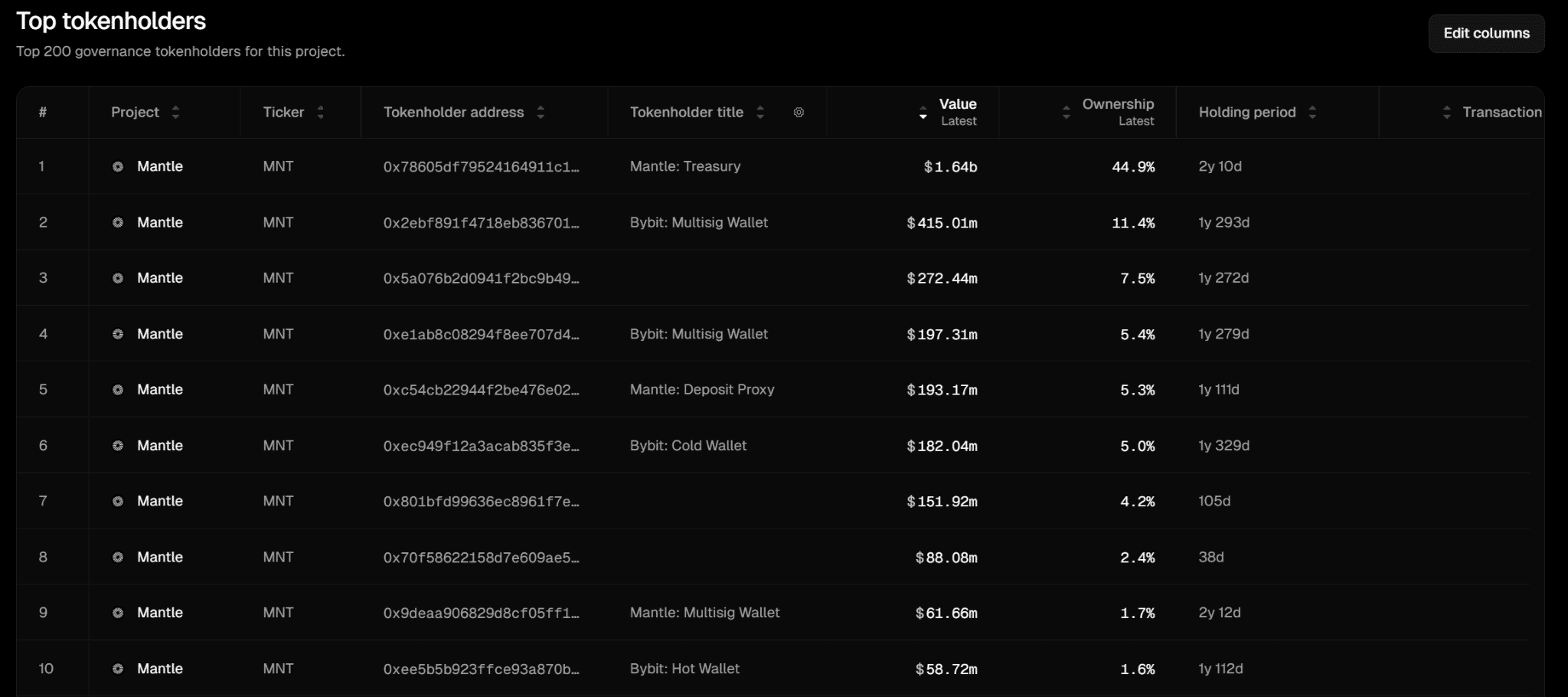
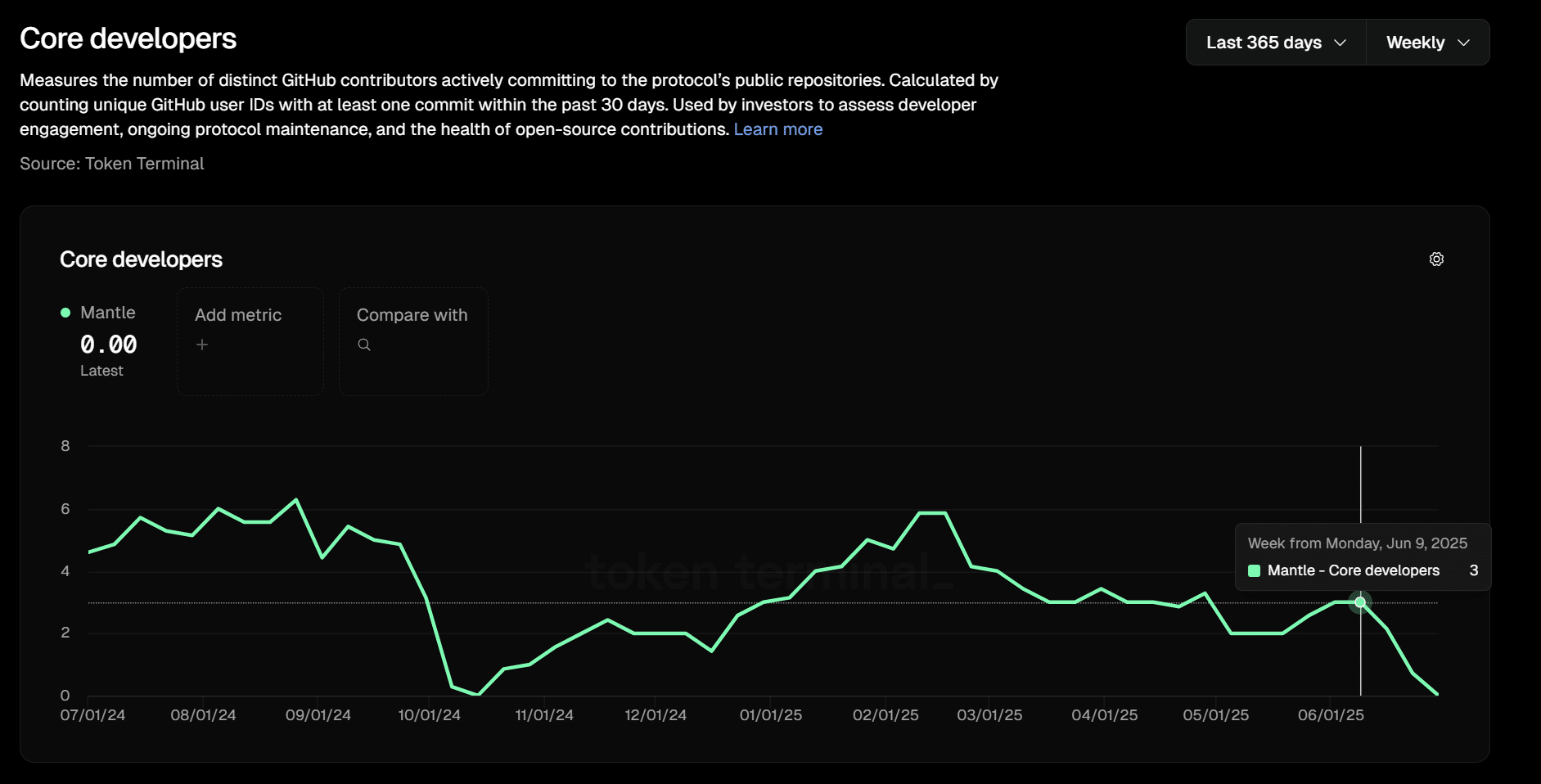
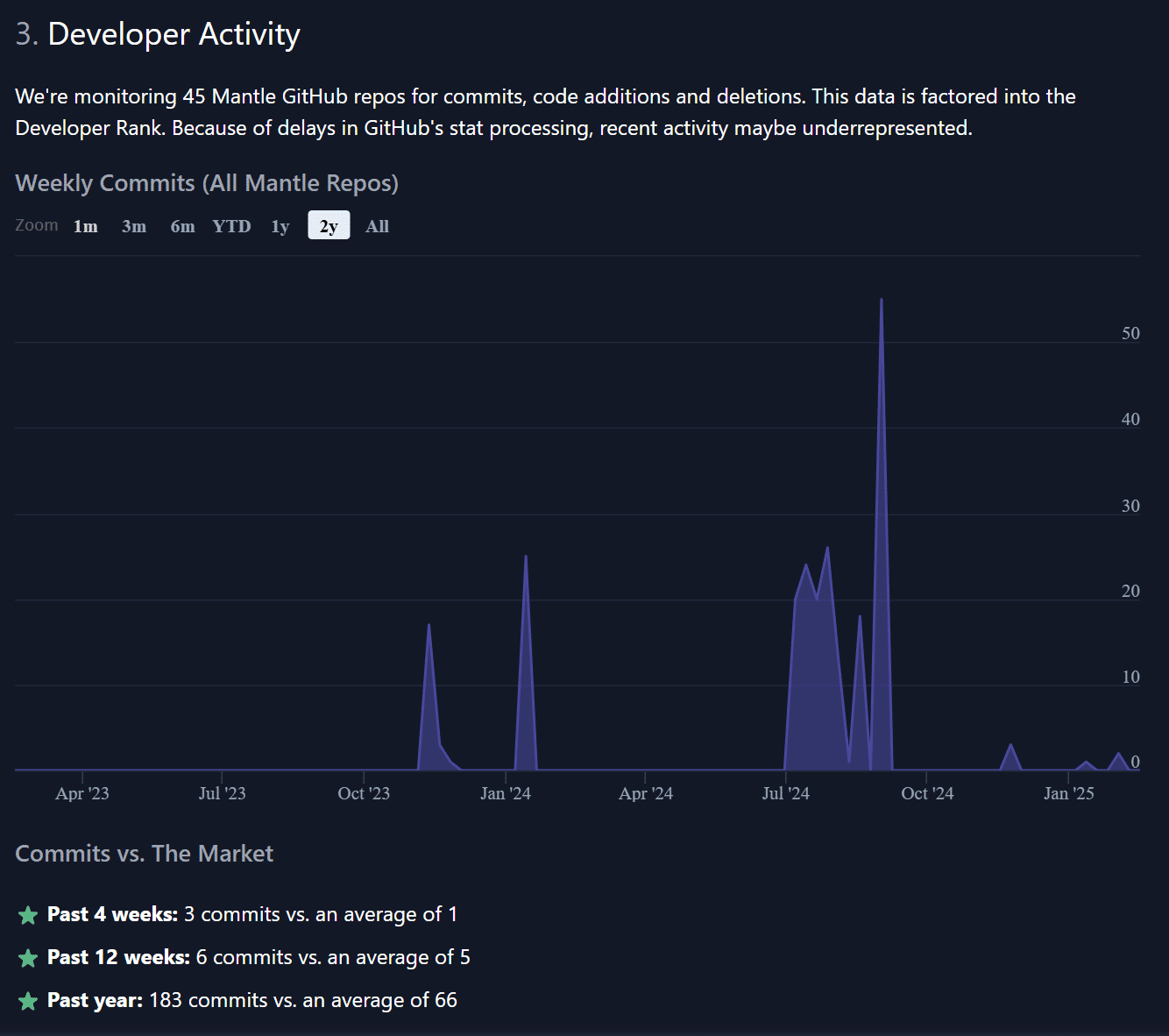
MNT holders decide everything, including when and how Treasury tokens are used, through a system called on-chain governance. This means decisions are made by the community, not by a small group of people. MNT is designed to power the entire Mantle ecosystem, on both the technical and governance layers. It has actual roles to play, and those roles are deeply integrated into the way the network runs. The point is simple: MNT isn’t just something you buy and hold, it’s something you use to participate in every layer of the network. Governance is where Mantle sets itself apart. Instead of creating a token just to raise funds or generate hype, MNT was built with on-chain governance in mind. Token holders are in full control of the protocol’s future. Supporting all of this is the Mantle Economics Committee, elected by the DAO to help review proposals and ensure treasury funds are used wisely. But even they answer to the token holders. This structure keeps Mantle adaptable without sacrificing transparency, and it gives the community a real stake in everything from tech development to ecosystem expansion. Tokenomics can lay the foundation, but market behavior is what shapes how a token performs in the wild. MNT’s value is influenced by a mix of internal activity and external forces, some you can control, some you can’t, but all of them matter. This combination of internal incentives and external exposure is what ultimately defines MNT’s position in the market. The more usage and participation the ecosystem sees, the more resilient the token becomes across market cycles. Mantle is designed from the ground up to solve Ethereum’s most pressing pain points, slow transactions, high gas fees, and limited scalability. But it doesn’t do this by copying what others have done. It takes a modular approach, letting each part of the system focus on what it does best. Transactions are executed off-chain, final security is handled by Ethereum, and data availability is outsourced to a faster, cheaper system. What you get is a blockchain that feels fast, costs less, and can adapt over time. Let’s dive into exactly how that’s possible. Mantle’s architecture is what sets the foundation for everything else it can do. At its core, it’s modular, which means it separates the different jobs of a blockchain into different layers. Unlike traditional blockchains that cram consensus, execution, and data into one bulky system, Mantle breaks it up and gives each layer its own optimized space to perform. By splitting these layers apart, Mantle becomes more flexible and efficient. Each layer can evolve without dragging the rest of the system with it. That makes the protocol adaptable over time and helps keep performance high as usage grows. Mantle’s internal structure is built to be lean, powerful, and modular. This means that every core part of the blockchain, from execution to settlement, is broken into separate, purpose-built layers that interact seamlessly. This separation of responsibilities allows Mantle to run with fewer bottlenecks. Execution is faster, settlement is secure, and data is cheaper to store. It’s like giving each part of the blockchain its own lane on the highway so they can all move at full speed without getting in each other’s way. One of Mantle’s biggest advantages is how easy it is for Ethereum developers to build on it. There’s no learning curve, no new language, and no special workarounds. Everything is designed to work just like Ethereum, only faster and cheaper. This compatibility means Mantle can easily onboard Ethereum developers and existing projects without friction. It removes one of the biggest barriers to adoption: technical migration. Instead, projects can move or expand to Mantle while keeping the same infrastructure and dev experience they’re used to. Mantle was built with performance in mind, and it shows. It doesn’t just improve on Ethereum, it leaps ahead by orders of magnitude in throughput, latency, and cost. Mantle doesn’t just scale, it does it intelligently. The network can grow without slowing down, and developers don’t have to choose between speed and security. It’s the kind of infrastructure that can support real-world demand. Like any blockchain project, Mantle comes with its own set of strengths and trade-offs. Understanding both gives a clearer picture of what it can realistically achieve and where caution is still needed. Benefits Drawbacks Despite these challenges, Mantle offers one of the most complete and forward-thinking Layer 2 experiences in the ecosystem today. Its design isn’t just efficient, it’s built to evolve. When it comes to assessing the long-term strength of any crypto project, numbers talk. On-chain metrics and developer activity offer a clear window into how alive, secure, and active the protocol actually is. So before throwing money into MNT, it’s worth examining what’s happening behind the scenes. Here’s a deep dive into Mantle’s token concentration, developer presence, and GitHub commit activity. Let’s start with where the money is sitting. Token distribution can reveal how decentralized (or centralized) a project truly is. In Mantle’s case, over 44.9% of the total MNT supply is held by the Mantle Treasury, worth roughly $1.64 billion. That’s nearly half the supply under one entity. The next biggest holders are a mix of Bybit wallets and Mantle deposit proxies, with ownership ranging from 11.4% to 1.6% individually. Here’s the top-line breakdown of the top 10 holders: While this setup isn’t unusual for early-stage Layer 2s, it does highlight a high concentration of tokens in institutional or protocol-controlled wallets. That can be good for funding and stability, but it’s also something to monitor, especially in terms of sell pressure or governance voting power down the line. Now let’s talk code. A project with no commits or core contributors is like a car running on fumes, it might coast for a while, but it’s not going far. So what’s Mantle’s engine telling us? Based on data from Token Terminal, the number of core developers contributing to Mantle’s GitHub repos recently dropped to zero. While that sounds harsh, it’s important to understand what this metric actually tracks: GitHub accounts that made at least one commit in the last 30 days. So while it doesn’t necessarily mean the devs are gone, it does point to a current lull in core-level contributions. Zooming out, we can see more nuance: Looking at Stack.money, which monitors a wider range of Mantle’s GitHub repos (45 total), the full picture comes into focus: So despite recent dips, Mantle’s dev activity is still relatively healthy when viewed on a 12-month timeline. The project might be taking a breather, or preparing for its next major push. MNT is currently trading around $0.56, which is a far cry from its $1.50 peak back in April 2024. That’s more than a 60% drop from the top, which might look scary at first glance, but it also screams opportunity if you understand where the project is headed. This kind of pullback is common in crypto, especially after a major rally. The bigger question is whether Mantle still has momentum behind it, and if the current price reflects fear, or simply undervaluation. Here’s why it might be worth considering: But it’s not without risk: If you want to buy Mantle safely, we suggest heading straight to any of the reputable platforms below. In case you want a step-by-step guide to purchasing MNT, consider checking out our “How to buy Mantle” article.
After buying Mantle, you need a wallet that supports MNT, protects your funds, and makes daily interaction smooth and secure. Here are three top options: What makes Mantle exciting isn’t just its current price or how many apps are already live. It’s what’s coming next. And if you’ve followed their roadmap or read their recent updates, you’ll know the team is laying serious groundwork for the future. Add to that a governance system that actually works, where token holders can vote on real upgrades and funding, and you’ve got a roadmap that balances speed with sustainability. The community vibe? Cautiously optimistic. Builders are engaged, governance is active, and sentiment is quietly bullish. It’s not a hype-driven project. It’s a builder-driven one. And that’s what tends to perform best over the long run. Mantle was built with a specific goal in mind: to improve how Ethereum scales, without compromising speed, cost, or decentralization. It does this by separating the blockchain into distinct layers that each serve a focused purpose, creating a system that is more efficient and easier to maintain over time. Its success depends on how effectively developers and users adopt the network. With tools that support Ethereum standards, active governance, and one of the largest treasuries in the space, Mantle is well-positioned to attract real usage. The pieces are already in place, from its modular architecture to its plans for ZK rollups and decentralized sequencing. What happens next will rely on continued upgrades, smart treasury deployment, and real-world demand. But as a Layer 2 designed for performance and community ownership, Mantle is on track to deliver on what it was built for. DISCOVER: Mantle is a Layer 2 blockchain built on top of Ethereum. It processes transactions off the Ethereum mainnet to make them faster and cheaper, then sends the final result back to Ethereum for security. Mantle uses a modular blockchain design. Instead of doing everything in one place, it separates transaction execution, data storage, and settlement into different layers. This makes it more flexible, more scalable, and cheaper to operate compared to most Layer 2s. The MNT token is used for several things: paying gas fees, voting on proposals through governance, staking to secure the network, and providing liquidity to support apps and tools in the ecosystem. Mantle was created by the BitDAO community, not a single person or company. Key contributors came from different parts of the crypto space, including developers and supporters from Bybit, Selini Capital, and the former BitDAO governance team. Yes, Mantle is fully EVM-compatible. Developers can build and deploy smart contracts using the same tools they use on Ethereum, without needing to learn anything new or change their code. Yes, you can use the Mantle Bridge to move tokens like ETH and other ERC-20 assets from Ethereum to Mantle and back. It works like most other crypto bridges and is designed for easy, secure transfers between networks. Established in 2013, 99Bitcoin’s team members have been crypto experts since Bitcoin’s Early days. Weekly Research Monthly readers Expert contributors Crypto Projects Reviewed
MNT Utility & Use Cases
Governance & Protocol Control
Mantle’s Market Dynamics & External Factors
How Does Mantle Crypto Work?
Architecture Behind the Mantle (MNT) Coin
Mantle Blockchain Structure
Token Standards & Smart Contracts
Scalability & Performance
Benefits and Drawbacks of MNT Crypto
Mantle’s Analytics
On-Chain Metrics
Development Activity: Core Developers and GitHub Commits
Is Mantle (MNT) a Buy?
Best Mantle Wallets
Mantle’s Future: What To Expect?
Conclusion: What is Mantle (MNT)?
FAQ
Is Mantle a Layer 2 or Layer 1 blockchain?

What makes Mantle different from other Layer 2s?
What is the MNT token used for?
Who created Mantle?
Is Mantle EVM-compatible?
Can I bridge assets to Mantle?
References

Why you can trust 99Bitcoins