







In This Article
Sui is a next-generation Layer-1 blockchain and smart contract platform designed to make digital asset ownership more secure, efficient, and accessible. As part of its ecosystem, the network offers built-in staking functionality that allows users to earn SUI staking rewards by supporting validators. Whether you’re a beginner looking for a SUI staking guide or an experienced user comparing the best SUI staking options, understanding how the process works is key to maximizing your gains.
In this article, we’ll walk you through how to stake SUI, explore the top SUI staking platforms, and highlight both the benefits and potential risks involved. You will also learn how to avoid common mistakes and make the most out of your SUI staking journey.
SUI Staking: Summary
The process of SUI staking is quite similar to many other blockchains. Sui uses a Delegated Proof of Stake (DPoS) system, where SUI holders can delegate their tokens to validators. Remember, the more tokens a validator gets, the more power they have in running the network. Validators earn rewards from gas fees for their work, and these rewards are also shared with the delegators who stake their SUI tokens.
Key Takeaways
- SUI holders can stake their tokens through validators and earn rewards in return, with the mechanism also incentivizing validators.
- SUI uses a Delegated Proof-of-Stake (DPoS) system, where token holders delegate their tokens to validators who process network transactions.
- The top staking providers for this coin include Best Wallet, Binance, OKX, SUI Wallet, Gem Wallet, KuCoin, and Trust Wallet.
- Gem Wallet offers the highest APY for staking SUI – 5.30%.
- One of the most effective ways to maximize your staking rewards is by choosing a reliable platform, staking a larger amount as early as possible, and regularly compounding your earnings.
What is SUI Staking?
As mentioned in our SUI review, SUI allows users to commit or stake their coins to network validators. The mechanism behind this process rewards users, but it also incentivizes validators to deliver the highest performance using an economic model.
SUI works on a Delegated-Proof-of-Stake (DPoS) system to secure the network, meaning that a network validator’s voting power is determined by the amount of SUI tokens that holders delegate to them. The more stake a validator is delegated, the more voting power they own. In exchange for performing consensus and processing transactions, validators earn rewards based on the gas fees gathered. Then, stakers share the rewards.
Well, if you are new to the network and haven’t bought SUI coins yet, check out our guide on ‘how to buy SUI‘ to get started.
How Does SUI Staking Work?
SUI operates on a Delegated Proof-of-Stake (DPoS) model, where validators are chosen based on the amount of stake delegated to them to process transactions. Validators lock up a specific amount of SUI as collateral and then earn rewards for processing operations. Network users hold their own SUI, which they can delegate to their chosen validators as part of the validators’ stakes. That way, the validators reward users based on the delegated amount of SUI. Users can withdraw their SUI or change their validator when the epoch changes.

SUI staking involves sending a transaction to the network that invokes the staking function included in the system’s Move package. This transaction collects the SUI coins within a self-custodial staked object, containing information, including the stake activation epoch and the validator staking pool ID. With the launch of SIP-6, users can use their staked objects to participate in liquid staking protocols.
Validators are collectively responsible for securing the network. They ensure the network is safe by processing transactions and participating in consensus. There are minimum staking requirements a validator must satisfy to become active and to stay in the active validator set. As per Sui official website,
“A validator candidate must accrue at least 30M SUI of stake before they can request to join the validator set. If an active validator’s stake falls below 20M SUI, they have seven epochs of grace period to gain back the stake before being removed from the validator set. If an active validator’s stake falls below 15M SUI, they are removed from the validator set at the end of the current epoch boundary. Sui uses 24-hour epochs.”
SUI is a permissionless network, meaning anyone with a sufficient stake and appropriate setup can become a validator. Using DPoS, SUI determines which validators operate the network and their voting power.
Validators offer services to SUI by operating and protecting the network and receive commissions from staking rewards. In the early network phases, staking rewards include stake subsidies and gas fees. These subsidies are crucial since gas fees are expected to be relatively low initially. Over time, however, all rewards will come solely from gas fees.
| Aspect | Details |
|---|---|
| Staking Model |
Delegated Proof-of-Stake (DPoS)
|
| Validator Selection |
Validators are chosen based on the amount of stake delegated to them.
|
| Stake Delegation |
Users delegate their SUI to chosen validators, who lock up SUI as collateral.
|
| Rewards |
Validators earn rewards for processing transactions and securing the network.
|
| User Actions |
Users can withdraw or change their validator when the epoch changes.
|
| Staking Transaction |
Transaction sends a staking request, including the stake activation epoch and validator ID.
|
| Validator Responsibility |
Validators process transactions, participate in consensus, and secure the network.
|
| Permissionless Network |
Anyone with a sufficient stake and setup can become a validator.
|
| Validator Services |
Validators operate the network and protect it, receiving commissions from staking rewards.
|
| Rewards Over Time |
In early phases, rewards include stake subsidies and gas fees, but over time only gas fees remain.
|
Where Can You Stake SUI: Top 5 Platforms For Staking Sui
Imagine buying SUI worth $ 10,000, putting it on one of the best crypto staking platforms (you heard about on some random Discord channel), waking up on a fine Sunday morning, and finding that your chosen platform was just hacked. You will sit there with a long face, regretting life choices and hating the world of cryptocurrency. Well, that’s exactly why it’s so important to choose a reliable platform for staking your SUI or any other coin. Our expert team has gathered a list of the top platforms for staking SUI, all of which are safe, trustworthy, and offer good fees, rewards, and customer support.
1. Best Wallet – Top No-KYC Platform For Staking Various Cryptos
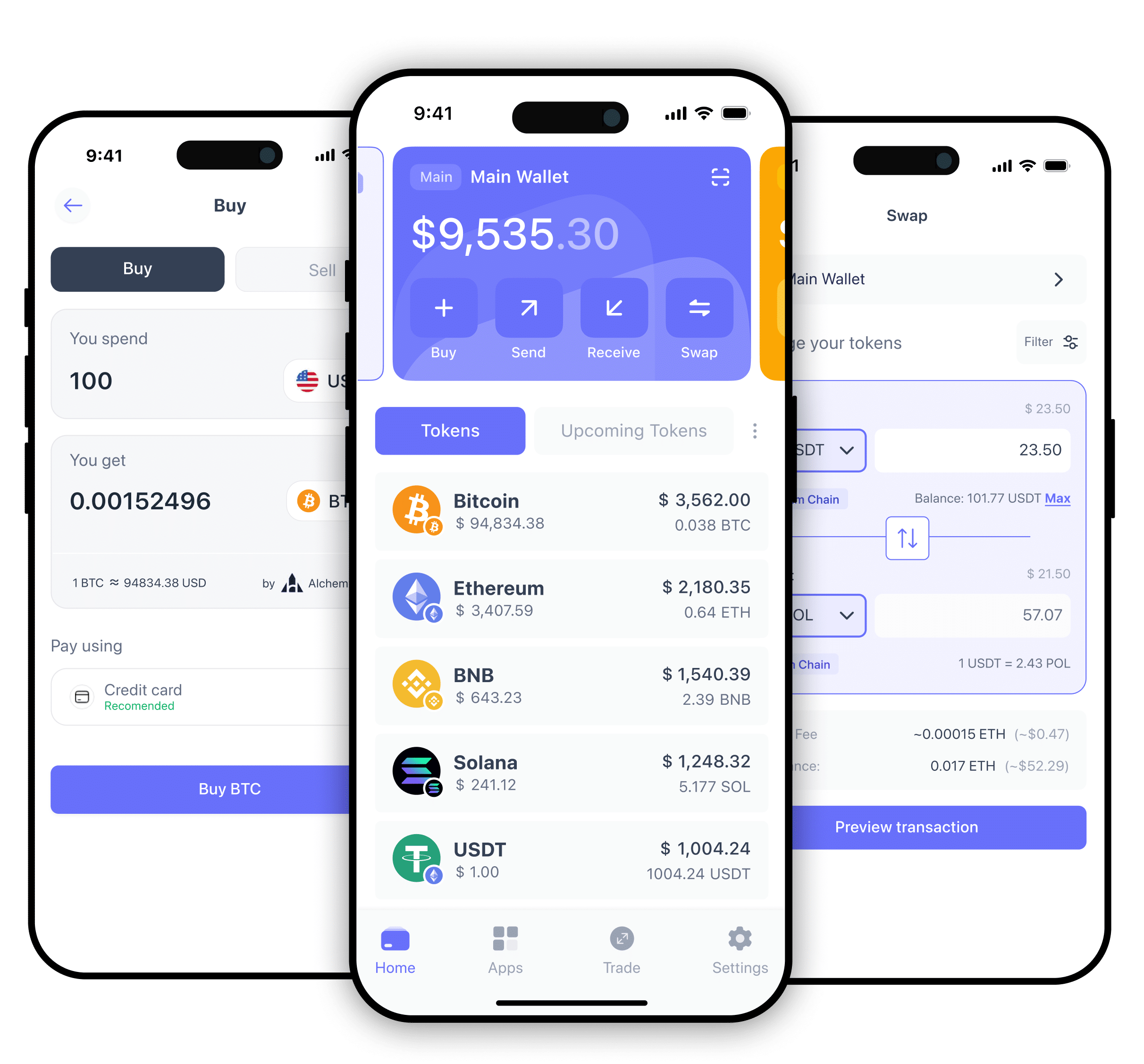
Best Wallet is a user-friendly, non-custodial crypto wallet that supports multiple blockchains. It allows users to buy, sell, swap, and stake major cryptos without hassle. This mobile crypto wallet features a decentralized exchange aggregator, Best DEX, which scans over 50 exchanges to find the best token swap rates and lowest fees. One of the most popular features is the “Upcoming Tokens” section, which allows investors to participate in presale crypto projects before they go live on centralized exchanges.

Unlike many wallets, Best Wallet doesn’t require you to write down and verify 12-24 recovery phrases, making setup easier. Instead, you can back it up on your cloud. It also supports nearly all blockchains, offers strong security like two-factor authentication (2FA), biometric verification, and third-party insurance, making it a great choice for crypto users.
Want to know more about Best Wallet? Read our Best Wallet Review 2026.
Best Wallet Key Features
- Best Wallet is free to download and easy to use, making it ideal for beginners.
- The built-in Best DEX app simplifies the process of buying, selling, and staking.
- Offers strong security with features like biometrics, 2FA, and advanced protection tools for your funds.
- Users keep their private keys with themselves; no centralized authority can access them.
- With multi-blockchain support, you can store and manage all your crypto tokens in one place.
Best Wallet Pros & Cons
Pros
- Setup is faster and easier with cloud backup instead of traditional recovery phrases.
- Finds the best swap rates and lowest fees from over 50 decentralized exchanges.
- Staking on the platform just takes less than two minutes.
- Regular updates and roadmap expansion.
- Provides multiple payment methods to buy, sell and trade cryptos.
Cons
- As a relatively new player, it lacks the long-term track record of some competitors.
- It’s a mobile wallet, doesn’t have a browser extension yet.
- Customer support could be better.
2. SUI Wallet – Top Wallet to Stake SUI Crypto in 2026
The SUI wallet is a non-custodial wallet used for asset management within the SUI network. Using the wallet for staking is user-friendly. All that is required is to choose a validator and stake your coins.
The wallet prioritizes security with advanced encryption and offers integrations with hardware wallets like Ledger. Still, it is restricted to the SUI blockchain, limiting multi-chain use.

Basically, Sui Wallet is designed for a privacy-first, hassle-free experience. It keeps your assets and personal data safe at every step. With Sui Wallet, managing your crypto is simple—you can access SUI, stake it, swap tokens, organize your NFT collection, and explore dApps, all in one place. The wallet combines an easy-to-use interface with top-tier security to protect your funds.
Sui Wallet Key Features
- A non-custodial wallet that lets you easily stake your SUI tokens.
- Staking SUI on this wallet is simple, as it only includes choosing a validator and staking your coins.
- Allows seamless connection with dApps running on the Sui network
- The wallet has a user-friendly interface.
- Prioritizes security with advanced encryption, and offers integrations with hardware wallets like Ledger.
- It is restricted to the SUI blockchain, limiting multi-chain use.
Sui Wallet Pros & Cons
Pros
- You control your assets at all times.
- Simple staking process with just a few clicks.
- Advanced encryption and hardware wallet support (e.g., Ledger).
- Clean, intuitive interface ideal for beginners.
- Stake, swap, manage NFTs, and explore dApps in one place.
Cons
- Restricted to the SUI blockchain, limiting multi-chain use.
- Fewer advanced tools compared to multi-chain wallets.
- Swaps are limited to what’s available within the SUI ecosystem.
3. Binance – Best Crypto Exchange For SUI Staking
Binance is one of the world’s leading crypto exchanges, known for its wide selection of trading pairs, low fees, and powerful trading features. It offers both regular spot trading and more advanced futures, margin, and options trading. The exchange also lets users earn passive income through staking, savings, liquidity farming, and more.

The platform is well-known for regularly adding new crypto listings. It also offers a feature called Binance Earn that lets users stake SUI in two ways: flexible and locked.
Flexible staking gives you an APY of 0.21%. It’s a low return, but the big advantage is that you don’t need to lock up your SUI—you can access your tokens anytime. Locked staking gives you better rewards, but you have to lock your SUI for a fixed period. Binance offers four options:
- 7 days – 0.59% APY
- 30 days – 1.09% APY
- 60 days – 1.49% APY
- 120 days – 2.59% APY
To stake SUI on Binance, you need a minimum of 0.01 SUI, so it’s accessible even if you start with a small amount. For more on this topic, read our Binance Staking review. Curious about the exchange itself? Don’t miss our full Binance exchange review.
Binance Key Features
- Offers yield-generating products for 19 cryptocurrencies, including SUI.
- Binance Earn enables users to stake their SUI with flexible and fixed options.
- The flexible option offers a 0.21% APY.
- The fixed options provide an APY ranging between 0.59% and 2.59%.
- The exchange has a minimum staking requirement of 0.01 SUI.
- Its “Simple Earn” feature allows users to earn returns on cryptos that do not natively support staking.
Binance Pros & Cons
Pros
- User-friendly platform with easy access to staking without technical hassles.
- Simple Earn feature makes passive income easy, even for beginners.
- Higher returns available through Dual Investment and locked staking products.
- Binance covers losses if validators misbehave.
Cons
- Regulatory challenges in certain countries may impact users.
- Offers very low flexible staking APY for SUI coin.
4. Trust Wallet – Best Self-Custodial Wallet for SUI Staking
With Trust Wallet, you can start earning rewards on your SUI tokens in just a few simple steps. All you have to do is open the app, tap on the Earn option, select SUI, choose how much you want to stake, and pick a validator. It comes with handy features like crypto swaps right inside the app, staking, and a built-in Web3 browser to explore dApps. It supports over 10 million digital assets across 100+ blockchains, making it a powerful all-in-one wallet for crypto users.
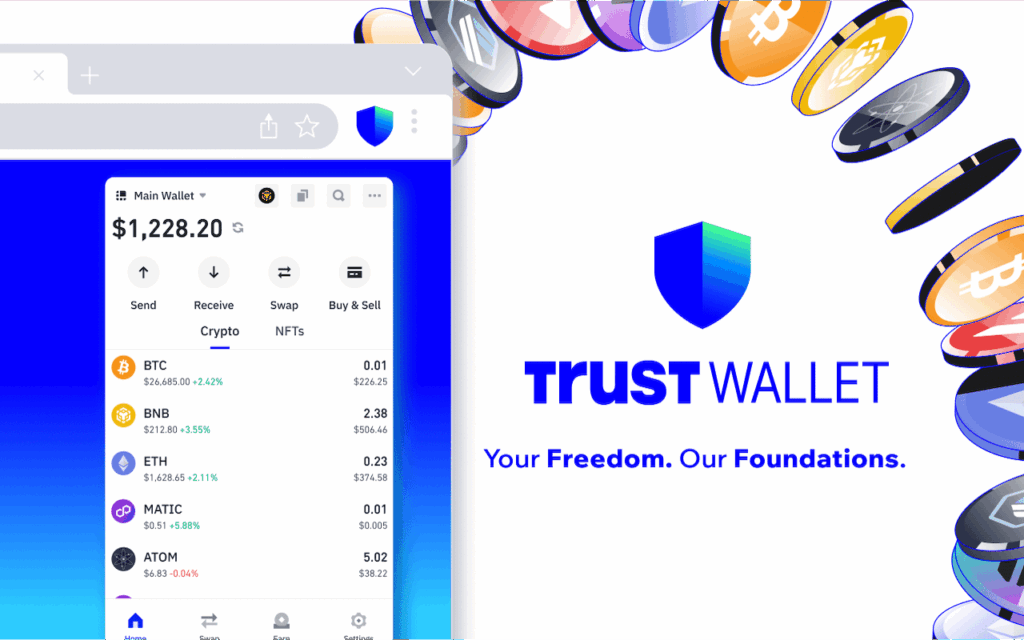
Right now, the annual percentage rate (APR) for staking SUI is around 3%. To break it down:
- If you stake 100 SUI, you’ll earn about 0.007 SUI per day,
- Around 0.21 SUI per month,
- And roughly 2.53 SUI per year.
It is a great way to grow your crypto while supporting the SUI network. If you want to know more about this wallet, check out our detailed Trust Wallet review for 2026.
Trust Wallet Key Features
- Easily earn rewards on supported tokens like SUI directly from the app.
- Stake or swap tokens instantly without leaving the wallet.
- Access various decentralized apps (dApps) and DeFi platforms with ease.
- Supports 10M+ digital assets across 100+ blockchains.
- You control your private keys and funds at all times.
Trust Wallet Pros & Cons
Pros
- Simple design makes it easy for beginners to navigate.
- One of the widest multi-chain supports in the market.
- Stake and swap tokens without needing a separate platform.
- Explore DeFi, NFTs, and games directly from the wallet.
- It’s non-custodial, so only you control your private keys and funds.
Cons
- Users may find support channels less responsive or slow.
- If not backed up securely, losing access can mean losing funds.
- Buying crypto with fiat requires linking to third-party providers.
5. Gem Wallet – Top SUI Staking Platform Offering Highest APR
Gem Wallet is a multi-chain, open-source, self-custodial Web3 crypto wallet. It allows you to send and receive crypto, swap and stake tokens, and even buy crypto with fiat without any hassle. It is one of the best SUI wallets, allowing users to earn passive income by staking their SUI. This platform makes staking SUI convenient, simple, and secure.

Staking SUI on Gem Wallet comes with an annual percentage rate (APR) of 2.50%. Based on the platform’s calculator:
- If you stake 100 SUI, you’ll earn approximately 0.21 SUI per month and 2.5 SUI in a year.
- With 1,000 SUI staked, your rewards go up to around 2.08 SUI each month and 25 SUI per year.
Gem Wallet Key Features
- Easily manage assets across different blockchains in one wallet.
- Stake cryptocurrencies like SUI directly within the wallet and earn passive income.
- You retain full control of your private keys and assets at all times.
- Transparent and community-driven, allowing users to audit and trust the platform.
Gem Wallet Pros & Cons
Pros
- Simple interface makes it beginner-friendly.
- Offers higher-than-average APR for coins like SUI.
- Strong focus on user security with self-custody and open-source transparency.
- Combines wallet, staking, swapping, and buying crypto in one place.
Cons
- Less community support and educational content than more established wallets.
- Limited functionality for desktop users as the browser extension is missing.
- May involve additional fees or restrictions depending on region.
Want to Stake Coins Other Than SUI?
Take a look at our 14 Best Crypto Staking Coins to Invest in 2026.
How to Stake SUI: A Step-by-Step Guide
This section will provide you with a step-by-step guide for staking SUI:
-
Go to 'Stake & Earn SUI'
In your wallet’s ‘Home’ tab, find and click on “Stake & Earn SUI.”
-
Choose a Validator
Choose a validator and click on “Select Amount.”
-
Enter Amount & Stake
Add the amount of SUI you want to stake, and leave SUI in your wallet to cover potential gas fees. Click on “Stake Now” to confirm.
-
Confirm the Transaction
Check the transaction details, confirm by clicking the check mark, and close the prompt.
-
Close the Staking Page
Click on “X” to close the “Stake & Earn SUI” page. Your rewards will accumulate in the next epoch and will be shown within your wallet.
-
View Your Stake
To see your stake, go to the “Home” tab and choose “Currently Staked.” It will show you data about the selected validator, the amount staked, earnings, and the validator commission.
How Much Can You Earn by Staking SUI?
Your staking rewards depend on the chosen platform, staked amount, staking duration, and network activity. As we’ve seen from the abovementioned options, staking reward APYs range from 0.21% to 5.30%. The platform that offers the highest APY is Gem Wallet.
While discussing the amount you can earn, we should mention that staking SUI for airdrops is a common feature offered by some SUI projects to reward active network participants, and the airdrop is usually quite generous.
Given that these rates are usually dynamic and change, keep an eye out so that you are aware of your potential earnings.
Tips and Strategies for Maximizing SUI Staking Rewards
Consider these approaches to increase your staking rewards with SUI.
Benefits and Risks of SUI Staking
Benefits Risks This section includes a comparison between SUI, Helium, and USDC staking, starting with the consensus mechanisms: SUI operates on a DPoS, Helium’s consensus mechanism is PoC, whereas USDC doesn’t have its own consensus mechanism but relies on the blockchain it operates on. All three offer flexible and fixed staking options, with different minimum staking amounts depending on the chosen platform. Their APYs also vary, with USDC staking offering the highest at 14%, then Helium staking at 8.6% APY, and SUI staking with a maximum APY of 5.30%. Reward distribution is usually based on the amount staked, the chosen platform, and the staking duration. Here are the most common mistakes involved in SUI staking: Here is a step-by-step process for unstaking your SUI coins: Recent trends are showing exciting developments for SUI staking. One major trend is the rise of liquid staking, like Bitcoin staking through Babylon Labs and Lombard Protocol. This allows SUI to work with more than just its own token, bringing in a wider audience from decentralized finance (DeFi). Additionally, more platforms are letting users stake their SUI and earn steady returns, which helps grow the community. As SUI becomes better at supporting cross-chain staking and integrating different assets, it’s expected to attract more users, increase activity on the network, and offer even better staking rewards. If you would like to read more about the potential of SUI, enjoy our SUI price prediction article. See Also: Yes, SUI allows users to stake their tokens with network validators. This mechanism not only rewards users with staking returns but also encourages validators to maintain top performance through an incentive-based economic model. The main risks include slashing penalties—if a validator misbehaves or goes offline, you could lose part of your staked tokens. Also, some platforms enforce a lock-up period during which you can’t access or trade your staked SUI. You can choose wallets like Best Wallet or Gem Wallet. According to our research, Gem Wallet offers the highest staking APY for SUI at 5.30%, making it one of the top choices for maximizing returns. And it is also very secure. Yes, Binance supports SUI staking through both flexible and fixed staking options, allowing you to choose based on your investment goals and liquidity needs. Staking on SUI Wallet is easy. Just choose a validator, enter the amount you want to stake, and confirm. Make sure to leave a little SUI in your wallet to cover gas fees. You can initiate unstaking in the next epoch, which occurs every 24 hours. After initiating, your tokens and any rewards will be returned once the epoch ends. No, Kraken doesn’t currently support SUI staking. However, platforms like Binance, OKX, and Gem Wallet do. You can connect your Ledger device with the SUI Wallet and stake your SUI tokens directly from your hardware wallet for extra security. Established in 2013, 99Bitcoin’s team members have been crypto experts since Bitcoin’s Early days. Weekly Research Monthly readers Expert contributors Crypto Projects Reviewed
SUI Staking vs. Helium vs. USDC: A Comparative Analysis
Features
SUI Staking
Helium Staking
USDC Staking
Consensus Mechanism
Delegated-Proof-of-Stake (DPoS)
Proof-of-Coverage (PoC)
Doesn’t have its own consensus mechanism; relies on the blockchain it operates on
Duration
Flexible and fixed options
Flexible, decaying, or constant (up to 4 years)
Flexible and fixed options
Minimum Stake
Depends on the provider (Binance: 0.01 SUI, KuCoin 1 SUI)
Depends on the provider
Depends on the platform: Some don’t have a minimum staking requirement, while others, like Binance, ask for a minimum of 0.1–50,000 SUI
APY
0.21%–5.30%
1%–8.6%
1.09%–14%
Reward Distribution
Depends on staking duration, amount, and delegation choice
Depends on staking duration, amount, and delegation choice
Based on platform rates, supply-demand dynamics, and staking duration
Mistakes to Avoid When Staking SUI
How to Unstake SUI: A Detailed Guide
Initiate Unstaking
Withdraw stake from the validator by sending a transaction that invokes the unstaking function in the system Move package.
Process the Stake Object
The transaction unwraps the stake object, which involves processing both the accumulated and the principal rewards.
Receive Rewards
You receive the staked amount and the accumulated rewards as SUI coins.
Understand Reward Eligibility
To get rewards, your SUI must be staked for the full duration of an epoch. Make sure to understand the reward eligibility criteria.
Rewards Calculation
Based on when you stake and unstake, your rewards will be worked out and added to your wallet.
Conclusion: SUI Staking
FAQs
Does SUI offer staking?

What are the risks of SUI staking?
What platform is best to stake SUI?
Can I stake SUI on Binance?
How to stake on SUI Wallet?
When can you unstake SUI?
Can you stake SUI on Kraken?
How to stake SUI on Ledger?
References

Why you can trust 99Bitcoins