




Many people assume that using cryptocurrencies automatically hides their identity, but that is not entirely true. Crypto networks such as Bitcoin (BTC) and Ethereum (ETH) publish all transactions online, and some modern techniques can reveal the identity of crypto users. That’s where privacy coins come in. These special cryptocurrencies guarantee anonymity.
To use them effectively, you need the best wallet for crypto privacy coins. In this guide, we’ll compare popular wallets for privacy coins and help you learn all there is to know about crypto wallets and privacy coins.
Key Takeaways
Top Privacy Coins Wallets Ranked
We ranked the best software and hardware wallets for privacy coins. Best Wallet was singled out as the best wallet for its versatility to cater to both crypto newcomers and veterans. Hardware wallets from Ledger, Trezor, and ELLIPAL were highly rated for their institutional-grade security. Privacy-first wallets from the Monero and Zcash communities were also in the mix.
Wallets For Privacy Coins: Summary
In this article, we explored the world of privacy coin wallets and how they keep your crypto activity anonymous. We will specifically focus on crypto wallets to store your privacy coins such as Monero (XMR) and Zcash (ZEC).
You’ll learn how software, desktop, and hardware solutions differ and which one is best suited for your privacy coin storage needs. We also talk about the factors to consider when selecting a crypto wallet and the steps to take to secure it. By the end, you’ll have a better idea of choosing the right privacy coin wallet for you.
Best Software Wallets For Privacy Coins
Software crypto wallets are the best way to get started with self-custody of your privacy-focused cryptocurrencies, such as Monero (XMR) and Zcash (ZEC). But what does self-custodialship or self-custody even mean? In crypto, it refers to the practice of controlling your own private keys, which control your crypto assets, instead of relying on a crypto exchange to do it for you.
Such a setup protects you from risks such as exchange hacks, bankruptcy, and fraud. Just ask the former customers of FTX Exchange.
The best part of using software wallets is that they are free to download and use. So what are you waiting for? Go check out these popular wallets for privacy coins.
Best Wallet – Overall Best Non-Custodial Wallet For Privacy Coins
Best Wallet is quickly becoming a go-to choice for anyone looking to store their cryptocurrencies while retaining 100% ownership over their digital assets. Additionally, the app does not require users to complete KYC verification during onboarding. Therefore, it is no surprise to see it feature in our list of the top non-custodial wallets for privacy coins.
Designed for both beginners and experienced crypto users, Best Wallet makes storing, buying, sending, trading, and managing private tokens effortless. Because it is a non-custodial wallet, the private keys of your cryptocurrencies are stored locally on your device, which means that only you can control your assets. In contrast, when you leave your cryptocurrencies on your exchange account, you are essentially giving up control over your digital assets to the exchange operator and trusting them to act honestly.
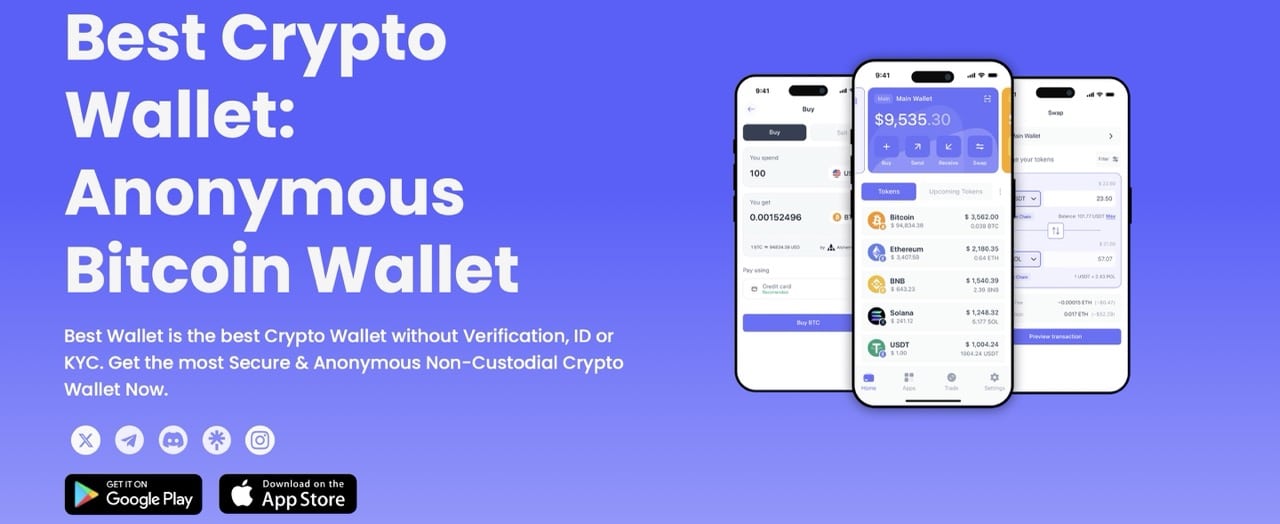
Security on Best Wallet is top-notch with the availability of the best features such as biometric authentication, PIN protection, multi-factor authentication (2FA), and more. The app also comes equipped with a decentralized exchange (DEX) aggregator, which connects users with the best exchange rates and the lowest trading fees when trading their private coins on-chain.
Overall, Best Wallet balances ease of use, security, and privacy features, which makes it our top private crypto storage solution in 2026. Learn more about it in our Best Wallet review.
Best Wallet Pros and Cons
Pros
-
BNon-custodial wallet that gives user full ownership of their private cryptocurrencies.
-
Supports multiple blockchains, including popular ones such as Bitcoin, Ethereum, Polygon, and BNB Chain.
-
Has an in-built DEX aggregator for easy and cheap on-chain crypto trading.
-
Supports multiple fiat onramping options to fund your account using popular payment methods.
-
Interface is user-friendly, setup is simple, and it does not charge high fees.
-
Users do not have to complete KYC processes, making it ideal for private tokens.
Cons
-
Only available as a smartphone app and does not have a desktop app or browser extension.
-
The platform may have limited customer support.
-
Users hold full responsibility for keeping their cryptocurrencies safe.
Zengo – Top Hot Wallet to Store Private Coins
Hacking is a big risk in crypto, especially when it comes to self-custodialship. As a crypto user, you have to keep in mind that when you choose to use a crypto wallet to store your assets, you and you alone are responsible for safeguarding your tokens against hacks and scams.
Sound tough, right? Enter Zengo Wallet, a one-of-a-kind non-custodial crypto wallet that uses MPC (Multi-Party Computation) cryptography to protect user funds. In simple words, MPC is the same type of security used by institutions like Fireblocks and Coinbase to custody billions in assets. Zengo is the first consumer wallet to bring this institutional-grade protection to everyday users.
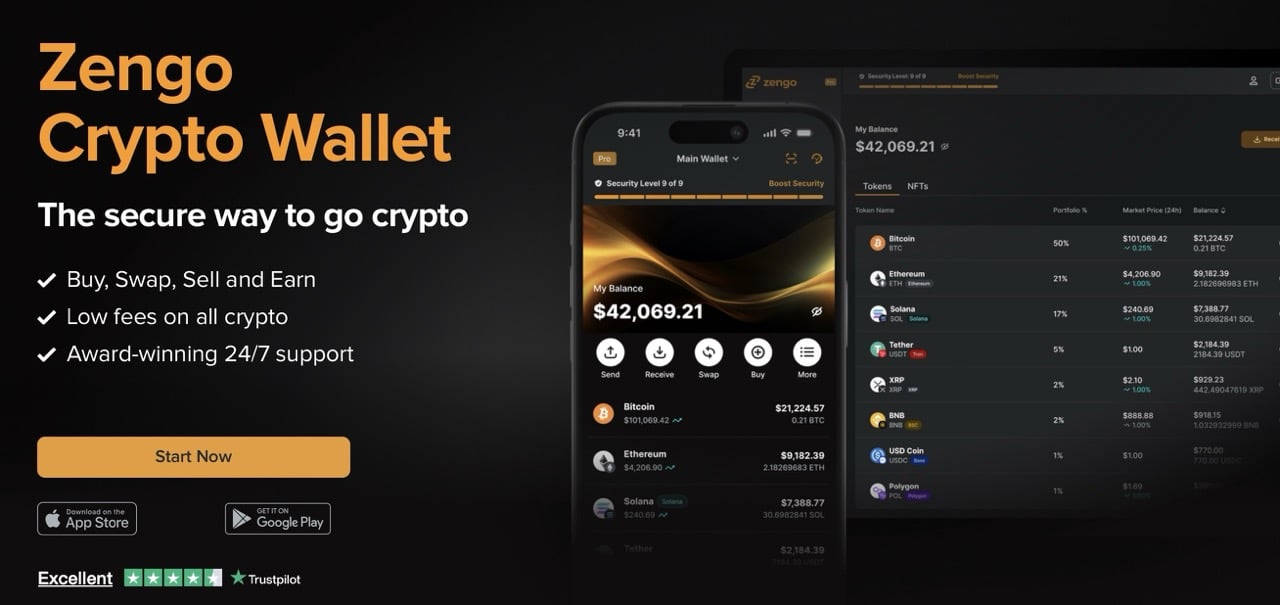
An MPC wallet like Zengo creates two independent “secret shares” instead of a single private key. One secret share is stored on your device, while the other is secured on Zengo’s servers. Such a setup eliminates a single point of failure as two shares work together to approve transactions.
Zengo is arguably the most secure privacy coin wallet in 2026. Learn more about it in our Zengo Wallet review.
Zengo Pros & Cons
Pros
-
No seed phrases are required as Zengo uses the MPC security model
-
Offers quick and easy setup for beginners
-
Supports buying, selling, swapping, and staking features.
-
Available on both iOS and Android,
Cons
-
Zengo Pro is a paid subscription.
-
Zengo is not open-source. The app and its server code are closed-source.
Binance Wallet – Top-Rated Exchange Wallet For Privacy Tokens
Binance Wallet is among the popular wallets to store Monero and Zcash if you want a solution that is closely integrated with a crypto exchange. As the name suggests, the Binance Wallet is an in-app non-custodial wallet available on the Binance Exchange mobile app.
One of its main advantages is versatility. In addition to storing your private tokens and other cryptocurrencies, Binance Wallet allows seamless transfer of tokens within the Binance ecosystem, so you can buy/sell tokens, trade futures, participate in liquidity pools, and stake cryptos all under one platform. This makes Binance Wallet a good option for those who want more than just a secure private crypto storage solution.
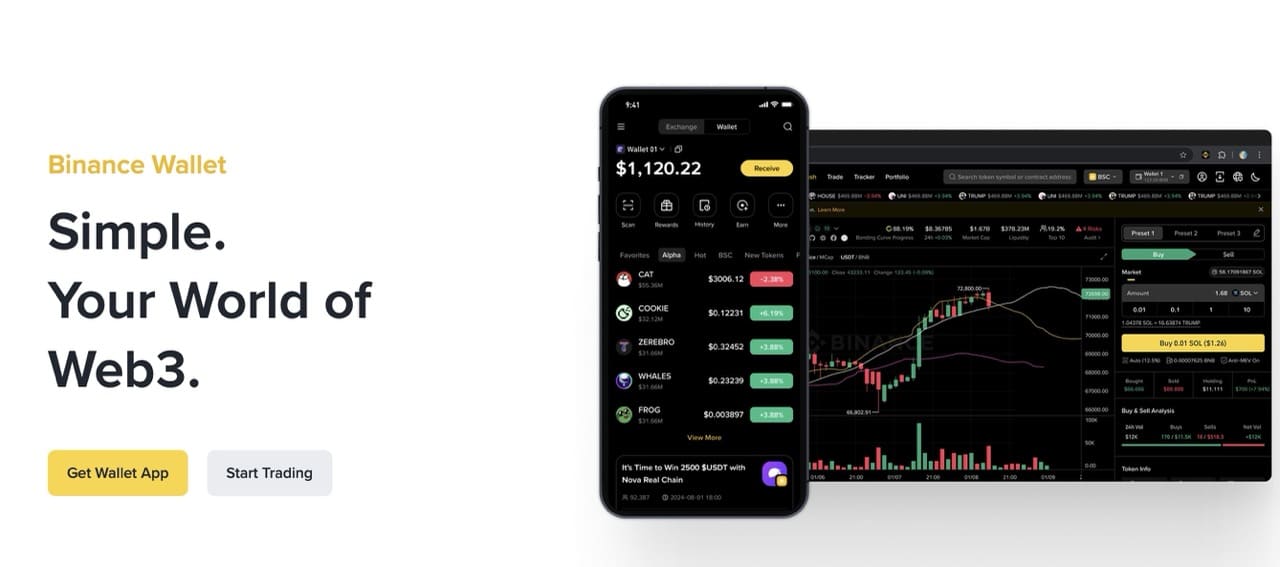
It is important to note that while the Binance Exchange is custodial in nature, which means that the exchange custodies and secures your assets, the Binance Wallet is non-custodial, which means that you keep complete control over your crypto assets.
For beginners who want a mix of ease, accessibility, and trading power, Binance Wallet remains a strong contender. Learn more about why it is one of the best mobile wallets for privacy coins in our Binance Wallet review.
Binance Wallet Pros & Cons
Pros
-
Integrated seamlessly with the Binance ecosystem, giving access to trading, staking, and DeFi features.
-
Comes as an in-app non-custodial wallet within the Binance mobile app, with the option as a desktop app.
-
Supports a wide variety of crypto assets, including both privacy coins and mainstream tokens.
-
Has strong security features such as MPC technology, multi-factor authentication, and withdrawal protection
Cons
-
You will need a Binance account to create a Binance Wallet.
-
Binance Exchange may require you to complete KYC.
Monero GUI Wallet – Top Desktop Wallet Specialized For XMR
Monero GUI Wallet is the official wallet developed and maintained by the Monero community. For many, it is the go-to choice to store their XMR tokens.
The wallet is developed to cater to both newcomers and experienced users. Those new to the Monero ecosystem can opt for the “Simple Mode,” which offers a quick and easy way to send and receive XMR tokens.
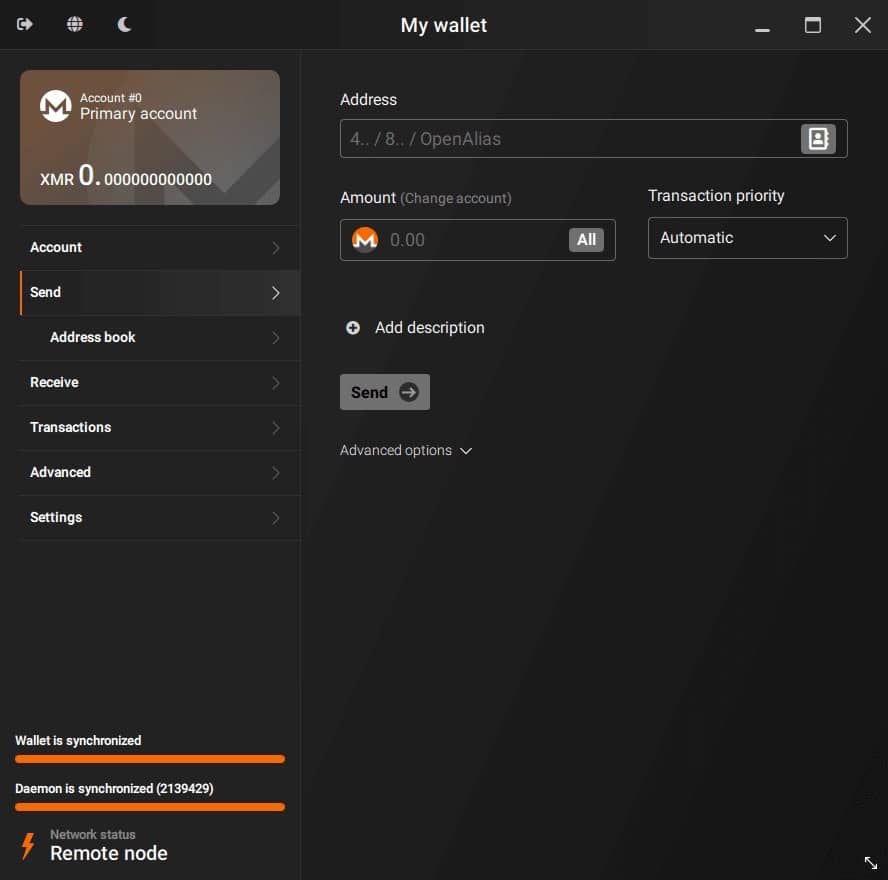
Crypto veterans looking for the best anonymous crypto wallet experience can use the “Advanced Mode,” which gives you full control of the wallet and nodes. The Monero GUI Wallet also features a special “Merchant Page” that is optimized for businesses looking for the safest crypto wallets for anonymous transactions.
Blockchain pruning is a key feature of the Monero GUI wallet, which ensures that the wallet downloads only 1/3rd of the Monero blockchain to allow you to download the wallet on less hard disk space. The wallet is compatible with hardware wallets such as Trezor and Ledger, has in-app fiat conversion, and is available in 30+ languages.
Check out our article on 4 Proven Ways to Buy Monero (XMR) if you are interested in this leading privacy crypto.
Monero GUI Pros & Cons
Pros
-
The wallet is completely open-source, community-audited, and transparent
-
Two modes: Simple for beginners, Advanced for experts
-
Full privacy integration with Monero’s blockchain features
-
Compatible with Trezor and Ledger hardware wallets.
Cons
-
Desktop-only, no native mobile version
-
Blockchain syncing can be slow for first-time users
-
Interface may feel complex for absolute beginners
Zecwallet Lite – Full-Featured Zcash Wallet
For those Zcash fans out there exploring mobile wallets for privacy coins, Zecwallet Lite may be what you are searching for. This wallet strips away the heavy demands of running a full Zcash node without compromising on the strong privacy features the Zcash blockchain is known for.
Made with user-friendliness and accessibility in mind, the Zecwallet Lite is available on desktop (Windows, macOS, Linux) and mobile (Android, iOS). Instead of downloading the entire Zcash blockchain, this wallet connects to light servers, making setup fast and easy.
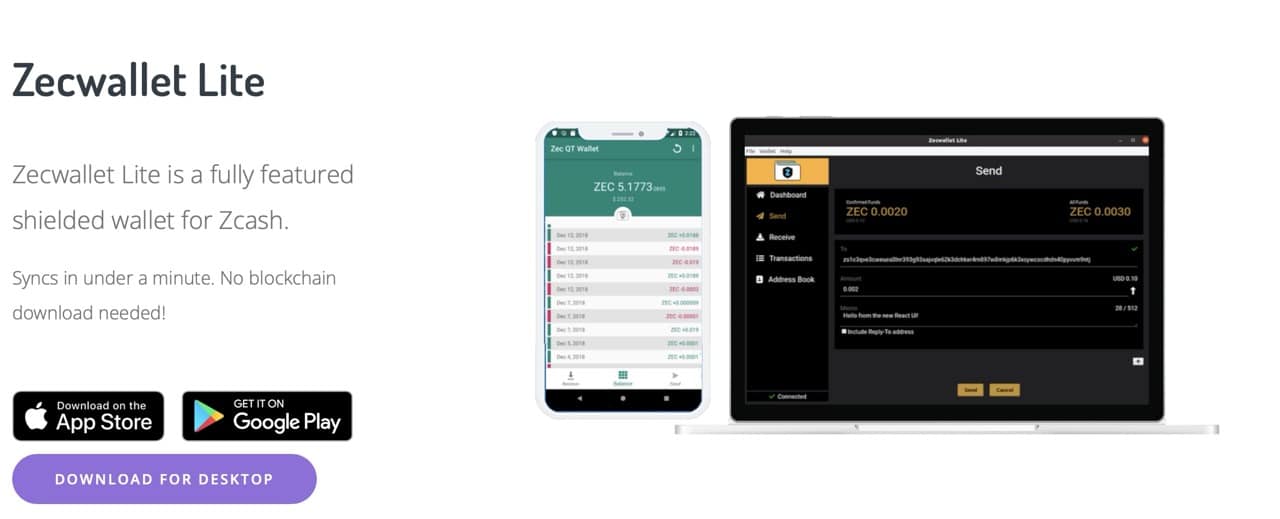
Privacy-wise, there are very few that can beat the Zecwallet Lite as it supports shielded transactions, ensuring that both senders and recipients remain hidden while amounts are encrypted. Furthermore, the Zecwallet Lite is a fully open-source project and is supported by a grant from the Zcash Foundation.
Check out our article on 4 Proven Ways to Buy ZCash (ZEC) if you are interested in this popular privacy-first crypto.
Zecwallet Lite Pros & Cons
Pros
-
Known for its quick setup and easy maintenance due to its lightweight design.
-
Available on both desktop and mobile platforms
-
Ideal for private transactions since it enables shielded transfers.
-
Open-source with active community development
Cons
-
Does not support all the features available on Fullnode wallet.
-
May not support advanced trading and DeFi features that crypto users expect.
Top Hardware Wallets For Privacy Coins
Hardware wallets are devices that secure your crypto assets by keeping them offline and in isolation from the internet. They are known for providing the strongest security available to crypto users; however, they are not free, and you will have to buy them.
In the next section, we will list the top hardware wallets from Ledger, Trezor, and ELLIPAL and let you know why they are among the most secure crypto wallets for privacy coins such as XMR and ZEC.
Ledger – Best Cold Wallet To Store Private Coins
Ledger is a renowned hardware wallet manufacturer that makes some of the most secure crypto wallets for privacy coins. Ledger provides customers with plenty of choices with regard to budget and features when it comes to its hardware wallet options. We would like to focus on two: Ledger Flex and Ledger Stax.
Ledger Flex is a mid-range wallet that features a 2.84-inch grayscale touchscreen and connectivity support for Bluetooth, NFC, and USB-C. Thanks to the device’s Bluetooth features, connecting the Flex to your smartphone or laptop is super easy. We highlight this because you will need to manage your cryptos from an app called Ledger Live, which is used to send cryptos, track your portfolio, and initiate transactions.
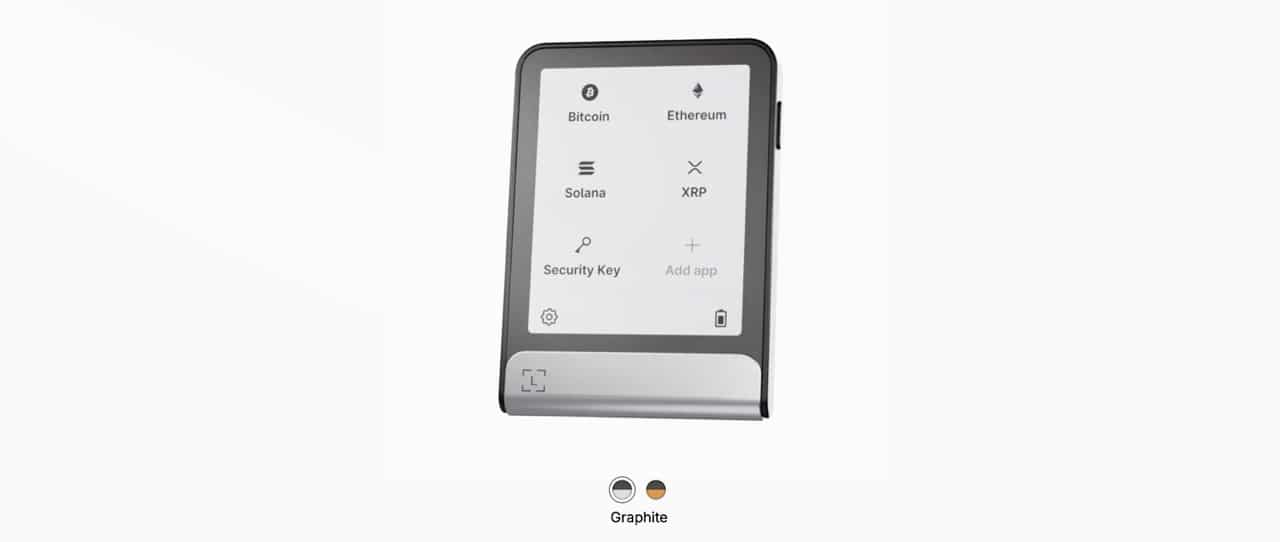
If you have extra cash to spare, you should consider the Ledger Stax, which comes with a bigger 3.7-inch grayscale touchscreen, an upgraded security chip, and wireless charging. The device features Bluetooth, NFC, and USB-C for easy connectivity.
Check out our Ledger Stax Vs. Flex review to learn more about why the two devices are among the safest crypto wallets for anonymous transactions.
Ledger Pros & Cons
Pros
-
Most secure consumer wallet solution available.
-
Both devices support a wide range of privacy cryptos along with thousands of other digital assets
-
Both devices feature Bluetooth, NFC, and USB-C for easy connectivity.
-
Ledger Live companion app makes it simple to buy, sell, swap, and stake crypto securely
-
Industry-leading security features with Secure Element chips and regular firmware updates
Cons
-
Ledger Flex is priced at $249, and Ledger Stax retails for $399.
-
Hardware wallets are vulnerable to loss, misplacement, and theft.
-
Wallet recovery is difficult.
Trezor – Popular Privacy Coin Hardware Wallet in 2026
Launched in 2014 as Satoshi Labs, Trezor was the first to launch a mass-market hardware wallet, setting the standard for cold storage in the crypto industry. More than a decade later, Trezor remains a trusted name known for its cold, hard security and innovative features.
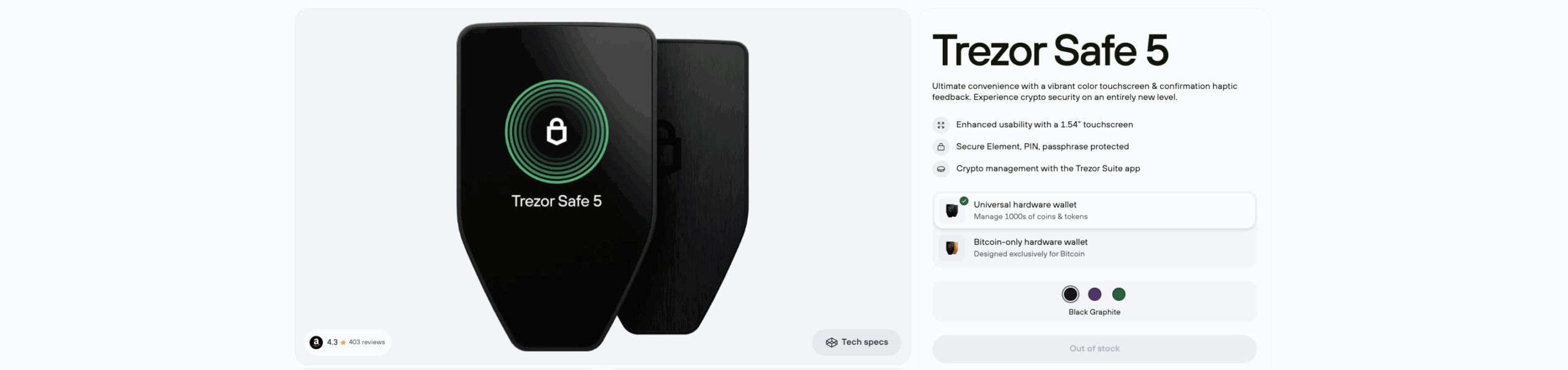
The Trezor Safe 5 stands out from the company’s hardware wallet lineup. Not only is it the company’s flagship model, but it also comes at a price cheaper than most top-level wallets. The Safe 5 prioritizes security and user-friendliness.
It features a 1.54-inch color touchscreen display, secure element chip, PIN and passphrase protection, and integration with the Trezor Suite smartphone app. Combined, these features make Trezor a reliable option for both beginners and seasoned crypto holders.
Learn why it is one of the best hardware wallets for privacy coins in our Trezor Safe 5 Review.
Trezor Pros & Cons
Pros
-
Cold storage solution removes exposure to online hacks
-
Trezor champions open-source firmware for transparency and community audits
-
Supports thousands of crypto assets, including privacy coins
-
Integration with DeFi tools and Web3 applications via the Trezor Suite app.
Cons
-
Hardware wallets may be less convenient than mobile wallets for daily use
-
Price can be a barrier. The Safe 5 is priced at $169.
-
Hardware wallets are vulnerable to loss, misplacement, and theft, and can be difficult to set up.
ELLIPAL Titan 2.0 – Cold Storage Solution For Private Tokens
ELLIPAL is a Hong Kong-based company that has become a serious competitor to hardware wallet rivals Ledger and Trezor. The company is known for making air-gapped cold wallets, and its flagship model is the ELLIPAL Titan 2.0.
The ELLIPAL Titan 2.0 stands out for its air-gapped design, offering extra security by eliminating the need to connect your cold storage device to external networks via WiFi, Bluetooth, or USB.
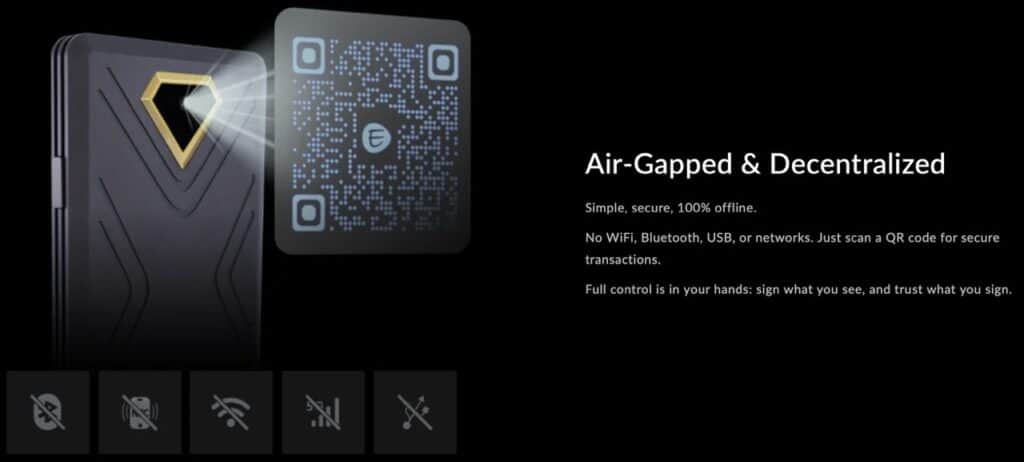
Instead, the ELLPAL Titan 2.0 uses QR codes for secure transactions. So if you are looking for the most secure private crypto storage solution, then the ELLIPAL Titan 2.0 might be your answer.
If air-gapping is not enough for you, extra security comes in the form of a backup account with a separate password, PIN & password protection, a full metal-sealed body, and even a self-destruction feature. Signature requests can be carefully reviewed and signed on the device’s 4-inch screen.
Learn what makes this device one of the best privacy coin wallets in our ELLIPAL Titan 2.0 review.
Ellipal Titan 2.0 Pros & Cons
Pros
-
Completely air-gapped for best security. No Wi-Fi, Bluetooth, or USB connections reduces the chance of online attacks.
-
Transactions are signed securely via QR codes, keeping private keys offline at all times
-
Extra safeguards including backup accounts, PIN and password protection, and a self-destruct mechanism if tampered with
-
Large 4-inch color touchscreen makes reviewing and signing transactions intuitive and safe
Cons
-
Priced around $169.
-
Firmware updates must be installed manually using a microSD card, which can feel less convenient
-
Bulkier form factor means it’s less pocket-friendly compared to smaller hardware wallets.
Privacy Coins Wallets Compared
Choosing the right wallet for privacy coins can feel overwhelming, so we’ve compared the top options side by side. This table highlights their type, custody model, price, and special features to help you quickly decide which one fits your needs best.
| Wallet | Type | Custody | Price (USD) | Special Features | Best For |
| Best Wallet | Mobile Wallet | Non-custodial | Free | Multi-blockchain support, DEX aggregator, Token Launchpad | Beginners & everyday use |
| Zengo | Mobile Wallet | Non-custodial (MPC) | Free (Pro optional) | MPC security (no seed phrase), Web3 Firewall, Transaction Insights | Users who dislike seed phrases |
| Binance Wallet | Exchange Wallet | Non-custodial | Free | Built-in exchange access, Trading & staking, Liquidity pools | Traders & Binance Exchange users |
| Monero GUI Wallet | Desktop Wallet | Non-custodial | Free | Full-node wallet, Advanced privacy tools, Community-developed | Power users of private coins |
| Zecwallet | Desktop/Mobile | Non-custodial | Free | ZK-proof support, Full Zcash features, Lightweight interface | Zcash-focused users |
| Ledger Flex | Hardware Wallet | Non-custodial | $249 | Portable design, Secure Element chip, Ledger Live integration, Bluetooth Connectivity | Secure storage on the go |
| Trezor Safe 5 | Hardware Wallet | Non-custodial | $149 | Open-source firmware, Multisig support, Passphrase protection | Long-term cold storage |
| ELLIPAL Titan 2.0 | Hardware Wallet (Air-gapped) | Non-custodial | $169 | Air-gapped, Self-destruct feature, Full metal body | Maximum offline protection |
How We Selected the Best Wallets For Private Coins (Methodology)
We selected five criteria that we think all crypto users must consider when choosing the right crypto wallet to store and manage their privacy coins. They were:
What Are Privacy Coins & Why Do They Need Special Wallets?
Privacy coins are a type of cryptocurrency that is specially designed to keep transactions anonymous.
What you need to understand as a crypto user is that public blockchains such as Ethereum and Bitcoin record and publish every transaction on the blockchain. While the identities of the sender and receiver are not made public, as crypto wallet addresses are made up of random alphanumeric characters, some methods and solutions can identify the sender/receiver, especially if their crypto wallet is linked to a KYC crypto exchange.
Privacy coins use advanced cryptographic methods to hide details such as sender, recipient, and transaction amount. For example, Monero uses a technique called ring signatures to mix transactions with others, making it impossible to identify who the real sender is. Meanwhile, Zcash uses zero-knowledge proof technology to allow transactions to be verified without revealing transaction-related details.
If enhanced anonymity and stronger protection against surveillance are your priority and need, then you should use special wallets such as Monero GUI and Zecwallet Lite (mentioned in the list) to guarantee your anonymity. However, if you want a crypto wallet that will allow you to self-custody your privacy coins, trade them, and use them online, then you can opt for any one of the software or hardware wallets mentioned above.
Factors to Look For in the Best Privacy Coin Wallet
Everyone has their own needs when choosing the right wallet for privacy coins. Some may want to prioritize ease of use, while others may look for trading use. A few may want guaranteed anonymity, while the rest may require top-notch security. Here are the five most important factors to consider when picking the best privacy coin wallet.
- Security: Look for crypto wallets with special security features such as MPC, biometric logins, Secure Element chips, or air-gapped technology. The rule of thumb is that if security is your priority, then a hardware wallet is your best bet.
- Non-custodial ownership: A good crypto wallet, software or hardware, should give you full control over your assets and private keys. Never compromise on this. Some might feel that self-custody is not important. But it is always better to be safe than sorry, remember that.
- Privacy protocol integration: You are holding Monero, Zcash, and other privacy coins for a reason, I suppose. So if you want guaranteed transaction anonymity, look for crypto wallets with zero-knowledge proof, shielded transactions, stealth addresses, or ring signatures.
- Convenience: Many users prefer mobile wallets for privacy coins to transact on the go, while others want desktop or hardware solutions for cold storage. Ideally, the wallet you choose should match your lifestyle and crypto usage.
- Special features: It’s always nice if your tool can do more than one job. Extra features can make a wallet more valuable. Look for multi-blockchain support, in-app staking, fiat onramp solutions, on-chain token swaps, and an in-built web3 browser.
How to Use Privacy Coin Wallet: Step-by-Step Guide
-
Download Best Wallet from the Google Play Store or Apple App Store and install it on your smartphone.
-
Open the app and create a new wallet. Set a strong PIN and enable biometric authentication for extra security.
-
Write down your recovery seed phrase and store it securely offline. This ensures you can restore your wallet if your phone is lost.
-
Search for privacy coins such as Monero (XMR) or Zcash (ZEC) in the app, and tap “Add” to enable them in your wallet.
-
To buy, use Best Wallet’s integrated purchase feature to buy Monero or Zcash directly with a debit card, credit card, or Apple Pay.
-
If you want to receive funds, copy your wallet address and share it with the sender.
-
To send privacy coins, enter the recipient’s address, input the amount of XMR or ZEC, and confirm the transaction.
-
Optionally, use the built-in features such as the DEX aggregator to swap tokens on-chain.
-
Manage your privacy coin portfolio on Best Wallet. Check prices. Sell, trade, transfer, or buy more.
How to Keep Your Privacy Coins Wallet Secure
Self-custody comes with added responsibility. Choosing a crypto wallet for your privacy coins is just the first step; keeping it secure is a consistent journey. Here are the best practices to protect your crypto wallet.
Conclusion: Top Wallets For Privacy Coins
To conclude, we would suggest that newcomers and beginners start their self-custody journey using software wallets. They are free after all. Easy-to-use crypto wallets such as Best Wallet, Binance Wallet, and Zengo Wallet offer convenience as well as additional features such as multi-blockchain support, in-app on-chain token swaps, fiat on-ramps, and staking features.
Privacy-first crypto users can choose the Monero GUI or Zecwallet Lite, which are made specifically for the XMR and ZEC tokens, respectively. Hardware wallets are perfect for anyone with extra cash to spare. These devices do not compromise on security.
DISCOVER:
- Crypto Exchange Promos & Discounts
- Crypto Wallet Promos & Discounts
- Top Web3 Wallets You Can Trust in 2026
- 5 Best Crypto Wallets for Gambling
- Top Wallets For Meme Coins in October 2026
- Top Privacy Coins for Private Transactions in 2026
- Bitcoin Futures: BTC Trading Guide For 2026
FAQs:
What is a privacy coin wallet?

A privacy coin wallet is a crypto wallet that supports privacy-focused cryptocurrencies such as Monero and Zcash. These coins are designed to keep your financial activity anonymous.
Are hardware wallets good for privacy coins?
Yes, Ledger, Trezor, and Ellipal manufacture hardware wallets that support privacy-focused cryptocurrencies such as Monero and Zcash.
Do mobile wallets support privacy coins?
Yes, software wallets that can be downloaded, such as Best Wallet, Binance Wallet, Zengo, Monero GUI, and Zecwallet, support privacy-focused cryptocurrencies such as Monero and Zcash.
Can I stay anonymous while using a privacy coin wallet?
Yes, if you use non-custodial wallets and avoid linking your identity to exchanges. Look for crypto wallets that do not require you to complete KYC verification.
Are privacy coin wallets free?
Software wallets such as Best Wallet, Binance Wallet, Zengo, Monero GUI, and Zecwallet are free to download and use. Meanwhile, hardware wallets produced by Ledger, Trezor, and ELLIPAL retail between $50 and $399.
Can I stake privacy coins in a wallet?
Some wallets allow staking, but not all privacy coins support it.
References
- Monero Project. “GetMonero.” Monero.org, https://www.getmonero.org/.
- Electric Coin Company. “Zcash.” Z.cash, https://z.cash/.
- Monero Project. “Monero-GUI.” GitHub, https://github.com/monero-project/monero-gui.
- Zecwallet. “Zecwallet.” Zecwallet.co, http://zecwallet.co/.
- Ledger. “Not Your Keys, Not Your Coins: Why It Matters.” Ledger Academy, https://www.ledger.com/academy/not-your-keys-not-your-coins-why-it-matters.

Why you can trust 99Bitcoins
Established in 2013, 99Bitcoin’s team members have been crypto experts since Bitcoin’s Early days.
Weekly Research
100k+Monthly readers
Expert contributors
2000+Crypto Projects Reviewed