




In This Article
Privacy coins are designed for one thing, keeping your financial activity out of public view. While most blockchains make every transaction traceable, these anonymous crypto coins break that visibility and make it much harder to link wallets, amounts, or identities together.
In this guide, we’ll explore the top crypto coins that keep identity hidden, how they work, and what makes them different. Whether you’re after total anonymity or more control over who sees your data, these privacy-focused projects offer real options.
Key Takeaways
Best Privacy Coins: Summary
This guide explains what privacy coins are, how they protect transaction data, and why they continue to play a critical role in digital finance. It compares the best privacy focused coins based on their underlying technology, privacy features, and real-world utility.
You’ll also find a step-by-step walkthrough on how to buy and store them securely, including how to choose a non-custodial wallet and the best exchange for privacy coins depending on region and withdrawal support.
By the end, you’ll have a clear view of the top privacy coins in the world, how they differ, and what makes them the best privacy coins to invest in 2026. Whether you’re prioritizing speed, control, or full anonymity, this guide helps you evaluate the most secure and private cryptocurrencies in 2026.
Top Privacy-Focused Cryptocurrency in 2026
In this privacy coins list, we’ll look at the top privacy coins and explain how they protect users in practice.
Each project has its own way of keeping information private, whether it’s hiding every detail of a payment or making smart contracts run confidentially on a public blockchain. What follows is a closer look at five leading projects and the specific methods they use to make privacy work.
Monero (XMR) – Gold Standard for Privacy
Monero is one of the first and most popular anonymous cryptocurrencies, and it makes every transaction private by default. It hides the sender using ring signatures, hides the amount with RingCT and Bulletproofs, and hides the receiver using stealth addresses.
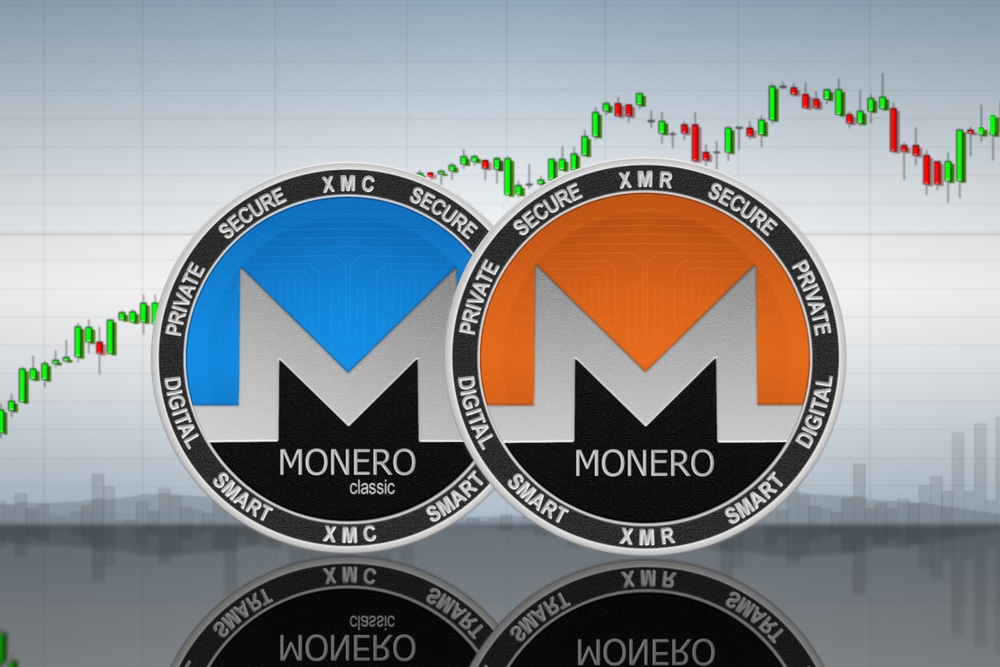
Since August 2022, every transaction includes 16 possible inputs, which means you’re always hidden among 15 decoys. That update also brought faster syncing with view tags and smaller transactions using Bulletproofs+.
Here’s how it works: your crypto wallet forms a ring of 16 inputs, signs the transaction with a special method called CLSAG, and sends the funds to a one-time stealth address. This address is generated from the receiver’s public keys, so nobody can link it back to their real wallet. The amount is hidden too, thanks to range proofs that make sure the number is valid without actually showing it.
Monero also takes care of privacy at the network level. It uses a system called Dandelion++ to make it harder to trace transactions back to IP addresses, and supports connections over Tor and I2P. For mining, Monero runs on RandomX, which favors CPUs to keep mining fair and accessible to more people.
The key thing to remember is that Monero doesn’t leave privacy up to the user. You can’t send a transparent transaction even by accident, which helps make the coin fully fungible. If you want to know more, check out our detailed Monero (XMR) review.
Zcash (ZEC) – Shielded Transactions With zk-SNARKs
Zcash introduced zero-knowledge proofs to everyday crypto payments. It gives users the option to use either transparent or shielded addresses. Since the NU5 upgrade in May 2022, the shielded system runs on a new pool called Orchard, built using Halo 2.
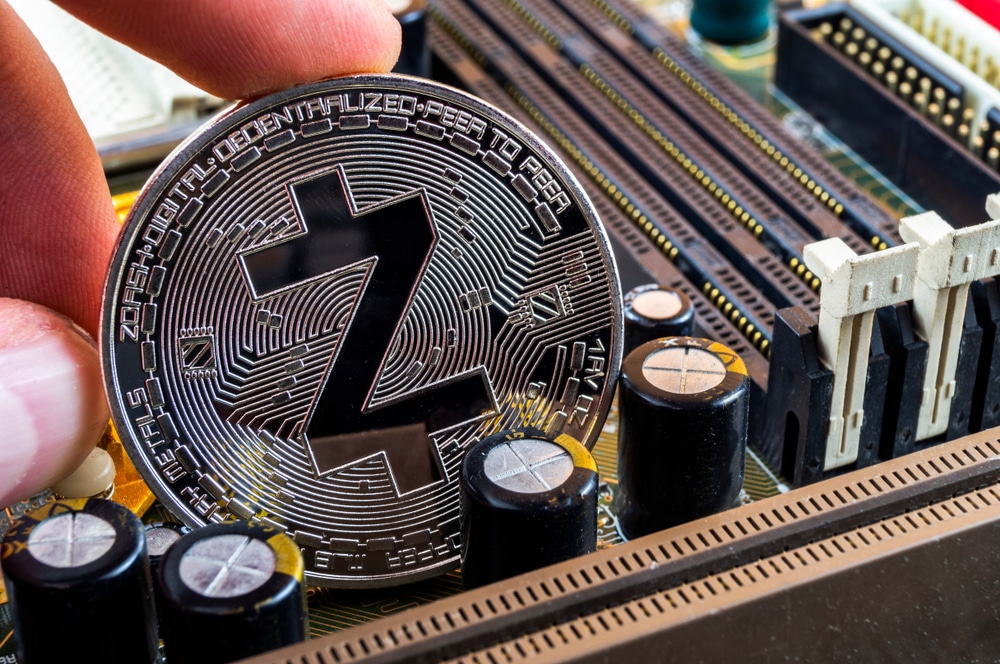
This update removed the need for a trusted setup and made the system more scalable. With Unified Addresses, wallets can combine different address types into one and direct incoming funds straight into the shielded pool if the wallet supports it.
The tech behind it sounds complex but works like this: the sender creates a zk-SNARK, which proves the transaction is valid without showing any details about who’s sending or receiving, or how much. The newest setup uses the Pallas and Vesta curves and is more secure than the earlier Sprout and Sapling pools.
Shielded usage depends a lot on wallet support and user habits. Zcash contributors track shielded pool sizes and flow data in real time, which you can view on their dashboards.
The move to Halo 2 was a big step. It fixed long-standing concerns about the original trusted setup and made it easier to build lighter, faster private payments. If you want to own this token, check out our “How to buy Zcash” guide.
Beldex (BDX) – Provides Fast, Optional Privacy
Beldex is another privacy coin that builds on CryptoNote-style tech, but it runs on a proof-of-stake network backed by masternodes. It hides the sender with ring signatures, hides the amount with RingCT, and hides the receiver using stealth addresses. All of this is similar to Monero, but the network is secured by users who stake 10,000 BDX to run a masternode.

These masternodes also power tools like BChat, a secure messaging app, and BelNet, a private VPN. Both services use the same Beldex network infrastructure.
To keep things private, your wallet builds a transaction with decoy inputs and signs it using ring signatures. The funds are sent to a one-time stealth address, and the amounts are hidden through range proofs.
Beldex is focused on optional privacy and everyday tools that run on the same backbone. Before getting involved, it’s smart to check the latest staking rules and app features, since they can change.
Dash (DASH) – Offers Instant, Easy and Secure Payments
Dash is built for payments and adds optional privacy through CoinJoin wallet mixing. The blockchain itself stays transparent, but users can choose to mix their funds before spending. Dash also uses masternodes to offer InstantSend and ChainLocks, which make payments fast and secure by locking inputs and confirming blocks quickly.

The way privacy works is pretty simple. The official Dash wallet lets you mix your funds with others in batches, using equal amounts so it’s harder to trace who owns what. This doesn’t make transactions fully private, but it does add a basic level of protection. Dash itself calls this “consumer-grade” privacy.
For speed, InstantSend locks your transaction inputs right away, so merchants don’t need to wait. ChainLocks adds another layer of protection at the block level, helping prevent chain reorganizations and attacks. To own this token, take a look at our “How to buy DASH” guide.
Oasis Network (ROSE) – Privacy-First Blockchain for DeFi
Oasis is a Layer-1 blockchain built for private smart contracts. It separates the consensus layer (which orders transactions) from the execution layer (which runs them). Some smart contracts run in special ParaTimes that use Trusted Execution Environments, or TEEs, like Intel SGX. These environments keep the contract logic and data confidential, even while still using a public blockchain.
The Sapphire ParaTime is the one built for confidentiality. It’s EVM-compatible, so developers can run Ethereum-style smart contracts with privacy built in. These contracts run inside hardware-isolated environments that prove their setup is legit through remote attestation. A key management service controls access to encryption keys used to protect contract data.
Developers can choose to make their contracts fully public, fully confidential, or a mix of both. Porting dApps from Ethereum is fairly simple, which makes it easier to start building private DeFi or machine learning apps on Oasis.
What makes Oasis unique is that it brings privacy to smart contracts, not just token transfers. That’s useful for things like hidden order books, private DeFi strategies, or secure AI tasks.
What Are Privacy Coins?
Privacy coins are cryptocurrencies built with one goal in mind, keeping transactions out of public view. Instead of showing exactly who sent money, who received it, and how much was involved, they blur those details so outside observers cannot easily piece things together.
On open blockchains like Bitcoin or Ethereum, anyone can track every transfer, but with privacy coins the trail is broken and the movement of funds looks much more like handing over cash in person.
The reason these coins exist is simple: people want more control over their financial information. By cutting down the visibility that usually comes with blockchains, privacy coins make it harder for others to follow your activity and link it back to you.
How Do Privacy Coins Work?
Each project uses its own techniques, but the idea is always to hide sensitive details while keeping the system secure. Take Monero as an example, it uses ring signatures to disguise the real sender among a group of decoys.
On top of that, it creates a new one time address for every payment, so even if someone knows your wallet they cannot connect all your transactions. The actual amounts are hidden with a system called RingCT and Bulletproofs, which let the network confirm the math adds up without revealing the figures.
Zcash takes a different route by using zero-knowledge proofs known as zk SNARKs. With these, the network can prove a transaction is valid without showing who is involved or how much is being moved. In practice, this means the blockchain stays secure and functional, but private information is kept out of sight.
Real-World Use Case of Private Cryptos
The usefulness of privacy coins shows up in a lot of everyday and high stakes situations. For individuals, they can be a way to make purchases without leaving a trail, or to operate more safely in countries where digital surveillance is common. For companies, they can protect negotiations or sensitive deals from prying competitors.
They are also important for people in vulnerable positions. Activists, whistleblowers, or journalists may need to receive funds in a way that cannot be traced back to them. In regions with strict controls on financial activity, these coins can provide a real measure of freedom by letting people transact without interference.
This also ties into areas like no KYC casinos, where players value the ability to deposit and withdraw without handing over personal documents, and anonymous wallets, which help users safeguard their funds with stronger privacy.
We have guides for no KYC casinos and anonymous wallets, so check them out below:
- Best No KYC Casinos 2026 – Top No ID Verification Casinos
- 16 Best Anonymous Crypto Wallets with No ID/KYC in 2026
Key Features of Privacy-Focused Coins
- Enhanced anonymity protecting sender, recipient, and transaction amounts
- Ring signatures that hide the true sender among decoys
- Stealth addresses that prevent linking payments to one wallet
- Confidential transactions and bulletproofs to hide amounts efficiently
- Zero-knowledge proofs, such as zk SNARK,s that allow fully shielded transfers
- Fungibility so every coin is equal and free of history
- Options for either default privacy or opt-in models
- Selective disclosure tools like view keys for auditing without giving up privacy
Pros & Cons of Using Private Coins
Pros
Cons
How to Buy Privacy Coins Safely: Step-by-Step Guide
If you care about privacy, start with a self-custodial wallet so you control the keys. A simple option is Best Wallet, a non-custodial, multi-chain app you install on your own device. If you plan to hold private crypto coins, pair Best Wallet with project wallets that fully support shielding and stealth features. That way you use the tools that match how privacy coins work while staying inside the world of privacy-focused cryptocurrencies.
Install Best Wallet from the official site or store, then add dedicated wallets for Monero or Zcash if needed. This is a clean path to handling the most secure crypto coins because you, not an exchange, hold recovery keys.
Use official links, verify signatures when provided, update your OS, and avoid browser extensions you do not need. Good hygiene keeps anonymous cryptocurrencies safe from basic malware.
Write the seed phrase on paper or another offline medium and store it safely. Never upload it to cloud notes or email.
Use Zcash Unified Addresses that direct funds into the shielded pool, and Monero subaddresses for incoming transactions.
Check local availability and withdrawals. If you are asking which coins offer anonymous crypto transactions, prefer platforms that let you withdraw ZEC straight to a shielded address and XMR to your own wallet. This also answers where to buy privacy coins in your region.
Complete account checks where required, deposit funds, and purchase the asset. Keep exchange balances small so your activity remains under your control.
Send ZEC to your shielded UA and XMR to your Monero address. Start with a small test, then move the rest. This is where anonymous crypto transactions begin to matter.
Use Tor or I2P where supported and connect to your own node if possible. This hides IP metadata and complements on-chain privacy.
When you need proof for taxes or invoices, use viewing keys or payment proofs instead of sharing your whole history.
Update wallets promptly, re-verify downloads, and test a small restore from your seed on a spare device before you rely on it.
Pick a self-custodial wallet that fits your assets
Verify downloads and secure your device
Create your wallet and back up the recovery phrase offline
Set the right address types before buying
Choose a compliant place to buy
Fund the account and buy
Withdraw immediately to your wallet
Reduce network traces when broadcasting
Keep private records without exposing everything
Maintain updates and re-verify on each upgrade
For wallet picks and setup tips, see our guide on top crypto wallets for privacy coins. It provides an in-depth overview of buying privacy coins, comparing options side by side.
Future of Anonymous Cryptocurrencies
The future of privacy-focused cryptocurrencies is starting to look a lot more active and advanced than most people expect. More and more crypto users are turning to these tools not just to hide illegal activity, but to protect everyday financial privacy.
In fact, as of early 2025, over 11% of all global crypto transactions now involve privacy crypto coins. In parts of Asia, nearly 3 in 10 traders are regularly using them. That’s a clear sign that demand is growing for ways to make anonymous crypto transactions feel like using digital cash.
People also use anonymous cryptocurrencies to protect personal purchases, hide transaction amounts, and keep nosy third parties away from their wallet activity. It’s about digital freedom, not just hiding from the law.
Tech That’s Making Privacy Stronger
The tools behind how privacy coins work are getting a serious upgrade. One major advancement is the use of zk‑STARKs, which are newer and better versions of zk‑SNARKs. These help keep your identity and transaction amounts hidden, but now with faster speeds and less computing power.

Zcash, one of the more well-known private crypto coins, recently introduced something called Project Tachyon. This change will make shielded transactions faster, cheaper, and much easier to use, especially on mobile.
Monero, often called one of the most secure crypto coins, is also moving forward. Developers are working on ways to make it even harder to trace, by making every transaction blend in with a much larger group. This makes it extremely difficult to figure out who sent what.
There’s also new tech that brings privacy to things beyond just sending coins. Platforms like Oasis Network and Zano are making it possible to run private DeFi apps and smart contracts, so even more parts of your activity can stay under wraps. And for full internet-level privacy, tools like Nym are building mixnets. These are systems that scramble traffic across multiple servers, hiding where the info came from or where it’s going, perfect for people who want to stay anonymous on every layer of the web.
Regulations Are Catching Up
Of course, governments aren’t thrilled with completely untraceable cryptocurrencies. Countries like Japan and South Korea have already banned crypto exchanges from offering them. The EU plans to fully ban privacy-focused cryptocurrencies starting in July 2027.
Big exchanges like Binance and Kraken have already removed Monero in certain areas, including the EU. And regulators like the Financial Action Task Force are pushing hard for exchanges to collect personal info on users. This goes against what most privacy crypto coins are trying to protect.
At the same time, developers are adapting. Some are adding optional privacy features or creating tools that try to stay within legal limits. Others are doubling down and building even stronger privacy tech.
And there are still legal gray areas. One of the biggest stories in 2025 is the trial of Roman Storm, who helped build Tornado Cash. The case could set a major precedent for how tools that offer anonymous crypto transactions are treated by law, whether they’re protected as free speech or seen as criminal tools.
Can Privacy Really Last?
Even though these coins promise privacy, law enforcement is catching up too. Their tools for tracing even untraceable cryptocurrencies are getting more advanced, especially when it comes to piecing together blockchain data. So while full anonymity isn’t impossible, it’s not guaranteed either.
Still, these changes might actually push the space in a healthier direction. If regulators are going to crack down, then developers will likely build smarter, more balanced systems that protect privacy while still being usable in regulated markets.
So what will come next? Let’s break it down simply:
In the end, private crypto coins are probably not going anywhere. But they will keep evolving, balancing better privacy with growing legal pressure. If you’re wondering where to buy privacy coins, your best bet is to look for exchanges that still list them in your region.
To understand which coins offer anonymous crypto transactions, look closely at projects like Monero, Zcash, and Oasis Network. They’re still leading the charge when it comes to protecting your privacy in a world that’s watching more closely than ever.
Conclusion: Private Cryptocurrencies
Picking the best privacy coins depends on how much control you want over your financial data. If you care about default privacy with no room for mistakes, Monero is still one of the top anonymous cryptos to rely on. If you want flexibility with advanced cryptography, Zcash gives you the option to shield transactions. Beldex adds utility like messaging and VPNs, while Oasis brings private smart contracts to DeFi.
The truth is, there’s no single answer to what are the best privacy coins in 2026. Each project has a different way of hiding transaction details or shielding wallet activity. That’s why it’s important to look beyond price and consider how each project fits your goals, whether it’s day-to-day use, long-term investing, or using crypto tools that keep your data safe.
If you’re looking for secure and private cryptocurrencies in 2026, start with the ones that lead in both adoption and innovation. And don’t forget to pair them with wallets and platforms that respect your privacy.
DISCOVER:
- Crypto Exchange Promos & Discounts
- Crypto Wallet Promos & Discounts
- How to Do Crypto Research: Learn From Experts
FAQ
Are privacy coins legal to use?

In most countries, yes. You’re allowed to use and hold privacy coins as long as you’re not breaking any other laws. But some places like Japan and South Korea have banned them from exchanges, and in others, regulators are pushing platforms to remove them. So it depends on where you live.
What are some of the most anonymous cryptocurrencies?
Monero is the most private by default. Zcash also offers strong privacy if you use its shielded addresses. Other coins like Dash, Pirate Chain, and Verge offer different levels of anonymity, but Monero and Zcash are still the most trusted.
Can I use privacy coins at online casinos?
Some online casinos accept them, but many don’t. That’s because privacy coins can make it harder for these sites to follow rules about checking who their users are. If you find a casino that allows them, it’s best to use your own wallet for full control.
Why are privacy coins being delisted from some exchanges?
A lot of exchanges are removing privacy coins because regulators want them to collect more personal info from users. Since privacy coins hide that info, some exchanges take them off to avoid legal problems.
Can privacy coins be traced?
They’re very hard to trace, but not impossible. If someone makes a mistake or uses a weak wallet, investigators might find a way in. Tools to trace them are getting better, but when used correctly, privacy coins still offer strong protection.
Are privacy coins a good investment in 2026?
They can be, depending on what you’re looking for. If privacy and control are your main goals, they’re worth considering. Just keep in mind that rules are changing fast, and some exchanges may block or limit them. Still, coins like Monero and Zcash have strong communities and real use cases.
References
- Coinbase. “What Is DeFi?” Coinbase, www.coinbase.com/learn/crypto-basics/what-is-defi.
- Coinlaw. “Privacy Coins vs Regulatory Compliance Statistics.” Coinlaw, coinlaw.io/privacy-coins-vs-regulatory-compliance-statistics/.
- U.S. Department of Justice. “Founder of Tornado Cash Crypto Mixing Service Convicted of Knowingly Transmitting Criminal Proceeds.” United States Attorney’s Office, Southern District of New York, www.justice.gov/usao-sdny/pr/founder-tornado-cash-crypto-mixing-service-convicted-knowingly-transmitting-criminal.
- IFC Review. “EU to Ban Trading of Privacy Coins from 2027.” IFC Review, www.ifcreview.com/news/2025/may/eu-eu-to-ban-trading-of-privacy-coins-from-2027/.

Why you can trust 99Bitcoins
Established in 2013, 99Bitcoin’s team members have been crypto experts since Bitcoin’s Early days.
Weekly Research
100k+Monthly readers
Expert contributors
2000+Crypto Projects Reviewed