




In This Article
Aave (AAVE), a decentralized lending platform, is one of the most popular crypto applications in the world. The platform plays a key role in the burgeoning decentralized finance (DeFi) industry.
Whether you’re lending, borrowing, or simply holding AAVE as an investment, choosing the right wallet is essential. With so many wallets for AAVE available, it can be hard to know which one offers the best mix of security, usability, and features.
This guide explores the top wallets for Aave in October 2026, covering both hot and cold wallets. You’ll discover the best wallets to store Aave cryptocurrency, compare their pros and cons, and learn how to secure your tokens.
Key Takeaways
- Aave is a multi-blockchain decentralized lending and borrowing protocol.
- Software wallets are user-friendly and free-to-use, making them the best choice for everyday Aave users.
- Hardware wallets, on the other hand, are designed to prioritize security. It is best practice to use both software and hardware wallets side by side.
- DeFi usability and multi-blockchain support are key criteria that users must look for in an Aave wallet, as you will need to borrow/lend crypto funds and participate in Aave governance.
- Split your portfolio. Keep some funds in a hot wallet for daily use and the rest in a cold wallet for secure storage.
Top Wallets to Store AAVE: Summary
This is your complete guide to the best AAVE wallets available in 2026. Whether you’re new to crypto or already using DeFi, this article will show you exactly where to store AAVE safely and how to use this lending protocol on different blockchains.
From software to hardware wallets, we’ll help you identify the best Web3 wallet for your AAVE. Our review breaks down the top Aave-compatible wallets, covering their main features as well as advantages and drawbacks.
By the end of this guide, you’ll be able to identify the best wallet for Aave, whether you’re focused on secure long-term storage or need a reliable DeFi wallet for portfolio management and AAVE staking.
- Best Wallet: A user-friendly, feature-rich, multi-chain wallet that supports most of the networks where the Aave Protocol operates.
- Zengo: A software wallet known for providing institutional-grade security through multi-party computation security.
- Binance Wallet: An exchange-integrated non-custodial wallet perfect for beginners and existing Binance users.
- ByBit Wallet: A custodial crypto wallet that is focused on providing a simple, user-friendly experience to DeFi users.
- Ledger Flex: A mid-range hardware wallet with touchscreen and Bluetooth support for easy management of your AAVE holdings.
- ELLIPAL Titan 2.0: A vault-like hardware wallet that keeps your AAVE token in complete isolation for maximum security.
Best Hot Wallets for Aave (AAVE)
Software wallets are crypto wallets that are known for their ease of use and rich features. These wallets are the gateways to the Web3 world as they are used to log into decentralized applications (dApps) and DeFi protocols such as Aave.
These are commonly referred to as hot wallets, as they remain connected to the Internet at all times. Built for convenience and flexibility, they offer ease of use but are more exposed to potential hacks and online threats. Hot wallets are ideal for beginners and regular DeFi users. Below, we highlight some of the leading options our team has tested and reviewed.
Best Wallet: Overall Best Non-Custodial, No-KYC Wallet
Best Wallet is a non-custodial cryptocurrency wallet designed for crypto beginners and experienced DeFi users. With its multi-blockchain support, this versatile wallet is a natural fit for AAVE holders as well as crypto lenders and borrowers. It’s a self-custodial solution compatible with major blockchains where Aave operates, including Ethereum, Polygon, Base, and BNB Chain.
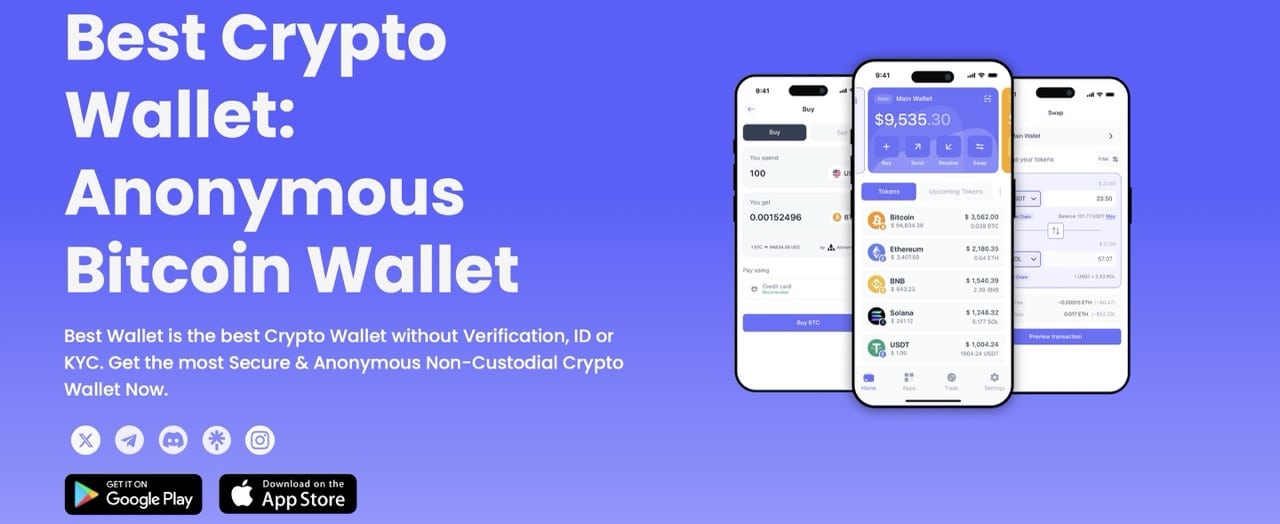
The biggest advantage of using Best Wallet to hold your cryptocurrencies is that your assets always remain under your control and ownership, as the private keys are stored locally on your smartphone. In contrast, storing cryptocurrencies on your crypto exchange account leaves them vulnerable to censorship, exchange bankruptcies, fraud, and hacks.
It has an in-built decentralized exchange (DEX) aggregator that connects you with the best exchange rates and lowest fees for on-chain trades, and a token launchpad that gives you easy access to crypto presale projects.
To know more, take a look at our dedicated Best Wallet review.
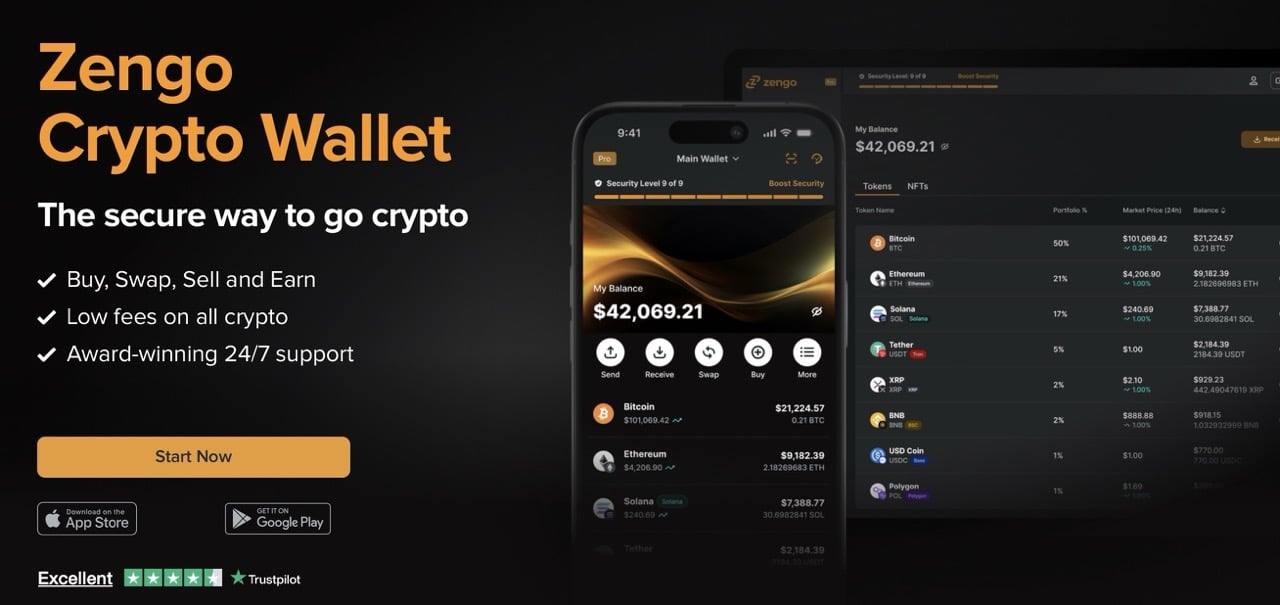
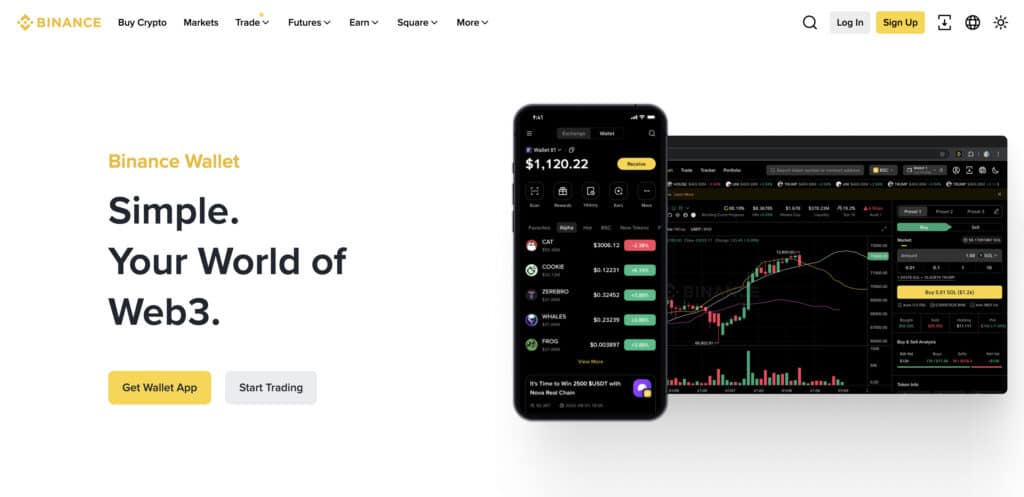
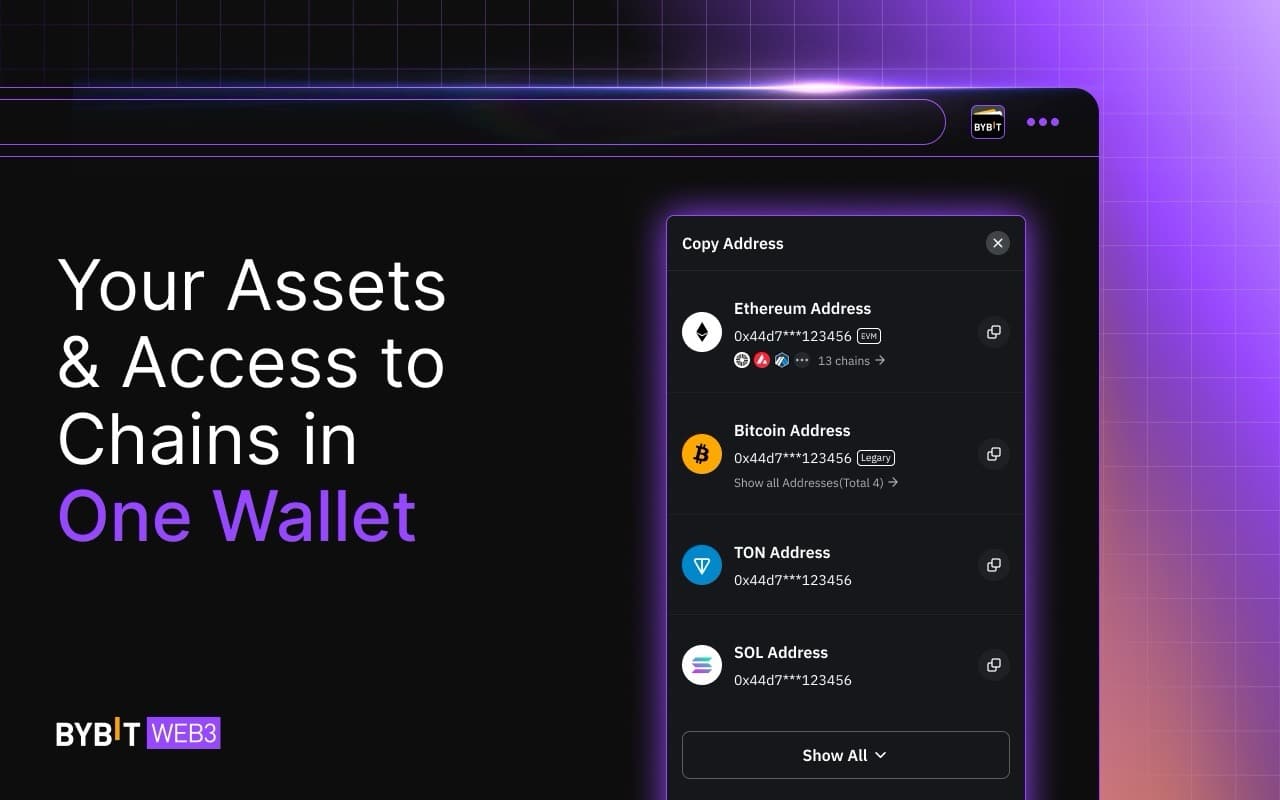
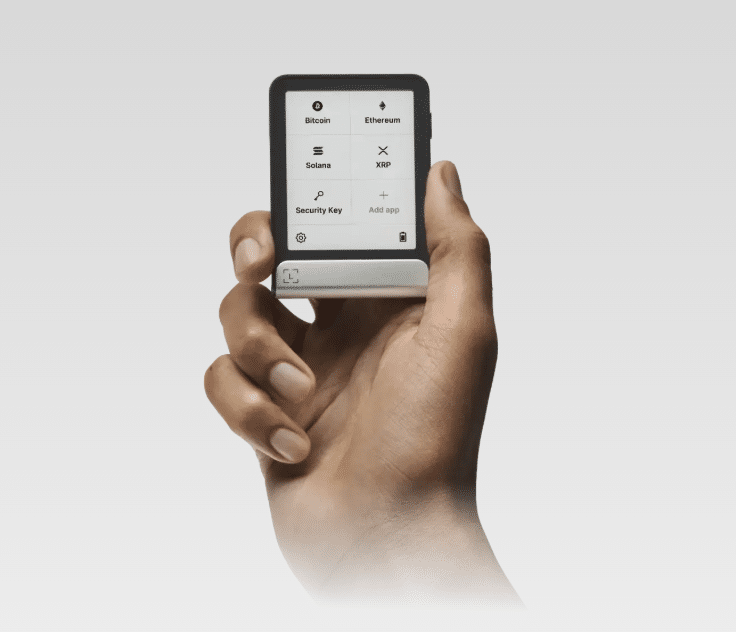
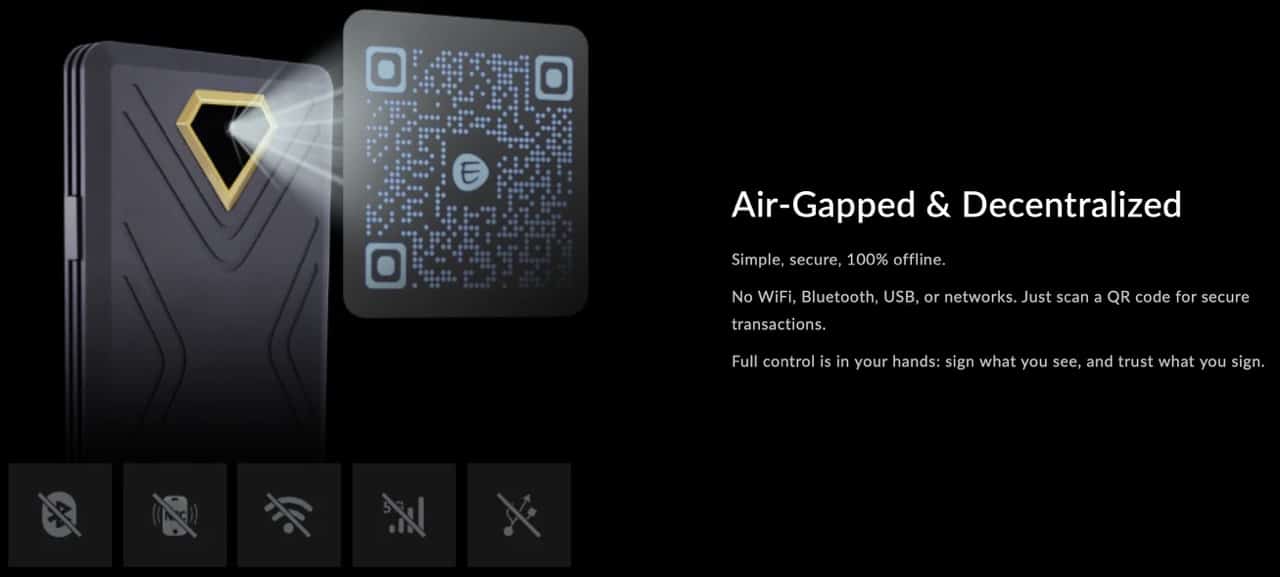
Let’s talk about the features that make Best Wallet our top choice for AAVE token holders. Zengo is another strong choice for AAVE investors. Known for its MPC (multi-party computation) security model, which was only available previously to institutions, Zengo is considered one of the most secure software wallets in the industry. MPC wallets like Zengo remove the need for a single private key by generating two separate parts known as “secret shares.” One share remains securely on your mobile device, while the other is kept on Zengo’s server. Such a setup removes the single point of failure risk. Zengo’s multichain support allows Aave users to access its decentralized money market protocol on various blockchains, including Ethereum, BNB Chain, Arbitrum, Optimism, and Polyon. Learn more about this non-custodial security solution in our Zengo Wallet review. Binance Wallet provides one of the easiest ways to access the Aave protocol, as it comes as an in-built non-custodial wallet within the Binance cryptocurrency exchange app. Known for its user-friendly interface, multi-blockchain support, and integration with the exchange, Binance Wallet is a great choice for crypto beginners and experienced DeFi users. Moving funds between your exchange account and wallet is fast and straightforward. Powered by technology like the Binance Bridge for seamless cross-chain transfers, this wallet is an excellent gateway to decentralized money market protocols such as Aave. In terms of security, Binance Wallet introduced MPC security service in 2018 to further protect users against hacks. Such a setup creates a seed phrase-less experience as MPC wallets require you to store private key shares in different locations. Read more about this exchange-integrated wallet in our Binance Wallet Review. ByBit Wallet, also known as the ByBit Cloud Wallet, is a custodial crypto wallet made by the world’s second-largest crypto exchange, ByBit. Like Binance Wallet, ByBit Wallet is an exchange-integrated wallet, which makes it a convenient Aave wallet option for existing ByBit Exchange users. ByBit Wallet differentiates itself from rivals by its focus on providing a user-friendly experience, removing the need to manage and secure private keys and recovery phrases. A drawback of such a setup is that it makes ByBit Wallet a custodial wallet, which means that the exchange operator holds onto the private keys of your crypto assets, giving them control. As per ByBit, ByBit Cloud Wallet provides convenience by managing private keys on behalf of its users. But it also presents custodial risks, meaning users must trust ByBit’s security measures to safeguard their assets. Although ByBit Wallet is custodial, it remains a strong option for accessing decentralized applications and DeFi platforms like Aave. It also offers a convenient way to engage with the blockchain ecosystem through trading, staking, and investing. Read our dedicated ByBit Wallet review to learn more. Cold wallets are physical devices used to store cryptocurrencies securely. Also known as hardware wallets, they come in the form of physical gadgets rather than apps. Unlike software wallets, cold wallets are not free. You’ll need to purchase them online or through authorized retail channels. These wallets prioritize security above all else. By keeping crypto assets completely isolated from the internet, hardware wallets add an extra layer of protection against hacks and online threats. The downside is that cold wallets tend to be less versatile, offering fewer features and less convenient than software wallets. We believe cold wallets are best suited for buy-and-hold crypto investors. If you thought using a hardware wallet would restrict you to simple buy-and-hold investing and prevent you from providing liquidity or offering collateral for loans, then the Ledger Flex proves otherwise. Ledger Flex combines the security of cold storage with practical usability. It not only covers all standard hardware wallet protections but also lets you access DeFi platforms like Aave through its companion app, Ledger Live, available on desktop and mobile. Connecting Ledger Flex to your external devices is made seamless with Bluetooth and NFC support. Once you are connected, you can use the Ledger Live app to manage your AAVE tokens and participate in DeFi activities such as token swaps, liquidity pools, taking loans, and even voting on Aave improvement proposals. The wallet also features a 2.84-inch touchscreen display that makes it easy to verify and sign transaction requests that come your way. With Ledger Flex, you can borrow crypto and swap tokens securely from within your hardware wallet. Learn more in our detailed Ledger Stax vs. Flex review. ELLIPAL Titan 2.0 is a hardware wallet that is known to provide vault-like security due to its air-gapped nature. What sets the ELLIPAL 2.0 apart from its rivals is that the device stays completely offline by eliminating any connection with the outside world. This means no USB, internet, WiFi, or Bluetooth connections. Instead, ELLIPAL Titan 2.0 uses QR codes to scan and approve transactions. Such a setup makes transaction signing intentional and protects user funds from hacks, scams, and online attacks. The ELLIPAL Titan 2.0 also comes with a 4-inch touchscreen, support for up to five private key accounts, a durable metal-sealed body, and a built-in self-destruct mechanism for added protection. Check out our comprehensive ELLIPAL Titan 2.0 wallet review to learn more. Choosing the best AAVE wallet can feel overwhelming, especially if you’re new to DeFi. To simplify the process, we evaluated each option across six essential categories: Aave wallets are cryptocurrency wallets built to store the protocol’s native token, AAVE, while also supporting the various blockchain networks where Aave is active. At the time of writing, the Aave v3 protocol was on more than 10 blockchain networks, including Ethereum, Base, Arbitrum, Avalanche, Optimism, Sonic, Polygon, BNB Chain, Scroll, and ZKsync, among others. Notably, the original Aave v2 protocol was on Ethereum, Polygon, and Avalanche. Aave is a decentralized, non-custodial lending protocol. In simple terms, it’s like a global, digital money market that runs on blockchain. Instead of going through a bank, users connect their crypto wallets directly to Aave to borrow crypto funds by locking up collateral or become lenders by supplying crypto and earning interest on it. Because it’s permissionless, anyone can use Aave. No bank approvals, no middlemen, and no credit checks. All you need is an Aave crypto wallet. If you want to know more about this protocol, look at our “What is Aave” guide. When choosing the wallets that support AAVE crypto, users first have to decide between software wallets and hardware wallets. Software wallets are free, beginner-friendly, and ideal for anyone starting their self-custodial journey with AAVE. They often come packed with features, allowing you to connect easily to Web3 platforms, manage DeFi positions, borrow cryptocurrency, and participate in Aave governance. Hardware wallets, on the other hand, are designed for maximum security. By keeping your AAVE tokens completely offline, they protect your funds from online threats, making them the most reliable option for secure Aave storage and long-term holdings. Additionally, when choosing a software wallet, users also have the choice of using a smartphone app, a desktop app, or a browser extension. Some wallets are available in all three forms, which allows users to use one wallet account across all their devices. When choosing an Aave wallet, multi-chain support is essential. Make sure it supports Ethereum, the main Aave blockchain, so you can also vote on governance proposals with your AAVE tokens. Getting started with an AAVE wallet is straightforward. You can buy AAVE on a crypto exchange such as Binance and manage it on a non-custodial wallet like Best Wallet. Such a setup ensures that your AAVE tokens are always under your full control and ownership. You can also directly buy and store AAVE tokens on Best Wallet using fiat onramp solutions provided within the app. Download Best Wallet from the official App Store or Google Play. Open the app to begin. Tap “Create new wallet,” enable biometric login, and set a strong PIN for quick, secure access. Write down and securely store your recovery phrase offline. Never share it with anyone. You can also choose to back it up on your Cloud drive on Best Wallet. Create a PIN to protect your wallet. On the home screen, tap on the “Buy” button. Search for “AAVE.” You will find AAVE tokens on different blockchains. Choose the blockchain you want to use. Enter the amount of AAVE token you want to purchase. The app will automatically show you the conversion rate. Review the transaction and tap on “Buy Aave.” Choose your preferred payment option and complete the purchase. Once your AAVE tokens are credited to your wallet address. You can head over to Aave’s official website. Log in using your Best Wallet. Participate in lending/borrowing DeFi activity. You can monitor active loans, adjust collateral, and claim rewards on Aave’s official website. AAVE token holders may also participate in decentralized governance by accessing the governance portal to vote or delegate voting powers via Aave’s official website. What readers should keep in mind is that there’s no single golden rule when it comes to using crypto wallets. Since most software wallets are free, you can try out several options. Once you find the one that fits your needs best, you can start using it for your everyday DeFi activities on Aave and other dApps. Another important point is that you can always use software and hardware wallets alongside each other. There’s no strict rule that you must pick one over the other. A best practice is to split your portfolio. Keep some funds in a software wallet for daily use, and store the rest in a hardware wallet for secure, long-term storage. DISCOVER: Yes. Many AAVE wallets, such as Best Wallet, Zengo, and Ledger (via integrations) allow you to stake AAVE directly or connect to the Aave protocol for earning rewards. Not really. Aave Protocol is built on top of blockchains such as Ethereum, Polygon, and Avalanche. Crypto wallets that support these blockchains will be compatible with Aave. Yes, most major exchange wallets support AAVE since it’s a widely traded token. However, they are custodial, meaning you don’t fully control your private keys compared to self-custodial wallets. Yes, MetaMask is the most popular wallet supporting AAVE. Yes, all crypto wallets that support Ethereum are compatible with the Aave Protocol. Established in 2013, 99Bitcoin’s team members have been crypto experts since Bitcoin’s Early days. Weekly Research Monthly readers Expert contributors Crypto Projects ReviewedWhy Best Wallet Is Our Top Choice?
Best Wallet Pros & Cons
Pros
Cons
Zengo: Keyless Crypto Wallet With Strong Security
Zengo Pros & Cons
Pros
Cons
Binance Wallet: Self-Custodial Wallet Integrated Into Binance App
Binance Wallet Pros & Cons
Pros
Cons
ByBit Wallet: Top Web3 Wallet to Store AAVE Coins
ByBit Wallet Pros & Cons
Pros
Cons
Best Cold Wallets for Aave (AAVE)
Ledger Flex: Most Secure Hardware Wallet for Aave Holders
Ledger Flex Pros & Cons
Pros
Cons
Ellipal Titan 2.0: Tamper-Proof With Auto-Self-destruct Feature
Ellipal Titan 2.0 Pros & Cons
Pros
Cons
Top-Rated Wallets For AAVE Compared
Wallet
Type
Features
Ideal for
Price
Best Wallet
Non-custodial, Software wallet
Beginners & DeFi users who want full ownership
Free
Zengo
Non-custodial, Software wallet
Security-focused users who prefer keyless wallets
Free/Pro Plan
Binance Wallet
Non-custodial, Software wallet
Binance users who want seamless DeFi access
Free (KYC required)
ByBit Wallet
Custodial, Software wallet
Beginners who want convenience over control
Free (Custodial)
Ledger Flex
Non-custodial, Hardware wallet
Long-term holders, DeFi investors, and advanced users
$249
Ellipal Titan 2.0
Non-custodial, Hardware wallet
Users prioritizing vault-like offline security
$149
How We Ranked the Top Aave Wallets (Methodology)
What Are Aave (AAVE) Wallets?
How to Select the Best Wallet to Store AAVE Tokens?
How to Set Up AAVE Wallet?
Install Best Wallet
Create Your Wallet
Back Up Recovery and Create PIN
Buy AAVE
Complete The Purchase
Connect to Aave App (Optional)
Participate in Aave Governance (Optional)
Tips to Keep Your AAVE Wallet Safe
Conclusion
FAQs:
Can I stake AAVE directly from my wallet?

Are there wallets made specifically for AAVE?
Do exchange wallets support AAVE?
Is MetaMask a good wallet for AAVE?
Do all Ethereum wallets support AAVE?
References

Why you can trust 99Bitcoins