




The story of NFT marketplaces really starts long before the profile‑picture mania of 2021. Early experiments like colored coins and Rare Pepes on Bitcoin hinted at the idea of unique digital assets. However it was projects on Ethereum, most famously CryptoKitties in 2017, that brought non‑fungible tokens into the spotlight by letting users buy, breed, and trade provably scarce digital cats on‑chain. That first wave clogged Ethereum, captured mainstream headlines, and showed that ownership of one‑of‑a‑kind digital items could have real monetary and cultural value, setting the stage for NFTs to expand from quirky collectibles into a full‑blown asset class.
From there, the market exploded. Over just a few years, NFTs spread from digital art and PFP collections into music, gaming items, virtual land, IP licensing rights, and even tokenized claims on real‑world assets, with trading volumes at the peak rivaling those of major crypto exchanges.
Marketplaces evolved just as fast: what began as a handful of generalist platforms turned into an entire ecosystem of specialized venues: curated art galleries, gaming‑focused markets, on‑chain royalty‑aware platforms, and no‑fee, incentives‑driven aggregators all competing for liquidity and creator attention. The subsequent cooldown shook out a lot of speculation, but it also left behind battle‑tested infrastructure, better standards, and users who care more about utility and long‑term value than about flipping the latest fad.
Today’s NFT marketplace landscape is more mature and fragmented than ever. A few large platforms still dominate headline volume, but serious activity is spread across multiple chains, niche verticals, and pro‑grade trading tools. Royalty models, aggregation, creator incentives, and integration with DeFi are all active fronts in the “marketplace wars,” and the next boom (if and when it comes) is likely to be driven less by pure hype and more by real use cases like gaming, ticketing, IP, and RWA tokenization.
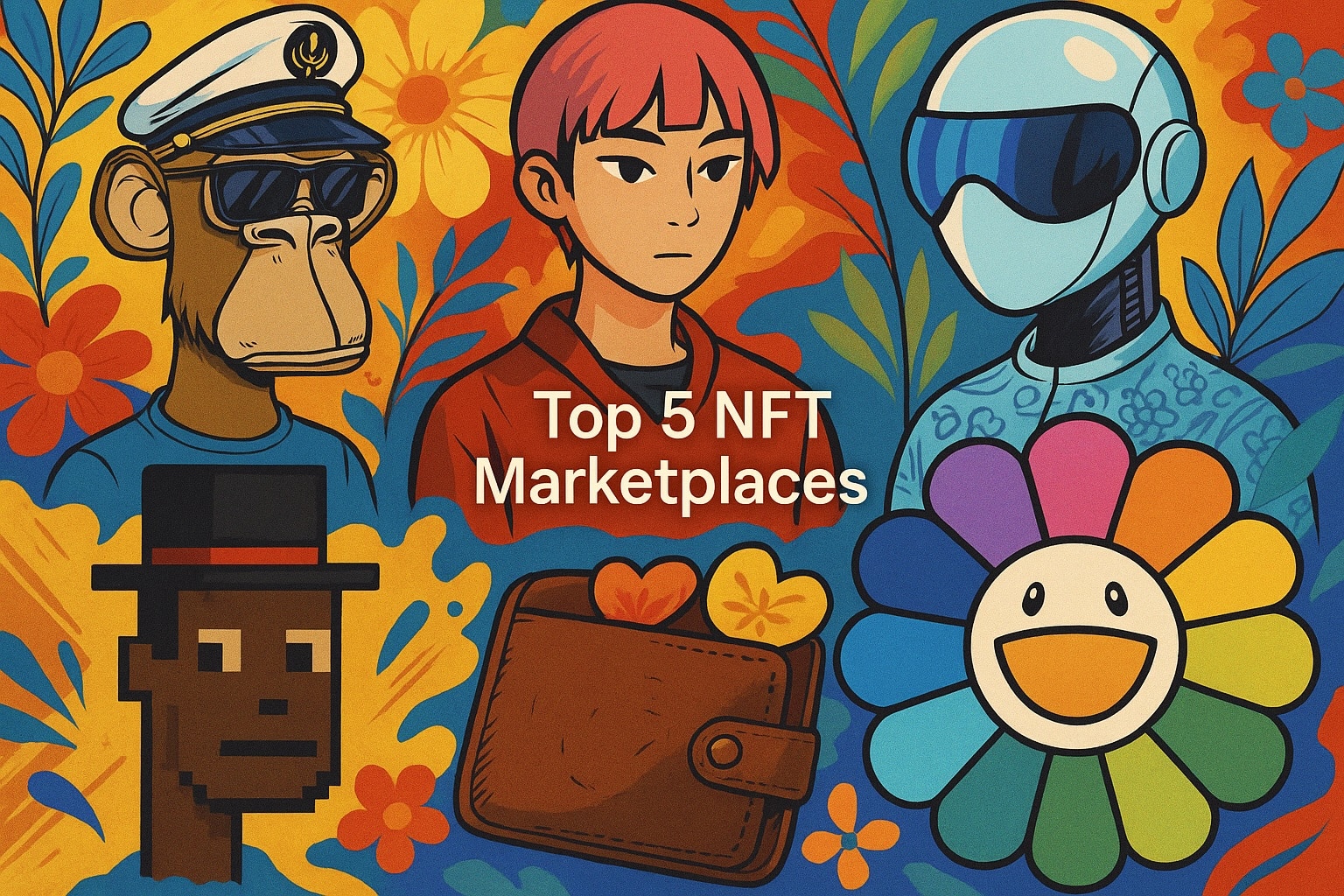
This beginner-friendly guide lists the top-rated NFT marketplaces available to you in June2026, the main types you will encounter, and which platforms are currently considered the safest and most user‑friendly places to buy and sell NFTs, so you are prepared if the next NFT cycle kicks off in earnest.
Key Takeaways
- The NFT craze began with CryptoKitties in 2017, sparking today’s boom in tokenized assets from art and music to gaming and real estate.
- OpenSea is an all-rounder, Blur appeals to traders, Magic Eden is known for its multi-blockchain support, Binance NFT is great due to its exchange integration, and SuperRare caters to artists.
- OpenSea, Blur, Magic Eden, Binance NFT, and SuperRare allow you to mint NFTs on their platforms. Fees may vary.
- Creator royalty is a topic of controversy in the NFT industry. Some NFT marketplaces enforce creator royalties while others keep it optional.
- Primary NFT platforms handle first sales, while secondary markets allow peer-to-peer reselling. Most NFT marketplaces allow both primary and secondary sales.
Top NFT Marketplaces: Summary
Choosing the right NFT platform can feel overwhelming, especially with so many options available. To help you find the best fit for your needs, you will have a curated list of NFT marketplaces, their fees, features, and user experience.
5 Best Platforms to Buy & Sell NFTs
Looking to dive into the world of digital collectibles? Choosing the right NFT marketplace is key to buying, selling, and trading NFTs safely and profitably. Below, we have highlighted the five best platforms to buy and sell NFTs.
OpenSea: NFT Marketplace for Beginners
OpenSea is a U.S.-based NFT marketplace that was founded in 2017 by Devin Finzer and Alex Atallah.
It is the top NFT marketplace with an all-time trading volume of over $39.5 billion, according to data compiled by DappRadar. Bored Ape Yacht Club (BAYC) remains the most traded NFT collection in OpenSea’s history, followed by CryptoPunks and Mutant Ape Yacht Club.
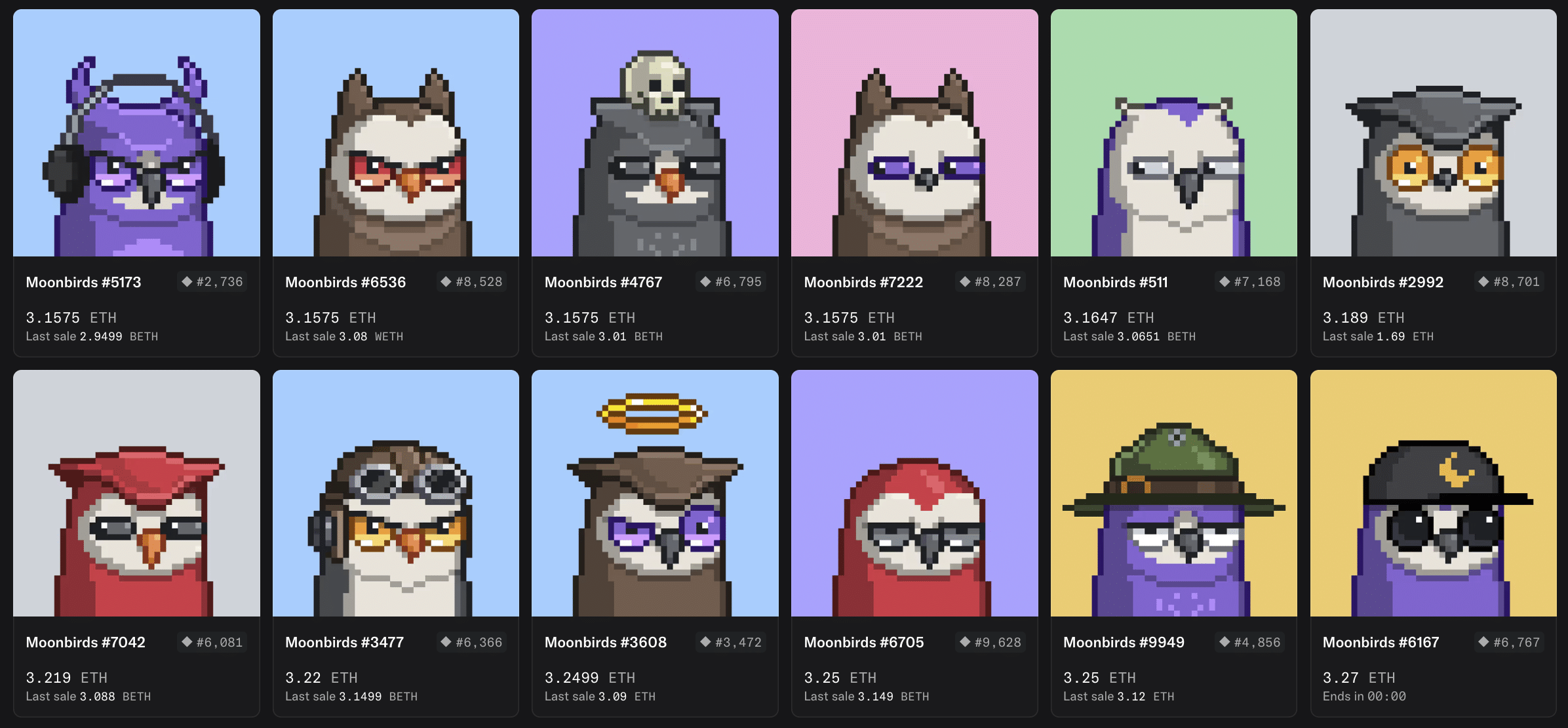
OpenSea is credited for putting the NFT industry on the map. In December 2020, the platform introduced a key feature that enabled anyone to mint NFTs on supported blockchains, marking a significant advancement as it simplified the technical complexities associated with NFT minting.
The platform charges a 0.5% fee for selling NFTs, a 10% fee for minting an NFT, and a 0.85% fee for token swaps. OpenSea was once undoubtedly the best NFT marketplace for artists due to its policy to enforce creator royalties. However, in August 2023, OpenSea made it optional to pay creator fees.
Opensea is expected to launch its platform token called SEA. Learn all about the SEA token launch in our separate article.
OpenSea Pros & Cons
Pros
-
Trades conducted on OpenSea are completely on-chain and permissionless.
-
OpenSea supports fiat onramps, such as MoonPay, for easy fund deposits.
-
The platform has a beginner-friendly interface and supports email login options.
-
It’s multi-chain, supporting popular blockchains such as Ethereum, Solana, and Polygon, among others.
-
Features a free-to-use Pro version for advanced traders.
Cons
-
Charges a 0.5% fee for selling NFTs.
-
Additional fees include a 10% fee for minting an NFT and a 0.85% fee for token swaps.
-
OpenSea did not support Bitcoin NFTs at the time of writing.
Blur: NFT Marketplace With Low Fees
Blur was founded in 2022 by Tieshun Roquerre as an antithesis to OpenSea. At the time of Blur’s launch in October 2022, OpenSea was dominating the NFT trading scene. However, OpenSea was more focused on catering to the mass market, leaving a gap for Blur to create a platform for advanced NFT traders. Founder Roquerre told a media platform about how he wanted to create “a Binance for NFTs.”
I was just very frustrated. And using OpenSea at the time, I just felt like it was very slow and clunky, you know, good for newcomers, but for someone that was more experienced and native in the space, it felt like I was fighting the platform a lot.
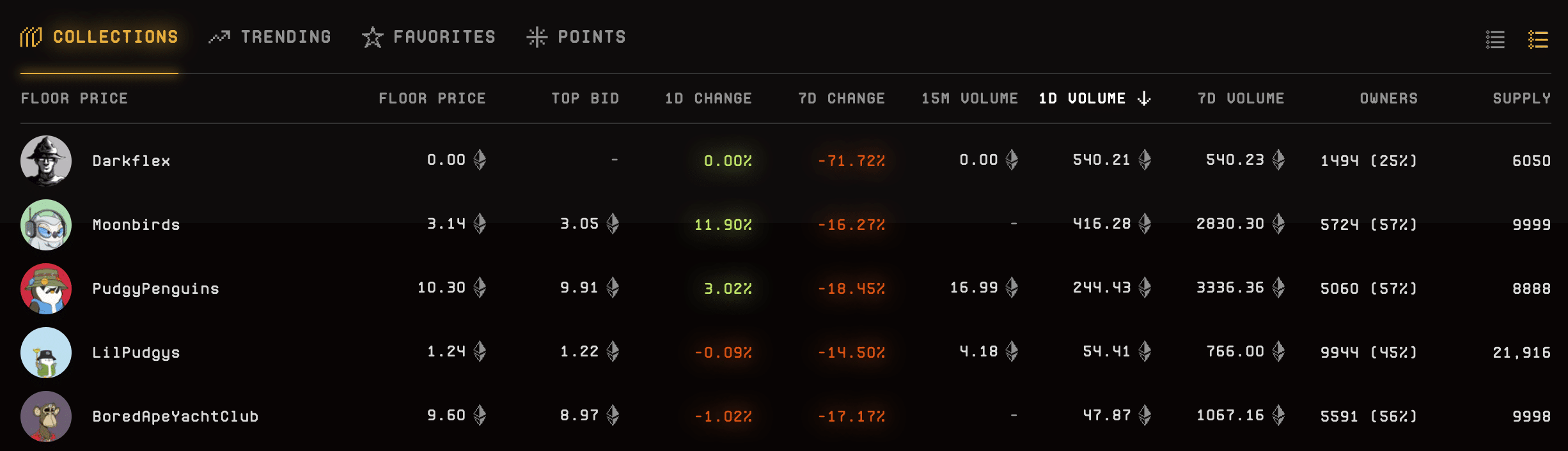
This top NFT marketplace provides fast trade execution, 0% marketplace fees, and platform rewards in the form of the BLUR token. Its interface is focused on providing market statistics over image and aesthetics.
Special features on Blur include loyalty rewards for listing NFTs exclusively on Blur, NFT-based crypto borrowing and lending, and advanced charts and analytics.
Blur Pros & Cons
Pros
-
0% marketplace fee with advanced trading tools and data feeds.
-
Users can earn BLUR tokens for listing, buying, and selling NFTs, and participating in crypto lending on Blur.
-
Fast execution of trades and floor sweeps.
-
NFT-based crypto lending and borrowing are available on the platform.
Cons
-
Advanced interface may overwhelm beginners.
-
Only supports Ethereum and Blast blockchain networks.
-
Does not fully honor creator royalty and only enforces a 0.5% minimum creator royalty.
Magic Eden: Top Multi-Chain NFT Collectibles Marketplace
Magic Eden, commonly known as ME, is an NFT marketplace that was first launched on the Solana blockchain in September 2021. Magic Eden was founded by Sidney Zhang, Jack Lu, Zhuoxun Yin, and Zhuojie Zhou. Today, ME is the third-largest NFT trading platform in terms of all-time volume, behind OpenSea and Blur.
Magic Eden stands apart from its competitors by offering broad multi-chain support. At present, it is the only marketplace among the top three NFT marketplaces that enables trading of Bitcoin-based NFTs, including Runes and Ordinals.

The platform supports other major blockchains such as Ethereum, Solana, BNB Chain, Base, and Avalanche, and continues to expand its reach by integrating additional networks. CEO and co-founder Jack Lu said in February 2025.
Magic Eden will be on 10 chains by the end of the year. Beyond NFT trading, we will have Solana token trading, Runes trading, and cross-chain swaps. Mobile and desktop. Instead of downloading different trading dApps and wallets on each chain, you will have the convenience of trading all crypto in 1 place. One app for you to discover the best opportunities across chains.
Magic Eden does not charge listing fees. The platform charges a 2% fee on all transactions on Bitcoin and Solana NFTs and a 0.5% fee for EVM chains. Magic Eden gives buyers the option to honor royalties set by creators.
U.S. users may find the main Magic Eden (magiceden.io) website blocked. However, there is a U.S.-exclusive Magic Eden (magiceden.us) domain with some restrictions.
Magic Eden Pros & Cons
Pros
-
Supports Bitcoin Runes and Ordinals NFTs.
-
It is known for its extensive multi-blockchain integration.
-
The platform does not charge any fee for listing NFTs.
-
Special features include token launchpads, NFT minting terminal, token swapping & native Bitcoin support.
Cons
-
Creators may not receive guaranteed royalties on Magic Eden.
-
Charges a 2% fee on all transactions on Bitcoin and Solana NFTs and a 0.5% fee for EVM chains.
-
Multi-chain UX can add wallet/setup complexity for absolute beginners.
Binance NFT Marketplace: Easy-to-Use NFT Platform for Beginners
Binance NFT is an NFT marketplace within the Binance ecosystem. The platform is tightly integrated with the world’s most popular crypto exchange, which enables easy fiat onramps, token transfers, and account security. If you already use Binance, you will know why it’s one of the best NFT marketplaces for beginners.
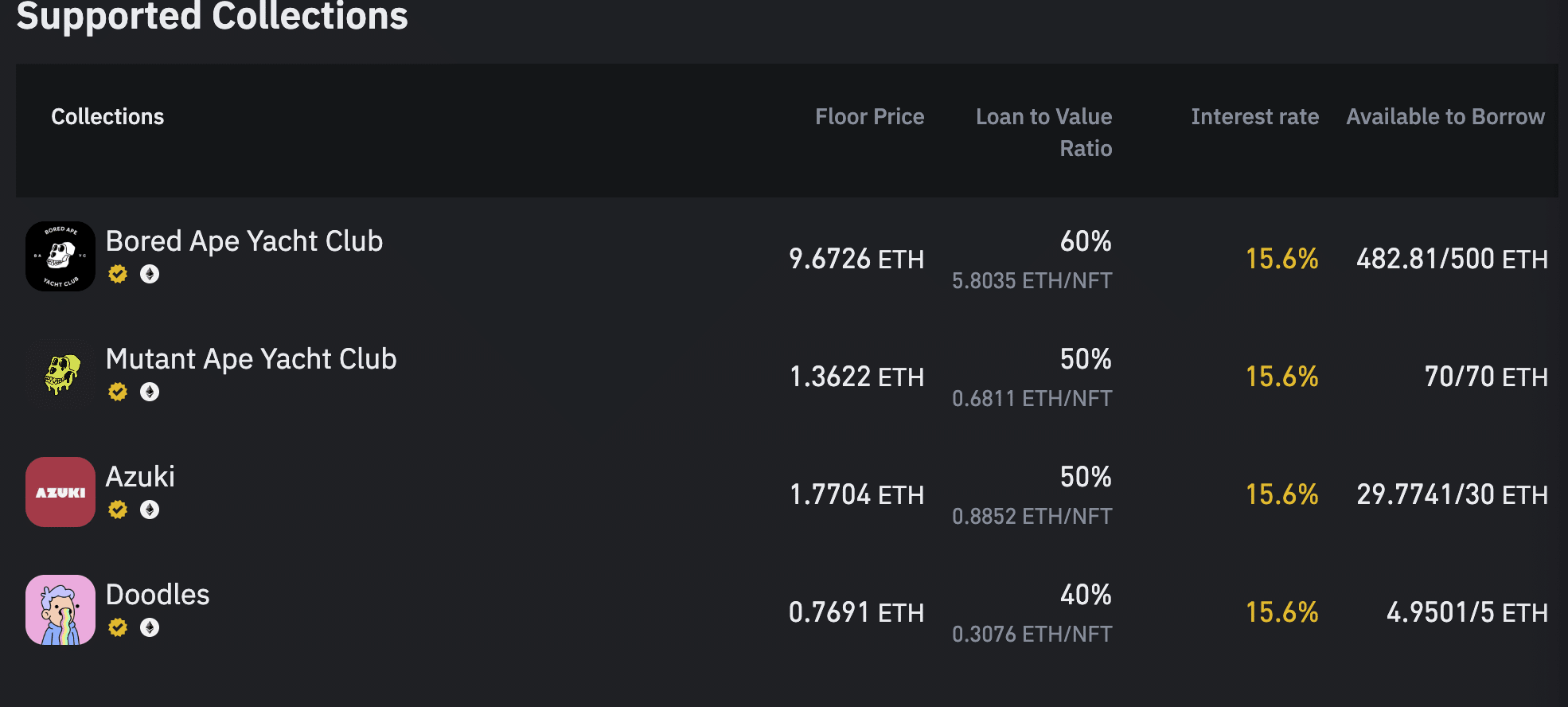
The key differentiator of this NFT platform is its DeFi (Decentralized Finance) integration. Binance NFT allows instant liquidity through NFT loans. Only Blue-chip NFTs such as BAYC and Azuki are available for loan deals. Other DeFi features include Sandbox (SAND) NFT and ApeCoin (APE) NFT staking.
Pro Tip: If you are going to be using the Binance NFT marketplace, you’re going to need to buy BNB to ensure you have some on hand to pay the network fees. Curious to see how high BNB can go? Check out our Binance Coin Price Prediction.
The platform charges a 1% fee on every NFT sale. Every NFT minted on the platform incurs a minting fee of 0.005 BNB on BNB Smart Chain and 0.001 ETH on Ethereum. Meanwhile, NFT collections incur a collection minting fee of 0.5 ETH on Ethereum and 1 BNB on BNB Smart Chain.
There are no listing fees. Sellers on Binance NFT are required to pay royalty fees on every secondary market sale.
Binance NFT Marketplace Pros & Cons
Pros
-
Great for first-timers and Binance users due to exchange integration and easy fiat onramps.
-
High trust and security practices inherited from a major exchange.
-
Frequent partner drops and curated events.
-
DeFi features such as NFT loans and NFT staking.
Cons
-
Regional availability and KYC requirements vary.
-
Not among the top NFT marketplaces by volume.
-
1% fee on each sale. Every NFT minted on the platform incurs minting fees.
SuperRare: Top NFT Marketplace for Artists
SuperRare is a premier NFT art marketplace that specializes in listing one-of-a-kind digital art collectibles. SuperRare is different from other NFT collectibles marketplaces as the platform has a curated onboarding process and a gallery-like feel to its website.
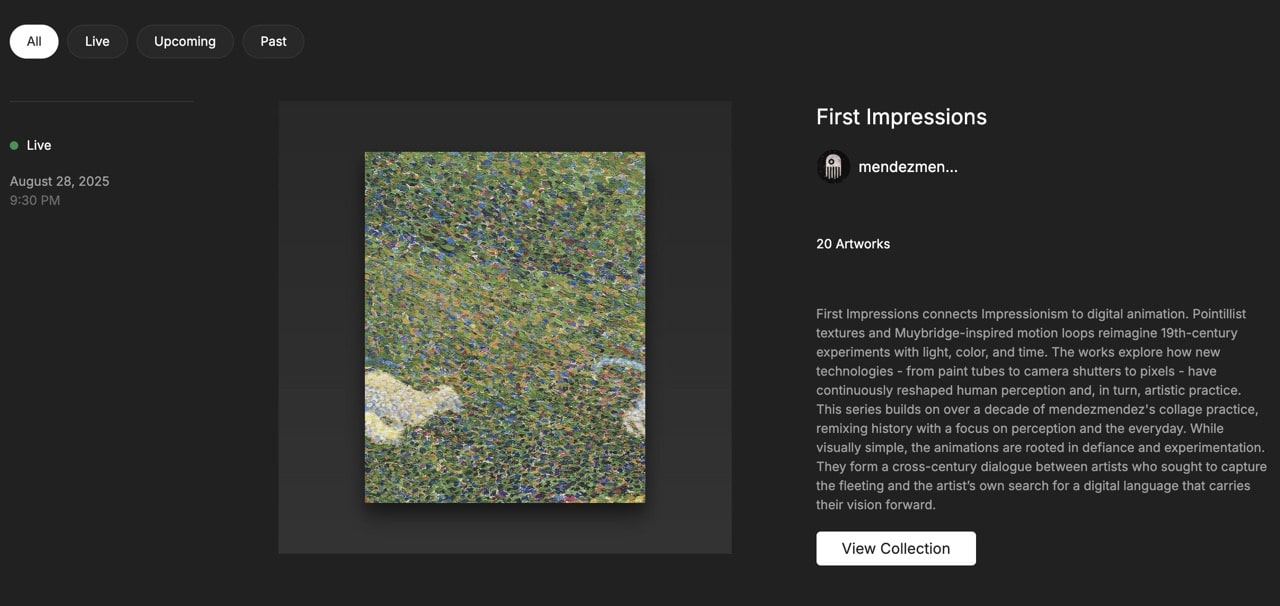
The platform offers extensive NFT minting and burning features, making it a top NFT marketplace for artists. SuperRare also allows creators to collaborate and share earnings with up to three Ethereum wallet addresses. Additionally, the platform lets creators sell artwork through scheduled and reserved auctions.
But what makes SuperRare a top NFT marketplace for artists is that the platform enforces artist royalties. In contrast, most of the rival NFT trading platforms either offer optional royalties or do not implement them at all.
Regarding fees, SuperRare imposes a 15% commission on primary sales (first time the artwork is sold). On secondary sales, the seller receives 90% of the sale amount, while the artist gets 10% as royalty. All sales on SuperRare incur a 3% marketplace fee, which the buyer pays.
SuperRare Pros & Cons
Pros
-
Artist-first NFT crypto marketplace with enforced royalties.
-
Curated collection and avaialbility of one-of-a-kind and rare collections.
-
Purchasing experience is super smooth with the integration of fiat onramp solutions such as MoonPay.
-
Extensive NFT minting, burning, and auction features for artists.
Cons
-
Higher fees, 15% on first-time sales, and 3% on marketplace fees on all sales.
-
SuperRare is limited to the Ethereum and Base blockchain.
-
Rival NFT marketplaces may not index NFTs minted on SuperRare.
NFT Trading Platforms Compared
Still not sure which NFT platform is best suited for you? Here is an easy-to-understand NFT marketplace comparison guide for you:
| Platform | Founded | Supported Blockchains | Fees | Key Highlights |
|---|---|---|---|---|
| OpenSea | 2017 | Ethereum, Solana, Polygon, others (not Bitcoin) | 0.5% sale fee, 10% minting fee, 0.85% swap fee |
|
| Blur | 2022 | Ethereum, Blast | 0% marketplace fee; 0.5% minimum royalty |
|
| Magic Eden | 2021 | Bitcoin (Runes & Ordinals), Ethereum, Solana, BNB Chain, Base, Avalanche | 2% on Solana/Bitcoin.
0.5% on EVM 0% listing |
|
| Binance NFT | 2021 | BNB Chain, Ethereum |
1% sales fee. Minting fee (0.005 BNB or 0.001 ETH) |
|
| SuperRare | 2018 | Ethereum, Base |
15% primary sale fee. 3% marketplace fee paid by buyer. 10% secondary sales royalty to the artist. |
|
Best NFT Marketplaces for Different Needs
How We Chose the Overall Best NFT Marketplaces
What Is an NFT Marketplace?
An NFT marketplace is a platform where you can mint, buy, and sell non-fungible tokens. NFTs are unique digital assets that are created on a blockchain. Since NFTs exist on the blockchain, NFT marketplaces are integrated into the underlying blockchain, which means that every mint or trade that occurs on OpenSea, Blur, Binance NFT, Magic Eden, and SuperRare is recorded on the blockchain and can be tracked online.
NFT marketplaces simplify the minting and trading of NFTs by providing the required tools and connecting buyers and sellers.
Readers should also know the difference between primary vs. secondary NFT marketplaces. Primary NFT marketplaces are platforms where the first sale after the NFT mint occurs. Secondary NFT marketplaces allow the resale of NFTs in a peer-to-peer manner.
Learn all about NFTs and digital collectibles in our “What is NFT” guide. If you wish to find the most secure wallet for your NFT collection, head to our NFT wallets’ guide.
Factors to Consider When Choosing an NFT Trading Platform
So you are here because you want to know which NFT marketplace is best in 2026? However, the answer to this question is subjective. To help you decide which is the best platform for you, we have compiled a list of factors that you should consider:
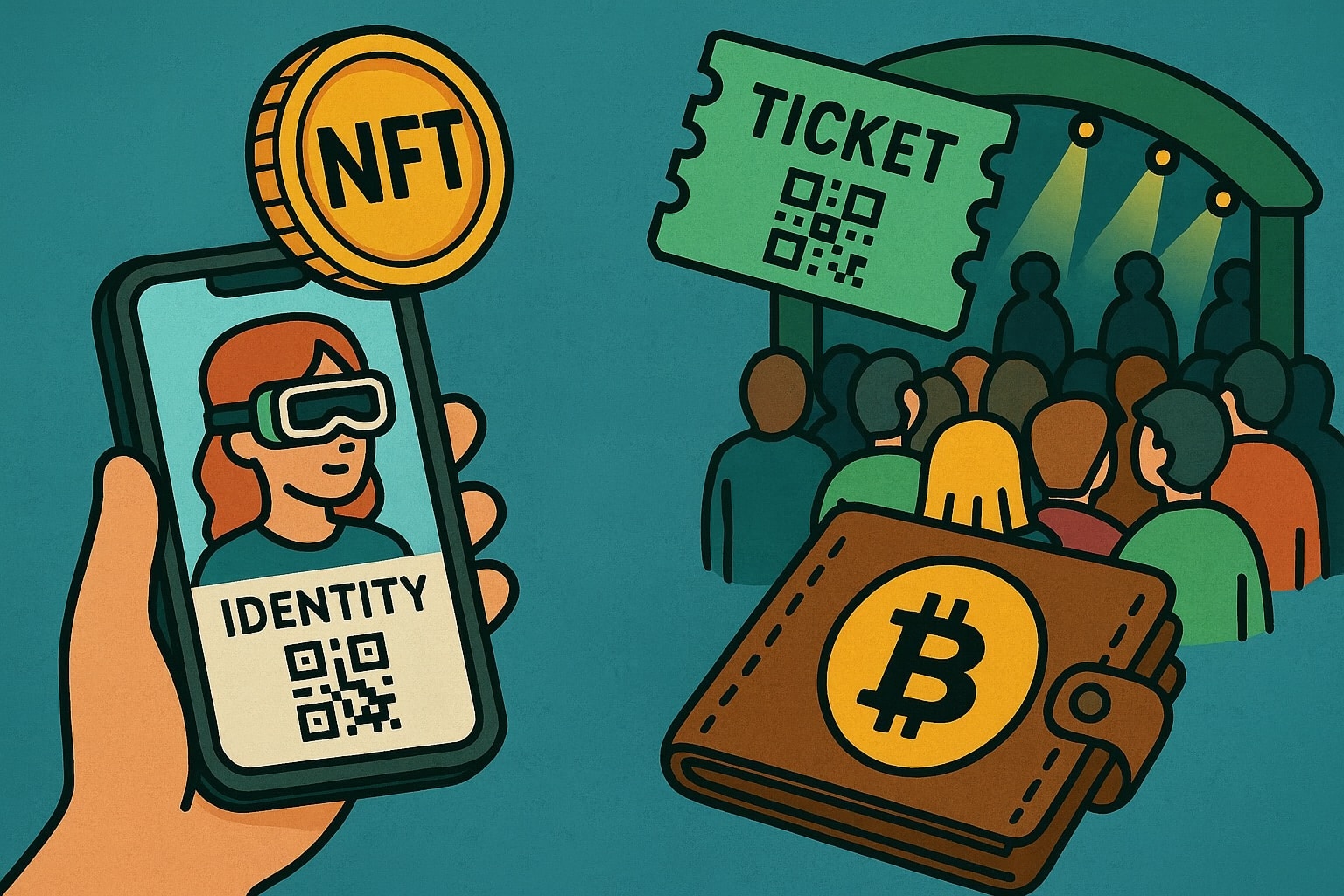
In this how to buy and sell NFTs on a marketplace guide, we will take OpenSea as our preferred platform. Opensea is the top NFT marketplace by volume and is suited for both newcomers and experienced users. Download a multi-chain wallet like Best Wallet, then add funds (ETH, SOL, or stablecoins) from an exchange. Go to opensea.io, click ‘Connect Wallet’, and approve the connection in your wallet app or browser extension. Browse verified collections, filter by price or traits, then click ‘Buy Now’ or place a bid. Confirm the purchase in your wallet. Buy Now are NFTs listed at a specific price, while the Bid function only works for auctions. If you want to buy an NFT that is not listed, you can “Make Offer.” Go to your profile, choose the NFT you want to sell, click ‘Sell’, set a listing price or auction, and confirm the listing in your wallet. Once sold, funds (minus fees/royalties) appear in your wallet. Withdraw or transfer to a hardware wallet for security. NFTs are growing from a marketplace dominated by collectible digital art and blockchain gaming items to expand towards real-world asset (RWA) tokenization and corporate use cases. The transparency and verifiability provided by blockchain technology make NFTs a great fit for tracking real-world assets such as real estate and fine art. NFT utility is expanding further into live event ticketing and digital identity with the advancement in cryptography technology, such as zero-knowledge (ZK) proofs. For those who do not know ZK proofs, it is a technology that allows you to prove something without revealing the information. The combination of NFTs and ZK tech could be key in digital identity solutions as the former enables true ownership of unique assets (aka your identity proof) while the latter allows you to verify your identity without revealing your personal information. One can only imagine how such an advanced NFT solution will be used in social logins, ID verification, bot control, and even in democratic voting systems in the future. If you are just getting started, we recommend you to use OpenSea. For most of us, OpenSea was our rite of passage to the NFT market. It is the most popular NFT trading platform out there, and for good reason. OpenSea features a user-friendly interface that is not overly “cryptofied.” If you are an existing Binance customer, you may want to check out Binance NFT. Traders will gravitate towards Blur because of its zero platform fees. Artists will feel at home at SuperRare; however, they may feel the pinch of the high platform fees. Magic Eden is the perfect platform to explore NFTs beyond the Ethereum ecosystem. So, evaluate what do you exactly want and pick a NFT marketplace based on your needs. DISCOVER: OpenSea is the largest NFT marketplace by all-time trading volume and remains highly popular. It is followed by Blur and Magic Eden. Blur charges 0% marketplace fees, but you still pay blockchain gas fees. OpenSea and Binance NFT are simple, user-friendly, and great for first-time buyers. Yes, you will need a crypto wallet and cryptocurrencies loaded on it to buy NFTs. Remember, most NFT marketplaces are on-chain, which means that you will not be able to buy NFTs using fiat currencies. Yes, you can list your NFTs on multiple marketplaces and then sell them eventually. No, not all NFT marketplaces exist on Ethereum. While many run on Ethereum, others operate on blockchains like Solana, Polygon, Binance Smart Chain, and Avalanche. Install Best Wallet, fund it with SOL, then connect directly on Magic Eden or other Solana-based NFT platforms. Learn more about this easy-to-use, multi-blockchain crypto wallet in our Best Wallet Review. Established in 2013, 99Bitcoin’s team members have been crypto experts since Bitcoin’s Early days. Weekly Research Monthly readers Expert contributors Crypto Projects Reviewed
NFT Marketplace Fees
Platform
Sale Fees
Minting Fees
Other Fees
Royalties
OpenSea
0.5% per sale
10% per NFT minted
0.85% on token swaps, Gas fees
Optional (made optional in Aug 2023)
Blur
0% marketplace fee
None
Gas fees
0.5% minimum royalty (optional above that)
Magic Eden
2% (Solana & Bitcoin), 0.5% (EVM)
None
Gas fees
Optional, buyer chooses
Binance NFT
1% per sale
0.005 BNB (BNB Chain) or 0.001 ETH (Ethereum); collections: 1 BNB or 0.5 ETH
Gas fees
Seller must pay royalties on secondary sales
SuperRare
15% gallery fee on primary sales; 3% marketplace fee (buyer pays, all sales)
Included in primary fees
Gas fees
10% enforced royalty on secondary sales
Benefits & Risks of Using NFT Marketplaces
Pros
Cons
How to Buy and Sell NFTs on a Marketplace?
Set Up and Fund a Wallet
Connect Wallet to OpenSea
Buy an NFT
Sell an NFT
Complete the Sale
Futures of NFT Marketplaces
Conclusion: Top NFT Marketplaces
FAQs:
What is the most popular NFT marketplace?

Which NFT marketplace has the lowest fees?
Which NFT marketplace is best for beginners?
Do I need crypto to buy NFTs?
Can I sell NFTs on multiple marketplaces?
Are all NFT marketplaces exist on Ethereum?
How do I connect wallets to Solana NFT marketplaces?
References:

Why you can trust 99Bitcoins