





Gold and Bitcoin have long stood as two of the most debated investment assets. Investors often ask: Which one should I pick when it comes to gold vs. Bitcoin? Is BTC a better investment than gold?
In 2026, the conversation has become sharper as the world questions the U.S. dollar’s role as the global reserve currency. Central banks are stockpiling gold, investors are turning to Bitcoin as a hedge against inflation and monetary policy risk, and geopolitical tensions are redrawing the financial order.
This article compares Bitcoin and Gold in terms of performance, safety, and long-term potential to help you decide whether to invest in Bitcoin or gold in 2026.
Key Takeaways
- Gold and Bitcoin have surged to new all-time high prices in 2025.
- Gold brings centuries of stability and universal acceptability, while Bitcoin’s fixed supply and borderless nature appeal to investors seeking independence from fiat.
- Gold’s market cap is 11 times larger than Bitcoin’s market cap, but Bitcoin has significantly outperformed gold in long-term returns despite higher volatility.
- During crises, gold has consistently held value, while Bitcoin’s performance has been mixed, showing sensitivity to macroeconomic events such as interest rate hikes/cuts.
- Gold brings stability, Bitcoin offers growth. Holding both balances risk and reward for protection with upside.
Bitcoin vs. Gold: Summary
Gold has been a trusted asset for thousands of years, serving as currency, jewellery, and a central bank reserve. It is synonymous with stability and is considered the ultimate hedge against uncertainty.
Bitcoin, by contrast, is just 16 years old but has already grown into a trillion-dollar asset class. Its innovation, scarcity, and borderless nature have made it a contender for gold’s role.
In this article, we will compare the two assets across key metrics in 2026, which include historical market performance, inflation rates, correlation with other assets, energy consumption statistics, and more.
Should You Invest in Gold or Bitcoin in 2026?
Both gold and Bitcoin are breaking records in 2026. Gold has surged above $3,750 an ounce, setting fresh all-time highs as governments hoard reserves, the dollar weakens, and markets brace for potential U.S. rate cuts. Bitcoin has also rallied strongly year-to-date, supported by inflows into newly launched ETFs, rising adoption, and political backing from the Trump administration.
Behind these gains lies more than market speculation. Geopolitical tensions are rising, the dollar’s dominance is eroding, and the risk of inflation or stagflation still lingers. In this environment, investors are turning toward assets that protect against currency debasement and policy uncertainty.
The real question for investors is no longer whether gold or Bitcoin is “better” but how each fits into a portfolio designed for 2026. To answer that, we need to examine their roles as safe havens, their performance, and the metrics that set them apart.
Gold and Bitcoin: Which is the Safe Haven?
Gold has been recognized as the ultimate safe haven for thousands of years. Its value comes from qualities that few other assets can match: scarce supply, universal acceptability, and inverse correlation with risk assets in financial markets such as stocks.
The precious metal has been valued for centuries because it is rare, durable, and widely recognized as both jewelry and a store of wealth. In contrast, fiat currencies hold value only because they are backed by governments and trusted by society.
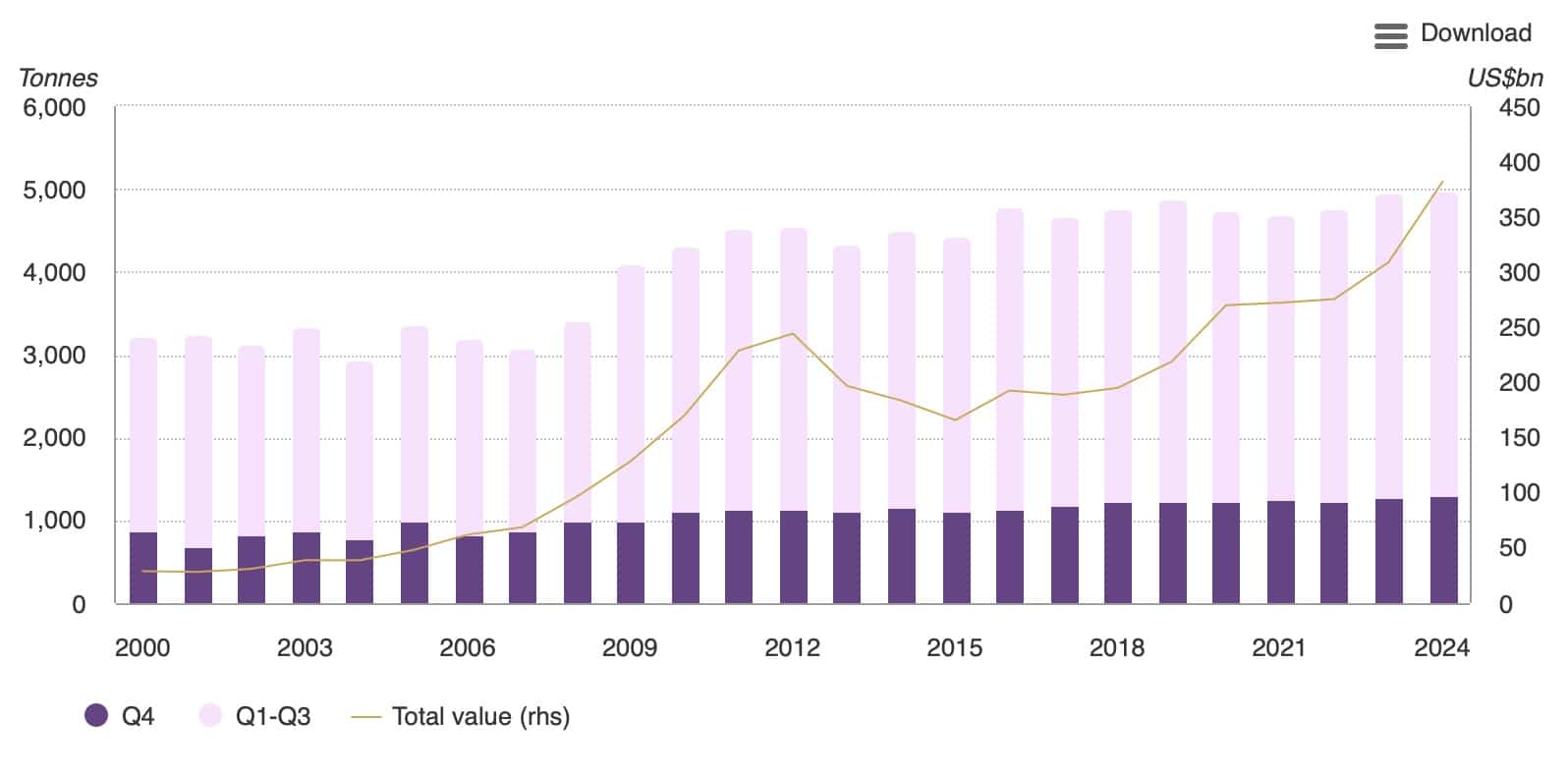
The numbers tell the story. According to the World Gold Council, the annual gold demand has surged from less than 1,000 tonnes or about $50 billion in 2000 to over 5,000 tonnes or more than $350 billion in 2024.
Bitcoin is still proving itself as a safe-haven alternative. Its fixed supply, predictable issuance, and growing acceptance have strengthened its role as “digital gold.” From a market value of under $1 million in 2010, Bitcoin has surged to more than $2 trillion in 2025, evidence of its rising appeal as an alternative to gold.
Comparing Gold to Bitcoin On Key Metrics
Understanding gold vs. Bitcoin means looking at the data. Returns, volatility, and market size reveal how they perform, while liquidity and hedge value show their role in times of stress. Gold still leads as the traditional safe haven, but Bitcoin is quickly gaining ground as its digital counterpart.
Performance Metrics: Bitcoin vs. Gold Returns
Let’s compare the returns, volatility, and max drawdowns of gold and Bitcoin:
| Metric | Gold | Bitcoin |
| YTD Return | +45% | +21% |
| 1-Year Return | +44% | +75% |
| 5-Year Return | +104% | +952% |
| All-time high | $3,747 per ounce (on 23 September 2025) | $124,457 (on August 14, 2025) |
| Volatility | 15.44% | 24.58% |
| Max Drawdown (Annual) | -30.9% (2013) | -72.1% (2018) |
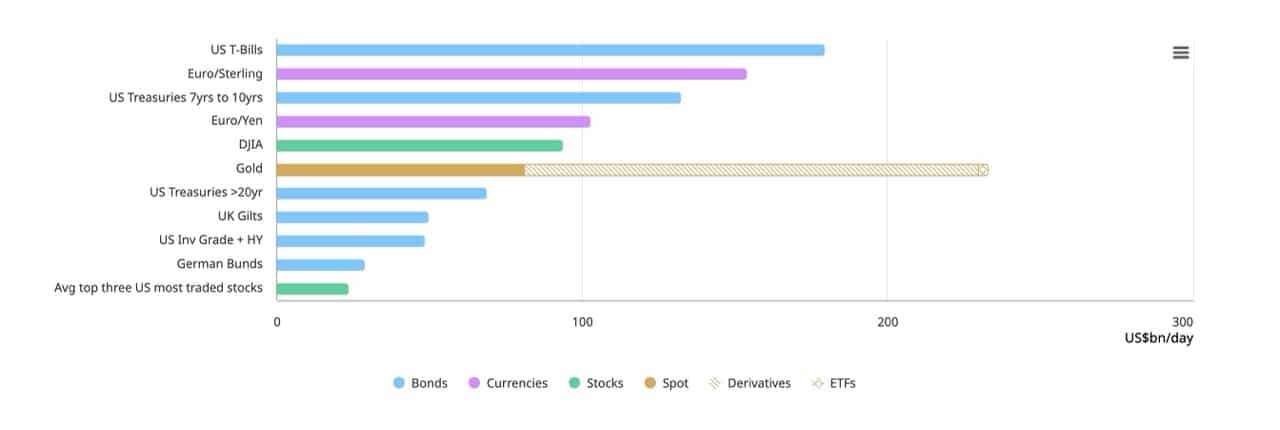
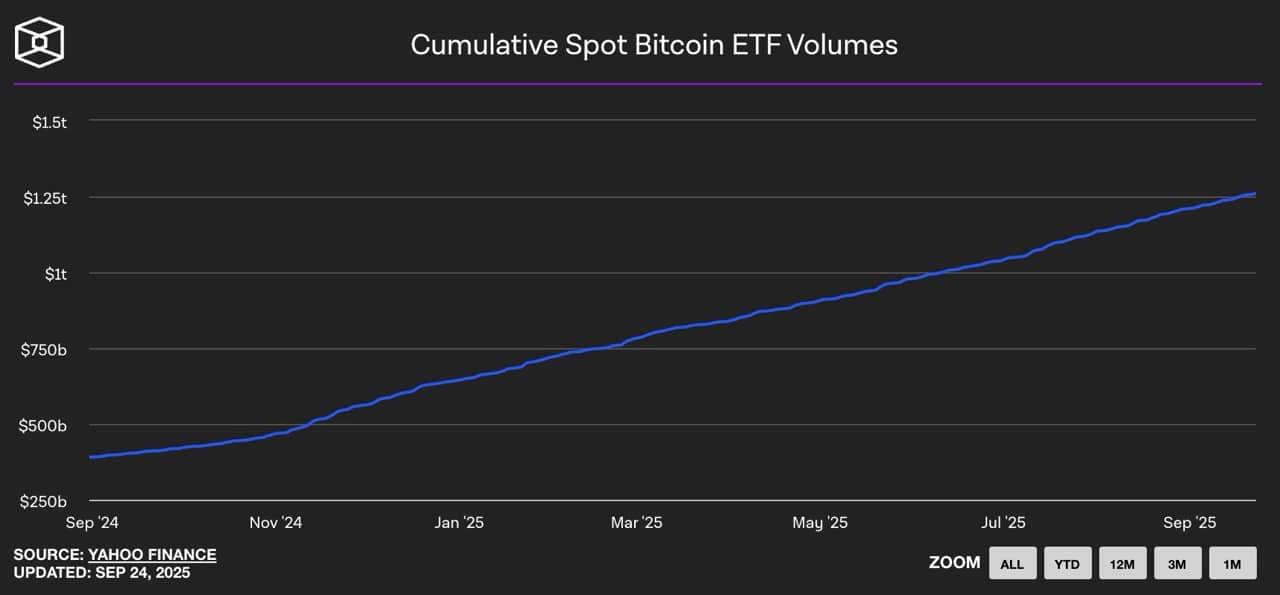
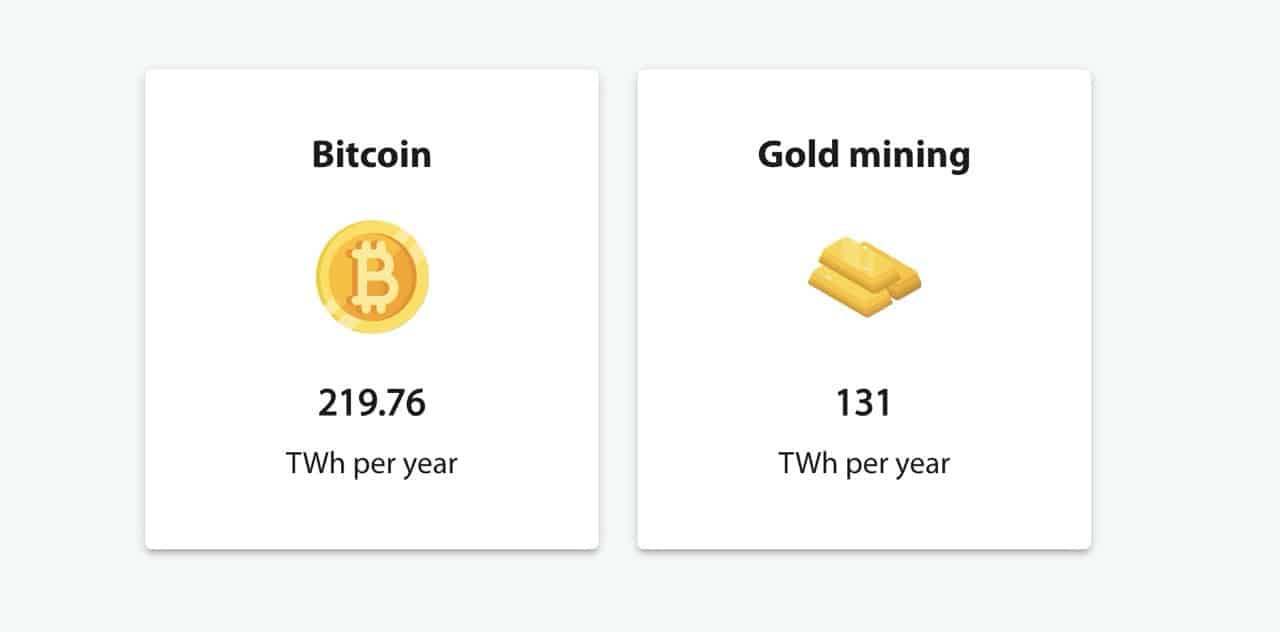
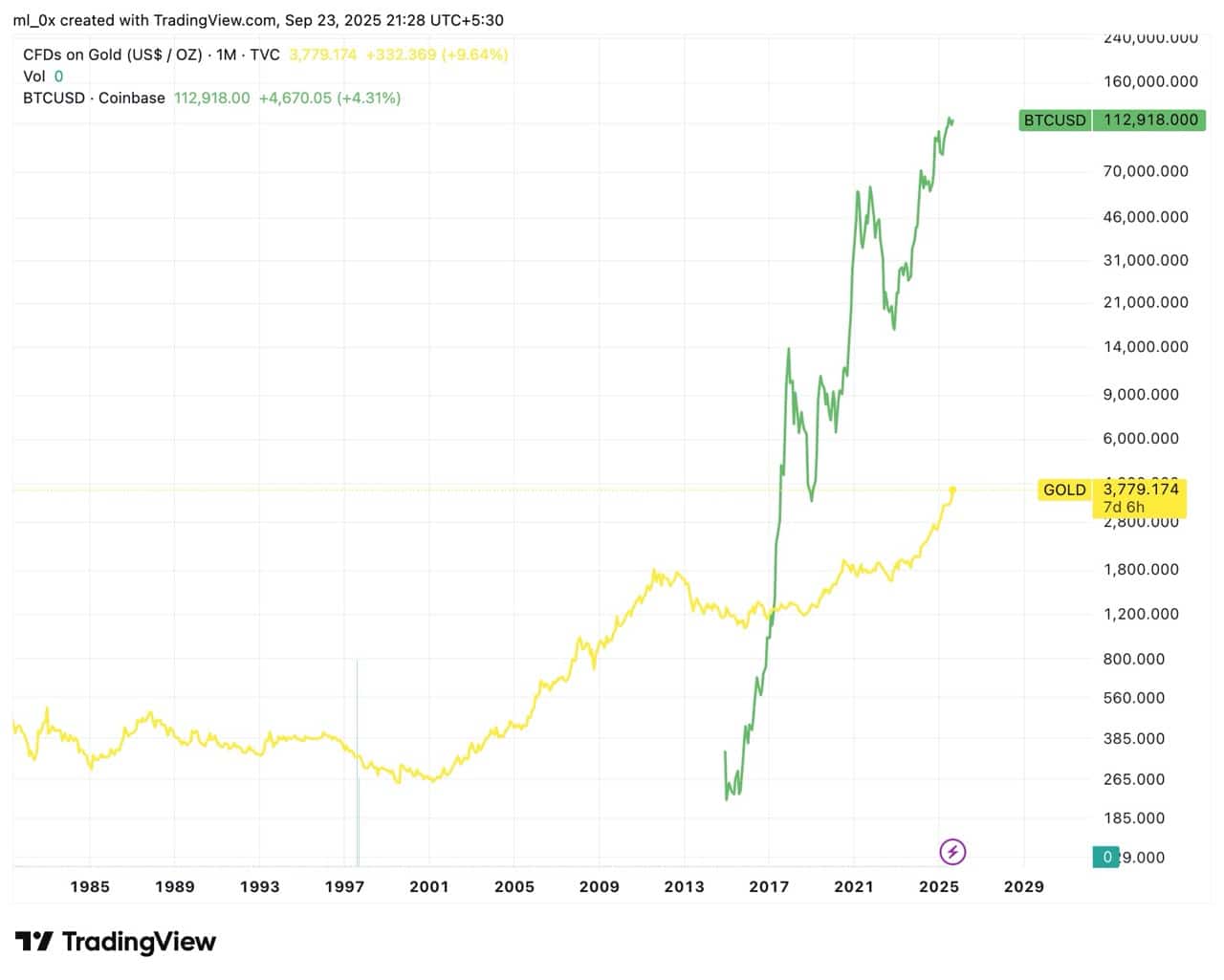
From the table above, we see that gold continues to prove its resilience with strong gains and low volatility, making it a steadier store of value. Bitcoin, however, has impressively produced massive long-term returns while showing properties of an investment asset that is still maturing. Let’s compare the market cap, trading volumes, and dominance of gold and Bitcoin to see how these two safe-haven assets stack up. The table above shows gold’s overwhelming dominance in scale and liquidity, supported by its role in central bank reserves and jewellery demand across the U.S., India, China, Europe and other economies. Bitcoin, while far smaller, is steadily building dominance within the crypto market and gaining traction among retail investors and institutions. The contrast suggests gold remains the established safe haven, while Bitcoin is the emerging alternative. Now, let’s compare gold and Bitcoin on some other metrics to see which is a better store of value. In this section, we will study how the gold and Bitcoin market valuations have fared historically and compare them to U.S. inflation rates. To measure inflation, we will take the Consumer Price Index (CPI), which is an economic indicator that tracks the rise and fall in price of a fixed basket of goods and services. An increase in the CPI index indicates the falling purchasing power of the U.S. dollar. The table highlights how the U.S. dollar has steadily lost purchasing power, with the CPI rising more than 111% over 30 years. In contrast, gold’s price has climbed nearly 900% in the same period, showing how it preserves and grows value as the dollar weakens. Meanwhile, Bitcoin, though only 16 years old, has surged over 48,000% in the past ten years. The price of a single Bitcoin has risen from near $0 to over $110,000 and beyond. Both gold and Bitcoin illustrate how investors can protect themselves against the erosion of dollar value. Now let’s compare how gold and Bitcoin have performed in comparison to the U.S. equity benchmark index S&P 500 during recent market crisis events: The comparison shows a clear pattern. Gold has consistently held its ground or posted modest gains during episodes of economic uncertainty, reinforcing its reputation as a reliable safe haven. Bitcoin’s crisis performance, by contrast, has been mixed. The asset has shown sensitivity to interest rate-related stimulus. Gold has earned its reputation as a safe haven through its low correlation with equities and bonds. Unlike many financial instruments, its price reflects central bank purchases, jewelry demand in India and China, and geopolitical risks. This unique demand pattern allows gold to preserve value when the stock market falters. Bitcoin presents a different pattern. It remains more volatile, but much of that volatility has skewed upward. From Feb 2020 to Feb 2024, Bitcoin delivered a 58% annualized return, far higher than the S&P 500’s 13.6%, despite a standard deviation nearly four times larger. Fidelity Digital Assets analysts Zack Wainwright and Chris Kuiper, in a report, said, Bitcoin has long been seen as a highly volatile asset. New assets typically take time to undergo price discovery, maturation, and then settle into lower volatility. Even gold experienced high volatility when the U.S. came off the gold standard in the 1970s. Below, you will look at how gold and Bitcoin perform when compared in terms of liquidity and trading infrastructure. Gold remains one of the most liquid instruments in the world. Its liquidity is supported by deep futures markets, exchange-traded funds, reserve demand from central banks, and consumer demand for jewelry and store-of-value use cases. According to the World Gold Council, gold was the most liquid asset in the world in 2024 in terms of trading volume, higher than U.S. treasury bills, the Euro-Sterling trading pair, and the Nasdaq. SPDR Gold Trust, the world’s largest gold-backed ETF, held about 1,000 tonnes of physical gold, and the value of its assets under management was over $121.69 billion, as of late September 2025. Bitcoin has become one of the most actively traded financial instruments in the world, though its liquidity still trails gold and traditional securities. Its trading ecosystem is supported by spot markets, derivatives, and more recently, U.S.-approved Bitcoin ETFs. When comparing the most popular gold ETF to the Bitcoin ETF, we notice that the IBIT ETF has covered significant ground compared to the SPDR Gold Trust, despite the latter launching about 20 years before it. Retail investors are also using Bitcoin holding companies such as MicroStrategy to gain exposure to the cryptocurrency. Gold has always been deeply tied to geopolitics. During times of economic uncertainty or conflict, central banks often boost reserves as a sign of stability and a hedge against reliance on the U.S. dollar. In recent years, countries like China, India, and Russia have increased their purchases, viewing gold as a tangible store of value that diversifies risk, strengthens economic independence, and provides a hedge against de-dollarization. Bitcoin is also drawing similar investment narratives. Nations like Bhutan, El Salvador, and Iran are actively mining and building reserves. Meanwhile, in crisis-hit regions facing hyperinflation, war, or sanctions, individual ownership is rising. For example, citizens in Argentina and Turkey have leaned on Bitcoin ownership to protect their wealth, while Russians turned to it after the Ruble’s collapse during the Ukraine invasion. Bitcoin has faced heavy criticism from environmentalists and lawmakers due to its heavy energy consumption. This is because Bitcoin uses a consensus mechanism called proof-of-work that requires miners to expend electricity when validating transactions and forming new blocks. Learn all about this technology in our What is Proof-of-Work article. According to the Cambridge Bitcoin Electricity Consumption Index (CBCI), Bitcoin’s annualized electricity consumption is estimated to be 221.62 Terra Watt hours (TWh), which is more than nations such as Thailand (202.6 TWh) and South Africa (191.4 TWh). Gold mining is also a highly energy-intensive process. CBCI estimates gold mining’s annualized electricity consumption at 131 TWh. Both Bitcoin mining and gold mining also consume a lot of water. A 2023 study estimated that Bitcoin mining’s annual water footprint was 2,237 gigalitres (GL). Meanwhile, a 2021 research reported that 79.7% of global gold production in 2018 was estimated to consume 712.79 cubic megameters (mm3) of water. Here are some of the top metrics you should look at when gauging investors’ sentiment. In terms of performance, the gap between gold and Bitcoin is striking. Gold behaves like a mature asset, delivering steadier returns with low volatility, while Bitcoin remains highly volatile, crashing hard but rebounding with strength. BTC has outperformed gold in several time periods, including: 1-year returns, five-year returns, and 10-year returns. Over the past year, gold prices rose about 51%, while Bitcoin surged 91%. Stretching the view to five years, gold delivered a solid 92% return, but Bitcoin surged by 869% over the same period. On a 10-year horizon, the difference becomes even more dramatic: gold appreciated by roughly 234%, but Bitcoin soared by more than 48,000%. Gold’s steady appreciation reinforces its role as a reliable, tangible safe haven, especially in times of economic uncertainty. Yet Bitcoin’s meteoric rise suggests a volatile but high-growth asset that has become a favourite among speculators. In this section, we compare the benefits and risks of investing in gold and Bitcoin to help you settle the gold vs. crypto investment debate. Which is a better store of value, gold or Bitcoin? Let’s find out. Investors must balance tradition with innovation when considering a Bitcoin vs. gold investment comparison. Gold offers stability and proven value, while Bitcoin brings higher returns, greater volatility, and a new approach to diversification. Here are the factors to consider in your Bitcoin vs. gold comparison study: The current macroeconomic conditions, characterized by falling interest rates, de-dollarization concerns, national protectionism, and heightened geopolitical tensions, are expected to support gold demand. According to the World Gold Council, lower interest rates “reduce barriers for Western investment in gold”, which is expected to support gold prices in the medium to long-term. Some crypto analysts also agree; they say that when real rates fall (nominal yield minus inflation shrinks), gold tends to outperform. When it comes to Bitcoin and gold correlation, we find that, unlike gold, Bitcoin has shown no meaningful relationship with the 10-year real interest rate. Gold will likely remain a traditional safe-haven asset, valued for its stability and long history. Bitcoin, on the other hand, is emerging as “digital gold,” offering portability, scarcity, and growing institutional adoption. Over the next decade, the key question is whether Bitcoin can outpace gold as the preferred store of value in a digital-first world. Are you interested in investing in Bitcoin? Check out the top crypto exchanges in 2026 where you can gain exposure to this store-of-value cryptocurrency with ease. Gold and Bitcoin represent two very different answers to the same problem: how to preserve wealth in an uncertain world. Gold offers the comfort of history, stability, and universal acceptance. At the same time, Bitcoin is an emerging asset that is becoming increasingly popular for retail and institutional portfolios for its gold-like properties. For most investors in 2026, the smartest approach to the gold vs. Bitcoin long-term investment debate may not be choosing one over the other. The best approach may actually be being open to gaining exposure to both assets and deciding how the gold vs. Bitcoin risk and reward comparison fits your risk profile. DISCOVER: It depends on what you’re looking for. Gold is stable and proven, while Bitcoin is newer, riskier, but has delivered much higher returns. If you want safety, gold wins. If you want growth potential, Bitcoin has the edge. Not yet. Gold has thousands of years of history as money and a hedge. Bitcoin, with its fixed supply and digital design, is sometimes called “digital gold,” but it still needs more time, adoption, and trust before it can fully match gold’s role. Gold usually holds its value or even rises when markets crash. Bitcoin’s record is mixed. It sometimes falls with stocks, other times it holds steady or bounces back quickly. Gold is the safer crisis hedge today. Yes, many investors do. Gold adds stability, while Bitcoin adds growth. Holding both helps balance risk and reward, giving you protection and upside in one portfolio. Gold will likely stay steady and reliable, but Bitcoin has much more room to grow. Over the past decade, Bitcoin has massively outperformed gold. Just remember, it also comes with bigger risks and deeper price swings. Established in 2013, 99Bitcoin’s team members have been crypto experts since Bitcoin’s Early days. Weekly Research Monthly readers Expert contributors Crypto Projects ReviewedMarket Characteristics: Gold Market Cap vs. Bitcoin
Metric
Gold
Bitcoin
Market Cap
$25.6 trillion (As of 26 Sept.)
$2.25 trillion (As of 26 Sept.)
Investment narrative
Store-of-value, safe haven
Store-of-value, safe haven
Other use cases
Jewellery
Peer-to-peer payments
Average daily trading volume
$232.83 billion (including over-the-counter, exchanges and ETFs)
$10.77 billion (7-day daily moving average for spot trading excluding ETFs)
Dominance
Gold’s market cap was more than 11 times (+1000%) bigger than Bitcoin’s market cap.
Bitcoin contributed about 57% of the total crypto market cap at the time of writing.
Hedge & Safe-Haven Metrics
Inflation Hedge Effectiveness
Instrument
1-year performance
5-year performance
10-year performance
20-year performance
30-year performance
U.S. CPI Index
+2.7%
+24.5%
+35%
+65%
+111%
Gold
+51%
+92%
+234%
+771%
+895%
Bitcoin
+91%
+869%
+48,808%
NA
NA
Crisis Performance
Event
Date
S&P 500
Gold
Bitcoin
Trump tariff crash
April 4, 2025
-5.97%
-2.47%
+0.8%
Russian invasion of Ukraine
Feb 23, 2022
-1.8%
+0.5%
-2.6%
COVID-19 crash
March 16, 2020
-11.98%
-1%
-10.6%
U.S. Rate hike-related crash
Feb 05, 2018
-4.1%
+0.5%
-21.9%
Global Financial Crisis-related
Oct 15, 2008
-9%
+1.5%
NA
Correlation With Other Assets
Liquidity and Trading Infrastructure
Gold – The Most Liquid Asset in the World
Bitcoin – Growing Liquidity in the Cryptocurrency Market
Geopolitical Relevance
Regulation & Accessibility
Category
Gold
Bitcoin
Regulation
Universally regulated
Rules still evolving, vary by country
Legal Status
Recognized as a financial & monetary asset
Restricted in some regions, not recognized in most countries
Access
Jewelry, bullion, ETFs, futures
Spot, ETFs, DeFi, Bitcoin-holding corporations
Intermediaries
Needs banks, brokers, custodians
Peer-to-peer transfers, crypto exchanges
Global Reach
Widely accepted, but the movement is limited
Borderless, transferable anywhere
Investor Base
Governments, institutions, individuals
Institutions, corporates, and individual investors
Sustainability Metrics
Investor Sentiment Metrics
Bitcoin’s 10 Year Return To Gold Compared
Benefits & Risks of Investing in Bitcoin vs. Gold
Pros & Cons of Investing in Bitcoin
Pros
Cons
Pros & Cons of Investing in Gold
Pros
Cons
Factors to Keep in Mind While Choosing Between BTC & Gold
Future Outlook: Gold and Bitcoin in the Next Decade
Conclusion
FAQs:
Is Bitcoin a better investment than gold in 2026?

Can Bitcoin replace gold as a store of value?
How do gold and Bitcoin perform during financial crises?
Should I hold both gold and Bitcoin?
Which has higher long-term potential, gold or Bitcoin?
References

Why you can trust 99Bitcoins