




In This Article
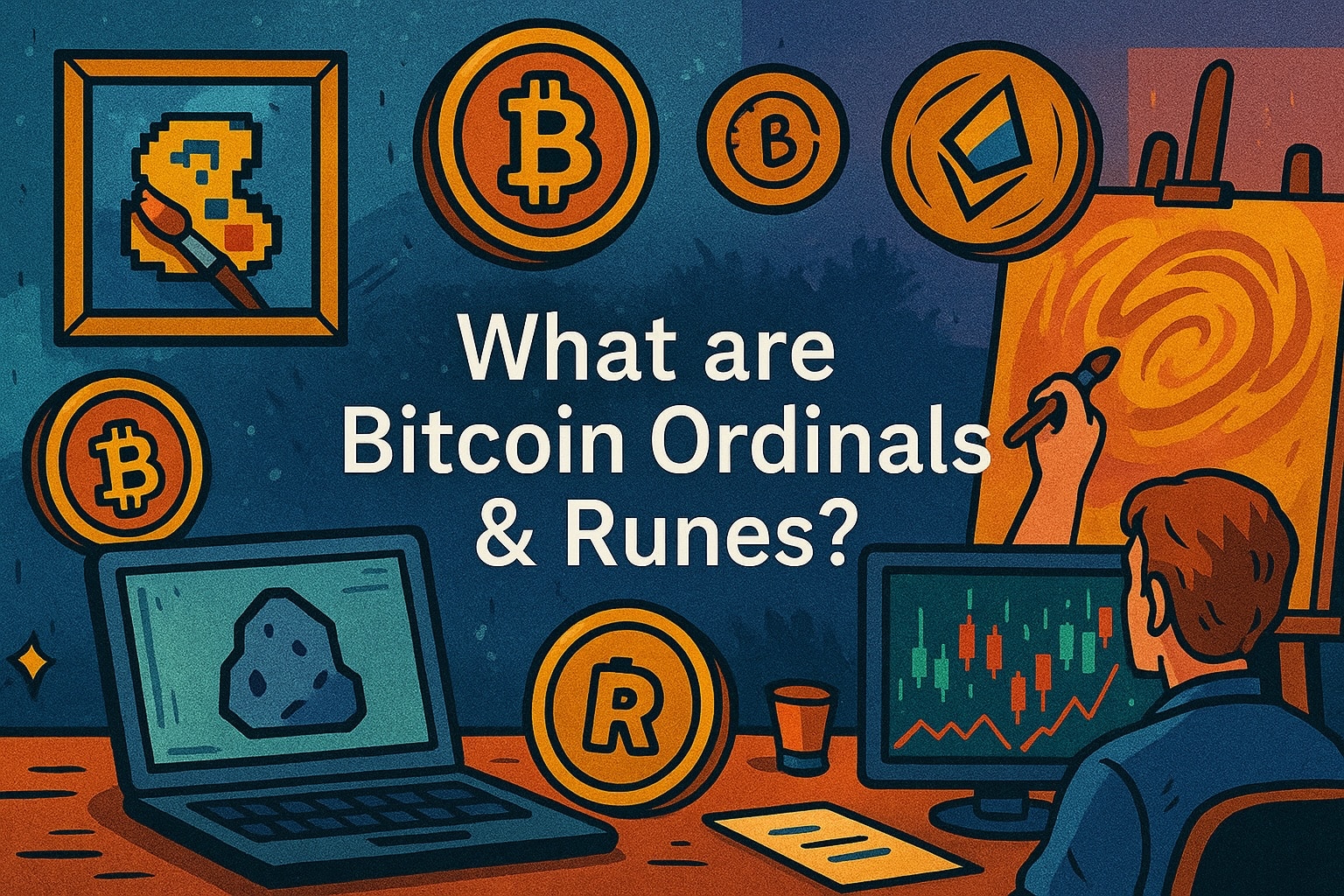
Bitcoin, originally designed as a peer-to-peer digital currency, is evolving far beyond its role as “digital gold.” A major innovation called Bitcoin Ordinals and Bitcoin Runes has reshaped how people interact with the Bitcoin blockchain. Now the use cases of Bitcoin have gone beyond peer-to-peer payments and store-of-value and expanded into tokenization, an area dominated by smart contract blockchains like Ethereum and Solana.
But What are Bitcoin Ordinals and Runes? What is the difference between Bitcoin Runes and BRC-20 tokens? What are the Bitcoin Runes’ advantages over BRC-20 tokens? In this article, we answer all this and more as we help you understand these incredible blockchain technologies and how they are reshaping Bitcoin.
Key Takeaways
- The Ordinals protocol turns individual satoshis into Bitcoin NFTs via on-chain inscriptions. This makes unique, immutable Bitcoin blockchain collectibles without traditional smart contracts.
- Bitcoin Runes, on the other hand, creates fungible tokens. The use of Bitcoin’s native UTXO transaction model allows Runes to be leaner than alternative and has supported Runes Protocol adoption across the ecosystem.
- Casey Rodarmor is the founder of Bitcoin Runes and Bitcoin Ordinals.
- Some Bitcoin users have overlooked Bitcoin Ordinals’ benefits and criticized it for clogging the blockchain and creating an environment for high gas fees and slow transactions.
- Bitcoin Ordinals and Bitcoin Runes have the power to usher in a new era for the Bitcoin blockchain, one which is commonly referred to as Bitcoin Finance or BTCFi.
What Are Bitcoin Ordinals & Runes: Summary
In this article, we will explain the meaning of Bitcoin Ordinals and Bitcoin Runes. The first half of the article will focus on Bitcoin Ordinals, how they work, and how to create and trade them. You will learn the history behind the project, its use cases, and its implications on the Bitcoin blockchain.
The second half of the article will focus on Bitcoin Runes, their properties, use cases, and the problems they solve. You will come across an easy-to-understand comparison table on the main differences between Bitcoin Ordinals and Runes. We will also highlight the differences between Runes and the BRC-20 token standard, which is an alternative way to create fungible tokens on Bitcoin.
By the end of the article, you will be well-versed with the basics of these two innovative blockchain technologies and understand how they are shaping the future of Bitcoin by ushering in the era of Bitcoin Finance (BTCFi).
Bitcoin Ordinals Review
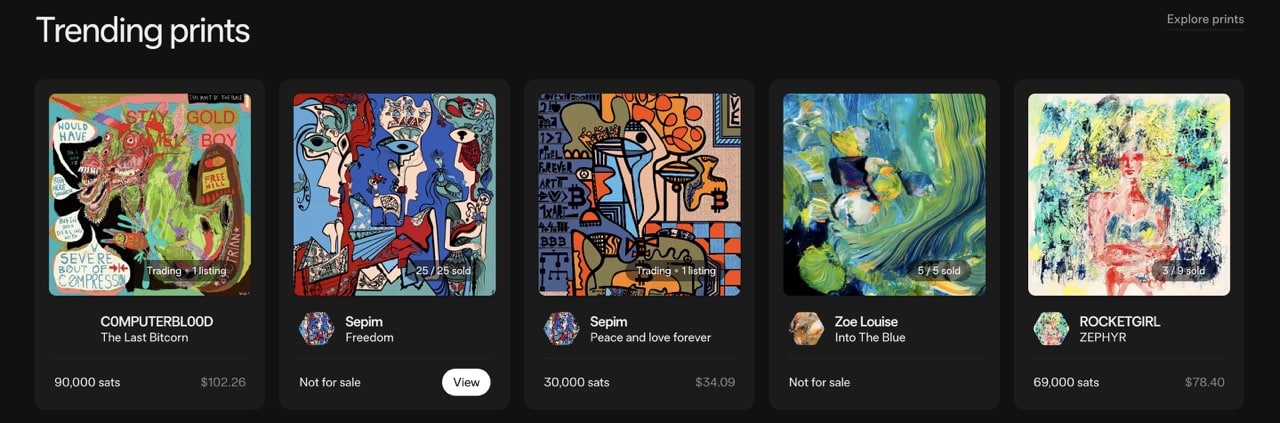
Bitcoin Ordinals is a protocol to create non-fungible tokens (NFTs) on the Bitcoin blockchain. It works by introducing a method to track individual satoshi coins, which are the smallest unit of Bitcoin, and attaching data to them to make each satoshi unique, turning it into an NFT. Fun fact: Satoshis are named after Bitcoin’s pseudonymous founder, Satoshi Nakamoto.
The Bitcoin Ordinals protocol was launched by Bitcore Core software developer Casey Rodarmor in January 2023. At its launch, Bitcoin Ordinals became so popular that the increased activity on the blockchain clogged the network and led to delayed transactions and gas fee spikes.
How Do Bitcoin Ordinals Work?
The smallest unit of Bitcoin is called a satoshi. In simple words, a satoshi is the cent to your dollar. Now, since Bitcoin does not have smart contract capabilities that would allow developers to create fungible and non-fungible tokens, just like the ones you see on Ethereum (ETH) or Solana (SOL), developers had to take an unconventional approach to tokenization of Bitcoin.
Enter Ordinals. To put it plainly, what is happening when you create a Bitcoin Ordinal is that you are taking a satoshi coin and inscribing or writing data on it to make it unique from other satoshi coins. It is like writing down your initials on a penny coin to distinguish it from other pennies in your pocket.
Now, here is a more technical breakdown of how Bitcoin Ordinal works:
Use Cases for Ordinals
How Bitcoin Ordinals Compare to Ethereum NFTs
The key difference between Bitcoin Ordinals and Ethereum NFTs, or NFTs on other smart contract blockchain platforms, is that the metadata of an ordinal is stored on the Bitcoin blockchain. The on-chain data makes ordinals immutable, meaning that no one can alter their metadata. In contrast, the metadata of NFTs on Ethereum, Solana, and other smart contract chains are stored on off-chain solutions such as the Interplanetary File System.
Here is a table to compare Bitcoin Ordinals vs. Ethereum NFTs:
| Feature | Bitcoin Ordinals | Ethereum NFTs |
| Blockchain | Bitcoin | Ethereum |
| Launch Year | 2023 | 2017 |
| Underlying Standard | No token standard. Data inscribed into Satoshi coins. | ERC-721 and ERC-1155 token standards |
| Data Storage | Data inscribed directly on-chain | Metadata is stored off-chain |
| Fungibility Impact | Uses individual satoshis to carry unique data, making them “non-fungible” | NFTs are unique |
| Smart Contract Support | Bitcoin does not natively support complex smart contracts | Full smart contract integration allows royalties, composability, and advanced DeFi integrations |
| Marketplaces | Emerging marketplaces like Ordinals Wallet, Gamma, Magic Eden (Bitcoin support added) | Mature marketplaces such as OpenSea, Blur, and Rarible |
| Adoption & Ecosystem | Early-stage adoption, niche collector, and experimental community | Wide adoption; multi-billion dollar NFT ecosystem |
| Transaction Costs | Variable based on Bitcoin block space competition | L1 gas fees vary, but L2 gas fees are cheap |
| Use Cases | Primarily collectibles, digital art, and experimental NFTs on Bitcoin | Collectibles, gaming assets, metaverse items, DeFi integrations, tokenized real-world assets |
| Security & Immutability | Extremely secure due to Bitcoin’s strong network and immutability | Secure but dependent on Ethereum network congestion, scalability, and off-chain storage reliability |
| Community View | Controversial. Some argue that Ordinals “clog” the blockchain with non-financial data | Generally accepted as a natural use of Ethereum’s smart contract capabilities |
How to Create and Trade Bitcoin Ordinals
Now that we have understood what are Ordinals Bitcoin, let’s go through an easy step-by-step guide on how to create Bitcoin Ordinals and trade them:
-
Get a Taproot-ready Ordinals wallet
Download and install an Ordinals-compatible Bitcoin wallet. Create a new wallet, set a strong password, and complete any onboarding prompts.
-
Back up your seed phrase securely
Write down your 12/24-word recovery phrase on paper. Never share it with anyone.
-
Enable Taproot and locate your bc1p address
In your wallet, ensure Taproot is enabled and find your Taproot receive address (it starts with “bc1p”). Use this address for inscriptions and transfers.
-
Fund the wallet with BTC for fees and trades
Buy or transfer a small amount of BTC to your Taproot address. You’ll need enough to cover gas fees for inscribing and any purchases or listings.
-
Prepare your content for inscription
Choose the file you want to inscribe (image, text, HTML, etc.). Keep file sizes small to control fees.
-
Pick an inscription method
Use a trusted inscription service such as Gamma or UniSat.
-
Set inscription options and fee rate
Upload your file, select the correct content type, and enter your Taproot receive address. Choose a network fee rate that balances speed and cost.
-
Send the payment and wait for confirmation
Approve the transaction from your wallet. After broadcast, wait for on-chain confirmation. You’ll receive an inscription ID once it’s finalized.
-
Verify your inscription on an explorer
Check the inscription ID on an Ordinals explorer to confirm the content and ownership. Save the ID and consider bookmarking the explorer page for future reference.
-
Connect your wallet to a Bitcoin Ordinals marketplace
Open a marketplace that supports Bitcoin Ordinals (e.g., Magic Eden, UniSat Market, Gamma) and connect your wallet.
-
List your inscription for sale
Select your inscription, set a price in BTC/sats, and create the listing. Review marketplace fees.
-
Complete a sale and manage proceeds
When a buyer purchases, the sale will settle on-chain. Confirm receipt of BTC in your wallet.
-
Buy an inscription safely
If you’re buying, connect your wallet, verify the inscription ID and content, and sign the transaction to complete the purchase. Wait for confirmation and confirm that the inscription appears in your wallet.
Bitcoin Runes Review
Bitcoin Rune is a protocol to create fungible tokens on the Bitcoin blockchain. Before we take this further, let’s briefly understand what fungible tokens are and how they differ from non-fungible tokens.
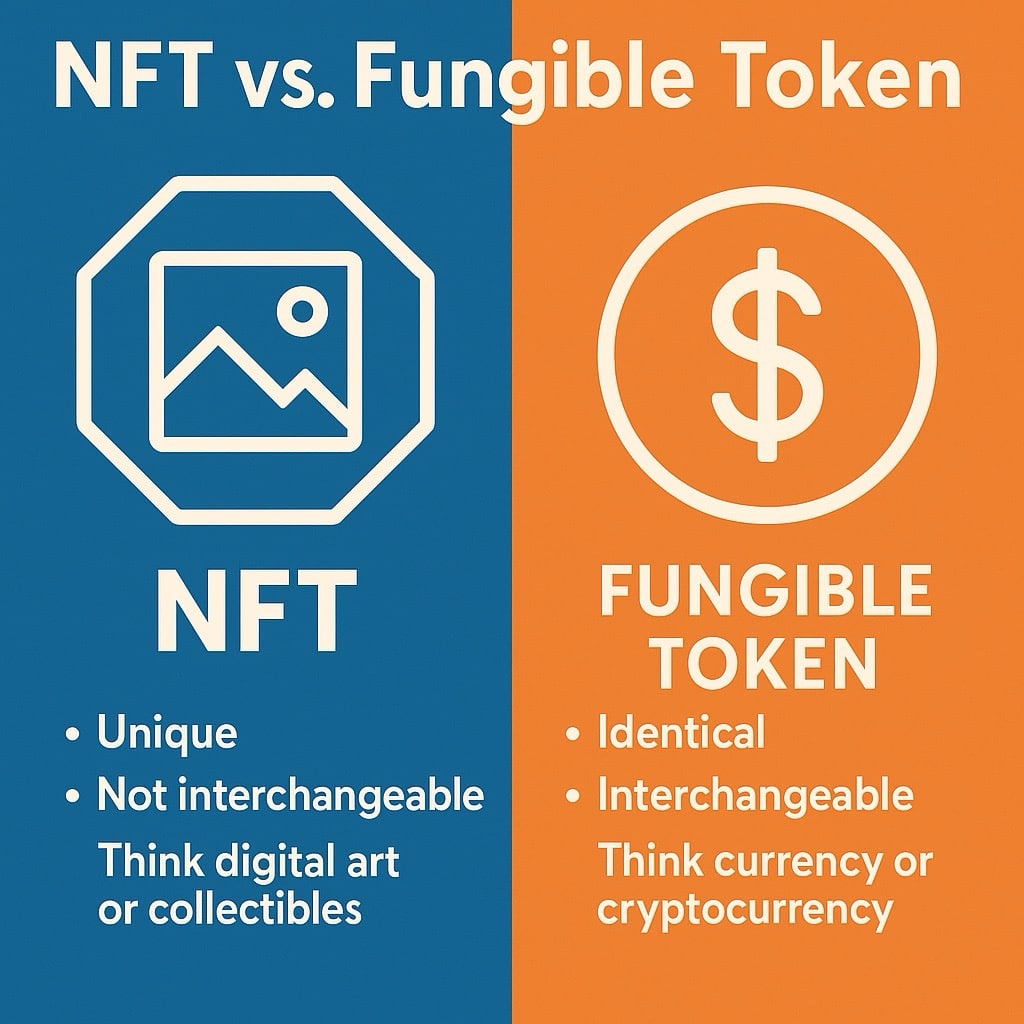
Fungible tokens are non-unique cryptocurrencies. For example, a BTC coin is fungible. Similarly, an ETH coin is also fungible and so is a $1 bill, because a $1 bill in New York with Adam is the same and replaceable with a $1 bill in Los Angeles with Mary. Using the same concept, 1 ETH on Adam’s MetaMask crypto wallet is the same as 1 ETH on Mary’s Coinbase crypto exchange account.
Non-fungible tokens, on the other hand, are unique, one-of-a-kind, and are not interchangeable. For example, if fungible tokens represent hundreds of white t-shirts in a shop, an NFT would be a white t-shirt with a celebrity’s autograph on it. The NFT is one-of-a-kind, unique, and is not interchangeable with the rest of the t-shirts.
Let’s get back to Bitcoin Runes.
About eight to nine months after the Bitcoin Ordinals Protocol was launched by developer Casey Rodarmor, he introduced the possibility of fungible tokens on the Bitcoin blockchain via a blog post. Rodarmor, founder of Bitcoin Runes, wrote,
I’m not sure creating a new fungible token protocol for Bitcoin is a good idea. Fungible tokens are 99.9% scams and memes. However, they don’t appear to be going away any time soon, similar to the way in which casinos don’t appear to be going away any time soon. Creating a good fungible token protocol for Bitcoin might bring significant transaction fee revenue, developer mindshare, and users to Bitcoin.
In April 2024, Rodarmor launched the Runes Protocol right after Bitcoin’s fourth halving event. To conclude the term Runes Bitcoin NFT is technically wrong as Runes Protocol is only used to create fungible tokens and not non-fungible tokens.
Bitcoin Runes Explained: How Do Bitcoin Runes Work?
Runes uses Bitcoin’s native unspent transaction output (UTXO) transaction model.
Understanding the UTXO model can be difficult, so here is a simplified analogy to the UTXO model. The UTXO model works like cash and change. When you owe the shopkeeper $8 you do not split the single $10 note to pay them. Instead, you give the $10 note and receive $2 in change.
Bitcoin’s UTXO works the same way. Let’s say we have two Bitcoin UTXOs (think of it as dollar bills): 0.2 BTC and 0.8 BTC. When you send 0.5 BTC to a friend, your wallet will use the 0.8 BTC UXTO. In the end, you will be left with your initial 0.2 BTC UTXO and 0.3 BTC UTXO (the change).
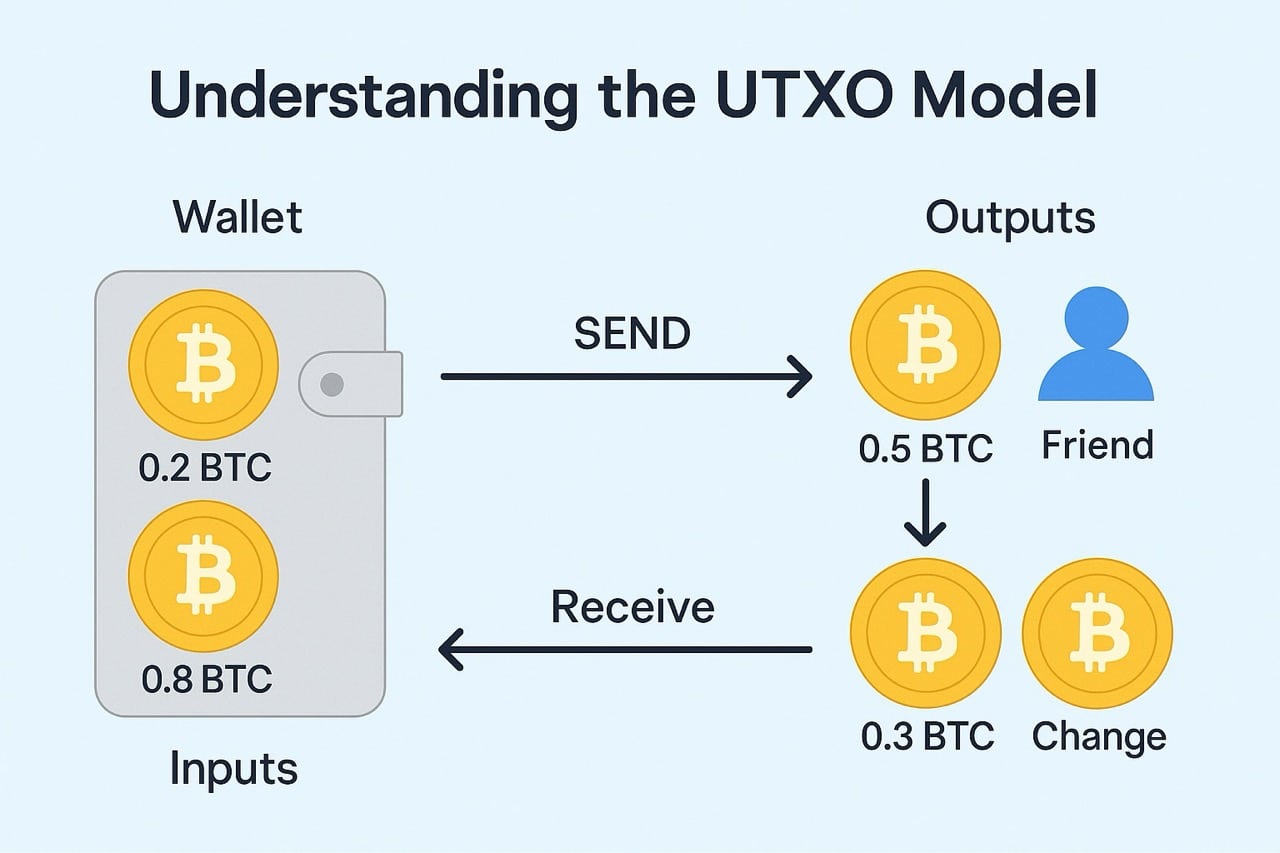
The Bitcoin Runes protocol uses this transaction model, where any number of Runes can be held by UTXOs. It is the use of the UTXO model that makes Runes fit more naturally into the Bitcoin Protocol.
In addition, Bitcoin Runes also uses the OP_RETURN script in Bitcoin transactions to store instructions. This field contains information about the Rune’s name, symbol, and quantity, among others.
How Bitcoin Runes Differ From BRC-20 Tokens?
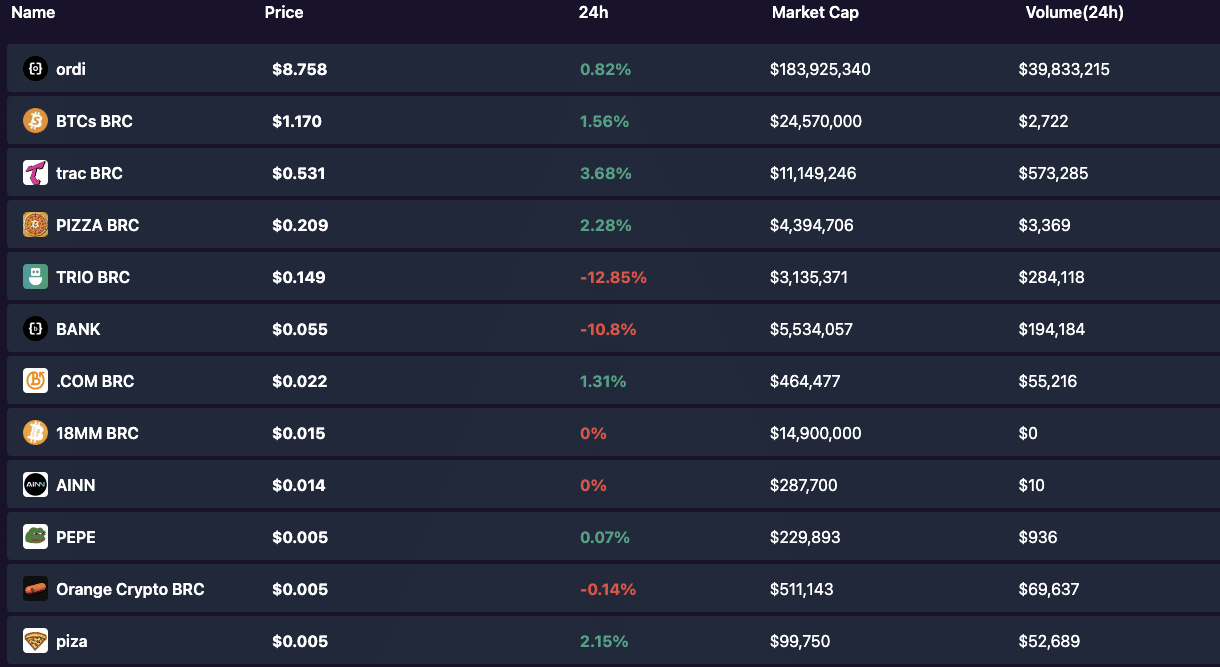
Runes is not the only fungible token standard on Bitcoin. Users can also create fungible tokens using the BRC-20 Bitcoin token standard.
What is the BRC-20 standard, you ask? BRC-20 is a method to create fungible tokens on the Bitcoin blockchain using the inscription technique. Bitcoin does not support smart contracts; therefore, BRC-20 is a Bitcoin smart contracts alternative to creating cryptocurrencies on the Bitcoin blockchain. The name for the BRC-20 token standard is inspired by the popular ERC-20 token standard on Ethereum.
The main difference between the two is the use of the UTXO model in Bitcoin Runes. In contrast, BRC-20 tokens are more closely related to Bitcoin Ordinals as they use the same inscription technique to bind data onto individual satoshis.
The use of the native UTXO transaction model of Bitcoin makes Runes a more efficient solution to create fungible tokens on Bitcoin. Meanwhile, BRC-20 has faced criticism for network congestion.
Use Cases For Bitcoin Runes
How to Create and Trade Bitcoin Runes
In this section, we present you with an easy step-by-step guide on how to create Bitcoin Runes and how to buy Bitcoin Runes:
-
Get a Bitcoin Runes Wallet
Download a wallet that supports Runes, like Xverse or UniSat, and set it up securely.
-
Add Some Bitcoin
Transfer a small amount of BTC into your wallet to pay for fees.
-
Create or Mint Runes
You can create (etch) your own Rune token by choosing its name and supply, or mint an existing Rune from the protocol.
-
Use a Runes Marketplace
Connect your wallet to a Bitcoin Runes marketplace (like UniSat) to buy, sell, or trade Rune tokens.
-
Confirm and Trade
Check the details, approve the transaction, and wait for the blockchain confirmation. Your Rune will show up in your wallet.
Bitcoin Ordinals vs. Runes: Key Differences
While both Bitcoin Ordinals and Bitcoin Runes were created by Casey Rodarmor, they serve very different purposes. Ordinals make it possible to create unique digital collectibles on Bitcoin, while Runes allow the creation of fungible tokens (all tokens are identical, like dollars or sats). Together, they expand Bitcoin’s role from just a currency into a platform for both NFTs and tokens.
Here is an easy-to-understand comparison table stating the differences between Bitcoin Ordinals and Runes:
| Feature | Bitcoin Ordinals | Bitcoin Runes |
| Type of Asset | Non-fungible (NFTs, collectibles) | Fungible (tokens, coins) |
| Protocol | Ordinals Protocol | Runes Protocol |
| Launched | 2023 | 2024 |
| Creator | Casey Rodarmor | Casey Rodarmor |
| How It Works | Inscribes unique data (images, text, code) on satoshis | Uses Bitcoin’s UTXO model to create interchangeable tokens |
| Main Use Cases | Art, music, digital collectibles, Bitcoin NFTs | Meme coins, altcoins, DeFi tokens, loyalty points |
| Marketplaces | Magic Eden, Gamma | UniSat, Rune marketplaces |
| Wallets | Xverse, Hiro Wallet, Ordinals Wallet | Xverse, UniSat |
Benefits and Challenges of Bitcoin Ordinals & Runes
Pros
-
Ordinals bring NFTs to Bitcoin, while Runes allow fungible tokens, opening new markets and use cases.
-
Both run directly on the Bitcoin blockchain, benefiting from its unmatched security and decentralization.
-
Inscriptions are fully stored on-chain, making them immutable and resistant to censorship.
-
Crypto wallets and marketplaces for Ordinals and Runes are rapidly expanding, improving accessibility for beginners.
-
Ordinals and Runes enable creators, developers, and communities to launch collectibles, meme coins, or DeFi tools on Bitcoin.
Cons
-
Heavy inscription and token activity can clog the Bitcoin blockchain, slowing transactions.
-
Demand for Ordinals and Runes often pushes transaction fees upward, making Bitcoin costlier to use.
-
Some Bitcoin purists argue these protocols distract from Bitcoin’s role as money.
-
Marketplaces and tools are still developing, so the user experience may feel complex for beginners.
-
Users must beware of fake Rune tokens or low-quality Ordinal projects.
Tips for Beginners Before Investing in Bitcoin Ordinals & Runes
Okay, now that we have gone through what Bitcoin Ordinals and Runes are all about, let’s go through some useful tips on Bitcoin Ordinals & Runes for beginners who wish to invest in Bitcoin fungible tokens and non-fungible Bitcoin Ordinals inscriptions.
Here are the top 10 tips for beginners before investing in Bitcoin Ordinals & Runes:
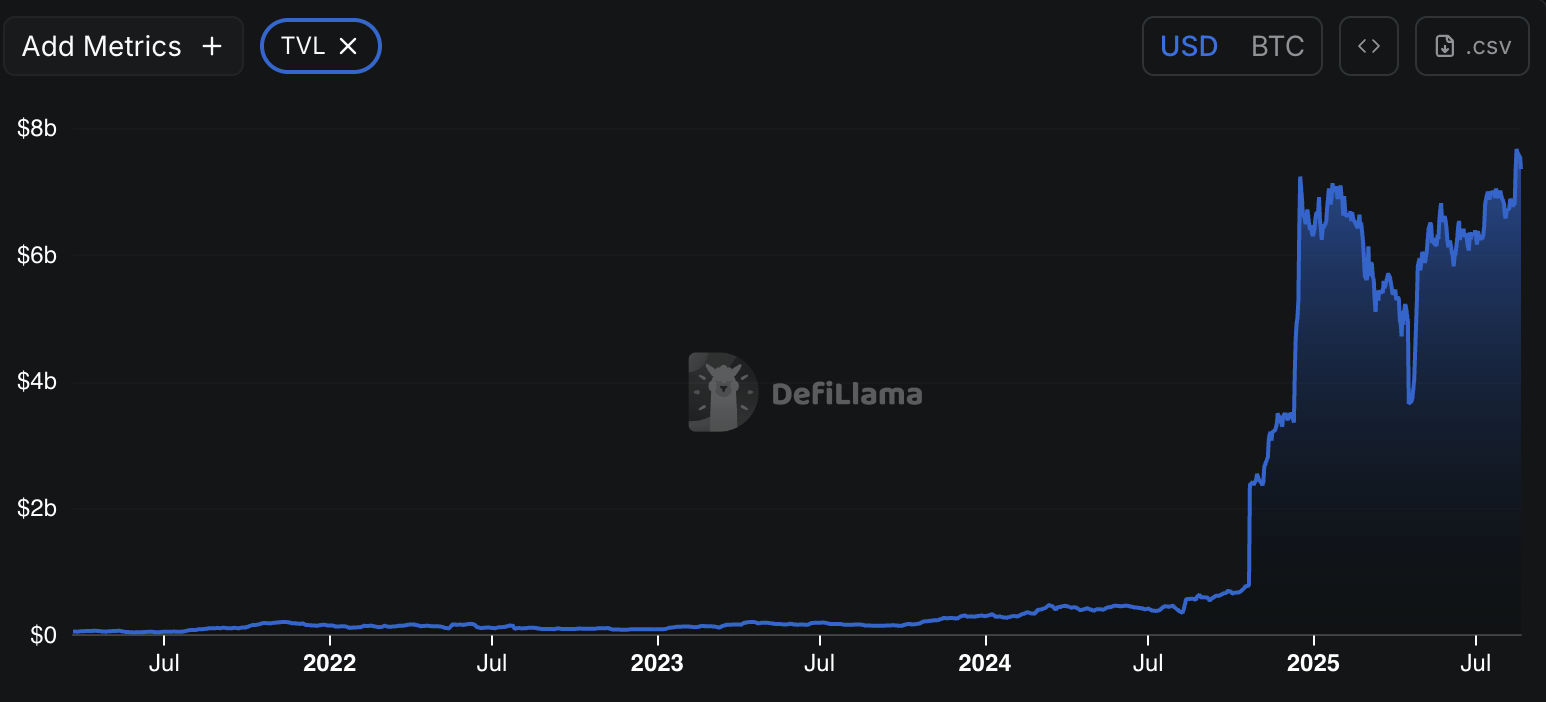
The introduction of Bitcoin Ordinals and Runes was seen as a transformational event for the Bitcoin blockchain. The two technologies could eventually pave the way for Bitcoin to be considered more than just a financial asset for payment and store-of-value. While Bitcoin does these two functions well and has earned itself global recognition for it, the blockchain still lacks the programmability that smart contract blockchains like Ethereum and Solana have. Bitcoin Ordinals and Bitcoin Runes have the power to usher in a new era for the Bitcoin blockchain, one which is commonly referred to as Bitcoin Finance or BTCFi. You can compare it to the initial coin offering (ICO) boom and the DeFi Summer that the Ethereum ecosystem experienced in 2017 and 2020, respectively, which saw thousands of new crypto projects issue their tokens on Ethereum, creating a multi-billion dollar decentralized finance (DeFi) ecosystem on top of Ethereum. Could we see the same happen on Bitcoin? If it does turn out to be that way, some BTCFi enthusiasts believe that the DeFi ecosystem on Bitcoin could be as renowned as the one on Ethereum and Solana, especially given Bitcoin’s status as the premier cryptocurrency of the world. We also can’t ignore the rise in Bitcoin’s TVL (Total Value Locked) since the beginning of 2025. A key catalyst for BTCFi could be an upgrade that looks to reintroduce the OP_CAT opcode, which is expected to increase the programmability of the Bitcoin blockchain and enable a new way to create fungible and non-fungible tokens on Bitcoin. A key hurdle blocking the growth of Bitcoin Ordinals, Bitcoin Runes, and OP_CAT is the controversy over the use of the Bitcoin blockchain. Bitcoin Ordinals and Bitcoin Runes have been criticized for shifting focus away from payments and store-of-value. Purists are against these innovations due to the side effects of their implementation, such as clogged networks, volatile gas fees, and slow transactions. However, supporters of Bitcoin Ordinals, Bitcoin Runes, BRC-20 tokens, and protocols like ORDI believe that they will play a crucial role in the sustainability of the Bitcoin blockchain by increasing the fees received by the Bitcoin mining community. Learn all about Bitcoin mining and how it works in our article. Bitcoin Ordinals and Runes push Bitcoin beyond payments into Bitcoin NFTs and Bitcoin fungible tokens. If you’re asking what Bitcoin Ordinals are or what Bitcoin Runes are, think of Ordinals as unique items made by Bitcoin inscriptions, and Runes as interchangeable tokens built for efficiency on UTXO. Beginners should start with a trusted Bitcoin Ordinals wallet or Bitcoin Runes wallet, and learn how to create Bitcoin Ordinals and how to buy Bitcoin Runes before using any BTC NFT marketplace. As the Ordinals protocol and Runes protocol mature alongside BRC-20 tokens, adoption should grow. DISCOVER: Bitcoin Ordinals is a method to create NFTs on the Bitcoin blockchain. The protocol takes a satoshi (the tiniest unit of BTC) and inscribes data (like an image or text) directly on-chain, making that satoshi a one-of-a-kind collectible. No, Bitcoin Ordinals and Rune are not the same. Bitcoin Ordinals is a method to create non-fungible tokens on the Bitcoin blockchain, which are unique and one-of-a-kind. Bitcoin Runes is a method to create fungible tokens on the Bitcoin blockchain that are interchangeable. No. ERC-721 is an Ethereum NFT standard. Ordinals live on Bitcoin, use inscriptions, and don’t rely on Ethereum-style smart contracts or ERC standards. Popular, beginner-friendly options for both include Xverse and UniSat. Always verify current support before funding. Bitcoin Ordinals and Runes have courted controversy because they have caused gas fees to spike and transactions to slow on the Bitcoin blockchain due to increased on-chain activity. Not much. A modern crypto wallet handles most steps. Learn basics, practice secure wallet usage, and do your research if you plan on investing. Established in 2013, 99Bitcoin’s team members have been crypto experts since Bitcoin’s Early days. Weekly Research Monthly readers Expert contributors Crypto Projects Reviewed
Future of Bitcoin Ordinals & Runes
Conclusion: Ordinals & Bitcoin Runes
FAQs:
What are Bitcoin Ordinals in simple terms?

Is Bitcoin Ordinals and Runes the same?
Is Bitcoin Ordinal ERC-721 token?
Which wallets support Bitcoin Ordinals and Runes?
Why are Ordinals and Runes controversial in the Bitcoin community?
Do I need technical knowledge to use Ordinals or Runes?
References

Why you can trust 99Bitcoins