




In This Article
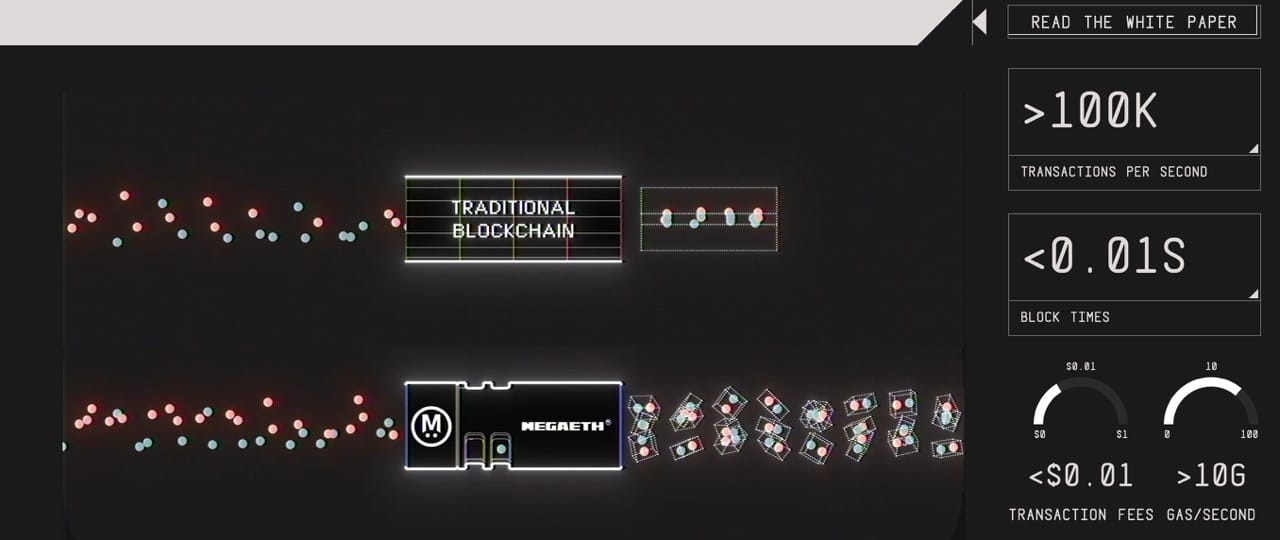
MegaETH calls itself the first real-time blockchain, designed to help Ethereum scale by processing transactions off-chain with near-instant finality and a target of over 100,000 TPS. Instead of waiting seconds for confirmation, MegaETH wants on-chain actions to feel as fast as using the internet we know today.
Do you want the answers to “What is MegaETH?” In this guide, we’ll walk through how it works, why it stands out from other Ethereum Layer 2s, what the MEGA token does, and all you need to know before mainnet launches.
Quick Facts About MegaETH
| Field | Summary |
| Type | High-performance Ethereum Layer 2 |
| Purpose | Instant transaction execution, high throughput, and abundant compute capacity |
| Transaction Speed | Targeting 100,000+ transactions per second (TPS) |
| Fees | Ultra-low fees compared to Ethereum L1 |
| Compatibility | Fully EVM compatible |
| Security | Ethereum settlement, EigenDA data, node validation |
| Use Cases | High-frequency DeFi, gaming, social, messaging, and AI agents. |
| Architecture | Modular architecture with node specialization using EigenDA [EIGEN] for data availability |
| Team | MegaLabs team backed by Dragonfly, Vitalik Buterin, Joseph Lubin, others. |
| Token Information | MEGA token, 10 billion token supply, public auction at a ceiling price of $0.0999 per token |
Key Takeaways
- MegaETH is an optimistic Ethereum Layer 2 that aims to be the first real-time blockchain with sub-10ms transaction finality and 100,000+ TPS.
- It uses a modular design with node specialization, mini-blocks, parallel execution, Ethereum for settlement, and EigenDA for data availability to reach high performance.
- The MEGA token (10 billion supply) powers gas, staking, governance, and ecosystem incentives, with over half reserved for KPI-based staking rewards.
- MegaETH is EVM compatible, so developers can deploy Solidity dApps using familiar Ethereum tools while targeting high-frequency DeFi, gaming, social, and AI use cases.
- Mainnet is planned for Q4 2025, making MegaETH a promising but still experimental Layer 2 that users should approach with careful sizing and good security practices.
What Is MegaETH?
MegaETH is an optimistic Ethereum Layer 2 rollup that aims to provide transaction processing within 10 milliseconds and network throughput over 100,000 TPS. As per MegaETH team,
Sophisticated fully on-chain dApps such as autonomous worlds require high tick rates (e.g., block intervals of less than 100 milliseconds) to simulate real-time combat or physics. Additionally, on-chain high-frequency trading would not be possible unless orders can be placed or canceled within 10 milliseconds … With our technological advancements, it is time to build a real-time blockchain to unlock these potentials.
As a layer 2 rollup, MegaETH offloads Ethereum transactions to a secondary layer for faster execution at cheaper fees. The rollup makes improvements on the existing L2 architecture by introducing 10-millisecond mini-blocks and implementing stateless validation, parallel execution, and node specialization, all of which allow high throughput, faster transactions, and greater accessibility to node operations.
Architecture Overview
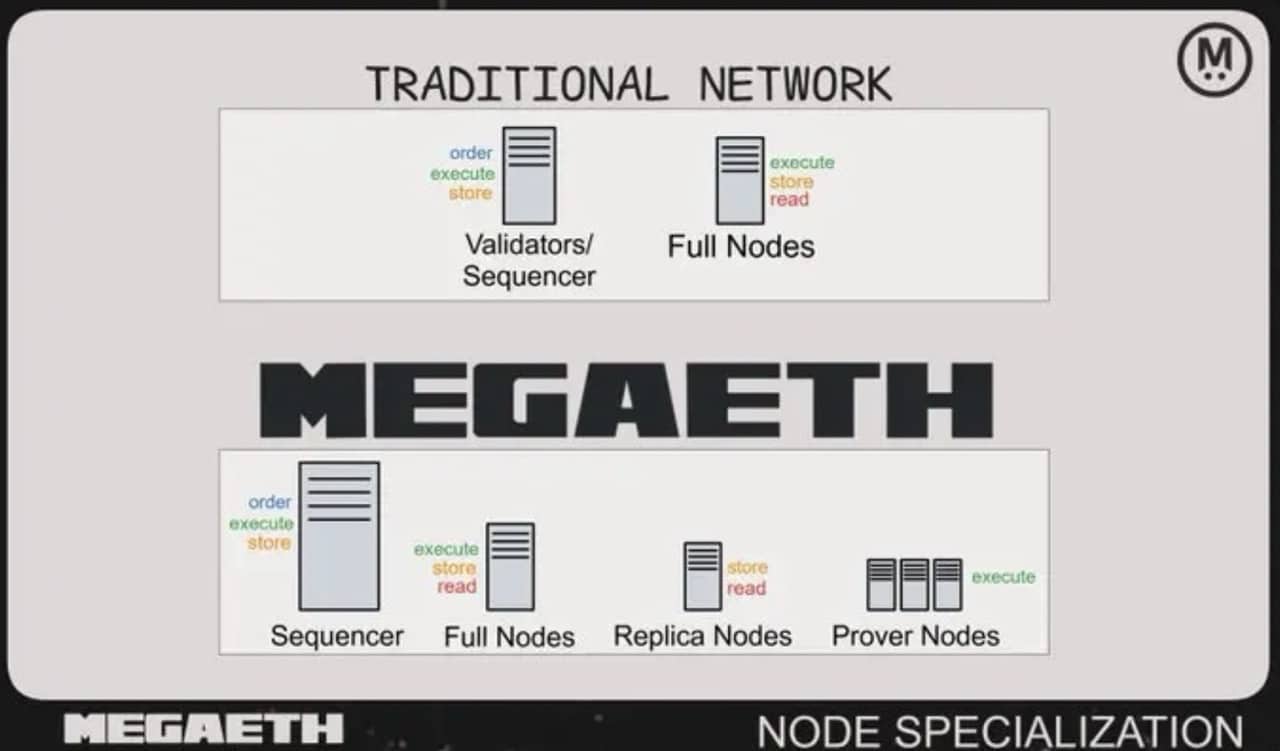
MegaETH is developed using a modular architecture where network components have specialized roles instead of asking every node to do everything. Nodes on MegaETH are categorized into four types: sequencers, provers, full nodes, and replica nodes. Their functions are as follows:
According to MegaETH, the main advantage of node specialization is the ability to set the hardware requirements for each type of node independently. Such a setup ensures that the blockchain remains highly decentralized, as hardware requirements for certain nodes are low and accessible. For example, you can run a replica node on your laptop. Vitalik Buterin says,
It’s crucial for blockchain decentralization for regular users to be able to run a node.
MegaETH Labs and Foundation
MegaETH was co-founded by Yilong Li, Lei Yang, and Shuyao Kong in 2023. The project is supported by a company called MegaLabs, which is the core developer firm behind the Ethereum L2 project. In 2024, MegaLabs raised $20 million in a seed round led by Dragonfly Capital. Notable participants included Ethereum co-founder Vitalik Buterin, Consensys CEO Joseph Lubin, and EigenLayer creator Sreeram Kannan.

Co-founders Yilong Li and Lei Yang hold PhD degrees in computer science from Stanford University and MIT, respectively. Co-founder Shuyao Kong graduated from Harvard University with an MBA and worked at MetaMask developer Consensys for over eight years before developing MegaETH with Li and Yang.
In 2025, the MegaETH Foundation was set up as a non-profit entity to hold treasury assets such as ETH and MEGA tokens, promote ecosystem development, and oversee the public MEGA token sale. The MegaETH Foundation was allocated 7.5% of MEGA’s total supply. Over time, governance is expected to shift toward token holders, but the foundation currently plays a central coordinating role.
Latest MegaETH Developments
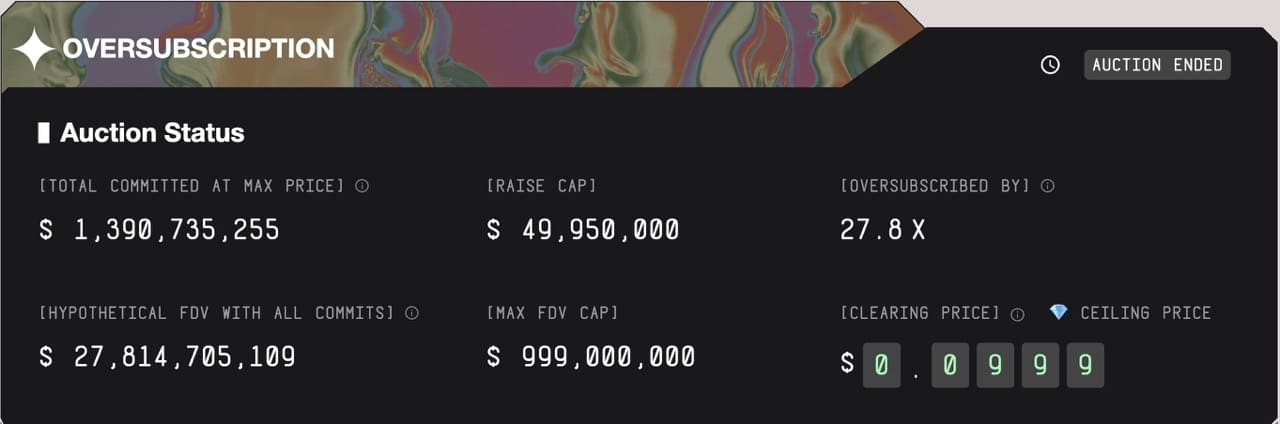
The most recent milestones include the launch of a public testnet, the introduction of the USDm stablecoin with Ethena, and a MiCA-compliant public token sale that raised $49.95 million by auctioning 5% of the total supply or 500 million MEGA tokens.
Readers interested in tracking MegaETH updates can follow the official website, blog, documentation portal, GitHub organisation, and credible news outlets. When researching about MegaETH’s performance, always check whether numbers refer to devnet stress tests, public testnet results, or future expectations after mainnet launch.
Token, Symbol & MegaETH Tokenomics
MEGA is the native token of the MegaETH ecosystem and has a fixed total supply of 10 billion tokens. Around 5% is being sold through an English auction-style public sale at a ceiling price of $0.0999 per token. The MEGA public sale was oversubscribed by over 27 times.
Another 5% is reserved for The Fluffle NFT holders and related community rounds. Fluffle NFTs were soulbound (non-transferable) tokens minted on Ethereum. 10,000 Fluffle NFTs were sold to whitelisted crypto users in February 2025 for 1 ETH per token with the promise of future MEGA token allocation.
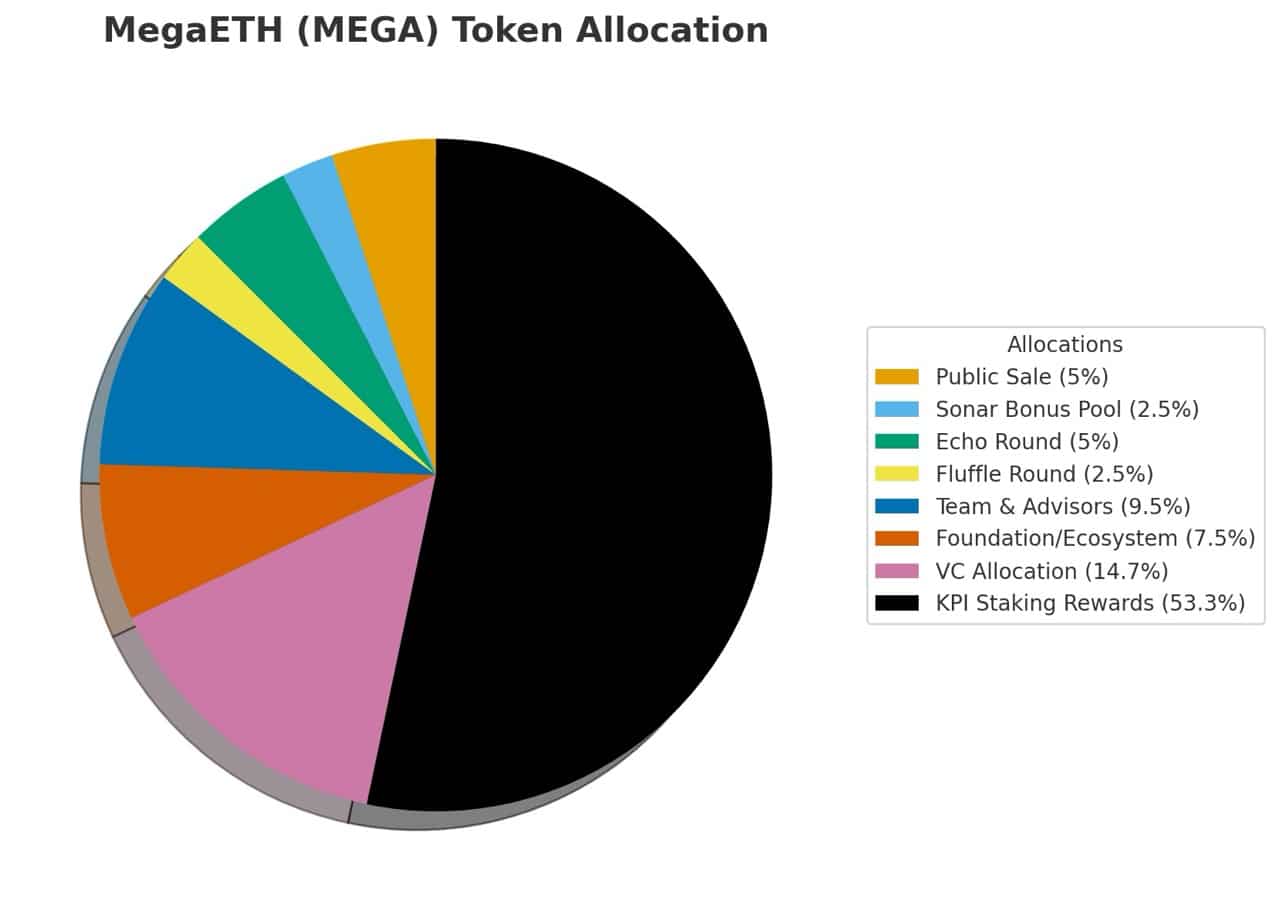
A large 53.3% allocation is earmarked for KPI based staking rewards that unlock over time as the network hits growth and performance targets.
The remaining supply is split between team and advisors, the foundation or ecosystem reserve, and investors such as VCs and community sale participants. MEGA is planned to be used for gas fees on MegaETH, staking for sequencer rotation and security, governance voting, and incentives like builder grants or user rewards.
How MegaETH Works?
As an Ethereum layer 2 scaling solution, MegaETH provides an off-chain channel to process transactions. Once the transactions are finalized, their data is published on the Ethereum mainnet to ensure immutability (the state of being unchangeable).
Layer 2 blockchains like MegaETH help crypto users sidestep network congestion and high transaction fees on the base Ethereum layer. MegaETH builds on layer 2 innovation and takes it one step further by creating a “real-time blockchain.”
Real-Time Execution Layer
MegaETH is developing a real-time blockchain capable of settling transactions in less than 10 milliseconds, even under heavy load. According to the MegaETH whitepaper,
With our technological advancements, it is time to build a real-time blockchain to unlock these potentials. More formally, a real-time blockchain is a blockchain that is capable of processing transactions as soon as they arrive and publishing the resulting updates in real-time.
MegaETH aims to achieve real-time transaction execution using four techniques:
- Node specialization: MegaETH boosts network performance by allowing network nodes with different hardware configurations to specialize in specific tasks.
- Hyper-optimized execution: MegaETH optimizes its infrastructure to function at hardware limits. For example, MegaETH’s sequencer node has enough RAM to hold the entire blockchain state, which reduces network latency.
- Mini-blocks: MegaETH has special blocks called mini-blocks that use fewer resources than normal blocks, allowing even network participants with limited hardware and connectivity to process its data. Mini-blocks are produced every 10 milliseconds.
High Performance and Scaling
MegaETH is an ultra-high-performance blockchain that aims to process over 100,000 transactions per second.
In addition to node specialization, optimized execution, and mini-blocks, which we talked about earlier, MegaETH looks to offer high performance and scalability by outsourcing security and censorship resistance tasks to base layers such as Ethereum and EigenDA, thereby freeing up MegaETH’s resources to focus on providing high throughput.
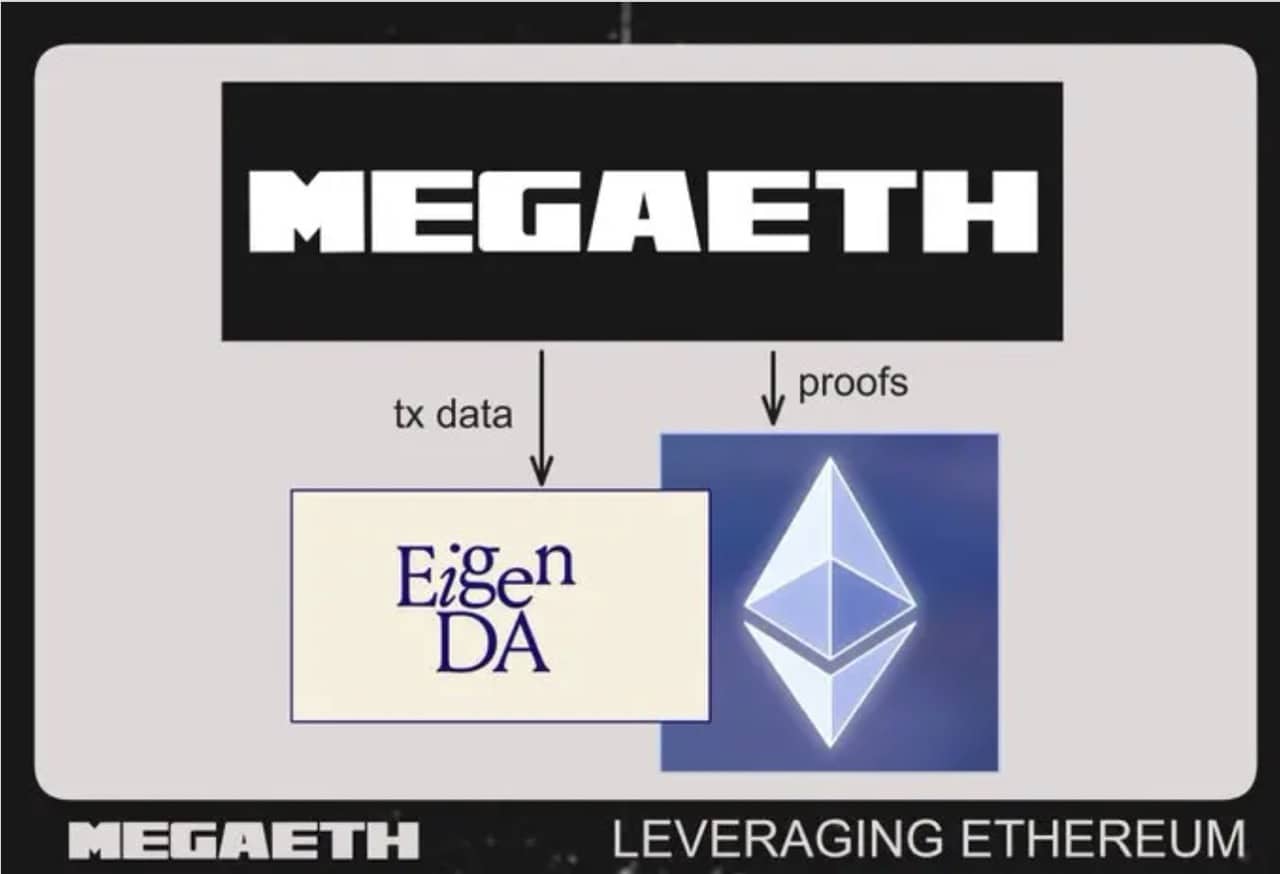
Ethereum is used as a database to post proofs of transactions executed on the MegaETH network, thereby providing crypto users with anti-censorship guarantees that their transactions can not be altered or changed.
EigenDA is used as a data availability layer to record all MegaETH transaction data so that anyone can verify the state changes made on MegaETH. Furthermore, EigenDA ensures that replica nodes and full nodes can keep up with the chain’s state.
Additionally, the use of parallel execution, where two or more transactions are executed simultaneously, also allows the MegaETH network to scale.
Compatibility with Ethereum
One of MegaETH’s key promises is that it stays close to Ethereum rather than inventing a completely new development stack. Developers can write smart contracts in Solidity, use common frameworks, and rely on familiar tools like MetaMask or other EVM-compatible wallets. This lowers the learning curve and makes it easier to port existing projects.
Testnet Guide
If you want to experiment with MegaETH before mainnet, the public testnet is the place to start. You typically connect using an EVM wallet like MetaMask, add the MegaETH testnet RPC details, and request testnet ETH from the official faucet, which is a special token used only in testnets.
Once connected, you can send test transactions, deploy simple contracts, and use the testnet explorer to check block times, gas usage, and transaction status. Remember that testnet coins have no real value, so this is a safe sandbox for learning and experimenting
Mainnet Launch Date Tracker
At the time of writing, MegaETH has not yet launched its mainnet. The team has shared a roadmap that targets a Q4 2025 mainnet release, subject to successful testnet performance and security audits. Timelines in crypto often slip, so it is better to treat this as a goal rather than a fixed date.
To track the launch, follow official channels such as the MegaETH website, X account, and blog posts.
Airdrop Overview
MegaETH has taken a different path from many chains that rely heavily on points programs. 5% of MEGA tokens are allocated to holders of The Fluffle NFT. These NFTs were sold to select developers and early supporters and are non-transferable. Another 5% or 500 million MEGA tokens were sold via public auction in 2025 for a price of $0.0999 per token.
A huge chunk, 53.3% of the total supply, or 5.33 billion, is reserved for staking rewards. The rest is distributed among the team, advisors, investors, and the MegaETH Foundation.
NFTs & Creator Ecosystem
The Fluffle is the flagship NFT initiative on MegaETH, playing a key role in token distribution and community building. Each soulbound NFT represents a long-term commitment to the network and may receive MEGA allocations over time as the ecosystem grows. Holders are usually early supporters, builders, and active community members rather than speculators flipping JPEGs.

Beyond The Fluffle, MegaETH is positioning itself as a home for high-performance creator projects such as real-time games, interactive art, and social experiences that need fast block times. With sub-second settlement, NFTs can power more dynamic content like live auctions, in-game items, and digital collectibles.
Key Features of MegaETH
MegaETH is built to feel fast, cheap, and familiar for anyone already using Ethereum. Here are the core features in simple terms:
- Real-time execution – Targets near-instant transaction processing.
- 10 millisecond block production – Special blocks called mini-blocks are created on MegaETH every 10 milliseconds.
- Parallel execution – Runs many transactions at once to boost throughput.
- High throughput – Aims for 100,000+ transactions per second.
- Modular – Uses Ethereum for transaction settlement and EigenDA for data availability.
- Node specialization – Network nodes with different hardware configurations specialize in different tasks.
- Full EVM compatibility – Works with Solidity and standard Ethereum-based tools.
Explorer, RPC & Tooling
MegaETH provides an official explorer where you can view transactions, blocks, gas usage, and network performance statistics in real time. You can use it to confirm that a transaction was included in a block, check how long it took, and see which smart contracts it interacted with. It is also a handy way to learn what types of dApps are being deployed on the network.
RPC endpoints on MegaETH are access points that let crypto wallets and dApps talk to the MegaETH blockchain. Most users never have to configure them manually because wallets connect automatically, but it’s still good practice to understand the underlying blockchain technology you’re using.
In terms of tooling, several infrastructure providers already support the MegaETH testnet. Developers can build using familiar stacks like Hardhat, Foundry, and indexers that integrate EigenDA-powered data. For beginners, the key comfort is that MegaETH tries to plug into the existing Ethereum tooling world instead of creating a completely new environment.
Bridges and Interoperability
As a Layer 2, MegaETH relies on bridges to move assets like ETH, stablecoins, and blue-chip tokens between the Ethereum mainnet and its own network. The project’s documents explained that the connection between MegaETH and Ethereum is made through a canonical bridge. Third-party bridges may also appear, which may offer MegaETH interoperability with Ethereum, other layer 2 networks such as Optimism, Arbitrum, and Base, and foreign ecosystems such as Solana and Bitcoin.
When bridging, beginners should always start with small test transfers, wait for clear confirmations on both chains, and avoid relying on unverified contracts. Understanding finality is important: optimistic designs may have challenge periods, even if UX looks instant. For bringing in stablecoins or blue-chip assets, follow official documentation and only trust routes that are clearly endorsed by MegaETH and reputable issuers.
Validators/Sequencers, Staking, and Security
Transaction processing on MegaETH is performed by the sequencer node. MegaETH currently uses a single central sequencer model for maximum performance, with plans to decentralize sequencing over time. The sequencer node is responsible for ordering and executing transactions on the MegaETH blockchain and publishing the blocks on EigenDA. It is also responsible for posting the proofs of the transactions on Ethereum. Meanwhile, prover nodes, using the stateless validation scheme, validate blocks in the background.
According to MegaETH, running a prover node costs pennies per hour on cloud infrastructure, or can be done on modest hardware at home, thanks to the stateless validation scheme, which removes the need for any node to store state data. Meanwhile, MegaETH’s sequencer is described as a “monster machine that would be near-impossible to run residentially” with 100 Cores, 1-4 TB Memory, and 10 Gbps Network.
As a proof-of-stake blockchain, staking is expected to form a major part of MegaETH’s security once its mainnet network is launched. According to official documents, when rotational sequencers are introduced, each sequencer node will be required to stake a certain number of MEGA tokens to become eligible to validate and process transactions.
MegaETH’s token whitepaper mentioned security audits by firms such as Spearbit and Sherlock, and highlighted bridge security and potential maximum extractable value (MEV) risks as key focus areas.
Ecosystem Map
Even before mainnet, MegaETH has started attracting an ecosystem of projects across DeFi, blockchain gaming, social, and AI. You’ll already find early DEXs, lending protocols, perps platforms, creator tools, and consumer apps experimenting with its real-time architecture. As the network matures, this mix should grow into a full stack of finance, culture, and infrastructure.

Mega Mafia is MegaETH’s flagship accelerator for ecosystem growth. Builders who want to push this new generation blockchain to its limits can apply to Mega Mafia’s programs, which support teams with funding and hands-on help from the core ecosystem. Examples of early Mega Mafia projects include:
- Valhalla – A perpetual decentralized exchange (DEX) aiming for centralized exchange-level volumes and user experience while tapping Ethereum liquidity.
- Hunch – A mobile-first prediction app that turns real-time micro-trends into fast-resolving markets.
- Aeon – A “paste anything & monetize” platform that makes any content composable and paywalled in one click.
Benefits of MegaETH
MegaETH’s main benefit is that it tries to combine Ethereum’s security with user experiences that feel as fast as Web2 apps. This opens the door for use cases that are hard or impossible on slower chains. At the same time, its EVM compatibility and ecosystem programs make it attractive to developers and early users.
For Developers
For developers, MegaETH offers the chance to build apps that feel as responsive as mainstream web apps while still using Ethereum tooling. High throughput and low latency make it easier to design complex DeFi protocols, on-chain games, and AI agents that need constant state updates. Larger contract size limits and more affordable data availability also provide more room for advanced logic and richer user experiences.
Developers can reuse existing Solidity code, integrate with familiar wallets, and tap into ecosystem grants and KPI based staking rewards. Early builders may also benefit from visibility and potential token incentives as the network grows.
For Users
For everyday users, MegaETH promises faster confirmations and lower fees compared with many existing chains. Sending a transaction should feel almost instant, which can make trading, gaming, and social interactions far more enjoyable.
At the same time, users need to be aware of extra risks that come with any new Layer 2, particularly around bridges and new DeFi protocols. It is wise to start with small amounts, use canonical (native) bridges, and stick to audited or well-reviewed dApps. Think of MegaETH as a high-speed test track where the potential is huge, but safety practices matter more than ever.
For Businesses
For businesses, MegaETH could unlock new kinds of financial products, in-game economies, and real-time data services that are difficult on slower networks. Ultra-fast settlement can reduce risk for market makers and exchanges, while native stablecoins like USDm and future institutional integrations may help with compliance and accounting.
Enterprises do need to weigh sequencer centralization and the complexity of MegaETH’s architecture. They will also have to plan for integration with existing custody, KYC, and reporting tools to stay on the right side of compliance.
Use Cases of MegaETH
MegaETH is built to make certain on-chain ideas actually work at scale. Its speed and low fees open up use cases that are either painful or impossible on slower blockchains.
- High-frequency DeFi trading – Perps, CLOB DEXs, and advanced strategies that need real-time prices and instant order updates.
- Stablecoin payments and microtransactions – USDm-powered apps for tiny, frequent payments, pay-per-use services, and streaming money.
- Real-time games and autonomous worlds – On-chain games and “autonomous worlds” with sub-second ticks and live combat or physics.
- AI agents and automated strategies – Bots and agents that react instantly to on-chain data and real-time oracle feeds.
- Social, creator, and consumer decentralized applications – Social feeds, prediction apps, and creator tools where interactions, tips, and rewards happen in real time.
- Next-gen financial infrastructure – Real-time settlement rails that aim to match or beat centralized venues while staying fully on-chain.
MegaETH vs. Other Ethereum Layer 2s
In this section, we compare the upcoming MegaETH blockchain with the established Ethereum layer 2 chains such as Arbitrum, Optimism, and Base.
| Feature | MegaETH | Arbitrum One | Optimism Mainnet | Base |
| Type | High-performance optimistic L2 with EigenDA DA | Optimistic rollup on Ethereum | Optimistic rollup on Ethereum | Optimistic rollup on Ethereum |
| Native Token | MEGA | ARB | OP | None |
| Settlement layer | Ethereum L1 | Ethereum L1 | Ethereum L1 | Ethereum L1 |
| Data availability | Transaction data posted on EigenDA | Posts calldata to Ethereum | Posts calldata to Ethereum | Posts calldata to Ethereum |
| Target throughput and latency | 100k+ TPS, 10 millisecond blocks | Thousands of TPS, second-level blocks | Thousands of TPS, second-level blocks | Thousands TPS, 2s blocks |
| EVM compatibility | Full EVM plus extensions | Full EVM | Full EVM | Full EVM |
| Sequencer model | Single powerful sequencer, planned rotation | Centralized sequencer, roadmap to decentralize | Centralized sequencer | Centralized sequencer |
Is MegaETH Secure?
MegaETH inherits security from Ethereum for settlement and from EigenDA for data availability, while also implementing node specialization to allow so many more people with limited hardware to verify the chain. Such a setup not only makes MegaETH secure but also makes it more decentralized and less susceptible to coordinated attacks.
The MegaETH team has stated that it has audited its code through firms such as Spearbit and Sherlock and is planning bug bounties and monitoring as part of its launch stack.
MegaETH has listed bridging vulnerabilities, sequencer centralisation, and the complexity of its new generation architecture as key risks to its security. However, until the MegaETH mainnet is live and battle-tested, it should be considered higher risk than more established L2 chains.
Conclusion
MegaETH is an Ethereum scaling project that isn’t trying to reinvent the wheel. Instead, it takes a research-driven approach, using rigorous performance benchmarking to identify where classic blockchain designs can be optimized. The goal is clear: push past 100,000 TPS and move toward sub-10 millisecond transaction finality.
Expectations are high, especially after the MEGA token public sale was oversubscribed by more than 27 times. Still, we’ll need at least a year or two of real-world usage to judge how the network performs in practice. Looking ahead, MegaETH’s roadmap to becoming the first real-time Ethereum rollup includes ambitious targets like 10+ gigagas per second and 1ms block times. MegaETH mainnet launch date is set for early December.
DISCOVER:
- Crypto Exchange Promos & Discounts
- Crypto Wallet Promos & Discounts
- Ethereum Price Prediction for 2025-2030
- How to Buy Ethereum in 2026
- What is x402 Protocol? A Beginner’s Guide
- What Is Monad Crypto? Features & Why It Matters
FAQs:
Where can I follow the latest MegaETH developments?

Follow the official MegaETH website, X (Twitter) account, blog, docs, and GitHub. You can also track major announcements via reputable crypto news sites.
How do I access the MegaETH testnet?
Add the MegaETH testnet RPC to an EVM wallet, then use the official faucet to claim testnet ETH and start sending transactions or deploying contracts.
When is the MegaETH mainnet launch date?
The team is targeting a MegaETH mainnet launch date sometime in early December, subject to testnet performance and security audits. Treat this as a roadmap goal, not a guaranteed date.
What is the MegaETH token, its symbol, and its tokenomics?
MEGA is MegaETH’s native token with a fixed 10 billion supply. Allocations cover public sale, Fluffle NFTs, staking rewards, team, investors, and the MegaETH Foundation.
Is there a MegaETH airdrop and how do I qualify?
There’s no open public airdrop program. So far, 5% of MEGA is allocated to The Fluffle NFT holders and related early community participants.
What is MegaETH Labs and how is the ecosystem funded?
MegaETH Labs is the core development company behind MegaETH. The ecosystem is funded through venture backing, the MEGA token sale, and large allocations for staking and builder incentives.
Where can I buy MegaETH tokens?
MEGA is sold through the official public sale and may later be listed on centralized or decentralized exchanges. Always follow official links and avoid unverified “MEGA” tokens.
References
- National Institute of Standards and Technology. “Blockchain.” NIST, https://www.nist.gov/blockchain.
- Sampath, Jagath, and Lee Reiners. “Tokenomics: Crypto Asset Valuation, Token Design, and the Development of Blockchain Networks.” The FinReg Blog (Duke University School of Law), 16 Nov. 2018, https://sites.duke.edu/thefinregblog/2018/11/16/tokenomics-crypto-asset-valuation-token-design-and-the-development-of-blockchain-networks/.
- Reserve Bank of Australia. “Stablecoins: Market Developments, Risks and Regulation.” RBA Bulletin, Dec. 2022, https://www.rba.gov.au/publications/bulletin/2022/dec/pdf/stablecoins-market-developments-risks-and-regulation.pdf.
- MegaLabs. “MegaETH: Unveiling the First Real-Time Blockchain.” MegaETH, https://www.megaeth.com/research
- Superior Performance Limited. MICA Crypto-Asset White Paper – MEGA Token. MegaETH, 24 Sept. 2025, https://static.megaeth.com/MEGA%20MiCA%20Whitepaper.pdf

Why you can trust 99Bitcoins
Established in 2013, 99Bitcoin’s team members have been crypto experts since Bitcoin’s Early days.
Weekly Research
100k+Monthly readers
Expert contributors
2000+Crypto Projects Reviewed