




In This Article
The cryptocurrency market continues to evolve at a breakneck pace, often outperforming traditional equities in terms of returns. While the S&P 500 has provided steady growth for investors, the booming crypto market has delivered returns that have turned everyday individuals into millionaires.
This difference shows why so many people are looking for reliable methods to make money in crypto. For those who follow the right strategies and stay diligent, the chances of achieving significant financial success are remarkably high.
Unlike traditional stocks, which are often tied to established companies, cryptocurrencies represent a frontier of innovation. They provide opportunities to invest early in transformative technologies like blockchain, DeFi, and NFTs.
The top crypto strategies for 2026 involve leveraging these advancements while minimizing risks, making this article essential for anyone seeking to explore how to get rich off crypto.
What can you expect from this guide? We will break down proven methods to make money in crypto, looking into multiple strategies across different industries in the crypto space.
It doesn’t matter if you’re new to the crypto scene or a seasoned pro—there’s something here for everyone. We’ll cover everything from staking and trading to uncovering up-and-coming projects, giving you the tools and insights you need to succeed as a crypto investor in 2026.
How to Get Rich Off Crypto: Summary
This guide lays out the exact steps you can take to learn how to get rich in crypto. We’ll walk you through how to make the most of the crypto market in 2026. Whether it’s investing in presale coins, staking, or trading, we’ll show you strategies that can help you grow your money.

You’ll also learn why spreading your investments across areas like DeFi and NFTs is smart and how to stay safe while doing it. From presale coins to long-term strategies, there’s no shortage of ways to explore how to get rich in crypto
Whether you’re new to crypto or have been around for a while, this guide will give you straightforward tips to help you succeed.
Key Highlights
- Get in Early: Investing in presale crypto coins gives you the chance to buy tokens at a discount, which could lead to big returns as projects grow.
- Proven Strategies: Staking, trading, and holding are all ways to make money with crypto, depending on your goals and risk tolerance.
- Inspiring Stories: People like Glauber Contessoto (Dogecoin Millionaire) and Ansem (early Solana investor) show how the right moves can lead to life-changing wealth.
- Spread Your Bets: Diversify by investing in well-established coins like Bitcoin and Ethereum, along with up-and-coming technologies like DeFi and NFTs.
- Ride the Waves: Crypto is volatile, so being prepared for market swings and staying calm during dips is key to long-term success.
- Stay in the Loop: Keep up with trends using platforms like CoinGecko and X (formerly Twitter), and look for new opportunities early.
- Protect Your Investments: Use hardware wallets, avoid scams, and always research projects before committing your money.
Proven Ways to Get Rich off Crypto In 2026
Cryptocurrency has completely changed how people think about investing. It’s created life-changing opportunities for financial freedom and continues to be one of the most exciting ways to build wealth. As we dive into 2025, crypto stands out as a market full of possibilities.
With the right strategies and a clear understanding of how it works, making significant profits isn’t just a dream—it’s something you can achieve. This section focuses on real strategies that show how to get rich in crypto without unnecessary risks.
Whether you’re new to the game or have been involved for years, these methods are designed to help you make smarter choices and take advantage of what 2026 has to offer.
Pro Tip: While the crypto market makes it possible for investors to make huge gains, there are still risks you should be aware of. FINRA points out in its guide on crypto asset risks that market ups and downs, along with shifting regulations, are big challenges for investors. To stay ahead, it’s important to diversify your investments and use secure wallets to keep your assets safe.
Similarly, the Illinois CPA Society reminds us in its article on cryptocurrency risks and rewards that while the potential for big returns is exciting, it comes with risks like unpredictable price swings and tech issues. Striking a balance between these is key.
SCORE.org also highlights the importance of managing market swings in its guide on crypto price volatility. By understanding what drives these fluctuations, investors can make smarter moves and reduce the chances of heavy losses.
With that said, with the right mindset and a steady plan, crypto can be a great way to grow your money.
Investing in Presale Crypto Coins
If you’ve been wondering how to get rich in crypto, presales let you invest before a project takes off, often at a lower price. During a presale, you can buy tokens at a discounted price before they officially launch. If the project takes off, your early investment can lead to impressive returns.

Presales are often tied to projects with big ideas, like solving real-world problems or introducing new technologies. By investing early, you not only give yourself a chance to earn big, but you also support the growth of these exciting ventures.
Being part of something at the beginning is not just rewarding financially—it’s also a chance to contribute to shaping the future of crypto.
That said, not every presale is a good deal. Doing your homework is key. Look into the team behind the project, what problems they’re solving, and whether there’s real demand for their solution. Taking the time to research can be the difference between hitting it big and losing out.
Luckily, we’ve done some of that work for you, and we can recommend two of the best crypto presales around.
Best Crypto Presales to Invest in 2026
In this section, we’ll spotlight the top presale opportunities for 2025. These aren’t just random picks—they’re carefully chosen projects with strong teams, unique ideas, and a real chance to make an impact.
No matter if you’ve been investing for years or are just getting your feet wet, these presales could help you achieve impressive returns while being part of the next big thing in crypto.
Bitcoin Hyper
Bitcoin Hyper (HYPER) introduces Bitcoin’s first Layer 2 chain designed to scale the original network and enable faster, low-cost transactions. Built with SVM smart contracts and Bitcoin rollup technology, it dramatically improves efficiency, delivering near-instant finality and reduced fees without compromising decentralization.

Bitcoin Hyper Features
- DeFi on Bitcoin: Bitcoin Hyper connects Bitcoin to decentralized finance by enabling dApps, lending, and staking directly on its Layer 2 network, expanding utility and liquidity.
- Staking with Dynamic APY: Users can stake $HYPER immediately during presale to earn a flexible 41%% APY, offering a potential source of passive income.
- Tokenized Governance: HYPER holders will help shape the future of the network through voting rights and on-chain governance mechanisms.
- Presale Access: Early investors can secure $HYPER tokens at $0.01368760 and gain first-mover advantage before full launch.
Bitcoin Hyper Pros and Cons
Pros
-
Early presale access lets users buy in at lower prices before broader market adoption.
-
Introduces scalable DeFi functionality to Bitcoin, expanding its real-world utility.
-
Offers passive rewards through a staking program featuring dynamic APYs.
Cons
-
As a new Layer 2 ecosystem, Bitcoin Hyper still needs strong user and developer adoption to grow sustainably.
-
Early-stage tokens often face high volatility, especially once public trading begins.
Why it could be a good investment
Bitcoin Hyper stands out by integrating DeFi with Bitcoin in a way few projects have attempted. For investors aiming to “get rich off crypto,” early-stage entries like this one can offer high upside potential—particularly with staking rewards and governance participation enhancing long-term value. Its presale pricing and APY incentives create a compelling entry point, while the broader ambition to unlock Bitcoin’s utility beyond store-of-value could drive lasting demand
To stay ahead of project developments and new announcements, join the Bitcoin Hyper Telegram channel or explore the project in this video breakdown:-
For further reading, take a look at our Bitcoin Hyper price prediction article.
ICO Investing: How It Works
An Initial Coin Offering, or ICO, is a way for crypto projects to raise money by selling their tokens to early investors. It’s like a crowdfunding campaign but with cryptocurrency instead of traditional rewards or shares.

The project creates its token, often on platforms like Ethereum, and releases a whitepaper. This document explains what the project plans to achieve, how the token fits into its ecosystem, and how the funds will be used.
Investors buy these tokens during the ICO, usually using cryptocurrencies like Bitcoin or Ethereum. Once the sale ends, the tokens are often listed on crypto exchanges, where people can trade them.
If the project succeeds and grows in popularity, the value of the tokens could increase, potentially offering early investors significant returns. Of course, this isn’t guaranteed—some projects don’t succeed, and their tokens can lose value.
Over time, ICOs have evolved into other formats like IDOs (Initial DEX Offerings) and IEOs (Initial Exchange Offerings). IDOs take place on decentralized platforms, where the sale and trading happen immediately on a blockchain, making the process more transparent.
IEOs, on the other hand, are managed by centralized exchanges that vet the project and handle the token sale, offering a bit more security for investors.
Nowadays, people often refer to all these token sales—ICOs, IDOs, and IEOs—simply as “presales.” The term covers any early-stage token sale where investors can get in before the token is officially launched to the public. It’s a shift that reflects how the industry is maturing, with more structured and secure ways to raise funds.
Presales give investors a chance to get in early, often at lower prices. If the project does well, there’s potential for big gains. But it’s important to remember that this space is still high-risk.
Many projects don’t deliver on their promises, and the market can be unpredictable. Whether it’s an ICO, IDO, or IEO, the idea remains the same: investing early in a project’s potential while being aware of the risks involved.
How Does an ICO/Presale Work?
- Announcement and Whitepaper: The project kicks off by announcing the ICO and releasing a whitepaper. This document explains the project’s goals, how it works, tokenomics (how tokens are distributed and used), and what the funds will support.
- Token Creation and Pricing: Tokens are created, often on blockchain platforms like Ethereum. Some ICOs set a fixed price per token, while others use dynamic pricing, where the total funds raised influence the token price.
- Marketing and Promotion: To attract investors, the team promotes the ICO through social media, forums, and events, building hype and interest.
- Token Sale Period: During the sale, investors can buy tokens using cryptocurrencies like Bitcoin or Ethereum, and sometimes even fiat money. This phase usually has a set time limit.
- Development and Implementation: After raising funds, the team uses the capital to develop the project as promised in the whitepaper.
- Exchange Listing: Once the ICO is over, the tokens may get listed on crypto exchanges, allowing investors to trade them and provide liquidity.
ICO Investing Pros and Cons
Pros
-
Early access lets investors buy tokens at a potentially lower price before public listing.
-
Successful projects can yield substantial returns for early participants.
-
Investors help support and fund innovative technologies and emerging platforms.
Cons
-
Many ICO projects fail or underdeliver, creating a high risk of financial loss.
-
The lack of regulation in the ICO market increases exposure to scams and fraud.
-
Token prices can be extremely volatile, making future returns unpredictable.
Use Simulated Crypto Futures With 1000x Leverage Trading at CoinFutures
Leverage trading is one of the highest-risk, highest-reward ways to grow your crypto stack. Whether you’re trying to catch a 2x move on Ethereum or attempting a bold 50x short on Bitcoin, precision matters. But before risking real funds on a crypto leverage trading platform, it’s smart to train where the only thing at stake is your strategy. CoinFutures mirrors live price action and helps users master timing, risk control, and liquidation zones in a safe, gamified environment.
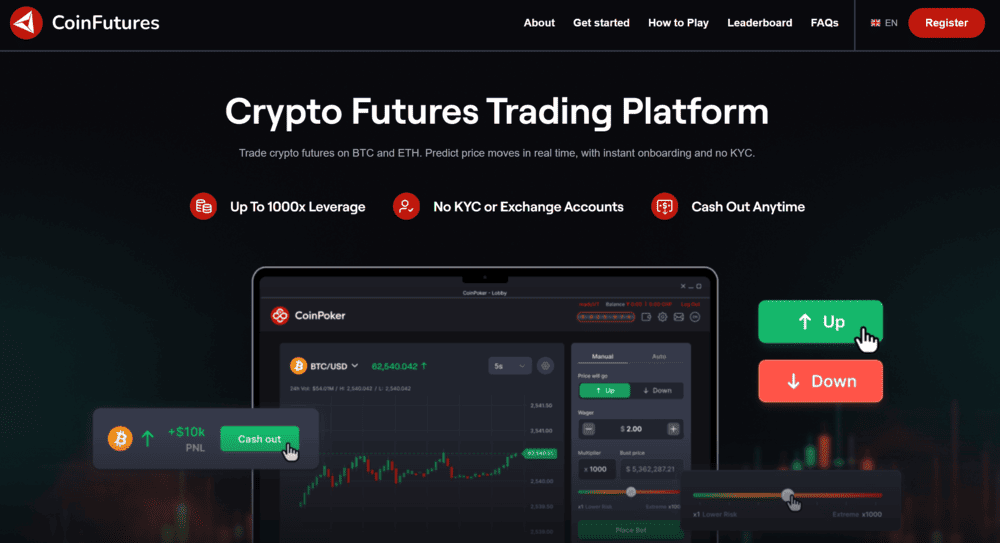
It is a highly private and secure platform with a no-KYC, no-wallet policy. It’s designed to feel like live crypto margin trading, making it ideal for testing strategies, signals, and technical setups before putting your capital on the line. With support for up to 1000x leverage crypto trades, users can go long or short on dozens of top assets, including Bitcoin, Ethereum, Solana, Litecoin, XRP, Avalanche, Tron, Dogecoin, and even trending meme coins like WIF, SPX6900, TRUMP, and more.
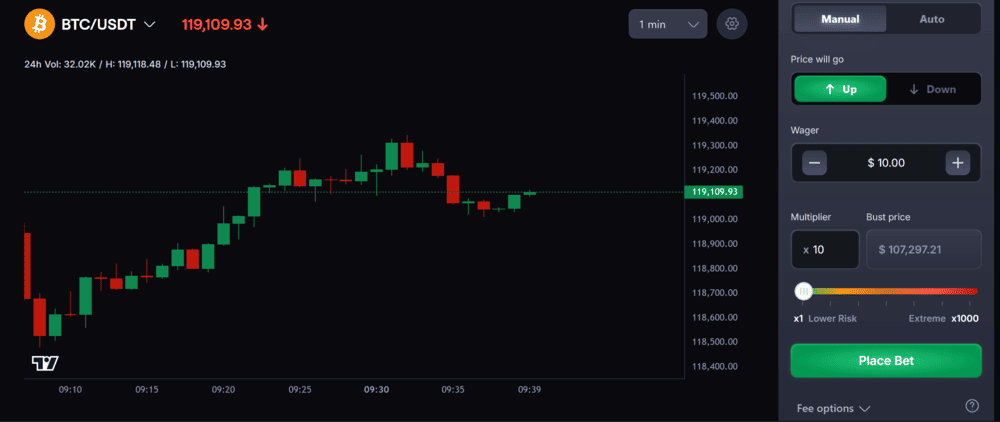
The high-speed experience teaches you how to manage margin trading, liquidation zones, stop losses, and exit targets so you can manage risks.
Each simulated round is dynamic: your leverage multiplier increases as the price moves in your favor, amplifying your potential profits. But, note that it also tightens the liquidation range. Tools like Stop Loss and Take Profit let you pre-define your exits, so you can stick to your strategy even if you’re away from the screen.
Whether you’re learning how to short crypto, exploring the difference between spot vs. futures crypto, or testing signals from Discord, Telegram, or newsletters, CoinFutures is a perfect action ground.
More at CoinFutures Review.
CoinFutures: How It Works
- Choose Your Crypto: Select Bitcoin or other alts to trade in a simulated futures environment that mimics real price action.
- Predict the Move: Decide whether the price will go up (long) or down (short), based on live chart updates and visible public sentiment.
- Set Your Leverage: Pick a multiplier between 1x and 1000x to increase your risk and potential reward. The higher the multiplier, the greater the impact of each move.
- Manage Risk: Add an optional Stop Loss or Take Profit level, and the platform will auto-calculate your bust price or the level at which your round ends.
- Watch and Cash Out: Once your bet is placed, watch the chart and cash out anytime before bust to lock in your gains or minimize losses.
CoinFutures Pros and Cons
Pros
-
Simulated crypto futures trading with leverage up to 1000×.
-
No KYC, signup, or wallet needed—users can start instantly.
-
Real-time charts refresh every second, closely mirroring live BTC and ETH markets.
-
Stop Loss and Take Profit tools help users manage risk effectively.
-
Ideal for practicing strategies and learning crypto margin trading safely.
Cons
-
Extreme leverage (1000×) may encourage risky habits for inexperienced users.
-
Asset selection is limited, though more cryptocurrencies are expected soon.
Crypto Long-Term Investing or HODLing
HODLing is perfect for anyone who wants to take a patient approach to figuring out how to get rich in crypto. HODLing (a misspelling of “hold”) is a strategy where investors buy cryptocurrencies and hold onto them for a long time, regardless of market ups and downs.
It’s based on the belief that crypto values, like Bitcoin, will grow significantly over time.
Fun Fact: HODL is a popular meme in the crypto space that started from a spelling mistake made by an early Bitcoin Investor on the bitcointalk forums.
Take Bitcoin, for example. Early adopters who held onto their investments through volatility have seen incredible returns. This strategy avoids the stress of short-term market movements and the risk of poorly timed trades.
HODLing also aligns with traditional investment principles: staying patient and focusing on long-term growth. By resisting the urge to sell during market dips, you’re better positioned to ride out volatility and benefit from long-term value appreciation.
For those confident in the future of cryptocurrencies, HODLing can be a straightforward way to build wealth without needing to actively trade. It’s simple, stress-reducing, and—if history is any indication—potentially very rewarding.
It’s not about timing the market—it’s about staying in it, which is a key principle in learning how to get rich in crypto.
Crypto HODLing: How It Works
HODLing your crypto is simple; you’ll need a secure place to store it. Many people use hot wallets, like mobile apps or web-based wallets, because they’re easy to access.

A mobile wallet lets you check your balance or make transactions directly from your phone, while a web wallet works through your browser, so you can log in from anywhere.
Since these wallets are always online, they can be more vulnerable to hacks. But don’t worry—good wallets come with extra security features like two-factor authentication and encryption to keep your funds safe.
If you’re holding onto a lot of crypto and want even more protection, you can always move it to a cold wallet. Cold wallets are offline, so they’re much harder for hackers to reach.
Below are our top three wallets for long-term crypto investors:
1. Best Wallet
Best Wallet is a non-custodial, multi-chain cryptocurrency wallet available on iOS and Android. It’s packed with features to suit both beginners and experienced crypto users, with a focus on security, user control, and seamless access to decentralized finance (DeFi) services.

Best Wallet Features
- Multi-Chain Support: Best Wallet supports over 60 blockchains, including Bitcoin, Ethereum, Solana, and Polygon, making it easy to manage a variety of cryptocurrencies in one app.
- Self-Custody Security: You’re in full control of your crypto, with no need to trust a third party.
- Integrated Decentralized Exchange (DEX): Swap cryptocurrencies directly within the app without relying on third-party exchanges. It’s fast, convenient, and reduces transaction times.
- Staking Aggregator: Earn passive income by staking supported cryptocurrencies across multiple blockchains, all in one place.
- Fiat On-Ramp/Off-Ramp: Buy and sell cryptocurrencies using fiat currencies through methods like credit/debit cards and bank transfers, making it easy to enter and exit the crypto market.
- Portfolio Management: Track your assets in real time, including profit and loss metrics, to stay on top of your portfolio’s performance.
- Enhanced Security Measures: With features like two-factor authentication (2FA), biometric verification, and encrypted private keys, your funds are kept secure.
Best Wallet Pros and Cons
Pros
-
User-owned, non-custodial design ensures full control of private keys and funds.
-
All-in-one functionality with DEX integration, staking, fiat on-ramps, and portfolio tools.
-
Multi-chain support allows users to manage many cryptocurrencies across different networks in one app.
-
BEST token staking provides opportunities for passive rewards and ecosystem benefits.
Cons
-
Several advanced features are still being rolled out and not fully available yet.
-
Mobile-only platform with no desktop version, which may limit convenience for some users.
-
Customer support options are limited, with no live chat or direct phone assistance.
Best Wallet is one of the safest options for managing cryptocurrency, thanks to its non-custodial design. This means you have full control over your private keys and funds—no middleman involved. Unlike wallets on centralized exchanges, this setup eliminates the risk of losing your assets due to hacks or poor management by a third party.
On top of that, Best Wallet has essential security features like two-factor authentication (2FA) and biometric verification. These add an extra layer of protection, making sure only you can access your wallet, even if someone gets hold of your device.
Your private keys? They’re encrypted and stored directly on your device. This keeps them safe from online threats and unauthorized access. Even if your device is compromised, encryption has your back.
If you want to know more about this wallet, check out our Best Wallet Review.
2. Exodus
Exodus is a user-friendly, multi-platform cryptocurrency wallet that supports a wide range of digital assets. Designed with both beginners and experienced users in mind, it offers a seamless interface for managing, exchanging, and staking cryptocurrencies across desktop, mobile, and browser-based applications.

Exodus Features
- Wide Asset Support: Exodus supports over 300 cryptocurrencies, enabling users to handle diverse portfolios within a single wallet.
- Integrated Exchange: A built-in exchange feature allows users to swap between cryptocurrencies directly within the app.
- Staking Options: Users can stake select cryptocurrencies to earn rewards without leaving the wallet.
- NFT Storage: The wallet supports non-fungible tokens (NFTs), allowing for centralized management of digital assets.
- Cross-Platform Use: Available on desktop, mobile, and as a browser extension, Exodus ensures accessibility across multiple devices.
- Hardware Wallet Integration: Exodus integrates with Trezor hardware wallets for those seeking enhanced security through cold storage.
Exodus Pros and Cons
Pros
-
Clean, intuitive interface makes it beginner-friendly and efficient for experienced users.
-
All-in-one management for crypto, NFTs, and staking within a single wallet.
-
Built-in exchange and staking tools allow seamless trading and earning without leaving the app.
Cons
-
Limited advanced features compared to some multi-chain professional wallets.
-
Some networks or NFT collections may not be fully supported yet.
-
Staking options can vary by region, limiting access for some users.
Exodus is a solid wallet choice for managing cryptocurrencies and NFTs with ease. It’s user-friendly, packed with features like staking and an integrated exchange, and works across multiple platforms.
However, users who prioritize advanced security features or complete code transparency might find some limitations. Overall, it’s a great option for those who value convenience and functionality.
3. Zengo
Zengo is a crypto wallet that focuses on making security simple and user-friendly. Unlike most wallets, it uses keyless technology, which eliminates the need for private keys while still keeping your funds secure. This makes it a standout choice, especially for beginners or those worried about losing access to their wallets.

Zengo Features
- Keyless Security: Zengo uses biometric encryption instead of private keys, reducing the risk of losing access to your wallet.
- Multi-Asset Support: The wallet supports a wide range of cryptocurrencies, making it versatile for managing your portfolio.
- Built-In Exchange: Swap cryptocurrencies directly in the app with a few taps.
- Savings and Earning Options: Zengo offers opportunities to earn rewards by saving certain cryptocurrencies.
- Cross-Platform Accessibility: The wallet is available on iOS and Android, so you can manage your crypto on the go.
- 24/7 Customer Support: Zengo provides around-the-clock assistance, a rare feature in the crypto wallet space.
Zengo Pros and Cons
Pros
-
Keyless security system removes the need to manage private keys, making fund protection easier.
-
Quick, beginner-friendly setup that requires no advanced crypto expertise.
-
24/7 customer support ensures help is available whenever needed.
-
Supports multiple cryptocurrencies, allowing users to manage diverse assets in one place.
Cons
-
Advanced users may find the feature set limited, with no staking or detailed transaction controls.
-
Mobile-only wallet, with no desktop option for users who prefer larger-screen management.
-
Built-in exchange fees may be higher than those on external trading platforms.
Zengo is a wallet that prioritizes ease of use and security, making it an excellent choice for beginners or anyone looking for a stress-free way to manage their crypto. The keyless technology is innovative and helps prevent the common issue of losing private keys.
However, advanced users might find it lacks some features they’re used to, and the mobile-only setup could be limiting for desktop users. Overall, Zengo strikes a great balance for those who want a secure, easy-to-navigate crypto wallet.
Here are our top picks by category:




Crypto HODLing Pros and Cons
With the right setup, long-term HODLing can be a simple and effective way to grow your crypto investments over time.
Pros
-
Strong long-term growth potential, as fundamentally solid cryptocurrencies often appreciate over extended periods.
-
Reduced trading activity lowers transaction fees, helping preserve overall returns.
-
In some regions, long-term capital gains taxes are lower, offering potential tax advantages.
-
Less emotional stress, as HODLing avoids reacting to short-term market volatility and impulsive decisions.
Cons
-
Holding through downturns can mean missing opportunities to rotate into stronger-performing assets.
-
Extreme volatility can result in large temporary drawdowns for long-term holders.
-
May face liquidity issues if funds are needed during a market dip.
-
Regulatory changes could negatively impact the value of long-held cryptocurrencies.
Crypto Mining
Crypto mining is the process that creates new cryptocurrency tokens and secures blockchain networks. It’s a cornerstone of many cryptocurrencies, especially those using Proof of Work (PoW) systems like Bitcoin.

Miners use computational power to solve complex puzzles, validate transactions, and add new blocks to the blockchain. In return, they’re rewarded with cryptocurrency tokens.
Crypto Mining: How It Works
- Transaction Verification: Miners collect and verify transactions to ensure they’re legitimate.
- Building a Block: Validated transactions are grouped into a block, which connects to the previous one, forming a blockchain.
- Solving Complex Puzzles: Powerful computers solve mathematical puzzles to validate the block, a step that requires significant resources.
- Proof of Work Submission: The first miner to solve the puzzle shares their solution with the network for verification.
- Adding the Block: Once the Proof of Work is verified, the block is added to the blockchain, and the miner earns rewards in newly minted cryptocurrency and transaction fees.
For example, Bitcoin’s mining process runs roughly every 10 minutes, ensuring the network operates securely and transactions are consistently validated.
Crypto Mining Pros and Cons
Pros
-
Mining can generate crypto rewards, allowing you to earn coins without purchasing them directly.
-
Contributes to blockchain decentralization by helping secure and validate network transactions.
-
Offers flexibility, as miners can switch between different cryptocurrencies to pursue better profitability.
Cons
-
Requires significant upfront investment in hardware and supporting infrastructure.
-
Consumes large amounts of energy, leading to high electricity costs and environmental concerns.
-
Highly dependent on crypto market prices, making mining earnings unpredictable.
Crypto Staking or Yield Farming
Crypto staking is like putting your cryptocurrency to work by locking it in a wallet to support blockchain networks that use a system called Proof of Stake (PoS). When you stake your crypto, you’re helping the network validate transactions and stay secure, and in return, you earn rewards.

If you’ve ever wondered how to get rich in crypto passively, staking is one of the easiest and most reliable options. Yield farming, while riskier, can offer higher returns for those ready to explore how to get rich in crypto with a hands-on approach.
Yield farming, on the other hand, is a bit more hands-on. It involves depositing your cryptocurrency into liquidity pools on decentralized finance (DeFi) platforms. These pools help with things like trading or lending, and you earn rewards through interest, transaction fees, or platform tokens.
Yield farming can offer higher returns than staking, but it’s more complex and comes with risks like market volatility and potential issues with smart contracts.
Crypto Staking: How It Works
Staking involves locking up your cryptocurrency to help secure and validate transactions on a blockchain network. In return, you earn rewards.
- Choose a Cryptocurrency: Select one that operates on Proof of Stake (PoS) or Delegated Proof of Stake (DPoS).
- Buy Tokens: Purchase the required amount of tokens to participate.
- Set Up a Wallet: Transfer your tokens to a staking-compatible wallet.
- Stake or Delegate: Lock your tokens in the wallet or delegate them to a staking pool.
- Earn Rewards: Receive periodic rewards based on the amount you’ve staked and the network’s reward structure.
Crypto Staking Pros and Cons
Pros
-
Generates passive income through regular staking rewards without active trading.
-
Helps support and secure blockchain networks, promoting decentralization.
-
Generally safer than yield farming, as it avoids reliance on complex smart contracts.
Cons
-
Some staking protocols require token lock-ups, reducing liquidity and flexibility.
-
Certain networks impose penalties for validator mistakes or downtime, which can lead to losses.
-
Token price volatility can reduce the real value of both your stake and your rewards.
Crypto NFT Investment
Investors can get involved in the NFT market by purchasing, holding, or trading non-fungible tokens (NFTs) to earn a profit. NFTs are unique digital assets stored on a blockchain, representing ownership of items such as digital art, music, videos, virtual real estate, and in-game collectibles.

Unlike cryptocurrencies, which are interchangeable (fungible), each NFT is one of a kind and cannot be swapped on a one-to-one basis, making it “non-fungible.”
Crypto NFT Investment: How It Works
- Browse Collections: Potential investors browse NFT collections on online marketplaces like OpenSean and Rarible, looking out for popular collections and NFTs with rare attributes.
- Buying NFTs: Investors purchase NFTs often using cryptocurrencies like Ethereum.
- Ownership Proof: Each NFT has a unique identifier tied to its buyer, ensuring verifiable ownership is recorded on the blockchain.
- Value Growth: The value of an NFT can rise based on factors like rarity, creator reputation, and demand, offering potential resale profits.
- Royalties for Creators: Many NFTs are designed to provide creators with royalties from resale transactions, creating ongoing revenue streams.
Crypto NFT Investment Pros and Cons
Pros
-
Provides secure, verifiable ownership of digital assets, giving collectors true uniqueness.
-
Early adopters of certain NFTs have seen substantial increases in value.
-
Supports artists and creators by offering new, direct monetization opportunities.
Cons
-
The NFT market is highly volatile, with prices fluctuating rapidly.
-
Minimal regulation increases the likelihood of scams and fraudulent projects.
-
Unique NFTs can take time to sell since each requires a specific buyer, creating liquidity challenges during market downturns.
Higher Risk Ways to Get Rich Off Crypto
Let’s face it: everyone dreams of hitting it big in crypto, but not every method is guaranteed success. Some ways to earn are undeniably high-risk, and the chance of failure is just as high. This isn’t about discouraging you but about giving you a realistic picture.

If you’re up for the challenge, willing to take the risk, and ready to learn, let’s dive in. Just remember: this isn’t a one-way ticket to easy money—it’s a game of strategy, timing, and often a little luck.
Crypto Trading
Crypto trading is one of the most common ways people try to make it big in the world of cryptocurrency. The idea is simple: buy low, sell high. But in practice, it’s anything but straightforward.
The crypto market is like a rollercoaster on steroids—prices can swing wildly in a matter of minutes. While this volatility creates opportunities, it also makes trading incredibly risky.
See which strategy works for you, for example day trading isn’t for everyone, but it’s a powerful method for those curious about how to get rich in crypto through short-term opportunities.
On the other hand, swing trading allows you to explore how to get rich in crypto over weeks instead of days, making it more accessible to beginners.
Crypto Trading: How It Works
Crypto trading involves various methods and strategies.
Common Crypto Trading Strategies
- Day Trading
- What It Is: Involves making multiple trades within a single day to profit from short-term price fluctuations.
- Key Features: Relies on technical analysis, chart patterns, and quick decision-making.
- Risks: High-risk approach due to rapid market changes. The U.S. SEC warns that most day traders incur large financial losses.
- Spot Trading
- What It Is: Buying and selling actual cryptocurrencies for immediate delivery.
- Key Features: Straightforward and involves owning the digital asset to profit from its appreciation.
- Risks: Still requires an understanding of market trends and precise timing.
- Swing Trading
- What It Is: Holding positions for days or weeks to benefit from anticipated market swings.
- Key Features: Combines technical and fundamental analysis to predict price movements.
- Risks: Requires patience and the ability to endure market volatility over a longer period.
- Leverage Trading (Margin Trading)
- What It Is: Borrowing funds to increase position size, amplifying potential profits.
- Key Features: Can magnify returns but also significantly increases risk.
- Risks: Losses are equally amplified, and the SEC highlights the dangers of relying heavily on borrowed funds.
Crypto trading can be incredibly rewarding, but it’s also a minefield for the unprepared. To succeed, you’ll need a solid strategy, discipline, and the ability to accept losses along the way. Most importantly, never trade with money you can’t afford to lose. The market doesn’t care about your plans, so tread carefully and always, always do your research.
If you’re interested in crypto trading, below are some of our preferred trading platforms:
1. Margex
Margex is a cryptocurrency trading platform established in 2020, offering perpetual futures trading with up to 100x leverage. Known for its intuitive interface and advanced features, Margex caters to both beginner and experienced traders, providing a well-rounded trading experience.

Margex Features
- High Leverage Trading: Margex supports trading with leverage of up to 100x, enabling users to amplify their positions.
- Perpetual Futures Contracts: Trade perpetual futures on popular cryptocurrencies like BTC, ETH, and even meme coins like PEPE and FLOKI.
- User-Friendly Interface: The platform is designed for easy navigation, making it accessible to both new and experienced traders.
- Copy Trading: Users can replicate the trades of successful traders, a great feature for those learning the ropes.
- Staking Opportunities: Margex offers staking options with up to 5% APY, allowing users to earn passive income on their crypto holdings.
Margex Pros and Cons
Pros
-
Competitive fees—0.019% for limit orders and 0.060% for market orders—make trading cost-efficient.
-
No KYC required, allowing users to trade quickly while maintaining privacy.
-
Robust security features, including multi-signature cold storage and real-time monitoring, help protect user funds.
Cons
-
Supports fewer cryptocurrencies compared to larger exchanges, limiting trading variety.
-
Unavailable in certain regions, including the U.S., reducing overall accessibility.
Margex combines high-leverage trading, a user-friendly interface, and competitive fees to deliver a solid trading platform. With up to 100x leverage, traders can maximize potential profits, while features like copy trading and staking add versatility for users seeking more ways to engage with the market.
The absence of mandatory KYC enhances privacy and simplifies onboarding, making it attractive for those who prioritize convenience.
That said, the platform’s limited selection of cryptocurrencies and regional restrictions might be drawbacks for some users. Regardless, Margex is a strong option for traders looking for an efficient and secure platform to navigate the cryptocurrency market.
If you want to know more about this exchange, check out our Margex Review.
2. MEXC
MEXC is a cryptocurrency exchange established in 2018, offering a wide range of trading services for both beginners and experienced traders. Known for its extensive selection of cryptocurrencies, competitive fees, and advanced trading tools, MEXC has positioned itself as a strong contender in the crypto trading space.

MEXC Features
- Extensive Cryptocurrency Options: With support for over 2,700 cryptocurrencies and more than 2,900 trading pairs, MEXC provides access to a broad range of digital assets, from popular coins to emerging projects.
- Spot and Futures Trading: The platform supports spot trading and futures contracts, offering leverage of up to 200x for those looking to amplify their trades.
- Zero Trading Fees: Traders benefit from 0% maker fees and low taker fees (0.02% for spot and 0.01% for futures), making MEXC a cost-effective choice.
- Copy Trading: Newer traders can replicate the strategies of successful traders, an excellent learning tool while potentially earning profits.
- Demo Trading: MEXC offers a risk-free demo trading environment, enabling users to practice strategies with virtual funds.
MEXC Pros and Cons
Pros
-
Extensive crypto selection with 2,700+ assets, offering access to both major and niche markets.
-
Beginner-friendly interface with a clean, intuitive layout ideal for new traders.
-
Advanced tools such as high-leverage futures, copy trading, and demo accounts support diverse trading strategies.
-
Zero maker fees and competitive taker fees make the platform cost-efficient for active traders.
Cons
-
Limited fiat support requires users to rely on external services for fiat conversions.
-
Not available to U.S. residents, reducing access for a major market segment.
MEXC excels in offering an unparalleled selection of cryptocurrencies, making it ideal for traders looking to diversify their portfolios or explore lesser-known assets. The platform’s low trading fees and advanced features, such as futures trading with high leverage and copy trading, provide flexibility for a wide range of trading styles.
Its demo trading feature is particularly helpful for those who want to practice risk-free before committing funds.
However, the platform’s limited fiat support and U.S. restrictions may be drawbacks for some users. MEXC’s blend of accessibility, cost-effectiveness, and robust trading tools makes it a strong choice for those seeking a comprehensive cryptocurrency trading platform.
To dive deeper into this exchange, check out our detailed MEXC Review.
3. BingX
BingX, established in 2018, is a cryptocurrency exchange that has become popular for its wide range of trading services and user-friendly features. With a presence in over 100 countries and a user base of more than 10 million, BingX caters to both beginners and seasoned traders, offering tools and features to suit a variety of trading styles.

BingX Features
- Spot and Futures Trading: BingX supports trading in over 700 cryptocurrencies, offering both spot trading and futures contracts with leverage up to 125x.
- Copy Trading: Beginners can replicate the trades of experienced traders using the platform’s copy trading feature, helping them learn while potentially earning profits.
- Demo Trading: The demo trading feature allows users to practice strategies with virtual funds, providing a risk-free way to improve trading skills.
- Diverse Asset Options: In addition to cryptocurrencies, BingX enables trading in commodities and forex markets, offering a broader range of investment opportunities.
- User-Friendly Interface: The intuitive design makes it easy for traders of all levels to navigate and use the platform effectively.
BingX Pros and Cons
Pros
-
Supports 700+ cryptocurrencies, offering traders a wide range of assets to explore.
-
Competitive fees—0.1% for spot trading and futures fees as low as 0.02% (maker) and 0.05% (taker)—make it ideal for active traders.
-
Strong security framework with 100% margin reserves publicly verified and partnerships with cybersecurity leaders.
-
Available in 100+ countries, ensuring broad global accessibility.
Cons
-
No direct fiat trading pairs, requiring users to use third-party services for fiat conversions.
-
Unavailable in several regions, including the U.S., limiting access for certain users.
BingX offers a well-rounded trading platform with features like copy trading and demo accounts that cater to both learning traders and those with experience. Its competitive fees and extensive asset offerings provide ample opportunities for diversification and profitability.
The platform’s focus on security, through verified margin reserves and cybersecurity partnerships, ensures a safe trading environment.
While the lack of fiat support and regional restrictions might be drawbacks for some, BingX’s user-friendly design, global reach, and advanced tools make it a reliable and versatile choice for cryptocurrency trading.
For a complete breakdown of this platform, visit our BingX Review.
Crypto Trading Pros and Cons
Pros
-
Big earning potential thanks to fast-moving crypto markets that can rise sharply in short periods.
-
Crypto trades 24/7, giving you full flexibility to buy or sell anytime.
-
Decentralization gives traders more control without interference from banks or central authorities.
-
Thousands of cryptocurrencies available, allowing broad diversification beyond Bitcoin and Ethereum.
Cons
-
Extreme volatility can trigger sudden losses just as quickly as gains.
-
Regulatory uncertainty may impact trading conditions or the legality of certain assets.
-
Risk of hacks, scams, and lost funds if wallets and accounts aren’t secured properly.
-
Steep learning curve for beginners trying to understand crypto markets and strategies.
Crypto Sports Betting
Crypto sports betting is exactly what it sounds like—betting on sports using cryptocurrency instead of regular money. It’s growing in popularity because of its added perks like anonymity, quick transactions, and access to global betting markets.

Plus, the decentralized nature of crypto can make it easier to avoid restrictions in certain regions.
For sports fans with sharp instincts and solid knowledge, crypto sports betting can be a fun way to combine passion with profit. You can bet on anything from football matches to esports tournaments, and some platforms sweeten the deal with bonuses or promotions. But just like regular sports betting, it’s not without its risks.
Crypto Sports Betting: How It Works
Here’s how you can get started:
- Find a Platform: Look for a reputable site. For example, CoinPoker is known for its variety of sports and betting options.
- Sign Up: Create an account. Most crypto betting sites keep things simple—no long forms or intrusive details.
- Deposit Crypto: Add funds to your account using Bitcoin, Ethereum, or another cryptocurrency. It’s quick and usually low on fees.
- Place Your Bet: Choose the sport, pick the game, and decide on your wager. You can bet on match winners, scores, or even specific player performances.
- Try Live Betting: Some platforms let you bet during the game as the action unfolds, with constantly changing odds. It’s a dynamic way to get more involved in the excitement.
- Cash Out Winnings: If you win, your earnings are credited in crypto. You can withdraw them to your wallet whenever you want.
If you’re interested in getting into sports betting, we recommend CoinPoker. Let’s take a closer look at the platform and how it works.
CoinPoker
CoinPoker, launched in 2017, is a crypto-focused online poker platform that integrates blockchain technology to provide a secure, transparent, and decentralized gaming experience.
Using its native token, CHP, alongside major cryptocurrencies like Bitcoin (BTC) and Ethereum (ETH), the platform aims to offer a unique twist on online poker for both casual and serious players.

CoinPoker Features
- Cryptocurrency Integration: Supports multiple cryptocurrencies for deposits and withdrawals, including BTC, ETH, USDT, and CHP.
- Decentralized Card Shuffling: Uses user-generated and verifiable shuffling mechanisms to ensure fair and transparent gameplay.
- Rakeback Program: Offers 33% rakeback weekly, rewarding active players and enhancing player loyalty.
- Welcome Bonus: New players receive a 100% bonus on their first deposit, boosting their starting bankroll.
- Multi-Platform Support: Compatible with Windows, macOS, Android, and iOS, making it accessible across a variety of devices.
CoinPoker Pros and Cons
Pros
-
Privacy-focused platform with no extensive KYC, enabling anonymous gameplay.
-
Fast crypto deposits and withdrawals allow quick, seamless transactions.
-
Provably fair gaming ensures transparent and verifiable outcomes.
-
Globally accessible to many regions, fostering a diverse player base.
Cons
-
No fiat payment support, which may discourage users unfamiliar with crypto.
-
Some regional restrictions apply due to regulatory limitations.
-
Certain features rely on the CHP token, adding complexity for new users.
CoinPoker offers a unique blend of online poker and cryptocurrency, delivering transparency, privacy, and fairness through blockchain technology. Features like decentralized card shuffling and a provably fair system ensure trust in gameplay. The platform’s competitive rakeback program and welcome bonus make it particularly appealing for both new and experienced players.
While the lack of fiat support and regional restrictions may present challenges, CoinPoker’s focus on fast transactions, anonymity, and a global player base positions it as an innovative and reliable option for poker enthusiasts who appreciate the advantages of cryptocurrency.
If you want to know more about this casino, check out our CoinPoker Review.
Crypto Sports Betting Pros and Cons
Pros
-
Better privacy since crypto betting requires minimal personal information.
-
Lightning-fast deposits and withdrawals let you access funds almost instantly.
-
Lower fees compared to traditional banking methods save money over time.
-
Global accessibility allows users from many countries to participate easily.
Cons
-
Crypto’s price swings can change the value of your winnings quickly.
-
Legal uncertainty in some countries may affect crypto sports betting availability.
-
Wallets and platforms can be targeted by hackers despite blockchain security.
-
Fewer platforms support crypto compared to traditional payment methods.
It’s not just about knowing how to place bets; it’s about understanding the risks involved and taking steps to protect your funds. If you decide to give it a try, remember to start small, stay informed, and always bet responsibly.
Engaging in Play-to-Earn (P2E) Games
Play-to-Earn (P2E) games have completely changed how we think about gaming. Instead of just playing for fun, gamers can now earn real money or valuable digital assets while enjoying their favorite virtual worlds.

Thanks to blockchain technology, P2E games let players truly own their in-game items and even monetize their time and skills. If you enjoy gaming, this might be the most entertaining way to explore how to get rich in crypto.
Earning Through P2E Games: How It Works
Here’s a quick look at how earning through P2E games typically works:
- Getting started: Most P2E games require you to have a wallet and the native gas token of the network the game runs on (i.e., ETH for Ethereum-based games); players also need to connect their wallet to the game.
- Collecting In-Game Assets: Players earn or acquire digital items, characters, or currencies, often as NFTs (non-fungible tokens). These can be sold or traded for real-world value.
- Rewards for Gameplay: Whether it’s completing quests, winning battles, or hitting milestones, players earn rewards in the form of cryptocurrencies or NFTs.
- Turning Rewards into Cash: Once you’ve built up your collection of assets, you can sell or trade them on marketplaces, converting your virtual efforts into real-world income.
Play-to-Earn Pros and Cons
Pros
-
Earn while you play, turning gaming into a source of real income.
-
Full ownership of in-game assets, which can be traded, sold, or collected.
-
Accessible worldwide, offering new earning opportunities in underserved regions.
-
Strong communities where players collaborate and share strategies.
Cons
-
High entry costs for some games due to pricey NFTs or characters.
-
NFT and crypto prices can fluctuate, affecting real earnings.
-
Gameplay may feel more like work when the focus shifts to earning.
P2E games offer a unique opportunity to blend fun and financial rewards, especially for players who enjoy exploring virtual economies. However, they come with challenges—like upfront costs and unpredictable markets.
Expert Tips for Getting Rich with Crypto
Investing in cryptocurrencies can be incredibly rewarding, but it’s not as simple as picking a coin and waiting for the price to skyrocket. Success often comes down to recognizing emerging opportunities early and being patient enough to let them unfold.
One of the best ways to get ahead in the crypto game is by learning to spot future trends. This isn’t about chasing the latest hype; it’s about seeing where the industry is heading and positioning yourself before everyone else catches on.
Look For Future Trends in Crypto
The key to finding future trends is understanding where the buzz is happening and where attention is building steadily.
You don’t have to be an insider or a tech expert; you just need to know where to look. Platforms like YouTube, Twitter, Reddit, and Telegram are goldmines for discovering what’s coming next.

Crypto influencers on YouTube often share deep dives into projects or sectors they believe are gaining traction. Watch their content, not just for what they say, but for patterns—are multiple influencers talking about the same niche? That could be a sign.
Twitter is where the crypto world seems to live in real time. Follow key figures, developers, and investors who have a track record of being early to trends. Pay attention to hashtags and trending discussions—it’s like having your finger on the market’s pulse.
But don’t just scroll passively; join the conversation. You’ll often learn even more by engaging with others who share their insights.
On Reddit, there are entire communities dedicated to crypto, like r/CryptoCurrency or r/Altcoin. These spaces can reveal a lot about emerging narratives. You’ll find deep discussions, project breakdowns, and opinions that are unfiltered by marketing.
People often share hidden gems here, but remember, it’s still the internet, so approach everything with a critical eye.
Telegram groups are where many project teams and communities gather. These chats can offer insider updates and a sense of how active and engaged a project’s followers are. If the community is vibrant and growing, it’s often a good sign. Just be wary of overly hyped groups that seem more focused on pumping prices than building value.
| Platform | Strategy | Tools/Resources |
|---|---|---|
| YouTube | Subscribe to reputable channels; engage with content; analyze trends | YouTube subscriptions; comment sections |
| Follow key influencers; monitor hashtags; engage in conversations | Twitter lists; hashtag tracking tools | |
| Join relevant subreddits; participate actively; observe upvoted content | Reddit subscriptions; Reddit Enhancement Suite | |
| Telegram Groups | Join official channels; participate in discussions; verify legitimacy | Telegram app; official project links |
| News Outlets | Follow reputable sources; set up alerts; cross-reference information | News aggregator apps; RSS feeds; Google Alerts |
| Social Media | Monitor discussion trends; analyze sentiment; identify influencers | Social listening tools like LunarCrush, Santiment |
| Attention | Track engagement metrics; identify growing communities; monitor searches | Social media analytics tools; Google Trends |
| Slow Burner | Look for consistent growth; assess development; evaluate community | GitHub activity trackers; community forums; project roadmaps |
By using these platforms and strategies step by step, you can spot new trends in the cryptocurrency market, especially ones with strong long-term potential.
This can also help you to make smarter decisions and avoid the risks tied to short-term market swings. The key is to notice when conversations start to shift. Where is attention building? Are people talking about a project or sector more frequently? Tools like Google Trends or social media analytics platforms can help you see what’s gaining momentum.
Diversify Your Portfolio
Building a cryptocurrency portfolio is all about finding the right balance. Diversification is a smart way to spread out your risks while giving yourself more chances for success. Think about investing in different parts of the crypto world.

For example, DeFi projects like Aave or Compound are shaking up the financial industry, while DeSci projects are changing how scientific research is funded and shared.
AI-powered blockchain platforms, like SingularityNET, mix the power of artificial intelligence with the security of decentralized networks. On the other hand, blue-chip cryptocurrencies like Bitcoin and Ethereum offer a stable foundation for long-term growth.
You might also want to explore Layer 2 solutions, like Polygon and Optimism, which make transactions faster and cheaper. By diversifying into these areas, you’re not putting all your eggs in one basket, and you’re setting yourself up for a mix of stability and growth.
Tax Planning and Legal Considerations
When it comes to crypto taxes, planning ahead can save you a lot of headaches (and money). Different countries have different rules, but generally, you’ll face taxes when you sell, trade, or earn cryptocurrency.

Capital gains tax usually applies to profits from selling or trading crypto, while income tax is for things like staking rewards, mining, or getting paid in crypto. Tax rates vary based on your personal income and can range from 0-37%. You can find detailed information in our Crypto Taxes Explained: Crypto Tax Guide 2026
Here’s a simple breakdown to show how taxes might look:
| Transaction Type | Tax Category | Example Rate |
|---|---|---|
| Selling Crypto for Cash | Capital Gains Tax | 20% |
| Trading One Crypto for Another | Capital Gains Tax | 20% |
| Staking or Mining Rewards | Income Tax | 25% – 35% |
To make tax time easier, keep detailed records of your transactions, like dates, amounts, and how much they were worth in your local currency. Tools like crypto tax software can help you organize everything and stay on top of your reporting.
Also, think about strategies like holding onto your crypto for longer to qualify for lower tax rates or offsetting gains with losses. These steps can make a big difference since managing risks and taxes is important for anyone serious about learning how to get rich in crypto.
Risk Management and Security
Crypto markets are known for their ups and downs, so it’s important to have a plan. Setting clear goals and using stop-loss orders can help you avoid big losses when the market takes a dip. Diversification, as we talked about earlier, is another key way to protect your investments.
Just as important is keeping your crypto safe. A hardware wallet, like Ledger or Trezor, is one of the best ways to secure your private keys because it keeps them offline. Don’t leave large amounts of crypto on exchanges—they’re a popular target for hackers.
Scammers often use social engineering to trick people into giving away their information. Here are some simple ways to protect yourself:
- Double-check links and emails before clicking, even if they seem legit.
- Turn on two-factor authentication (2FA) for all your accounts.
- Use strong, unique passwords and consider a password manager.
Here’s a quick look at common threats and how to avoid them:
| Threat | What It Is | How to Prevent It |
|---|---|---|
| Phishing Emails | Fake emails pretending to be trustworthy | Check sender details; avoid clicking on random links |
| SIM Swapping | Taking over your phone number | Use 2FA apps instead of SMS for authentication |
| Exchange Hacks | Cyberattacks on crypto exchanges | Use hardware wallets and split your crypto storage |
| Malware | Harmful software targeting your crypto | Keep antivirus updated; avoid sketchy downloads |
Research and Stay Informed
Crypto is always changing, so staying up to date is important for crypto investors. Keeping an eye on market trends, new regulations, and technology advancements is a great way to help you make smarter investment choices. Following reliable sources and knowing where to look for accurate information can give you a huge advantage.
Here are some reliable sources to keep you informed:
| Source Type | Examples | Why It’s Useful |
|---|---|---|
| News Websites | 99Bitcoins, CoinGecko | Daily updates on markets and industry trends |
| Analytics Platforms | Glassnode, Messari | Deep dives into data and performance |
| Community Forums | Reddit (r/CryptoCurrency) | Insights from other investors and enthusiasts |
| Social Media | Twitter (Crypto Influencers) | Quick news and perspectives from experts |
| Data Trackers | CoinGecko, DefiLlama | Price tracking, news, and portfolio management tools |
It’s also a good idea to use portfolio tracking tools and blockchain explorers. These help you keep tabs on your assets, monitor performance, and double-check transactions. Combining these tools with daily research will keep you ahead of the curve.
For example, there are accounts on Twitter @whale_alert that post major transactions made by large crypto holders. You can take the wallet addresses and paste them into a block explorer, and use them to track these big players’ crypto assets.

CoinGecko also has a very useful categories page so investors can browse for cryptocurrencies based on their industry, narrative, or functionality, and there are over 515 crypto categories.

Some of the cryptocurrency categories that you can browse on CoinGecko include:
- Smart Contract Platform
- Meme Coins (Take a look at our best meme coins article)
- Wrapped Tokens
- DePIN
- NFT
- Yield Farming
- Solana Meme
- AI Agents
- Frog Themed
- Rollup
- Gaming Blockchains
The categories also include portfolios by VCs, so you can easily see where major investors are placing their money. Below is a screenshot showing the portfolio for Andreessen Horowitz (a16z).

You can find other VC portfolios on CoinGecko, including:
- Alameda Research Portfolio
- Delphi Ventures Portfolio
- Pantera Capital Portfolio
- Binance Labs Portfolio
The better informed you are, the more confident you’ll feel about your investment decisions.
How to Get Rich With Crypto: Success Stories and Case Studies
Cryptocurrency has opened the door for everyday people to build life-changing wealth. Some started with small investments and took big risks, while others made their fortunes by spotting trends early and sticking to their plans.
Ansem: The Solana Advocate
Zion Thomas, better known as Ansem in the crypto world, is a great example of someone who got in early and stayed ahead of the curve. Back when Solana was trading for just $1.50, Ansem saw its potential and made a big bet. That decision paid off, turning his initial investment into a fortune worth over $20 million.
Today, Ansem shares his insights on social media, helping others learn how to research and understand blockchain projects. His story shows how doing your homework can lead to big rewards. He emphasizes understanding the technology and timing your investments carefully.
Javed Khan: From Bitcoin to Bentley
Javed Khan stumbled into crypto when he started using Bitcoin to transfer money. But he quickly realized its potential and began buying Bitcoin during market dips. With a careful and patient strategy, Khan turned his investments into enough profit to buy his dream car—a Bentley.
His story highlights the importance of timing and sticking to a plan, proving that even a casual start in crypto can lead to amazing results. His disciplined approach is a reminder that success often comes to those who stay consistent.
Glauber Contessoto: The Dogecoin Millionaire
Glauber Contessoto, also known as the “Dogecoin Millionaire,” went all-in on Dogecoin when it was trading at just $0.045. Investing his life savings of $180,000, Glauber believed in the coin’s potential and the power of its community. His gamble paid off in a huge way when Dogecoin’s value skyrocketed, making him a millionaire in just a few months.
Despite the ups and downs of the market, he held on to his investment, showing both confidence and resilience. His story is a reminder that sometimes, taking a calculated risk can pay off in life-changing ways. Glauber has since used his platform to advocate for the power of grassroots movements in the crypto space.
These examples aren’t just inspiring—they’re practical lessons on how to get rich in crypto by seizing opportunities early.
Conclusion: How to Make a Lot of Money With Crypto
To succeed in the crypto market, focus on identifying projects with solid fundamentals and long-term potential. Timing is crucial—early entry into innovative technologies or trends often yields the best returns.
Building a well-rounded portfolio that aligns with your risk tolerance ensures you’re prepared for market fluctuations. Most importantly, stay adaptable and continuously educate yourself, as the crypto landscape is dynamic and requires informed decisions to capitalize on opportunities effectively.
Learning how to get rich in crypto isn’t only about luck; it’s about making informed decisions and staying consistent.
Now that you know the basics, take your first step toward figuring out how to get rich in crypto—it’s all about starting!
See Also:
- Bitcoin Price Prediction for 2025, 2030
- Ethereum Price Prediction for 2025-2030
- Polygon (POL) Price Prediction 2025-2030
- 7 High-Risk High-Reward Cryptos for 2026
- 10 Best AI Crypto Coins to Invest in 2026
- Top 11 DePIN Coins to Invest in 2026
FAQs
Can I get rich with cryptocurrency?

Yes, it’s possible. A lot of people have made big money with crypto, but it’s not magic—you’ll need patience, a good plan, and a solid understanding of what you’re investing in.
Can cryptocurrency make me rich overnight?
Not really. While there are stories of people striking it rich quickly, those cases are rare. Most success in crypto comes from smart, long-term investments, not gambling on instant gains.
Has anyone gotten rich off crypto?
Absolutely! People like Glauber Contessoto, who went all-in on Dogecoin or early Bitcoin adopters, have turned their investments into fortunes. The key was spotting opportunities early and sticking with them.
How can I make money in crypto without any money?
If you’re starting with zero cash, look for free ways to earn crypto, like airdrops or tasks for new projects. Some play-to-earn games can also help you get started without spending upfront.
What is the best cryptocurrency to invest in to get rich?
It depends on your goals. Bitcoin and Ethereum are popular for long-term growth, but newer coins or presale tokens might offer bigger returns if you do your research.
What is the safest way to get rich off crypto?
Play it smart and spread your investments across several projects, only invest what you can afford to lose, and keep your crypto secure in a wallet. Stick with projects that have solid fundamentals and proven potential.
Can I get rich from crypto trading?
It’s possible, but trading isn’t easy. You’ll need to spend time learning how markets work and be prepared for the risks. A lot of traders lose money, so be cautious if you decide to try it.
What are the risks of getting rich off crypto?
Crypto is unpredictable, and prices can drop just as fast as they rise. Scams and hacks are also common, so staying informed and keeping your investments secure is crucial.
Can NFTs help me get rich?
They can, but NFTs are very hit-or-miss. Some people have made a fortune, but others have lost money. If you dive into NFTs, make sure you understand the risks and focus on quality projects.
Is trading a good way to understand how to get rich in crypto?
Yes, trading is a great way to understand how to get rich in crypto, but it takes practice. Learning to read market trends and starting with small trades can help you grow your skills and profits.
Are presale coins a smart way to figure out how to get rich in crypto?
Presale coins are one of the smartest ways to get in early and figure out how to get rich in crypto by investing in projects before they gain momentum.
References
- FINRA. “Crypto Asset Risks.” FINRA, https://www.finra.org/investors/investing/investment-products/crypto-assets/risks.
- Illinois CPA Society. “The Risks and Rewards of Cryptocurrencies.” Illinois CPA Society, https://www.icpas.org/information/copy-desk/insight/article/spring-2018/the-risks-and-rewards-of-cryptocurrencies.
- SCORE. “Navigating Volatility: A Comprehensive Guide to Cryptocurrency Prices.” SCORE, https://www.score.org/utah/resource/blog-post/navigating-volatility-cryptocurrency-prices-a-comprehensive-guide.
- Bitcointalk. “I AM HODLING.” Bitcointalk, https://bitcointalk.org/index.php?topic=375643.0.
- 99Bitcoins. “Crypto Tax Guide: Understanding Your Cryptocurrency Taxes.” 99Bitcoins, https://99bitcoins.com/education/crypto-tax-guide/.
- CoinGecko. “Crypto Categories: Explore by Industry, Narrative, or Functionality.” CoinGecko, https://www.coingecko.com/en/categories.

Why you can trust 99Bitcoins
Established in 2013, 99Bitcoin’s team members have been crypto experts since Bitcoin’s Early days.
Weekly Research
100k+Monthly readers
Expert contributors
2000+Crypto Projects Reviewed