




In This Article
Polymarket’s rise from a niche crypto experiment to a global forecasting platform was fully on display when billions were wagered on the U.S. presidential election in 2024. After being blocked from the U.S. market for regulatory reasons, Polymarket has now secured approval from the U.S. Commodity Futures Trading Commission (CFTC) to relaunch in the United States.
With renewed access, growing visibility, and real money flowing through its markets, now is the right time to learn what Polymarket is, how the Polymarket prediction market works, and whether Polymarket is legal.
Quick Facts About Polymarket
Category
Details
Type
Parent company
Founder and CEO
Shayne Coplan
Founded
2020
Use Case
Underlying technology
Blockchain Network
Polygon
Currency Used
USDC
Custody Model
KYC Requirement
No KYC
Market Categories
Settlement Method
Best Suited For
Key Takeaways
- As of 2026, Polymarket was legally available in the U.S., but remained geo-restricted in more than 30 countries, including the UK, Australia, and Singapore.
- Polymarket is best suited for users who want crypto-native trading, wallet-based access without KYC, and a decentralized, non-custodial setup.
- All trades on Polymarket are peer-to-peer, meaning there is no house setting odds or profiting from user losses.
- Compared to crypto casinos and sportsbooks, Polymarket focuses on outcome probabilities and sentiment, while casinos offer broader live sports coverage but operate with house-controlled odds.
- Kalshi and PredictIt provide regulated, fiat-based alternatives to Polymarket, with Kalshi targeting mainstream U.S. users and PredictIt focusing on academic and political research.
What Is Polymarket?
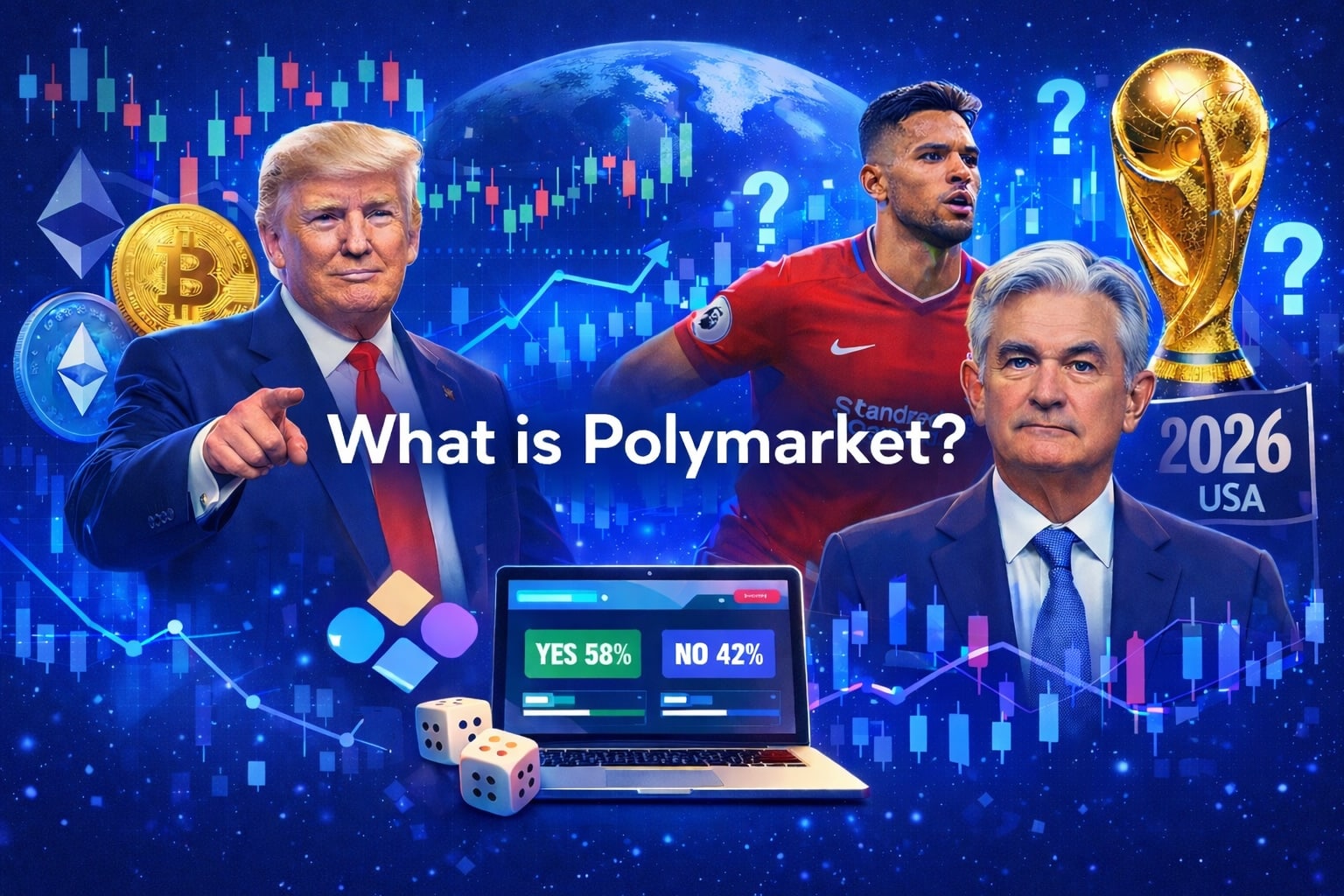
Polymarket is a prediction market where users bet on the outcomes of real-world events using cryptocurrencies. Markets span topics such as geopolitics, live sports, movies, finance, company earnings, technology, and other major global events.
Users need USDC stablecoins to place bets on Polymarket. Accounts can be created by connecting a crypto wallet or by signing up with a Google account, which simplifies onboarding for non-crypto users.
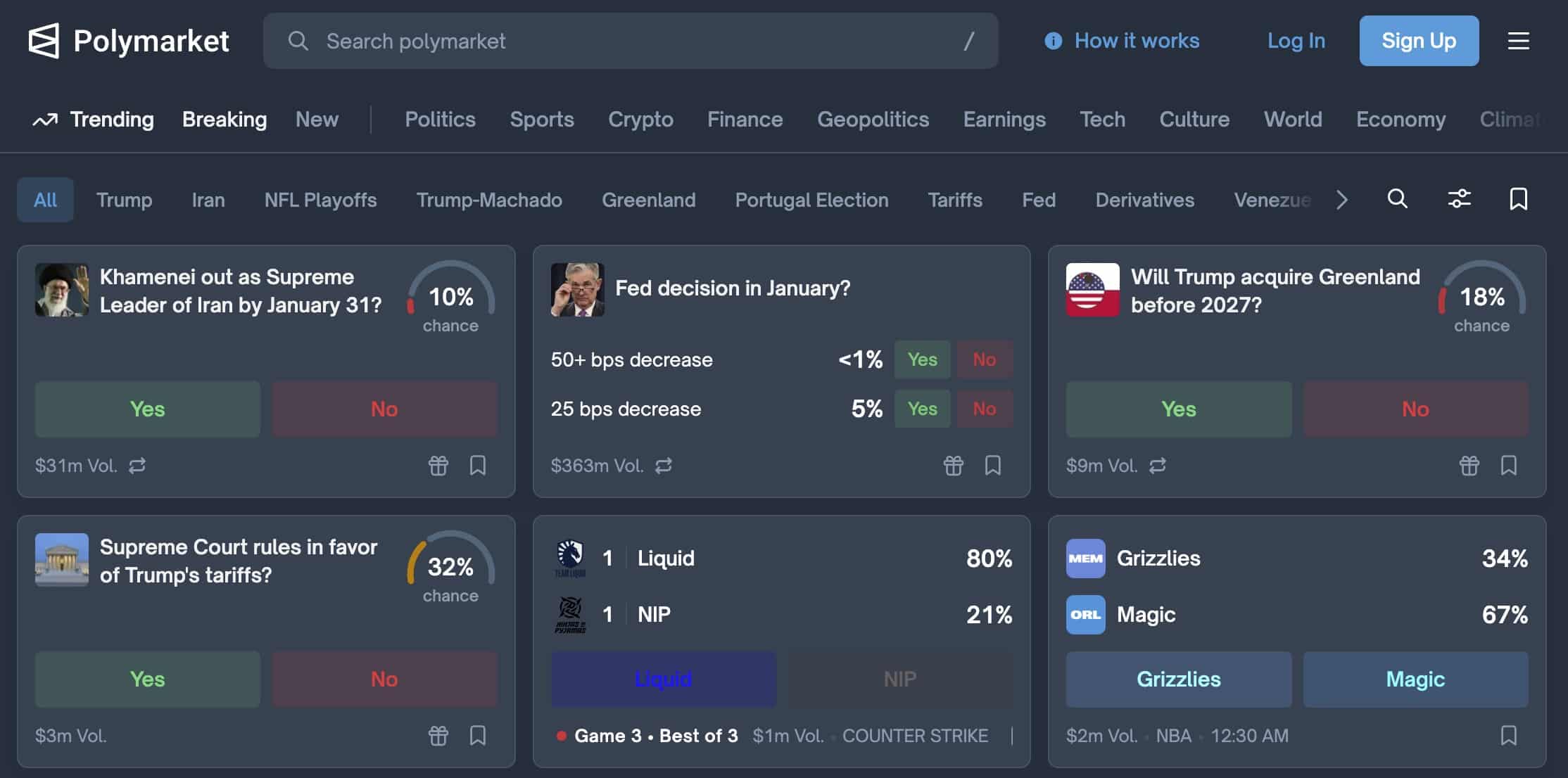
Polymarket operates on the Polygon (POL) blockchain. Blockchain technology is used to process deposits and withdrawals, record trades, and settle outcomes transparently. Smart contracts handle market logic, execute trades, and settle bets autonomously.
In 2025, the Intercontinental Exchange (ICE), the parent company of the New York Stock Exchange (NYSE), invested $2 billion in Polymarket and said Polymarket’s data would soon be integrated into the NYSE. Polymarket was valued at $9 billion during the latest funding round. Shayne Coplan, Founder and CEO of Polymarket, opined,
Visit PolymarketBy combining ICE’s institutional scale and credibility with Polymarket’s consumer savvy, we will be able to deliver world-class products for the modern investor. Realizing the potential of new technologies, such as tokenization, will require collaboration between established market leaders and next-generation innovators. We couldn’t be more excited to build together.
How Does Polymarket Betting Work?
Users can buy “Yes” or “No” shares on Polymarket based on what they think will happen. Shares are always priced between 0 and 1 USDC, and prices update in real time as new information comes in, reflecting the market’s implied probability.
For example, at the time of writing, the market for the 2026 FIFA World Cup winner showed Spain with a 16% chance of winning. Spain’s “Yes” shares were priced at 16 cents, while “No” shares traded at around 85 cents.
If you believe Spain will win, you can buy “Yes” shares at 16 cents. The value of those shares will rise or fall as Spain progresses through the tournament.
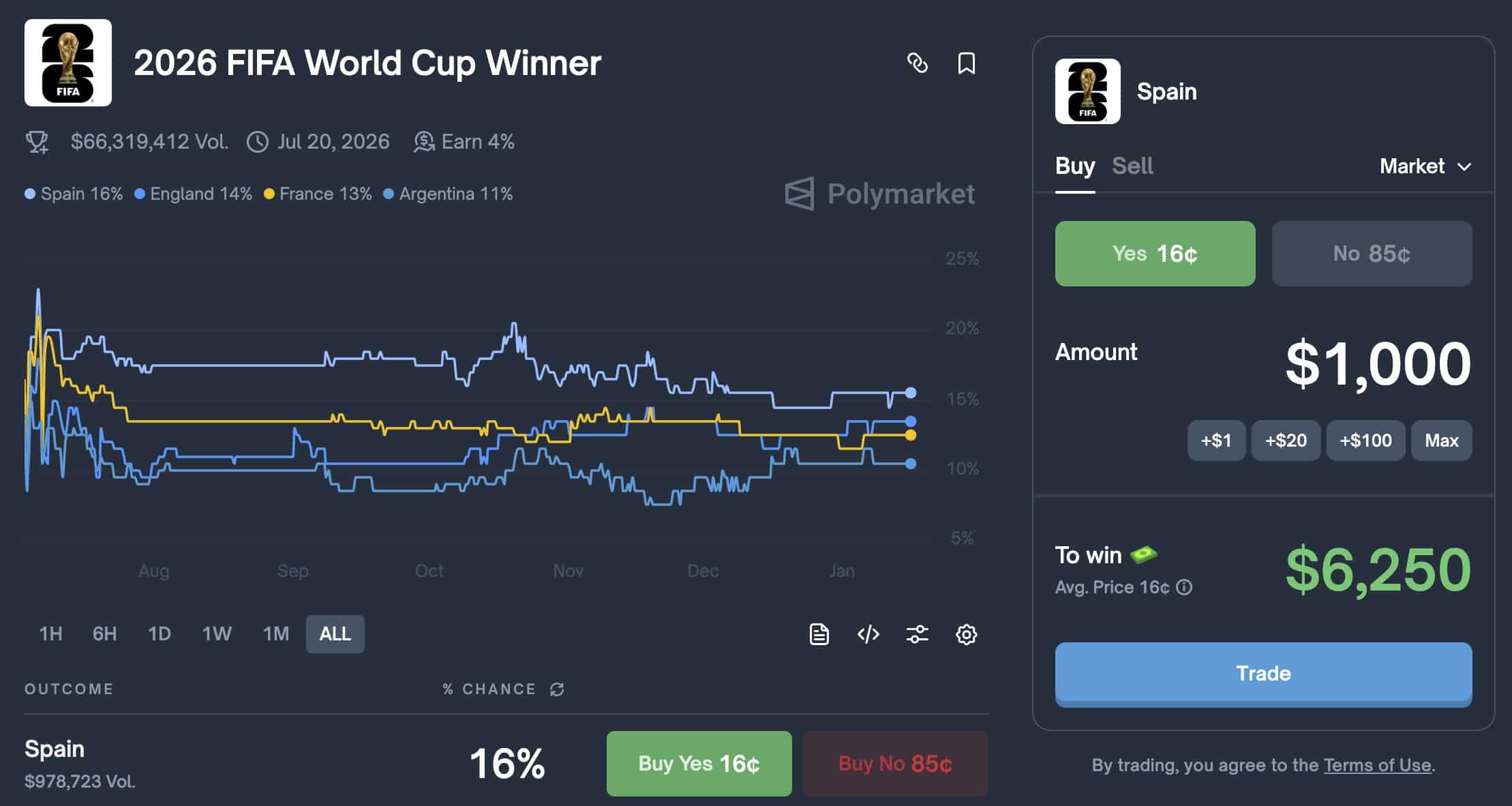
If Spain reaches the semi-finals, its chances improve, and the price of “Yes” shares may rise, say to 80 cents. At that point, you can sell your shares early and lock in a profit.
If Spain goes on to win the World Cup, “Yes” shares settle at 1 USDC. Selling shares you bought at 16 cents for 1 USDC results in a significant gain.
While this section focuses on how Polymarket betting works for users, the next section explains the blockchain technology behind it.
How Polymarket Works on the Blockchain?
Polymarket runs as a decentralized prediction market built on blockchain technology. This removes the need for a central operator to hold user funds or manually settle outcomes.
Polymarket uses a hybrid model where trades are matched off-chain, but final settlement happens on-chain in a non-custodial way. This keeps trading fast while preserving transparency.
Sites Like Polymarket in 2026
Crypto casinos and sportsbooks are popular sites like Polymarket in 2026, especially in regions where prediction markets are limited or unavailable. While these platforms don’t offer event-based prediction markets, they do support live sports betting and other wagering options using crypto. Since both Polymarket and these platforms rely on cryptocurrencies and non-custodial wallets, crypto users can switch between them easily without a steep learning curve.
Below, we have listed the top crypto casinos that you can consider if you are blocked or if you want a different option.

Register to Claim 50 Free Spins - No Deposit Needed!

200 Free Spins with your first deposit

€2,000,000 Monthly Prize Pool

Stake £10 and Get up to 200 Free Spins

Up To €45 in Bonuses + 60 Free Spins

Up To 50 Free Spins

100% up to €100 + 100 free spins

100% Up To €250 + 100 Free Spins

Up To 100 Free Spins
Polymarket Fees & Costs Explained
Polymarket is designed to be low-cost, especially compared to traditional betting platforms. Most users will pay little to nothing in fees, depending on the markets they trade and how they access the platform
Trading Fees on Polymarket
Most Polymarket markets are completely fee-free. There are no platform fees to trade shares, and Polymarket does not charge users to deposit or withdraw USDC.
The only exception is 15-minute crypto markets, which charge a small taker fee on trades. These fees are not profit-driven and are used to fund Polymarket’s Maker Rebates Program. In these fast-moving markets, traders who take liquidity pay a small fee that varies by share price. Fees peak at about 1.56% near 50% probability and drop toward zero as prices move closer to 0% or 100%.
Collected fees are redistributed daily to traders who provide liquidity. This system helps keep spreads tighter and prices more reliable during volatile periods.
Blockchain & Gas Fees
Most users do not pay blockchain gas fees when using Polymarket. If you sign up with email or Google, Polymarket covers all gas costs for trading, approvals, and settlement. You only pay gas fees if you trade directly from a self-managed wallet like MetaMask. Even then, fees are usually low because Polymarket runs on the Polygon network.
Polymarket’s Cost Comparison With Sportsbooks
Traditional sportsbooks act as the house and build fees into their odds. Even when a bet looks fee-free, the platform takes a margin that reduces long-term returns. Polymarket works differently because there is no house. All trades are peer-to-peer, meaning users trade directly with each other, and prices move based on supply and demand.
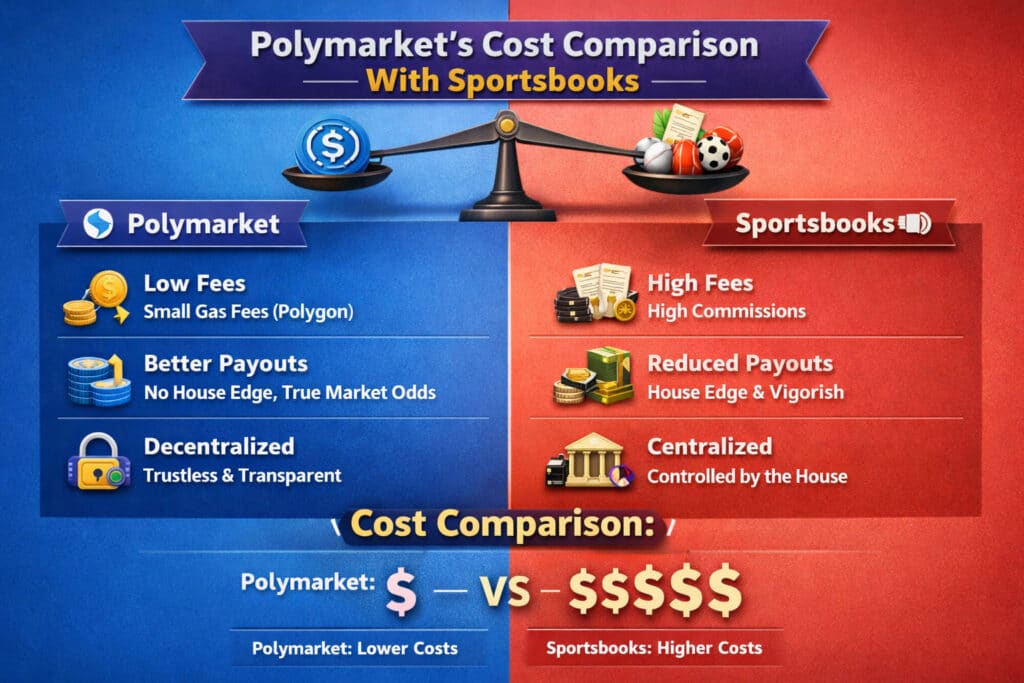
Sportsbooks benefit when users lose, which creates a built-in conflict. Polymarket does not benefit from market outcomes and does not charge trading, deposit, or withdrawal fees on most markets. Using blockchain and USDC also removes many hidden costs. Trades settle transparently on-chain, funds stay in user wallets, and prices reflect real market sentiment rather than bookmaker adjustments.
How to Use Polymarket: Step-by-Step Guide
Using Polymarket is simple, even for beginners, as long as you’re familiar with basic crypto tools. This step-by-step guide explains how to get started, place your first trade, and navigate the platform with ease.
-
Create an Account
Sign up using your email or Google account for a quick setup, or connect a non-custodial crypto wallet such as Best Wallet, MetaMask, or Coinbase Wallet.
-
Connect via Google
Click on “Continue with Google.” Follow the steps shown on the screen.
-
Connect a Crypto Wallet
If you choose wallet sign-up, select your preferred wallet from the list. If your wallet is not shown, choose WalletConnect.
-
Connect via WalletConnect (Best Wallet and others)
Scan the WalletConnect QR code using your wallet app and approve the connection request.
-
Enable Trading
After signing up, tap “Enable Trading.” Approve the request in your wallet to allow Polymarket to place trades on your behalf.
-
Deposit Funds
Add USDC to your Polymarket account by transferring from an exchange like Coinbase, sending crypto from a wallet, or buying USDC with a debit card, credit card, or PayPal through MoonPay.
-
Choose a Market
Visit the Markets page to explore active prediction markets. Use search and filters to find topics such as politics, crypto prices, or major global events.
-
Buy Yes or No Shares
Select a market and choose “Yes” or “No” based on your view. Enter the amount you want to trade and confirm the order.
-
Track or Exit Your Position
Monitor your position as prices move. You can sell your shares at any time or hold them until the market settles.
-
Withdraw Your Funds
After selling shares or when a market resolves, withdraw your USDC back to your wallet or exchange. Withdrawals are usually instant and free.
Is Polymarket Good For Sports Betting?
Polymarket is better for big, headline events than for full sports betting. It does not offer live betting, detailed match markets, accumulators, or player prop bets. Because of this, users who like betting with crypto often look for crypto sports betting sites instead. These platforms offer a more complete experience, with many sports, live betting options, and different types of bets, while still keeping the speed and flexibility that come with using crypto. For a wide range of options, you can check out our crypto sports betting guide.
How to Use Polymarket for Crypto Price Predictions?
Well, to use Polymarket for crypto price predictions, you first need a non-custodial crypto wallet and USDC on the Polygon network. After connecting your wallet, search for a market related to a specific crypto price outcome, such as whether Bitcoin will reach a certain price by a set date.
You can then buy “Yes” or “No” shares based on what you think will happen. The price of each share reflects the market’s current probability, and you can sell your position at any time before the market resolves or wait until it settles to collect winnings if your prediction is correct.
Remember, Polymarket is often used to track market sentiment rather than make direct price calls. It shows where traders believe outcomes are heading, based on real money at risk. In traditional finance, the Efficient Market Hypothesis argues that markets quickly price in all available information. Under this view, odds or prices reflect the best current estimate of future outcomes.
Polymarket reflects this process in real time. As traders adjust positions around inflation expectations, Federal Reserve decisions, or geopolitical developments, the odds shift to show emerging consensus.
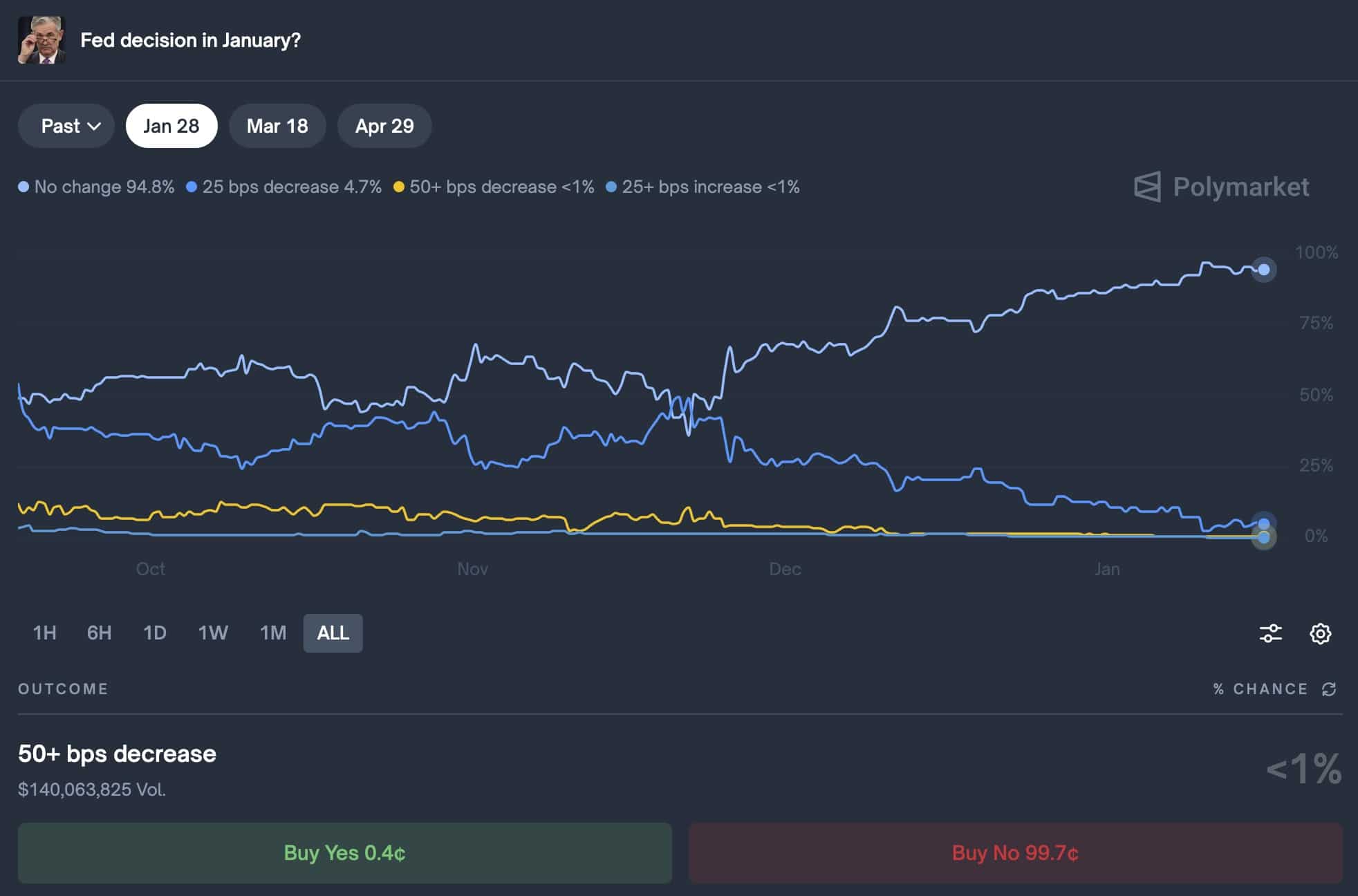
Because participants commit capital, Polymarket highlights money-backed positioning, not opinions. This makes it a useful sentiment tool, not a prediction guarantee. In the past, this kind of early sentiment tracking was limited to surveys, polls, or private research shared with institutions. Polymarket makes similar signals available in real time to anyone, without permission, geographic limits, or paywalls.
Limitations of Prediction Markets
Prediction markets can be powerful tools for understanding sentiment, but they have clear limits. Knowing where they fall short helps set realistic expectations and avoid overconfidence.
- Market efficiency: Economist Robert Shiller has argued that markets are not always fully efficient. Narratives, emotion, and momentum can temporarily influence consensus, especially during major macro or geopolitical events.
- Participation bias: Prediction markets reflect only the views of active participants. If certain regions or groups are missing, the signal may be incomplete.
- Liquidity gaps: Some markets are deep, while others are thin. Low liquidity can exaggerate short-term moves that don’t reflect broader sentiment.
- Information quality: Markets react quickly, but early information can be incomplete or wrong. Odds may shift again as clearer data emerges.
- Outcome risk: Strong consensus does not guarantee correct outcomes. Unexpected events can quickly invalidate prevailing expectations.
- Access limits: Regulatory restrictions can limit who participates. This may affect how representative the market truly is.
Is Polymarket Safe and Legit?
Polymarket is safe and legit; however, it isn’t a fully regulated site. A lot of people ask, “Is Polymarket legal in the United States?” We found it is allowed in the U.S. and many other countries in the world. In 2025, Polymarket was cleared by the U.S. Commodity Futures Trading Commission to relaunch in the U.S. after a hiatus of more than three years.
The platform is, however, restricted in several regions across the world, including Australia, Germany, the United Kingdom, and Singapore, among others. Let’s learn more about the platform’s transparency, oracles, and risks below.
Platform Transparency
Polymarket uses a hybrid-decentralized design to enable fast trading without sacrificing on-chain settlement. Orders are matched off-chain to reduce latency and fees, while final settlement and payouts occur on the blockchain, so outcomes remain publicly verifiable.
Market rules, resolution sources, and settlement logic for each market are coded into smart contracts for autonomous settlement. This allows users to understand how outcomes will be decided before committing funds, even though edge cases and disputes can still arise.
Smart Contract & Oracle Risk
Polymarket relies on smart contracts to hold funds, execute trades, and settle markets automatically. If a contract contains a bug or vulnerabilities, it may be exploited by hackers, leading to investor losses.
Market outcomes are finalized using an oracle system that reports real-world results on-chain. While this process includes dispute mechanisms, unclear events or poorly defined rules can still lead to delays or contested resolutions. Oracle downtime and hacks may adversely affect Polymarket performance.
User Responsibility
Polymarket is a non-custodial platform, which means users control their own wallets and funds. The platform does not store passwords, recover wallets, or reverse transactions on a user’s behalf.
This puts responsibility on the user to manage wallet security, approvals, and networks correctly. Sending funds to the wrong address, approving malicious contracts, or losing access to a wallet can result in permanent loss with no recovery option.
Restricted Regions
Polymarket is available to U.S. users as discussed above, as of 2026. The platform was cleared by the U.S. Commodity Futures Trading Commission to relaunch in the U.S. in 2025. The favorable regulatory decision came after Polymarket acquired QCEX, an FTC-licensed derivatives exchange and clearinghouse, for $112 million in July 2025, giving the company a legal path to operate in the U.S.
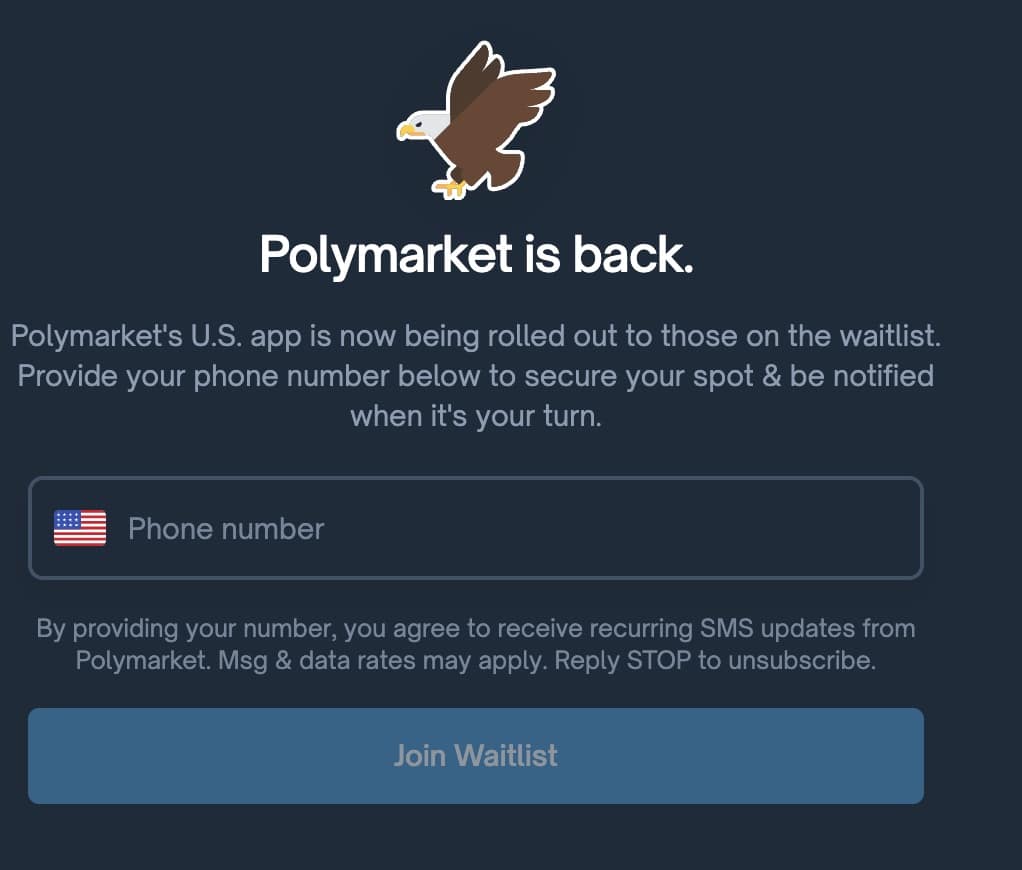
However, Polymarket is restricted in more than 30 countries, including:
- Australia
- Germany
- France
- United Kingdom
- Italy
- Poland
- Russia
- Singapore
- Thailand
- Taiwan
- Venezuela
- Yemen
- Zimbabwe
Polymarket vs. Kalshi vs. PredictIt: Which One is Better?
The return of Polymarket to the U.S. could reshape the prediction market landscape and introduce meaningful competition to platforms like Kalshi and PredictIt. While all three serve a similar purpose, they operate under very different models. The key differences relate to regulation, user access, pricing mechanics, and who is legally allowed to participate. The table below compares them :
Feature
Polymarket
Kalshi
PredictIt
Platform Type
Decentralized crypto prediction market
Regulated prediction market
Research-focused prediction market
Regulatory Status in the U.S.
CFTC-regulated
CFTC-regulated
CFTC-regulated
Availability
U.S. and other select regions
U.S. and other select regions
U.S.-only
Custody Model
Non-custodial (user wallets)
Custodial
Custodial
Crypto wallet signup/log in
Yes
No
No
Currency Used
USDC (crypto)
USD (fiat)
USD (fiat)
Cryptocurrency support
Yes
Yes
No
KYC Required
No (via crypto wallet access)
Yes
Yes
Pricing Mechanism
Peer-to-peer market pricing
Exchange-style pricing
Exchange-style pricing
Fees
Fee-free, except for 15-minute crypto markets
Trading and exchange fees
Trading fees
Market Scope
Politics, macro, crypto, sports, culture
Politics, macro, crypto, sports, culture
Politics-focused
Trade Flexibility
Can exit positions anytime
Can exit positions
Position limits apply
Primary Use Case
Market sentiment, forecasting and speculation
Market sentiment, forecasting and speculation
Academic & political research
Polymarket is best suited if you want crypto-native trading and no KYC setup via crypto wallet access. Polymarket suits users who are comfortable managing a crypto wallet and smart contracts, and those who prefer a decentralized and non-custodial setup.
Kalshi is better for users who prefer not to use crypto. It focuses on regulation and compliance, operating as a fully CFTC-regulated exchange with fiat balances and custodial accounts. PredictIt is designed for political research and small-scale trading. It operates as a non-profit, research-focused platform aimed at academic use rather than active or high-volume trading.
Polymarket Political Betting: How to Bet on Elections?
You can use this decentralized prediction market platform for real-time forecasting on the presidential election and other political future events and election outcomes worldwide. Follow these simple steps.
-
Log In or Sign Up
Visit Polymarket and log in using a crypto wallet. For beginners, using Best Wallet makes setup simple and keeps you in full control of your funds.
-
Enable Trading
After logging in, click “Enable Trading” and approve the request in your wallet. This allows Polymarket to execute trades on your behalf.
-
Fund Your Account
Deposit USDC on the Polygon network. You can transfer USDC from an exchange or buy it directly through supported on-ramps.
-
Open the Politics Category
From the homepage, navigate to the Politics section. Choose an active market such as U.S. midterms, primaries, or general elections.
-
Select an Election Market
Open a specific election market, for example, a midterms outcome with options like “Democrats Sweep,” “Republicans Sweep,” or other defined outcomes.
-
Buy Yes or No Shares
Choose the outcome you believe will happen and buy “Yes” or “No” shares at the current odds. Enter the amount and confirm the trade.
-
Monitor or Exit Early
Track how the odds move as news and polling change. You can sell your shares at any time before the election if you want to lock in gains or cut losses.
-
Settle or Withdraw
If you hold winning shares until final settlement, they resolve at 1 USDC. Withdraw your USDC back to your wallet or exchange.
Benefits & Risks to Consider Before Using Polymarket
Before using Polymarket, it’s important to understand both the advantages and potential risks involved. While the platform offers transparent, crypto-based prediction markets, factors like market limitations and regulatory uncertainty are worth considering.
Pros
-
Peer-to-peer pricing reflects real-time market sentiment rather than bookmaker odds
-
Non-custodial setup gives users full control of their funds
-
No KYC required when using a crypto wallet
-
Ability to enter and exit positions before market resolution
-
Transparent settlement using blockchain and public market rules
Cons
-
Smart contract and oracle failures can lead to unexpected outcomes
-
User is fully responsible for wallet security and transaction accuracy
-
Access is restricted in several countries
-
Market outcomes may be disputed or delayed in edge cases
-
Not suitable for users unfamiliar with crypto wallets or blockchain basics
Conclusion: Polymarket Review
Polymarket shows how prediction markets can function without a traditional bookmaker by using peer-to-peer trading and blockchain settlement on Polygon. Polymarket’s setup enables fast transactions, low fees, non-custodial access, and a clear interface for tracking market sentiment.
At the same time, Polymarket’s history underscores the role of regulation. The platform previously paid a $1.4 million CFTC penalty and paused operations before later securing approval to relaunch in the U.S. While Polymarket is accessible in many regions, restrictions still apply in certain jurisdictions. Polymarket delivers well, but users seeking deeper sports markets and richer betting options might prefer exploring dedicated crypto sports betting sites alongside it.
Visit PolymarketSee Also:
- Top Polymarket Alternatives in 2026
- Top Prediction Markets in August 2026
- Best Decentralized Prediction Markets With No KYC in 2026
FAQs:
How accurate is Polymarket compared to polls?


Prediction markets like Polymarket often outperform polls because they aggregate incentives, information, and capital rather than opinions alone.
How does Polymarket work as a decentralized prediction market?
Polymarket works as a decentralized prediction market by allowing users to trade “Yes” or “No” shares on real-world outcomes using crypto, with prices set by market demand rather than a bookmaker. Markets settle automatically based on verified outcomes, and users can buy or sell their positions at any time before settlement.
How does Polymarket differ from traditional betting platforms?
Polymarket differs from traditional betting platforms by using market-driven pricing instead of bookmaker-set odds. Thus, it lets users trade directly with each other. It also focuses on event outcomes rather than full sports betting features like live bets or accumulators.
Prediction Markets vs. Sportsbooks, which is better?
Prediction markets are better for sentiment and forecasting. Sportsbooks are better for live sports coverage and traditional betting formats.
Is Polymarket legal in the United States?
Yes. Polymarket is available to U.S. users following CFTC approval in 2025.
Is Polymarket legal?
Polymarket is legal in the U.S. and select regions but geo-blocked in many countries, including the UK, Australia, and Singapore, due to local regulations.
How to get started on Polymarket?
Connect a crypto wallet or sign in with Google, deposit USDC on Polygon, enable trading, and buy “Yes” or “No” shares.
How to connect your crypto wallet to Polymarket?
Choose wallet login, select your wallet or WalletConnect, scan the QR code, and approve the connection in your wallet app.
What wallets are compatible with Polymarket?
MetaMask, Coinbase Wallet, Phantom, Best Wallet, and any WalletConnect-supported wallets are compatible with Polymarket.
How do you make money on Polymarket?
You profit by buying shares at a lower price and selling higher, or by holding winning shares until they settle at 1 USDC.
References
- Commodity Futures Trading Commission. CFTC Orders Polymarket to Pay $1.4 Million for Unregistered Event-Based Binary Options. U.S. Commodity Futures Trading Commission, 3 Jan. 2022,
www.cftc.gov/PressRoom/PressReleases/8478-22. - Commodity Futures Trading Commission. Designated Contract Markets. U.S. Commodity Futures Trading Commission,
www.cftc.gov/IndustryOversight/IndustryFilings/TradingOrganizations/49571. - Commodity Futures Trading Commission. Contracts and Products. U.S. Commodity Futures Trading Commission,
www.cftc.gov/IndustryOversight/ContractsProducts/index.htm. - Polymarket. Geoblocking and Restricted Regions. Polymarket Documentation,
docs.polymarket.com/polymarket-learn/FAQ/geoblocking. - Polymarket. What Is Polymarket?. Polymarket Documentation,
docs.polymarket.com/polymarket-learn/get-started/what-is-polymarket.

Why you can trust 99Bitcoins
Established in 2013, 99Bitcoin’s team members have been crypto experts since Bitcoin’s Early days.
Weekly Research
100k+Monthly readers
Expert contributors
2000+Crypto Projects Reviewed