




In This Article
The rise of corporate Bitcoin holdings has changed how companies think about their balance sheets. Instead of holding only cash or bonds, some public companies holding Bitcoin are now treating it as part of their core reserves. These Bitcoin treasury companies are using BTC to manage inflation risk, unlock new funding options, and gain exposure to long-term value growth. It’s a change in strategy that’s reshaping how corporate finance approaches digital assets.
Key Takeaways
- Bitcoin treasury companies hold BTC as a real part of their balance sheet, not just as a side bet.
- Companies are using BTC to hedge inflation, boost returns, and unlock new ways to raise capital.
- These moves are shaping markets, from ETF growth to more friendly laws and better crypto tools.
- Retail investors often follow corporate buys, which helps drive price and bring more attention to Bitcoin.
- By 2030, analysts think a quarter of S&P 500 companies could hold BTC, with central banks getting involved too.
Bitcoin Corporate Adoption: Summary
Bitcoin treasury companies are putting BTC on their balance sheets the same way they’d hold cash or bonds. What started with MicroStrategy in 2020 has turned into a real trend, with hundreds of public companies now doing the same. These firms aren’t just chasing hype, they’re betting on Bitcoin as a long-term asset that can help protect against inflation and boost overall returns.
It’s not just tech companies either. Media firms, miners, and even casinos are getting involved. This shift is changing how markets work, pushing demand for ETFs, influencing regulation, and opening the door for more tools to support corporate Bitcoin strategies. With over 800,000 BTC now in corporate hands and central banks starting to take notice, Bitcoin is becoming a serious part of how companies manage their money.
What Are Bitcoin Treasury Companies?
Bitcoin treasury companies are private companies or publicly traded companies that hold BTC as a core treasury asset on their balance sheet. Instead of sticking strictly to cash or securities, these entities view Bitcoin as a legitimate part of their treasury strategies, treating it more like an asset class than a speculative play.

This is a significant shift in how corporate treasurers think about liquidity, portfolio risk, and the future of money. It’s part of a broader global adoption trend across both traditional finance and crypto-native sectors.
What makes these companies different:
As of 2025, several companies hold more than 800,000 BTC combined. That’s almost 4% of all BTC in circulation, spread across thousands of crypto wallet addresses.
Some of the more prominent Bitcoin treasury companies include:
This movement is catching the attention of institutional investors, sparking debates across capital markets, and raising questions about how Bitcoin fits into modern corporate investment strategy.
Why Companies Are Adding Bitcoin to Their Balance Sheets?
The reasons companies are diving into BTC are layered, but they usually fall into a mix of financial logic, strategic positioning, and a bit of brand storytelling. Here’s what’s driving the trend:

- Inflation Hedge – Inflation eats away at cash and short-term funds. Bitcoin offers a potential hedge against that by being scarce and decentralized. For companies that want more control over their reserves, BTC offers an alternative to traditional treasury assets.
- Diversification and Risk Management – Bitcoin often moves differently from stocks and bonds. That makes it a useful tool for balancing portfolio risk, especially when paired with other cryptocurrencies or traditional assets. It’s not just about gains, it’s about a smarter strategy.
- Long-Term Value Growth – Firms aren’t just hoping BTC holds steady; they believe it will gain value. With a track record of major price jumps, Bitcoin is seen as a long-term investment that could boost shareholders’ returns. It’s one way to try and outperform in a tough market.
- Boosting Stock Performance – MicroStrategy’s bold BTC strategy helped drive its stock performance up thousands of per cent. That kind of surge catches eyes. When publicly traded companies announce Bitcoin buys, the media and markets notice.
- Evolving Regulations and Accounting – Things are getting clearer. In places like the U.S., cryptocurrency accounting is improving, and regulations are making it easier to add BTC to the books. New standards now allow firms to reflect certain gains, making Bitcoin less of a black box.
- Innovative Financial Tools – Some companies are using BTC to launch new types of securities or raise capital for future projects. Bitcoin isn’t just sitting there, it’s part of a broader strategy to unlock new value.
- Market Dynamics and FOMO – When a few big players dive in, others follow. BTC’s fixed supply means that large firms’ buying Bitcoin decisions can impact market dynamics, and no one wants to be the last to act while competitors gain a foothold.
- Sovereignty and Narrative – Some firms are leaning into the idea that Bitcoin equals freedom. For example, Trump Media has used its BTC strategy to position itself as independent from banks and aligned with a new world of decentralized digital assets.
Bitcoin vs. Fiat: What’s Profitable for Institutions
Over the past five years, Bitcoin has delivered an average compound annual growth rate of around 155%. That puts it far ahead of traditional assets like gold, equities, or cash. A $10,000 investment in Bitcoin ten years ago would now be worth roughly $93,000. In comparison, the same amount invested in the S&P 500 would have grown to about $26,000 over the same period.

The S&P 500 has performed well in its own right, returning about 15 percent annually over the last five years and approximately 17.5% over the past fifteen. It’s been a consistent performer and remains a core long-term growth option for many institutional portfolios.
Gold, while more defensive, has shown mixed results. Over the past five years, it returned about 7% annually, and in some shorter windows, such as the most recent three-year stretch, it delivered closer to 23%. From 2000 to 2020, gold increased by approximately 360%, though it still lagged behind broader equity indices over that span.
Cash and money market instruments, which include T-bills, certificates of deposit, and commercial paper, offer stability and quick access to funds. However, their returns are lower than more risky investment vehicles, typically ranging between 4.24–4.26% APY for short-term Treasury Bills, for example.
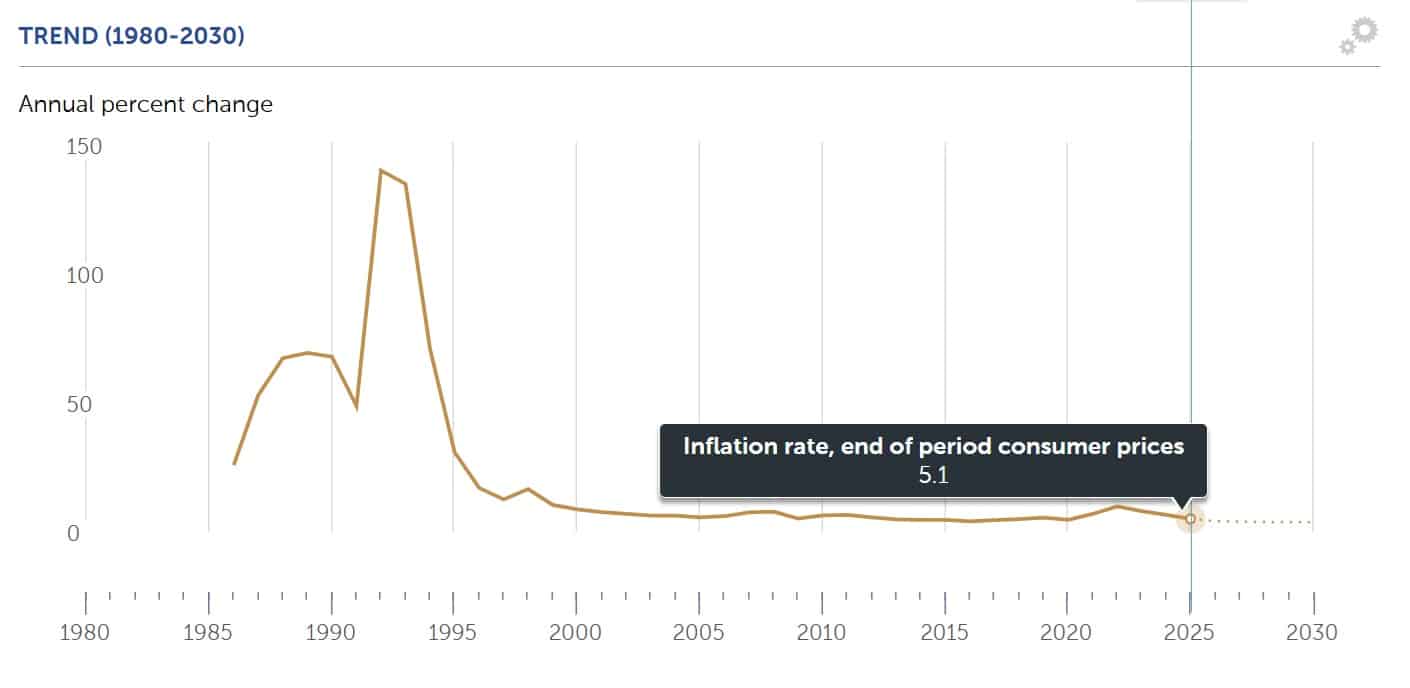
Holding straight cash in your bank account has no economic benefits, unless you can find a savings account that beats inflation, which currently sits at around 5.1% according to the International Monetary Fund.
These instruments prioritize liquidity and capital preservation, but the trade-off is almost no meaningful growth, especially during periods of rising inflation.
Opportunity Cost of Idle Fiat in Traditional Treasury Strategies
Holding large amounts of cash may feel safe, but it barely grows. Even money market instruments and T-bills rarely earn much more than 4%, and sometimes far less. Compare that to Bitcoin’s average performance, and it becomes clear that doing nothing with your cash can cost you a lot. For companies with long planning horizons and higher return goals, this is a growing concern.
Institutional Appetite for Asymmetric Risk/Reward Assets
Bitcoin isn’t low risk, but that’s part of why institutions are paying attention. The upside is massive, and when sized appropriately, it can strengthen a portfolio without overwhelming it.
A few things are clear:
Liquidity & Convertibility in Treasury Management
When it comes to treasury planning, liquidity and the ability to move funds quickly are essential. Cash and money market instruments offer nearly instant access, usually within one to three business days. They carry very little risk and are ideal for short-term obligations, but their returns are minimal.

Gold is widely recognized and liquid, but settling a gold transaction often takes longer. It also comes with extra costs for storage and insurance. While it’s a strong store of value in times of uncertainty, it’s slower to access and manage than digital alternatives.
Bitcoin operates in 24/7 global markets and offers deep liquidity across exchanges. Settlement happens quickly, and there’s no need to rely on a central bank or intermediary. That level of flexibility makes it especially attractive for institutions that want to move capital in and out efficiently, without being tied to banking hours.
There are also newer tools being built around Bitcoin that improve its utility. For example, Bitcoin-backed Stablecoins such as Mezo’s mUSD allow institutions to borrow against their Bitcoin without having to sell it. This preserves exposure to potential upside while still unlocking liquidity. Additionally, lending platforms and structured finance products are increasingly using Bitcoin as collateral, offering yet another way for firms to generate returns without giving up their position.
To help compare how each asset fits into treasury planning, the table below breaks down key factors like returns, volatility, liquidity, and opportunity cost. It offers a side-by-side view of how cash, gold, equities, and Bitcoin perform across several dimensions that matter to institutions.
| Aspect | Cash/Money Market | Gold | S&P 500 | Bitcoin (BTC) |
| Avg. annual return | ≈ 0–3% | ≈ 7%–23% | ≈ 10–17% | ≈ 155% |
| Volatility | Very low | Low–Moderate | Moderate–High | Very High |
| Correlation with equities | N/A | Low | N/A | Low–Moderate |
| Liquidity / Convertibility | Instant (1–3 days) | Liquid, slower | Daily market trading |
24/7 global, near-instant
|
| Cost/drags | Minimal, interest risk | Storage + insurance | Management fees |
Custody/security risk
|
| Opportunity cost | High when yields low | Moderate–Low | Low |
Variable, potential high reward
|
Each asset class comes with its own trade-offs. Cash is reliable for meeting short-term obligations, but it offers little growth. Gold remains a solid defensive play, while equities continue to drive long-term value. Bitcoin, despite being the most volatile, stands out for its growth potential and growing acceptance among institutions.
When Did Bitcoin Treasury Adoption Begin: Timeline
For most of its early years, Bitcoin sat outside traditional finance. That changed in 2020 when MicroStrategy allocated a portion of its cash reserves to BTC. The move got attention, and other companies started exploring the same path, looking for alternatives to cash that could offer stronger long-term returns.

Since then, a growing number of public and private firms have added Bitcoin to their balance sheets. Some view it as a hedge, others as a long-term store of value. This timeline breaks down the key moments that shaped Bitcoin’s role in corporate treasury strategy.
2009–2017: Foundations
Bitcoin was launched on January 3, 2009, with the mining of its first block. In the early days, it traded for less than a penny and mostly circulated among hobbyists and developers. In 2010, it gained its first real-world value when 10,000 BTC were exchanged for two pizzas.
By 2011, Bitcoin experienced its first major price rally, jumping by thousands of percent. This caught the attention of tech circles and forums, but for the most part, it was still viewed as experimental and far removed from traditional finance.
2020: Corporate Treasury Moves Begin
In August 2020, MicroStrategy became the first publicly traded company to use Bitcoin as a treasury asset. The company purchased 21,454 BTC for around $250 million, making a bold statement about how it viewed the future of corporate reserves.
Two months later, Square (now Block) made its own move with a $50 million Bitcoin investment. That same year, MassMutual bought $100 million worth, and PayPal rolled out Bitcoin support for U.S. users, hinting that corporate interest in digital assets was entering a new phase.
2021: Acceleration and Momentum
By February 2021, Bitcoin’s market cap had reached $1 trillion. In March, Tesla announced a $1.5 billion Bitcoin purchase and briefly accepted BTC as payment. Although it later reversed that decision, the move pushed Bitcoin deeper into public markets and headlines. The signal was clear: Bitcoin was becoming a real part of corporate finance conversations.
2021–2022: MicroStrategy Keeps Buying
MicroStrategy continued to lead the pack. In September 2021, it added another $175 million worth of BTC, bringing its total to over 38,000 coins. By early 2022, the company had acquired around 130,000 BTC at a total cost of nearly $4 billion. At this point, Bitcoin wasn’t just a hedge for MicroStrategy, it was core to its identity.
2024–2025: New Entrants and Regulatory Tailwinds
Heading into late 2024, MicroStrategy’s total holdings reached more than 423,000 BTC. The scale of its strategy helped it gain a spot in the Nasdaq 100 by December. Meanwhile, other companies were beginning to follow a similar playbook.
In May 2025, GameStop joined the movement with a $506 million Bitcoin purchase. By June, over 60 public companies had confirmed Bitcoin on their balance sheets. These firms included both crypto-native businesses and traditional corporations like Trump Media and Metaplanet. Some had even started adding Ethereum, Solana, and XRP to diversify their digital asset exposure.
2025: Peak Activity and Government Involvement
In March 2025, the U.S. government introduced a Strategic Bitcoin Reserve funded by approximately 200,000 BTC seized in past operations. It was the first formal step toward state-level Bitcoin holdings.
On July 21, Trump Media announced a $2 billion Bitcoin allocation, stating that about two-thirds of its liquid assets were now in BTC. The company also confirmed plans to expand its crypto exposure further.
Timeline Summary
Bitcoin now sits alongside cash, gold, and equities in corporate reserve planning. What started with a few bold moves has turned into a trend backed by some of the largest public companies.
Public Companies That Hold Bitcoin Treasuries
More public companies than ever are holding Bitcoin as part of their treasury strategy. What started with MicroStrategy in 2020 has grown into a broader movement across tech, finance, mining, and even media.
Some companies are buying BTC as a long-term store of value, while others are integrating it into their core operations. As of mid-2025, over 130 public companies collectively hold hundreds of thousands of BTC, worth tens of billions of dollars.
The table below highlights some of the largest and most notable public firms with Bitcoin on their balance sheets, including how much they hold and what role it plays in their broader strategy. Note that this table has data sets as of July 2025.
| Company Name | Ticker | BTC Held (approx.) | Est. Value (USD) | Notes |
|---|---|---|---|---|
| MicroStrategy | MSTR (NASDAQ) | 607,770 BTC | ~$104B | Largest corporate holder; BTC is core to its strategy |
| MARA Holdings | MARA (NASDAQ) | 50,000 BTC | ~$8.6B | Mining and treasury-focused company |
| Century Casinos | CEP/XXI | 37,230 BTC | ~$4.4B | Under-the-radar but significant buyer |
| Riot Platforms | RIOT (NASDAQ) | 19,225 BTC | ~$3.3B | Bitcoin miner and holder |
| Trump Media & Technology Group | DJT (NASDAQ) | 18,430 BTC | ~$2B | Added BTC in July 2025, majority of its liquid assets |
| Metaplanet Inc. | 3350 (TYO) | 16,352 BTC | ~$2.8B | Japanese firm following MicroStrategy-style strategy |
| Galaxy Digital Holdings | GLXY (TSX) | 12,830 BTC | ~$2.2B | Institutional crypto platform |
| CleanSpark | CLSK (NASDAQ) | 12,608 BTC | ~$2.1B | Publicly traded miner with treasury exposure |
| Tesla | TSLA (NASDAQ) | 11,509 BTC | ~$1.35B | High-profile buyer in 2021, partial sell-off since |
| Coinbase Global | COIN (NASDAQ) | 9,267 BTC | ~$1.1B | Held as operational and custodial reserves |
| Block (formerly Square) | SQ (NYSE) | 8,038–8,584 BTC | ~$1.4B | Early adopter among fintech companies |
| Hut 8 Mining | HUT (TSX/NYSE) | 10,273 BTC | ~$1.75B | Public mining firm with treasury focus |
| Next Technology Holding | NXTT (OTC) | 5,833 BTC | ~$1B | Quiet treasury buildup in 2025 |
| Semler Scientific | SMLR (NASDAQ) | 4,846 BTC | ~$840M | Medical tech firm turned BTC holder |
| GameStop | GME (NYSE) | 4,710 BTC | ~$800M | Added BTC in May 2025 using excess reserves |
| Bitcoin Group SE | ADE (Germany) | 3,605 BTC | ~$615M | One of the largest German crypto financial firms |
| Boyaa Interactive | 0434.HK (HKEX) | 3,350 BTC | ~$570M | Gaming firm based in Hong Kong |
Bitcoin is now part of a real treasury strategy for a growing number of public companies, across industries and geographies. Whether it’s to hedge against inflation, signal long-term conviction, or gain exposure to a non-correlated asset, the reasons vary. But the trend is clear: more companies are treating Bitcoin as a reserve asset, and the list keeps growing.
Benefits & Risks of Bitcoin Treasury Strategies
The idea of holding Bitcoin on a corporate balance sheet would’ve sounded reckless over a decade ago. Today, it’s a real strategy used by public companies, mining firms, and even media brands looking to protect their reserves, grow capital, or break from traditional financial systems. But it’s not a one-sided move.

Holding Bitcoin has clear advantages, but it also demands a different kind of risk management, one that blends technical infrastructure, market awareness, and internal discipline. Below is a clear breakdown of the main benefits and trade-offs for any company thinking about treating Bitcoin as more than just an investment.
Benefits of Bitcoin Treasury Strategies
Adding Bitcoin to a corporate treasury is no longer just a fringe idea. For many companies, it’s becoming a serious consideration as they look for ways to protect purchasing power, diversify reserves, and stay ahead of financial and technological shifts. While not every firm will take the same approach, there are several distinct advantages that make Bitcoin worth evaluating as part of a broader treasury strategy.
Taken together, these benefits show why Bitcoin is gaining traction among finance teams. For companies with the right risk tolerance and long-term mindset, it can be a meaningful complement to more traditional holdings like cash, bonds, or gold.
Risks of Bitcoin Treasury Strategies
While the benefits of holding Bitcoin are real, companies also face a number of risks that need to be considered carefully. These risks don’t necessarily mean Bitcoin shouldn’t be part of a treasury strategy, but they do highlight why governance, planning, and policy matter so much when introducing a volatile and still-evolving asset into corporate finance.
Any company thinking about holding Bitcoin needs a clear strategy, strong internal controls, and the discipline to treat it like any other high-risk, high-reward asset. With the right guardrails in place, the upside can be significant, but it must be approached with care.
Market Impact of Bitcoin Treasury Companies
More companies are putting Bitcoin into real-world practice, not just as an experiment but as a part of how they manage money, risk, and capital. Whether it’s on a balance sheet, inside an ETF, or used as part of national reserves, the presence of Bitcoin in corporate finance is influencing how markets behave.

In this section, we’ll look at how that influence shows up across price action, institutional behavior, and policy direction.
1. Price movements around large buys and public announcements
Some company’s buys barely move the price, but others grab attention. A recent analysis showed only a weak connection between corporate buys and short-term price changes, yet when big names like Tesla or MicroStrategy announce their moves, there’s usually a quick price reaction. What matters more than the amount is the message. These moments shift how the market feels about Bitcoin.
The effect gets stronger when ETFs are involved. In mid-July, spot Bitcoin ETFs pulled in almost $15 billion. One of them, BlackRock’s iShares Bitcoin Trust, brought in over $1.3 billion in just two days. That flood of demand helped push Bitcoin past $123,000. Around the same time, the U.S. launched a Strategic Bitcoin Reserve. That move didn’t change the price much at first, but analysts think it could provide longer-term support over time.
2. Institutional validation and market maturation
Institutional Bitcoin investment continues to grow. More traditional firms are adding Bitcoin exposure as ETF access improves and rules become clearer. Deutsche Bank pointed out that Bitcoin is becoming a stable part of some institutional portfolios. Retail investors still dominate ETF ownership, but companies and investment firms now hold around 10 to 15 percent of positions, adding steady capital into the mix.
Open interest in Bitcoin futures climbed to $57 billion recently, and funding rates are staying level. These are signs of a market running on capital and planning, not just short-term hype. More firms are thinking long-term, and Bitcoin is slowly becoming part of that picture.
3. Influence on ETFs, ETPs, and broader adoption
When large firms choose Bitcoin, others take notice. That’s helped drive the creation of new ETFs and other crypto products. In 2025 alone, Bitcoin ETF inflows crossed $50 billion. That level of activity helped these funds grow faster than gold ETFs did during their early years.
Big names like Fidelity, State Street, and BNY Mellon are now offering services built for Bitcoin. These tools include custody solutions, crypto lending, and software that helps companies add Bitcoin into treasury plans. All of this supports Bitcoin financial strategy on a much larger scale.
Some countries are also watching what companies do. Nations like Ukraine and Bhutan are experimenting with Bitcoin for their own reserves, often influenced by how corporate players are treating it. It is not just about early adopters anymore. The idea of Bitcoin as a corporate treasury asset is starting to fit into much broader financial systems.
4. Correlation with macro trends and monetary policy
Bitcoin doesn’t move in isolation. It reacts to changes in interest rates, regulation, and global policy. The passage of the Digital Asset Clarity Act helped drive price action upward, while political uncertainty and rate hikes cooled momentum. This shows Bitcoin is now part of how the broader market reacts to news.
In 2024, Bitcoin’s correlation with traditional indexes like the S&P 500 and NASDAQ reached 0.87 during volatile periods. That level of connection means Bitcoin can behave more like a risk asset at times, especially when markets are shaky.
At the same time, geopolitical shifts and growing concerns over dollar dominance are pushing some firms and countries to look elsewhere. Bitcoin plays a role here too, offering an option for access and autonomy when trust in traditional systems drops.
As more companies and ETFs accumulate Bitcoin, the supply on exchanges drops, and long-term pressure starts building. That makes it harder for small events to move the market. Meanwhile, infrastructure continues to grow. More services are coming online to support corporate crypto investment, including custom tools for custody, lending, and reporting.
Case Study: MicroStrategy’s Bitcoin Strategy
MicroStrategy kicked off its Bitcoin strategy in August 2020 with a $250 million buy, using cash on hand to acquire 21,454 BTC. That decision set the tone for what would become one of the most aggressive Bitcoin acquisition plans by any public company.

To keep expanding its position, the company raised money through convertible senior notes. In December 2020, it issued $650 million in zero-coupon notes to fund more purchases. By November 2024, it had scaled up significantly, issuing $2.6 billion worth of zero-interest senior notes, later increased to $3 billion. Altogether, MicroStrategy has raised somewhere between $7.27 and $8.2 billion through convertible debt.
In parallel, it launched an equity and preferred stock strategy. Through the “21/21” plan, the company aimed to raise $21 billion through equity and another $21 billion through fixed-income products like preferred stock. This plan helped them maintain flexibility while growing their holdings. In January 2025, the board approved a $2 billion perpetual preferred stock offering, giving MicroStrategy even more room to add Bitcoin to its treasury.
Impact on Stock Price, Market Cap & Perception
Since adopting its Bitcoin-focused approach, MicroStrategy’s stock has performed far beyond expectations. Its shares have climbed roughly 3,500 percent, while the S&P 500 grew only about 12 percent in the same period. Even in 2025, with some turbulence in the market, MSTR stock remained up nearly 193 percent year-to-date.
The market cap tells a similar story. MicroStrategy is now valued between $70 billion and $108 billion, driven far more by Bitcoin than by its original business intelligence products. As a result, the stock now trades at nearly twice its net asset value, a premium that reflects its position as a kind of public Bitcoin proxy.
Opinions on this premium vary. Critics like Jim Chanos believe it’s excessive and likely to shrink. Others, including Bitcoin advocates like Pierre Rochard, argue that the company’s first-mover advantage justifies the added value. Either way, investors now see MSTR more as a Bitcoin vehicle than a standard tech stock.
Michael Saylor’s public stance plays a big role here. His comparisons of Bitcoin to digital gold, and his push for companies to hold it as a reserve, have made him a key figure in the space. At this point, MicroStrategy is no longer judged just on fundamentals, but on how well its Bitcoin strategy performs.
How Bitcoin Treasury Policies Affect Retail Investors
When companies like MicroStrategy or GameStop announce Bitcoin purchases, retail investors often follow. These moves are seen as validation, sparking quick inflows from individuals who treat the news as a green light. The result is usually a short-term spike in price and trading volume.

This kind of reaction is driven by crowd behavior. People buy in because others are buying, not because they’ve assessed the risks. When prices pull back, many are left holding losses. Following corporate buys without a plan often leads to poor timing and regret.
At the same time, corporate adoption has improved the crypto landscape. It’s led to more spot ETFs, better custodial options, and stronger stablecoin infrastructure. These developments make it easier and safer for retail investors to enter and exit the market. Regulations like the Genius Act have also helped by providing legal clarity around Stablecoins and on-ramps.
Corporate buying also adds steady demand for Bitcoin, which supports liquidity and helps smooth out extreme price moves. A deeper market makes price discovery more reliable and gives retail investors more confidence.
Still, most companies don’t just use cash to buy Bitcoin. They often rely on leverage, issuing debt or stock to fund large buys. This leverage works both ways. It can push prices up in bull markets, but it also increases risk during downturns. If a major holder is forced to sell, it can cause a chain reaction that hurts retail investors the most.
What’s also changed is how Bitcoin is viewed. It’s increasingly seen as a long-term treasury asset rather than a risky bet. That matters. When large firms treat Bitcoin like digital gold, retail investors start to see it the same way.
New tools are also making it easier for individuals to do more than just hold Bitcoin. Lending platforms, credit lines, and other services give retail investors more ways to use their Bitcoin without selling it.
Corporate Bitcoin adoption has made the market more mature and accessible. But it hasn’t removed the risks. Retail investors still need to stay sharp, manage exposure carefully, and avoid blindly following the headlines.
Expert Predictions on Bitcoin Treasury Growth
ARK Invest has been one of the most vocal supporters of Bitcoin’s long-term potential. In their Big Ideas 2025 report, they laid out three possible scenarios for Bitcoin’s price by 2030: a conservative estimate of $300,000, a base case of $710,000, and a bullish target of $1.5 million.

That high-end forecast was later raised up to $2.4 million, based on growing interest from institutions, corporations, and even sovereign entities.
Other major firms show similar optimism. Jurrien Timmer, the global head of macro at Fidelity, estimates that Bitcoin could be worth as much as $1 billion per coin by 2038 using a network adoption model. Meanwhile, Bloomberg and Reuters pointed out how recent legislative clarity is making it easier for these kinds of predictions to gain traction. With the CLARITY, and Anti-CBDC Acts moving through U.S. Congress, investor confidence is growing fast.
These new laws are helping remove one of the biggest obstacles to broader Bitcoin use. The GENIUS Act clarifies rules around Stablecoins. The CLARITY Act focuses on crypto asset classification. Together with anti-CBDC legislation, these efforts make it easier for institutions to treat Bitcoin as a serious part of their strategy.
How Central Banks and Sovereign Funds are Buying In?
In early 2025, the Czech National Bank began exploring the idea of adding Bitcoin to its €140 billion in foreign reserves. Governor Aleš Michl suggested a possible 5% allocation, which would amount to around €7 billion.
He explained that if this had been done over the past decade, the bank’s returns would have been about 3.5 percentage points higher each year. That said, it would have also doubled the volatility. The board has since approved a formal review, which now includes crypto as part of its quarterly reserve updates.
There’s also growing interest from governments. Sovereign wealth funds are also taking an interest. Abu Dhabi’s Mubadala fund, for example, has invested roughly $408 million into Bitcoin ETFs, and countries like El Salvador, Bhutan, and the U.S. now hold Bitcoin directly in state reserves.
On the corporate side, the change could be even more visible. Elliot Chun from Architect Partners believes around 25% of S&P 500 companies will hold Bitcoin by 2030. Right now, only Tesla and Block are on that list. If that forecast holds, more than 120 additional companies in the index would join them within the next five years.
Conclusion: Bitcoin Treasury Companies
Bitcoin treasury companies are writing a new playbook. Instead of treating crypto as a side project, they’re putting BTC right in the middle of their corporate strategy. From hedging against inflation, to rethinking liquidity, to experimenting in the capital markets, they’re using Bitcoin to reshape what a modern balance sheet looks like. This could be the start of a new era, one where firms, funds, and even entire countries are watching closely.
DISCOVER:
- Crypto Exchange Promos & Discounts
- Crypto Wallet Promos & Discounts
- Bitcoin Staking: How to Earn Rewards by Staking Crypto?
- Next Crypto Crash: 6 Major Risks to Watch in 2025
- What are Bitcoin Ordinals & Runes: Beginner’s Guide
- Crypto Jobs Guide: How to Land Web3 Job in 2026
- What is Yield Farming: A Beginner’s Guide
- Gold vs. Bitcoin: Which is a Better Investment in 2026?
FAQ
Why are companies adding Bitcoin to their treasuries?


Some see it as a hedge against inflation or a way to protect long-term value.
Which companies hold the most Bitcoin in their treasury?
MicroStrategy leads by a wide margin. Others include Marathon Digital and Tesla.
Is it risky for companies to hold Bitcoin in their treasuries?
It can be. Bitcoin’s price moves a lot, which can affect financials.
What are the benefits of corporate Bitcoin holdings?
It can help diversify reserves and signal innovation to investors.
Will more companies add Bitcoin to their treasuries in the future?
Possibly. It depends on market conditions, regulation, and internal strategy.
How can investors track companies that hold Bitcoin?
They can follow earnings calls, SEC filings, or use tracking sites like BitcoinTreasuries.net.
References
- CaseBitcoin. “Charts.” CaseBitcoin, www.casebitcoin.com/charts.
- Board of Governors of the Federal Reserve System. “H.15 Selected Interest Rates.” Federal Reserve, www.federalreserve.gov/releases/h15/.
- ARK Invest. “ARK’s Bitcoin Price Target for 2030.” ARK Invest, www.ark-invest.com/articles/valuation-models/arks-bitcoin-price-target-2030.
- McKenna, Frances Yue. “Holding 0.001 Bitcoin Could Make You a Very Rich Person.” Yahoo Finance, www.finance.yahoo.com/news/holding-0-001-bitcoin-could-190859523.html.
- NASDAQ. “Abu Dhabi’s Sovereign Wealth Fund Reveals $408 Million Investment in BlackRock’s Bitcoin ETF.” Nasdaq, www.nasdaq.com/articles/abu-dhabis-sovereign-wealth-fund-reveals-408-million-investment-blackrocks-bitcoin-etf.
- NASDAQ. “Czech National Bank to Assess Bitcoin as Part of Reserve Strategy.” Nasdaq, www.nasdaq.com/articles/czech-national-bank-assess-bitcoin-part-reserve-strategy.

Why you can trust 99Bitcoins
Established in 2013, 99Bitcoin’s team members have been crypto experts since Bitcoin’s Early days.
Weekly Research
100k+Monthly readers
Expert contributors
2000+Crypto Projects Reviewed