








In This Article
A key first step when you DYOR (do your own research) in crypto investing starts with reading the project’s whitepaper, which explains a crypto project’s goals, the problems it solves, and how it works.
In this guide, we’ll explore cryptocurrency whitepapers and their structure, as well as the reasons why they are crucial to both crypto projects and investors. Let’s begin with some key takeaways to consider.
Key Takeaways on Crypto Whitepapers
- A crypto whitepaper is a blueprint, not a guarantee. Its existence alone doesn’t mean the project will succeed.
- The whitepaper should clearly define the problem and solution, with investors weighing the real-world benefits for adoption.
- It should detail the token’s role within the ecosystem, including distribution and supply.
- Whitepapers filled with hype and jargon but lacking clear mechanics are a red flag for poor planning or potential scams.
What is a Crypto Whitepaper?
A crypto whitepaper serves as a blueprint for a digital currency project. The whitepaper explains why the project exists, the problems it addresses, and provides technical aspects regarding how the project operates. The project team and contributors use the whitepaper as a north star, while prospective investors use it to assess the project’s viability before making an investment decision.
Purpose of a Crypto Whitepaper
A crypto whitepaper serves to inform investors and developers about the project on a technical level, including defining the project’s vision, providing a roadmap, and detailing tokenomics.
However, the whitepaper’s publication typically precedes the project launch, meaning elements could change before (or after) launch.
For example, when Bitcoin was launched, the network followed the structure outlined in the whitepaper. Since then, several “soft forks” have introduced improvements to the protocol, including more efficient transaction storage, enhanced support for multisignature transactions, and improved support for smart contracts. These improvements were developed years after the whitepaper was published.
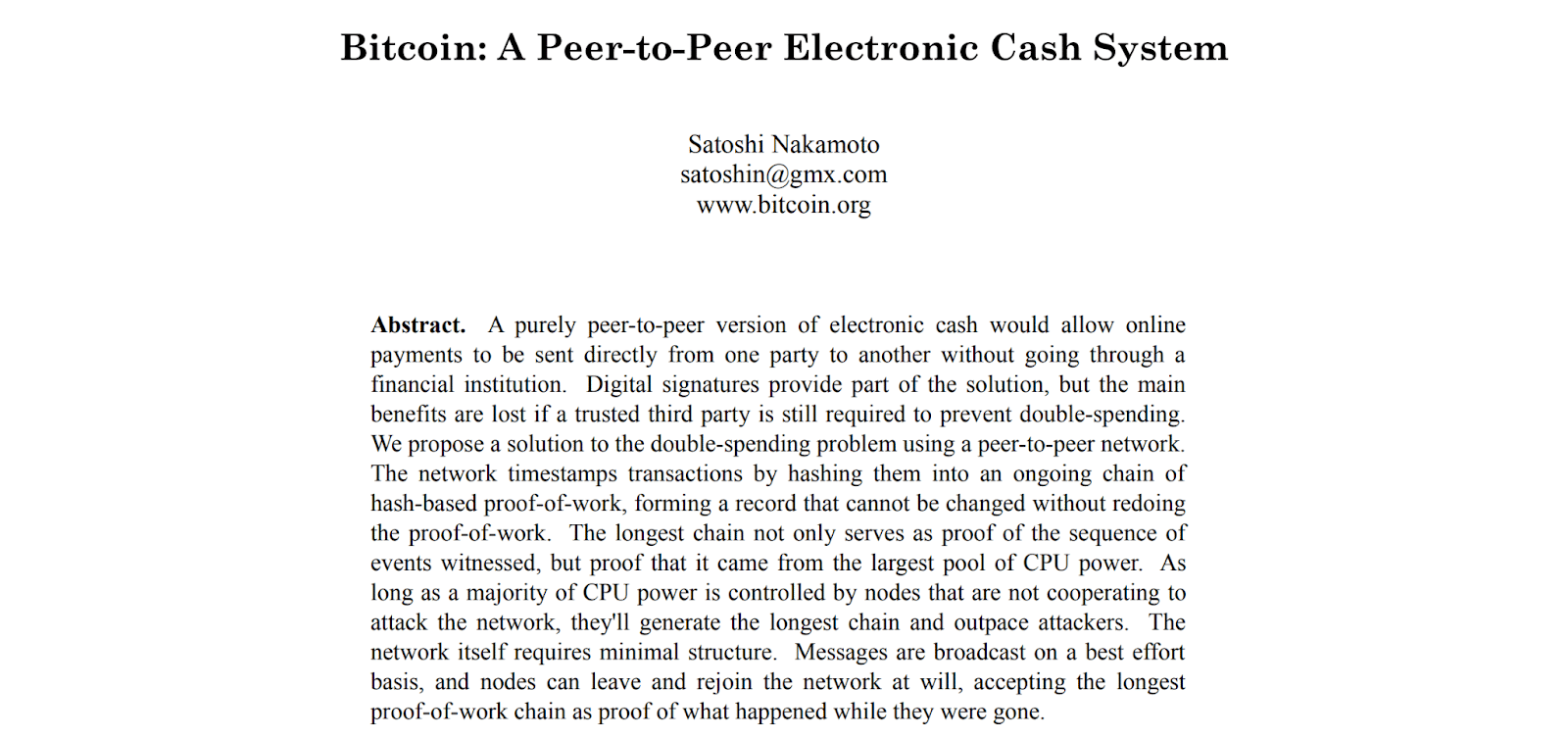
The Bitcoin whitepaper (PDF) provides a notable example of a crypto whitepaper’s purpose, simply titled “Bitcoin: A Peer-to-Peer Electronic Cash System.” The document begins with an abstract that provides an overview of the proposed network, followed by a detailed explanation of the Bitcoin network. At just nine pages, the Bitcoin whitepaper is a must-read for crypto investors, as many projects that followed used a similar blockchain structure.
Whitepaper vs. Litepaper
Some projects also publish a litepaper, which serves as a teaser, providing a high-level overview of the project rather than an in-depth explanation or too many technical terms. While many whitepapers often exceed 20+ pages, litepapers are typically under 10 pages, summarizing the project in just a few pages in some cases.
The two documents usually focus on different goals. A whitepaper explains how a project works, including technical details about the mechanics, tokenomics, and the business model (what gives the token value). By contrast, a litepaper often focuses on answering simple questions: what problems does it solve and what benefits does it offer?

Target audiences also differ, with the litepaper serving as an introduction to the community and smaller investors, whereas the whitepaper addresses larger investors and researchers. In many cases, the litepaper is released before the full whitepaper is complete.
Typical Structure of a Crypto Whitepaper
Although the project team can take liberties in the structure of a cryptocurrency whitepaper, they often follow a proven template that incorporates several key elements. These include an introduction (what problem does it solve?), followed by a proposed solution. Let’s examine the typical structure of a crypto whitepaper and the role each element serves.
Introduction and Problem Statement
The introduction typically offers innovative ideas and addresses a problem or a market inefficiency. For example, the Bitcoin whitepaper explains how a peer-to-peer payment system allows users to bypass financial institutions but points out the shortcomings of peer-to-peer solutions that require a different trusted third party. The introduction might contain an Abstract or Summary.
Proposed Solution and Technology
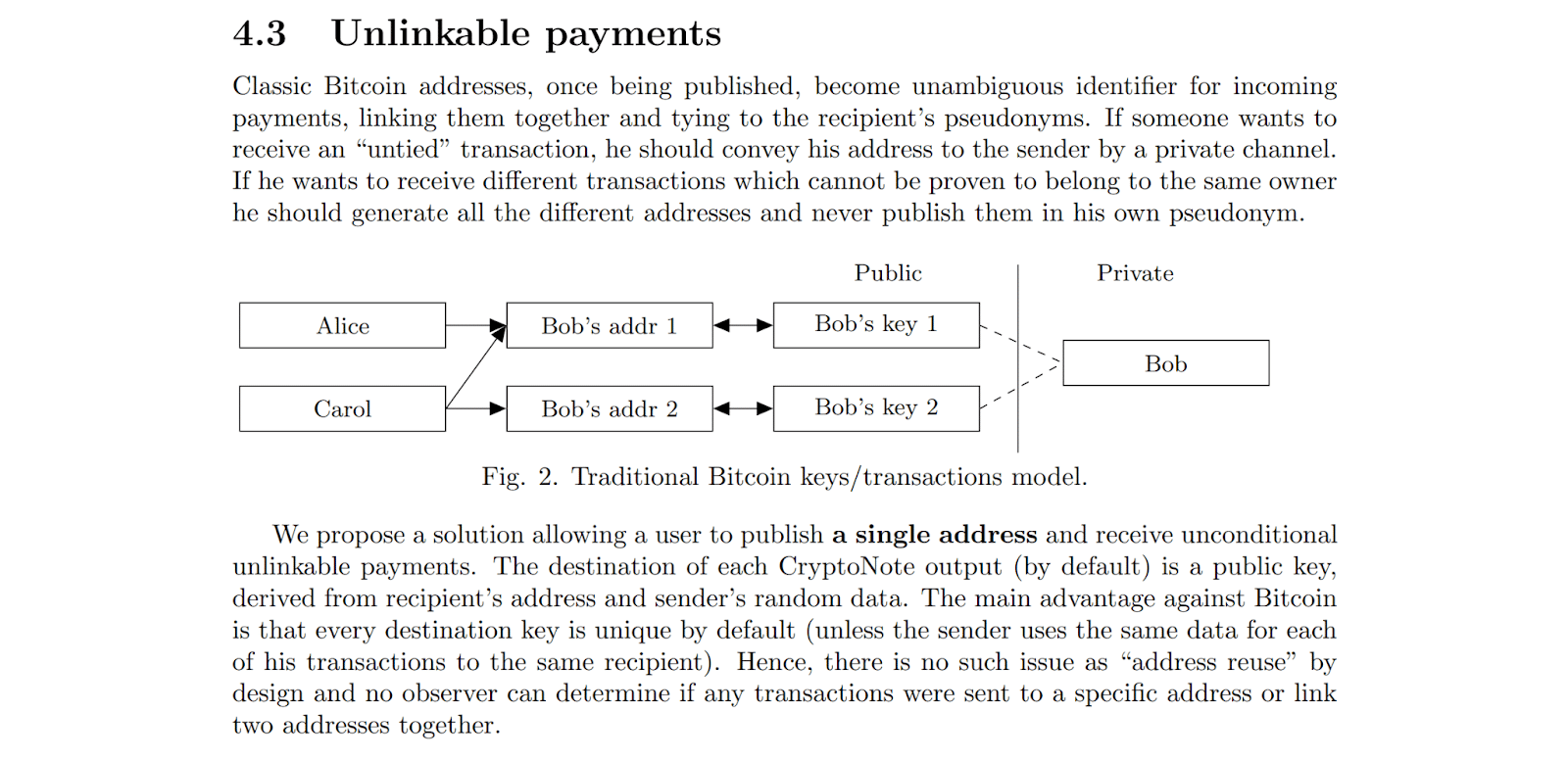
While the introduction defines the “Why,” the proposed solution or technology sections explain the “How.” This section of the whitepaper outlines the network’s architecture, consensus mechanism, and cryptographic techniques employed. For example, the Monero whitepaper details the project’s solutions to blockchain privacy using Bitcoin’s transparency as a problem to be solved.
Tokenomics
Tokenomics refers to the economic model for a cryptocurrency project regarding its coin or token. The tokenomics define the initial supply, the maximum supply, and inflationary or deflationary characteristics. For example, the Bitcoin protocol sets the maximum supply of bitcoins at 21 million, enforcing this maximum through a decentralized network of nodes that are unlikely to accept changes to this maximum, as it would go against their economic interests.
Governance and Community Model
A crypto whitepaper also typically discusses governance, which refers to the process by which decisions are made regarding changes to the protocol. The Ethereum project uses Ethereum Improvement Proposals EIPs, which are first discussed within the community before being evaluated by developers for feasibility. Some projects, typically tokens that use a host blockchain, enable on-chain voting to manage governance decisions.
Roadmap and Milestones
Although not all projects commit to expected completion dates in a whitepaper, crypto whitepapers often feature a roadmap that details an expected chronology of events. These milestones might include testnet launch, testing goals, feature releases, and mainnet launch.
Team and Partnerships
Naming the team and partnerships provides insight for investors and developers, establishing credibility for the project. However, some teams prefer to remain anonymous for various reasons, including privacy and regulatory uncertainty. Partnerships may also come well after the whitepaper’s release. If information about the team and partnerships is available, this allows potential investors and contributors to weigh these independently as part of their decision to invest time or money.
For example, the Keeta whitepaper (PDF) reveals the project team, whereas the Bitcoin whitepaper was authored by Satoshi Nakamoto, an anonymous person or team.
Why Crypto Whitepapers Matter
Cryptocurrency investing centers on buying digital assets we can’t see or touch. Whitepapers help investors and the broader community understand why these crypto assets have value, or why that value might fall at some point in the future.
A whitepaper provides a foundation for investor due diligence, offering transparency, technical specifications, and enabling investors and the community to assess a cryptocurrency’s likely regulatory status.
Investor Transparency
The whitepaper should be among the first resources any investor should consider when weighing an investment in a project. Key components center on the tokenomics, including supply and inflationary characteristics. The whitepaper should provide clarity on the token’s role within the ecosystem, enabling investors to make a more informed decision before making a purchase.
For example, Bitcoin (BTC) serves as a form of hard money. A capped maximum supply, enforced by a worldwide decentralized network, ensures this role. By contrast, Solana (SOL) is inflationary, meaning its supply will grow indefinitely. Continuing demand must outpace the rate of supply growth to see price gains.
Technical Clarity
The Aave lending and borrowing protocol marked a significant innovation in decentralized finance (DeFi), enabling peer-to-peer lending through lending pools. However, while simple to understand in concept, the Aave whitepaper (PDF) explains how the protocol works, the problem it solves, and the AAVE token’s role in the platform’s safety and governance.
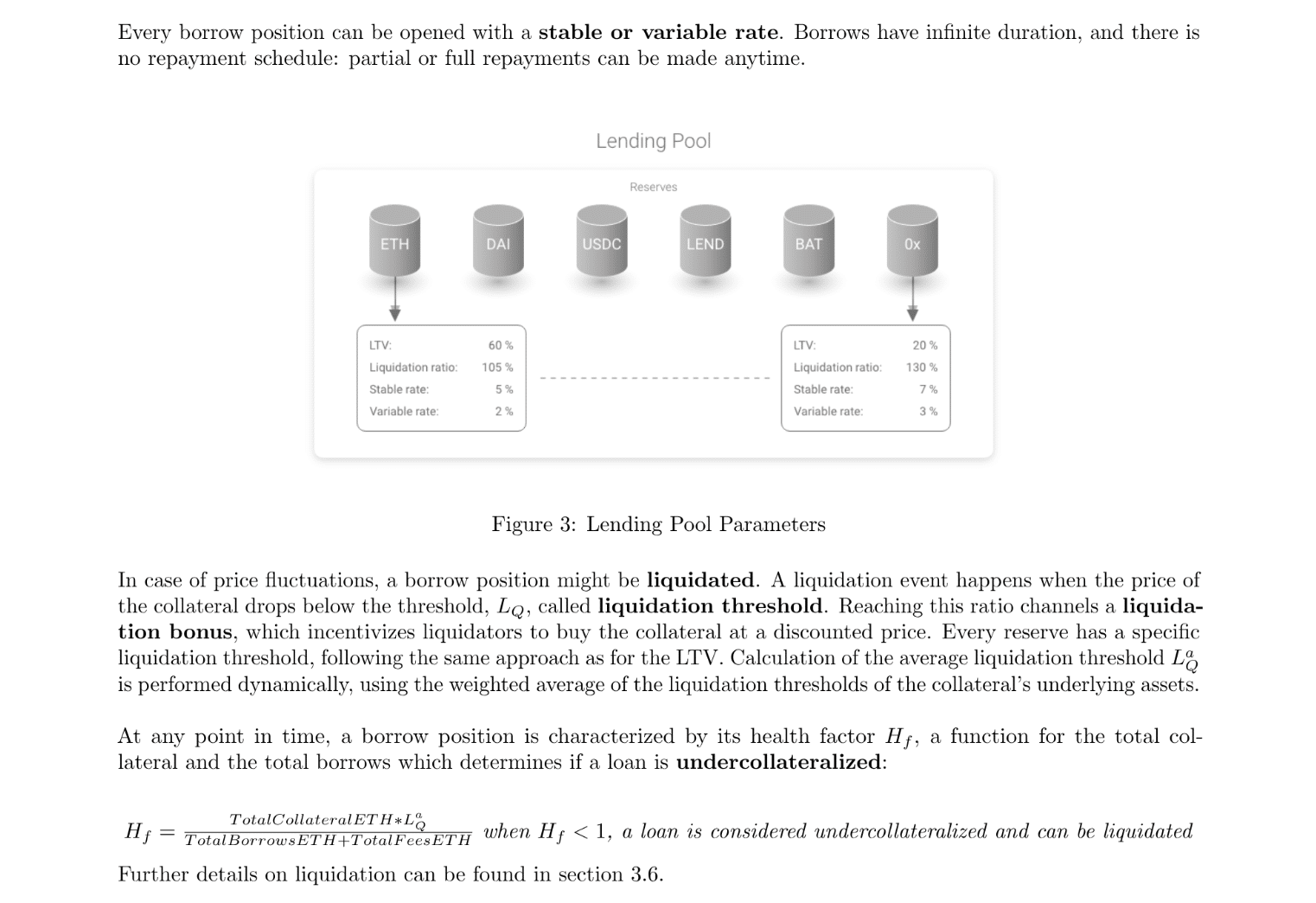
Whitepapers explain how the protocol works in detail rather than glossing over benefits and basic functionality. Investors need to understand whether the protocol will function effectively and what safeguards are in place to ensure its smooth operation.
Community Building
The lasting value in specific cryptocurrencies relies as much on the community as it does on project fundamentals. A detailed and well-written whitepaper fosters early adoption, and these holders become informal ambassadors for the project, while also providing price support.
The whitepaper’s defined vision attracts both users and contributors, allowing the project to reach critical mass. However, vague descriptions and unanswered questions in a whitepaper have the opposite effect, making it more difficult for a project to build a community.
Regulatory Relevance
A crypto whitepaper should also provide clarity on whether its token represents a security or a utility token. The former could affect the cryptocurrency’s value if regulators deem it to be an unregistered security. Although the whitepaper may not make the distinction clear, investors can assess the token’s role and distribution to draw their own conclusion.

In 2020, the US Securities and Exchange Commission (SEC) sued Ripple, alleging that the XRP token was an unregistered security. The case dragged on for years, with the uncertainty weighing on the XRP’s price until the case was dropped in 2025.
Some jurisdictions, such as the European Union, now enforce specific requirements to comply with Markets in Crypto-Assets (MiCA) regulations.
Risks and Limitations of Whitepapers
It’s essential to understand that a crypto whitepaper isn’t a guarantee or a contract. The project, assuming it survives and launches, may undergo changes and improvements over time. It’s also possible that later changes could prove detrimental to the token’s value.
Several risks could affect a project’s viability, even after a whitepaper has been published.
- Vague or missing data: Early interest could wane as detractors begin to criticize vagueness in the whitepaper. A lack of specifics could indicate a poorly researched project or a scam that was never intended to accomplish its stated purpose.
- Hype over technical details: Someone could read the Bitcoin whitepaper today and come to a solid understanding of how the project was intended to function. Many newer whitepapers lean more heavily on marketing hype. Ensure that, amid the hype, the key functions and details remain evident.
- Anonymous teams: Many crypto project teams remain anonymous. While this by itself doesn’t make a project uninvestable (Satoshi remains anonymous today), it may make the team unaccountable for all practical purposes.
A whitepaper is a tool for investors, users, and prospective project contributors to evaluate a project. However, it comes without any guarantees that the project will launch or even resemble the details in the whitepaper at launch. Crucially, it’s also essential to know that projects can change over time, perhaps abandoning the ethos outlined in the whitepaper.
Famous Examples of Crypto Whitepapers
Several key crypto whitepapers defined the crypto ecosystem as we know it today. Let’s examine some of the project whitepapers that launched the industry and paved the way for its future.
- Bitcoin Whitepaper (2008): The Bitcoin whitepaper provided a decentralized method of ensuring secure peer-to-peer transactions. This 9-page document explained the mechanics of the protocol and how it used blockchain technology to maintain a transparent ledger that was highly resistant to tampering.
- Ethereum Whitepaper (2014): Vitalik Buterin published the Ethereum whitepaper prior to the network’s 2015 launch, which served as a tool for early investors to weigh the project’s long-term viability. The launch of this innovative smart contract network also popularized the ICO (initial coin offering) model for funding early-stage crypto projects.
- Monero – CryptoNote (2012): The CryptoNote whitepaper detailed the privacy shortcomings of Bitcoin and similar transparent blockchain ledgers, proposing privacy solutions such as ring signatures that obscure which wallet address signed a given transaction.
- Polkadot (2016): The Polkadot whitepaper, authored by Ethereum co-founder Gavin Wood, introduced the term Web3 and detailed an architecture for blockchain interoperability.
How to Read a Crypto Whitepaper
Whitepapers can vary in structure, but they usually contain key elements that determine whether the project can survive and thrive. Let’s take a step-by-step look at how to assess a crypto whitepaper.
1) Check the Problem and Solution
A crypto whitepaper often details the problem and solution early in the document. For example, Satoshi Nakamoto clearly defined the problem and solution in the first several sentences of the Bitcoin whitepaper. However, defining the problem doesn’t make a project investable.
Answer these questions for yourself when reading a whitepaper.
- Does the problem truly exist?
- If so, how broad is its scope?
- Do other solutions offer a better way to solve the problem?
- Is the problem clear to the average reader?
If the problem a project aims to address is unclear or something others can’t identify with, the project may struggle to gain adoption.
2) Evaluate the Tokenomics
Tokens can play various roles in crypto projects, ranging from serving as a form of money, such as Bitcoin, to providing utility, governance, staking, or access to services. It’s essential to understand what the token does. Beware of projects that dance around the topic or only provide supply metrics.
Additionally, look for information on distribution. Do the founders or a few parties control a large percentage of the supply? You may need to perform additional research to find the answer. Still, the whitepaper will often indicate whether a project is a fair launch, either explicitly or by omission of any mentions that suggest a fair distribution.
Lastly, evaluate the supply. Capped supplies, such as Bitcoin and Litecoin, ensure higher values as demand rises. Inflationary tokens need demand to rise faster than the inflation rate to see higher values.
3) Assess the Team’s Credibility
Look for information on the founders, core contributors, and advisors. A completely anonymous team lacks accountability and can disappear as suddenly as they appeared, leaving the project’s whitepaper as their only trace.
If the team is not anonymous, research the credentials and credibility of team members, advisors, and contributors before investing. Have they been involved in previous projects, and what level of success did these projects achieve?
4) Consider Feasibility
Defining a problem and its solution are key first steps in a well-constructed white paper. However, is the solution feasible? A jargon-filled whitepaper that lacks details, such as mathematical proofs or diagrams that explain the technology, may suggest a project that’s not ready for launch. In the worst case, it may be a scam.
Look for substance over hype and weigh milestones or roadmap goals against the size and experience of the team. Also, consider risks, such as security and scalability. Even today’s largest projects still struggle with scalability, so a new blockchain with the same challenges may struggle without widespread adoption.
Conclusion
A crypto whitepaper can offer a key to understanding a project before investing. Ideally, the document clearly outlines the problem the project aims to solve, as well as its straightforward solution. Technical details matter, however, and vague details or excessive marketing language can suggest the project’s tech may not be ready.
Use the whitepaper to evaluate the problem, solution, technical implementation, project viability, and the team before making an investment decision.
FAQs
Does a good whitepaper guarantee that the project will succeed?

No. Competitive factors, funding, and technical problems that affect the project’s launch or subsequent operation can all play a role in a project’s success or failure.
What is the biggest "red flag" an investor should look for?
Be wary of anonymous teams that can disappear without consequence and whose previous track record cannot be verified.
Why is Tokenomics so important to the whitepaper?
Understanding the role of a token within the project or broader ecosystem is crucial to determining its value. However, other factors, such as token distribution and supply/demand dynamics, also affect the value of a token going forward.
What’s the difference between a whitepaper and a litepaper?
A whitepaper explores the project in more detail, often reaching dozens of pages. A litepaper often focuses on the benefits of the project and may only reach a few pages in length. Think of the litepaper as an entree and the whitepaper as a full-course meal.
References
- Bitcoin: A Peer-to-Peer Electronic Cash System (bitcoin.org)
- CryptoNote v 2.0 (getmonero.org)
- Ethereum Improvement Proposals (ethereum.org)
- KeetaNet: Scalable Blockchain Banking (keeta.com)
- AAVE Protocol Whitepaper (github.com)
- SEC ends lawsuit against Ripple, company to pay $125 million fine (reuters.com)
- REGULATION (EU) 2023/1114 OF THE EUROPEAN PARLIAMENT AND OF THE COUNCIL (europa.eu)

Why you can trust 99Bitcoins
Established in 2013, 99Bitcoin’s team members have been crypto experts since Bitcoin’s Early days.
Weekly Research
100k+Monthly readers
Expert contributors
2000+Crypto Projects Reviewed