







In This Article
In this price forecast, we explore ZKP (ZKP), an up-and-coming Layer 1 blockchain that uses the zero-knowledge proof mechanism, with a focus on supporting AI tasks. While the project launches its native network in 2027, early backers purchase ZKP coins via a public auction sale.
The presale event spans 450 days; participants contribute between $50 and $50,000, and the total raised per 24-hour cycle determines the investment cost basis. This dynamic creates varying ZKP price points, as investors gain exposure at different valuations.
Read on to learn more about the blockchain startup and evaluate ZKP’s future potential. Our ZKP price prediction forecasts the growth trajectory from 2025 to 2030.
Key Takeaways
- ZKP is an early-stage startup with bold technical ambitions. The anonymous founders launch a proprietary Layer 1 blockchain in 2027, with zero-knowledge proof technology supporting the underlying network.
- The decentralized ecosystem serves artificial intelligence (AI) stakeholders. Platform users purchase hardware to perform AI computation tasks, which allows them to earn ZKP coins. Each device costs $249, yet to maximize rewards, users pay up to $30,000 in upgrade fees.
- While the project remains in the development phase, it sells ZKP coins through an auction-style presale. Every 24 hours, investors contribute digital assets, and the daily raise sets the coin price.
- ZKP promotes a fair and transparent auction event, but the opaque process hides important investment data. The ZKP price changes daily based on previous investment rounds, and without any fundraising caps or projected exchange listing prices, we cannot accurately value the project.
- Our ZKP price prediction relies on the average auction cost basis since the project launched the event. At $0.000166 per coin, ZKP could reach $0.0003818 in 2027, and $0.0008466 in 2030. As the fundraising campaign runs for nearly 15 months, we update this price prediction frequently to reflect the auction’s progress.
ZKP (ZKP) Price Prediction 2025-2030 Overview
Here is a summary of our ZKP price prediction based on existing auction data and project fundamentals:
- 2025: ZKP raises funds from November 2025 to February 2027, which makes it one of the longest presale events in crypto history. Unlike traditional presales, ZKP employs an auction-style process, where 450 daily cycles yield varying coin prices. As the event progresses, investors have a much clearer view of the startup’s pre-listing valuation.
- 2026: The auction remains active throughout 2026. During the year, the project publishes multiple technical updates, including testnet data, neural network layers, and its proof-of-space consensus mechanism. In an unusual move, the founders claim to reveal their identities on June 1st, 2026,
- 2027–2030: The auction concludes in February 2027, and the mainnet network is expected to launch five months later. ZKP’s price action largely depends on technical achievements and the listing of exchange partners. According to our analysis, the bullish case is all-time highs of $0.0003818 in 2027 and $0.0008466 by the decade’s end. Missed roadmap deadlines, subpar technology, or a lack of developer adoption could trigger price declines to $0.0000996 after the listing event.
| Year | Potential Low | Average Price | Potential High |
| 2025 | N/A | N/A | N/A |
| 2026 | N/A | N/A | N/A |
| 2027 | $0.0000996 | $0.0002318 | $0.0003818 |
| 2030 | $0.000405 | $0.0005481 | $0.0008466 |
ZKP Price Prediction 2026–2026
ZKP launched a public auction sale in November 2025 to help fund its development timeline. The Web3 project sells its native coin, ZKP, to early backers long before its token generation event (TGE). While most investors join presale events to secure pre-exchange discounts, the auction process offers no guarantees of a reduced valuation.
Therefore, understanding how the auction event works is crucial.
ZKP reserves 35% of its total supply for the fundraising process. As it allocates 90 billion ZKP coins over 450 daily batches, the auction sells 200 million coins per day. Participants invest between $50 and $50,000 by connecting a non-custodial wallet and transferring popular cryptocurrencies, such as Bitcoin (BTC), XRP (XRP), and Solana (SOL). When the daily event closes, the system distributes coins proportionally based on the total investment raised.
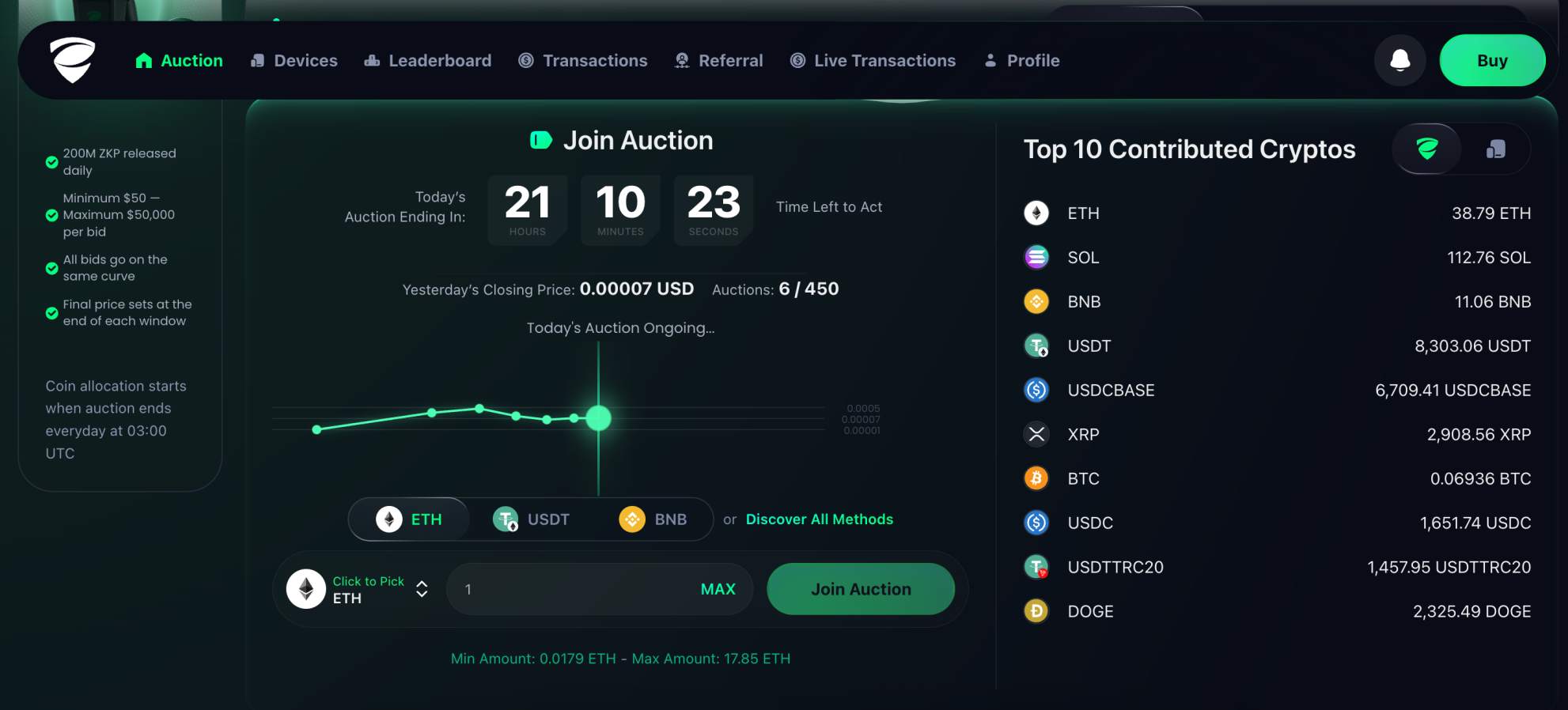
If the project raises $20,000 within the 24-hour cycle, the 200 million ZKP allocation translates to a $0.0001 cost basis per ZKP. A $100,000 raise the following day increases the ZKP price to $0.0005. Prices fluctuate over the almost 15-month process, which directly affects the fully diluted valuation (FDV).
As one of the most extensive crypto presales historically, consider the cash flow risks of locking investment funds for at least 450 days. Those who join the auction receive their ZKP coins no earlier than Q1 2027. Since the mainnet launch is scheduled for July 2027, participants may need to wait even longer.
ZKP Price 2027-2030 Predictions
On February 20, 2027, the ZKP public sale finally ends. As we approach the auction’s conclusion, the average cost basis and market cap become clearer.
For this ZKP forecast, we based projections on a $0.000166 price point. This ZKP price reflects the initial five 24-hour auction cycles, yielding limited validity.
We examined all ZKP documents to determine the TGE timeline; however, the project currently sets no launch dates. Most new cryptocurrencies launch on exchanges several days after the presale event. Yet, July 2027 is most likely, as it aligns with ZKP’s mainnet release. Based on our projected average price and the 257,142,857,143 ZKP supply, we predict an initial FDV of about $14.9 million. Note that market capitalization could be significantly larger if the auction event takes off.
A wide range of factors influences the price potential of ZKP at the TGE. If the team secures listings with the best Bitcoin exchanges, ZKP has exposure to large-scale liquidity. Major listings create hype, which can encourage new investors to enter the market immediately.
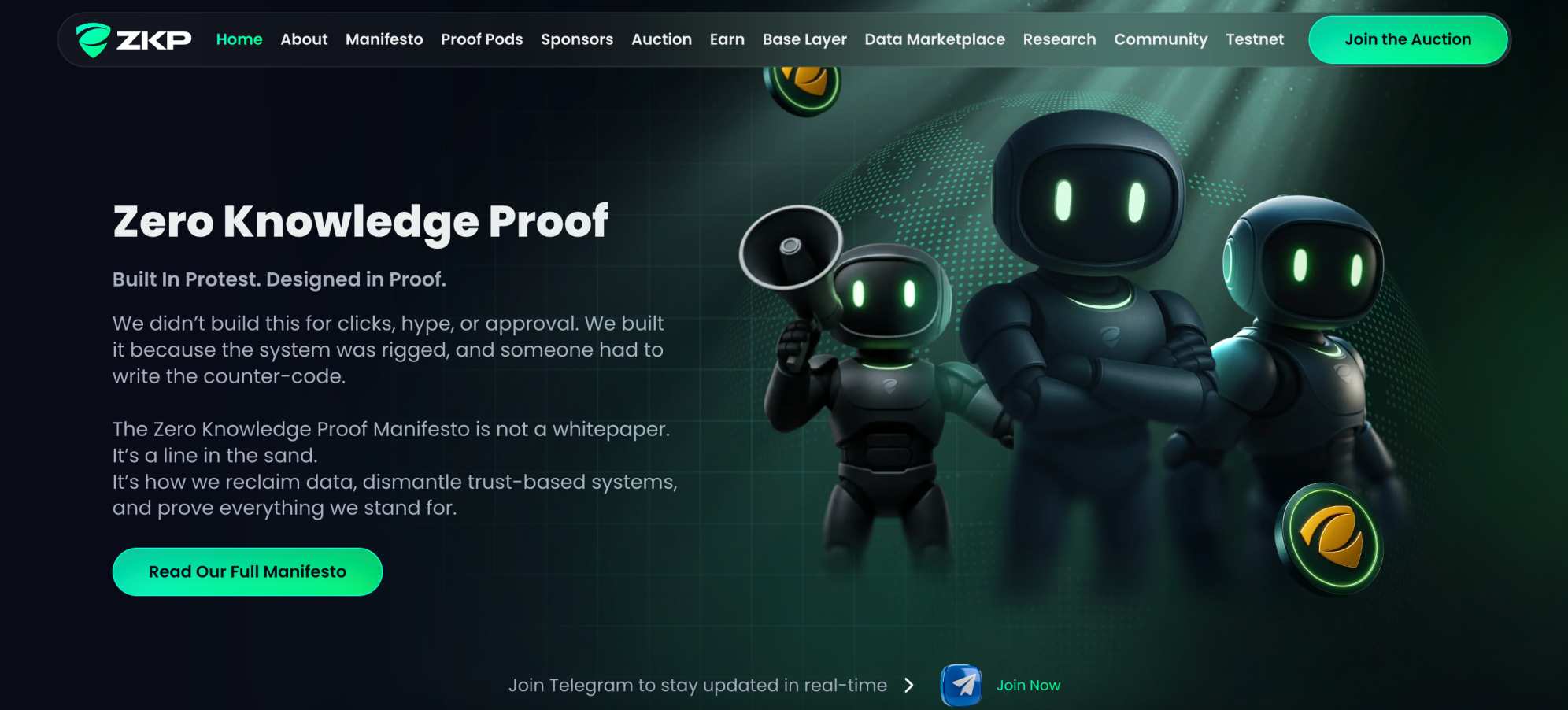
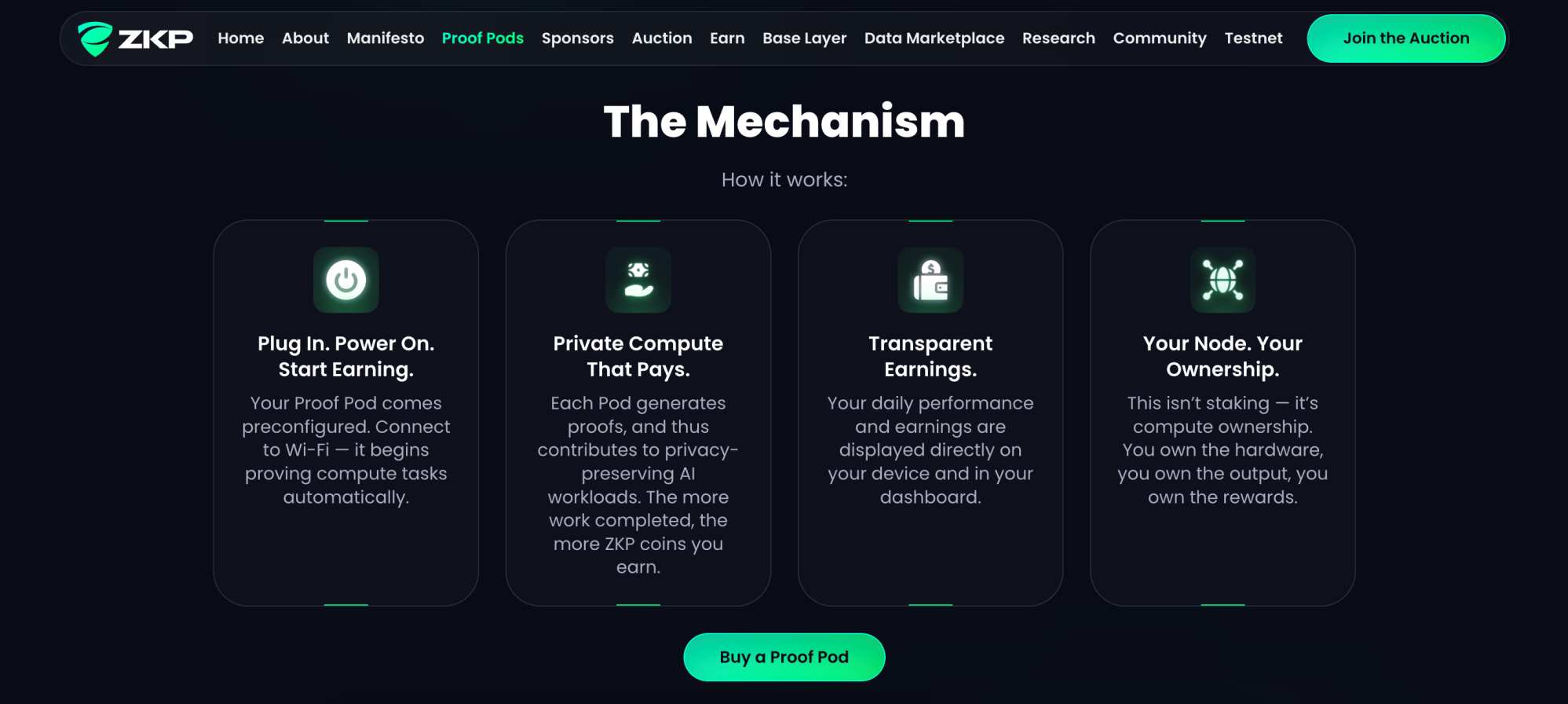
Project fundamentals also matter. While the mainnet launch is scheduled for 2027, ZKP has already begun selling hardware devices called “Proof Pods”. These devices connect to the ZKP ecosystem via WiFi, and they complete AI computation tasks for third-party users. While Proof Pods are expensive at $249, devices initially generate limited mining rewards.
The firm sells additional upgrades for $100, which increase computation outputs. However, with up to 300 upgrades available, the hardware remains unaffordable for most consumers. A lack of Proof Pods orders could impact the TGE territory. Early backers may lose confidence in the project’s revenue objectives unless the mainnet launch delivers on its promises.
The mainnet offers a Layer 1 blockchain with privacy-focused features, enabling AI developers, data providers, and other end-users to process and store large datasets. Although the zero-knowledge proof mechanism ensures decentralization and security, the roadmap targets just 100–200 transactions per second (TPS). Existing Layer 1 solutions far exceed these scaling capabilities, as modern blockchains often handle thousands of TPS, even during bullish cycles.
Investors must also consider existing competition in the zero-knowledge proof space. Several blockchains already employ this technology, including Zcash, Mina Protocol, and StarkNet.
So, how do these factors influence our ZKP price prediction?
A successful auction campaign and mainnet release could help drive the ZKP price to $0.0003818 by Q4 2027. This forecast reflects a 130% upside from the current auction average. In our view, these potential price gains offer little value when considering the 15-month lock-up period, as well as the risks associated with investing in a startup before it launches its flagship project.
Investors who buy ZKP from the public sale should take a much longer-term approach. The roadmap notes that development tasks will continue until at least 2029, which includes achieving up to 1,000 TPS (still far below many Layer 1s), implementing recursive proof systems, and facilitating a quantum transition. A completed development timeline increases stakeholder confidence and could drive Proof Pods adoption.
In this scenario, our bullish ZKP price prediction is a potential all-time high of $0.0008466 by 2030. This projection gives ZKP a $218 million FDV and delivers almost 409% gains from the estimated launch price. Although these potential gains exceed those of traditional financial markets, top cryptocurrencies further along in their project goals could yield even higher returns.
Some market commentators, including ARK Invest CEO Cathie Wood and Coinbase Co-Founder Brian Armstrong, predict a $1 million BTC price by 2030. This prediction offers an almost 800% upside based on BTC’s all-time high, so ZKP’s potential remains unfavorable considering the added risks.
Potential Highs & Lows of ZKP
Our analysis predicts the following ZKP price movements:
| Year | Potential Low | Average Price | Potential High |
| 2025 | N/A | N/A | N/A |
| 2026 | N/A | N/A | N/A |
| 2027 | $0.0000996 | $0.0002318 | $0.0003818 |
| 2030 | $0.000405 | $0.0005481 | $0.0008466 |
Our ZKP Price Prediction Methodology
Our crypto price predictions are based on technical analysis and fundamental research; however, we have adjusted our methodology for this ZKP forecast. Because of the startup’s auction process, participants receive a different cost basis depending on which 24-hour cycle they invested in. As auction prices have ranged from $0.00005 to $0.00041 so far, one investor group has paid up to eight times more than the lowest-priced cycle. With more than 445 cycles remaining, wider price disparities are inevitable.
To produce this ZKP price prediction, we utilized the average auction rate at the time of publication. This enabled us to forecast potential FDVs and initial market capitalizations for 2027’s TGE. We also examined the 117-page whitepaper, diving deep into technical claims, roadmap timelines, and token dynamics. To assess long-term ecosystem growth and price potential, we compared the technical capabilities with those of other Layer 1 blockchains, including those that already offer the zero-knowledge proof mechanism.
What Is ZKP?
ZKP is a zero-knowledge proof blockchain with a peer-to-peer marketplace for decentralized data. Its ecosystem relies on two parties: data providers and end users, such as AI developers who demand reliable data for model training.
The network’s decentralized framework enables anyone to become a data provider. They purchase Proof Pods for $249, connect the device to the ZKP system, and mine large data sets passively. While the upfront purchase allows users to earn ZKP coins, basic units offer limited revenue potential. Instead, users must upgrade their hardware for $100 a time. To achieve the maximum output, Proof Pods owners complete 300 upgrades. At a $30,000 outlay, this money-extraction model risks long-term adoption failure.
End users who require AI computation need ZKP coins for payment, which creates sustainable income. As the data marketplace grows, demand for ZKP may increase. Yet, without sufficient data providers, ZKP might need to reconsider its Proof Pods pricing structure.
ZKP Coin Use Cases
ZKP is the project’s ecosystem coin, and it powers the peer-to-peer data marketplace. Its economic infrastructure mirrors other DePIN coins like Filecoin (FIL) and Render (RENDER), since buyers and providers use ZKP to transact.
Consider an AI developer who requires large data sets in a secure and private environment. They purchase that data with ZKP, which unlocks real-world utility. Data providers sit at the other end of the transaction. They operate Proof Pods devices to process AI tasks and earn a portion of the generated revenue.
As ZKP does not utilize the proof-of-stake consensus mechanism, holders do not earn staking rewards. Later in the roadmap, ZKP launches a decentralized autonomous organization (DAO). The DAO lets the ZKP community cast votes on network proposals and help shape the project’s future.
Despite its ecosystem use cases, some people buy ZKP as a speculative investment only. The drawback is that participants lock their investment funds until at least Q1 2027 because of the 15-month auction process.
What Drives the Price of ZKP?
The extensive auction campaign influences the ZKP price until the TGE. Across 450 24-hour cycles, each daily raise yields a different cost basis. ZKP’s presale structure rewards participants with a lower price when cycles raise less capital, and vice versa. The system forces investors to rely on pure chance, as they discover their allocation only when the respective auction ends.
When the auction ends in February 2027, the ZKP team must create a fair methodology to determine the exchange listing price. Some investors pay substantially more than others, so the TGE valuation should benefit all participants.
After the TGE, ZKP’s price direction depends on various factors. Roadmap development plays a major role, as ZKP’s growth aligns with its core Layer 1 product. Other driving forces include exchange listing partners, demand for zero-knowledge proof networks, and broader market sentiment. We have also explored elsewhere whether we think ZKP is legit or a scam.
Regardless of fundamentals, some presale buyers may cash out their ZKP coins at the TGE, considering the lengthy lock-up term. Others may hold for several years to experience the full growth cycle.
Alternative Presales to Consider
Our analysis reveals that ZKP offers limited growth for public sale investors. The blockchain relies on third-party data providers, who must purchase $249 Proof Pods without a clear return on investment (ROI). As the upgrade system requires an additional outlay of up to $30,000 to maximize rewards, we predict that ZKP will sell a limited number of units.
The gambling-like auction framework also poses unprecedented risks. In just five auction cycles, some investors have already paid eight times more than other participants. The team has provided no insight into the exchange listing price, so some auction buyers may need substantial price increases just to break even.
We researched other Web3 startups to identify potential ZKP alternatives. Here are some top crypto presales to consider at fair valuations.
Bitcoin Hyper (HYPER)
Our top ZKP alternative, Bitcoin Hyper introduces the world’s fastest Layer 2 solution for the Bitcoin ecosystem. It revolutionizes BTC use cases, which the blockchain currently limits to peer-to-peer transfers. When BTC holders connect to Bitcoin Hyper’s sidechain, they access yield products from the decentralized finance (DeFi) markets. As such, instead of letting coins sit idle in a private wallet, platform users increase their holdings via yield farming, staking, lending, and other DeFi concepts.
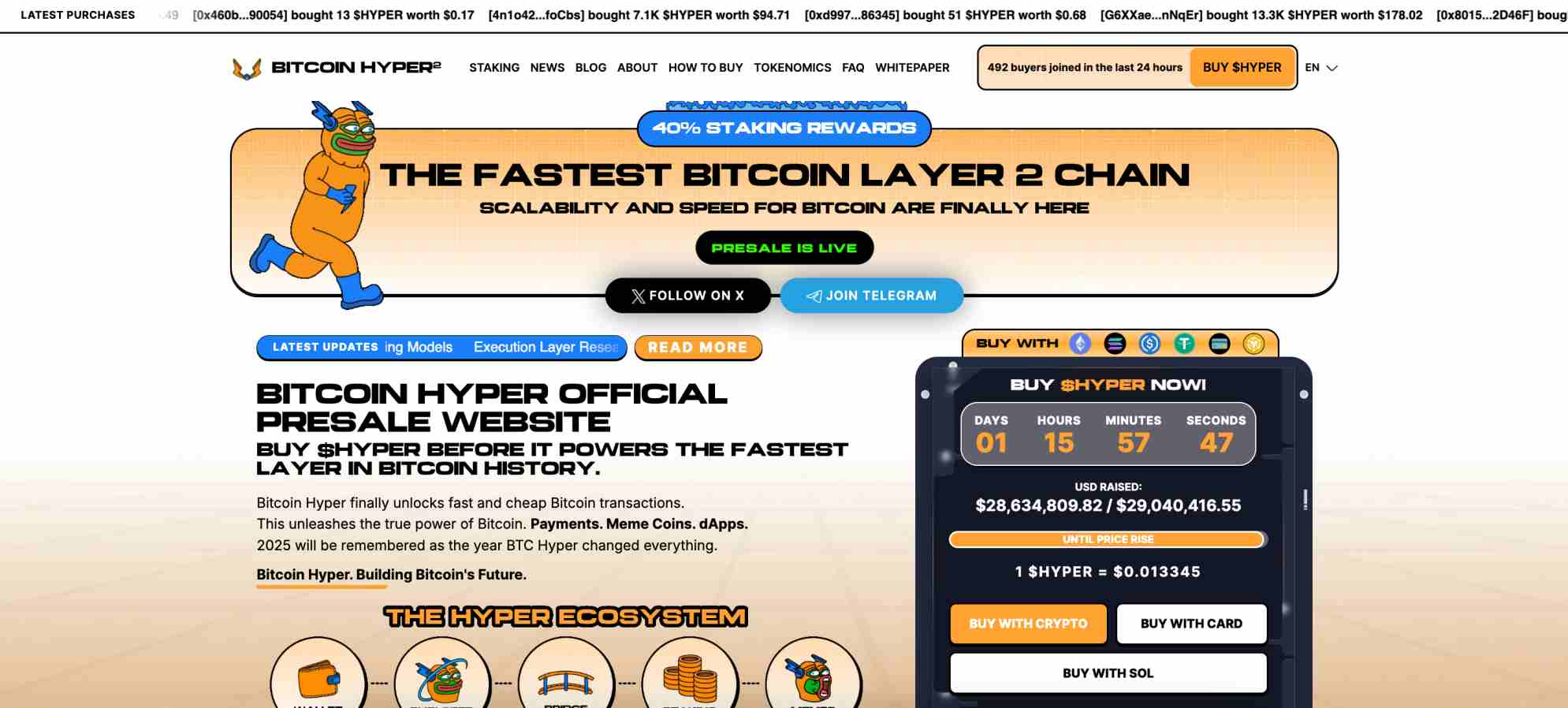
The Bitcoin Hyper whitepaper outlines an efficient and secure Layer 2 mechanism to streamline BTC transactions. The Solana Virtual Machine and Canonical Bridges power the platform, providing users with a highly scalable environment and near-zero settlement fees. HYPER is the utility token that drives adoption, as users need it to pay network gas. The presale event is in the final stages, and the project has raised nearly $29 million.
Maxi Doge (MAXI)
Maxi Doge is a brand-new meme coin built for high-risk crypto speculators. The dog-themed mascot is a degen pure-play that necks cans of caffeine while trading 1000x perpetual futures without risk management orders. The canine pumps weights in between derivative sessions, so the project artwork reflects a ripped Shiba Inu on steroids. While this light-hearted narrative might not appeal to utility investors, Maxi Doge’s shareable visuals could make it a social media fan favorite.
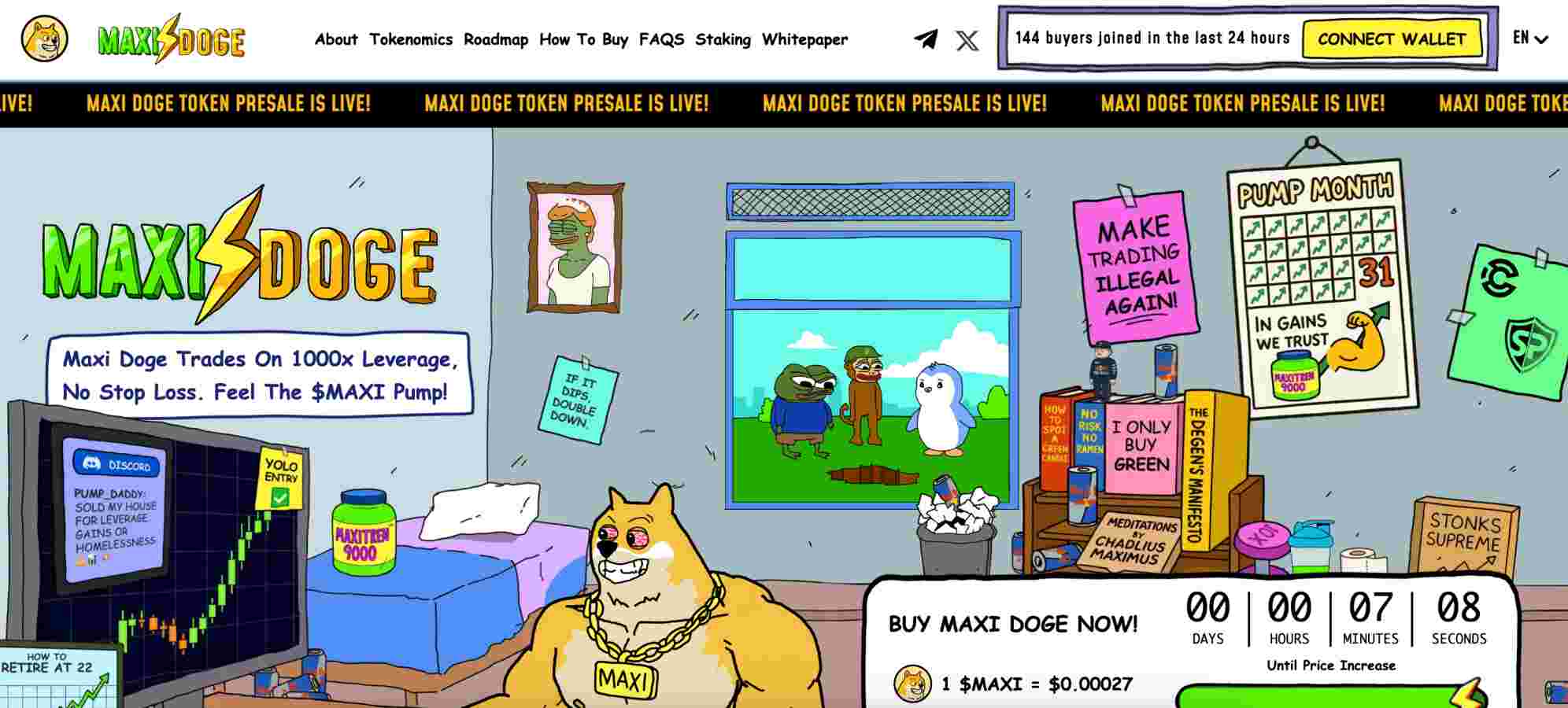
Despite its high-risk nature, auditors verify that MAXI’s smart contract is secure. Independent audits confirm a finite supply, and the anonymous founders cannot blacklist wallets or mint new tokens. MAXI’s small-cap valuation allows presale buyers to target substantial growth, particularly when the next meme coin rally emerges. The current $0.000271 presale price is available for a limited timeframe. Besides a reduced price, the presale offers exclusive access to the MAXI staking pool, which yields up to 72% APYs.
ZKP Forecast Conclusion: Is ZKP a Buy?
Our research suggests that ZKP’s speculative public auction appears flawed. The process requires investors to risk funds without knowing their cost basis, resulting in a significant price disparity within the ZKP community.
In addition to the $249 purchase price, its Proof Pods technology relies on system upgrades. Consumers spend up to $30,000 to power up their device, which resembles a profit-extraction strategy. We also dislike the 15-month-long auction timeline, since investors lock contributed capital until at least Q1 2027.
While ZKP offers an adverse risk-reward, our presale guide reveals legitimate alternatives for 2026.
Discover the Best Crypto Presales
FAQs
Is ZKP a good investment?

No, our analysis shows that ZKP resembles a high-risk investment without sufficient upside. Its public auction offers little transparency, as participants learn purchase prices only when the 24-hour cycle ends.
Is ZKP worth buying?
No, while we predict rapid growth in the zero-knowledge proof arena, ZKP’s native blockchain has limited scaling potential. Investors must wait until July 2027 for the mainnet release, yet full functionality arrives after 2029.
What price does ZKP launch on exchanges?
ZKP offers no guidance on the exchange listing price. As the public sale ends in February 2027, investors wait for up to 15 months to access public markets.
How much will ZKP be worth in 2025?
No price action is expected in 2025, as ZKP remains a pre-listing startup until Q1 2027 at the earliest.
How much will ZKP be worth in 2030?
A successful Layer 1 launch with growing Proof Pods adoption may push ZKP toward $0.0008466 by 2030. The bearish scenario is limited ecosystem growth, and the ZKP price drops to $0.000405 by the decade’s end
- ZKP whitepaper (ZKP)
- Introduction to Zero-Knowledge Proofs (Chainalysis)
- What is training data? (IBM)
- Is Brian Armstrong’s $1 Million BTC Prediction by 2030 Unrealistic? (NASDAQ)
- What is “proof of work” or “proof of stake”? (Coinbase)
- So far the meme rally is tame and that’s good for the market (CNBC)

Why you can trust 99Bitcoins
Established in 2013, 99Bitcoin’s team members have been crypto experts since Bitcoin’s Early days.
Weekly Research
100k+Monthly readers
Expert contributors
2000+Crypto Projects Reviewed