







In This Article
ZKP (ZKP) is a new Layer 1 blockchain that uses zero-knowledge proofs to facilitate verifiable artificial intelligence (AI) tasks. The startup sells “Proof Pods” devices for $249 that run AI computation, which allows stakeholders to earn passive rewards.
To raise operational capital, ZKP runs a public auction sale, where the system allocates up to 200 million ZKP daily. The total sale reserves 90 billion coins, which reflects 35% of the total supply.
This guide shows you how to buy ZKP coins with safety best practices. It also explains how the auction-style event works, what the project offers, and whether ZKP has a legitimate long-term future.
Key Takeaways on ZKP
- ZKP is one of the latest Layer 1 blockchains to enter the crypto market. Built for the AI era, the blockchain uses zero-knowledge proof to verify computational tasks in a decentralized ecosystem.
- The project sells native hardware devices called “Proof Pods”. Costing $249, users connect their hardware to the ZKP network, which performs tasks for AI workloads. Users may upgrade their Proof Pods up to 300 times, which requires additional expenditure.
- As users contribute to the ZKP blockchain, they generate rewards in the native coin, ZKP. This framework offers exposure to the Decentralized Physical Infrastructure Networks (DePIN) market, which some analysts predict has strong growth potential.
- ZKP coins offer various use cases within the ecosystem. End users need ZKP to pay for AI computation, private marketplace data, and network gas. The coins also unlock staking rewards and potential price appreciation.
- Why We Don’t Recommend ZKP: According to our research, ZKP remains a speculative investment that raises several red flags. Its revenue-extraction model requires users to buy devices for $249, yet to maximize rewards, they may need to purchase up to 300 additional upgrades. The ZKP supply also presents stability risks. The project allocates a massive 90 billion coins to the auction, with 200 million released daily. Besides stability pressures, other concerns include an anonymous team structure and heavy marketing language.
What Is ZKP?
ZKP is an up-and-coming blockchain ecosystem that operates in several high-growth niches, including AI, DePIN, and privacy. The network relies on zero-knowledge proof, which allows digital asset transfers without revealing transaction data. ZKP primarily serves the AI and machine learning sector, since it helps verify computational tasks on-chain. End users include AI developers, data providers, node operators, and government agencies that safeguard sensitive information.
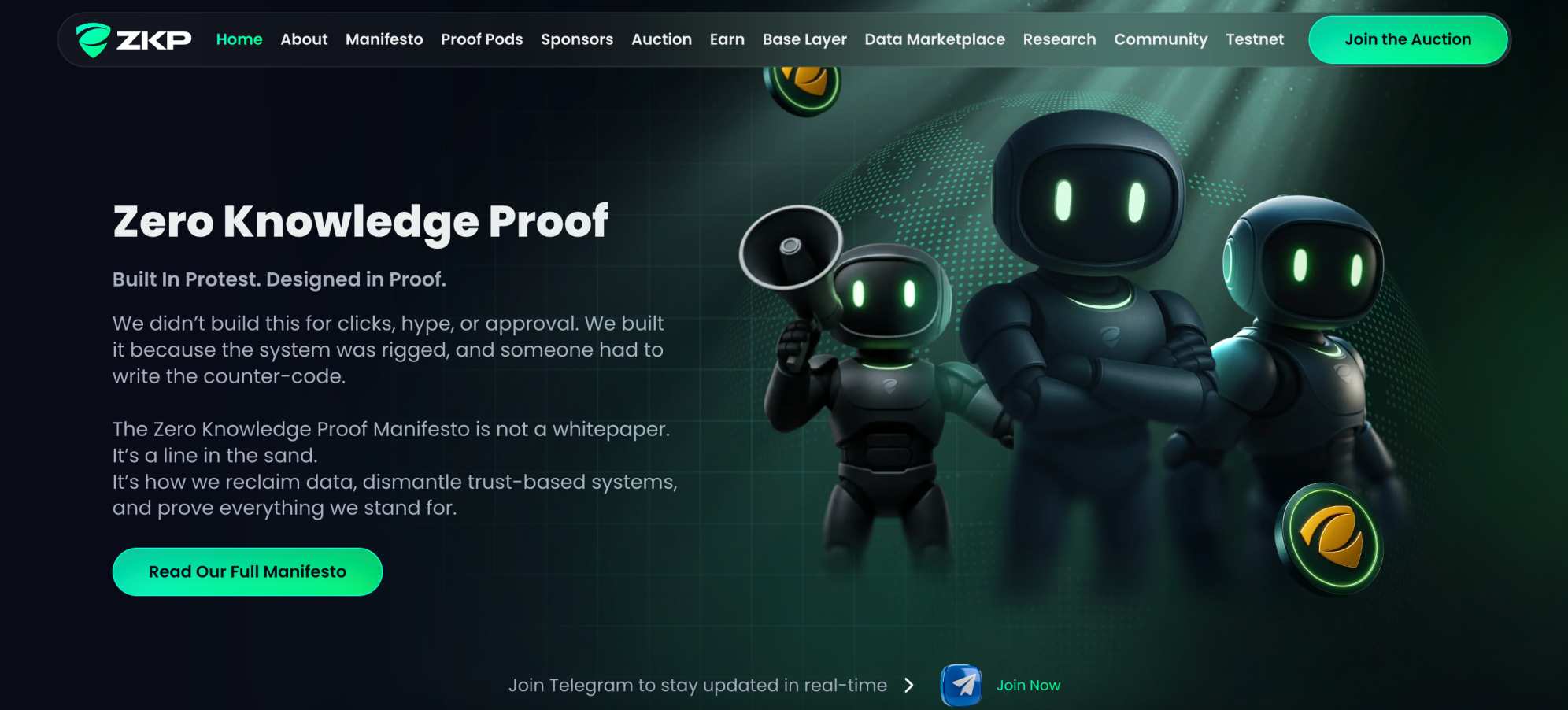
The project introduces an innovative approach to AI verification. It manufactures hardware devices called Proof Pods that enable users to connect to the ZKP network without requiring technical expertise. The plug-and-play solution uses a peer-to-peer model, as device owners indirectly serve end users. As customers pay fees in ZKP, the firm distributes a percentage of that revenue to the Proof Pods community.
Earning revenue depends on the member’s device tier. The initial Proof Pods price is $249; however, upgrading to a higher level costs an additional $100. With 300 upgrades available, users would need to outlay over $30,000 to achieve the highest rewards.
ZKP: Concerns & Considerations
ZKP proposes a unique blockchain infrastructure with significant use cases, especially as demand for AI computation grows. The whitepaper is highly extensive, with clear technical specifications and roadmap targets. The zero-knowledge proof aspect is another strong metric, since crypto stakeholders increasingly demand privacy solutions.
Despite these potential benefits, our research identified several concerns with the startup project.
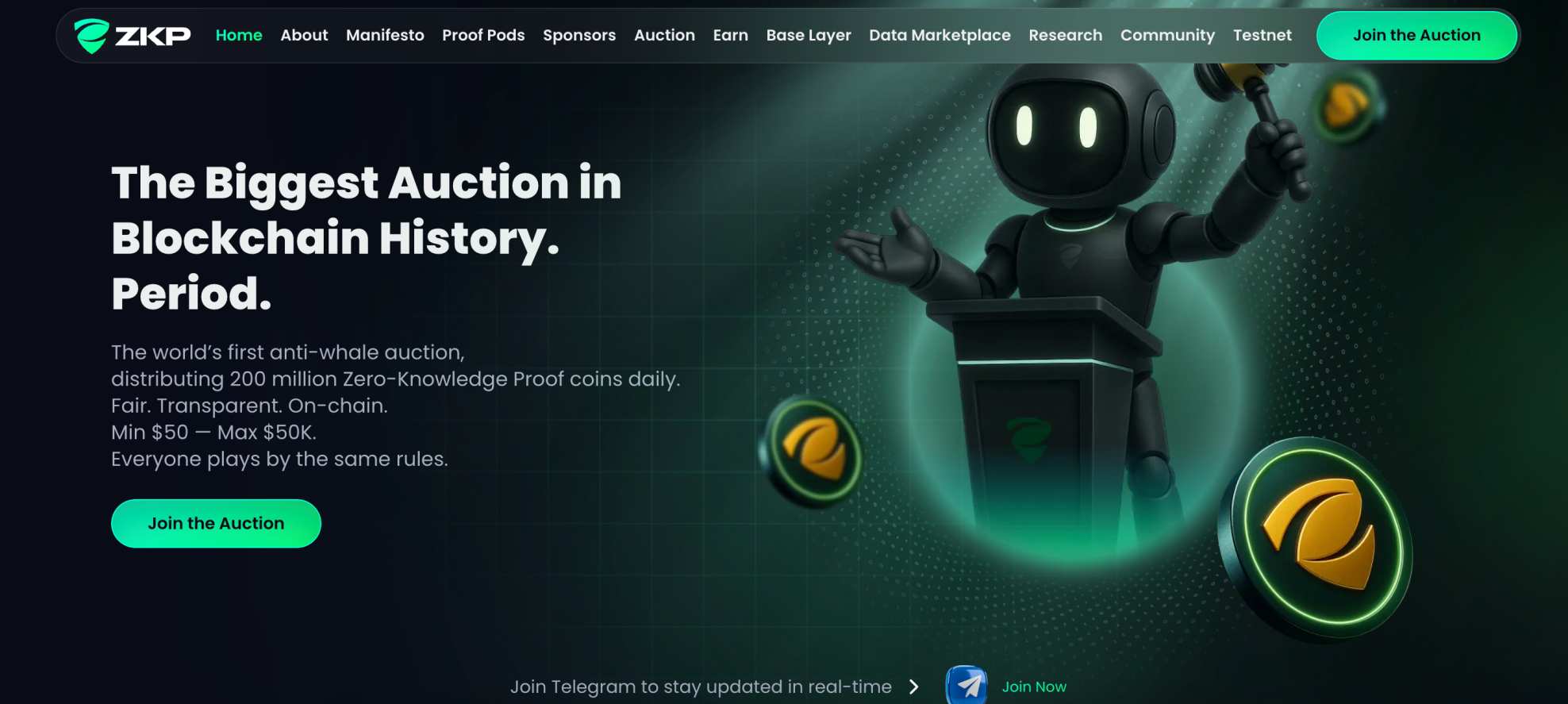
The first red flag is the fundraising structure. ZKP operates an auction-style process, allocating 200 million coins daily. Participants contribute between $50 and $50,000, and they receive a proportionate number of coins based on the total raise. The auction model repeats daily until the project allocates 90 billion coins.
This represents a substantial portion of the overall ZKP supply, creating inflationary pressures for long-term holders. It also causes fluctuations in the ZKP cost basis, as the coin price varies daily based on the total contributions. Someone investing today could pay a much higher price than those who join tomorrow, resulting in a disjointed distribution model.
We also discovered issues with the Proof Pods system. While we appreciate Web3 projects that generate revenue, ZKP resembles a maximum-extraction model. Users must outlay $249 for the device, and unless they pay for additional upgrades, the hardware is unlikely to earn sufficient rewards. The “workaround” is to pay $100 per upgrade up to 300 times, costing up to $30,000. This represents a significant financial burden without guarantees of a net return.
Research also highlights concerns with the team’s lack of transparency. Although anonymity aligns with the zero-knowledge proof thesis, the founders will unveil their identities on June 1, 2026. In the meantime, the project potentially raises millions of dollars from auction participants. Why wait for (at the time of writing) half a year if the team can do this now, particularly when it creates credibility and accountability?
Finally, presale participants must consider the lengthy auction timeframe. Since the project allocates 200 million coins daily from a 90 billion reserve, the event spans at least 450 days. The roadmap offers no information about when the token generation event (TGE) goes live, so investors lock their assets without a clear release date.
How to Buy ZKP: Step-by-Step Instructions
If you have conducted independent research and wish to proceed, the following guide explains how to buy ZKP. The public auction differs from traditional presale events, as user contributions determine the cost basis. We explain each step in simple terms to help beginners avoid common mistakes.
-
Get a Decentralized Wallet
The ZKP presale requires investors to connect a decentralized wallet and transfer cryptocurrencies to the auction pool. As the dashboard supports WalletConnect, the event accepts the top anonymous crypto wallets, including MetaMask, Exodus, and Coinbase Wallet.
We recommend the Best Wallet app for first-time investors. The user-friendly app offers a non-custodial experience, allowing you to buy and store ZKP coins without relying on intermediaries.
That means you have your own encrypted private keys and seed phrases, and you can also protect your investments with two-factor authentication and biometrics.
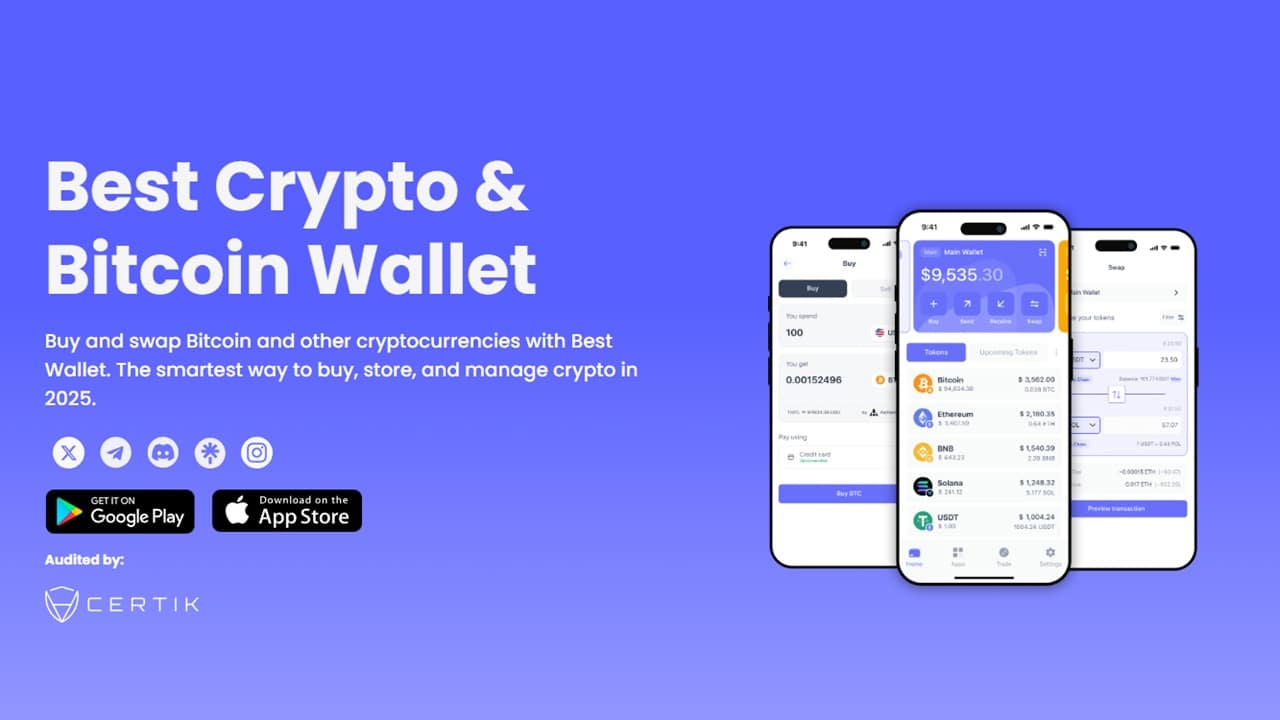
The app supports the same cryptocurrencies as the auction, including Bitcoin (BTC), Solana (SOL), and Ethereum (ETH), so you will not have any issues purchasing ZKP.
-
Add Cryptocurrencies
Before you can invest in the ZKP public sale, you need to add a supported asset to the Best Wallet app.
Here is a full list of cryptocurrencies that ZKP accepts:
- Bitcoin (BTC)
- Ethereum (ETH): Ethereum or Base networks
- BNB (BNB)
- Tether (USDT): Ethereum, BNB, or Tron networks
- Solana (SOL)
- Cardano (ADA)
- USDC (USDC): Base network
- XRP (XRP)
- Dogecoin (DOGE)
- Shiba Inu (SHIB)
If you own one of these cryptocurrencies, send them to the Best Wallet app. To obtain the deposit address, tap “Home” and then select the asset name.
Those without cryptocurrencies can purchase some with fiat money on Best Wallet. As one of the best fiat-to-crypto providers, Best Wallet supports over 20 currencies. Popular payment methods include PayPal, Google Pay, Apple Pay, debit/credit cards, and Skrill.
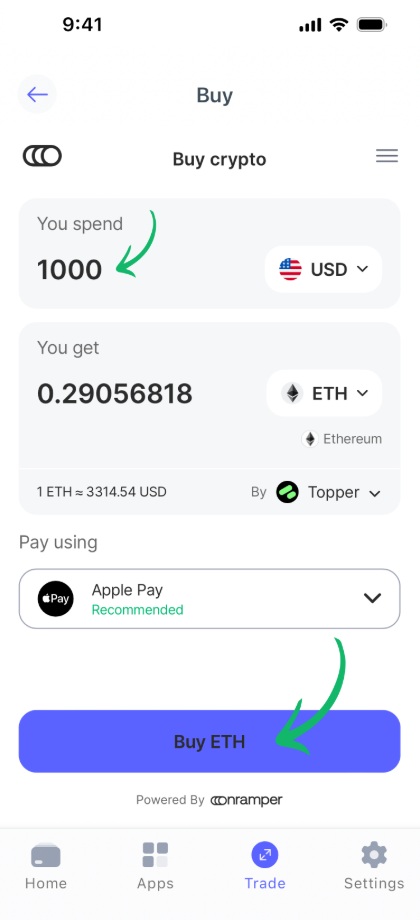
Select the “Trade” and “Buy” icons, and input your local currency and preferred deposit method. Select a digital asset to purchase (most presale investors use Ethereum, or ETH) and enter the desired purchase size. Then, complete the payment. The wallet immediately adds your purchased cryptocurrencies to the non-custodial balance.
-
Link Your Wallet to the ZKP Presale
Visit the ZKP website and click the “Join the Auction” and “Connect to Join” buttons. A pop-up box appears asking for the wallet provider.
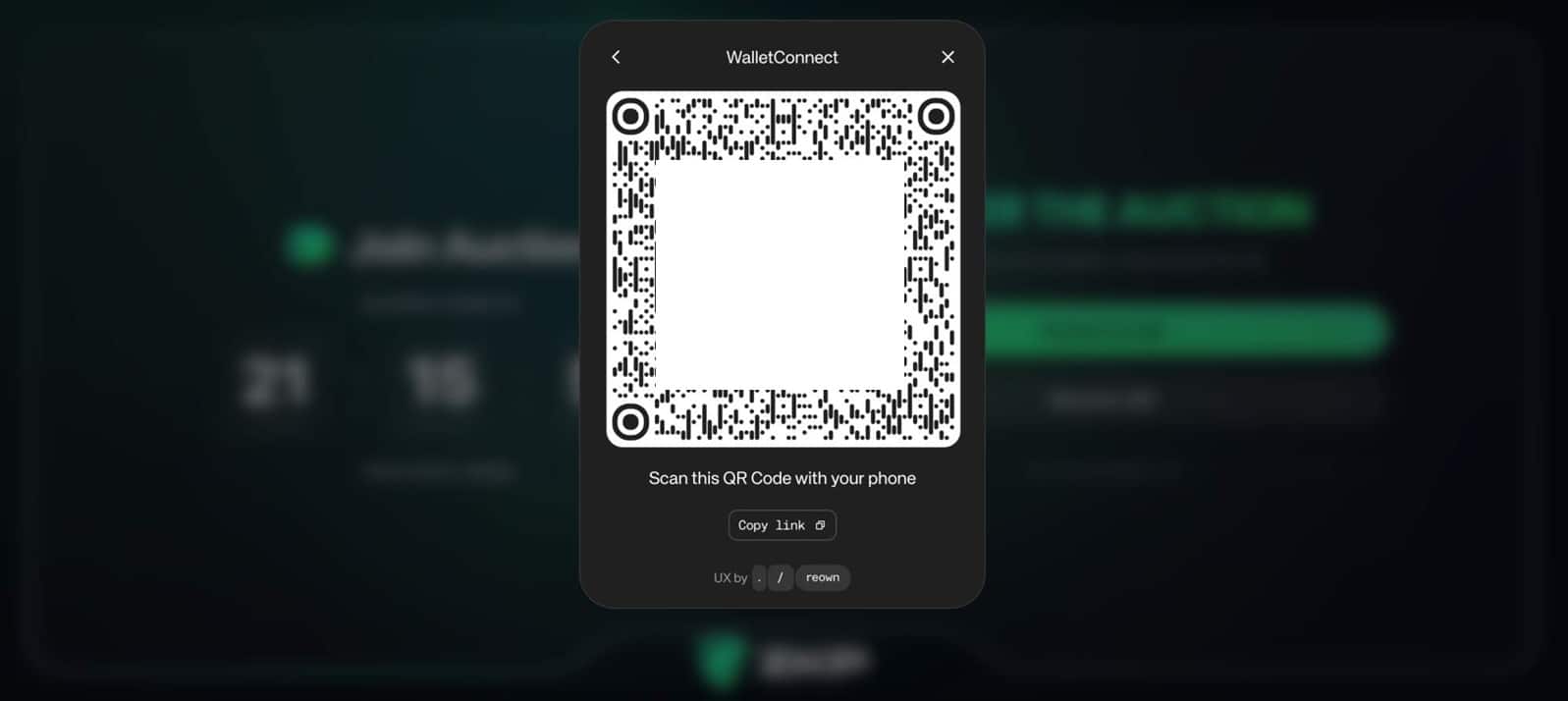
When you select “WalletConnect”, a Best Wallet notification triggers on the mobile device. Open the app and confirm the connection request.
If you want to invest in the ZKP presale on a desktop device, scan the WalletConnect QR code from the Best Wallet app.
-
Make an Auction Contribution
In the presale dashboard, scroll below the auction countdown timer. In the “Click to Pick” field, select the digital asset you want to use for the auction. Then type in the total contribution amount in that coin or token.
The minimum and maximum investments are $50 and $50,000 per transaction. Although the presale claims to be anti-whale, it does not limit the number of daily transfers.
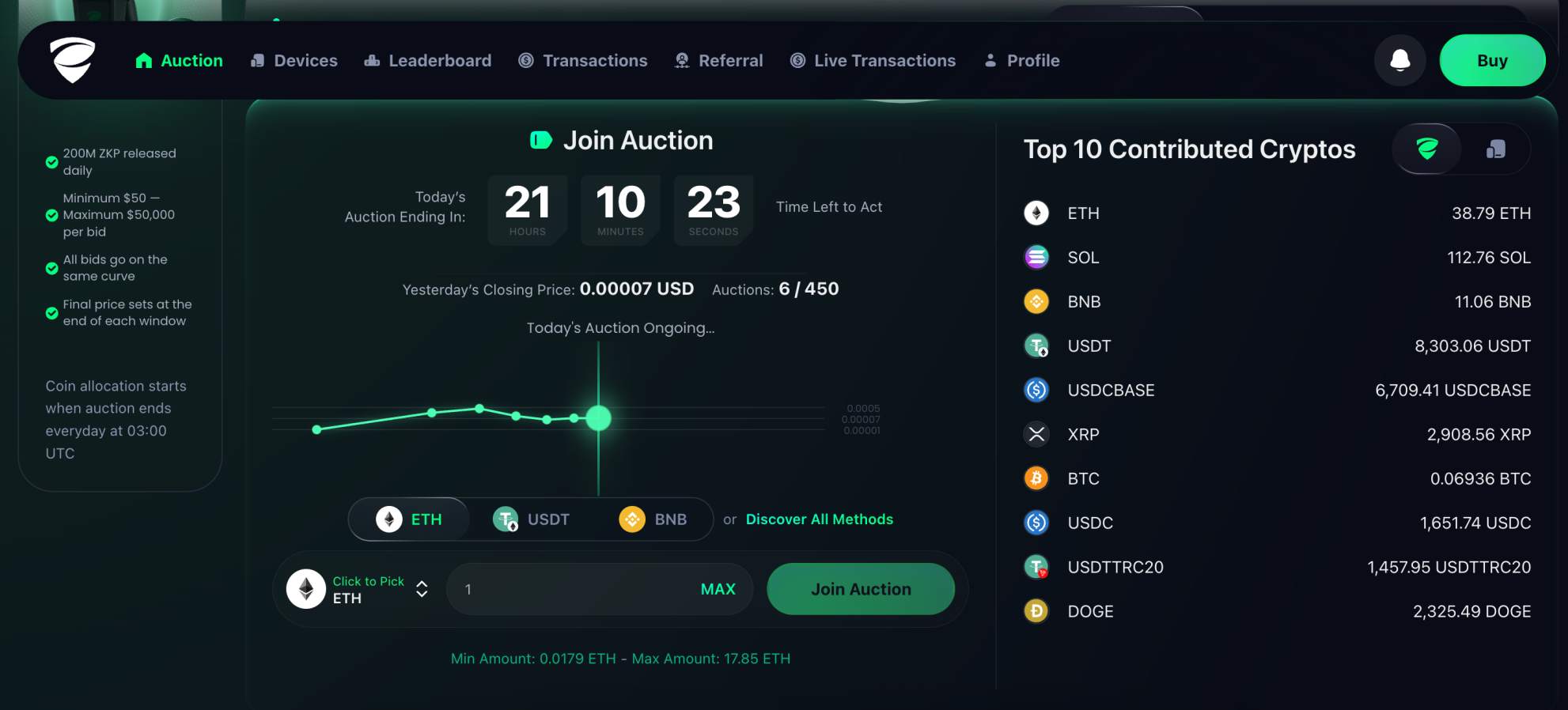
To complete the purchase, click “Join Auction” and open the Best Wallet app to approve the smart contract request. The contract transfers the payment asset to ZKP’s auction wallet.
-
Evaluate ZKP Cost Allocation
Each auction cycle runs for 24 hours. You don’t know how many coins you receive until the cycle closes, as the system determines allocations by the total contributions. In our view, this presale structure lacks credibility, as each participant receives a varying cost basis, depending on which day they invested.
When the daily auction finishes, return to the ZKP dashboard and connect the same wallet that you used to invest. Evaluate your investment cost basis by dividing the total purchase amount by the number of ZKP coins received.
Note that the coins are only displayed in the account dashboard. The project does not specify when investors receive real coins in their private wallet, although this typically occurs after the presale concludes. This timeframe requires some investors to wait at least 450 days to get their coins.
ZKP Tokenomics and Presale Details
ZKP confirms a total supply of 257,142,857,143 coins. Although we are unable to confirm the initial network standard, coins will likely be native to ZKP’s Layer 1 blockchain, which may mean that when users claim their auction coins, they need a specialist wallet that supports the ZKP network.
No wallet currently exists, so investors must wait for the team’s official guidance.
The ZKP supply is fixed, which prevents the founders from issuing additional coins. However, as the project reserves 35% of coins for the auction event, the team controls the remaining 65%. Of that figure, 55% goes to the Proof Pods verification model, where devices generate passive rewards for completing AI tasks. ZKP uses the other 10% for team incentives, exchange liquidity, and ecosystem distributions.
| Purpose and Allocation | Details |
| Mining / Proof Rewards (55%) | Powers the Proof Pods ecosystem. Stakeholders purchase devices to passively mine ZKP coins. |
| Public Sale Auction (35%) | Early backers purchase ZKP via a 450-day auction. The coin price varies by daily contribution. |
| Community & Ecosystem (4%) | This allocation funds community growth, ecosystem partners, and research programs. |
| Liquidity Provision (4%) | Provided to centralized and decentralized exchanges to ensure price stability. |
| Team & Advisors (4%) | After a 12-month cliff, the core team receives 4% of the supply over a 36-month linear unlock. |
Understanding how the public sale operates is essential, as daily contributions set the coin price.
Every 24 hours, the auction dashboard offers 200 million ZKP coins, which are added to the ‘circulating supply’ (in quotes as the supply is not on-chain yet). During that period, investors contribute between $50 and $50,000.
Suppose the daily auction raises $1 million. Based on the 200 million allocation, investors pay $0.005 per ZKP. If the auction receives $3 million the following day, the ZKP price increases to $0.015. Therefore, participants paid three times more than those who joined the previous day.
The auction mechanism makes it difficult to estimate the total capital target, especially since it spans 450 cycles.
Is ZKP a Good Investment?
This section considers whether ZKP represents a viable long-term purchase. Read on to make an informed investment decision, and ensure you conduct independent research before you proceed. We have separately explored whether ZKP is legit or a scam.
Native Technology With Zero-Knowledge Proof
Unlike speculative meme coins, ZKP is developing a native blockchain with real use cases. Its Layer 1 blockchain uses the zero-knowledge proof system, which enables secure transactions with complete privacy. In layman’s terms, the community purchases hardware devices, and once connected, they contribute computational power to the network.
The project has a solid economic framework, as end users, such as developers and data providers, pay for verifiable AI tasks. The network distributes that income to device holders, which creates a sustainable revenue model. In theory, as more end users join the ecosystem, ZKP demand increases. This utility-centric system supports the ZKP price over time.
The drawback is the mainnet release date. While the roadmap promises a July 2027 launch, the network will handle a maximum throughput of just 200 transactions per second. This is a fraction compared with Layer 1 leaders like BNB Chain, Solana, and Avalanche, which process thousands of TPS with minimal fees and strong adoption.
ZKP estimates that scalability improves to 700 TPS and 1,000 TPS in 2028 and 2029, respectively, yet these targets remain uninspiring.
Upfront Revenue to Fund Operations
ZKP requires substantial global adoption to meet its DePIN objectives. The peer-to-peer network relies on Proof Pods, where devices generate ZK proofs to compute AI applications.
The Web3 project sells Proof Pods, so anyone can become a network contributor and earn passive rewards. Participants require no technical knowledge, as they simply connect the device to a stable WiFi connection and activate the service. As Proof Pods cost $249, a successful rollout could generate significant revenue for the project, which in turn helps fund further development progress.
Our issue is with the upgrade system, as it continually attempts to extract additional money from community members. The “pay-to-earn” concept charges $100 per upgrade, and with a maximum of 300 upgrades permitted, the top earners spend more than $30,000. Due to this approach, ZKP is unlikely to sell many devices.
Gambling-Like Cost Basis
The ZKP auction event resembles a gambling-like structure, as investors only discover their cost basis when the 24-hour cycle finishes. One participant may secure a $0.00007 ZKP price, while another could pay 10 times more. This opaque process discourages serious investors from joining the auction.
Seasoned traders conduct deep research into new cryptocurrencies, which includes expected market capitalization. Without knowing the cost basis, investors cannot evaluate risks and potential rewards.
Because of these high investment risks, ZKP demand is modest. In a recent auction cycle, the project raised just $14,000.
Opportunity Costs
ZKP launched the public sale on November 27, 2025. It spans 450 auction cycles, so the presale runs for almost 15 months. Those who invest early face opportunity costs, as they receive their tokens when the event finishes.
During that timeframe, participants may need access to emergency funds; however, the tokens remain locked until the TGE.
Note that the project has not announced when the TGE goes live, which adds additional uncertainty.
ZKP Price Prediction
Producing an accurate ZKP price forecast is a challenge. The blockchain project offers no hard cap guidance, and participants potentially pay 450 different prices depending on the 24-hour cycle.
Having analyzed the initial six auction events, we identified an average cost basis of $0.00008. This price point assigns ZKP a fully diluted valuation (FDV) of about $20.5 million based on the total coin supply. With ZKP allocating 35% of tokens to auction investors, the initial market capitalization is about $7 million. These figures may increase if the auction event gains popularity, as it is less than a week old.
Another omission is the TGE launch date. The earliest exchange listing is February 2027, as the presale runs for nearly 15 months. The more likely outcome is a July 2027 exchange listing, which coincides with the proposed mainnet launch.
Presale buyers face no vesting terms, allowing them to sell their tokens when exchange trading begins. Depending on roadmap progress, mainnet adoption, and general market conditions, ZKP could reach a $50 million FDV in Q4 2027, and $105 million at the end of 2030.
Without sufficient network activity, including Proof Pods adopters and AI end users, ZKP faces continued price declines. Our bearish forecast predicts a potential decline in FDV to $11.5 million by the end of the decade. We have gone deeper into ZKP price predictions elsewhere.
Alternative Presales to ZKP
ZKP develops promising technology, and its zero-knowledge proof framework enables private and secure transactions for the AI era. However, we identified multiple issues with this presale project that create a subpar investment thesis.
While ZKP claims to offer a fair and transparent public sale, it relies on speculation rather than a serious investment proposal. Participants contribute funds without knowing their cost basis, resulting in a significant disparity in market prices. The long presale timeframe is another concern, as investors lock their assets for up to 15 months.
We also dislike the revenue extraction system. The firm charges $249 for a mining device without ROI guarantees, yet users must purchase 300 upgrades worth $100 each to achieve maximum yields. This pricing policy may hinder sales, as consumers are unlikely to risk thousands of dollars on an unknown financial outcome.
Given these factors, we do not recommend the ZKP auction. Here are some other crypto presales that offer a more favorable risk-reward profile.
Bitcoin Hyper (HYPER)
Bitcoin Hyper (HYPER) is a credible utility project designed for the Bitcoin blockchain. Its Layer 2 sidechain lets BTC investors access decentralized applications (dApps) via a Canonical Bridge. The technology ensures users retain asset ownership without relying on wrapped tokens. Once investors bridge to the Bitcoin Hyper network, they unlock decentralized finance (DeFi) tools, including liquidity mining, decentralized insurance, prediction markets, and lending protocols.
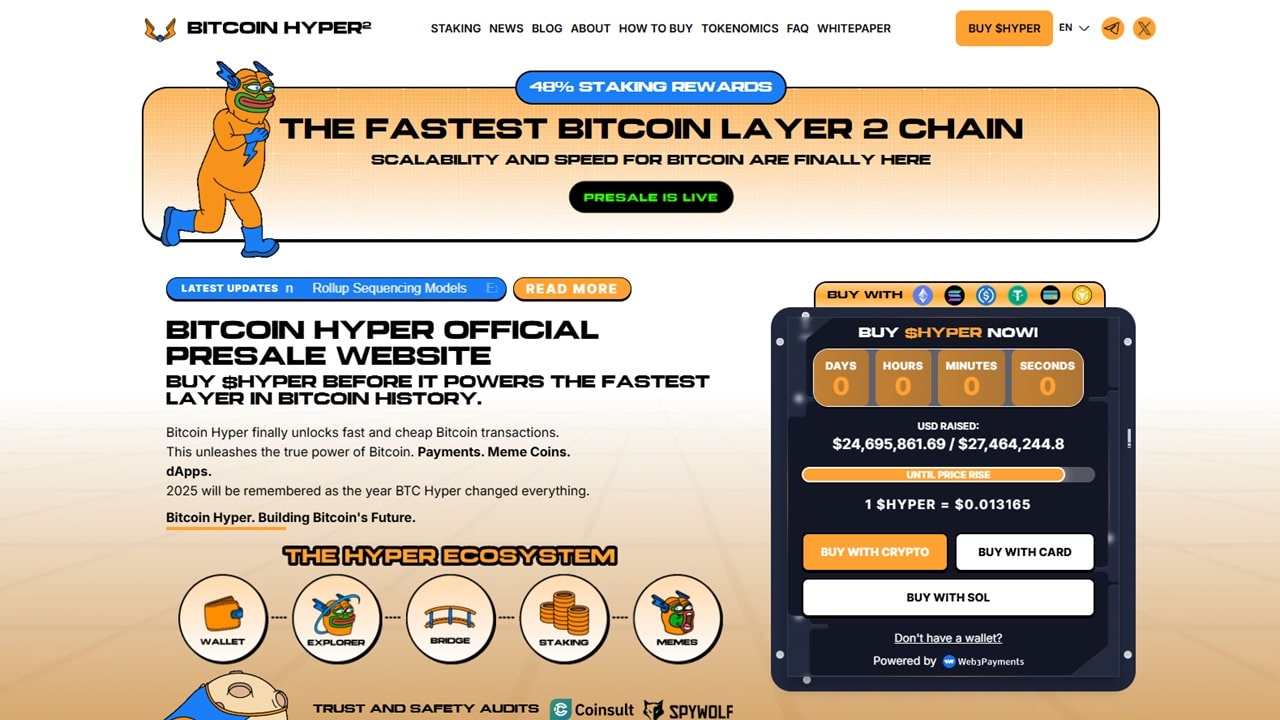
The Layer 2 initiative also offers a more cost-effective and scalable framework. The Bitcoin blockchain processes just seven TPS, while Bitcoin Hyper handles thousands in the same timeframe. Unlike ZKP, which has a prolonged mainnet launch date of July 2027, Bitcoin Hyper is expected to go live in Q1 2026 at the latest. Investors have purchased almost $29 million worth of HYPER tokens from the presale event. Those who participate pay just $0.013365 per HYPER.
Maxi Doge (MAXI)
Maxi Doge (MAXI) is an ERC-20 meme coin inspired by a ripped Shiba Inu dog, which trades perpetual futures with high leverage. The speculative project offers MAXI tokens at a substantial presale discount and a small FDV of approximately $40 million. These investment dynamics appeal to investors with a high risk appetite, as the low market capitalization initially leads to volatile trading conditions.
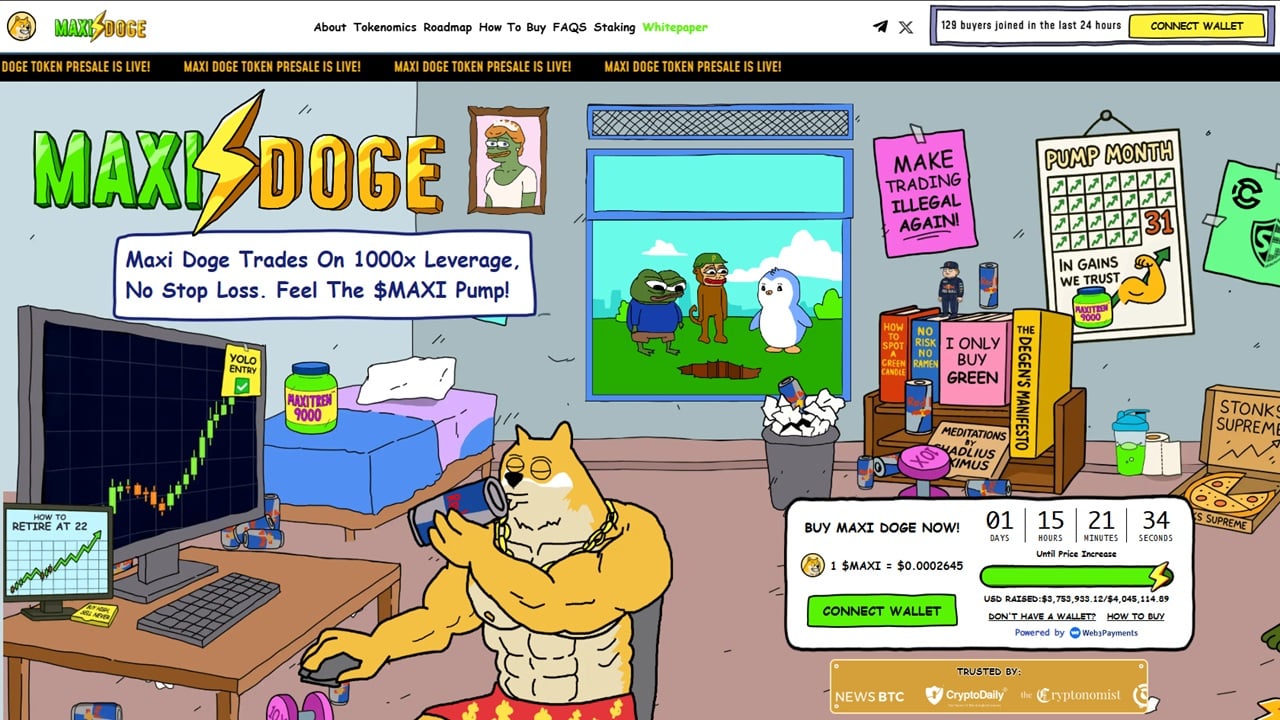
Although MAXI offers limited utility, the whitepaper hints at several potential use cases. As per public documents, Maxi Doge may integrate a futures trading platform for MAXI holders, launch gamified tournaments, and bridge to additional blockchain ecosystems.
That said, like other dog meme coins, MAXI’s true potential stems from hype, FOMO, and community growth. The Maxi Doge presale is entering its final stages, and participants can stake their tokens before the TGE.
FAQs
What is ZKP?

ZKP is an early-stage Layer 1 blockchain that settles transactions via the zero-knowledge proof system. It claims to serve the AI sector, yet the mainnet, which launches in July 2027, has long-term scalability targets of just 1,000 TPS.
When will ZKP be listed on exchanges?
ZKP provides no information about exchange listing dates, prices, or platform partners. Since the public sale spans 450 days, February 2027 is the earliest listing timeframe.
Is ZKP audited?
We were unable to find any contract audits for the ZKP token. This omission is likely because ZKP operates on a native blockchain that remains in development.
How do I join the ZKP presale?
Connect a non-custodial wallet to the ZKP website and fund it with BTC, ETH, or another accepted asset. Input the contribution amount from $50 to $50,000, and open the connected wallet to approve the transaction.
Is ZKP a good investment in 2026?
Although it’s zero-knowledge proof technology has some potential, the speculative auction system does not resemble a sensible investment. Participants only discover their token cost price after the auction’s 24-hour cycle, which could be higher than the exchange listing rate.
- ZKP whitepaper (ZKP)
- What Is a Zero-Knowledge Proof? (Chainlink)
- The cost of compute: A $7 trillion race to scale data centers (McKinsey Insights)
- Governing with Artificial Intelligence: The State of Play and Way Forward in Core Government Functions (Organisation for Economic Co-operation and Development)

Why you can trust 99Bitcoins
Established in 2013, 99Bitcoin’s team members have been crypto experts since Bitcoin’s Early days.
Weekly Research
100k+Monthly readers
Expert contributors
2000+Crypto Projects Reviewed