






In This Article
LiquidChain ($LIQUID) is building the first-ever Layer-3 blockchain solution as it aims to solve one of the biggest challenges in crypto: breaking down the silos between the biggest networks like Bitcoin, Ethereum, and Solana. The new L3 will allow users to access liquidity from all of these chains in one place.
LiquidChain is current;y offering its $LIQUID token on presale, giving investors a chance to get in on the ground floor of the unified L3 ecosystem. That has many wondering whether $LIQUID is the next major crypto to take off.
In our LiquidChain price prediction, we’ll take a close look at the project’s utility, adoption, and growth potential and help you decide if it’s a good investment today.
Key Takeaways
- LiquidChain ($LIQUID) is a new Layer-3 blockchain designed to bring together liquidity from the Bitcoin, Ethereum, and Solana ecosystems.
- The project enables seamless bridging of Bitcoin, Ethereum, and Solana assets with a cross-chain virtual machine and unified proof engine to verify transactions in real-time.
- $LIQUID is the native token of the LiquidChain ecosystem and will be used for transaction fees, staking, and development.
- The $LIQUID token is currently on presale at a price of $0.0143. The list price has not yet been announced.
- LiquidChain’s price performance is likely to depend on the technical capability of its L3, demand for cross-chain dApps, and institutional adoption of LiquidChain’s liquidity pools.
LiquidChain Price Prediction Overview
LiquidChain initiated its token presale in November 2025 and is expected to launch the $LIQUID token on exchanges in Q2 2026. While the presale is taking place, the project team is actively building the LiquidChain blockchain and developing partnerships with exchanges and dApp developers.
2026: The $LIQUID token is expected to launch on decentralized exchanges (DEXs) in Q2 2026, followed by centralized exchanges (CEXs) in Q3. We expect the investor base to grow gradually after launch in anticipation of a 2027 mainnet launch.
2027: LiquidChain is likely to launch its L3 mainnet in 2027, creating the first multi-chain ecosystem for Bitcoin, Ethereum, and Solana. We anticipate a demand surge around the mainnet launch, followed by accelerated growth as dApps roll out and users take advantage of high liquidity staking rates.
2030: We expect LiquidChain to develop an early lead in cross-chain liquidity, making it the L3 of choice for new DeFi projects and financial institutions moving into crypto. While staking rates will decline over time, we expect the price of the $LIQUID token to reach an average price of $1.10 by the end of 2030.
| Year | Potential Low | Average Price | Potential High |
| 2026 | $0.020 | $0.034 | $0.045 |
| 2027 | $0.041 | $0.080 | $0.120 |
| 2028 | $0.22 | $0.45 | $0.80 |
| 2029 | $0.35 | $0.89 | $1.15 |
| 2030 | $0.65 | $1.30 | $1.85 |
LiquidChain Price History
The LiquidChain presale launched on November 11, 2025 with the $LIQUID token available at an initial price of $0.0122. The token price has increased in stages every few days since that time, and $LIQUID is now selling for $0.0143, a gain of 17% for the earliest investors.
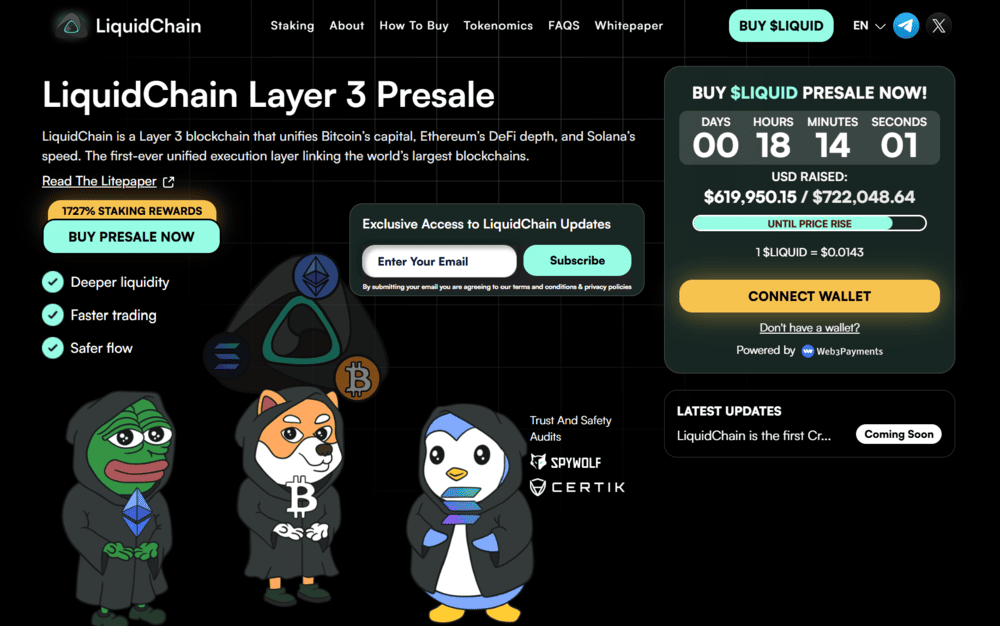
LiquidChain hasn’t announced a target list price for the $LIQUID token yet. But our analysis indicates that the token won’t launch until mid-Q2 2026, so there will likely be at least 10 more rounds of price increases. The project has raised nearly $620,000 so far.
LiquidChain Price Prediction 2026
2026 is still early days for LiquidChain. The project is likely to continue its $LIQUID token presale until at least May, and many crypto investors are still learning about the project for the first time. Early sentiment around LiquidChain is very positive, indicating that the project could gain traction quickly as it becomes more well-known.
There are two major catalysts we expect for LiquidChain this year. The first is the Token Generation Event (TGE) and launch of $LIQUID for trading on DEXs. LiquidChain hasn’t announced DEX partnerships yet, but in the spirit of multi-chain, it could launch on both Ethereum and Solana DEXs. That would be significant because it puts $LIQUID in front of investors on two of the largest blockchains, creating a massive audience for the new token.
The second catalyst we foresee is LiquidChain launching on one or more CEXs in Q3 2026. The timing and magnitude of this listing will depend partly on demand for $LIQUID on DEXs. But we expect Tier-1 exchanges like Binance and Bitget to consider listing $LIQUID because of its positioning as the first-ever L3 project. A major listing could allow $LIQUID from the ‘Binance effect,’ creating a surge of demand and quickly repricing the token higher.
While $LIQUID’s launch is likely to come against the backdrop of a crypto bear market, we don’t expect that to significantly diminish demand for the token. Many crypto investors are using the bear market to look for opportunities beyond Bitcoin and invest in the next generation of Web3 projects. LiquidChain is poised to be one of the most important platforms of the next bull run for DeFi, so it’s likely to attract forward-thinking investors.
On top of that, staking rewards for $LIQUID are expected to remain very high throughout 2026. Presale investors can currently earn APYs up to 1,727%, making this one of the best staking cryptos of the year. For investors navigating a broader market downturn, that low-effort yield is extremely attractive.
Given all this, we calculate that $LIQUID could surge to $0.026 after its Q2 launch, then steadily rise to an average price of $0.034 in the second half of the year. We anticipate a potential high around $0.045 during Q3 in the wake of LiquidChain’s first CEX listing.
LiquidChain Price Prediction 2027-2030
Following the $LIQUID token launch in 2026, LiquidChain will have the foundation necessary for its game-changing L3 ecosystem. The project’s long-term success will depend on its ability to execute on this L3.
Here’s how we project this ecosystem will develop and the impact that will have on the $LIQUID token price.
2027: L3 Launch and Early Growth
Heading into 2027, all eyes will be on LiquidChain’s L3 mainnet. The project team hasn’t yet announced an expected launch date, but we anticipate the mainnet will go live in Q1 or Q2. When it does, the $LIQUID token will instantly have a range of new utilities and investors will finally get to see how effective LiquidChain’s promised blockchain is at bridging the gaps between Bitcoin, Ethereum, and Solana.
We expect the L3’s launch to initiate exponential growth in the value of the $LIQUID token. Demand should soar as the token becomes necessary to transact on the L3, while total value locked to LiquidChain could spike as investors move BTC, ETH, and SOL into its liquidity pools. dApp availability is likely to remain limited at this time, but LiquidChain could experience a ‘ChatGPT moment’ as DeFi users recognize the game-changing potential of having access to liquidity from the three biggest ecosystems in one place.
Crucially, staking rewards are also likely to remain elevated throughout 2027 as LiquidChain encourages further adoption of its ecosystem and incentivizes liquidity provisioning. This increases the attractiveness of the L3 even for investors who don’t necessarily need cross-chain capabilities.
We predict surging demand will push the $LIQUID token price sharply higher. We anticipate an average price of $0.080 by the second half of the year, with potential higher prices as additional CEXs list the token.
2028: DeFi Expansion
By 2028, development on LiquidChain will have accelerated to the point that the ecosystem has several competing DeFi projects, including exchanges, lending platforms, and yield farming solutions. These will establish LiquidChain as the new hub for DeFi, helping it pull even more liquidity from Bitcoin, Ethereum Layer-2s, and Solana and essentially creating a flywheel effect as LiquidChain becomes synonymous with DeFi.
The DeFi expansion on LiquidChain is likely to be aided by a resurgent crypto bull market in 2028. That will improve liquidity conditions across the market, boost demand for DeFi, and incentivize developers to build even more on LiquidChain’s L3.
This is expected to be a period of rapid, intense growth. Staking rates may fall as liquidity explodes higher, reducing new supply as demand for $LIQUID remains extremely robust to fuel network activity. We expect the token’s price to nearly double, reaching an average price of $0.45 by year-end. An even more bullish scenario could push $LIQUID toward $0.80.
2029-2030: Institutional Adoption & Long-term Growth
The explosive growth of 2028 combined with the breadth of another crypto bull market is likely to pull traditional financial institutions into the DeFi space. LiquidChain is positioned to capture institutional interest thanks to its position as a next-gen DeFi leader and cross-chain support, which creates flexibility for institutional investors. Institutions that are themselves looking to build DeFi platforms are likely to do so on LiquidChain as opposed to outmoded Ethereum Layer-2s.
This long-term outlook indicates:
- An average $LIQUID price of $0.89 in 2029
- An average $LIQUID price of $1.30 in 2030
Our average price forecasts assume that LiquidChain will face growing competition from other L3s by 2030. However, if this competition fails to materialize, the project could see a potential high price of $1.85 by the end of 2030.
Our LiquidChain Price Prediction Methodology
Our LiquidChain price forecast is based on fundamental analysis of the $LIQUID token, the project’s positioning in the broader Web3 ecosystem, and the overall crypto market. To analyze LiquidChain itself, we used only information published in the official whitepaper and shared through official channels.
These are the core factors we considered.
Layer-3 Technical Capabilities
Since LiquidChain is proposing to build a first-of-its-kind Layer-3 blockchain, we looked closely at the technical details available in the whitepaper. While the whitepaper lacks specifics about implementation, none of the technology that LiquidChain requires is fundamentally new. This gives us confidence that the proposed L3 will be able to effectively bridge Bitcoin, Ethereum, and Solana and that it will be technically sound for heavy DeFi development.
Exchange Listings and Liquidity
Exchange listings are crucial for both $LIQUID token repricing and liquidity to ensure the project can grow. Our price prediction accounts for:
- DEX and CEX listings in Q2 and Q3 2026, respectively
- Additional exchange listings after the LiquidChain L3 launch
- Steadily growing liquidity for both retail and institutional investors
$LIQUID Token Utility and Demand
We analyze the utility of the $LIQUID token itself to ensure that growth in the LiquidChain ecosystem will directly benefit token holders. We predict demand coming from two main utility functions:
- Staking rewards for $LIQUID holders (driving early and mid-stage demand)
- $LIQUID requirements for ecosystem participation (driving mid and late-stage demand)
Our forecast model assumes that these utilities will be balanced such that $LIQUID demand for network participation continues to grow even as staking rates decline.
Crypto Market Cycles
We also considered the broader crypto market, since market cycles have significant impact on DeFi demand and investors’ tolerance for new cryptocurrencies like $LIQUID. Our model forecasts the next bull market beginning in mid to late 2027 and taking full effect in 2028. This timeline coincides with predictions from professional crypto analysts.
What is LiquidChain?
LiquidChain is an emerging crypto project that aims to build the first-ever Layer-3 blockchain. The goal is to create a network that bridges the Bitcoin, Ethereum, and Solana ecosystems, combining liquidity across the three largest crypto projects.
LiquidChain’s L3 is built on top of three key components:
- A custom cross-chain virtual machine
- A united proof engine that can verify Bitcoin, Ethereum, and Solana states in real-time
- Smart contract integrations that enable developers to build extend existing dApps to LiquidChain
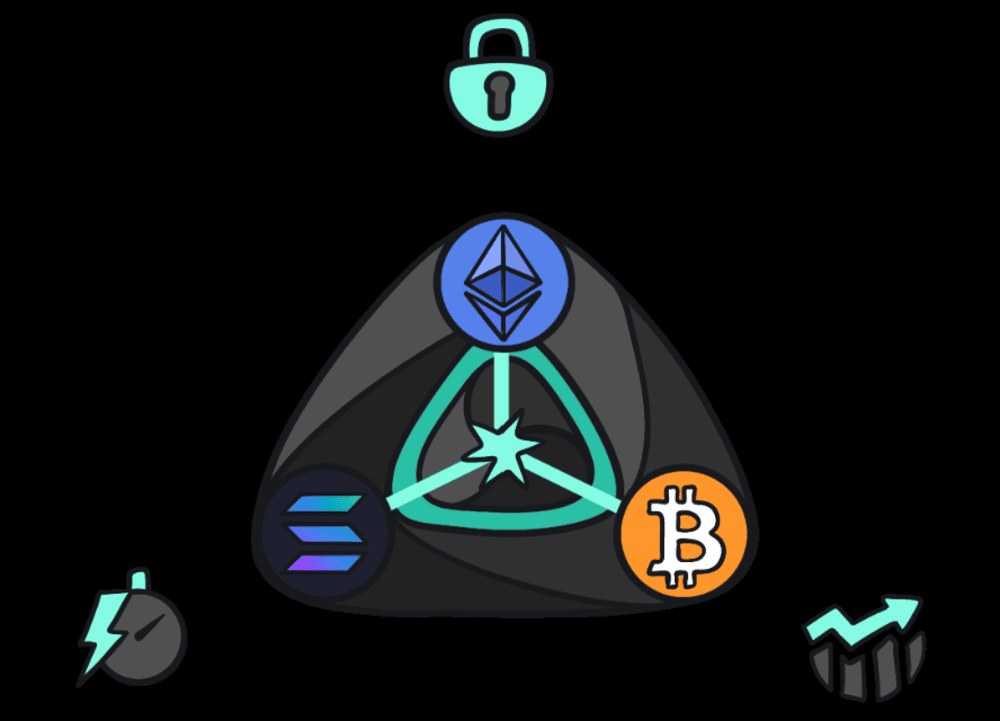
If successful, LiquidChain would break down the silos that currently separate these ecosystems and make it difficult to transfer liquidity between them. The new L3 would enable fast, cross-chain transactions at low cost and spur development of a new class of dApps that operate across multiple blockchains.
| Category | Details |
| Token Name | LiquidChain |
| Token Symbol | $LIQUID |
| Blockchain | Layer-1: Bitcoin, Ethereum, and Solana Layer-2: Ethereum Layer-2s Layer-3: LiquidChain |
| Execution Environment | LiquidChain Virtual Machine |
| Total Supply | 11,800,000,100 $LIQUID |
| Initial Presale Price | $0.0122 |
| Current Presale Structure | Multi-stage presale |
| Accepted Payment Methods | BTC, ETH, USDT, USDC, SOL, BNB, credit/debit cards |
| Staking | Available, variable rewards |
| Gas Token | $LIQUID |
| Planned Listing Price | Not yet announced |
| Mainnet Target | Q1 2027 |
| Exchange Listings | DEXs first, followed by CEXs |
LiquidChain Crypto Use Cases
LiquidChain has a number of potential use cases that could appeal to different types of investors, institutions, and developers. Here are a few of the clearest use cases for the project and its $LIQUID token.
High-speed Crypto Trading
LiquidChain will be the first blockchain to offer native cross-chain access to Bitcoin, Ethereum, and Solana. That makes it a powerful tool for trading because it enables crypto traders to instantly swap tokens from any of these ecosystems, without having to first go through costly and time-consuming bridges.
For traders, that means:
- Faster transactions
- Lower execution costs
- Wider token availability
Highly Liquid DeFi
DeFi applications stand to benefit massively from LiquidChain’s all-in-one liquidity pools. It will be seamless to borrow, stake, and yield farm across multiple blockchains. LiquidChain will offer integrations for existing DeFi apps, enabling developers to quickly extend existing platforms across more chains.
Cross-chain dApps
While LiquidChain’s cross-chain liquidity push has obvious applications for DeFi, breaking down blockchain silos has benefits for a much wider range of uses. NFTs, crypto games, and Web3 apps could all benefit from cross-chain compatibility and liquidity enabled by LiquidChain. The project team has specifically identified prediction markets as one application that could migrate from existing Ethereum Layer-2s to LiquidChain.
Staking & Ecosystem Access
The $LIQUID token plays a crucial role in the LiquidChain ecosystem by providing:
- Staking rewards (up to 1,727% APY during the presale)
- Gas payments for transactions on the LiquidChain L3
- Governance participation
Where to Store LiquidChain Tokens?
The $LIQUID token is currently available only through the LiquidChain presale, not through exchanges. The token will initially launch on Ethereum, meaning you need a secure ERC-20 compatible wallet to store tokens you receive from the presale.
We recommend using Best Wallet to buy and store $LIQUID. Best Wallet is a free mobile wallet for iOS and Android that supports 60+ blockchains and offers cutting-edge security features. You’ll maintain full self-custody over your $LIQUID tokens and Best Wallet never requires Know Your Customer checks that could compromise your identity.
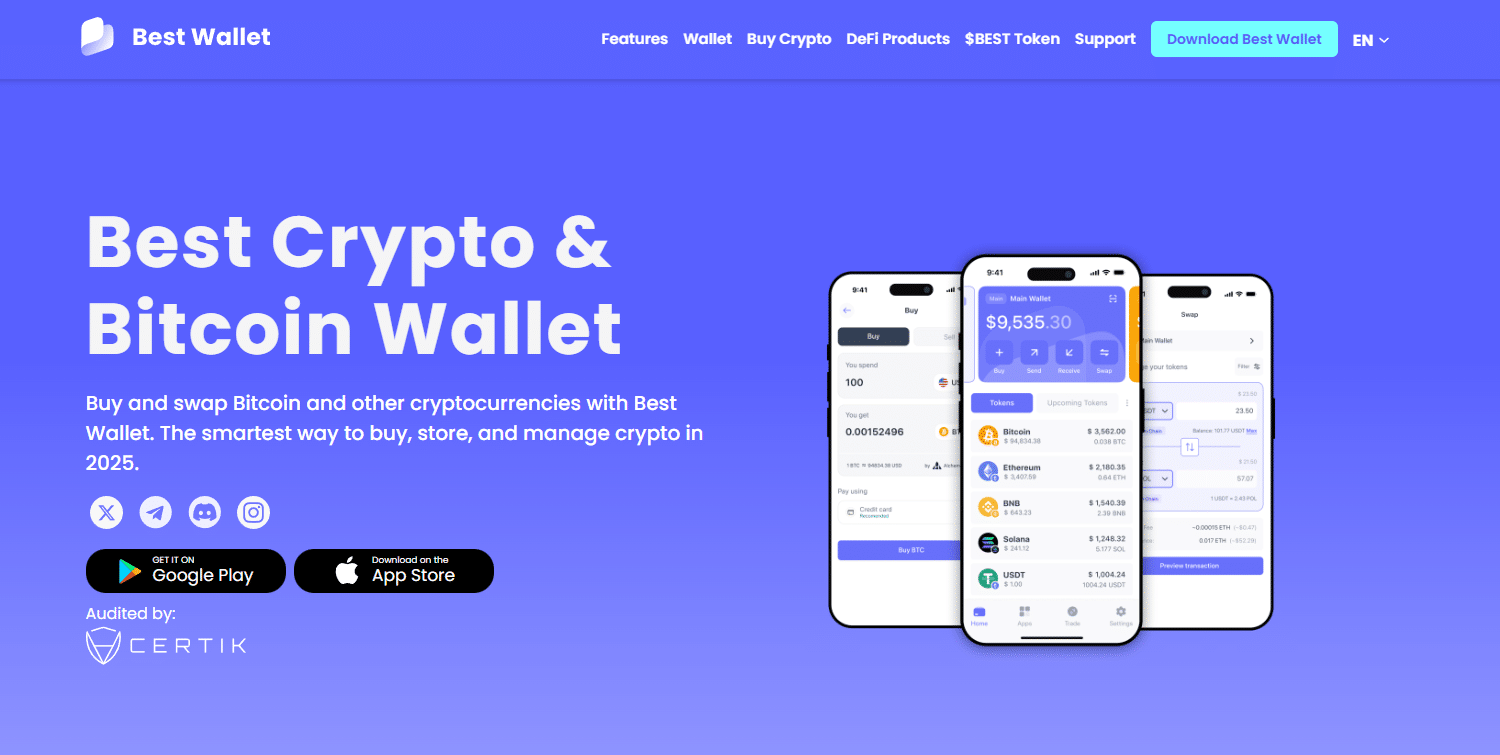
Best Wallet streamlines the token claiming process at the end of the $LIQUID presale and offers built-in staking so you can maximize your token rewards. An integrated DEX makes it easy to swap cryptocurrencies. More than 500,000 users already trust Best Wallet, and it’s the best crypto wallet to store $LIQUID.
Visit Best WalletWhat Drives the Price of LiquidChain?
LiquidChain’s price will be driven by a combination of different factors related to both the project’s execution and broader crypto market action. Here are some of the key factors to watch, broken down by when they’ll likely have the biggest impact.
Presale-phase Price Drivers
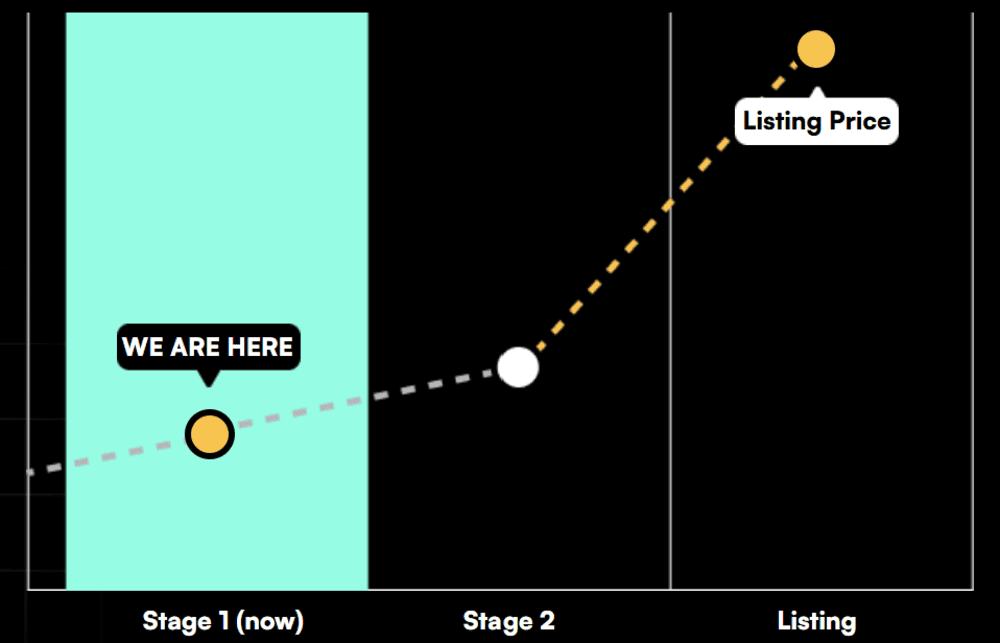
LiquidChain’s presale is divided into stages with a preset price increase at each stage. This means the $LIQUID token price is somewhat mechanical rather than fully demand-driven, although demand does influence how quickly each stage sells out.
Key price drivers to watch during the presale include:
- How quickly each presale stage sells out
- How high staking APYs remain (high APYs encourage long-term holding)
- LiquidChain’s marketing reach and partnership announcements
- Listing announcements as the end of the presale approaches
- Sentiment around new token launches and the broader crypto market
Post-launch Price Drivers
After $LIQUID hits exchanges, the price will be far more dynamic. Core drivers include:
- CEX listings and $LIQUID token liquidity
- Achievement of key development milestones like the mainnet launch
- Staking rates, especially relative to Ethereum Layer-2 networks
- Adoption of LiquidChain by dApp developers
- Growth of LiquidChain’s liquidity pools for DeFi
Bull, Base, and Bear Price Scenarios
LiquidChain’s long-term price potential could follow different trajectories depending on how well the project executes on its roadmap, how quickly users adopt the L3 for DeFi and other use cases, and what happens in the broader crypto market.
In a bullish scenario, LiquidChain will launch on major CEXs including one or more Tier-1 exchanges in 2026. It will deliver its mainnet on schedule and launch with ready-to-use DeFi integrations thanks to partnerships with existing platforms. Investors will rapidly switch to the L3 to take advantage of its cross-chain operability, resulting in strong liquidity growth and a surge in demand for the $LIQUID token.
In a base scenario, LiquidChain will launch on smaller CEXs in 2026, followed by a Tier-1 exchange in mid-2027 after the mainnet launch. The mainnet will attract users more slowly as developers need time to integrate dApps with the L3. LiquidChain will see strong liquidity growth, but at a slower pace than in the bullish scenario. The base-case reflects the average price for each year of our prediction.
In a bear scenario, LiquidChain may face delays in launching its mainnet or, due to bearish crypto market conditions, could fail to achieve a major CEX listing in 2026 or 2027. This would limit liquidity and potentially slow down LiquidChain’s adoption by developers. The $LIQUID token would see reduced demand, at least for the first several years of our prediction timeframe, causing the price to trend near the low end of our forecast.
Benefits and Risks of LiquidChain
LiquidChain’s primary benefit is that it breaks down the silos that currently separate Bitcoin, Ethereum, and Solana. This siloed architecture makes it difficult to transact across chains or build dApps that operate across multiple chains, limiting liquidity and creating a fragmented system of competing ecosystems.
By unifying these networks, LiquidChain promises to increase liquidity, reduce fees, and enable mega-dApps capable of operating seamlessly across blockchains. LiquidChain promises to make life easier and less expensive for individual traders and DeFi users, while also providing the liquidity that institutions need in order to operate on-chain.
Another key benefit to LiquidChain is that it incentivizes liquidity provisioning with generous staking rewards. Investors can lock their $LIQUID tokens to earn more coins, encouraging long-term holding while generating yield. This serves as an important source of income for investors and creates a key source of demand for $LIQUID.
The main risk to LiquidChain that we see is that the project is doing something new and untested. As the first L3, LiquidChain will likely face technical difficulties that must be overcome. These could slow down the mainnet launch or introduce security risks that scare potential investors and users.
LiquidChain is also launching in a crypto bear market. While we anticipate that a bull market is on the horizon in 2027-2028, the project will need to navigate at least several months of tepid sentiment and a risk-off environment that discourages investing in emerging tokens.
Overall, we see LiquidChain as a high-risk, high-reward investment. It has asymmetric upside if the project can execute on its roadmap and take a leading role in DeFi heading into the next crypto bull market. However, a lot depends on LiquidChain’s ability to deliver a trustworthy blockchain and convince DeFi users and developers to adopt its L3.
Is LiquidChain a Good Investment?
LiquidChain is a potentially game-changing L3 that will increase connectivity between the largest blockchain ecosystems and unlock the next generation of DeFi. The potential upside is enormous: according to our forecast, the base-case for LiquidChain is a roughly 9,000% gain in the $LIQUID token price by 2030.
Investors should bear in mind that LiquidChain is a new project building a type of cross-chain network that has never existed before. This comes with significant risk, especially if LiquidChain encounters difficulties in implementing its L3 blockchain.
However, even in our bearish scenario, LiquidChain appears poised for explosive growth. We predict the $LIQUID token could grow by 50x-100x over the coming years as investors, developers, and ultimately institutions adopt its L3 solution. We’re rated LiquidChain as one of the best cryptos to buy in 2026.
LiquidChain Price Prediction: Conclusion
LiquidChain is building the world’s first Layer-3 blockchain as it aims to combine Bitcoin, Ethereum, and Solana into a single ecosystem. It has the potential to be a key player in the next generation of DeFi and a source of enormous liquidity for crypto traders and institutions.
The $LIQUID token fuels the LiquidChain network and provides access to generous staking rewards. It’s a high-risk, high-reward investment with the potential to jump nearly 100x according to our $LIQUID coin price forecast.
Visit LiquidChainSee Also:
- LiquidChain Launches Crypto Presale With Multi-Chain Access for Ethereum Traders
- Bitcoin, Ethereum, Solana in One Place: Why LiquidChain ($LIQUID) Might Be the Next Big Altcoin
FAQs
Is LiquidChain legit?

Yes, LiquidChain is a new cryptocurrency project that’s raised more than $600,000 from early investors. The project is building the first Layer-3 blockchain to enable liquidity sharing across Bitcoin, Ethereum, and Solana. LiquidChain has a thorough whitepaper and has been audited by Spywolf and CertiK.
Where is the best place to buy LiquidChain?
LiquidChain is only available to buy through the official presale website. You’ll need to connect a crypto wallet like Best Wallet and swap BTC, ETH, SOL, USDT, USDC, or BNB for LIQUID tokens. You can claim your $LIQUID tokens at the end of the presale.
When will LiquidChain launch?
LiquidChain hasn’t announced a launch date yet. We expect the presale to end and $LIQUID to list on DEXs in May or June 2026. We anticipate the LiquidChain L3 will launch in the first half of 2027.
Will the LiquidChain price reach $1?
According to our LiquidChain price forecast, the $LIQUID token could reach $1 in 2030. For this to happen, LiquidChain needs to execute on its roadmap and the macro environment around crypto must improve. Otherwise, LiquidChain may take longer to reach $1.
Is LiquidChain a buy?
LiquidChain is a high-risk, high-reward investment that may be suitable for investors who want to get in early on the next generation of DeFi. The $LIQUID presale offers tokens at a discounted price and early investors can lock tokens to earn generous staking rewards.
Can LiquidChain outperform Solana?
LiquidChain is a much smaller project than Solana at present, so it has the potential to deliver much larger returns over the next several years. However, Solana’s size makes it less risky, so investors need to weigh the risk vs. reward of owning LiquidChain as the project develops.
References

Why you can trust 99Bitcoins
Established in 2013, 99Bitcoin’s team members have been crypto experts since Bitcoin’s Early days.
Weekly Research
100k+Monthly readers
Expert contributors
2000+Crypto Projects Reviewed