





Facebook’s Libra-turned-Diem project was shut down in early 2022. This article covers how the coin worked, who controlled it, and why it was wound down.
What is Diem: Summary
Diem, formerly known as Libra, was a centralized, global, stable cryptocurrency project set to launch in 2022, headed by Facebook and a consortium of major companies around the world. Diem’s value was maintained by a reserve of liquid stable assets that back each coin created.
Interestingly, Diem was set to become completely decentralized five years after it launched. Sadly, it never happened.
What is Diem?
Diem (formerly Libra) is a cryptocurrency project pioneered by Facebook. Its purpose was to connect the billions of people living together on planet Earth through one digital currency.
As the world moves into a cashless, digital-only economy, many unbanked or underbanked people may be left out. The Libra cryptocurrency aimed to help people who don’t have access to the banking system to participate in the digital economy.
Libra is designed to work much like a stablecoin (a cryptocurrency with a relatively stable value against real-world currencies, also known as fiat currencies).
Unlike Bitcoin or Ethereum, which widely fluctuate in value due to price speculation, Libra’s value was predicted to have low volatility due to a reserve of currencies and assets that back it.
The Novi Wallet
Facebook also set up a subsidiary called Novi Financial Inc. to develop the first Diem wallet called Novi.
Novi was set to work as an independent wallet for Diem, integrating with other services like Facebook or WhatsApp and allowing billions of users to send funds to each other with a single tap and with low fees.
The Diem Association
Diem was set to start as a centralized currency, but claimed that within five years, it would become completely decentralized, just like Bitcoin.
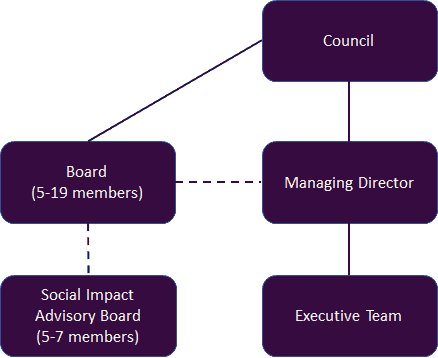
In its initial stages, the Libra project was to be managed and controlled by the Diem Association, a nonprofit organization of global companies, social organizations, and academic institutions.
On Becoming a Founding Member
To become a founding member, you needed to stake $10 million. Each founding member was also required to run a validator node, a computer that validates and approves transactions following the Diem rules. This is a bit similar to what a miner does in the Bitcoin network.
But money and computing power were not enough to join the Diem association as a founding member. You also needed to pass a certain scalability bar.
For example, commercial companies needed to have more than $1 billion in market value, reach over 20 million people a year, and be recognized as a top 100 industry leader.
Cryptocurrency-focused investors needed to have at least $1 billion in assets under management. Social organizations needed to have a track record of working on poverty alleviation, be ranked in the top 100 in their field, and have an operating budget of over $50 million.
Lastly, academic institutions wanting to join needed to prove they are in the top 100 universities in the world according to certain standards.
The Diem Reserve
Most cryptocurrencies aren’t backed by any commodity or fiat currency. That’s why they often fluctuate dramatically in price since a lot of people are speculating on how much they will be worth in the future.
Diem, on the other hand, was set for day-to-day use, which required it to have a less volatile nature. That’s why for every Diem created, there would be a set of stable and liquid assets backing it.
This backing, known as the Diem reserve, would help make Diem more stable, so users will be able to sell Diem coins at or close to the value for which they bought them.
The Diem reserve would expand and shrink according to supply and demand for Diem from the market.
So unlike many cryptocurrencies that have a limited supply or use mining to generate new coins, the Diem supply was set to become ever-changing.
Diem Criticism
As you can imagine, the Diem project attracted its share of criticism.
“Just Another Fiat Currency”
Diem seemed to be just another fiat currency, only this time controlled by corporates and not by central banks.
The Diem Association stated that in the early development of the Diem network, its founding members were committed to working with authorities and addressing all regulatory concerns.
Basically, this means that Diem would probably be available only for people who pass a certain verification process, making it still unreachable to many unbanked and underbanked people around the world.
Keep in mind that over half of the 1.7 billion underbanked come from just seven countries: Bangladesh, China, India, Indonesia, Mexico, Nigeria, and Pakistan; in more than half of these places, cryptocurrencies are banned, Facebook can’t freely operate, and heavy regulatory restrictions exist to combat crime and money-laundering concerns.
On top of that, Diem’s value was backed by major fiat currencies, making it inherently attached to their fluctuations.
Privacy Issues
Much like Bitcoin, Diem transactions were pseudonymous. This means all transactions were public and visible to everyone, but you couldn’t tell who sent what to whom, since Diem addresses were just random letters and numbers.
Centralization
Another important issue is the fact that Diem was a centralized, also known as permissioned, blockchain with intentions of becoming permissionless, but it remained unclear how and if this transition would actually occur.
The financial interests of the companies behind Diem could collide with this vision if Diem became extremely popular, and it required a significant level of trust on the public’s part to believe that those organizations would lobby for Diem’s vision over their own interests.
Some of the challenges the switch to decentralization presents include:
- How to decentralize the reserve function?
- How to scale the system so it will work fast enough with more than 100 validators?
- How to secure a decentralized network against fraud?
- How will decisions be made once there is no centralized council?
Bitcoin proponents would argue that if you want to create a decentralized coin, you should make it decentralized from the get-go, since a decentralized model is something that needs to be taken into account when building the foundations for any blockchain.
One theory suggests that when building a blockchain, you’re ideally looking for three main elements:
- Decentralization: Meaning anyone can participate, and it’s free for all.
- Security: Since these are digital currencies, you need to protect against double-spending issues.
- Scale: You want the system to be able to have a high rate of transaction approval, so it can easily be adopted worldwide.
The problem is that by design, you can only have two out of the three. Currencies that are decentralized and secure, like Bitcoin, aren’t really scalable. Currencies that are scalable and secure aren’t truly decentralized, like Ripple and its XRP currency.
Currencies that are decentralized and scalable are inherently insecure since it takes time for the data to travel between all participants in a large system, and bad actors can take advantage of this lag in information.
Governance
Finally, we have Diem’s governance model and regulation. One of the most interesting points of criticism about this issue comes from an article by Dmitriy Brenzon, a research partner at Bollinger Investment Group.
Brenzon says it is unclear whether the benefits of the public good that Diem aims to serve are a strong enough incentive for competing organizations with conflicting priorities.
For example, what happens if Novi, the Diem wallet developer, wants to launch in the same market as Celo, a platform for stable, secure digital payments? Celo is a portfolio company of Andreessen Horowitz and Coinbase, which are part of the Diem council.
Brenzon puts it this way, “With only 28–100 Council members, politics should be expected; after all, there will be individuals from organizations who know how to play that game.”.
His final point really hits the mark:
“What is the incentive for companies to participate, and will it be strong enough to stand up against regulators and governments when push comes to shove?
While Diem intends to create a network that operates across any country, it’s actually creating a network that will have to comply with every country’s regulatory regime.”
Several regulators from countries around the world, like France and Germany, already lashed out against Diem.
Subsequently, major council members Visa, Mastercard, PayPal, Stripe, eBay, Booking.com, and Mercado Pago decided to withdraw their membership, leaving Diem with no major U.S. payment provider and with hindered momentum.
Conclusion: Why did the Libra Project Shut Down?
The Libra project—later renamed Diem—was shut down mainly because of regulatory opposition and loss of partner support. Governments and central banks feared that Facebook’s proposed global stablecoin could disrupt national currencies and enable money laundering.
As scrutiny increased, major financial partners like Visa, Mastercard, and PayPal withdrew. Although Libra rebranded as Diem in 2020 and limited its scope to a U.S. dollar-backed stablecoin, regulators remained unconvinced. In 2022, the Diem Association sold its assets to Silvergate Bank, effectively ending the project.
In short, Libra/Diem didn’t fail due to technology. It failed because it challenged the global financial system too quickly.
See also: Fastest Growing Cryptocurrencies to Watch in 2026
FAQs
What is Diem?

Diem, formerly known as Libra, was a centralized, global, stable cryptocurrency project set to launch in 2022. The launch never happened, and the project was shut down.
Why did Libra fail?
The Libra (later renamed Diem) project shut down because it faced overwhelming regulatory resistance and loss of key partner support that made its original vision unworkable.

Why you can trust 99Bitcoins
Established in 2013, 99Bitcoin’s team members have been crypto experts since Bitcoin’s Early days.
Weekly Research
100k+Monthly readers
Expert contributors
2000+Crypto Projects Reviewed