






In This Article
As someone who has been working in crypto media for over nine years across multiple notable crypto companies, I occasionally have the opportunity to sit down with other notable figures and bright minds in the crypto space to discuss all matters of the industry.
In December 2025, I had the opportunity to be interviewed by Jasir Jawaid, the Editor-in-Chief of the popular crypto channel and longtime friends over at the Coin Bureau, to discuss my thoughts on whether the crypto market is dead.
Jasir reached out during one of the most unusual and perplexing periods in crypto history. A time when every tailwind seems to be in play, when things have never looked better for Bitcoin and crypto, particularly in terms of adoption, regulations, and laws, yet the price is not reflecting the fundamentals. We decided to dive into what is going on.
Working on a wider crypto piece and reaching out to multiple notable figures, Jasir published a fantastic article on how some folks are viewing the markets. Feeling that there is more here to uncover, he and I sat down to catch up and dive deeper.
When You Hear People Say “Crypto is Dead,” What Do You Think They Actually Mean?
When I hear someone declare ‘crypto is dead,’ I don’t believe they are talking about the technology or the fundamental movement. What they typically mean is that the specific flavor of speculative euphoria they were focused on has ended. It’s a statement born out of market fatigue, disappointment in price, and/or a lack of understanding regarding the technology’s true evolution.

The sentiment often surfaces after scandals, price crashes, or regulatory crackdowns. It very rarely reflects a belief that the idealistic vision of changing, replacing, or optimizing traditional financial systems has been lost.
Crypto being perceived as dying can come from multiple angles:
1. The Death of Easy Money
This is the angle that most people and the average crypto user hit the “crypto is dead” narrative from. For the average market participant, the bear market or significant market corrections are the most tangible evidence of failure.
- Synonymous with ‘Get-Rich-Quick’: Many people are initially attracted to crypto as a way to get rich quickly and make easy money. Previous cycles have experienced phenomena such as Bitcoin, memecoins, and NFTs doubling or tripling in price on a daily or weekly basis, attracting thousands of inexperienced traders and investors who pile in, looking to make a quick buck. When the inevitable bear market hits, the 80-90% corrections wipe out those who were attracted by the vertical price moves. For many, the ‘death of crypto’ is synonymous with the ‘death of the get-rich-quick opportunity.’ They simply conflate a volatile market cycle and their financial losses with the failure of the entire asset class.”
2. The Death of the Revolutionary Dream
Sometimes the claim that “crypto is dead” is referring to people in the industry lamenting the loss of crypto’s original promise:
- Financial Independence and Decentralized Rebellion: The initial vision was a movement driven by individuals seeking freedom from banks and governments. The prevailing feeling now is that crypto has shifted to a market steered by large institutions, automated trading, and compliant financial products.
- A Shift to Mainstream Finance: For the disappointed, this shift makes crypto feel less revolutionary and more like just another corner of mainstream finance, subject to heavy regulation and institutional control. The idealistic vision of a decentralized future has been lost to speculative excess, opportunists, and traditional market forces.
If I am being honest with myself and my readers, this is the only angle about crypto being “dead” that I give any relevance to and sympathize with. As an ex-financial advisor and someone who witnessed firsthand the corruption, greed, and predatory nature of the banking system, I, along with many early Bitcoiners, adopted not just an asset, but an ideal. An ideal and a hope that we could adopt a sound-money alternative and a shift to an Austrian-style economic monetary policy to replace the failed Keynesian economic experiment in place today. There was (and still is) hope that Bitcoin would provide a better alternative to the fiat system in place today.
There are two schools of thought here, and time will tell which plays out. Either Bitcoin has now been co-opted and absorbed into the traditional financial system, in which case, many of the original libertarian ideals for Bitcoin are truly dead. Or perhaps, this was the plan all along, and Bitcoin’s adoption into government and TradFi is the ultimate Trojan horse move.
3. The Death of Bad Actors and Unsustainable Models
This is a healthier kind of “death,” and it’s a necessary cleansing for the industry to mature and grow.
- Cleansing the Space: When people say crypto is dead after events like the collapse of Terra/LUNA or FTX, they are celebrating (or lamenting) the demise of centralized, opaque, and frankly, fraudulent institutions masquerading as legitimate ‘crypto’ operations. These events often cleanse the space of bad practices.
- The Actual Meaning: The old, outdated, and unsustainable ways of doing business in this industry are fading away, which is a necessary step toward true maturity and resilience.
4. The Death of Media Hype
The lack of mainstream headline visibility creates the illusion of death for those already disappointed or skeptical about the industry.
- The Perception of Existence: In a bull market, crypto is front-page news and is in all the headlines. In a bear market, the headlines dry up. For the external observer, the lack of mainstream media coverage and viral trends can create the perception that the industry has lost all interest. They mean ‘crypto is dead to the general public,’ not that the developers have stopped building or that adoption has stalled.
My Take: Crypto is Evolving, Not Dying
Okay, there is some validity in the mourning of some of the original libertarian ideals of Bitcoin. I don’t think many old-school Bitcoiners who signed up for the original ethos would argue against that. Just look at the number of OG whale wallets selling that reflects this, as many feel Bitcoin has failed on its original promise. But this makes up for a very small fraction of those who are sounding the seventh trumpet over the industry.
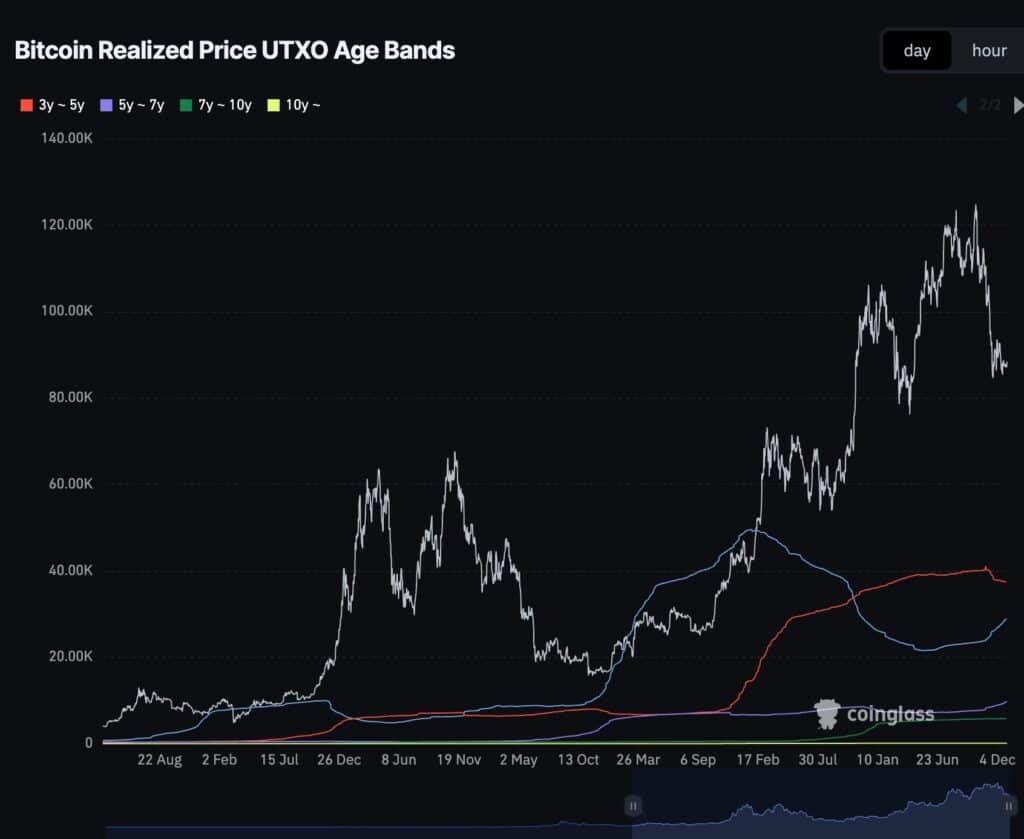
For the majority of people who sensationalize the death of crypto, this old, tired, and worn-out narrative is utterly baseless.
Every time there is a price crash, someone is quick to claim that crypto is dead. We’ve seen it countless times before. Bitcoin’s core code continues to run, Ethereum’s ecosystem is expanding into real-world use cases, and decentralized finance is becoming increasingly robust, and adoption is skyrocketing. We have moved past the age of pure speculation and are entering the era of institutional integration, regulatory clarity, and scalability.
When the US government shut down, Bitcoin continued to produce blocks. When FTX collapsed, Silvergate Valley Bank, Signature Bank, and Silicon Valley Bank were forced to shut down, but Aave and Uniswap continued like clockwork. When the next major financial crisis hits, the Bitcoin network will remain operational. When the banks freeze people’s accounts (which seems to be happening with greater frequency), Bitcoin transactions will still be able to be sent via the internet, satellite, or even ham radio. So what’s dead here?
Question 2: What Metrics Do You Personally Look at to Decide Whether Crypto is Dying or Evolving?
There are many metrics people can use to help separate the signal from the noise. To determine whether “crypto is dying” or “crypto is evolving,”
I disregard short-term price action entirely and focus on metrics that measure utility, adoption, and commitment to building.
Here are the four key metric categories I personally track, which collectively reveal whether we’re witnessing the decay or evolution of the crypto industry:
Key Metrics for Crypto Evolution
1. Developer Activity (Commitment to Building)
This is one of the most important metrics because an industry based on open-source software cannot die if its engineers are still actively working. If developers are leaving, the ecosystem is dying. If they’re staying and building, it’s evolving. As the old saying goes, “If you build it, they will come.” So it is a good idea to keep an eye on where the building is happening.
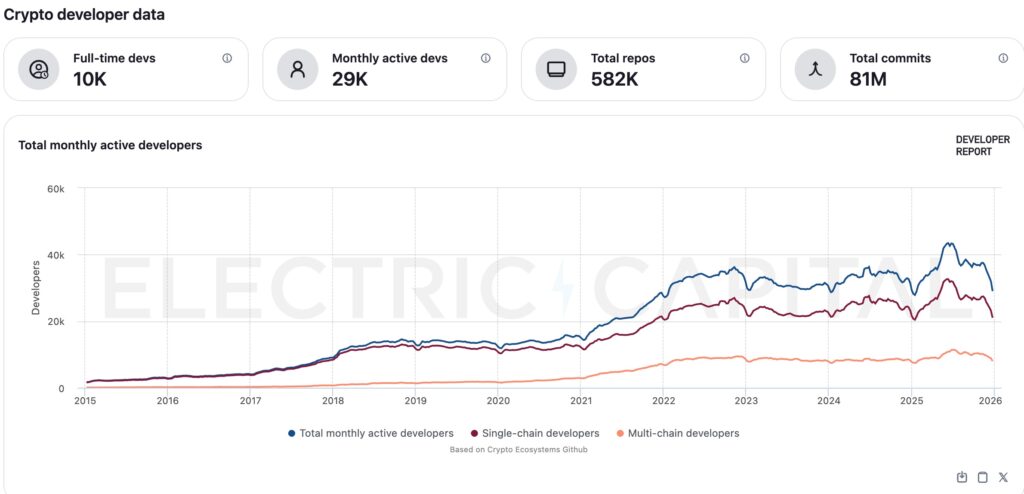
- Monthly Active Developers: This counts the number of unique coders making contributions (commits, pull requests) to a project’s public code repository (like GitHub). A high, stable, or increasing count, especially during a bear market, is a powerful sign of long-term health and commitment.
- Code Commits/Contributions: Tracking the actual volume of code changes, updates, and fixes. This indicates that the core infrastructure of major blockchains, such as Ethereum and Solana, is not stagnant.
- Layer-2 (L2) Developer Growth: I specifically monitor the rate at which new developers are building on scaling solutions (like Arbitrum, Optimism, etc.). This is a strong indicator of an industry focused on scalability and real-world application over base-layer hype.
2. On-Chain Utility and Adoption
These metrics track how many real people are using the networks for actual value transfer and decentralized applications, not just for trading on exchanges. These metrics are fantastic as the data is taken directly from immutable blockchain ledgers, so the data cannot be falsified, faked, exaggerated, or anything like that; just pure, raw, transparent data.
- Active Wallet Addresses (Non-Zero Balances): The count of wallets holding a token and, more importantly, the number of addresses actively transacting over a given period. A steady increase in non-zero balance addresses shows actual user base growth and long-term holding.
- Total Value Locked (TVL) in DeFi: This measures the amount of assets currently deposited in decentralized finance protocols. A rising TVL indicates that people are entrusting capital to decentralized platforms, demonstrating confidence in the security and utility of the DeFi ecosystem. Significant, sustained drops can signal fading faith.
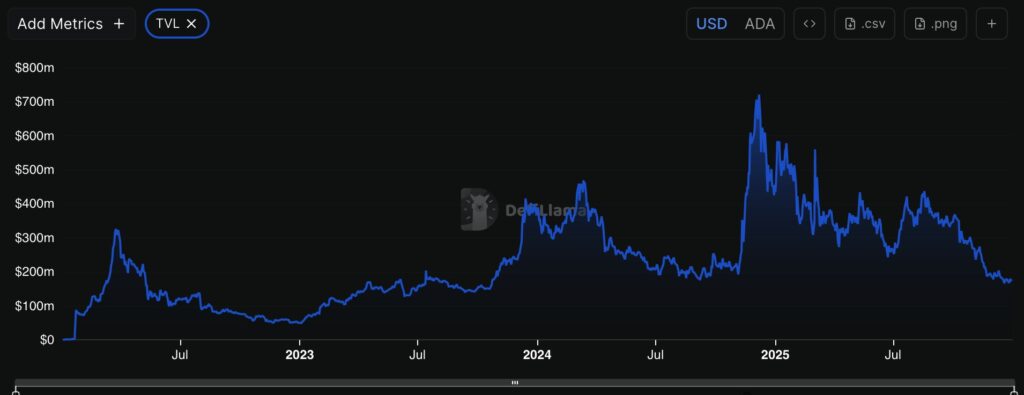
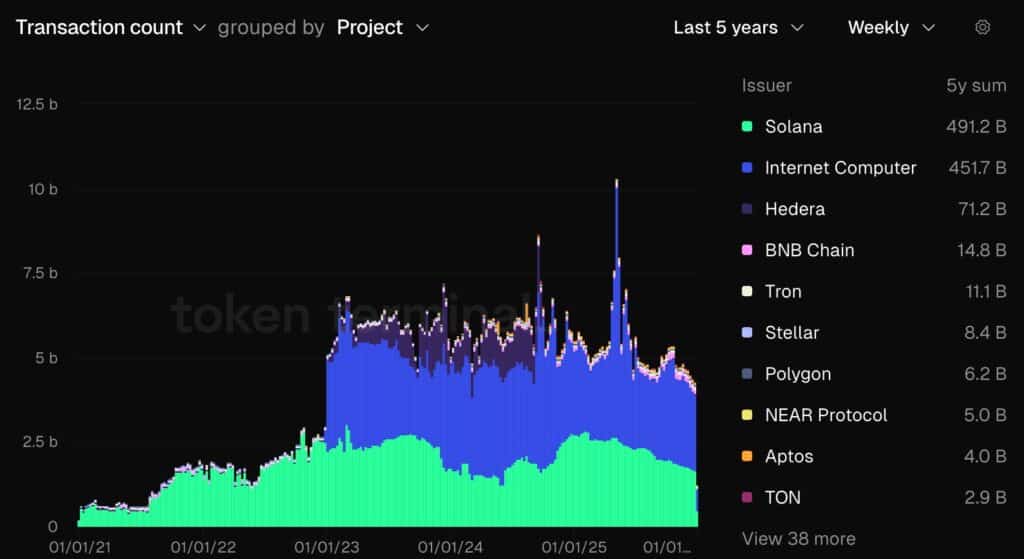
- Daily Transaction Count & Fees: Rising transaction counts that outpace price growth indicate a genuine, utility-driven expansion. Consistent, high transaction fees (in USD terms) on a base layer confirm strong, organic demand for block space for high-value economic activity.
3. Institutional Integration and Regulatory Clarity
For better or for worse, the industry’s path to maturity and mass adoption is tied to its integration with the traditional financial world and government clarity. Here are some of the metrics to keep an eye on to track progress.
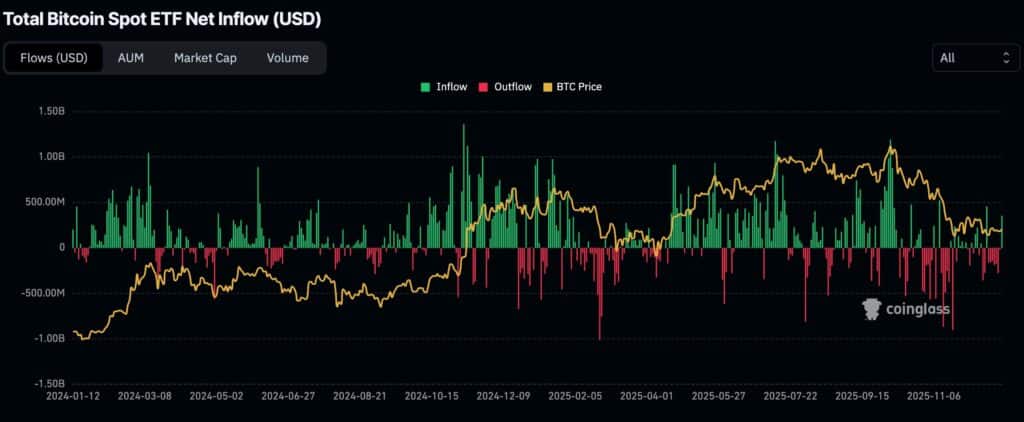
- Regulated Product Flows (ETFs, ETPs): Tracking the net flow of capital into regulated financial products like Bitcoin or Ethereum Exchange Traded Funds (ETFs). Consistent net inflows are a powerful indicator of institutional acceptance and that major financial players view the asset as a legitimate, long-term portfolio allocation.
- Government/Corporate Blockchain Deployments: I track successful rollouts of enterprise-level blockchain use cases (e.g., tokenized real-world assets, institutional stablecoins). This demonstrates that the technology is evolving beyond speculative use cases into practical business solutions. Some examples of this include Goldman Sachs’ digital assets platform to tokenize assets, JPMorgan Chase (Onyx & JPM Coin), Walmart & IBM Food Trust, and even Estonia’s rollout of a blockchain-based national health system.
- Regulatory Momentum: Growing engagement from lawmakers worldwide, as seen in the EU’s MiCA regulation, demonstrates that crypto is on the radar and moving toward mainstream relevance, rather than fading into irrelevance.
4. Decentralization and Network Security
A blockchain can’t be “dead” if its core mechanism is secure and decentralized.
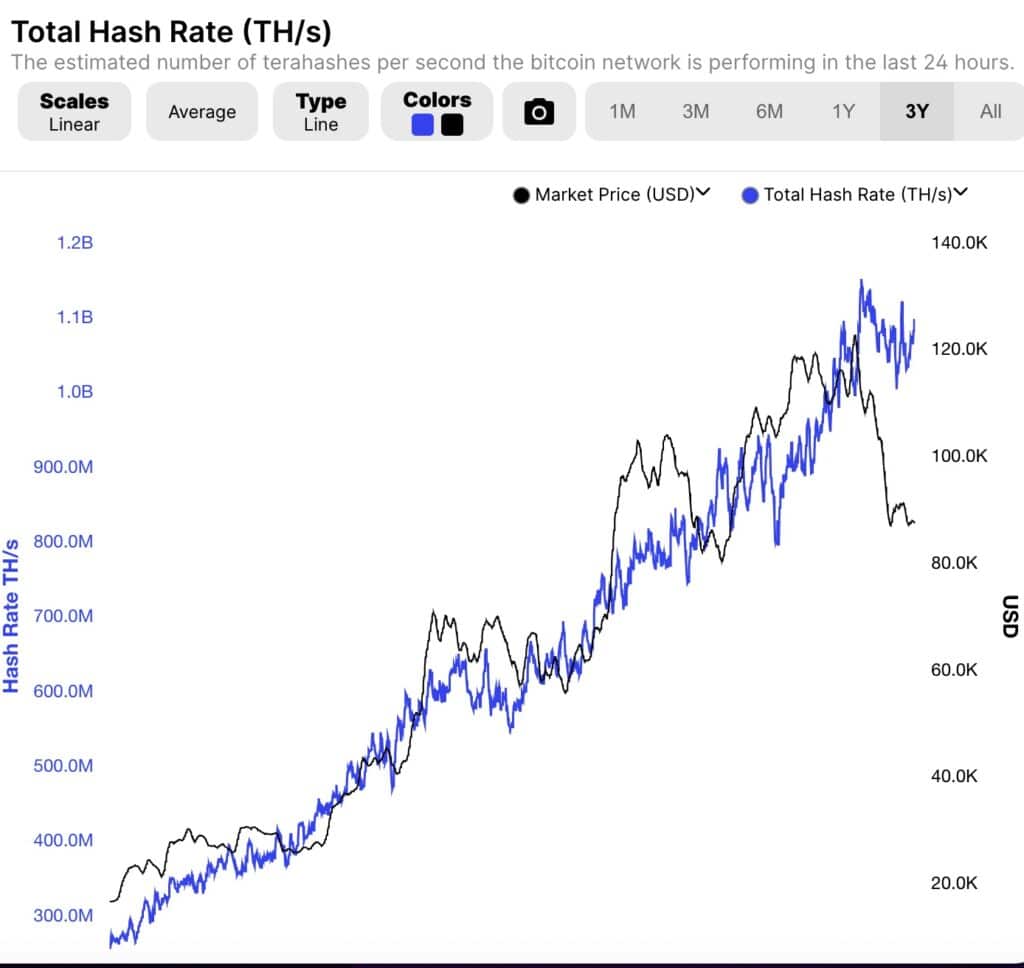
- Hash Rate (for Proof-of-Work chains, such as Bitcoin): This measures the total computational power dedicated to securing the network. A rising hash rate indicates that more miners are competing, making the network exponentially more secure and harder to attack, which is a direct measure of network health.
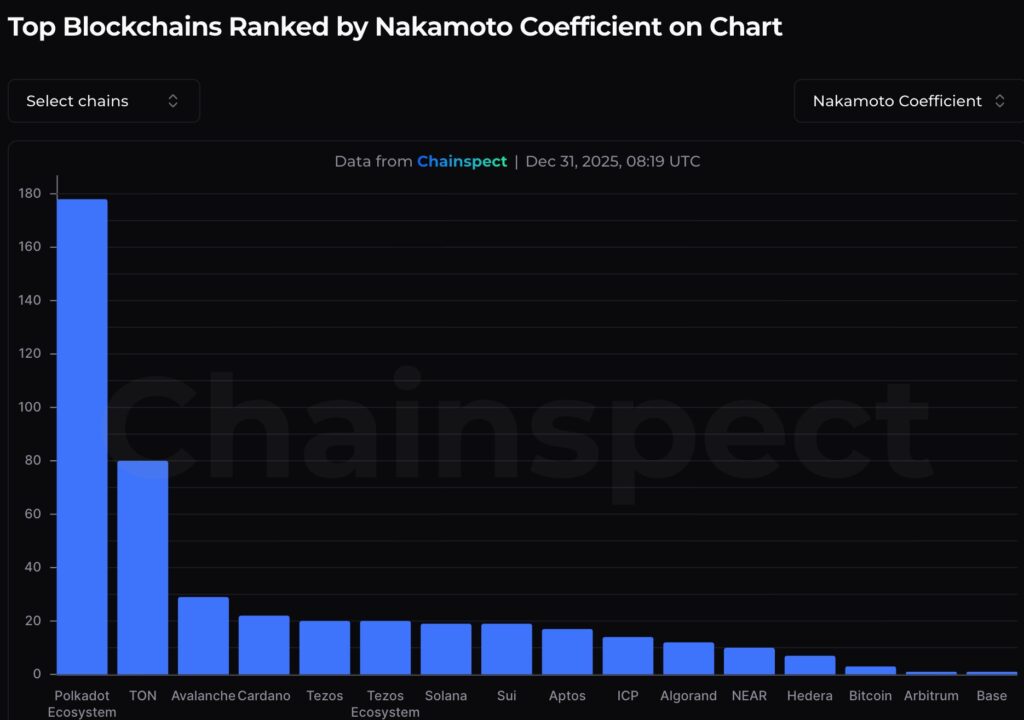
- Nakamoto Coefficient (for Proof-of-Stake chains): This measures the number of independent entities (validators) needed to compromise a majority of the network. A higher Nakamoto Coefficient means a network is more decentralized and more resilient to attack.
It is important to look past the dramatic price charts and observe the builders, the users, the institutions, and network activity itself. As long as those metrics are trending upward, crypto is not dying; it’s simply experiencing a necessary Darwinian evolution that is purging weak projects and making the strong ones more resilient.
Question 3: What Would Need to Happen For You to Confidently Say Crypto is Dead?
To confidently say crypto is dead, there would need to be a systemic failure that negates the core tenets of the technology and its utility. It wouldn’t be a simple price crash or a few failed projects, but a convergence of events across technology, adoption, and politics.
As a long-term crypto advocate, I operate under the principle that the core thesis: decentralized, censorship-resistant digital value, is fundamentally sound. For me to write the obituary, the following conditions would need to be met:
The Three Necessary Conditions for Crypto’s Death
1. Technological & Cryptographic Failure (The Impossible Kill)
The most direct way for crypto to die is for the technology itself to fail simultaneously across the major networks. This would mean that the blockchains are abandoned, become insecure, or consistently fork and break down, making them unusable or irrelevant. There is also the possibility of a leap in technology that would render blockchain technology obsolete, similar to how Netflix “Blockbustered” Blockbuster.
- A Cryptographic Breakthrough: Someone would have to discover a critical vulnerability in the underlying cryptographic primitives (such as SHA-256 or the Elliptic Curve Digital Signature Algorithm) that underpin Bitcoin, Ethereum, and other cryptocurrencies. This would allow an attacker to forge signatures or produce coins at will, instantly destroying the concept of scarcity and trust. There is also the threat of quantum computing or AI systems breaking the cryptography that secures these networks.
Why this is unlikely: The math behind this cryptography is foundational to the entire internet and modern security; its failure would be a catastrophic internet-wide event, not just a crypto-related one. The fact that this cryptographic approach to security has not been breached to date means it will most likely remain secure until quantum computing becomes a threat, in which time, I believe there will be more robust cryptographic approaches in place to protect against the quantum threat. In fact, there are already discussions happening and crypto wallets being upgraded to prevent quantum attacks.
- A Persistent 51% Attack: The dominant, decentralized Proof-of-Work (PoW) or Proof-of-Stake (PoS) networks would need to suffer a prolonged, successful attack that is economically and technically infeasible to recover from. For Bitcoin, this means a 51% attack that persists long enough to destroy confidence in its immutability and finality.
Why this is unlikely: The cost to launch and sustain such an attack on major chains like Bitcoin or Ethereum is astronomical and quickly becomes uneconomical as the attacker drives down the value of their own holdings. At this stage in their lifecycle, it is nearly financially and computationally impossible to launch such an attack against these larger networks, and the attacker would lose any potential value gained in the attack.
2. The Death of Decentralization & Censorship-Resistance (The Ethical Kill)
The core value proposition of decentralized cryptocurrencies is that no single entity can control or censor them. Its death would require this feature to be permanently broken, killing the spirit of financial independence and rebellion.
- Total Global Regulatory Coordination: A unified, global, and effective regulatory crackdown would be necessary, where all major sovereign nations (the US, EU, China, and the G7) cooperate to simultaneously criminalize, outlaw, and block all on-ramps (exchanges, mining, nodes, and wallet software) globally. This would starve the network of new users and capital.
This ban would include a complete and total ban on the open-source software itself, with no meaningful resistance or workaround from the community, which is a nearly impossible act of censorship.
- Complete Centralization of Mining/Validation: If the majority of the network’s hash power (PoW) or stake (PoS) fell under the control of a handful of state-backed entities, the network would effectively become a centralized database. At that point, the fundamental characteristic of censorship-resistance is lost, and the original ethos of Bitcoin and other decentralized cryptocurrencies drops to zero. This may not have a negative effect on the financial value of these assets, but the ethos and fundamentals behind cryptocurrencies would be lost.
3. The End of Developer/Community Interest (The Quiet Kill)
Crypto only exists because of the talent and passion dedicated to its maintenance and growth. If the builders leave, the project dies a slow, silent death.
- The Developer Exodus: To confidently say crypto is dead, there would need to be a near-total collapse in developer engagement across major networks like Bitcoin and Ethereum. For me, this means a sustained drop of 90% or more in Monthly Active Developers, with zero new talent entering the field. This indicates a complete loss of faith in the technology’s future.
- Zero New Use Cases & Adoption: Real-world adoption would need to flatline globally. We would see the cessation of all innovation: no new DeFi primitives, no further tokenization of real-world assets (RWA), no new scaling solutions or privacy solutions, and a dramatic, persistent drop-off in daily transactions and decentralized app users. The technology is stuck, and the community has ceased to envision new applications. Crypto “dies” only if both network activity and grassroots interest evaporate, leaving blockchains as ghost towns.
For me to declare crypto ‘dead,’ it wouldn’t be because Bitcoin dropped to $10,000. It would be because of a systemic, unrecoverable failure in one or more of these three pillars: the math, the political resistance, or the human will to build and adopt.
Until the networks are broken, the world has unified in an unprecedented global ban, and the developers have all moved on, I remain confident that crypto is simply evolving and weathering the natural cycles of disruption.
Question 4: What Would Convince Skeptics That Crypto is Far From Dead?
The “crypto is dead” narrative is almost always a lazy argument that conflates market volatility with technological failure or complete loss of interest. To truly convince a skeptic that this ecosystem is far from dead, and is, in fact, structurally evolving into a foundational layer of the global economy, we must present them with evidence that transcends price and highlights real, measurable utility.
In my view, the case for crypto’s undeniable growth rests on three indisputable pillars of institutional and utility adoption:
Pillar 1: The Institutionalization of Access (Wall Street’s Embrace)
This is the most potent evidence, as it shifts crypto from a fringe asset to a regulated, permanent asset class. Skeptics argue this is still just trading, but the impact is far more profound: it’s structural integration.
- Regulated Financial Products (Spot ETFs): The approval and subsequent massive record-breaking capital inflow into Spot Bitcoin and Ethereum ETFs in significant markets, such as the U.S., signaled that the genie is out of the bottle. These products signify that the largest, most conservative financial institutions, such as BlackRock and Fidelity, have completed their due diligence, deeming the assets secure and robust enough for sovereign wealth funds and pensions. These ETFs create a regulated, trusted on-ramp for trillions of dollars in traditional finance capital that previously couldn’t access crypto.
- Tokenization of Real-World Assets (RWA): Major banks (like JPMorgan and BlackRock) are actively moving financial products onto blockchains. They are tokenizing assets like U.S. T-Bills and money market funds. As of October 2025, the total value of tokenized RWAs had already reached approximately $24 billion in the past month, growing 380% in three years according to CoinDesk, demonstrating that TradFi is validating the underlying blockchain technology for efficiency, settlement, and transparency.
My Response to Skeptics: This is proof of utility and “green-light” approval. When TradFi adopts the token standard and blockchain settlement to save billions and move trillions of dollars’ worth of value, it is validating the fundamental technological shift. They are building on the crypto rails, whether they keep it permissioned or not.
Pillar 2: The Global Utility of Stablecoins (Mass Market Product-Market Fit)
Skeptics often focus on volatility. Stablecoins are a compelling counterargument, as major coins such as USDT and USDC are non-volatile and serve a crucial, life-changing function.
- Emerging Market Lifelines: In high-inflation economies (like Turkey, Nigeria, and Latin America), local currencies are rapidly devaluing. People are using US Dollar-pegged stablecoins (USDT, USDC) as a decentralized form of digital dollar for cross-border remittances, local business, and basic savings to protect their wealth.
- Record-Breaking Transaction Volumes: The data is clear: on an adjusted basis, stablecoins recorded an annual volume of over $9 trillion in 2025, rivaling major payment networks such as Visa and ACH. Real-world transfers and commerce largely drove this activity, and it is uncorrelated with the speculative crypto trading market, proving a massive product-market fit.
- Global Adoption Spike: On-chain activity is experiencing a surge globally. A report by Chainalysis highlights that Latin America’s crypto adoption grew by 63% year-over-year, and the Asia-Pacific (APAC) region saw its on-chain crypto activity jump by 69% in the 12 months ending mid-2025, underscoring a broad shift in crypto momentum toward the Global South, where utility is fueling growth.

My Response to Skeptics: The evidence is clear. Stablecoin growth and adoption are happening at an exponential rate. For hundreds of millions of users worldwide and trillions of dollars in value being transacted annually, stablecoins provide the leading argument that crypto is far from dead.
Pillar 3: The Unprecedented Developer Commitment (The Builders Never Left)
The ultimate proof of life for an open-source movement is the activity of its core engineers.
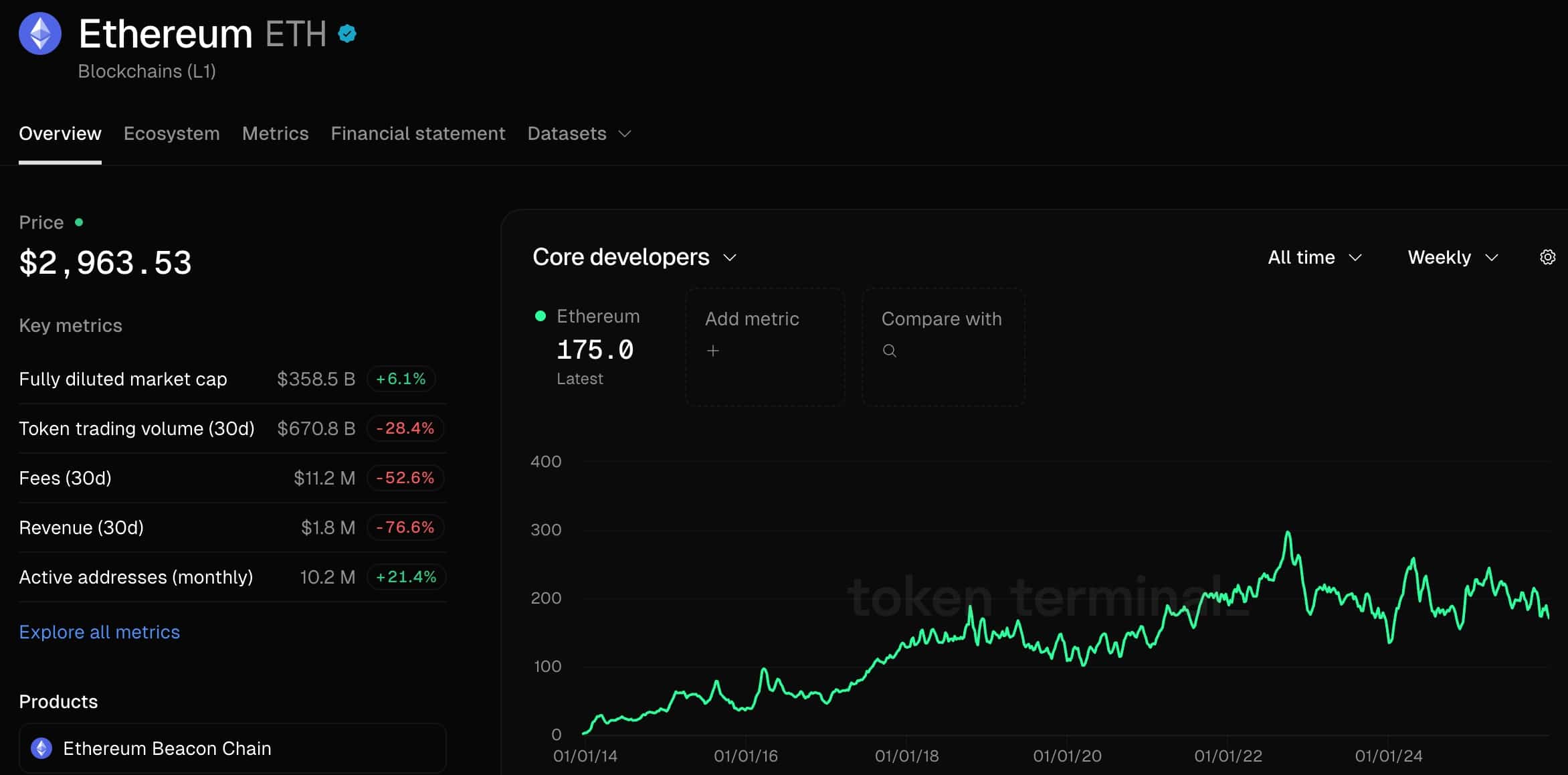
- Bear Market Building: We know that when the price drops, the traders leave, but many core developers stay. During the most recent bear cycles, metrics like Monthly Active Core Developers on chains like Ethereum and Solana remained remarkably stable or even grew.
- Focus on Foundational Infrastructure: The work being done is not on useless projects. It’s on fundamental infrastructure, such as Layer-2 scaling solutions (rollups), that drive down transaction costs, enabling the networks to handle billion-user scale. This clearly showcases evolutionary maturity.
- Household Adoption Climbing: Across major markets (U.S., U.K., France, Singapore), crypto ownership jumped to over 24% in 2025, up from about one in five the previous year. This suggests that mass market trust is on the rise.
In summary, the narrative of “crypto is dead” is trapped in the past, viewing the technology only as a volatile asset on a trading screen. The reality is that the financial world is integrating it through tokenization and ETFs, while developing nations are using it as a lifeline via stablecoins. A global army of developers is relentlessly building the next generation of scalable financial infrastructure and future innovations. When financial giants and everyday people start using the rails, the infrastructure is alive and well, and crypto is growing more relevant every year and adapting in ways that legacy financial systems often can’t match.
Question 5: How Much of Crypto’s “Death Narrative” is Media-Driven vs. Grounded in Reality?
The question of media influence versus reality is arguably the most important one in our field. As a journalist and someone who has been managing crypto news and media companies for 8 years, I’ve seen firsthand how the press acts as a massive magnifying glass and echo chamber, causing a self-fueling fire in many instances, both to the upside and the downside.
I would approximate that about 80% of the “death narrative” headlines are media-driven hype, designed to attract clicks, opportunistically taking advantage of cycle fatigue. In comparison, 20% are grounded in a necessary, yet painful, reality: the existence of bad actors in the space, along with investors and traders becoming impatient and disillusioned about downward price action.
Here is a breakdown of the two components:
The Media-Driven 80% (Hype, Cycles, and Clicks)
The media’s role in the “crypto is dead” narrative is primarily structural and cyclical. It’s about generating clicks and catering to the public’s simplified view of the industry.
- The Price-to-Progress Distortion: The media almost exclusively covers the price, not the technology. When Bitcoin is at an All-Time High, the narrative is “Crypto is the future of finance.” When it’s down 70%, a regularly occurring and normal bear market correction in this asset class, the headline flips to “Is Crypto Dead?”
The actual pace of developer commits, wallet address growth, TVL growth, on-chain activity, and institutional adoption is often decoupled from price; however, the media usually overlooks the former for the sake of sensationalism surrounding the latter. - The Narrative Trap (Cyber-Romanticism vs. Tulip Mania): Media coverage often swings between two extreme narratives: “The Bright Side” (Cyber-Romanticism: crypto will save the world) and “The Dark Side” (Tulip Mania/Criminality: it’s a scam for money laundering). When a bubble bursts, the media immediately defaults to the “Tulip Mania” narrative, ignoring the fact that the underlying technology continues to process value and attract engineering talent.
- A Failure of Granularity: Mainstream media often fails to distinguish between different parts of the ecosystem. A story about a collapsed centralized exchange (like FTX), which is essentially a poorly managed tech company, is used to declare the death of decentralized finance (DeFi), which is open-source code running autonomously. The headline should be “Corrupt CEO Bankrupts Exchange,” but it becomes “Crypto is Dead,” demonstrating a lack of necessary nuance.
- The “Slow News is No News” Problem: The work of evolution, such as protocol upgrades, scaling layer development, and regulatory clarity, is slow, technical, and tedious to the general public. It doesn’t generate ad revenue or clicks and therefore gets little coverage. Catastrophes, fraud, and price crashes are instant, viral, and click-worthy. The media is structurally incentivized to amplify the death narrative over the progress narrative.
The Reality-Grounded 20% (Necessary Purging and Pain)
While the narrative is overblown, there is a core of reality that fuels the skepticism, and it’s something we, as an industry, must own.
- The Death of Unsound Economics: The bear market is a necessary, painful mechanism that purges unsustainable business models. The death narrative is real for the projects built on hype, venture capital subsidies, and tokenomics that only work with significant price increases. The failures of protocols like Terra/LUNA and many high-yield DeFi farms were grounded in faulty economics and structural fragility.
- The Cleansing of Centralized Fraud: The collapse of highly-leveraged, centralized lenders and exchanges (Celsius, Voyager, FTX) was a real, traumatic, and destructive event for the industry’s reputation. This was a failure of governance and custody within centralized crypto institutions, not a failure of Bitcoin’s code or the utility of blockchain technology. This death is real and healthy, as it forces the remaining ecosystem to double down on true decentralization, transparency, and self-custody.
- Regulatory Scrutiny is Real: The fallout from these crises attracts real, serious regulatory scrutiny. The “death” of an era of laissez-faire, regulatory ambiguity, is a genuine development. This is not the death of crypto, but the painful maturation into a regulated asset class, which is a sign of long-term survival, not extinction.
The “death narrative” is an echo of the crypto market cycle, where the media simply switches its magnifying lens from ‘euphoria’ to ‘catastrophe.’ The reality is that while the speculative froth dies every few years, the core infrastructure, developer community, and institutional adoption continue to grow stronger, more secure, and more resilient in the quiet periods. We are reporting on a teenager going through growing pains, but the press keeps writing an obituary.
When the hype dies, the utility lives. So, when they say ‘crypto is dead,’ I continue to work, build, and buy, knowing they are missing the shift from a speculative asset to a foundational technology.

Why you can trust 99Bitcoins
Established in 2013, 99Bitcoin’s team members have been crypto experts since Bitcoin’s Early days.
Weekly Research
100k+Monthly readers
Expert contributors
2000+Crypto Projects Reviewed