








Robinhood Chain just logged $460M in 24-hour DEX (decentralized exchange) volume on July 9, nearly triple the number of Hyperliquid, with $160M. This move comes just one week into the Robinhood public mainnet.
The catch is that most of that volume came from a memecoin. Whether that diminishes the milestone or simply reveals how fast liquidity moves to new infrastructure is the question worth sitting with.
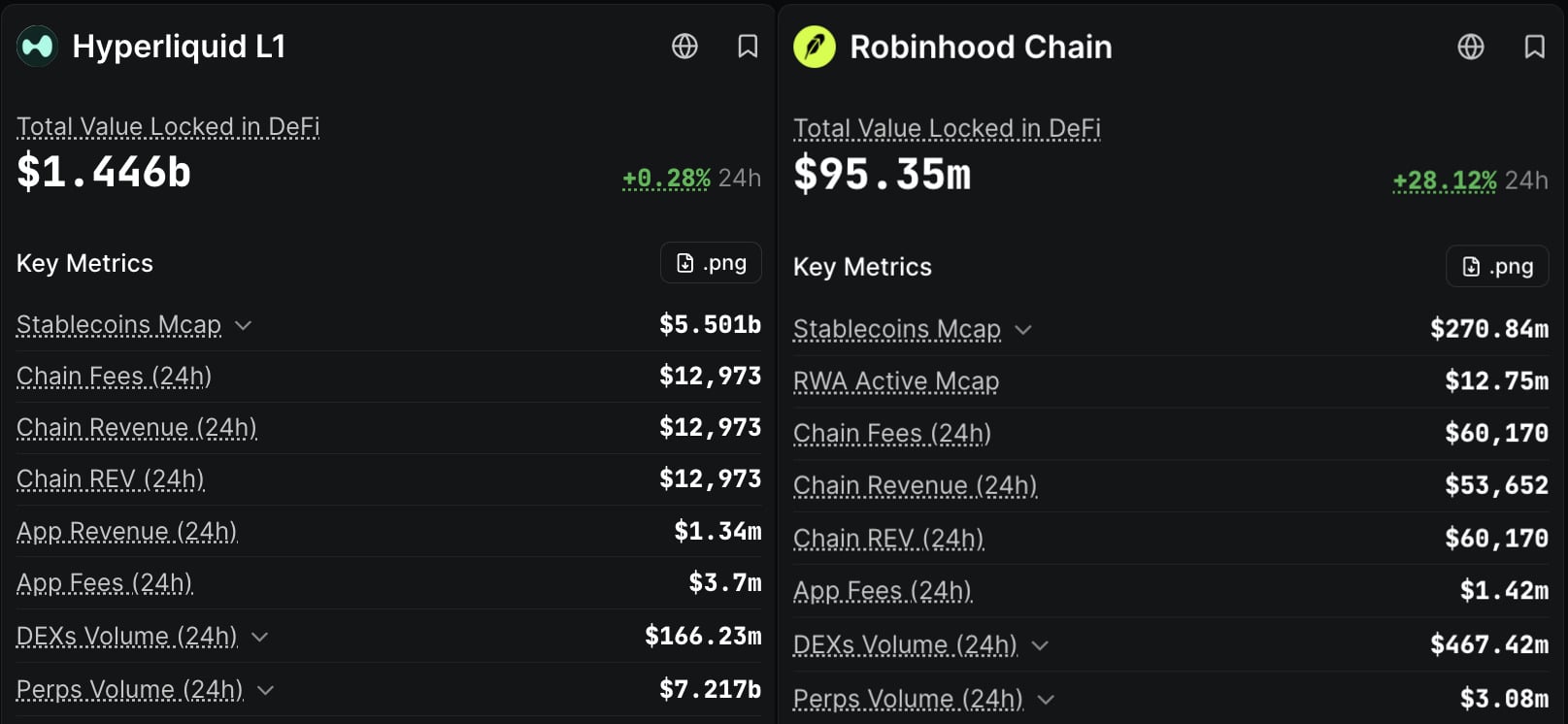
According to DeFiLlama data, Robinhood Chain hit roughly $460M in daily DEX volume on July 9. The primary driver was Cash Cat (CASHCAT), a WETH-paired memecoin trading on Uniswap that generated nearly $100M in 24-hour trading volume and briefly surpassed a $175M market cap.
The deeper story isn’t the memecoin. It’s what Robinhood Chain is actually built to do and whether that thesis gives it structural staying power against established onchain trading venues as real-world asset tokenization accelerates across the broader market.
Can Robinhood Chain Sustain Its Edge Over Hyperliquid’s DEX Volume?
Robinhood Chain has launched its public mainnet as an EVM-compatible Layer 2, utilizing Arbitrum’s technology. It integrates Chainlink’s CCIP, Data Streams, and Data Feeds for live price oracles and cross-chain messaging from the start.
Unlike Hyperliquid, which focuses on perpetual futures and high-frequency trading, Robinhood Chain centers on tokenized real-world assets (RWAs), such as stocks and ETFs, that can be traded 24/7 and used as collateral in DeFi. General Manager Johann Kerbrat aims to break the “walled garden” of traditional brokerages.
The bullish case highlights Robinhood’s existing millions of retail users, which could drive sustainable on-chain activity. The base case suggests a decline in volume, leading to slower growth as RWA infrastructure develops. The bearish case reflects risks in retaining traders, emphasizing the need for engaging products beyond tokenized equities.
The honest read is that surpassing Hyperliquid on a single 24-hour DEX volume metric is notable but not conclusive. Derivatives depth, fee revenue, and 30-day active wallet counts will tell a more reliable story.
DISCOVER: Best Meme Coin ICOs to Invest in 2026
Bitcoin Hyper Eyes Infrastructure Upside as New L2 Narratives Heat Up
The Robinhood Chain launch reignites a broader conversation about Layer 2 infrastructure as a category. New L2s with strong brand backing and credible technical stacks are compressing the timeline from “mainnet launch” to “serious trading venue.”
That same tailwind is drawing attention to early-stage L2 projects that build on networks beyond Ethereum, including Bitcoin. Bitcoin Hyper ($HYPER) is positioning itself as the first Bitcoin Layer 2 to integrate SVM (Solana Virtual Machine).
This is a combination designed to bring Solana-class smart contract performance to Bitcoin’s security layer, targeting latency and throughput that the base Bitcoin network structurally cannot deliver.
The project has raised $32,947,514.51 to date, with the presale token currently priced at $0.0136829. A decentralized canonical bridge handles BTC transfers between layers, and staking is live with a high APY for early participants.
For traders watching infrastructure narratives accelerate post-Robinhood Chain, research Bitcoin Hyper before the current presale stage closes.
EXPLORE: Best Crypto Presales With Asymmetric Upside in the Current Market

Why you can trust 99Bitcoins
Established in 2013, 99Bitcoin’s team members have been crypto experts since Bitcoin’s Early days.
Weekly Research
100k+Monthly readers
Expert contributors
2000+Crypto Projects Reviewed