




Crypto investors do not always want to sell – and that is the simple problem Clend is built around.
For long-term holders of Bitcoin, Ethereum, XRP, Solana, and other major assets, the value in a wallet can be substantial, but accessing it is less straightforward. A sale can trigger a taxable disposal in many jurisdictions and reduce exposure to the asset.
Clend offers a more direct route, letting you borrow USDC or JPYC against crypto collateral, without selling the underlying asset.
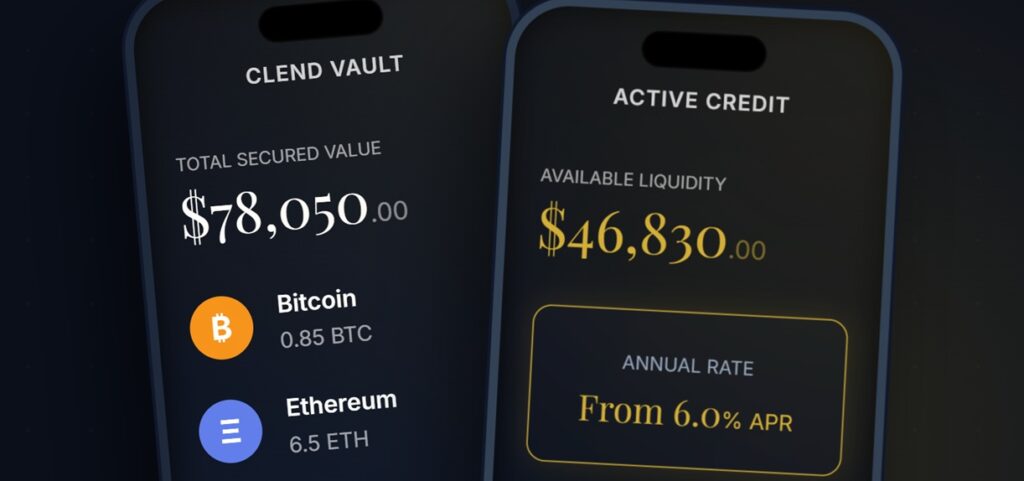
The service is not a full trading platform, exchange, or yield product, focusing almost entirely on one specific use case: crypto-backed borrowing. Users can pledge crypto as collateral, receive stablecoins in return, and repay the loan when ready. The collateral remains part of the borrower’s position unless the liquidation threshold is reached.
That makes Clend especially relevant for holders with large unrealized gains, crypto-native businesses managing treasury assets, or investors who need liquidity for a defined period without exiting a long-term position.
Borrow USDC or JPYC Against 25+ Crypto Assets
Clend supports borrowing against more than 25 collateral assets, including BTC, ETH, XRP, SOL, and other major cryptocurrencies. Borrowers can receive funds in USDC or JPYC. Japan historically has one of the most demanding tax environments for crypto investors, with gains potentially taxed at ~55%, depending on the individual’s circumstances. For a holder sitting on years of BTC or ETH appreciation, borrowing against the asset can be an effective way to unlock liqidity.
Tax treatment varies by country and personal situation, and Clend users should follow tax advice, but the general point remains that taking a loan against collateral is not treated the same way as selling the collateral itself.
Fixed Rates Without a Platform Token Requirement
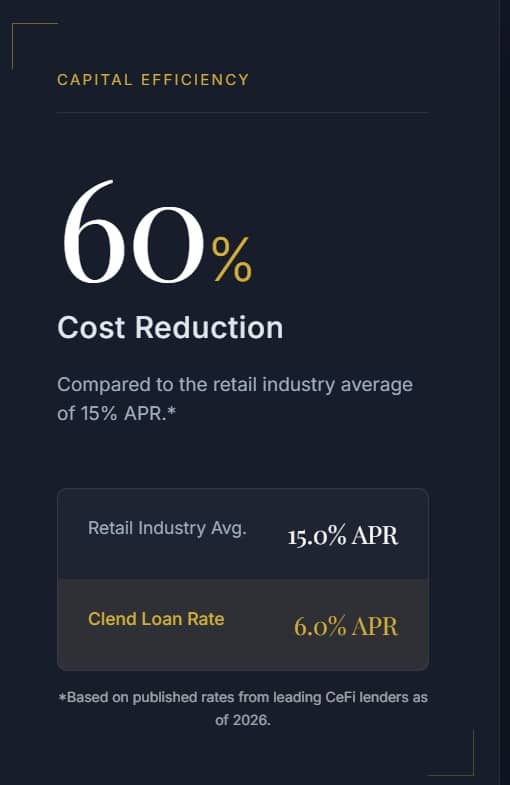
Clend’s rate structure is one of its main differentiators, offering fixed annual rates and not requiring users to hold a native platform token to access its best terms.
Some crypto lenders, Nexo, for example, reserve some of its most attractive borrowing terms for users who hold NEXO tokens or meet loyalty-tier requirements. That model can work for users who already want exposure to the token, but it introduces another variable, and the token price becomes part of the borrowing decision.
Clend avoids that structure, with no Clend token to buy, no loyalty tier to maintain, and no yield-boosting mechanism wrapped around the loan. The rate is fixed for the term, and the borrower knows the conditions from the outset.
For holders borrowing against BTC, ETH, XRP, or SOL, Clend has higher loan-to-value ratios than competing services. LTV determines how much liquidity a borrower can access for a given amount of collateral.
No Monthly Payments
Clend’s repayment model is built for borrowers who want flexibility, with no monthly payment obligations. Instead, interest compounds and is settled in full when the loan is repaid.
That can be useful for borrowers who need stablecoin liquidity now but do not want a monthly cash-flow commitment, for example a founder who is funding short-term business costs, a long-term holder bridging a property purchase, or an investor managing a tax bill.
Be aware that because unpaid interest compounds, the outstanding loan balance rises over time, which gradually increases the LTV. Borrowers should understand that the absence of monthly payments does not mean the loan stays static.
Clend’s model is likely best suited to users who can plan the repayment, monitor the collateral position, and add collateral or make partial repayments if needed.
Liquidation Is Based on the LTV Threshold
Crypto-backed borrowing always carries liquidation risk – Clend’s model is designed to make that risk easier to understand.
The platform does not liquidate collateral because of a short-term daily price swing, but it is tied to the loan reaching the relevant liquidation LTV. For most assets, that threshold is 90%. For stablecoin collateral, it is 95%.
This gives borrowers a buffer between the starting LTV and the liquidation point. A BTC or ETH borrower, for example, can see how much room they have before the loan becomes at risk. The key variables are the value of the collateral, the size of the loan, and the compounding interest that increases the outstanding balance over time.
Additional collateral can also help reduce LTV and move the position further away from liquidation.
Who Clend Is Built For
Clend is likely not designed for small retail borrowing, as loans come with a minimum borrowing amount of 30,000 USDC and a minimum collateral value of approximately 33,000 USD. Loans are available for up to 12 months, and the minimum borrowing and collateral requirements make it more suitable for high-net-worth crypto holders, long-term BTC and ETH investors, and corporate borrowers with crypto balance sheets.
That said, that audience is likely to understand the problem Clend is solving – a holder with a large BTC position may not want to sell into a tax event, and a Web3 company may need operating capital without liquidating treasury assets. A Japanese user may want JPYC liquidity while maintaining crypto exposure.
In each case, the appeal is the same: borrow against the asset rather than exit the asset.
A Focused Way to Access Stablecoin Liquidity
Clend’s USDC and JPYC borrowing service supports 25+ collateral assets, offers fixed rates, and removes the platform-token requirement that can complicate borrowing elsewhere.
The strongest fit is a borrower who wants to keep long-term upside exposure, avoid a potential taxable disposal, and access stablecoin funds for a defined period. The main risks are also clear: crypto volatility, rising LTV as interest compounds, and liquidation if thresholds are reached.
But for the right user, Clend offers a clean proposition: Deposit crypto collateral, borrow USDC or JPYC, keep the underlying position, and repay when ready.
You can check out a deeper Clend review for more information.
Visit ClendClend is operated by R0 Inc. Crypto markets are volatile. Collateral may be liquidated if LTV thresholds are reached. Tax treatment varies by jurisdiction and individual circumstance; always consult a qualified tax professional. This article does not constitute financial, legal, or investment advice.

Why you can trust 99Bitcoins
Established in 2013, 99Bitcoin’s team members have been crypto experts since Bitcoin’s Early days.
Weekly Research
100k+Monthly readers
Expert contributors
2000+Crypto Projects Reviewed