




So you’ve bought your first crypto, now the big question is: where do you keep it? That’s where wallets come in.
What a Crypto Wallet Really Is?
A crypto wallet isn’t like the one in your pocket where you keep your cash. Contrary to belief, crypto wallets don’t actually hold your coins. All crypto coins live on the blockchain, which is basically one giant record book (a ledger) that everyone shares.
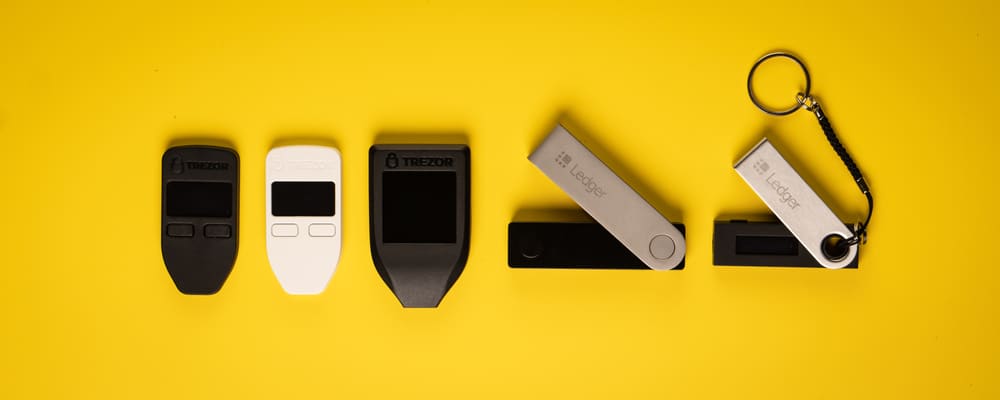
Imagine the blockchain is a single, massive, public bank ledger (like a spreadsheet) that everyone in the world shares. This sheet lists every crypto address on that network and its balance.
As the wallet doesn’t hold the crypto coins themselves, it stores your Private Key. Think of this key as the password required to sign a check against your balance on the spreadsheet. When you “send” Bitcoin, the coin doesn’t physically travel; your wallet uses your Private Key to digitally sign a message that says, “Deduct X from my address and add X to the recipient’s address.” The network verifies this signature and updates the shared ledger.
Think of your private key as the PIN or password to your bank account, but with no “Forgot Password?” button if you lose it.
Hot Wallets vs. Cold Wallets
You’ll hear about two main types of wallets: hot and cold.
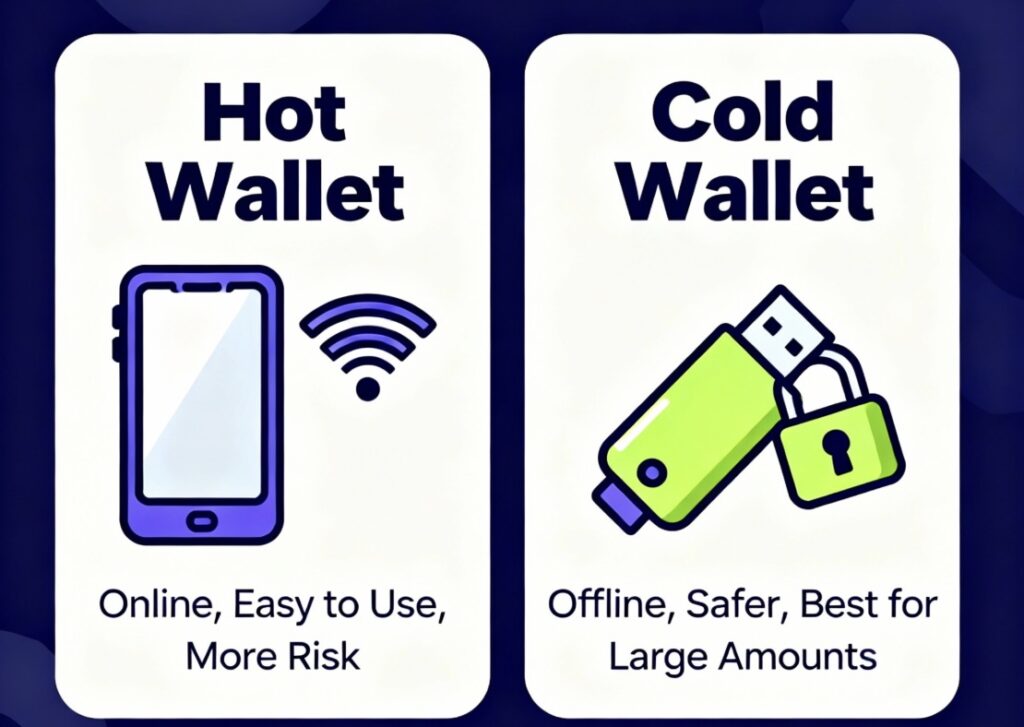
Difference Between Hot Wallet & Cold Wallet
Below you will find a quick comparison between the two types of wallets.
| Feature | Hot Wallet | Cold Wallet |
| Connection | Always online | Offline storage |
| Accessibility | Quick, convenient | Less convenient |
| Security | Higher risk (hack-prone) | Very secure (offline) |
| Best For | Frequent trading | Long-term holding |
| Examples | Mobile apps, web wallets | Hardware wallets, paper wallets |
| Cost | Usually free | Hardware devices can cost $50-$200+ |
| Backup/Risk | Vulnerable to malware, phishing | Risk if lost or damaged without backup |
An easy way to remember: Hot = convenient but exposed. Cold = secure but less handy. Your private keys are the most important part of crypto ownership, as the saying goes, not your keys, not your coins. And if you’re wondering what private keys are, don’t worry, we’ll explain in the section below.
What is a Private Key and Seed Phrase?
This is the most important part of crypto ownership, so let’s slow down here.
You may ask – Why protect them at all costs? Because if you lose your seed phrase, your crypto holdings are gone forever. And if someone else gets it, they own your funds. There’s no customer support to call, no password reset, no undo button.
So, rule number one: never share your seed phrase or private key with anyone, ever. Write it down, keep it offline, and store it somewhere safe, known only by yourself or a highly trusted loved one. It is important to understand the difference between public and private keys fully. Check out our Private Key vs Public Key article for a comprehensive exploration.
Beware, a widespread scam that has tricked many crypto users happens when a person reaches out to customer support for a wallet they are using. Scammers often pose as customer support reps from a reputable wallet company and will say you need to give them your private keys or seed phrase so they can help. This is always 100% a scam to steal your crypto; no wallet company support team member will ever ask for this information.
If you want to avoid the hassle of buying a hardware wallet to store your private keys, you may consider non-custodial software wallets like Best Wallet or Zengo, which are free to use, and they don’t keep your private keys. If you are in the market for a wallet, feel free to read our review of the Best Crypto Wallets to find the right one for your needs.
We also have our YouTube video where we break down our favourite crypto wallets, both free software wallets and hardware wallets, to help you choose.
Please check out our Ultimate Guide to Crypto Safety to learn how to keep your crypto safe and secure.
Chapter Quiz