







In This Article
Money used to be about trust. You trusted a bank clerk to count the bills. You trusted a vault to hold the gold. In crypto, proof replaces trust. Everything comes down to math, and math doesn’t care about you. At the center of that cold, unfeeling equation sit two weapons: the public and private keys.
Think of them as the twin passports that let you move through the digital economy. Without them, your coins aren’t yours. Lose one, and the blockchain doesn’t care; it will happily let someone else spend what was once your fortune. This is why cryptographic keys matter more than your password, your PIN, or even your mother’s maiden name.
So here’s crypto keys explained in plain English. If you’ve ever wondered what are public and private keys in cryptocurrency, forget the textbook diagrams. This isn’t a fairy tale about “magic internet money.” It’s the brutal reality of how ownership, access, and security collide in a world where the blockchain is judge, jury, and executioner.
Key Takeaways
- Public and private keys are mathematically related pairs that control ownership and access in crypto.
- A public key can be safely shared, while the private key must remain secret.
- Public key cryptography enables secure communication and digital signatures without a trusted courier.
- Losing a private key means losing access to your funds as there’s no recovery button.
- Both symmetric and asymmetric cryptography play roles, but asymmetric keys dominate modern crypto wallets.
- The biggest risks are human error, poor storage, and potential attackers targeting private keys.
Public Key vs. Private Key: Summary
Crypto lives and dies on keys. In this article, we’ll break down how public and private keys work, why they matter, and the brutal risks if you screw them up. We’ll unpack the basics of public key cryptography, explain the function of each key, and show how they fit together in asymmetric encryption.
We’ll dig into the nuts and bolts, from digital signatures and public key hashes to how private keys are stored in cryptocurrency wallets. You’ll see real-world examples of hacks, scams, and plain human stupidity, alongside practical steps to keep your sensitive information safe from potential attackers.
By the end, you’ll understand the difference between public and private keys in crypto, how they secure end-to-end encryption and crypto transactions, and why losing a private key is like losing the deed to your digital fortune.
What Are Public and Private Keys?
The heartbeat of crypto isn’t some shitcoin mascot. It’s cryptographic keys. Without them, Bitcoin, Ethereum, or any other blockchain is just an expensive math experiment.
A public key is the address people use to send you funds. It’s generated from your corresponding private key, the ultimate password. Together, they form a key pair that is mathematically linked but impossible to reverse-engineer thanks to large prime numbers and algorithms like RSA.
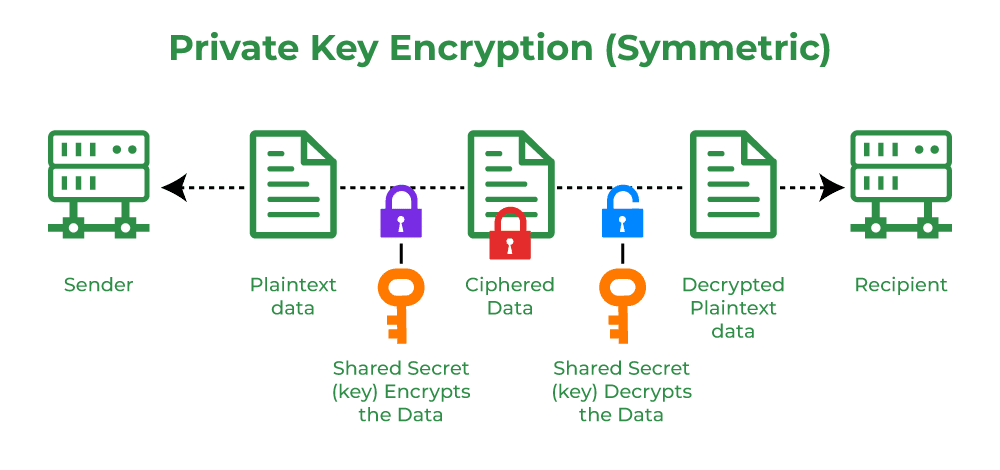
This setup is called public key cryptography (or asymmetric key cryptography). It replaces the need for a trusted courier or the same key both sides use in symmetric cryptography. Instead, you get a cleaner model: one key to encrypt, the other to decrypt.
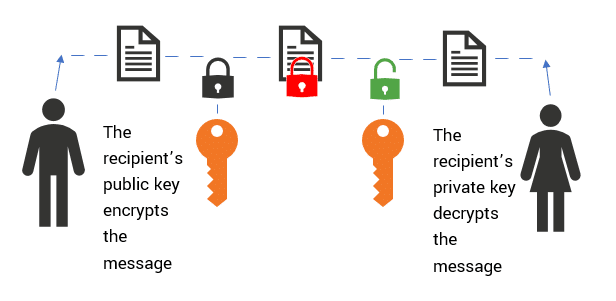
The private key is where the stakes get brutal. Ask yourself: What is a private key in cryptocurrency? It’s the single line of defense between you and the wolves. Lose it, and you lose control. Share it, and someone else has control. There’s no “forgot password” link, help desk, or recovery team.
So, what is a public key in a crypto wallet? It’s your calling card, your inbox, the front door. The private key is the only thing that proves you own what sits behind it. That’s how key cryptography ensures secure communication and locks down ownership in a trustless, global market.
Public Key Explained: How It Works?
The public key is the visible half of your crypto identity. It lets two parties interact without ever meeting. In public key cryptography, the public key is safe to share openly. It’s like a mailbox bolted to your front door: Anyone can slip a letter inside, but only the person with the corresponding private key can open it.
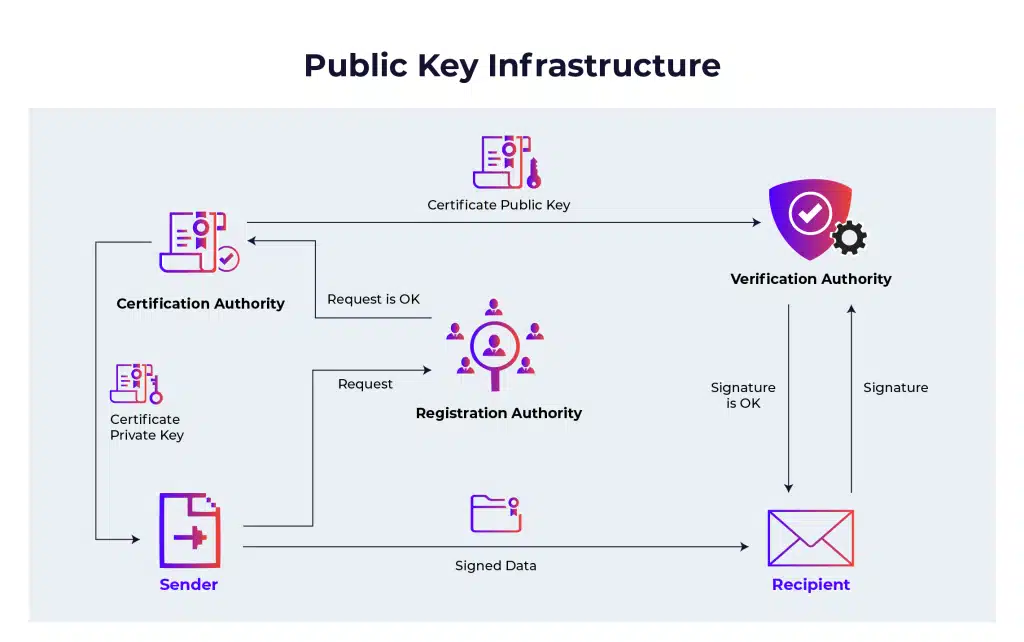
This design flips traditional symmetric cryptography on its head. Instead of both sides juggling the same key in an insecure channel, asymmetric encryption makes it possible to send encrypted information across the world without handing out the keys to your vault. It’s one of the most important breakthroughs in understanding cryptography and why cryptocurrency wallets exist.
The public key does more than just receive funds. It underpins digital signatures, verifies identities, and enables secure communication in systems far beyond crypto, ranging from government digital certificates to end-to-end messaging apps. It’s the face you show the world, backed by the math of large prime numbers that make brute-force attacks a fantasy.
Function
A public key works by locking data that only its corresponding private key can unlock. The sender encrypts a confidential message with your recipient’s public key, knowing that decryption requires the private twin. Only the intended recipient can access the funds or message in crypto transactions, no matter how many potential attackers lurk on the network.
Public Key Hashes
Raw public keys aren’t what you usually share. Blockchains run them through hash functions to generate wallet addresses and shorten and secure fingerprints that make life easier. In Bitcoin, that means turning the public key into an address using SHA-256 and RIPEMD-160. Ethereum does something similar. These public key hashes add another security layer while keeping addresses practical. Combined with digital signatures and public key infrastructure, they let you prove identity, confirm authenticity, and keep encrypted data safe during data exchange.
Pros
-
Safe to share publicly, your crypto public key doesn’t expose funds.
-
Enables end-to-end encryption and digital signatures without a trusted courier.
-
Scales to billions of users for secure communication and information security.
Cons
-
If the corresponding private key is lost, the received message or funds are unrecoverable.
-
Weak encryption methods or poor implementation leave room for potential attackers.
-
Public visibility makes tracking data exchange and link activity to users easier.
Private Key Explained: How It Works?
If the public key is your mailbox, the private key is the master key that opens it. It’s the raw proof of ownership, the ultimate credential in crypto. Without it, you don’t own anything; not your coins, NFTs, or even the right to prove you ever had them. According to the Computer Security Resource Center:
A cryptographic key that is used with an asymmetric (public key) cryptographic algorithm. The private key is uniquely associated with the owner and is not made public. The private key is used to compute a digital signature that may be verified using the corresponding public key.
In private key cryptography, the corresponding private key is mathematically tied to your public key but never exposed. It unlocks the decryption process, signs transactions, and proves that a received message came from you. Unlike a password, it can’t be reset. Unlike a bank, there’s no customer service line to call. This is the brutal importance of a private key in crypto: absolute control paired with absolute risk.
Lose your crypto private key and your fortune evaporates. Leak it, and potential attackers can drain your wallet in seconds. Please keep it safe, and you hold an unforgeable ticket in a system designed to operate without trust.
Function
A private key proves ownership by doing two things:
- Decrypting encrypted data that was locked with your public key.
- Signing messages or transactions so others can verify authenticity with your corresponding public key.
When the sender encrypts data, only the intended recipient’s private key can unlock it. When you sign with your sender’s private key, everyone else can confirm it was you and not some impostor, without needing a trusted courier. This dual role makes private keys the backbone of asymmetric encryption and digital signatures.
Formats of Private Keys
Private keys work in different shapes and sizes depending on the blockchain. Bitcoin uses 256-bit numbers written in formats like WIF (Wallet Import Format), and Ethereum private keys are also 256-bit hex strings. Both are examples of crypto private keys, absurdly large numbers derived from the math of large prime numbers.
These formats are how cryptocurrency wallets interact with the blockchain, sign transactions, and ensure secure communication. Without the proper format, your wallet wouldn’t know how to handle the decryption process or validate a transaction.
How Private Keys Are Stored?
Private keys live inside cryptocurrency wallets, but how they’re kept safe varies. A hot wallet keeps them connected to the internet, convenient, but vulnerable. Cold storage, hardware wallets, or even paper backups keep them offline, making it harder for potential attackers to strike.
Best practice is about discipline, not your flashy device. Guides on how to secure private keys stress redundancy, backups, and avoiding central points of failure. Lose the key, and the blockchain shrugs. Share it, and it’s game over. That’s why “how to protect your private key in crypto” is the first lesson every serious investor learns.
Risks and Vulnerabilities
The risks of private keys are ruthless because they stem from human fallibility as much as math. Forgetting a private key or misplacing a backup means permanent loss; the blockchain won’t make exceptions. Storing it online opens the door to hackers, malware, and phishing campaigns. Even hardware wallets aren’t immune; physical theft or supply chain tampering can compromise them.
Social engineering remains the most common threat. Attackers don’t always brute-force encryption methods. They trick people into handing over the secret key through fake websites, emails, or slick impersonations. Once compromised, a crypto private key hands over total control and no fraud department will claw your coins back.
There’s also the risk of weak randomness. Potential attackers can guess poorly generated cryptographic keys, often in cheap or outdated wallets. While rare, these cracks in information security show that technology alone can’t save careless users.
In short, the private key is the sharpest double-edged sword in crypto. It grants absolute access and control but demands vigilance, discipline, and paranoia in return.
Difference Between Public & Private Key
The difference between public and private keys in crypto is life or death for your digital assets. In public and private key cryptography, explained, each half of the key pair serves a different role:
- The public key is your address, and it is safe to broadcast. It enables public key encryption and lets anyone send you encrypted information.
- The private key is the proof of ownership. It enables private key encryption, unlocks funds, and signs transactions. Expose it, and you hand over total control.
This is the essence of public key vs. private key: one is designed for exposure, the other for secrecy. One proves where the message should go, the other proves who has the right to open it. Together, they make asymmetric cryptography work across millions of users moving trillions in encrypted data.
| Parameter | Private Key | Public Key |
| Purpose | Prove ownership | Receive/verify |
| Visibility | Secret | Shareable |
| Who holds it | You only | Anyone |
| Generated from | Random large number |
Derived from private
|
| Can derive other key? | N/A | No (one-way) |
| Used for (core) | Sign, decrypt | Verify, encrypt |
| Wallet role | Controls spending |
Enables receiving
|
| Relation to address | Generates address | Hash → address |
| Storage | Hardware/cold best |
Certificates/records
|
| Sharing rule | Never share | Safe to share |
| Exposure risk | Total loss of funds | No direct risk |
| Loss impact | Access lost forever | None (recreate) |
| Typical format | 256-bit hex, WIF |
Compressed/uncompressed key
|
| Common algo (blockchains) | ECC (secp256k1) | ECC (secp256k1) |
| Key length (ECC) | 256-bit | 256-bit |
| Best practice | Offline, backups, passphrase |
Publish as needed
|
| Attack surface | Phishing, malware, theft |
Spoofed identities
|
| Example action | Sign TX/message | Verify signature |
In theory, it sounds neat and simple. In practice, it’s a brutal contract: the public key can be shared freely, but the private key must be guarded like state secrets. Lose it, and the blockchain doesn’t care who you are; the math decides.
How Public and Private Keys Work Together?
The genius of asymmetric encryption is that two keys, the public key and the private key, do a dance together without ever being in the same place. They’re mathematically related, but one can’t be used to guess the other. That’s what makes public and private keys the foundation of secure communication on blockchains.
Here’s how it plays out:
- The sender encrypts a confidential message or transaction using the recipient’s public key.
- That message turns into encrypted data, unreadable to anyone snooping across an insecure channel.
- Only the corresponding private key can perform the decryption process to unlock the received message.
Flip the scenario, and you get digital signatures. Users sign with their sender’s private key, while others confirm authenticity using the corresponding public key. There is no middleman, no trusted courier, just math.
In more advanced systems, like the Diffie-Hellman key exchange, two parties can even derive a shared secret key using their related keys without revealing them. That shared secret can then be used for faster symmetric key cryptography (the same key on both ends) but bootstrapped with the safety of asymmetric methods.
This interplay is why cryptographic keys dominate modern information security. Encrypted messages can move across the internet, potential attackers can intercept them, and it won’t matter. Without the private key, the data remains sealed.
Together, public and private keys form the machinery behind end-to-end encryption, digital certificates, and ultimately the security of cryptocurrency wallets. It’s not trust that keeps your funds safe, it’s the relentless precision of cryptography.
Common Threats and How to Protect Your Keys
Crypto doesn’t collapse because the math fails. It collapses because humans do. Public and private key cryptography algorithms are practically bulletproof; large prime numbers and asymmetric encryption don’t bend easily. The real battlefield is where people store, share, and mismanage their secret keys.
Common Threats
- Phishing and Social Engineering: The oldest scam in the book. Fake websites and emails trick users into typing in their private keys. Once entered, the attacker owns everything.
- Malware and Keyloggers: Installed quietly on your machine, these grab crypto wallet keys as you copy and paste them. Even a secure-looking decryption process is useless if your device is compromised.
- Poor Storage: Saving a private key in a notepad file, screenshot, or cloud service is basically gift-wrapping your funds for potential attackers.
- Fake Wallets and Apps: Downloading the wrong cryptocurrency wallet can send your sensitive information straight to a thief.
- Human Error: If you lose backups or forget a seed phrase, the blockchain doesn’t show sympathy. Your assets are locked away forever.
How to Protect Your Keys
- Use Hardware Wallets: Cold storage devices keep private keys offline, away from the reach of potential attackers.
- Redundancy: Backups stored in multiple secure locations prevent a single point of failure.
- No Sharing: Never send or screenshot your secret key. The moment it leaves your control, it’s compromised.
- Multi-Factor Layers: Pair wallets with biometrics or passphrases. Information security thrives on redundancy.
- Vigilance: Double-check URLs, wallet downloads, and any request for your keys. The blockchain doesn’t care about excuses; securing private keys is about personal discipline, not trust.
In short: the math is fine. It’s the humans who fail. How to protect your private key in crypto isn’t a suggestion; it’s survival. Treat your keys like nuclear launch codes, because in many ways, that’s precisely what they are.
Real-World Examples & Lessons Learned
Bitcoin historical events and the history of crypto are a graveyard of lost keys and stolen fortunes. Each case is a brutal reminder of the importance of the private key in crypto. The algorithms didn’t fail; the humans did.
Take Mt. Gox (2014). At its peak, it handled 70% of all Bitcoin trades. Then came the implosion: 850,000 BTC gone. A crypto private key example of how poor security practices, unencrypted keys, and sloppy operations can vaporize billions. It wasn’t math that failed; it was management.
Or look at Ledger (2020–2024). Not a hack of the cryptography itself, but of customer data. Names, emails, and addresses leaked. Once in the hands of potential attackers, phishing campaigns exploded. Users were tricked into handing over their secret keys. The difference between public and private keys in crypto became painfully clear: the public key wasn’t the risk; it was the private key that scammers were after.
Your Crypto Classroom
Discover educational crypto content curated by 99Bitcoins. We’ve long been a leader in crypto education, turning complex ideas into simple, actionable lessons. Head to our Education hub to learn at your own pace.
Then there’s the endless parade of individuals losing fortunes through sheer negligence. Hard drives are tossed in landfills, seed phrases are scribbled on Post-its, and cryptocurrency wallets are abandoned on old laptops. Each story is a crypto public key example gone wrong: funds are visible on-chain but forever inaccessible without the corresponding private key.
The lesson? How public and private keys secure crypto transactions is only half the story. The other half is discipline. You can’t outsource paranoia. If you wouldn’t leave gold bars on your front porch, don’t leave cryptographic keys in your downloads folder.
The past decade has shown us that encrypted data is safe, but users aren’t. The math works. People don’t.
Conclusion
Here’s the truth no one in polite crypto dinner parties wants to say out loud: you don’t own coins, you own keys. The public key is the address you spray around like cheap perfume. The private key is the one thing separating you from total ruin. That’s the contract. No lawyers. No reset button. No whining to customer support when you screw it up.
This is public and private key cryptography explained without the sugar. The math is flawless; large prime numbers don’t wake up hungover and lose hard drives. People do. Every hack, every rug, every sob story on Reddit is just another crypto private key example of human stupidity colliding with unforgiving code.
Your public key is harmless. Your private key is a live grenade with the pin already pulled. You don’t “secure” it, you clutch it like your life depends on it, because in crypto, it does. Securing private keys isn’t advice; it’s survival of the paranoid.
The difference between public and private keys in crypto is simple: one is public theater, the other is the ultimate truth. Your public key invites the world in, while your private key decides whether they stay outside or loot your vault.
Crypto isn’t a trustless utopia. It’s a knife fight where math holds the scorecard. The blockchain doesn’t care who you are, how much you lost, or whether you “meant well.” Respect the keys. Or watch the chain etch your wealth into history, untouchable, forever.
DISCOVER:
- Crypto Exchange Promos & Discounts
- Crypto Wallet Promos & Discounts
- What Are Non-Custodial Crypto Wallets? A Beginner’s Guide
FAQs
How to SSH with private key?

You generate a key pair, then use your private key to authenticate while the server checks it against your public key. It’s the same principle as cryptographic keys in crypto: one proves identity, the other confirms it.
What is public key encryption?
It’s an asymmetric encryption method where anyone can use your public key to send encrypted messages. Only the corresponding private key can unlock them.
How does public key cryptography work?
It relies on two keys that are mathematically related but impossible to reverse. One encrypts, the other decrypts, securing data exchange over an insecure channel.
How does private key and public key work?
The public key locks data, and the private key unlocks it. Together, they make end to end encryption and digital signatures possible.
What happens if someone gets my private key?
Game over, they have full access to your funds, messages, and identity. The blockchain won’t know the difference between you and the thief.
What happens if I lose my private key?
Your assets are locked forever, visible but unreachable. The decryption process can’t happen without the secret key.
In what format are private keys stored?
Depending on the blockchain, private keys can be stored as long hex strings, WIF for Bitcoin, or keystore files for Ethereum. Each format is just a different way to represent the same raw cryptographic key.
Can I change my private key?
No, a private key is permanent once generated. The only option is to create a new key pair and move your funds.
References
- “Cryptocurrency & Blockchain.” Library of Congress Guides: FinTech in the 21st Century, https://guides.loc.gov/fintech/21st-century/cryptocurrency-blockchain.
- “Private Key.” Computer Security Resource Center (CSRC) Glossary, National Institute of Standards and Technology, https://csrc.nist.gov/glossary/term/private_key.
- Willson, Michael. “Private Key vs Public Key – How They Work?” Blockchain Council, 27 July 2022, https://www.blockchain-council.org/blockchain/private-key-vs-public-key/.
- “What Is a Private Key?” Utorg, https://utorg.pro/blogs/what-is-a-private-key/.
- Hoffman, David. “Crypto Custody.” Penn Carey Law, https://www.law.upenn.edu/faculty/david-hoffman/crypto-custody.php.

Why you can trust 99Bitcoins
Established in 2013, 99Bitcoin’s team members have been crypto experts since Bitcoin’s Early days.
Weekly Research
100k+Monthly readers
Expert contributors
2000+Crypto Projects Reviewed