






In This Article
The crypto market has often faced criticism for its environmental impact, especially because of energy-hungry blockchains like Bitcoin. But not all cryptocurrencies are built the same. In fact, a new generation of green crypto projects and sustainable blockchain platforms is rewriting the narrative by prioritizing sustainability, energy efficiency, and environmental responsibility.
In this article, we’ll explore the best eco-friendly cryptocurrencies, upcoming green crypto presale opportunities, and well-established sustainable crypto projects you can consider today.
Key Takeaways
- Green cryptocurrencies focus on low energy consumption, sustainability, and carbon offsetting.
- Proof-of-stake (PoS) consensus mechanism has become immensely popular for its low-energy consumption.
- High energy consumption of Bitcoin’s proof-of-work (PoW) mining model continues to draw regulatory and environmental scrutiny.
- According to the Cambridge Bitcoin Electricity Consumption Index, Bitcoin’s annual power consumption was estimated to be more than that of nations such as Thailand and South Africa.
- Discover upcoming presale eco coins and established green crypto projects in this article.
Greenest Crypto Projects: Summary
This article introduces beginners to the world of green cryptocurrency projects, highlighting why sustainability matters in blockchain. It starts by explaining the rise of eco-friendly cryptocurrencies and the difference between the best cryptos to buy as presale opportunities and established projects.
Readers will discover three crypto presale projects and five established blockchains. Each project is reviewed with pros and cons, making it easy to compare.
The article also dives into key features of green cryptocurrency, compares ReFi with green crypto projects, and outlines the benefits and risks of sustainable investing. A practical step-by-step guide shows how to buy with Binance and store with Best Wallet.
Eco-Friendly Crypto Projects in 2026
The demand for green blockchain solutions has reportedly been higher. The most sustainable cryptocurrencies are also gaining adoption across DeFi, NFTs, and enterprise blockchain use cases. Investors are looking not only for ways to identify eco-friendly cryptocurrencies but also for the top green crypto projects worth investing in for 2026.
Upcoming Presale Green Crypto Projects
Upcoming presale green crypto projects are drawing attention from eco-conscious investors. These tokens combine sustainability with early growth potential, offering a chance to back environmentally responsible innovation from the start. Here is our top pick:
Bitcoin Hyper ($HYPER): Greener Bitcoin via Layer-2
Bitcoin Hyper is a layer two (L2) scaling network for the Bitcoin blockchain. The architecture of Bitcoin Hyper is truly unique as it looks to help Bitcoin scale using the performance-focused Solana Virtual Machine (SVM) for executing transactions.

We listed Bitcoin Hyper among the greenest crypto projects in the blockchain sector because it provides Bitcoin users with an environmentally friendly cryptocurrency solution to send and receive BTC. By using and buying Bitcoin Hyper L2 for transactions, users can bypass the energy-intensive proof-of-work mining process used by the underlying Bitcoin blockchain to facilitate transactions.
Instead, Bitcoin Hyper executes transactions using a sustainable cryptocurrency system called proof-of-stake, which uses 99% less energy than Bitcoin’s proof-of-work system. The popular carbon-negative Layer-2 blockchain project states:
While Bitcoin itself consumes significant energy for its global mining operations, Bitcoin Hyper does not directly contribute to that energy footprint. The Bitcoin Hyper Layer 2 environment is powered by its own validator network, which uses a Proof-of-Stake (PoS) model.
This design means that all activities, such as transaction processing, smart contract execution, and off-chain computation, within the Bitcoin Hyper network are energy-efficient.
Bitcoin Hyper features on our list of the next 1000x crypto. Check out our $HYPER price prediction to learn more.
Pros
-
Layer-2 design improves Bitcoin’s speed and lowers transaction costs.
-
Solana Virtual Machine integration enables high-performance smart contracts and scalable dApps.
-
Canonical Bridge allows seamless BTC deposits, withdrawals, and usage on Layer-2.
-
Energy-efficient Proof-of-Stake validator network reduces environmental footprint compared to Bitcoin’s PoW.
-
Presale offers transparent tokenomics with no insider allocations or backdoor deals.
-
Clear roadmap with staking rewards, ecosystem expansion, and DAO governance.
Cons
-
Adoption and execution risks remain high.
-
Most L2s rely on a single sequencer for ordering transactions, which may raise centralization concerns.
-
Regulatory uncertainties could limit accessibility in certain regions.
Established Green Crypto Projects
Now, let’s talk about established sustainable green crypto projects in the industry that have already made a name for themselves. Unlike presales projects, these names have an excellent track record regarding their adoption, use cases, and partnerships. Below, you will find names of eco-friendly blockchains offering high throughput and some of the greenest cryptocurrencies with minimal carbon footprints.
Cardano (ADA): Efficient Proof-of-Stake Crypto Project
Cardano is one of the pioneers of the proof-of-stake crypto movements. Unlike the energy-intensive proof-of-work system, Cardano’s proof-of-stake model drastically reduces the blockchain’s environmental footprint.
The project takes it a step further through initiatives such as the Cardano Carbon Footprint, which looks to establish a transparent greenhouse gas accounting standard for Cardano. Furthermore, Cardano looks to use blockchain and crypto technology to contribute not just to carbon neutrality but to climate positivity.

Backed by Catalyst Fund 7, the Cardano Carbon Footprint initiative has engaged experts, community members, and organizations like My Carbon Zero to verify methodologies and identify strategies for offsetting emissions, including reforestation and ecosystem restoration. It comes as no surprise to learn that Cardano is considered among the top sustainable crypto coins for investment by the market.
Learn more about this leading L1 blockchain on our How to Buy Cardano guide.
Pros
-
Proof-of-stake consensus used in Cardano drastically reduces energy consumption compared to proof-of-work systems.
-
Cardano has shown commitment to climate positivity with verified carbon accounting and offset initiatives.
-
Community governance and funding via Project Catalyst support sustainability initiatives.
-
Established L1 network with years of history of use.
Cons
-
Blockchain carbon accounting remains complex, with incomplete scope and evolving definitions.
-
Cardano’s carbon offsetting crypto projects have faced delays, highlighting challenges in delivering sustainability goals on schedule.
-
Competition from other eco-friendly blockchains may dilute Cardano’s position as the “green leader.”
-
Adoption of sustainability-focused features depends heavily on community participation and governance funding.
VeChain: Greenest Crypto with Low Energy Requirement
VeChain is often listed among the greenest cryptocurrencies and the best low-energy usage cryptos in the world due to sustainability-focused underlying architectures and technologies used to build the blockchain.

VeChainThor is a proof-of-authority (PoA) consensus mechanism. In simple words, buying VeChain is a more centralized version of the energy-efficient crypto consensus model, proof-of-stake (PoS). PoA has a key advantage over PoS in that it can handle more transactions, offer cheaper fees, and execute transactions faster. Such a system provides developers and companies with a sustainable alternative that does not compromise on performance.VeChain said in its whitepaper:
VeChainThor is a constantly evolving public blockchain committed to helping global enterprises and governments achieve sustainable development goals efficiently, quickly, and at low cost,
VET is VeChain’s native token. By market cap, it is among the top 50 biggest cryptos in the world, and it is also among the most popular green cryptocurrencies of 2026.
Analyze more about this eco-friendly blockchain with our $VET price prediction.
Pros
-
Energy-efficient Proof-of-Authority consensus offers scalability and a low carbon footprint.
-
VeChain has showcased real-world use cases, including Walmart China traceability, Bayer pharma supply chain, and DNV sustainability solutions.
-
Enterprise partnerships with governments, NGOs, and Fortune 500 companies increase adoption credibility.
Cons
-
Proof-of-Authority relies on trusted validators, raising concerns over decentralization compared to PoS blockchains.
-
Adoption depends heavily on enterprise partnerships; retail adoption remains relatively low.
-
Complex governance structure may slow decision-making and ecosystem upgrades.
Algorand (ALGO): Carbon-Negative Blockchain
Algorand is a solid green cryptocurrency for dApp developers. The blockchain is known for providing a seamless developer experience and outstanding network performance with instant finality, high throughput, and low fees.
As a proof-of-stake eco crypto, buying Algorand comes with sustainability. The lightweight PoS consensus architecture allows the blockchain to run on low energy usage.

According to the Crypto Carbon Ratings Institute, Algorand’s annualized electricity consumption was 118,600 times less than Bitcoin and 3.2 times less than Ethereum, making ALGO one of the best eco-friendly tokens upcoming.
Check out our Algorand price prediction to learn where it is headed.
Pros
-
Algorand’s Pure Proof-of-Stake (PPoS) consensus is designed for sustainability, using minimal energy even as the network scales.
-
Algorand consumes about 118,600 times less energy than Bitcoin and about 3.2 times less than Ethereum, ranking among the greenest blockchains.
-
The Algorand Virtual Machine (AVM) enables dApps supporting DeFi, gaming, and real-world assets.
Cons
-
Retail adoption and community engagement remain weaker compared to larger ecosystems.
-
Enterprise and institutional partnerships drive much of its growth, leaving grassroots adoption limited.
-
Token price volatility and liquidity risks remain despite strong fundamentals.
Hedera (HBAR): Certified Carbon-Negative Ledger
Hedera is a top eco coin and one of the few public blockchains in the world that is governed by institutions. The members of Hedera’s governing council have sustainability-forward institutions and climate change activists on its board. Therefore, it comes as no surprise that we have Hedera on our list of sustainable crypto to buy now.
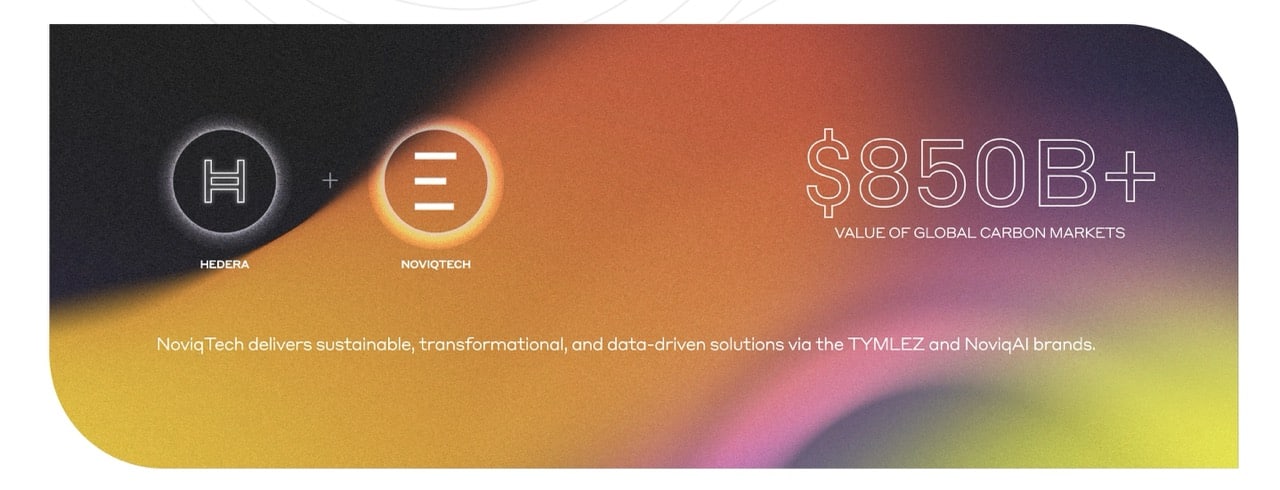
HBAR is not just a carbon-neutral crypto; rather, it is a certified carbon-negative project. Hedera purchases carbon offset credits every quarter, the amounts of which are determined by a third-party assessor called Terrapass.
The project’s emission assessments are determined every quarter, and carbon offsets are purchased to offset the emissions. Additionally, the Hedera Foundation commissions and funds sustainability projects alongside DeFi, AI, tokenization, and DePIN projects. Buying Hedera is a great example of investing in crypto sustainability.
Learn more about the expected Hedera price trajectory here.
Pros
-
Hedera is one of the few carbon-negative projects in the crypto industry..
-
The project buys carbon offset credits every quarter to offset its emissions.
-
Hedera uses proof-of-stake consensus, which is known to consume less energy compared to proof-of-work.
-
Chosen by enterprises and institutions for ESG-related use cases such as tokenized carbon offset marketplaces.
-
Hedera Foundation funds sustainability projects.
Cons
-
Relies on carbon offsets rather than eliminating emissions, which may be criticized as less impactful.
-
Carbon offset certificates are verified only up to Q2 2024; no public data found beyond that point.
Polkadot (DOT): Eco-Friendly Blockchain Project
Polkadot is a unique blockchain project that is dubbed the “Layer Zero” network, as it hosts interoperable layer one blockchains on top of it.
Polkadot uses a hybrid form of proof-of-stake consensus called Nominated Proof of Stake (NPoS) to secure the blockchains built on top of it. Such a setup not only allows its network of chains to secure themselves in a decentralized manner, but it also reduces energy consumption for the entire ecosystem without sacrificing performance. According to Polkadot, its network boasts the lowest carbon footprint in the blockchain world.

Polkadot is also a great low-energy blockchain for NFT creators. In June 2025, FIFA, the global governing body of football, launched an arcade-style mobile game called FIFA Rivals with tradable digital collectibles and verified ownership supported by the Polkadot blockchain.
Learn more about this Layer Zero blockchain in our how to buy Polkadot explainer and DOT price prediction.
Pros
-
Operates as a “Layer Zero” blockchain, enabling interoperability across multiple layer one chains.
-
Polkdaot uses Nominated Proof of Stake (NPoS), delivering security, decentralization, and reduced energy consumption.
-
Polkadot claims to have one of the lowest carbon footprints in the blockchain industry.
Cons
-
Ecosystem adoption still lags behind larger smart contract platforms like Ethereum and Solana.
-
Dependence on parachain auctions can limit accessibility for smaller projects with fewer resources.
Best Sustainable Cryptos Compared
Here is an easy-to-understand table that compares the eco-friendly crypto presales and low-carbon-footprint crypto projects we mentioned in this article.
| Project | What It Is | Why It’s Green | Key Use Case / Highlight |
| Bitcoin Hyper ($HYPER) | Bitcoin Layer-2 | Bypasses Bitcoin’s PoW, uses energy-light PoS |
|
| Cardano (ADA) | Proof-of-Stake L1 blockchain | PoS pioneer, Carbon accounting programs, Sustainability grants |
|
| VeChain (VET) | Proof-of-Authority L1 | Low-energy consensus model, real-world ESG focus |
|
| Algorand (ALGO) | Layer-1 PoS blockchain | 118,600× less energy consumption than Bitcoin, 3.2× less energy consumption than ETH |
|
| Hedera (HBAR) | Hashgraph + PoS public ledger | Buy carbon offsets every quarter, uses PoS consensus |
|
| Polkadot (DOT) | “Layer Zero” interoperability network | NPoS consensus lowers energy across parachains |
|
What Are Green Crypto Projects?
Green crypto projects are blockchains and cryptocurrency projects that are designed to minimize the environmental impact of their operations. These projects typically use low-energy consensus mechanisms and promote sustainability initiatives such as carbon offsetting and ESG funding.
Proof-of-stake (PoS), a consensus mechanism used by public blockchains to stay decentralized, protect their networks, incentivize the community, and facilitate transactions, is one of the key eco-crypto coin technologies that has become immensely popular for its low-energy consumption.

When Ethereum, the second most valuable blockchain in the world by market cap, transitioned from its original proof-of-work model to a PoS model, it cut its energy consumption by over 99%. Ethereum developer Consensys said in September 2022, after Ethereum became a PoS blockchain following an upgrade popularly known as The Merge, “a historic transition.”
Consensys noted that this shift reduced Ethereum’s carbon footprint by more than 99.99% overnight, transforming it into an almost net-zero technology and positioning it for sustainable long-term growth as the world’s leading smart contract platform.
Why Eco-Friendly Crypto Is Gaining Traction
But why does the world need green cryptocurrencies? Well, a lot of it has to do with the criticism that Bitcoin has faced over the years due to its high energy consumption.
As Bitcoin grew into a global network, it attracted miners from all over the globe who had to expend electricity to earn a chance to mine newly minted BTC coins. As Bitcoin’s market cap grew to over 1 trillion, Bitcoin became increasingly lucrative and highly competitive, drawing more miners and expending more electricity.
According to the Cambridge Bitcoin Electricity Consumption Index, Bitcoin’s annual power consumption was estimated at 206.35 terawatt-hour (TWh) at the time of writing. So it is Bitcoin Vs. the environment in a way based on these figures.
According to a report by the University of Cambridge, that’s more than Thailand’s (202.6 TWh per year) or South Africa’s (191.4 TWh per year) annual power consumption.

Some policymakers in Europe even advocated for a ban on the energy-intensive proof-of-work mining method used by Bitcoin. While the EU ultimately did not ban proof-of-work mining, the high energy use of Bitcoin’s PoW mining continues to be a regulatory and environmental topic of interest.
Key Features of Green Cryptocurrency
How can you identify which cryptos are green and which are environmentally friendly? Here is a list of the key features of such crypto projects:
Regenerative finance (ReFi) refers to a movement that is actively repairing and regenerating the planet through financial systems. For example, a ReFi project may use blockchain and crypto technologies to finance reforestation, renewable energy, soil restoration, and other climate-positive actions anywhere in the world. These projects may also allocate a part of their treasury or annual profits to undertake and fund sustainability initiatives. Green crypto projects, on the other hand, may be passively or actively pursuing sustainability initiatives. These methods may include adopting low-energy consumption designs, such as PoS consensus, or optimizing their networks to be more energy efficient. Unlike ReFi, their main goal is to ensure the blockchain infrastructure is eco-friendly, cost-effective, and scalable Up next, we list the advantages of green cryptocurrencies and risks of green cryptocurrencies: Sign up on Binance with your email or phone number. Complete verification to start buying green cryptocurrencies. Add money to your Binance account using bank transfer, card, or crypto deposit Search for tokens that were mentioned in this article, such as ADA, ALGO, or DOT. Tap “Buy” and confirm your purchase. Install Best Wallet on your phone. It’s a free, eco-friendly non-custodial wallet Create your wallet, secure your recovery phrase, and enable biometric authentication for added protection On Binance, go to “Withdraw,” enter your Best Wallet address, and transfer your green crypto securely Keep your green crypto safe in Best Wallet. Remember, Best Wallet enables you to retain complete ownership over your crypto assets. Green cryptocurrencies prove that innovation and sustainability can work together. By using energy-efficient consensus models and supporting carbon offsetting, these projects show how blockchain can grow without harming the planet. For investors, the challenge is how to choose a green crypto project for investment. Look for transparent reporting, real adoption, and strong sustainability goals to back projects that can deliver both impact and returns. Remember, crypto investing is risky. Always do your own research. This article should not be taken as financial or investment advice. It is for informational purposes only. Meanwhile, with alerts for new potentially explosive tokens and built-in features, platforms like Best Wallet make exploring these sustainable projects easier by bringing investment and storage options together in one secure app. DISCOVER: Cardano, Algorand, Hedera, VeChain, and Polkadot use low-energy consensus and carbon offset initiatives. No. Bitcoin still uses proof-of-work mining, which consumes massive energy compared to green crypto projects. They align with sustainability goals, use less energy, and may attract long-term adoption and institutional interest. Yes, but like all crypto, profits depend on adoption, demand, and execution. They remain high-risk investments. Presales face volatility, execution risks, low liquidity, and uncertainty about adoption after launch. Green crypto will grow as regulators, enterprises, and investors push for energy efficiency and climate-conscious blockchains. They use proof-of-work mining, which wastes huge amounts of electricity and increases carbon emissions globally. Established in 2013, 99Bitcoin’s team members have been crypto experts since Bitcoin’s Early days. Weekly Research Monthly readers Expert contributors Crypto Projects Reviewed
ReFi vs. Green Crypto Web3 Projects
Benefits & Risks of Investing in Sustainable Cryptocurrency
Pros
Cons
How to Invest in Green Cryptocurrency: Step-by-Step Guide
Create a Binance Account
Deposit Funds
Buy a Green Cryptocurrency
Download Best Wallet
Set Up Best Wallet
Transfer Crypto to Best Wallet
Hold or Stake Your Tokens
Conclusion: Sustainability and Crypto
FAQs
Which cryptocurrencies are eco-friendly?

Is Bitcoin eco-friendly?
Why should I invest in green crypto projects?
Are green crypto projects profitable?
What are the risks of investing in green crypto presales?
What is the future of green crypto?
Why Traditional Cryptocurrencies Harm the Environment?
References:

Why you can trust 99Bitcoins