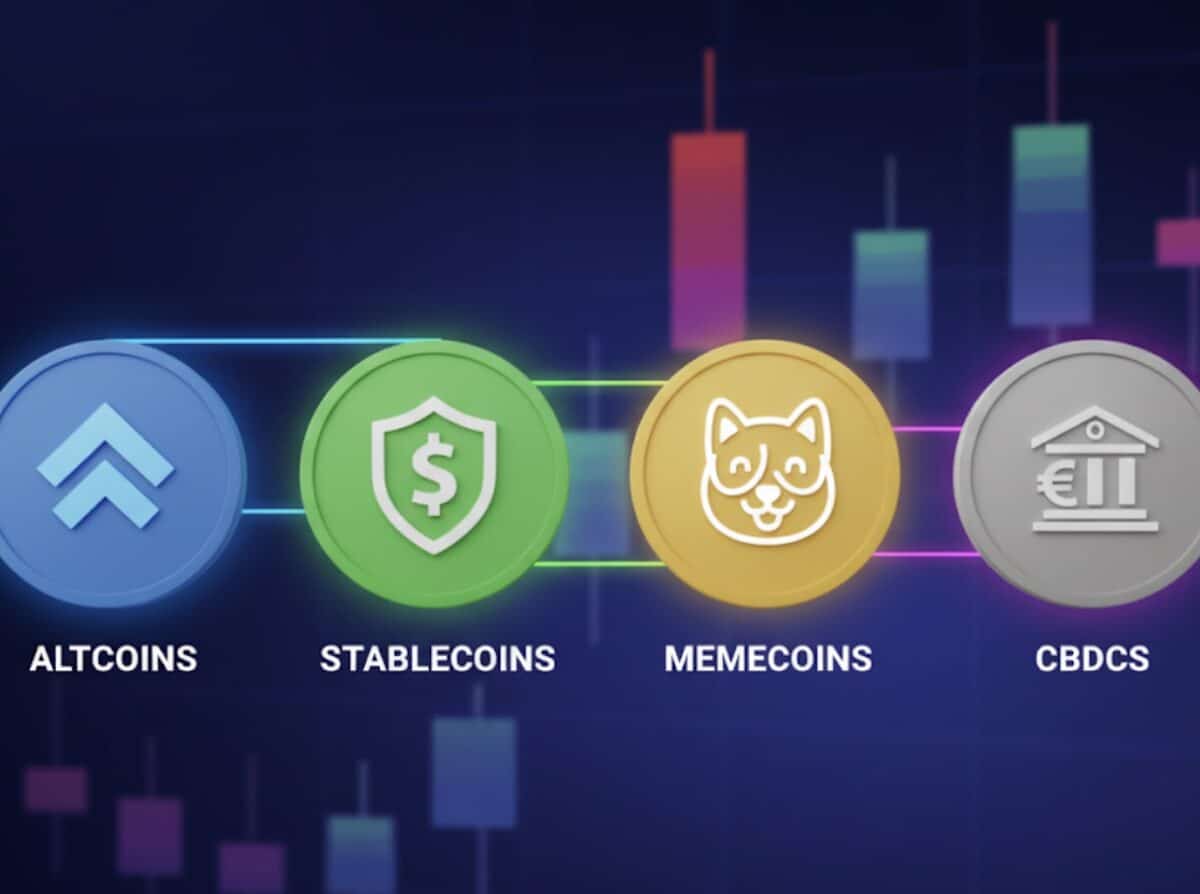





While Bitcoin and Ethereum together make up more than 70% of the total value of the entire crypto market, the remaining 30% of the market consists of tens of thousands of different tokens.
Many of these cryptocurrencies, known as altcoins, have relatively small market caps, ranging from $200 billion to less than $1 million. Regardless of size, they play an important role in the crypto market because they represent new technological innovations and offer opportunities for financial speculation.
In this chapter, we’ll take a deep dive into the world of altcoins.
What Are Altcoins?
The term ‘altcoin’ is a catch-all term for any cryptocurrency other than Bitcoin or Ethereum. In some uses, the term altcoin even includes Ethereum, covering everything but Bitcoin, the oldest and largest cryptocurrency.

There are tens of thousands of altcoins today. Most trade on centralized and decentralized crypto exchanges, but some are fully private or aren’t listed on exchanges for trading. If you want to know more, take a look at our “What are altcoins” explainer.
Why Are Altcoins Important?
Types of Altcoins
There are many different types of altcoins, each with a different purpose. Here’s an overview of the most important types.
Stablecoins Utility Tokens Security Tokens Governance Tokens Meme Coins Privacy Coins Payment Coins DeFi Tokens Gaming & Metaverse Tokens
You can find our video below that discusses Altcoins in more detail:
A Closer Look at Stablecoins
Stablecoins are a type of cryptocurrency that’s designed to keep a stable value instead of going up and down like Bitcoin or other coins.
They are usually tied (or “pegged”) to something steady, like the U.S. dollar, euro, or gold. For example, 1 USDT (Tether) or 1 USDC is meant to always be worth about $1. You can get an in-depth view in our dedicated “What are Stablecoins” guide.
How Do Stablecoins Maintain Their Price?
Stablecoins can use a few different approaches to maintain their price. The most common approach is simply to back every token issued with one unit of the asset the token’s price is pegged to.
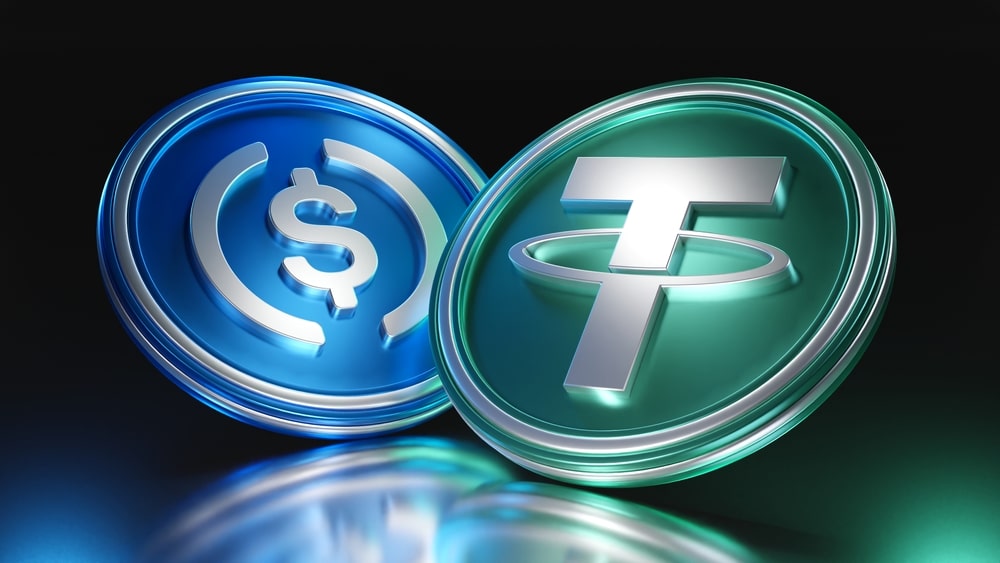
For example, every USDT issued is worth $1, and Tether actually holds $1 in reserves for every USDT in circulation. The same is true for USDC, the second-largest stablecoin. Both of these stablecoins can be redeemed for dollars, giving holders confidence that 1 USDT or USDC really is worth $1.
Similarly, issuers of gold-backed stablecoins such as Paxos Gold (PAXG) hold an ounce of gold in a vault for every token they issue. When users buy more of that token, the stablecoin manager buys more gold to back up the newly issued tokens.
Stablecoins can vary slightly depending on their nominal price. For example, it’s not uncommon for 1 USDT to be priced at $0.99995 or $1.00005. But these fluctuations are quickly corrected by the market and don’t matter much for most crypto users.
Meme Coins Explained
Meme Coins are another extremely popular class of altcoins. What makes them unique is that memecoins are solely for entertainment purposes. Most of them offer no real utility or technological innovation in the blockchain ecosystem. The value of memecoins is driven by financial speculation and hype. You should read our “What are meme coins” explainer to know more.
Where Did Meme Coins Come From?
Memecoins came from internet culture and online communities, not from serious financial planning. The very first meme coin was Dogecoin (DOGE), launched in 2013 as a joke based on the popular “Doge” meme of a Shiba Inu dog.
At first, it was created just for fun, but over time, Dogecoin built a strong community and became widely traded. After that, many other meme coins followed, often inspired by jokes, viral trends, or internet communities, like Shiba Inu (SHIB), Pepe (PEPE), and Floki Inu.

Shiba Inu (SHIB), introduced in 2020, became the second major meme coin and sparked a wave of new projects. Early tokens often imitated the Shiba Inu theme made famous by DOGE and SHIB, but over time the space expanded. Today, meme coins can be based on virtually any joke, meme, or trend that captures the attention, and imagination, of the crypto community.
Why Are Meme Coins So Popular?
Central Bank Digital Currencies (CBDCs): The Government’s Crypto
Central bank digital currencies (CBDCs) are a new type of digital asset that’s related to cryptocurrencies. They operate using blockchain technology just like cryptocurrencies, but they’re created, issued, and controlled by central banks. That makes CBDCs fully centralized, whereas many cryptocurrencies are decentralized to varying degrees.
CBDCs maintain a constant value, making them somewhat similar to stablecoins. However, a key distinction is that while stablecoins are privately created assets pegged to a fiat currency, CBDCs are digital representations of a country’s fiat currency and controlled by government authorities. There is effectively no difference between a CBDC and a physical currency note, and both are liabilities on a central bank’s ledger.
CBDCs are designed to enable faster digital payments, prevent money laundering, and provide access to financial services for people who are currently unbanked. They can be offered directly to the general public or only made available to financial institutions to support cross-bank payments.
How CBDCs Are Different From Other Cryptos?
Cryptocurrencies and Central Bank Digital Currencies (CBDCs) are both digital forms of money, but they work in very different ways. While cryptos are decentralized and driven by open markets, CBDCs are government-backed and centrally controlled. Check out this comparison table to understand the differences better.
Aspect
Cryptocurrencies
CBDCs (Central Bank Digital Currencies)
Issuer
Many are decentralized, created by developers, and then released publicly.
Issued and controlled by a country’s central bank.
Control
No single authority; governed by blockchain consensus and predetermined algorithms.
Fully centralized under government/central bank.
Purpose
Alternative money system, investment asset, decentralized finance, utility tokens.
Digital version of a nation’s official currency for payments and settlements.
Supply
Often fixed or algorithmically determined (e.g., Bitcoin capped at 21M).
Controlled and adjusted by the central bank’s monetary policy.
Anonymity/Privacy
Transactions can be pseudonymous (public keys, some privacy coins fully anonymous).
Traceable by authorities; designed for compliance and monitoring.
Volatility
Highly volatile; price determined by open market demand and supply.
Stable; value is always equal to the national fiat currency.
Adoption
Global, borderless use; anyone with internet can participate.
Restricted to citizens/residents within the issuing country (at least initially).
Technology
Runs on decentralized blockchains, often public and permissionless.
Likely to use permissioned blockchains or centralized digital ledgers.
Legal Status
Varies by country (legal, regulated, banned in some).
Legal tender; backed fully by government.
Examples
Bitcoin (BTC), Ethereum (ETH), Solana (SOL).
e-CNY (China), Digital Rupee (India), eNaira (Nigeria).
Chapter Quiz