







In This Article
- Is Now a Good Time to Invest in Bitcoin?
- What is the SEC’s take on Bitcoin Investment?
- Why Should You Invest in Bitcoin?
- Why Shouldn't You Invest in Bitcoin?
- Bitcoin Price Predictions From Crypto Experts
- What is Bitcoin & How Does it Work?
- Ways of Investing in Bitcoin
- Pros and Cons of Investing in Bitcoin
- Conclusion: Should I Buy Bitcoin Now?
Is Bitcoin a good investment? As Bitcoin (BTC) enters a new phase shaped by institutional adoption, more investors are opening up to it on expectations of a clearer regulatory outlook for the crypto industry.
In this article, we will walk you through everything you need to know about investing in BTC
 Bitcoin
2.39%
Bitcoin
BTC
Price
$61,841.19
2.39% /24h
Volume in 24h
$28.99B
Price 7d
Buy Now!
.
Bitcoin
2.39%
Bitcoin
BTC
Price
$61,841.19
2.39% /24h
Volume in 24h
$28.99B
Price 7d
Buy Now!
.
Key Takeaways
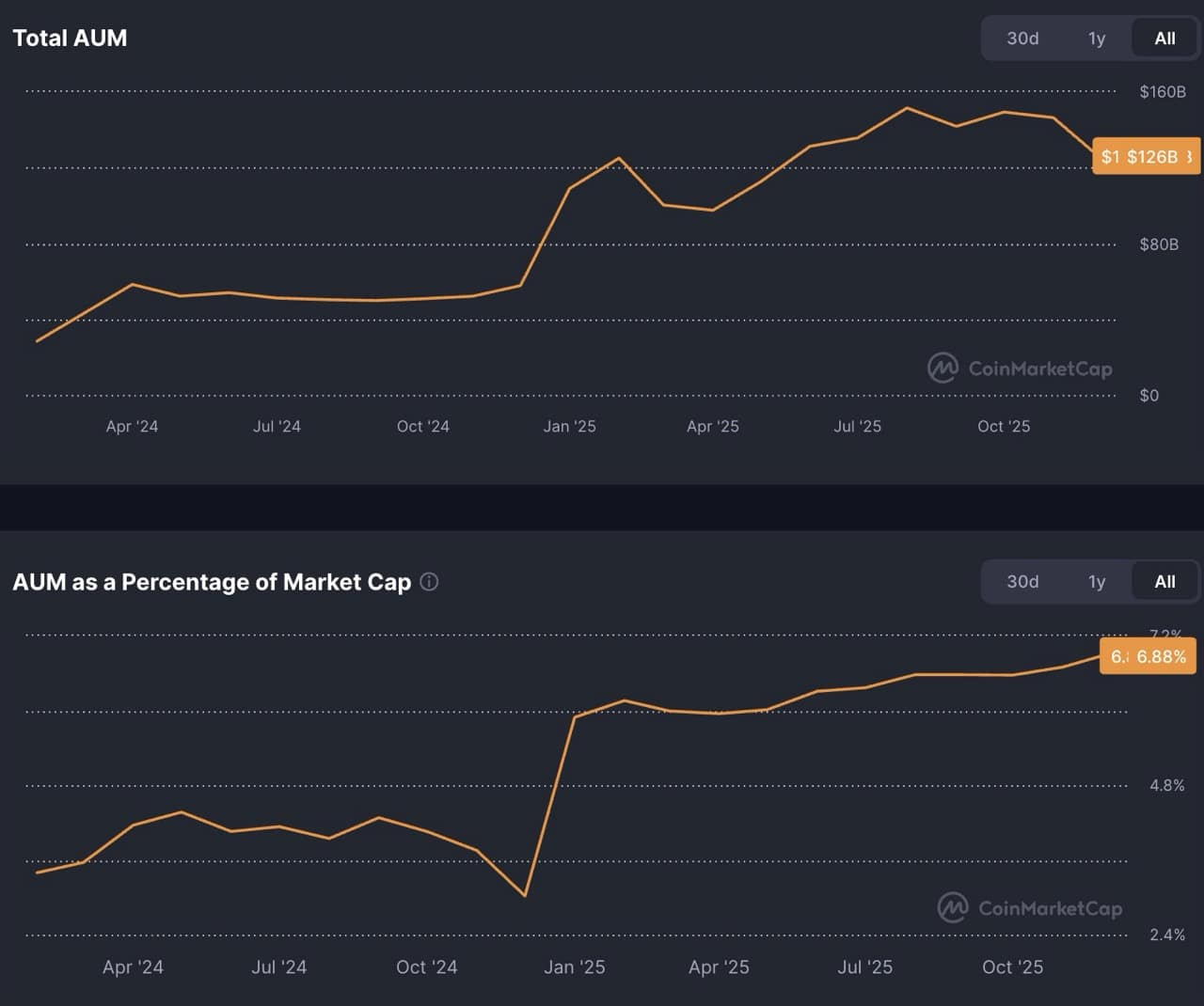
- Bitcoin is entering a new phase of institutional adoption, boosted by strong ETF inflows and broader acceptance from major financial firms.
- Regulatory momentum in the U.S. is shifting, with a more crypto-friendly SEC leadership and clearer policy discussions surrounding digital assets.
- Trump’s proposed Bitcoin Act and the idea of a Strategic BTC Reserve signal growing political willingness to integrate Bitcoin into national policy frameworks.
- Macro trends, including rate-cut expectations and rising geopolitical uncertainty, continue to strengthen Bitcoin’s long-term investment narrative.
- Despite its potential, Bitcoin remains highly volatile and policy-dependent, making risk management essential for new investors.
Is Now a Good Time to Invest in Bitcoin?
Is now a good time to invest in Bitcoin? The answer depends on how you view the shifting macro and political landscape. Of course, Bitcoin’s dominance continues in the crypto market. But BTC’s journey hasn’t been pleasant.
Bitcoin has climbed back into the spotlight after Trump’s election win, which revived market expectations for friendlier crypto policies. Trump’s Bitcoin Act proposal to create a strategic BTC reserve in the U.S. has created a sense that government attitudes may turn more supportive than in recent years.
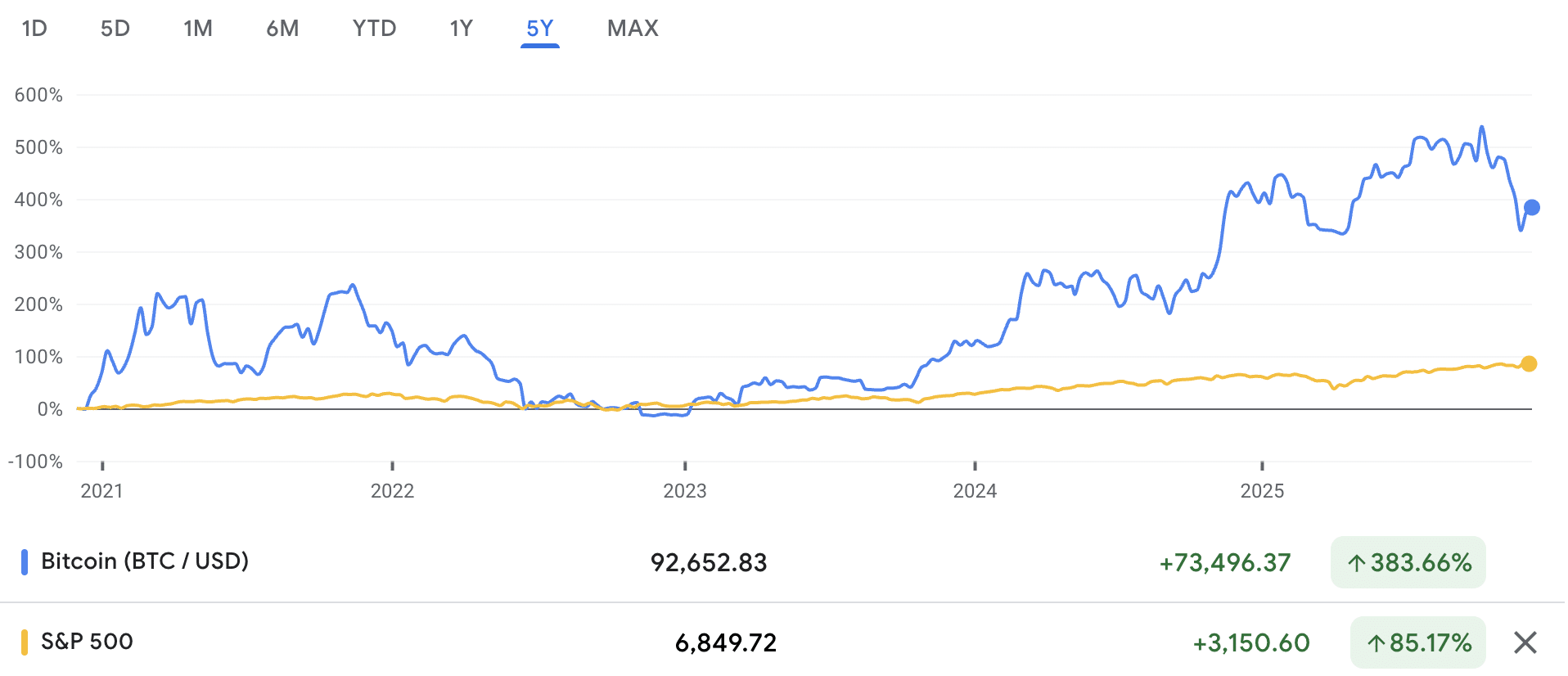
At the same time, the Federal Reserve has been cutting interest rates since September 2024 with expectations to cut rates further in 2026. Experts expect the move to boost demand for risk assets by making borrowing cheaper and weakening returns on cash.
However, investors should also weigh the risks. A friendlier administration doesn’t guarantee smooth regulatory outcomes, and the strategic-reserve idea is still only a proposal. Bitcoin remains volatile, and its reactions to political news can be sharp and unpredictable.
What is the SEC’s take on Bitcoin Investment?
The SEC’s view on Bitcoin is shifting, but it is still cautious. Under Gary Gensler, the agency allowed spot Bitcoin ETFs while warning that this did not mean it endorsed Bitcoin itself, and repeatedly stressed fraud and manipulation risks.
Gensler has now stepped down, and Trump has installed Paul Atkins, a long-time critic of heavy regulation and a clear supporter of digital assets, as SEC chair. Atkins has launched “Project Crypto,” a push to give clearer rules for tokens and trading platforms instead of relying mainly on enforcement.
Looking ahead, the outlook is more supportive than it has ever been. With a pro-crypto SEC chair, an openly crypto-friendly Trump White House, and a growing list of approved Bitcoin and crypto funds, the agency seems to be moving from a “slow it down” to “shape and regulate it” approach.
Forgot how it was for crypto when Gary Gensler was SEC Chair? Here is a quick recap: The Tyranny of Gary Gensler is Finally Over.
Why Should You Invest in Bitcoin?
Let’s explore some of the reasons why buying Bitcoin could make sense in 2026.
Why Shouldn’t You Invest in Bitcoin?
Let’s explore some of the reasons why buying Bitcoin may not be for everyone in 2026.

Bitcoin Price Predictions From Crypto Experts
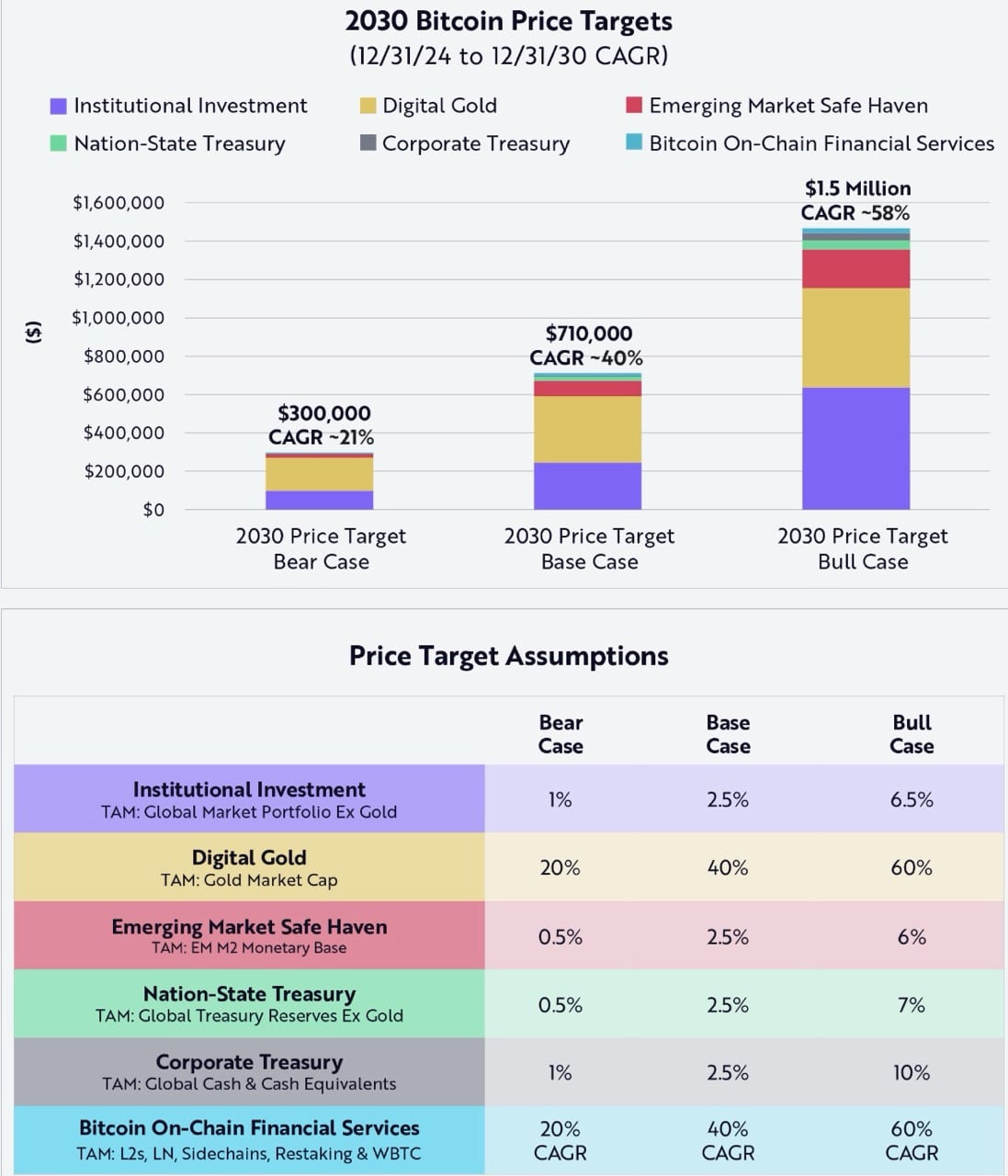
Curious what top analysts and institutions expect for Bitcoin’s next major move? This table breaks down the most credible BTC price targets published for 2025, 2026, and 2030.
| Investor / Source | Base Case | Bull Case | Target Year | Forecast Summary |
| JPMorgan | $165,000 | $170,000 | 2025–2026 | Strategists project around $165k by end-2025, with roughly $170k “fair value” if BTC is valued similarly to gold. |
| Standard Chartered | $200,000 | $250,000 | 2025 | Reaffirms about $200k by end-2025, with potential overshoot toward $250k driven by ETF inflows and macro trends. |
| ARK Invest | $710,000 | $1,500,000 | 2030 | ARK’s 2030 valuation model sets a base case near $710k and a bull case around $1.5 million per BTC, reflecting broad adoption across multiple use cases. |
| VanEck | $180,000 | $180,000+ | 2025 | Expects BTC to reach roughly $180k at the 2025 cycle apex during a strong bull phase. |
| Bernstein | $200,000 | $200,000+ | 2025–2026 | Targets around $200k by early 2026, calling this estimate “conservative” given ETF-driven demand. |
“On a very long-term time horizon, I personally do not think you can ever be fundamentally late to bitcoin if you are thinking of it as a store of value … As long as its hard supply cap remains in place, I believe potentially every purchase of bitcoin is putting your labor or savings into something that won’t lose value due to inflation resulting from government monetary policy.” – Chris Kuiper, Vice President of Research, Fidelity Digital Assets.
What is Bitcoin & How Does it Work?
Bitcoin is a decentralized digital asset created in 2009, designed to let people transfer value without banks or middlemen. It has a fixed supply of 21 million coins and runs on a public blockchain, which records transactions transparently and cannot be altered. Instead of identities, Bitcoin uses wallet addresses, giving it a pseudonymous structure.
For a full breakdown of how Bitcoin works, including mining, security, and supply mechanics, read our complete What Is Bitcoin guide.
Ways of Investing in Bitcoin
Investing in Bitcoin is straightforward, and the best method depends on your experience and risk tolerance. Most beginners use a regulated crypto exchange to buy BTC with a credit card, bank transfer, or PayPal, then store it on the platform or move it to a personal crypto wallet.
For a full walkthrough, see our How to Buy Bitcoin guide.
Security is just as important as buying, which is why a dedicated wallet matters. Best Wallet offers simple, secure storage with full control of your private keys. Investors who prefer a hands-off approach can also use Bitcoin ETFs, which track BTC without requiring a wallet.
Pros and Cons of Investing in Bitcoin
Pros
-
Still offers strong upside potential in bull markets.
-
Network has run for years without major security failures.
-
Now widely owned by institutions via spot Bitcoin ETFs.
-
Small allocation can meaningfully boost long-term portfolio returns.
-
Trades 24/7 and is easy to access through exchanges and ETFs.
-
Seen by many as “digital gold” and a long-term store of value.
-
Trump win, the proposed Bitcoin Act, and strategic-reserve talk have added policy tailwinds.
Cons
-
Price swings are extreme and can be emotionally hard to handle.
-
50%+ drawdowns still happen, even in longer bull cycles.
-
Can move sideways or fall for many months at a time.
-
Regulatory stance can change with politics and new SEC priorities.
-
Irreversible transactions mean user mistakes can be very costly.
-
No FDIC insurance; fewer protections than bank deposits or many traditional investments.
Conclusion: Should I Buy Bitcoin Now?
Bitcoin can be a worthwhile long-term investment, but only if you’re prepared for volatility and sharp price swings. A steady dollar-cost averaging strategy and a diversified portfolio can help manage risk. If you believe in Bitcoin’s long-term role in global finance, starting with small, consistent allocations is a balanced approach.
Explore the Best Cryptos to Buy
See Also: How Many People Own and Use Bitcoin in 2026
FAQs:
Is Bitcoin Worth Buying?

Bitcoin is an attractive asset class for its high-growth and untapped potential, being hailed as the best-performing asset of all time. However, it’s also a risky asset operating in a nascent market, so ensure you consider the risks.
How Much Could Bitcoin Be Worth in 2030?
Bitcoin could be worth considerably more in 2030, considering there will be another halving event in 2028. According to some analysts, Bitcoin could surpass $1 million by 2030.
What is the Best Way to Invest in Bitcoin?
The best way to invest in Bitcoin is with a regulated crypto exchange. You can then withdraw the Bitcoins to a decentralized wallet.
Should I invest in Bitcoin or Other Crypto?
It is good to invest in Bitcoin for those looking for the ‘safer’ play as other cryptocurrencies may offer a higher upside, but also carry significantly more risk. For diversification purposes, it may be worth considering other well-established popular coins like Ethereum, Solana, Cardano, and Avalanche.
Is Bitcoin Safe?
From a technology perspective, Bitcoin is safe and secure thanks to the use of the underlying blockchain technology and cryptography, but as an investment vehicle, Bitcoin is often compared to higher-risk tech stocks. Bitcoin is known for its extreme volatility but that price volatility has also contributed to Bitcoin’s massive price increases, with BTC continuously outperforming other assets. Due to short-term volatility, Bitcoin is more appropriate for longer-term investing.
Should I Sell My Bitcoin?
Selling Bitcoin before it’s had a chance to reach its full potential might not be the best idea. That said, it’s also wise to gradually take profits when prices increase, so consider your long-term investment strategy.
Will Bitcoin Go Up?
Many analysts believe that Bitcoin’s value will increase over time. While Bitcoin will experience volatility and prolonged bear cycles, the long-term consensus is positive.
When to Buy Bitcoin
Nobody has a crystal ball when it comes to predicting when to buy Bitcoin, but Bitcoin investing is no different from other asset classes. The classic “buy low, sell high” strategy also pertains to BTC. Historically, Bitcoin has had periods of enormous growth, followed by slowing sentiment and significant price drops to the downside. When the price is down, that is typically the best time to buy Bitcoin. If you are asking yourself “Is it safe to invest in Bitcoin today”, here is a great free resource LookintoBitcoin.com that can help Bitcoin investors identify where we are at in the Bitcoin price cycle and determine if it is a good time to invest in Bitcoin.
How Much Bitcoin Should I Buy
Many professional investors are recommending 1% to 5% exposure to Bitcoin across your entire investment portfolio, but this is a question that each individual investor needs to determine for themselves based on factors such as risk tolerance and time horizon. A common misconception is that investors need to buy a full Bitcoin, which isn’t the case. In the same way that cents make up a dollar, Satoshis make up a Bitcoin and investors can buy as little as $5 worth of BTC depending on the platform they purchase from.
Does Bitcoin Have Real Value?
Bitcoin’s critics argue it’s not backed by any meaningful value, labeling it as a Ponzi scheme inflated by hype. They say that while only 21 million bitcoins will ever exist, scarcity alone doesn’t justify its value. Supporters counter that Bitcoin’s value goes beyond scarcity. They argue it revolutionizes money by being decentralized, immune to control by governments, central banks, or companies, and offers protection from inflation and authoritarian regimes.
References:
- Nakamoto, Satoshi. Bitcoin: A Peer-to-Peer Electronic Cash System. bitcoin.org, 2008. https://bitcoin.org/bitcoin.pdf
- Ark Invest. “ARK’s Bitcoin Price Target for 2030.” ARK Invest, https://www.ark-invest.com/articles/valuation-models/arks-bitcoin-price-target-2030.
- Fidelity. “Crypto Outlook.” Fidelity Investments, https://www.fidelity.com/learning-center/trading-investing/crypto-outlook.
- The White House. “Establishment of the Strategic Bitcoin Reserve and United States Digital Asset Stockpile.” The White House, 5 Mar. 2025. www.whitehouse.gov/presidential-actions/2025/03/establishment-of-the-strategic-bitcoin-reserve-and-united-states-digital-asset-stockpile/.
- Sampath, Jagath, and Lee Reiners. “Tokenomics: Crypto Asset Valuation, Token Design, and the Development of Blockchain Networks.” The FinReg Blog (Duke University School of Law), 16 Nov. 2018, https://sites.duke.edu/thefinregblog/2018/11/16/tokenomics-crypto-asset-valuation-token-design-and-the-development-of-blockchain-networks/.
- U.S. Securities and Exchange Commission. “Dollar-Cost Averaging.” Investor.gov, https://www.investor.gov/introduction-investing/investing-basics/glossary/dollar-cost-averaging.

Why you can trust 99Bitcoins
Established in 2013, 99Bitcoin’s team members have been crypto experts since Bitcoin’s Early days.
Weekly Research
100k+Monthly readers
Expert contributors
2000+Crypto Projects Reviewed