







In This Article
- HiddenSwap Overview
- What Is HiddenSwap and How Does It Work?
- Supported Cryptocurrencies and Trading Pairs
- HiddenSwap Fees
- HiddenSwap User Experience and Customer Support
- HiddenSwap Security Features
- Who HiddenSwap Is Best For
- How to Get Started With HiddenSwap: Step-by-Step Guide
- HiddenSwap Review: Conclusion
HiddenSwap is a no-KYC crypto exchange for people who want to swap coins anonymously without opening an account or handing over an identity document. You choose the asset you send and the asset you want, paste a destination address, send a deposit to a one-time order address, then track the swap by its order ID. HiddenSwap currently supports over 1,100 coins and networks (including Bitcoin, Ethereum, Tether, Solana, Litecoin, Monero, and Zcash), and a swap can run without an account, an email, or an ID document.
This HiddenSwap review will cover how the model works in practice; the wide range of assets the platform lists; its fees, quote structure, and security measures; the user experience; and how the order page tracks a swap from deposit to payout. We’ll also explain how to get started on HiddenSwap and which categories of Web3 users will get the most out of it.
Our HiddenSwap Review: Key Takeaways
- No account, email, or ID is required for a crypto-to-crypto swap.
- Swap records omit names and IP addresses, and are deleted after 90 days.
- The platform is compatible with more than 1,100 coins and networks, including Monero and Zcash.
- The rate quoted before you send already includes the service fee, spread, and payout fee.
- The site works in Tor Browser, and the swap can run with JavaScript turned off.
HiddenSwap Overview
HiddenSwap is a web-based crypto swap exchange that allows users to create an order, send coins to a new deposit address, and receive a different asset at an address the user controls. Support works from the order ID alone, with no need for an account or KYC. The platform supports over 1,100 coins and networks, and popular routes include Bitcoin, Ethereum, Tether (on Tron and Ethereum), Solana, Litecoin, Monero, and Zcash.
Rates come in two forms (floating and fixed), while quotes are shown before you send and include the HiddenSwap fee, the spread, and the payout fee, making it easy to see the final amount you will actually receive. Records remain on file for 90 days and are then deleted unless an open claim keeps them active. HiddenSwap does not accept cards or bank transfers, and it does not store funds between swaps.
| Platform Name | HiddenSwap |
| Exchange Type | No-KYC crypto exchange for crypto-to-crypto swaps |
| Identity Checks / KYC | Not required |
| Account Setup | No account needed. Swaps are tracked by order ID only |
| Email Required? | No |
| Coins and Networks | Over 1,100 supported, including XMR, ZEC, BTC, ETH, USDT (Tron and Ethereum), SOL, LTC, and more |
| Custody Model | Per-order deposit address, no accounts or balances. Payout goes to the wallet address you provide |
| Rate Types | Floating and fixed |
| Fee Model | One quoted rate. HiddenSwap fee, spread, and payout fee are included in the quote |
| Tor / JavaScript Support? | Works in Tor Browser. Swaps work with JavaScript off |
| Additional Features | Open data and free open-source tools (e.g. address checker, memo rules, USDT network fee index). MCP server for AI assistants |
Pros
-
No KYC, account, email, or ID; order page tracked by ID only
-
Records omit names and IP addresses
-
Over 1,100 coins and networks listed
-
Dedicated Monero and Zcash pair pages
-
Quote includes fee, spread, and payout
-
Works in Tor and without JavaScript
Cons
-
Crypto-to-crypto only; no fiat on-ramp
-
Wrong-network deposits can cost $50
-
Swap records cannot be found without the order ID and/or deposit transaction hash
What Is HiddenSwap and How Does It Work?
HiddenSwap is a privacy-focused, no-KYC crypto exchange that provides straightforward crypto-to-crypto swaps without requiring you to register an account, store a user profile, or verify your identity for a normal swap. You simply pick two coins, paste the address your new coins should go to, and send the deposit shown on the order page. The platform never asks for a seed phrase or private keys, and never contacts users first.
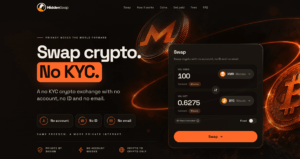
Over 1,100 crypto assets and blockchain networks are supported by HiddenSwap, from major cryptocurrencies and chains (Bitcoin, Ethereum) to other popular options such as Monero, Zcash, Solana, Litecoin, and Tether (which runs on both Tron and Ethereum).
Behind the scenes, a swap on HiddenSwap follows a short, readable path. You select the coins you want to send and receive, choose between a floating or fixed fee, enter the destination address, and send the exact amount to the deposit address that HiddenSwap creates for that order. After the source network confirms the deposit, HiddenSwap converts the coins and pays out to the address you provided.
A payout fee covers outgoing blockchain transaction fees, is deducted from the amount you receive, and is stated in the swap quote provided by HiddenSwap before you confirm the activity. If a swap cannot be completed, the deposit is returned, minus network fees, to the refund address you supplied (or, where the chain shows a sender, to that sender). When swapping some coins (such as Monero), you may need to contact HiddenSwap’s support team with your order ID so a refund address can be connected to it.
The most distinctive aspect of HiddenSwap’s design is the self-contained order, as well as the absence of custody between orders. Each swap gets its own deposit details and its own order page, which shows every step from deposit to payout – so you can then follow the transfer by order ID with links to the on-chain transactions, and no need for an account or login. The same pages work in Tor Browser, and the swap can complete with JavaScript turned off.
HiddenSwap Core Features
Below, we’ll explore the features that define how HiddenSwap works: how you open a swap, how the rates are set, how funds move, how you can track your orders, and more.
No Account and No KYC
HiddenSwap lets you swap your crypto without creating an account or being forced to undergo KYC checks. You do not need to register, upload an ID, or leave an email address.

To start, just choose the coin you need to send, the coin you want to receive, and the networks for each asset. Enter the amount and the wallet address that should receive the new coins, select the fee type (fixed or floating), and add a refund address (which is optional). Some coins also need a memo. HiddenSwap then gives you an order ID, which you can use to identify the swap for tracking and when contacting the platform’s support team if needed.
Per-Order Deposit Addresses
Each swap is assigned its own deposit address, which is created for that order only. The address appears on the order page, with a memo attached when the coin requires one.
You will need to send the exact amount shown to that address – and after the network confirms the deposit, HiddenSwap converts the coins and pays the new asset to the destination address you entered at the start. The next swap gets a new deposit address, so each order stays separate.
Floating and Fixed Rates
HiddenSwap offers two ways to price a swap. A floating rate can fluctuate until your deposit is confirmed, so you may receive a little more or a little less than the initial estimate, depending on market conditions at the time of confirmation. On the other hand, a fixed rate holds the quote on screen if the exact amount arrives in one transaction before the timer on the order page runs out.
Fixed rates are offered when the pair can support them. If the market moves 3% or more before the deposit arrives, HiddenSwap may ask you to accept an updated rate or take a refund.
Privacy Controls
Swap records held by HiddenSwap store the order ID, coins, networks, amounts, addresses, memos, transaction hashes, status, times, and where the visit started. The platform does not record your name or IP address, and records are deleted after 90 days, except in the rare event of an open claim that requires them to be maintained for longer.
You can use the HiddenSwap crypto exchange in Tor Browser, including at the Safest security level. Swaps also work with JavaScript turned off. Receiving Monero hides the payout on-chain more fully than assets on public blockchain networks, such as Bitcoin.
Order Tracking and Support
Every swap that takes place on HiddenSwap has an automatically-generated status page tied to its order ID. Users can open those pages to monitor four key steps (deposit received, deposit confirmed, coins converted, and payout sent) without needing to create or log into an account. Each step includes links to the blockchain transactions.
Support is provided via email ([email protected]). The support team will require the order ID to assist with any questions, and replies usually arrive within an hour. If the order ID is lost, HiddenSwap’s support team can locate the swap using the deposit transaction hash.
Public Tools and Open Data
HiddenSwap provides free open-source tools that work alongside the exchange. The address checker confirms that a wallet address is in the correct format before you paste it into an order; the memo guide lists destination-tag rules for 32 networks; and the USDT fee index publishes daily transfer costs on eight networks. HiddenSwap’s MCP server lets an AI assistant look up coins, live quotes, and order status by ID.
Supported Cryptocurrencies and Trading Pairs
HiddenSwap already supports over 1,100 coins and networks, although we recommend checking the live site to make sure your preferred cryptos are compatible. Coverage spans large Layer 1 assets (Bitcoin, Ethereum, Solana, Tron, etc.), stablecoins across several networks, and the privacy coins Monero and Zcash (which have their own dedicated pair pages on the HiddenSwap site).
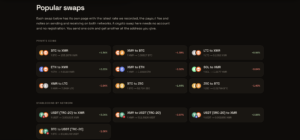
Swap routes are based on specific trading pairs, and popular privacy coin-related paths include BTC to XMR, ETH to XMR, USDT on Tron or Ethereum into XMR, and reverse swaps from XMR back into Bitcoin, Ethereum, or Tether. HiddenSwap also swaps USDT between Tron and Ethereum. Always match the network to the wallet you are using, and include a memo when the receiving coin requires one.
The lists below cover some of the most popular assets that can be swapped via HiddenSwap, but they are far from exhaustive, given the service’s scale and reach:
- Privacy coins: Monero (XMR), Zcash (ZEC)
- Major assets: Bitcoin (BTC), Ethereum (ETH), Solana (SOL), Litecoin (LTC), BNB, XRP, Tron (TRX), Cardano (ADA), Dogecoin (DOGE), and more
- Stablecoins: USDT and USDC on multiple networks (including Tron, Ethereum, BNB Chain, Solana, Polygon, Arbitrum, and Avalanche)
- Smart-contract networks: Ethereum, BNB Chain, Solana, Tron, Polygon, Arbitrum, Base, and more
| Category | Examples on HiddenSwap |
| Privacy Coins | Monero (XMR), Zcash (ZEC) |
| Large-Cap Assets | Bitcoin, Ethereum, Solana, Litecoin, BNB, XRP |
| Stablecoins | USDT (TRC-20, ERC-20 and others), USDC on several chains |
| Smart Contract Networks | Ethereum, BNB Chain, Solana, Tron, Polygon, Arbitrum, Base |
HiddenSwap Fees
The quote shown before you send already includes the HiddenSwap fee, the spread, and the payout fee, so you can immediately see the final amount you will receive when the swap completes.
| Charge | How It Is Applied |
| HiddenSwap Fee and Exchange Spread | Built into the rate shown in the swap box |
| Payout Network Fee | Shown in the swap box and taken from the amount you receive |
| Deposit Network Fee | Paid by your wallet to the source chain |
| Refund Network Fee | Taken from the refunded amount if a swap is returned |
| Wrong-Network or Missing-Memo Recovery | $50 plus network fees if recovery is possible |
HiddenSwap User Experience and Customer Support
HiddenSwap is a website-only crypto-to-crypto swap service and does not have a native mobile app or a browser extension. The core interface is a swap box on the platform’s website, where users can select the required coins and networks, review the quoted rate and included fees, paste a receiving address, and optionally add a refund address before starting the order.
Once an order is created, the site generates a one-time deposit address for that swap. The order page then follows the transaction through deposit, network confirmation, conversion, and payout, and it links to the relevant on-chain transactions. The same pages are used across desktop and mobile browsers. HiddenSwap also works in Tor Browser and with JavaScript turned off.
HiddenSwap users do not require an account, password, or stored login history – instead, each swap is identified by an order ID, which is the reference used to track the swap’s status on its dedicated order page and to enable HiddenSwap’s support team to track the swap if needed. Swap records are kept for 90 days and then deleted, except in limited cases such as an open claim. Those records contain order details such as coins, amounts, addresses, and transaction hashes, but not users’ names or IP addresses.
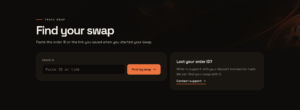
Support is email-based, so you can write directly to [email protected] with your order ID and the details of your request. We found that replies typically arrive within an hour, which matches HiddenSwap’s internal benchmark. However, HiddenSwap does not offer live support chat or an account-based ticket queue (since user accounts are not required or created).
As with all crypto swap services, users must exercise basic caution when making swaps and ensure that the required process is followed correctly at all times. The service only accepts crypto deposits, so users must send the exact amount on the network shown on the order page, and some coins also require a memo or destination tag. A deposit sent on the wrong network is not processed automatically – and when recovery is possible, it needs to be handled through HiddenSwap’s support team, who can use the swap’s order ID or deposit transaction hash to find the swap record. Completed swaps are final, and refunds (when applicable) are sent to the refund address provided at the start of the order – or, where the network shows it, to the address the coins originated from.
Overall, we found the interface and swap process simple and easy to use and follow. If you’ve already used a crypto swap platform before, HiddenSwap should be immediately familiar on the surface. Nonetheless, you will need to note your order ID and deposit transaction hash, as the level of privacy and anonymity provided by this platform also makes it impossible to find or recover records of your swaps without them.
HiddenSwap Security Features
HiddenSwap structures each swap around a dedicated, one-time deposit address created for that order. Coins sent to that address are credited after network confirmation, converted, and paid out to the receiving address entered at the start of the swap process. This creates a per-order flow without the need for any account or login.
Swap files are organized by their order IDs, which include details about the pair, networks, amounts, addresses, memos, hashes, and timestamps, as well as the page that initiated the visit. Names and IP addresses are left out of those files. Access to stored data is limited, and connections are encrypted.
HiddenSwap’s privacy policy sets a 90-day record retention period, after which records are deleted unless an open support case needs them to be retained for a longer period of time. Daily backups are kept for six days. Servers still see IP addresses in order to serve pages and throttle abuse, but those addresses are not written into the swap record, and the abuse check uses a short-lived hash.
The same order pages are built to run in Tor Browser and with JavaScript disabled. Encrypted transport and restricted staff access also form part of HiddenSwap’s security baseline.
Support is tied to the order ID, and help requests can be sent to [email protected]. HiddenSwap’s support team will then use the order ID to locate a swap – and will not ask users to send any seed phrases or private keys. Basic personal cybersecurity practices are required at all times, so users must check the address bar before making a deposit and keep a record of their swap’s order ID until the payout is visible on the status page. For stronger default on-chain privacy, the service also highlights Monero (XMR) as a popular swap option because transfers on public chains (such as Bitcoin) remain visible on their ledgers.
Who HiddenSwap Is Best For
HiddenSwap is a strong fit for people who already hold crypto and want to swap it for another asset without opening an exchange account. It is especially useful for anyone moving into or out of Monero or Zcash (although the platform supports 1,100 coins and blockchains in total), and for users who prefer to access services via Tor or a browser with JavaScript disabled.
The all-in quote is also helpful if you prefer a full and transparent summary of fees, and want to know exactly what you’ll receive before your deposit goes out. Floating and fixed rates are offered where available; limits appear in the swap box; and each swap has its own dedicated order page where you can follow the deposit, confirmation, and payout process. Because HiddenSwap does not require you to create or log into an account, you’ll need to be prepared to keep the order ID and send crypto from a wallet you already use. HiddenSwap’s support team can be reached by email and will track your swap using that ID if you encounter any issues.
In short, HiddenSwap will be ideal for those who want a no-account, no-KYC crypto exchange where swap rates and fees are shown up front, with a specific focus on platform transparency as well as users’ anonymity and privacy.
How to Get Started With HiddenSwap: Step-by-Step Guide
Before you initiate a swap on HiddenSwap, make sure you’ve chosen your destination wallet and know the full details of your intended swap, including the correct network to use and any memo the receiving coin will need.
-
Open the official HiddenSwap website, pick the coin and amount you will send, choose the coin you want to receive, and select the required network for each.
Visit HiddenSwap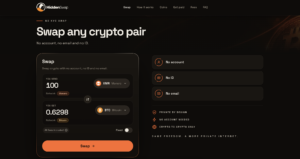
-
Choose a floating or fixed rate and check the quote, limits, and payout fee displayed within the interface.
-
Paste the address that should receive the new coins. Add a refund address if the send coin hides the source, as Monero does.
-
Create the order, copy the one-time deposit address and any memo, and save the order ID.
-
Send the exact amount from a wallet you control.
-
Watch the order page through deposit, confirmation, swap, and payout. Keep the order ID until the payout transaction confirms.
HiddenSwap Review: Conclusion
HiddenSwap gives privacy-minded users a clean and easy way to swap one cryptocurrency for another, and you won’t need an account, email, or ID/KYC to begin swapping coins. An order will only need the crypto pair, the destination address, and the deposit, and the swap quote is transparent and includes all fees – so it’s easy for users to know exactly what they can expect to receive after the swap is completed and confirmed. Monero and Zcash receive a significant amount of swap-pair coverage across the platform, and the site still works in Tor with JavaScript off.
Considering the above, and how easy HiddenSwap makes the entire process while maintaining user anonymity and privacy, we recommend it for anyone looking for a direct and simple no-KYC crypto exchange for crypto-to-crypto swaps. As long as you keep a personal note of swap order IDs and deposit transaction hashes, you should be able to easily track your swaps and continue your Web3 activities with minimal friction.
Visit HiddenSwapFAQs
What is HiddenSwap?

HiddenSwap is a no-KYC, anonymous crypto exchange and crypto-to-crypto swap service. You pick two coins, paste a receiving address, send a deposit to a one-time order address, and track the swap by order ID. No account, email, or personal ID documents are required.
Is HiddenSwap safe to use?
HiddenSwap does not take seed phrases or private keys and does not keep balances between swaps. Each order uses its own deposit address, and payouts go to the wallet you name. Always check the URL to make sure you’re accessing the official site before you initiate a swap.
Does HiddenSwap require KYC?
No. Swaps don’t require an account, email, or identity document. You provide the coins, networks, amount, and destination address. Some coins also need a memo.
Is HiddenSwap anonymous?
Yes. Swap records on HiddenSwap omit names and IP addresses and are deleted after 90 days, unless an open claim keeps them. You don’t need to sign up, and will not need to create or maintain an account or profile.
Does HiddenSwap hold your coins?
There are no accounts or balances on HiddenSwap. All orders are assigned their own deposit addresses – so the coins will be converted after you send your deposit to that address, and the payout goes to the address you provided at the beginning of the swap process.
How long do swaps take?
Swap timing will depend on the speed of the blockchain networks involved, which can vary significantly. Your swap’s order page will show deposit received, confirmed, converted, and payout sent.
Which coins can you swap on HiddenSwap?
HiddenSwap supports more than 1,100 coins and networks, including Bitcoin, Ethereum, Tether on Tron and Ethereum, Solana, Litecoin, Monero, and Zcash. Check the live site for the pair you want.
How do fees work on HiddenSwap?
The quote shown before you send already includes HiddenSwap’s fee, the exchange spread, and the payout network fee. Your wallet pays the deposit network fee separately. Wrong-network or missing-memo recovery, if possible, may add $50 plus network fees. Refunds deduct network fees only.
Can you swap Monero (XMR) on HiddenSwap?
Yes. Monero is supported, including popular routes such as BTC to XMR, ETH to XMR, and USDT to XMR, plus the reverse. For Monero refunds, add a refund address.
Can you use HiddenSwap over the Tor network?
Yes. The site works in Tor Browser, including at the Safest security level. Swaps can also complete with JavaScript turned off.
References:
- What Is Tor Browser and How Does It Work? (Tor Project)
- What Is KYC (Know Your Customer)? (Chainalysis)
- HiddenSwap Official Website (HiddenSwap)

Why you can trust 99Bitcoins
Established in 2013, 99Bitcoin’s team members have been crypto experts since Bitcoin’s Early days.
Weekly Research
100k+Monthly readers
Expert contributors
2000+Crypto Projects Reviewed