




In This Article
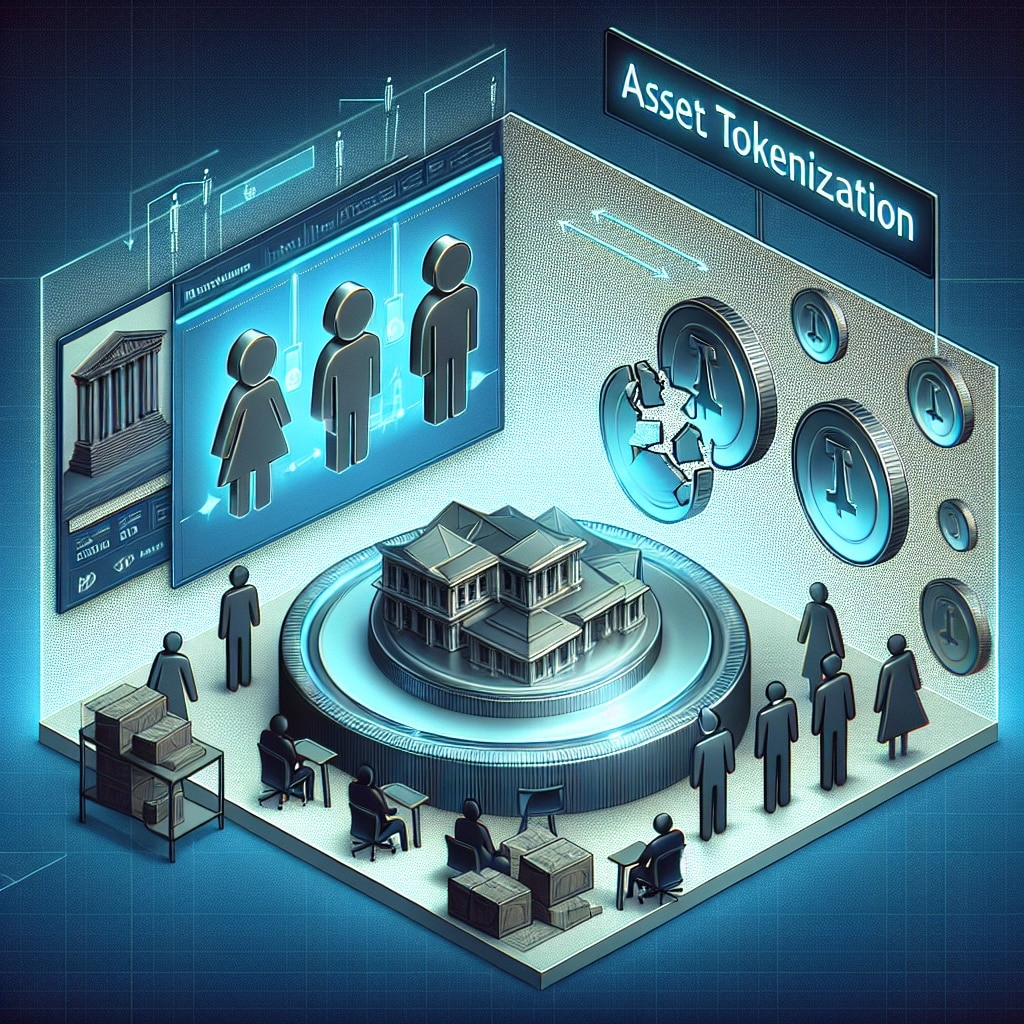
Real World Asset tokenization (RWA) is quickly becoming one of the most exciting frontiers in crypto. By bringing traditional assets, like real estate, commodities, and bonds, onto the blockchain, RWA projects are unlocking opportunities that were once reserved for wealthy investors and large institutions.
Think of it as a digital gateway to global markets. Instead of needing millions to buy property or access institutional-grade investments, tokenization allows anyone to purchase fractional ownership with just a few clicks. Whether it’s holding a piece of a luxury apartment complex, shares in gold, or exposure to fine art, RWAs are breaking down barriers to entry.
The advantages are hard to ignore:
- Faster settlements with blockchain efficiency
- Lower costs by cutting out layers of middlemen
- Enhanced security through transparent, tamper-proof ledgers
- Greater trust with on-chain ownership records
- Reduced reliance on third parties and custodians
In this guide, we’ll explore the best RWA cryptocurrency projects of 2026 that are leading this financial revolution.
Key Takeaways
- Real-world asset (RWA) tokens represent tangible or physical assets, such as real estate, commodities, or bonds, on the blockchain.
- RWA tokenization allows investors to get in on a piece of large high value assets through fractional ownership.
- RWAs aim to bring traditional financial assets into the digital space, enhancing liquidity, transparency, and accessibility for the global economy.
- Smart contracts play a crucial role in automating and securing transactions involving RWAs.
Best RWA Projects: Summary
Real-World Asset (RWA) tokens digitize physical assets like real estate, commodities, and financial instruments on the blockchain, enabling easier and more transparent trading and fractional ownership. By leveraging smart contracts, RWAs automate and secure transactions, enhancing liquidity and accessibility while ensuring transparency and trust. Despite regulatory challenges and market volatility, RWAs democratize asset access and offer innovative financial opportunities.
Let’s dive in and discover the top RWA crypto projects 2026 you should be watching. These represent some of the best RWA tokens to invest in 2026.
What are Real-World Asset (RWA) Tokens?
Okay, so what exactly are RWA crypto coins and what is RWA in crypto even mean? They’re tokenized assets crypto tokens that represent tangible or physical assets on blockchain networks. This tokenization process means that assets like real estate or precious metals can be bought, sold, and traded on the blockchain with unprecedented ease and transparency. These digital tokens can represent assets such as:
- Real estate
- Commodities
- Artwork
- Financial instruments like bonds and stocks
- Corporate debt
- Agricultural products
Tokenizing physical or traditional financial assets means turning them into blockchain-based tokens backed by underlying assets, such as equities, bonds, and commodities.
Note: When you hear people talking about tokenizing things and bringing them on the blockchain, they are usually talking about creating real world assets crypto for physical assets.
Tokenizing RWAs breaks down high-value assets into smaller, more manageable pieces that can be traded easily. This process is also known as fractionalized ownership. Tokenizing assets in this fashion not only democratizes access to these assets but also enhances portfolio diversification and brings real-world goods to a global market. Plus, blockchain’s transparency means secure record keeping on an immutable ledger for all financial transactions, simplifying processes like tracking transfers and proving ownership. The obvious benefit of tokenizing tangible or physical assets and creating RWAs is that it allows many people to have a fractional ownership of an asset that used to be possessed by an individual or company. This creates more liquidity for sellers of let’s say, large real estate projects or highly sought after and expensive luxury art – improving market conditions for both prospective buyers and sellers.
RWA tokenization is creating a more cohesive financial system with greater transparency. By bridging DeFi with real-world assets, we’re making traditional financial products more inclusive and functional.
If you are just coming across the term DeFi for the first time, we have a great video explaining the concept of decentralized finance if you want to learn more:
The Role of Smart Contracts in RWAs
Smart contracts act like a reliable digital assistant, handling complex tasks without any human intervention. These self-executing contracts, with terms written directly into code, automate and secure RWA transactions, cutting out the need for intermediaries.
Picture this: You are ready to buy a tokenized piece of real estate. The smart contract checks your funds, updates ownership records on the blockchain, and transfers the property tokens to you, automatically. No need for paperwork, lawyers, or weeks of waiting, ownership is settled in minutes. As soon as your transaction is confirmed in the next few blocks everything is settled. No need to mess around with title agencies needing to verify ownership of the land, no long closing dates. The blockchain handles everything.
Tokenized real estate allows fractional ownership, meaning you can invest in a high-value property with as little as a few hundred dollars. This opens up real estate investment to a global pool of investors, increases liquidity in traditionally illiquid markets, and ensures transparent, tamper-proof records on the blockchain. Smart contracts also automate rent payments, distributions, and compliance checks, cutting down operational costs. For both buyers and sellers, this means faster transactions, lower fees, and fewer middlemen, all while maintaining security and legal enforceability.
Smart contracts are immutable and transparent. Once deployed, their code can’t be changed, ensuring fairness and consistency. All transactions and contract terms are recorded on the blockchain, accessible to everyone. This open ledger system fosters trust and accountability, as anyone can verify transaction details. In short, smart contracts are the backbone of the RWA ecosystem. They bring automation, security, and transparency to the table, revolutionizing how we interact with real-world assets. By leveraging these digital contracts, RWA projects make transactions seamless, cost-effective, and trustworthy.
Why Invest in RWA Crypto Coins?
If you’ve been around crypto for a while, you’ve probably seen a lot of hype coins come and go. But RWA crypto coins are different, they’re tied to something with real-world value behind them. Instead of betting on meme tokens or speculative narratives, RWA tokens connect you to traditional markets like real estate, government bonds, or commodities, all while giving you the flexibility and transparency of blockchain. The biggest appeal lies in how RWA crypto bridges DeFi and TradFi.
RWA’s are gaining serious momentum as well. Current numbers (as of Aug 9, 2026) show tokenized RWAs hit $38.17B, closing in on the $40B mark, with holders up 56% in a month to ~1.7M addresses. Industry thought leader Deepankar Kapoor, Chief Growth Officer of Global Markets at eXchange1 had this to say on the subject:
“The number that jumps out to me isn’t the $38 billion in tokenized assets, it’s the 56% jump in holders in a single month. That’s real demand showing up, not just supply-side headlines. Tokenized Treasuries got here first because they’re the easiest asset to trust on-chain, but I’d expect real estate and private credit to follow the same curve over the next couple of years. RWA is how this industry brings in an entirely new, non-crypto-native audience, and that shift is still early.”
In traditional finance, getting exposure to these kinds of assets is expensive, slow, and often limited to accredited investors. For example, if you wanted to buy into a U.S. Treasury bond, you’d typically go through a broker, deal with settlement delays, and face minimum investment requirements in the thousands. RWA projects cut through that red tape. With just a wallet and a few clicks, you can hold fractionalized Treasuries, real estate shares, or tokenized gold, often with as little as a few hundred dollars.
Real-world assets (RWAs) are real or traditional financial assets, which include property, gold, or stocks that are converted to digital tokens on blockchain. The investors can purchase, sell, or transfer asset-backed holdings with ease through these tokens. This process brings transparency and efficiency to traditional investing. – Pressbooks
Another reason RWA coins stand out is liquidity. Assets like real estate and bonds are traditionally illiquid, you can’t just sell your stake in a building overnight. By tokenizing them, RWA platforms create secondary markets where these assets trade around the clock, just like crypto. That’s a massive upgrade compared to waiting months to offload property or securities in traditional systems.
And then there’s yield. With global interest rates rising, tokenized Treasuries and bonds have become attractive alternatives to stablecoins. Instead of parking cash in USDC or USDT and earning little to nothing, investors can put their money into RWA coins backed by bonds or money market funds and collect real, consistent yield.
Of course, it’s not without risks. Regulatory uncertainty, smart contract vulnerabilities, and market volatility are all factors to consider. But compared to the purely speculative side of crypto, RWAs offer a grounded, asset-backed approach that can bring stability to a portfolio. For me, the appeal of RWA coins is simple: they combine the security of traditional assets with the innovation of blockchain, opening up opportunities that used to be reserved for Wall Street.
Types of RWAs
RWA projects can come in many forms, literally anything physical that exists in the real world can be tokenized on the blockchain, but here are a few of the most prominent examples.
Real Estate
Imagine owning a slice of a luxurious Manhattan skyscraper or a cozy beach house in Malibu without the hefty price tag. Tokenizing real estate crypto means converting property into digital tokens that represent ownership. This makes buying, selling, and trading real estate as simple as trading stocks. You can invest in high-value properties with just a few clicks, opening doors to real estate markets previously out of reach.
Commodities
Think about gold bars, barrels of oil, or even bushels of wheat. Traditionally, investing in these commodities required substantial capital and logistical challenges. Now, through tokenization, these physical commodities are converted into digital tokens. This allows anyone to invest in them, trade them easily, and even use them in various DeFi platforms. It’s like having a piece of Fort Knox in your digital wallet.
Bonds and Securities
Ever wanted to get in on the bond market but found it too complex or exclusive? Tokenized bonds and securities are your ticket. By converting these financial instruments into digital tokens, they become more accessible. You can trade tokenized bonds just like cryptocurrencies, enjoying the benefits of traditional investments with the flexibility of digital assets.
Art and Collectibles
Picture owning a fraction of a Picasso painting or a rare baseball card. Tokenizing art and collectibles brings high-value, often illiquid assets into the digital realm. This not only democratizes access but also provides a way to trade and invest in these items with ease. It’s like turning your favorite museum pieces into shareable, tradable assets.
Intellectual Property
Consider the music industry, where artists can tokenize their songs, allowing fans to buy a stake in their music. This type of RWA makes it possible for creators to monetize their work directly and for fans to invest in their favorite artists’ success. It’s a new way of thinking about ownership and revenue sharing in creative industries.
Each type of RWA brings unique opportunities and advantages, transforming how we interact with and invest in real-world assets. By digitizing these assets, we open up new avenues for liquidity, accessibility, and transparency, making the world of finance more inclusive and dynamic.
Top 5 RWA Crypto Coins in 2026
Below is our RWA crypto list of some of the top RWA tokens and leading RWA projects.
Chainlink (LINK): Powering RWA Data Infrastructure
When I first explored Chainlink’s role in the RWA space, it struck me as the invisible backbone that makes everything else possible. Unlike platforms directly issuing tokenized assets, Chainlink provides the essential data infrastructure through its decentralized oracle network. RWAs live and die by accurate off-chain data so whether it’s bond yields, real estate valuations, or compliance checks, Chainlink is the bridge that ensures those numbers are trustworthy.
Traditional finance relies on centralized data feeds controlled by a handful of custodians. In contrast, Chainlink decentralizes this process with its network of independent node operators, reducing the risk of manipulation and single points of failure. Consider the $128 trillion bond market: pricing and settlement depend on constant, accurate data. With RWAs, Chainlink allows smart contracts to automatically verify and execute based on real-world data inputs, cutting out layers of intermediaries.
One of the most powerful use cases I found was their Proof of Reserve mechanism. It allows tokenized assets like tokenized Treasuries or commodities, to prove their backing in real time. For example, if you’re buying a tokenized gold asset, the smart contract can confirm that an equivalent amount of gold is held in custody. This level of transparency doesn’t exist in traditional markets where audits happen quarterly at best.
Chainlink is already integrated across major DeFi and RWA platforms, including collaborations with projects like Swift, ANZ Bank, and DTCC. For investors, that means every RWA token you hold may be secured by Chainlink’s infrastructure in the background. To me, Chainlink isn’t just another project in the RWA sector—it’s the connective tissue holding the entire ecosystem together.
Stellar (XLM): Democratizing Global Asset Access
Stellar has long focused on building financial inclusion, so seeing its pivot toward real-world assets felt like a natural evolution. My first interaction with Stellar’s tokenization features came through their integration with stablecoins and cross-border payments. Now, they’re expanding that same infrastructure to support tokenized bonds, treasuries, and even emerging RWA issuers like Archax.
In traditional finance, issuing securities or stable assets internationally requires navigating a labyrinth of correspondent banks, settlement systems, and regulators. Stellar simplifies this with its built-in tokenization layer and Stellar Consensus Protocol (SCP), which enables near-instant finality and low-cost transactions. The Stellar Development Foundation has been actively investing in RWA projects, including a high-profile investment in Archax, a UK-based digital securities exchange. This move pushes Stellar deeper into regulated tokenization markets.
The global remittance market is valued at over $800 billion, and Stellar’s low fees and fast settlement already make it a strong contender in that space. Add RWAs to the mix, and suddenly you can imagine small businesses in Africa or Southeast Asia gaining access to tokenized U.S. Treasuries or commodities using nothing more than a Stellar wallet. That’s a radical shift compared to traditional capital markets, which often require minimum investments in the tens of thousands.
When I tested Stellar’s ecosystem, I was impressed by how smooth token transfers felt. Even compared to Ethereum-based assets, fees were negligible. The potential here is huge: Stellar is combining financial accessibility with RWA tokenization in a way that could truly level the global playing field.
Ondo Finance: Bridging Physical and Digital Assets
When I first tried Ondo Finance, I was impressed by how seamlessly it connects traditional finance with the DeFi world. They focus on tokenizing bonds, making these assets accessible to crypto enthusiasts. One standout offering of this RWA project is their OUSG (Ondo Short-Term U.S. Government Bond Fund), which allows users to invest in tokenized short-term U.S. government bonds and trade them with the stablecoin USDC. The significant majority of their OUSG portfolio is currently in the BlackRock USD Institutional Digital Liquidity Fund (BUIDL), with the remainder in BlackRock’s FedFund (TFDXX), bank deposits, and USDC for liquidity purposes.
To put things in perspective, the global bond market is colossal, valued at around $128 trillion. Traditional finance often requires investors dealing with brokers, paperwork, and settlement periods that can take several days. By contrast, Ondo Finance streamlines the process, allowing for near-instantaneous transactions and eliminating the need for intermediaries. While traditional mutual funds might require a minimum investment of several thousand dollars, Ondo’s tokenized bonds can be purchased in much smaller fractions, democratizing access for retail investors.
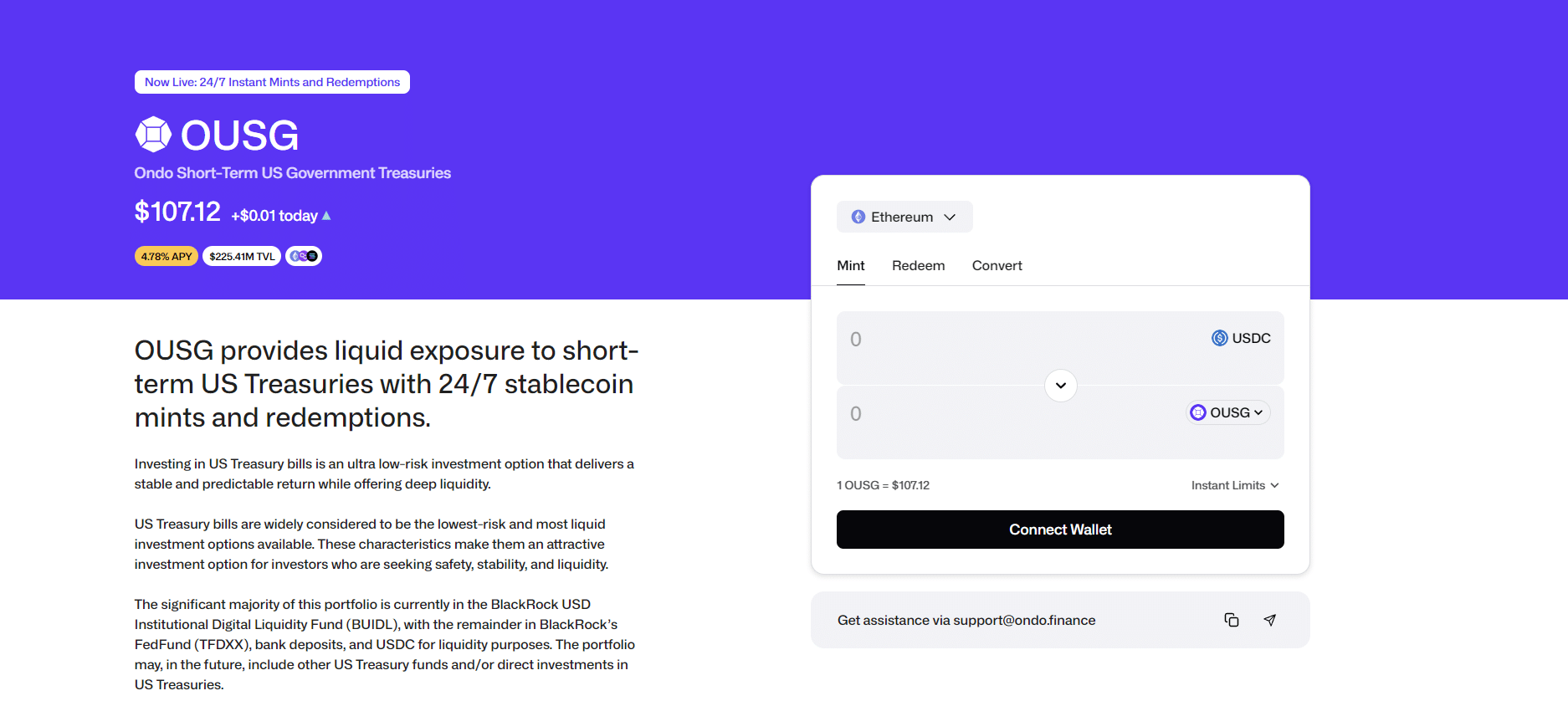
My experience with their platform was smooth and intuitive. Navigating the user interface was a breeze, making investments in OUSG as straightforward as trading regular crypto. The transparency and efficiency of Ondo Finance were evident from the start. Their platform provided detailed information about the OUSG offering, making it easy to understand the benefits and risks involved. With their innovative approach to tokenizing traditional assets, they’re bridging the gap between physical and digital finance in a way that’s both user-friendly and effective.
Something that really stood out to me was Ondo Finance has successfully facilitated over $500 million in tokenized bond transactions, highlighting its growing influence and trust within the DeFi community. Compared to traditional bond markets, where transaction volumes are often dominated by institutional players, this level of activity in a relatively new DeFi platform underscores the significant potential and growing, global, adoption of tokenized finance. Ondo’s products are prime examples of tokenized bonds crypto.
BUIDL (BlackRock’s Tokenized Fund): Institutional Strength Meets Blockchain
If Ondo is democratizing Treasuries, BlackRock’s BUIDL Fund is institutional finance planting its flag in the RWA world. BUIDL stands for BlackRock USD Institutional Digital Liquidity Fund, and it tokenizes short-term U.S. Treasuries, cash equivalents, and repo agreements into blockchain-based shares. Each BUIDL token is pegged to $1 and represents ownership in the fund, which is custodied and managed by BlackRock.
In traditional finance, accessing BlackRock’s funds typically requires high minimums and institutional accounts. Through tokenization, BUIDL allows investors (both institutional and retail) to hold shares directly on the blockchain. The fund recently surpassed $1 billion AUM, making it one of the largest tokenized RWA products in existence.
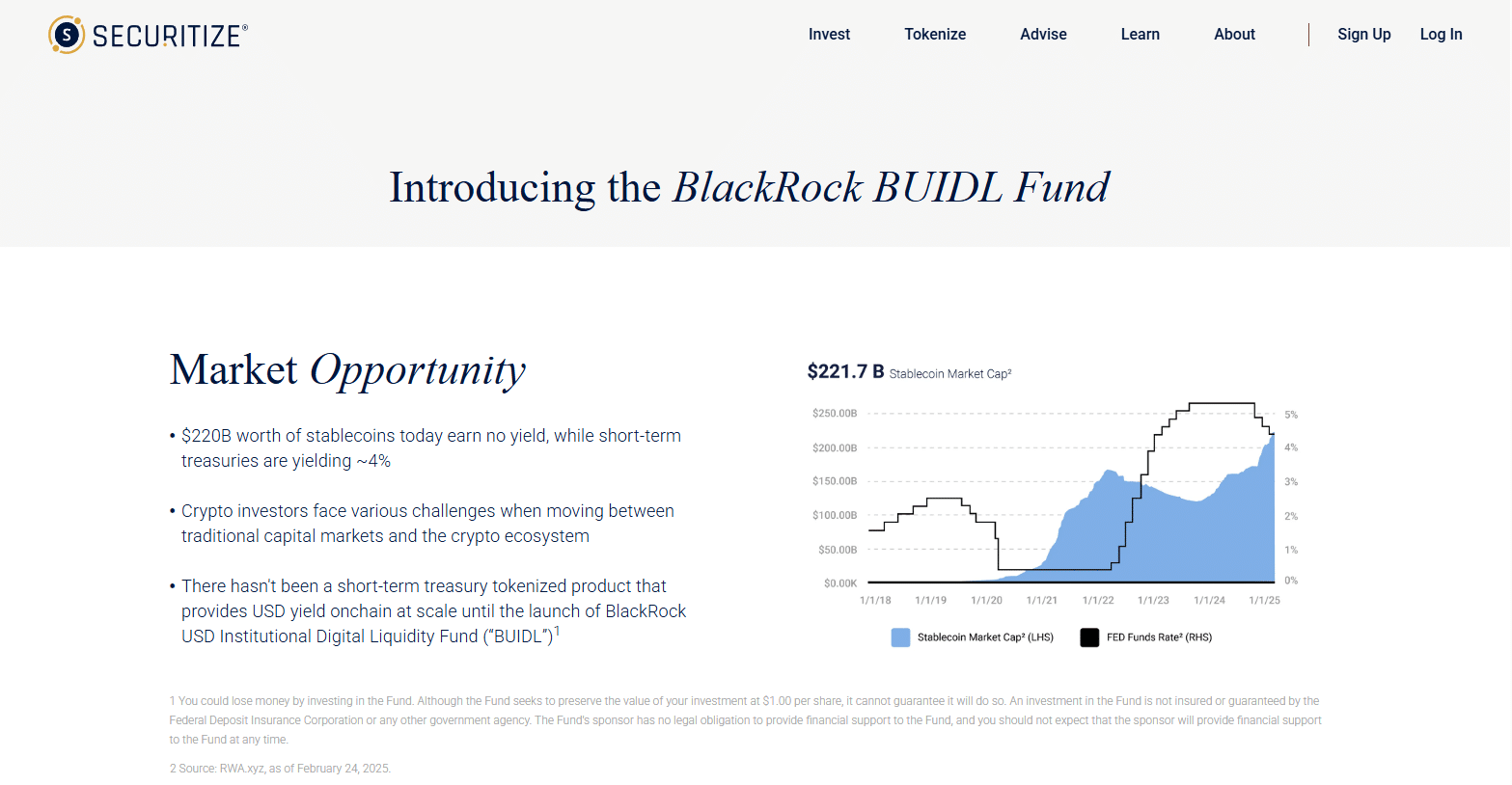
What makes BUIDL unique is its integration into DeFi ecosystems. Platforms like Crypto.com and Deribit now accept BUIDL tokens as collateral for trading or lending. This means Treasuries, arguably the safest asset in the world, can now underpin DeFi markets, reducing systemic risks compared to overreliance on volatile stablecoins.
From a technical perspective, BUIDL leverages tokenization standards that allow for compliance features like whitelisting and transfer restrictions, ensuring it operates within regulatory frameworks. While I wasn’t able to interact with BUIDL directly as an individual investor, the ripple effect across the ecosystem is obvious. For the first time, a heavyweight like BlackRock is validating RWA tokenization at scale, which bodes well for the sector’s long-term credibility.
Algorand (ALGO): The RWA Blockchain of Choice
Algorand has quietly become a powerhouse in RWA tokenization. When I explored its ecosystem, I was struck by the sheer breadth of projects choosing Algorand as their foundation. With its Algorand Standard Asset (ASA) framework, instant finality, and ultra-low fees, it’s tailor-made for large-scale tokenization efforts.
According to recent reports, Algorand now commands an estimated 70% of the RWA tokenization market share, representing over $268 million in value locked on-chain. This dominance isn’t by accident. Algorand was designed with features like compliance-friendly controls (freeze and clawback), which are critical for regulated assets like bonds, securities, and even central bank digital currencies (CBDCs).
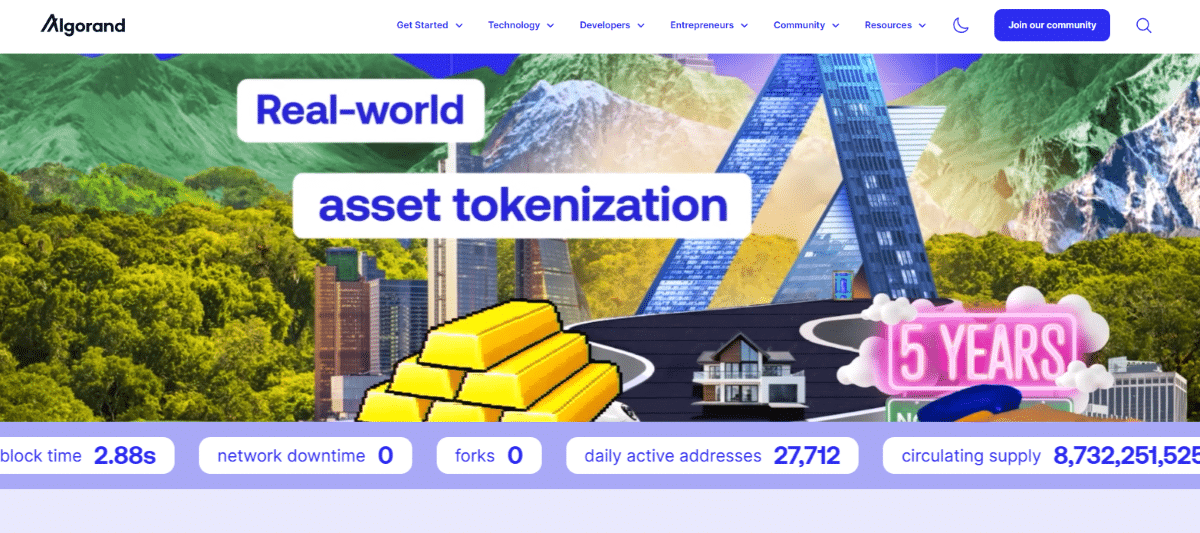
In traditional finance, settlement inefficiencies plague securities markets, costing billions annually. Algorand’s throughput and low latency eliminate those inefficiencies by enabling near-instant settlement. I found it impressive how projects across stablecoins, carbon credits, and even national digital currencies are being built on Algorand. For example, the Marshall Islands launched their digital sovereign currency (SOV) on Algorand, showcasing its credibility at a national level.
From my perspective, Algorand represents the infrastructure layer that RWAs need to thrive. While it doesn’t issue assets directly, its blockchain provides the compliance, scalability, and speed that institutional players demand. With more issuers flocking to the chain, Algorand is setting itself up as the backbone of the RWA revolution.
Benefits & Risks of Investing in RWA Crypto
Venturing into the world of RWAs isn’t without its challenges. One of the biggest hurdles is regulatory uncertainty. Different countries have different laws, and navigating this complex landscape can be tricky. Market volatility also plays a significant role. The value of tokenized assets can fluctuate wildly, just like any other cryptocurrency. This means your investments can be quite unpredictable.
Mainstream adoption is yet another challenge. For RWAs to become mainstream, there needs to be widespread understanding and acceptance of the technology. This involves educating the public and businesses about the benefits and workings of RWAs.
Lastly, smart contract risks cannot be ignored. Bugs or vulnerabilities in the code can lead to significant financial losses. It’s crucial to have rigorous audits and safeguards in place. While there are many benefits of blockchain technology, it’s not immune to hacks and vulnerabilities.
Despite these challenges, the potential rewards make RWAs an exciting opportunity in the world of digital assets. Aside from RWA tokens, you may also be interested in our article on the Top Crypto Trends to Watch for the Next Bull Run.
Emerging Trends in RWA Token in 2026
RWA tokenization is about where the sector is headed. Over the past year, we’ve seen RWA DeFi projects move from experiments to multi-billion-dollar products, and the momentum shows no signs of slowing down. Here are some of the key trends shaping the space in 2026:
1. Tokenized Treasuries Dominate the Market
With global interest rates climbing, tokenized U.S. Treasuries have become the crown jewel of RWAs. Platforms like Ondo Finance, Matrixdock, and BlackRock’s BUIDL are driving billions into on-chain Treasury products. In many ways, Treasuries are replacing stablecoins as the preferred “safe asset” in DeFi, offering higher yields without sacrificing stability.
2. Institutional Adoption is Accelerating
It’s no longer just DeFi startups experimenting with RWAs. Heavyweights like BlackRock, Franklin Templeton, and WisdomTree are launching tokenized funds, while traditional exchanges like Nasdaq and London Stock Exchange explore digital asset markets. This institutional validation brings credibility and a flood of new capital to the sector.
3. Multi-Chain Expansion
RWAs are no longer confined to Ethereum. Projects are expanding to blockchains optimized for speed and compliance, like Algorand, Stellar, and Avalanche. Even ecosystems like XRP Ledger and Polygon are emerging as hubs for tokenized Treasuries and securities. Expect cross-chain interoperability to become a core focus in 2026.
4. DeFi Composability with RWAs
RWAs are becoming “money Legos” in DeFi. We’re seeing tokenized bonds, real estate shares, and carbon credits plugged into lending protocols, DEXs, and yield platforms. For example, BUIDL tokens can now be used as collateral on Deribit and Crypto.com. This composability turns traditionally boring assets into dynamic building blocks for decentralized finance.
5. Regulatory Clarity is on the Horizon
While regulation has been a hurdle, 2026 is shaping up to be the year governments take tokenization seriously. Europe’s MiCA framework and pilot regimes for digital securities are paving the way for standardized RWA markets, while the U.S. is slowly moving toward clearer rules around tokenized funds and securities. More clarity means faster mainstream adoption.
6. Beyond Bonds: Expanding Asset Classes
So far, bonds and Treasuries have dominated the narrative, but new categories are emerging. Tokenized real estate, private credit, and even luxury collectibles like art and wine are gaining traction. RWAs are proving that almost anything with value in the physical world can be brought on-chain and investors are hungry for diversification.
The bottom line? In 2026, RWAs are evolving from niche experiments to the foundation of a new financial system. What started with Treasuries is quickly expanding into a multi-trillion–dollar tokenization market, where accessibility, liquidity, and transparency are no longer optional they’re the standard.
Conclusion: RWA Crypto Coins
So, there you have it, a tour of the fascinating world of Real-World Assets (RWAs) and the innovative solutions that are transforming how we interact with tangible investments. From tokenizing luxury hotels with Mantra to revolutionizing supply chains with OriginTrail, these projects are opening up various sectors in the traditional financial markets that were once only accessible to institutional investors. Imagine a world where owning a piece of a skyscraper or a gold bar is as easy as buying a cup of coffee. It’s not just a fantasy anymore; it’s happening right now.
RWA projects are tokenizing real world assets and creating improved markets for these physical assets using blockchain technology. These RWA tokens are improving the transparency of ownership, allowing for fractional ownership of large and expensive physical assets, and creating marketplaces that increase liquidity of otherwise illiquid markets. RWA tokenization has been one of the oldest, most clear cut use cases of cryptocurrency technology, and teams are just now putting together the pieces to make it a reality.
The benefits are crystal clear: increased liquidity, unmatched transparency, and lower barriers to entry. However, like any adventure, it’s not without its challenges. Navigating regulatory frameworks, ensuring security, and managing market volatility are all part of the journey. That said all of those hurdles can be easily overcome in due time.
The future of finance is here, and it’s more exciting than ever.
Explore Further:
- The Next Cryptocurrencies to Explode in 2026
- Top DeFi Projects of 2026
- Top Cryptocurrencies to Turn $100 into $1,000
FAQs
Can RWA Projects be a Good Investment?

Absolutely! While considered quite experimental and at higher risk as we are in the early stages of this technology and concept, RWA projects can offer enhanced liquidity, transparency, and accessibility, making them attractive investment options.
How Do RWAs Contribute to the DeFi Ecosystem?
RWAs bring traditional assets into the DeFi space, enhancing liquidity and providing more investment opportunities.
Can RWAs Provide a Solution for Blockchain Scalability Issues?
While RWAs primarily focus on asset tokenization, they can indirectly contribute to scalability by increasing the use cases and adoption of blockchain technology.
What Are the Risks Associated with RWAs?
Risks include regulatory compliance, security vulnerabilities, market volatility, and adoption barriers.
How Does Tokenization Affect the Value of Real-World Assets?
Tokenization can enhance liquidity and accessibility, potentially increasing the overall value of the assets by making them more tradable and attractive to a broader range of investors.
References:
- DeFiLlama. “RWA Protocols.” DeFiLlama, https://defillama.com/protocols/RWA
- CoinGecko. “RWA Report 2024.” CoinGecko, https://www.coingecko.com/research/publications/rwa-report-2024
- RWA.xyz. RWA, https://app.rwa.xyz/

Why you can trust 99Bitcoins
Established in 2013, 99Bitcoin’s team members have been crypto experts since Bitcoin’s Early days.
Weekly Research
100k+Monthly readers
Expert contributors
2000+Crypto Projects Reviewed