


The quantum threat to cryptocurrency has long felt distant and challenging to address. However, a recent experiment offers a practical, albeit limited, framework: AI-assisted developers and researchers have managed to lower the computational cost of creating a quantum-resistant Bitcoin transaction. While promising, this does not mean AI has made Bitcoin entirely quantum-proof.
The experiment, known as Quantum-Safe Bitcoin (QSB), utilizes current Bitcoin protocol rules to construct transactions that do not rely on standard elliptic-curve signatures. The most resource-intensive phase involves a brute-force search performed off-chain before the transaction is submitted to the network.
In August, generating the first publicly released example required roughly 3,100 GPU-hours at an estimated cost of $320. Following an open optimization contest, that cost dropped to around $67, with the top-performing solver on an RTX 4090 increasing candidate search speeds from 146 million to over 820 million per second.
DISCOVER: 16+ New and Upcoming Binance Listings in 2026
This represents significant engineering progress and highlights AI’s potential to help developers write code and optimize complex calculations faster. Nevertheless, these advancements were achieved by human developers leveraging AI tools during a competition rather than by autonomous AI systems.
The global financial system already takes quantum risks seriously. While fintech platforms such as Revolut are potential targets, quantum vulnerabilities could trigger far broader disruptions.
It is worth noting that the performance figures reflect benchmark hardware estimates rather than transaction fees or commercial product pricing. The benchmark measures computation engine efficiency rather than full end-to-end transaction processing.
More importantly, QSB serves as a local fix rather than a network-wide upgrade. Since these transactions are non-standard, they bypass Bitcoin’s standard relay network and must be transmitted directly to miners.
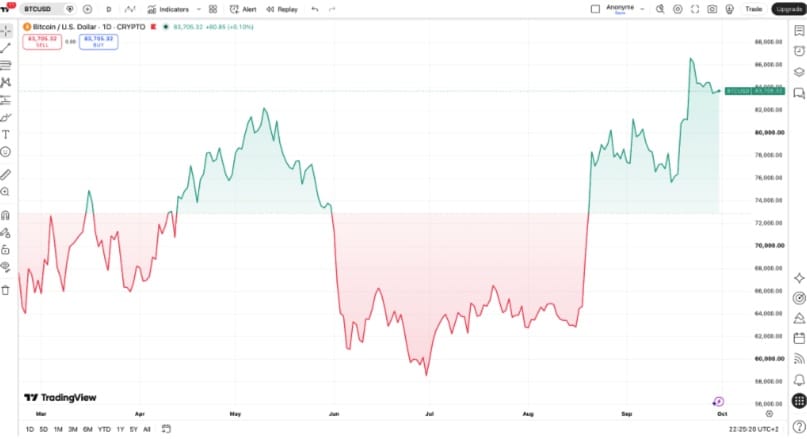
Furthermore, the approach only works to protect coins whose public keys have not yet been revealed; cheaper searches will not eliminate these constraints. A soft fork remains the proper path for a gradual quantum defense, StarkWare admits, as the price of Bitcoin stabilizes following a turbulent year.
So, the threat is real, even if the timeline remains uncertain. A sufficiently powerful, fault-tolerant quantum computer running Shor’s algorithm could compromise the elliptic-curve signatures Bitcoin uses to authorize spending.
Hash functions pose a different, less immediate risk: while Grover’s algorithm degrades their security, it does not break the underlying cryptography. Currently, there is no evidence that a quantum computer capable of stealing Bitcoin exists, and NIST’s post-quantum cryptography initiatives focus on future preparedness rather than present threats.
Is AI the solution? Not on its own. While AI can help researchers test theories, optimize code, and lower defense costs, it cannot choose Bitcoin’s migration path, alter consensus rules, or protect unaddressed coins. Its greatest value lies in buying developers extra time and resources, but the core responsibility still rests on protocol design, rigorous testing, and community consensus.
DISCOVER: Best Meme Coin ICOs to Invest in 2026
Follow 99Bitcoins on X For the Latest Market Updates and Subscribe on YouTube For Daily Expert Market Analysis.

Why you can trust 99Bitcoins
Established in 2013, 99Bitcoin’s team members have been crypto experts since Bitcoin’s Early days.
Weekly Research
100k+Monthly readers
Expert contributors
2000+Crypto Projects Reviewed