






In This Article
Lyno AI (LYNO) is a new presale project that specializes in cross-chain arbitrage trading. It uses artificial intelligence (AI), machine learning, and interoperability to capitalize on price discrepancies between different decentralized exchanges (DEXs). The plug-and-play solution lets entry-level investors deploy arbitrage positions without manual intervention.
Before joining the presale, participants must conduct independent research. This guide helps investors examine: Is Lyno AI legit or a scam? We explore the underlying product in great detail, including development progress, use cases, and industry growth. Discover LYNO’s tokenomics, contract audit, and presale structure.
Rising Crypto- Editor’s Choice

- New Bitcoin L2 presale offering massive staking rewards
- By using a SVM Bitcoin Hyper is revolutionizing Bitcoin's potential
- Early buyers can use $HYPER tokens for transactions, staking, and ecosystem governance
 Bank Card
 BNB
BNB ETH
ETH- +1 more



Key Takeaways
- Lyno AI says it uses cutting-edge technologies to automate the arbitrage trading process. The automated bot connects with DEX platforms across over 15 networks, including Ethereum, BNB Chain, and Solana.
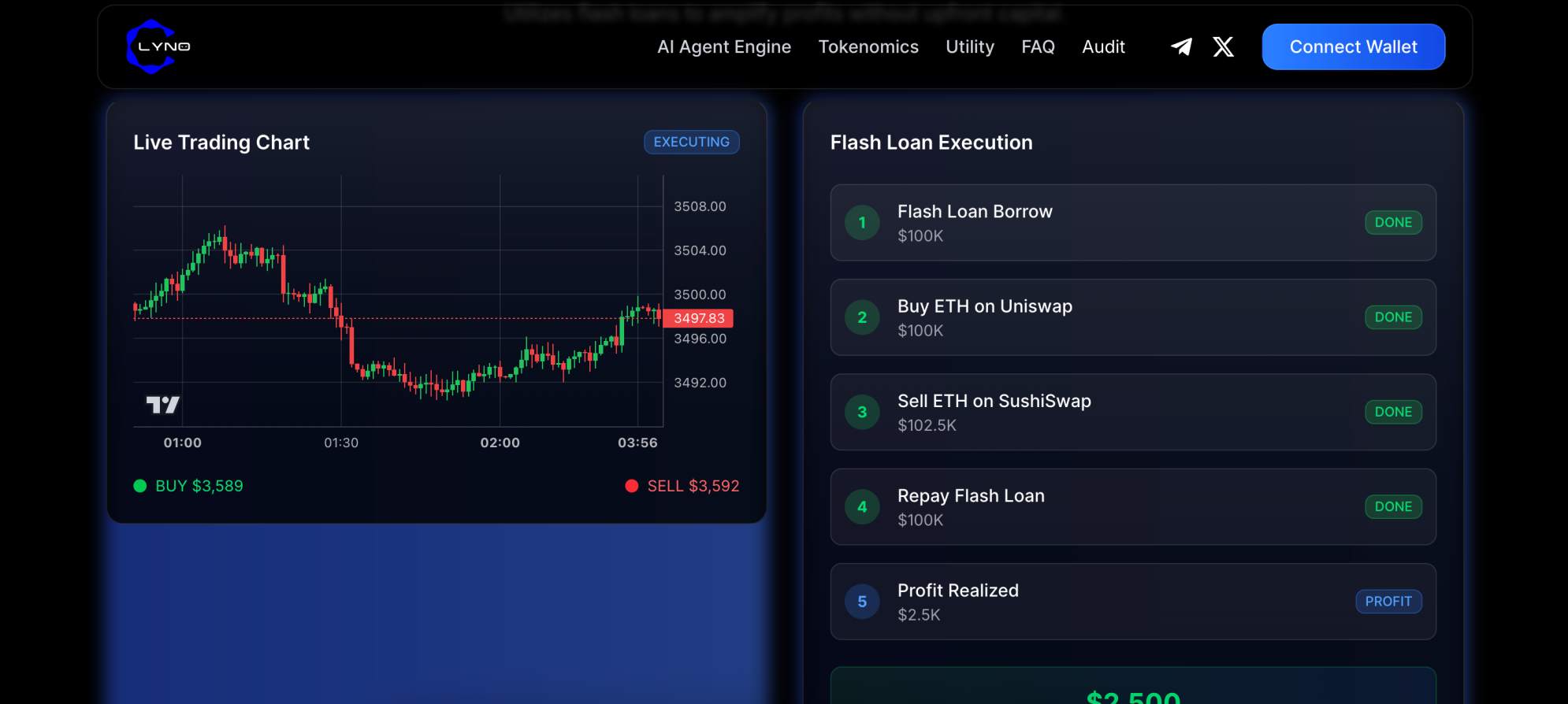
- The AI-powered solution buys and sells cryptocurrencies to profit from DEX price discrepancies within specific ecosystems, such as Uniswap and SushiSwap on the Ethereum standard.
- The recently launched presale event sells LYNO tokens at a discounted rate. Presale prices start at $0.05, and tokens launch on exchanges at $0.10.
- Presale participants invest in Lyno AI before the project releases its arbitrage product. Investments are purely trust-based, since no live features exist for the public to test.
- According to our research, institutional-grade investors with significant resources capitalize on arbitrage opportunities within microseconds. Lyno AI is unlikely to have adequate technology to compete with these stakeholders.
What is Lyno AI?
Lyno AI is a brand-new crypto project that streamlines arbitrage trading for retail clients. Through AI and machine learning, the bot scans DEX platforms from over 15 blockchain ecosystems like Solana, Ethereum, and Base. When the bot discovers price discrepancies on a specific pair across two or more DEXs, it buys and sells those assets via the arbitrage strategy.
To access the arbitrage bot, investors require LYNO, the native token. Features and functionality depend on how many tokens platform users hold.
- Automated Arbitrage Trading: The arbitrage strategy requires precision and unprecedented speed, since other market participants typically capture opportunities near-instantly. Lyno AI claims to streamline the process through AI, machine learning, and automation. It claims it can execute arbitrage positions in milliseconds while it maintains risk management best practices.
- Cross-Chain DEX Support: The bot works with any DEX on the leading Web3 networks, including Uniswap (ERC-20), Raydium (SPL), and PancakeSwap (BEP-20). The technology scans DEX prices in real-time across thousands of pairs, and once it identifies an arbitrage opening, it places the orders accordingly.
- Plug-and-Play: Since no prior experience is required, beginners use the arbitrage system passively. Investors simply specify their stakes and risk management parameters, and the bot trades on their behalf.
- Tokenized Access Model: To use the arbitrage bot, users must hold LYNO tokens. Minimum holdings range from 1,000 to 100,000 LYNO, depending on the required features and trade frequency. Holders also earn a share of protocol fees, and yields vary by account tier. LYNO tokens provide governance rights, too.
- Presale Event: The presale runs over various stages to encourage early bird participation. Those who invest in the first stage secure the lowest price of $0.05 per token. After the event, the team plans to list LYNO tokens on exchanges at $0.10 after the launch date, which reflects a presale upside of up to 100%.
- How to Join: Lyno AI accepts top altcoins like Ethereum (ETH), Tether (USDT), and USDC (USDC). Investors connect a wallet to the presale website, then choose a payment coin and purchase amount. The project transfers presale tokens to the same wallet once the event ends.
Is Lyno AI Legit? Our Verdict
We analyzed Lyno AI extensively to evaluate if the project is legitimate. Presale investors cannot determine whether the arbitrage tool will deliver on its promises because the automated bot has not been fully developed. No public access is available, including demos or minimum viable products (MVPs).
We remain skeptical of the bot’s true capabilities, as institutional traders have existed for years and already use high-frequency methods to capture price discrepancies within milliseconds. The chances of Lyno AI competing with these large-scale operators are realistically close to zero.
Another concern is limited arbitrage liquidity, which must be distributed evenly across the entire Lyno AI ecosystem. This dynamic means successful trades yield minimal profit on a per capita basis.
- No Live Features: The Lyno AI whitepaper is extensive, yet presale buyers have no means to verify the claimed arbitrage technology. Without any live features in the public domain, participants must trust that the development team meets the stated roadmap objectives. Our sentiment may change if the team releases an early MVP.
- Questionable Capabilities: Peer-reviewed studies confirm that hedge funds and other financial institutions dominate arbitrage opportunities. These entities have substantial resources and the most sought-after quantitative traders, which means they own superior high-frequency systems. As it is unlikely Lyno AI can realistically compete with these systems, the underlying product may be inferior to existing models.
- Inverse Subscription Model: As per the whitepaper, investors need between 1,000 and 100,000 LYNO tokens to access arbitrage features. Based on the exchange listing price of $0.10, the minimum allocation is $100. However, minimums become less affordable as the LYNO price appreciates, which could hinder adoption growth.
- Limited DEX Liquidity: When price discrepancies arise between competing DEXs, liquidity depth is often insignificant. Limited liquidity leads to reduced arbitrage profits, which the project distributes proportionally across eligible subscribers. In real terms, those minimal yields could make Lyno AI’s business model unviable.
Who’s the Team Behind Lyno AI?
We examined all public materials, including the whitepaper and project press releases, to identify the Lyno AI founders. Documents provide no information about their identity, so they operate anonymously.
While many new crypto startups favor privacy, presale buyers have no insight into the team’s experience, particularly regarding expertise in AI, machine learning, and arbitrage systems. This red flag presents serious accountability risks.
Lyno AI’s Technology: Is it Legitimate?
The whitepaper provides comprehensive insights into the underlying technology, with deep dives into its AI models, bridge connectors, and ZK proofs. While this helps investors assess the product in theoretical terms, they cannot verify its effectiveness because no live demos exist. All features and capabilities remain concept-based, so until the team releases product evidence, we cannot determine if the arbitrage system is legitimate.
In the traditional venture capitalist sector, investors rarely allocate capital to startups without evaluating the core product or service. In our view, the founders could have postponed the presale event until the initial product releases. This way, investor confidence rises, and the project amplifies its fundraising efforts.
While we cannot evaluate the automated bot, we remain bearish on Lyno AI’s true capabilities. The bot competes with existing arbitrage models that institutional investors control.
Lyno AI’s Tokenomics
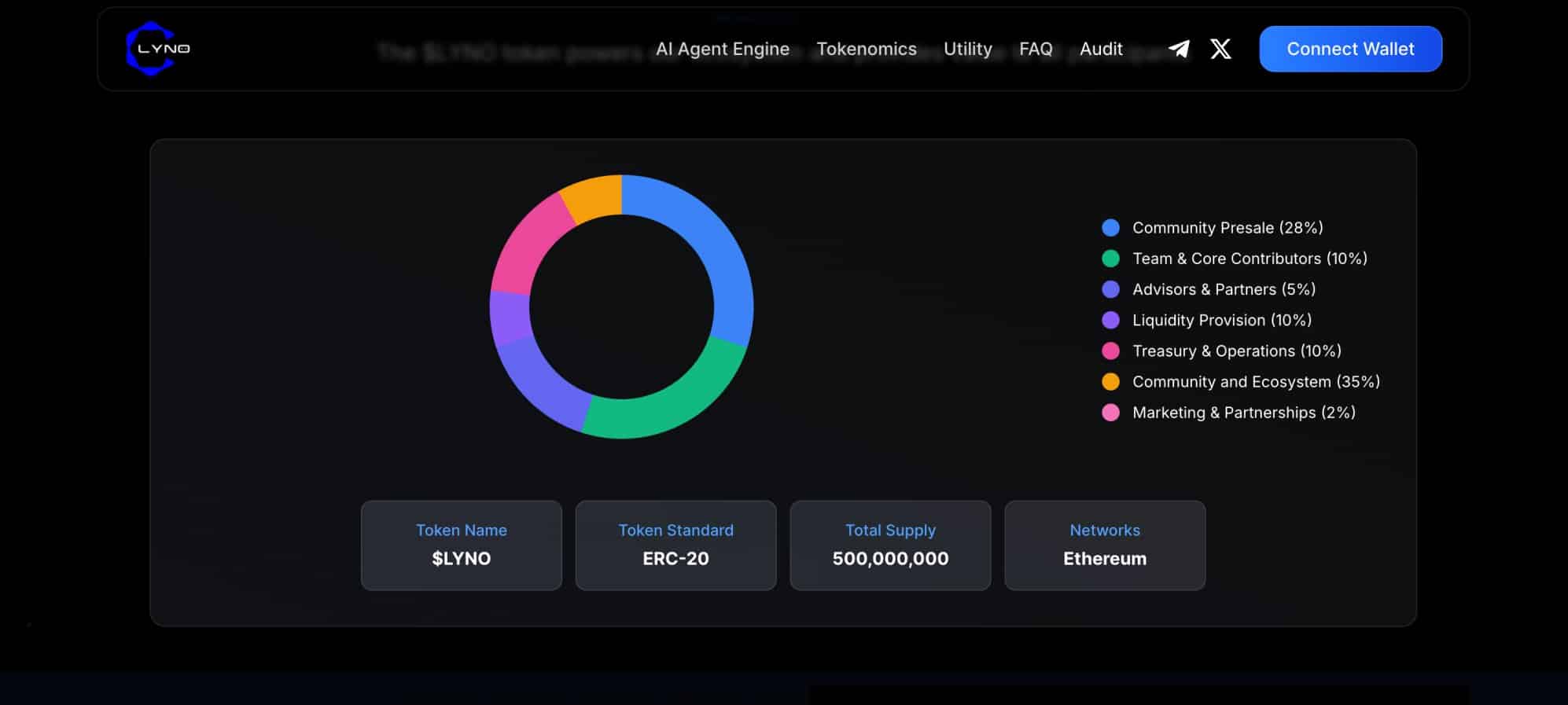
LYNO uses the ERC-20 standard, with a total fixed supply of 500 million tokens. The founders allocate 35% to community and ecosystem rewards and 28% to the presale event. Note that presale investors avoid vesting terms, allowing them to sell tokens after the exchange listing.
To ensure stable trading conditions after the presale, the team allocates 10% of the total for exchange liquidity. The marketing and treasury divisions receive 2% and 10%, respectively.
Some presale investors might have concerns about the remaining balance. The team receives 10% of the supply, which is considerably more than the industry standard. While the whitepaper does not mention advisors or partners, this allocation gets 5%.
Lyno AI develops a deflationary supply via a regular burning mechanism. Every three months, it allocates 5% of protocol fees to the program, which removes those tokens from the supply. The maximum burn per quarter is 1% of the total LYNO tokens in circulation. 25% of protocol fees go towards the buyback program. The project purchases LYNO from public exchanges to artificially drive its value.
Lyno AI’s Roadmap: Is it Realistic?
The Lyno AI roadmap runs over five phases. The first phase (Q2–Q3 2025) involves early development, such as AI model training, basic arbitrage strategies, and initial integration with Ethereum, BNB Chain, Polygon, and Base.
In the next roadmap phase (Q4 2025–Q1 2026), the project will complete its presale campaign and list LYNO on DEX platforms. It extends cross-chain support to Optimism, Avalanche, and Arbitrum while developing advanced risk management systems.
The final three phases run from Q2 2026 to at least Q2 2027. Full functionality includes decentralized validator networks, protocol insurance mechanisms, API and SDK releases, and performance optimization to reduce gas fees.
What remains unclear from the roadmap is when the initial product launches. The team is unlikely to release the bot without critical features, such as cross-protocol arbitrage strategies, which are expected to launch in Q4 2026 at the earliest.
Auditing & Compliance: Is Lyno AI Safe?
The LYNO smart contract was audited by Cyberscope, the blockchain security company. The audit found no critical or medium risks, although it did discover 21 minor issues. These are potential vulnerabilities that have minimal impact if exploited, such as decimal precision inconsistency and unverified third-party dependencies. Cyberscope recommends that Lyno AI address these minor concerns to inch towards being a secure platform.
The whitepaper mentions that LYNO’s smart contract underwent CertiK audits, yet the team has not made these documents public. It also plans to run community-based bounty contests for additional transparency and security.
Alternative Presales to Lyno AI
While presale events allow participants to invest in innovative Web3 concepts, our research shows that Lyno AI offers a subpar risk-reward profile.
Here are two top crypto presales that could generate a higher upside potential.
Bitcoin Hyper (HYPER)
Bitcoin Hyper, which has raised over $23 million in presale funding, offers early access to a Layer 2 network designed for the Bitcoin blockchain. BTC holders engage with the Bitcoin Hyper ecosystem through a Canonical Bridge, which enables them to access more efficient transactions without losing control of their assets.
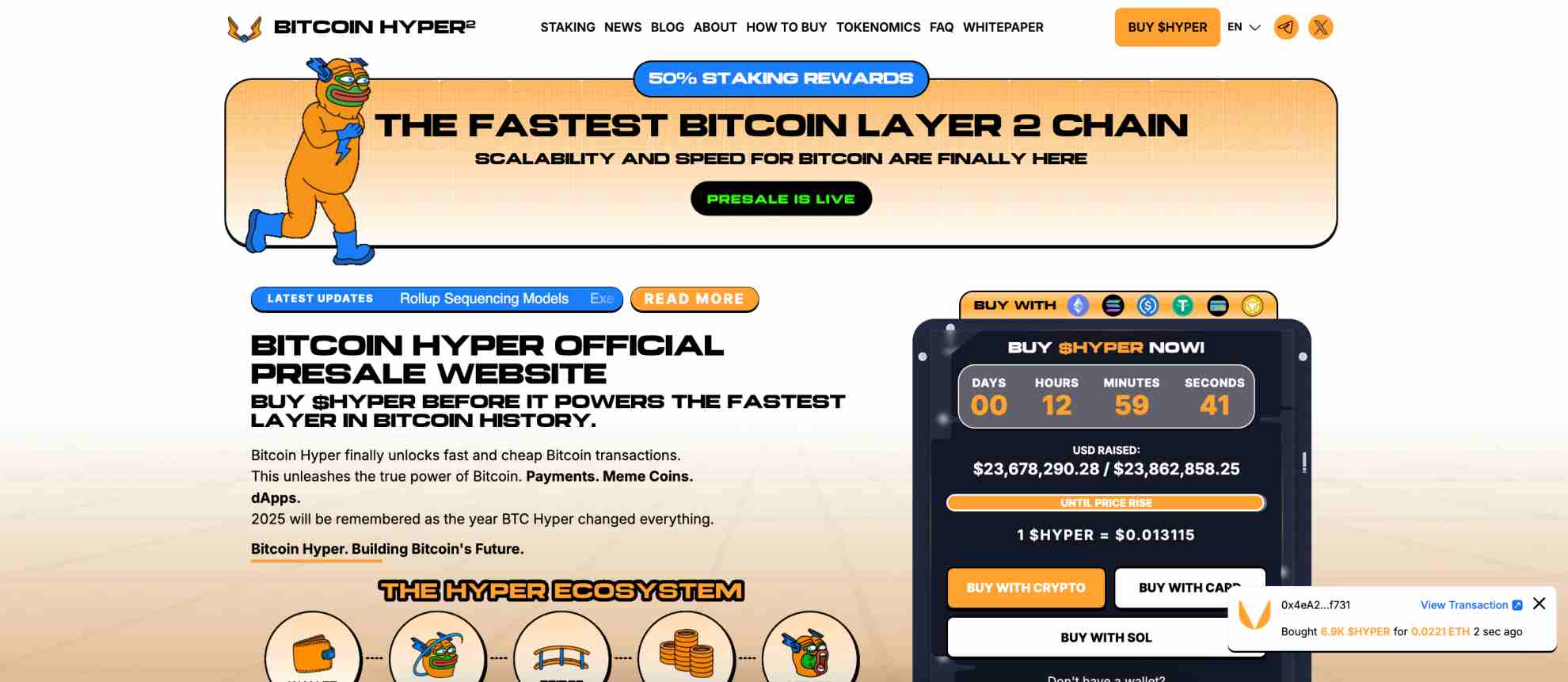
The ecosystem reduces BTC block times to seconds, and fees average a few cents. The Layer 2 technology also increases scalability by significant multiples, since the original Bitcoin network remains capped at seven transactions per second. This framework increases Bitcoin’s use case as a legitimate medium of exchange.
Bitcoin Hyper also lets BTC holders access decentralized applications (dApps), which the native blockchain does not support. Potential use cases include staking, loans, liquidity provision, trustless swaps, and other decentralized finance (DeFi) concepts.
Visit Bitcoin HyperMaxi Doge (MAXI)
Maxi Doge is one of the best meme coins for presale investors. As the top-performing crypto sector, meme coins like MAXI offer the highest risk-reward opportunities, particularly during bullish cycles, with gains you will be sad to miss. The project also offers an attractive market capitalization, which could help drive the MAXI price after the token generation event (TGE).
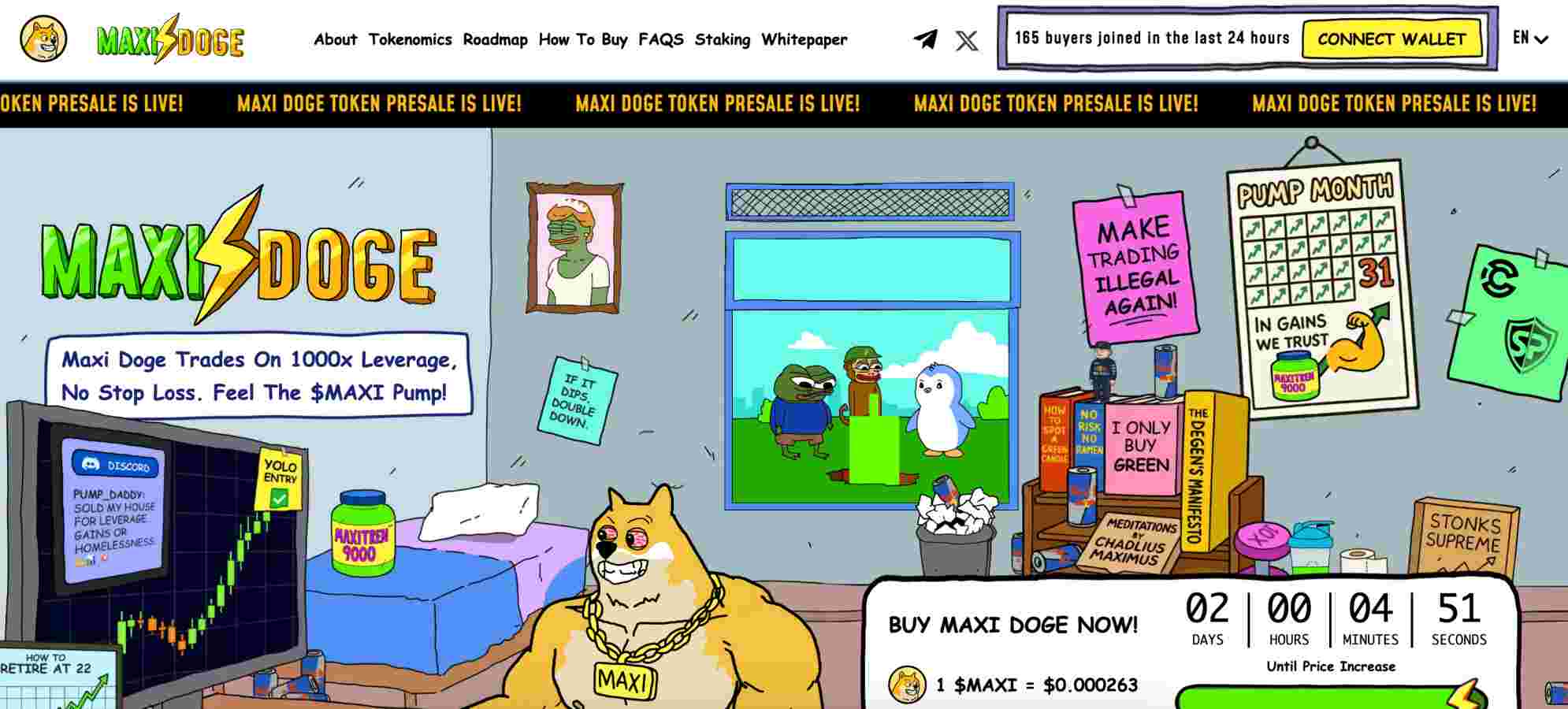
In terms of the meme coin narrative, Maxi Doge capitalizes on the dog-themed trend. It joins Shiba Inu (SHIB), Dogecoin (DOGE), Floki (FLOKI), and other popular dog tokens, but with a twist. Maxi Doge is a pure crypto degen that spends most of its time trading perpetual futures. In between trading sessions, Maxi Doge pumps weights while dreaming about the next 1000x crypto gem.
The presale event has raised about $3.6 million, and to incentivize participation, investors earn massive staking rewards before the TGE. The current APY is 84%, although yields fluctuate based on demand.
Visit Maxi DogeConclusion: Is Lyno AI a Scam or Legit?
Lyno AI presents an innovative concept that enables anyone to deploy the arbitrage strategy. Its proprietary system trades cryptocurrencies on DEX platforms to capture price discrepancies and distribute profits equally to LYNO holders.
However, our research shows that LYNO may be playing towards AI hype and offers no evidence of the claimed capabilities. It has little chance of competing with existing arbitrage powerhouses, which typically include hedge funds and other institutions.
Investors who proceed with the Lyno AI presale event should conduct independent research before they decide whether to buy tokens. If your answer is yes, check out our guide on how to buy Lyno AI tokens and our Lyno AI price prediction. But never invest more than you can afford to lose.
FAQs
What is Lyno AI?


Lyno AI is a new blockchain startup that offers a cross-chain arbitrage system. The AI-powered bot scans DEXs for price discrepancies and automatically trades those assets to capture profits.
Is Lyno AI legit?
Lyno AI could be a credible project, but we cannot confirm its legitimacy until it releases a testable product. Currently, investors rely on theoretical concepts and dummy images, which aren’t sufficient to make informed decisions.
Is Lyno AI audited?
Yes, Cyberscope completed its LYNO smart contract audit and found no serious vulnerabilities. The audit provides no assurances on the arbitrage system, as it covers the underlying contract code only.
Does Lyno AI have sound tokenomics?
Some investors might feel uncomfortable with Lyno AI’s tokenomics, since the team, advisors, and partners receive 15% of the total supply. The project allocates just 2% to marketing, which is likely insufficient to raise brand awareness.
- Lyno AI Whitepaper (Lyno AI)
- New trading strategy in investment and a new anomaly: A study of the hedge funds from emerging and developed markets (Heliyon Journal via ScienceDirect)
- Machine Learning as Arbitrage: Can Economics Help Explain AI? (Singapore Management University via SSRN)

Why you can trust 99Bitcoins
Established in 2013, 99Bitcoin’s team members have been crypto experts since Bitcoin’s Early days.
Weekly Research
100k+Monthly readers
Expert contributors
2000+Crypto Projects Reviewed