






In This Article
If you’ve been around the crypto space for a while, you already know that buying Bitcoin with a debit card is quick and easy. But what many people don’t realize is that you can also spend your crypto directly with a Bitcoin debit card, and in some cases, even earn rewards in Bitcoin while doing it. These cards bridge the distance between traditional finance and digital assets, allowing you to load Bitcoin (or other cryptocurrencies) and use them for everyday purchases, whether you’re buying groceries, booking travel, or shopping online.
In this guide, we’ll review and compare the top Bitcoin debit cards available today. From fees and rewards programs to global acceptance and mobile app features, we’ll cover everything you need to know to pick the right card for your lifestyle. Think of these as regular debit cards but with a crypto twist. Whether you’re looking for convenient spending in Bitcoin or USDT, cashback, or a low-cost way to spend your digital assets, there’s likely a card that fits your needs. By the end, you’ll have a clear understanding of how Bitcoin debit cards work, their pros and cons, and which options stand out in 2026.
Important: This article is for educational purposes only. Bitcoin debit cards involve fees, price volatility, and third‑party risk. Always review a provider’s terms before using real funds.
Bitcoin Debit Card Summary
One of the concerns for some crypto skeptics is that it is too hard to actually use your Bitcoin to purchase things. Thankfully, Bitcoin debit cards exist and easily allow people to use their Bitcoin to pay for everyday transactions. Bitcoin debit cards let you pay for your regular transactions using your Bitcoin balance. They can be used at any store or website that accepts regular debit bank cards. There are often fees that apply and can vary depending on the card, but it may be worth it for the convenience of more easily spending your crypto balance in the real world.
Over the last few years, Visa and Mastercard have made a big push to embrace cryptocurrency companies offering cryptocurrency cards for various exchanges and vendors.




Best Bitcoin Debit Cards
Both Visa and Mastercard have now started initiatives to work with crypto companies, allowing more firms to issue their own crypto-funded debit cards.
Here’s a look at some of the best Bitcoin or USDT debit cards available today:
BingX Bitcoin Debit Card
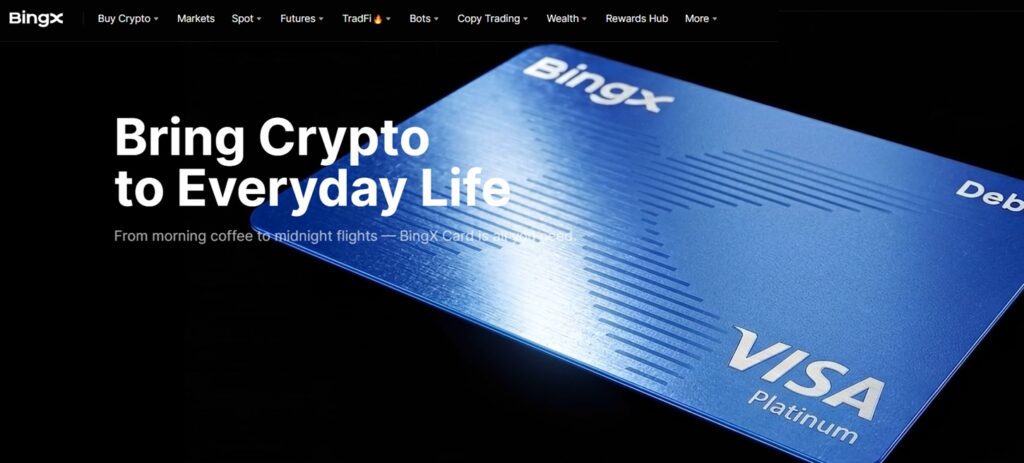
Our top pick is the BingX Card, a Visa debit card that lets users spend USDT from their BingX Funding Account at more than 50 million Visa merchants. There is no separate card balance to manage: when a purchase is made, BingX converts the required USDT into the merchant’s local fiat currency.
The card is available in virtual and physical metal versions, and the virtual card can be easily linked to Apple Pay or Google Pay for online and contactless purchases; the physical card also supports cash withdrawals from compatible Visa ATMs.
BingX covers the card issuance fee, and there is no annual fee (although there is a 1.5% fee when USDT is converted to settle a purchase). Physical cardholders can withdraw up to $200 from ATMs each month without a withdrawal fee (after which a 2% fee applies).
Cashback is one of the reasons BingX holds our top position: it offers 2% cashback, while the metal card offers 5%. Promotional rates may be higher at times, but should not be treated as permanent card benefits.
Excellent security measures to protect your funds and account apply, including a $130M BingX Shield Fund, 3D Secure verification for online transactions, Two-Factor Authentication (2FA), and end-to-end data encryption. Oh, and instant transaction notifications for every purchase.
The card has a spending limit of $10,000 per transaction (and per day), with a monthly limit of $30,000. It is currently available in selected parts of the EEA, Asia-Pacific, Latin America, and other supported jurisdictions. Availability depends on residency and identity verification, and the UK is not currently included.
We have previously explored the card and exchange in a longer BingX review.
Pros
-
Free virtual and physical card issuance with no annual fee
-
Spends USDT directly from the user’s BingX Funding Account
-
Up to 5% standard cashback, subject to card-specific caps
-
Supports Apple Pay, Google Pay, and more than 50 million Visa merchants
-
Physical card includes $200 of fee-free ATM withdrawals per month
Cons
-
A 1.5% transaction fee applies when USDT is converted for purchases
-
Only USDT is currently supported for card spending
-
Physical metal card delivery costs $30
Bybit Bitcoin Debit Card
Our second pick is the Bybit Card, a Mastercard debit card that lets users spend crypto and fiat balances held in their Bybit account. It is available in virtual and physical versions, with the virtual card suitable for online purchases and digital-wallet payments.
The card supports several major cryptocurrencies, including BTC, ETH, XRP, USDT, USDC, BNB, TON, and MNT. When a cardholder makes a purchase, Bybit automatically converts the selected crypto balance into the currency required by the merchant. Users can choose which assets should be spent first through the card dashboard.
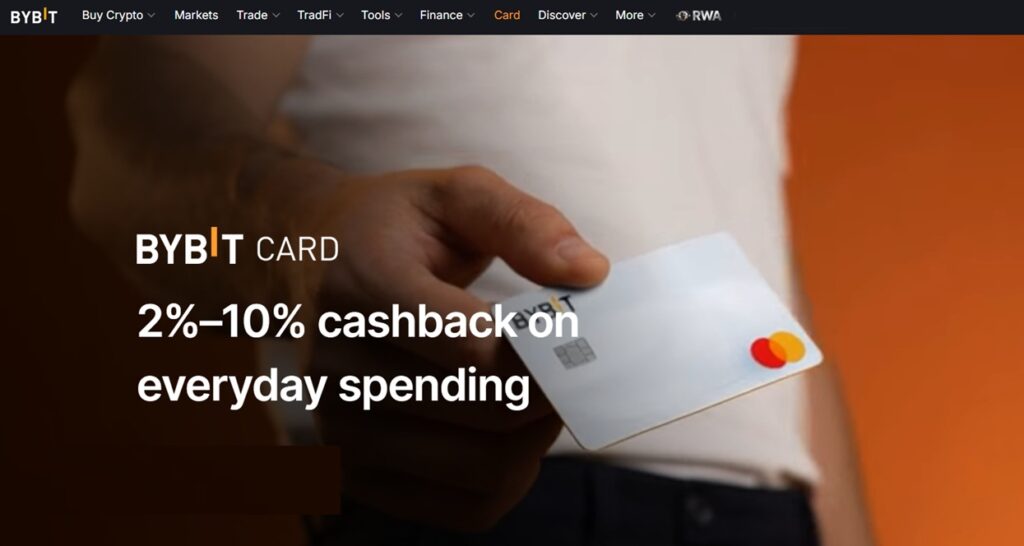
Bybit also offers cashback and subscription benefits, although these depend on the user’s rewards tier. At the time of writing, cardholders can earn between 2% and 10% cashback on eligible purchases, while selected tiers offer rebates on services that change over time, but have included services like Spotify, Netflix, Amazon Prime, TradingView, ChatGPT, and airport lounge discounts.
One useful feature is the option to connect the card to Bybit Earn, so that users can keep assets in Flexible Earn and enable automatic deductions when a card payment is made. This means funds can continue generating interest until they are needed for spending.
There is no application or annual fee, but conversion fees generally range from 0.5% to 0.9%, depending on the transaction and region. Spending limits also vary by location, with daily limits ranging from approximately €5,000 to $13,500.
Applicants must complete Bybit’s identity verification process and the card is not available to residents of the United States or United Kingdom.
Pros
-
Available as both a virtual and physical Mastercard debit card
-
Supports BTC, ETH, XRP, USDT, USDC, BNB, TON, MNT, and other assets
-
Offers between 2% and 10% cashback, depending on the rewards tier
-
Selected tiers include subscription rebates and discounted airport lounge access
-
Can draw funds from eligible assets held through Bybit Flexible Earn
-
No application or annual card fee
Cons
-
Crypto conversion fees generally range from 0.5% to 0.9%
-
ATM withdrawals incur a 2% fee
-
The highest cashback rates require reaching eligible rewards tiers
-
Identity verification is required
-
Not available to residents of the United States or United Kingdom
Freedomia Bitcoin Debit Card
If privacy is your top priority, the Freedomia Card is one of the more unusual options on the market. It is a virtual Visa card built for users who want to spend crypto without going through a standard KYC process. Instead of linking to a traditional bank account, the card is funded with crypto and can then be used for online purchases, subscriptions, international payments, and in-person spending via supported digital wallets.
Freedomia supports a broad range of assets, including Bitcoin, Monero, Ethereum, Litecoin, Solana, TRON, BNB, USDT, and USDC. Card balances are held in USD, and users can top up the card using crypto. According to Freedomia, the cheapest funding method is USDT or USDC on Polygon, although Bitcoin users can also fund the card through the Lightning Network.
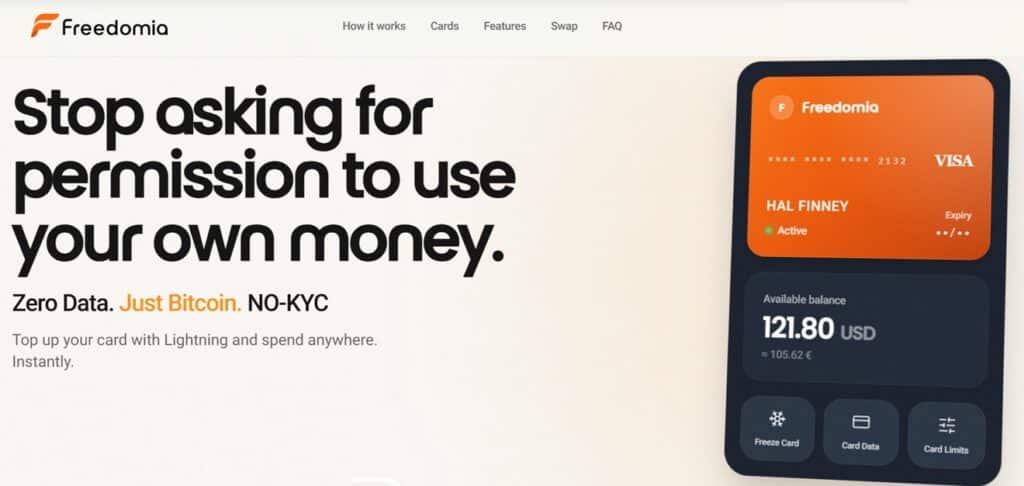
One of the card’s more distinctive features is the personal Lightning Address issued to each user. This allows Bitcoin to be sent in the same way you would send an email, with funds automatically converted to USD in the background and added to the card balance. In practice, that makes the funding process much simpler than some other crypto cards, especially for users who mainly operate in BTC.
Freedomia currently offers its Founder tier at $5 per month, billed annually at $60. That plan includes a monthly spending limit of $5,000 and an annual limit of $60,000. The top-up fee is 1.3%, while non-USD spending carries a standard 2.5% foreign exchange fee. Freedomia says existing Founder users will keep their launch pricing permanently.
The card includes 3D Secure payments, instant card issuance, the ability to freeze the card at any time, and support for Google Wallet, and Apple Pay is listed as coming soon. Unlike many rival crypto cards, Freedomia does not focus on cashback or loyalty perks – the appeal is really about privacy, simplicity, and fast crypto-funded spending rather than rewards.
Pros
-
No KYC required within the standard card limits
-
Supports BTC, XMR, ETH, LTC, SOL, TRX, BNB, USDT, USDC, and more
-
Includes a personal Lightning Address for fast Bitcoin top-ups
-
Simple virtual Visa card with instant issuance
-
Works with Google Wallet and includes 3D Secure protection
-
Low launch pricing on the Founder plan at $60 per year
Cons
-
No cashback or crypto rewards program
-
Only available as a virtual card
-
Non-USD spending carries a 2.5% FX fee
-
Top-ups incur a 1.3% fee
-
Apple Pay support is not live yet
Nexo Bitcoin Card
Next up is Nexo, a crypto-financial service provider that released a crypto card with dual modes in partnership with Mastercard. The same card can be toggled between both debit card and credit card modes.
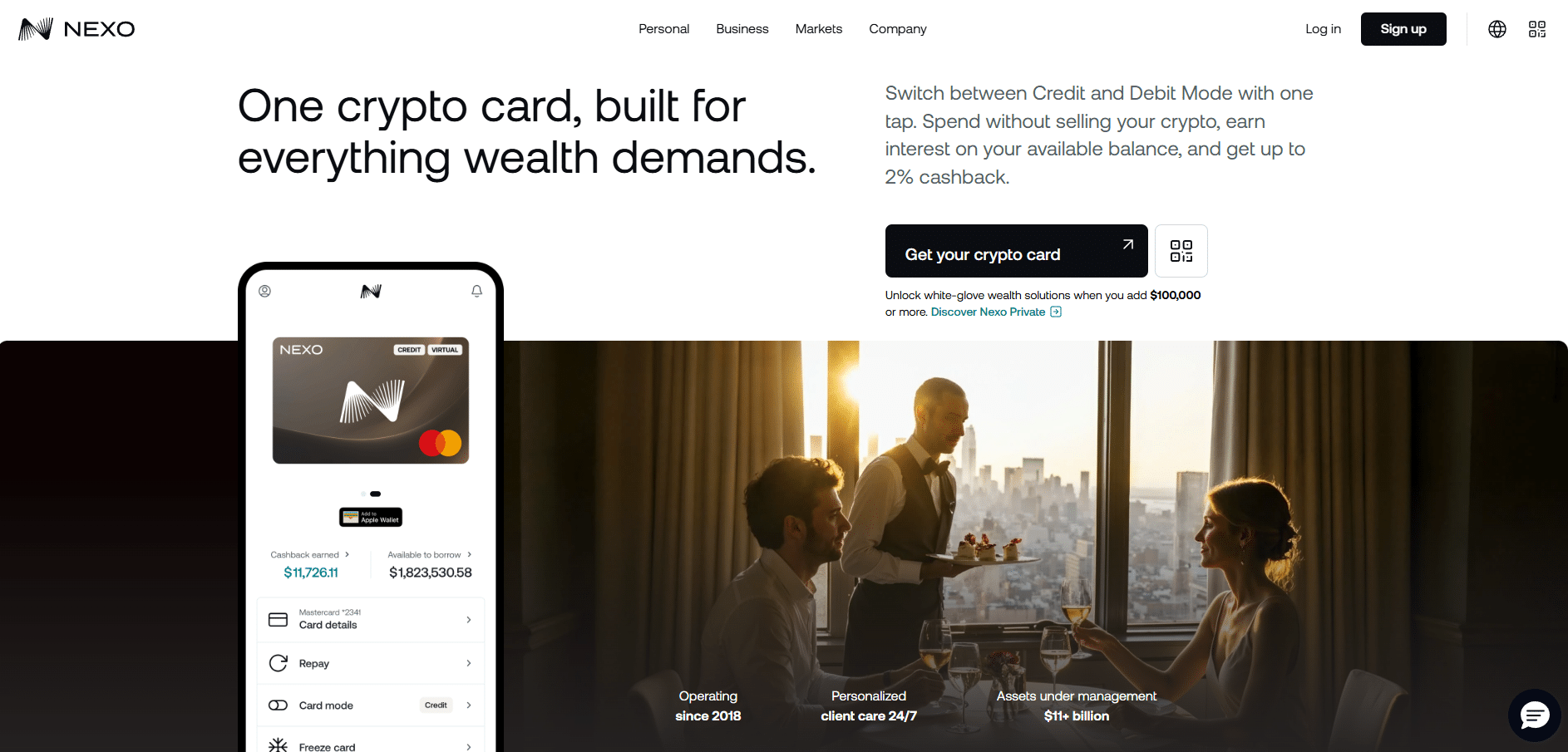
Nexo’s crypto card is unique in the sense that users can spend the value of their cryptocurrency without actually selling it – instead, the back-end borrows fiat currency against the user’s crypto balance. Nexo gives users fiat to spend, using their cryptocurrency as collateral, starting at borrowing rates of 0%. Credit card users can get up to 2% cashback plus daily interest.
In debit card mode, users are provided an easy way to spend their EUR, GBP, and USD stablecoins. Users earn daily compound interest of up to 9%. Users can also create a free virtual Nexo Card to instantly begin making everyday purchases from their phone.
Depending on the Loyalty tier, users will receive a certain number of free ATM withdrawals and no foreign transaction fees up to a limited amount per month. Basic, Silver, Gold, and Platinum tiers all offer different amounts of monthly free ATM withdrawals and limits with no foreign transaction fees.
Unfortunately, the card is currently only available in the EEA and the UK.
Pros
-
Instant access to crypto-backed loans with support for 100+ assets
-
Competitive rates with Loyalty Tiers and limited-time offers as low as 2.9% APR
-
Flexible repayment, interest only charged on withdrawn amounts
-
Integrated ecosystem: borrow, earn interest on crypto, swap crypto, and spend with a Nexo crypto card
Cons
-
Interest rates are significantly higher if you don’t hold NEXO Tokens
-
Fixed-term savings accounts require locking assets to access higher yields
Coinbase Bitcoin Debit Card
Coinbase is a great choice for most people, as this is the easiest and most convenient card to use, despite its higher-than-average chargeback fees. Moving past the fees, we believe the Coinbase debit card is one of the best Bitcoin debit cards available today.
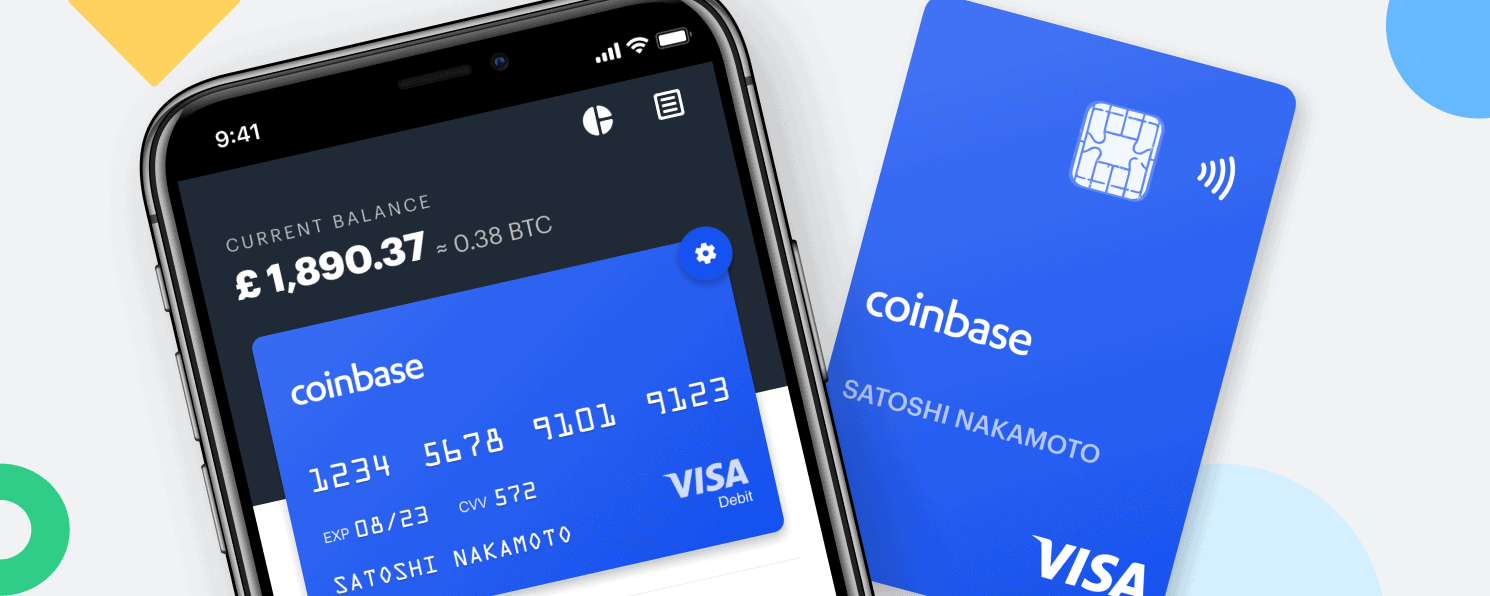
Coinbase, one of the leading Bitcoin exchanges around, issues its own Visa debit card for the UK, broader Europe, and the US.
The card is linked to your Coinbase account and allows you to easily spend crypto held on Coinbase anywhere that accepts Visa payments.
Choosing which cryptocurrency you’re spending can be managed through the Coinbase app, which is available both on Android and iOS. The card also offers multiple security features, such as two-factor authentication, instant freeze, and more.
Coinbase claims to charge no transaction fees to cardholders from the US. However, there is a spread that applies to each crypto-to-fiat conversion behind the scenes; this is variable and could be considered a fee of sorts.
In Europe, there’s a £4.95 or €4.95 fee for issuing the card. Coinbase does not charge ATM withdrawal fees, but the ATM itself may charge a fee. One major drawback is the £20/€20 fee for processing a chargeback if required. The complete fee schedule for the UK and Europe can be viewed on their website. Here’s how to get your Coinbase Bitcoin card:
- Sign up for Coinbase
- Download the Coinbase mobile app
- Order the card from the app
Pros
-
Issued by Coinbase, one of the most established and trusted crypto exchanges
-
Supports multiple cryptocurrencies for spending
-
Linked directly to your Coinbase account for seamless payments
-
No transaction fees for U.S. cardholders (conversion spread still applies)
-
Security features include two-factor authentication and instant freeze
Cons
-
High chargeback fee of £20/€20 in Europe
-
Conversion spread effectively acts as a hidden fee on every transaction
-
Card issuance fee in Europe (£4.95/€4.95)
-
ATM operators may charge additional withdrawal fees
CEX.IO Bitcoin Debit Card
The CEX.IO Card is a virtual Mastercard debit card that lets users spend the cryptocurrency or fiat currency held in their CEX.IO account, so rather than requiring users to sell crypto manually and withdraw the proceeds first, CEX.IO converts the selected asset into the required fiat currency when a purchase is made.
Users can choose which assets the card draws from and arrange them in order of priority. If the first balance is insufficient, the card moves to the next selected asset. CEX.IO supports more than 100 cryptocurrencies for card funding, including Bitcoin, Ethereum, Dogecoin, and Solana, as well as fiat balances held on the exchange.
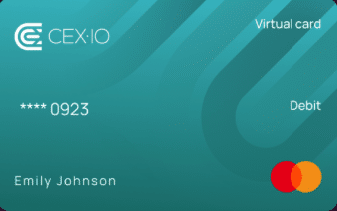
Because it is a virtual card, it is used through Apple Pay, Google Pay, or online checkout pages. It can be used for contactless payments in stores, app purchases, subscriptions, and online transactions wherever Mastercard is accepted. There is no physical version, which means ATM withdrawals are not supported.
CEX.IO also offers promotional crypto rewards in assets such as BTC, ETH, DOGE, and SOL. These do not follow a fixed cashback percentage and may change between promotions.
The CEX.IO Card is available only to verified residents of supported European Economic Area countries. Applicants need a CEX.IO account, government-issued identification, proof of address, and a verified phone number. The card has a daily spending limit of €3,000 and a monthly limit of €10,000.
Pros
-
Spends cryptocurrency or fiat directly from a CEX.IO account balance
-
Automatically converts selected crypto assets into fiat at checkout
-
Supports more than 100 cryptocurrencies, including BTC, ETH, DOGE, and SOL
-
No issuance, monthly maintenance, or annual fee
-
Compatible with Apple Pay and Google Pay
-
Users can set the order in which crypto and fiat balances are spent
Cons
-
Only available to verified residents of supported EEA countries
-
No physical card or ATM withdrawals
-
Conversion costs vary with market conditions
-
Rewards are promotional rather than based on a fixed cashback rate
-
Not available in the United Kingdom or United States
Crypto.com Bitcoin Debit Card
The Crypto.com Card is a prepaid Visa card linked to the user’s Crypto.com account. It lets cardholders spend cryptocurrency in the real world, with Crypto.com converting the selected digital assets into local currency when a purchase is made.
The card is available across several tiers, with the benefits determined largely by the amount of CRO committed by the user. Cashback can reach up to 8% on everyday purchases, while selected travel spending may earn rewards of up to 15%. All cashback is paid in CRO rather than Bitcoin or another chosen asset.
Lower tiers place monthly caps of $25 or $75 on rewards, while higher tiers offer unlimited payouts. Depending on the selected card, users may also receive airport lounge access, Spotify and Netflix rebates, and access to a private account manager.
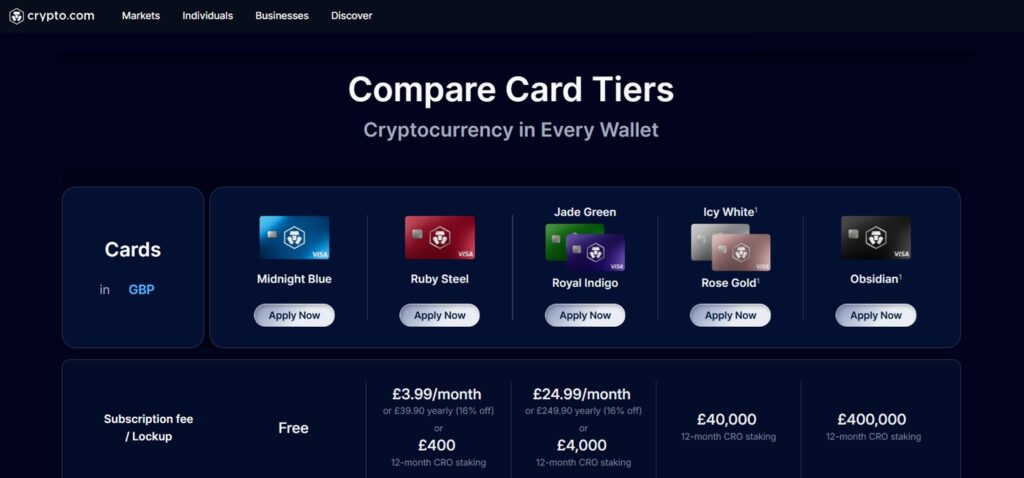
Crypto.com also offers up to $1,000 in fee-free ATM withdrawals per month. The exact withdrawal allowance and other benefits depend on the card tier, so users should compare the requirements carefully before committing CRO to access a higher level.
Unlike Crypto.com’s separate U.S. Visa Signature credit card, the prepaid card does not provide a line of credit. Cardholders can spend only the funds available through their Crypto.com account, with crypto converted into fiat to settle each transaction.
The largest benefits are concentrated in the higher tiers, which can require substantial CRO holdings. Users should therefore weigh the value of the cashback and subscription perks against the amount of CRO they need to commit and the potential price volatility of the token.
Pros
-
Offers CRO cashback of up to 8% on everyday purchases
-
Selected travel spending can earn rewards of up to 15%
-
Provides up to $1,000 in monthly fee-free ATM withdrawals
-
Selected tiers include Spotify and Netflix rebates
-
Higher tiers may include airport lounge access and a private account manager
-
Automatically converts crypto into local currency for card purchases
Cons
-
All cashback rewards are paid in CRO
-
The strongest benefits require higher card tiers and substantial CRO commitments
-
Lower tiers cap monthly rewards at $25 or $75
-
The value of CRO rewards and holdings can fluctuate
New and Untested Bitcoin Debit Cards
Aside from the companies mentioned above, I have found several lesser-known companies that claim to supply a Bitcoin debit card. However, many of these companies have very limited information about them online, and they should be treated with caution.
Trastra Debit Card
The Trastra debit card is a Visa payment card enabling users to receive funds in crypto and spend them in Euros. Though relatively new, the reviews seem to be mostly positive, with support being highly responsive.
What makes it special is the ability to exchange crypto for Euros without the need for a bank account. You can receive and hold crypto in your Trastra wallet and spend it as Euros whenever you need.
The card supports the following cryptocurrencies:
- BTC
- LTC
- ETH
- BCH
- XRP
- USDT
- USDC
The card is competitive, especially for its convenience, with no fees to trade and spend your crypto funds for Euro purchases. There are no card loading fees. However, it costs €9.00 to order a card with a €15 annual card management fee.
Bitnovo Debit Card
Bitnovo caters mainly to residents of Spain. It allows users to buy several major cryptocurrencies through their mobile app, website, or via vouchers that can be purchased in more than 40,000 shops around Europe. You can find them in Fnac, Worten, Game, Eroski, and more.
The platform enables users to top up a prepaid Mastercard or Visa card with the following cryptocurrencies:
- Bitcoin (BTC)
- Bitcoin Cash (BCH)
- Dash (DASH)
- Litecoin (LTC)
- XRP (XRP)
- Zcash (ZEC)
Like some of the cards above, Bitnovo requires users to manually sell their coins to top up their debit card rather than providing a service that automatically converts them upon spending.
Inactive Crypto Debit Cards
- TenX debit card
- Shift debit card
- CoinsBank debit card
- ANXPro debit card
- Uquid (active but doesn’t accept new customers)
- Crypterium (seems to be getting a ton of negative reviews online)
- Nuri debit card
What Is a Bitcoin Debit Card?
A Bitcoin debit card is not issued by the Bitcoin network. Instead, it’s a payment card (usually, Visa or Mastercard) provided by a crypto company or exchange. Bitcoin is like the fuel, but the card is the engine built by a third party. The engine decides the exchange rate, fees, and speed.
Here’s what happens when you use one:
- You hold Bitcoin in an account with the card provider
- You pay at a store or online
- The provider instantly converts BTC to fiat (EUR, USD, etc.)
- The merchant receives fiat, not Bitcoin
How Do Crypto Debit Cards Work?
Crypto debit cards function similarly to traditional debit cards but are linked to a user’s cryptocurrency wallet instead of a bank account. When making a purchase, the card provider (such as Coinbase, Crypto.com, or Wirex) converts the user’s crypto holdings into fiat currency (e.g., USD, EUR) in real-time, allowing the transaction to be processed seamlessly at any merchant that accepts Visa or Mastercard. Some cards also offer cashback rewards in Bitcoin or other cryptocurrencies, making them an attractive option for crypto enthusiasts who want to use their digital assets for everyday spending.
If you’re asking yourself, “Are crypto debit cards safe?”, the answer is a comfortable yes.
Crypto debit cards are generally secure as long as users follow proper security measures, such as enabling two-factor authentication (2FA) and keeping their private keys safe. Since most reputable providers issue cards in partnership with established payment networks like Visa and Mastercard, users benefit from their extensive fraud protection and global acceptance.
Both Visa debit card and Mastercard debit card options for crypto users provide widespread acceptance, allowing seamless transactions at millions of merchants worldwide. These payment giants have increasingly embraced digital assets, partnering with crypto platforms to offer secure and user-friendly solutions for spending Bitcoin and other cryptocurrencies in everyday life.
When using a Bitcoin debit card, remember:
- Your crypto is held by a third party, not in your own wallet
- Cards usually require identity verification (KYC)
- If the provider is hacked or frozen, access to funds may be delayed
By all means, users should always be aware of potential fees, regulatory changes, and the volatility of crypto prices, which could impact the value of their funds when making transactions.
The Main Costs You Should Know About
Before choosing a card, understand these common fees:
- Conversion Spread: The rate used may be worse than the market price
- Transaction Fees: Charged per payment
- ATM Withdrawal Fees: Often higher than bank cards
- Monthly/Annual Fees: Some cards charge for maintenance
Example Fee Breakdown
| Fee Type | Typical Cost | What This Means for You |
|---|---|---|
| Crypto-to-Fiat Conversion Fee | 1%–3% per transaction | Charged when your BTC is converted to euros or dollars at the time of payment |
| Card Transaction Fee | 0%–2% | Some cards charge extra each time you pay with the card |
| ATM Withdrawal Fee | €2–€5 per withdrawal | Applies when withdrawing cash from an ATM |
| Foreign Exchange (FX) Fee | 0%–3% | Charged if you spend in a currency different from your card’s base currency |
| Monthly/Maintenance Fee | €0–€10 | Some cards charge a fixed monthly fee just for keeping the card active |
| Blockchain Network Fee | Varies | Paid when you move BTC into the card wallet (not per card payment) |
Does Bitcoin Have a Debit Card?
No, it doesn’t. Any single centralized party doesn’t control Bitcoin, so it can’t issue its own debit card. However, you can get a third-party prepaid debit card that you can load with Bitcoin and then use to buy almost anything.
While many businesses don’t accept payments in Bitcoin (yet), most accept debit cards. With a Bitcoin debit card, merchants get paid in their own currency, while you are charged in Bitcoin from your prepaid balance.
Keep in mind there are downsides. Firstly, when using a Bitcoin debit card, you’re basically giving someone else control over your coins (at least the ones you’ve deposited).
Secondly, this service usually comes with a price. Every payment you make will often involve processing and conversion fees for paying with a foreign currency.
Conclusion
After comparing the leading Bitcoin and crypto debit cards, Nexo stands out as our top recommendation. While Coinbase, Wirex, BitPay, Cryptopay, SpectroCoin, and Robinhood each bring unique strengths to the table, Nexo’s card offers the best overall balance of features and usability.
With zero monthly or annual fees, instant crypto-to-fiat conversion at the point of sale, up to 2% rewards paid in Bitcoin or NEXO Tokens, and integration into a full crypto ecosystem (earn, borrow, and swap), the Nexo Card is a gateway into managing digital assets seamlessly. For users who want the most reliable, rewarding, and convenient option, Nexo takes the number one spot as the best crypto debit card available today.
See also: Best Crypto Credit Cards & Debit Cards in 2026
Bitcoin Debit Card FAQs
What is the best Bitcoin debit card?


The Nexo Card takes the top spot. It combines debit and credit functionality in one card, offers up to 2% cashback in Bitcoin or NEXO Tokens, and integrates seamlessly with the wider Nexo ecosystem. With no monthly fees, daily interest on deposits, and Mastercard’s global acceptance, it’s the most well-rounded option available today.
Are Bitcoin debit cards safe to use?
Yes, Bitcoin debit cards are generally safe if issued by a reputable provider. To maximize security:
1. Enable two‑factor authentication (2FA)
2. Keep spending money on the card account
3. Avoid storing long‑term savings with card providers
4. Read user reviews and provider history
What is a Bitcoin debit card and how does it work?
A Bitcoin debit card lets you spend your cryptocurrency like Cash by automatically converting Bitcoin into fiat currency (such as USD or EUR) at the time of purchase. These cards are accepted at most places where Visa or Mastercard is used, making it easy to use your crypto for everyday transactions.
Can I use a Bitcoin debit card worldwide?
Most Bitcoin debit cards can be used anywhere Visa or Mastercard is accepted. However, availability depends on the issuer. For example, Coinbase and BitPay are widely available to U.S. users, while Wirex and Nexo serve the EEA and the UK. Some regional restrictions may apply, so always check availability before applying.
Do Bitcoin debit cards have fees?
Yes, most cards have some form of fees, such as ATM withdrawal fees, conversion spreads, or foreign transaction charges. Nexo and Coinbase, for example, don’t charge monthly fees, while others like Cryptopay have maintenance or load fees. Always review the fee schedule of your chosen provider.
What are the alternatives of Bitcoin debit cards?
Bitcoin debit card alternatives include:
1. Crypto Exchanges: Sell BTC manually and withdraw to a bank
2. Mobile Wallets: Some offer direct fiat ramps
3. Traditional Debit Cards: Often cheaper for daily spending

Why you can trust 99Bitcoins
Established in 2013, 99Bitcoin’s team members have been crypto experts since Bitcoin’s Early days.
Weekly Research
100k+Monthly readers
Expert contributors
2000+Crypto Projects Reviewed