





A strange thing keeps happening in blockchain gaming: people get excited about new projects, then the games slow down, freeze, or never launch at all. This pattern has become familiar, and it raises a simple question that many studios now ask out loud: Where can a network be found that actually keeps up with active players?
This question matters because on-chain gaming is no longer a quiet corner of the industry. More studios plan to put gameplay on the blockchain, and many want tools that handle real traffic, not only small tests.
As activity grows, the need for fast networks with clear structure becomes part of a larger conversation about the future of playable, reliable, on-chain worlds. Wall Street Chain ($WSC) enters the crypto presale landscape as one of the projects trying to meet that demand.
Why Wall Street Chain Takes a Different Path in Gaming Infrastructure
Wall Street Chain is built as a Layer 1 blockchain that uses separate subchains for each game. This design aims to reduce network slowdowns when large events take place. It also helps games run more predictably. The project presents this structure as a way to support developers who want consistent performance during high activity.
The project also focuses on transaction speed and low fees. This is important for game studios that plan to run many in-game actions on-chain. High activity often leads to delays on shared networks, so a system that spreads traffic across subchains may help keep costs steady.
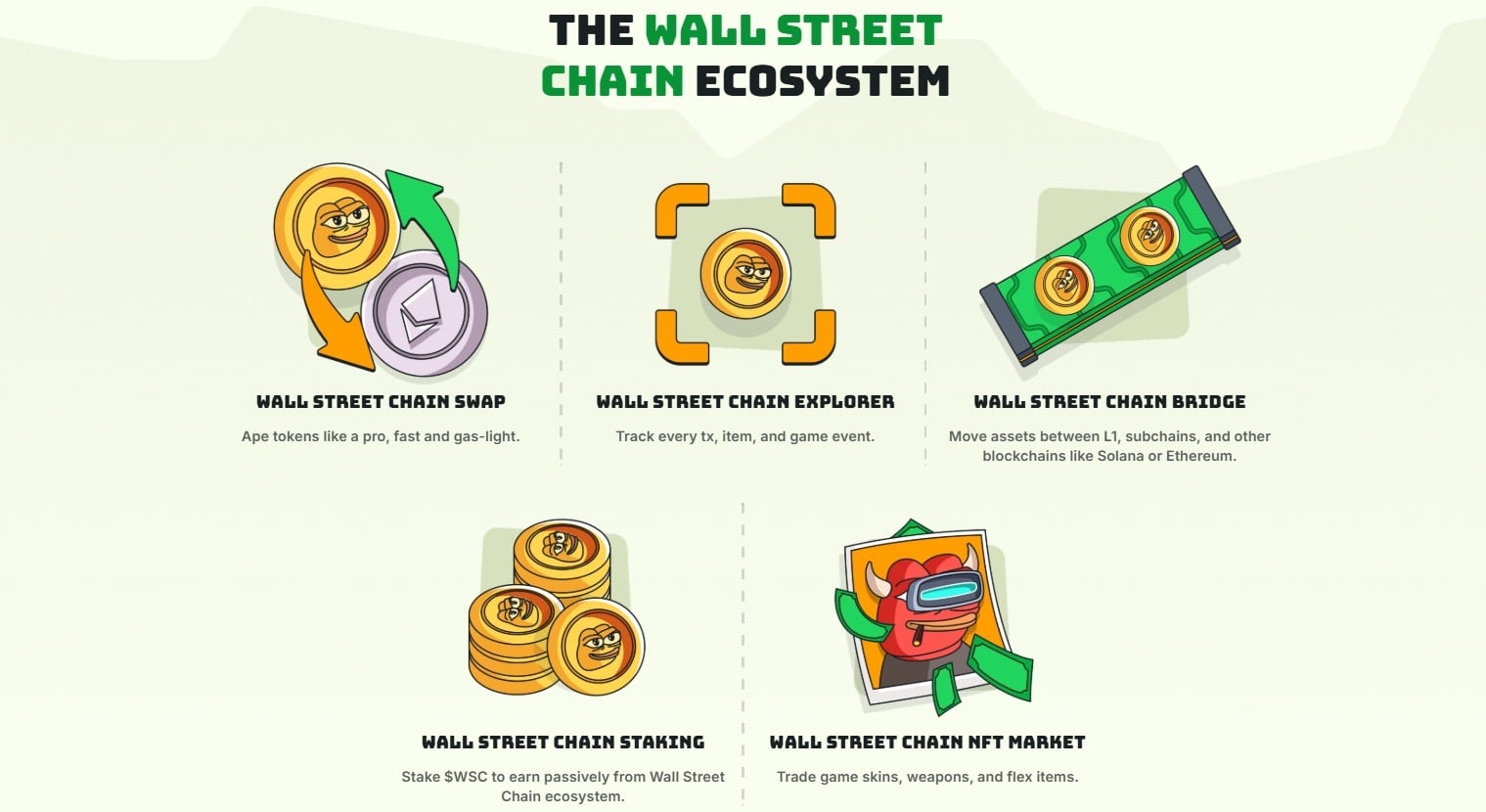
There is also an effort to combine useful tools with a simple framework. Wall Street Chain highlights its plan for an NFT marketplace, governance options, and token utilities inside the network. These elements are meant to support a broad range of gaming use cases. They also aim to give studios enough tools to build active game economies without relying on external systems.
The project positions itself as an ecosystem that tries to meet the current needs of blockchain gaming. This includes predictable performance, flexible development tools, and a structure that can host many different gaming styles. These points shape the project’s pitch as a contender in this space.
Main Features of the Wall Street Chain Network
The use of independent subchains is one of the network’s key structural features. Each game runs on a chain that does not compete for space with others. This design aims to support stable gameplay during peak periods. It also helps developers plan long-term updates without fear of sudden slowdowns.
The $WSC token sits at the center of the ecosystem. It supports transactions, governance, and staking. It also functions as a fee token for subchains. This multi-use approach helps keep activity inside one network rather than spreading it across many separate tools.
There is also a focus on supporting a large gaming ecosystem. The platform plans to host various on-chain titles and offer social features that help users move through the network. The NFT marketplace is part of this plan. It gives creators and studios a place to launch in-game assets without leaving the ecosystem.
The project highlights speed, predictable structure, and ease of development as its core technical aims. These features shape its role in the growing blockchain gaming landscape.
The Web2 x Web3 Gaming Era
The fastest L1 chain built to power the next era of on-chain games for degens first. For gamers, by gamers. pic.twitter.com/Fa9T42kBri
— Wall Street Chain (@WallStreetChain) December 5, 2025
$WSC Presale Progress and Early Network Participation
The project is in an active presale phase. The current token price stands at $0.00028846. The crypto presale supports purchases through several major cryptocurrencies and also offers card payments. This makes participation accessible to a broad group of early supporters. The project states that the price is set to rise step by step over the course of the presale.
A key point during this phase is staking. The project offers an estimated 500% annual reward rate for tokens locked during the presale. This rate is presented as a temporary incentive for early participants. Staking has drawn a large number of participants already, and the total number of tokens locked continues to rise. This suggests steady engagement during the early stages.
Developers position the crypto presale as a step toward preparing the network for upcoming game launches. It also gives the project initial liquidity for future growth plans. These elements help set the stage for the next part of the roadmap.
Visit Wall Street Chain Presale
Why the Next Stage Matters for Wall Street Chain
Wall Street Chain aims to give blockchain gaming a simple and dependable structure. Its use of subchains, its focus on predictable performance, and its multi-use token place it among the projects trying to solve real technical issues in the sector. These elements shape its early identity and may become important as more studios look for networks that support heavy gameplay.
There is growing interest in how blockchains support gaming. Projects that address slow transactions and congestion may become central parts of this shift. Wall Street Chain positions itself in this area and aims to build an ecosystem that can carry both small and large gaming projects.
The next stage will likely focus on new game releases, ecosystem expansion, and continued presale activity. These developments may help show how well the network performs under real usage. For now, the project presents a case built on structure, speed, and tools that serve active gaming needs.
Discover the future of crypto gaming with Wall Street Chain:
Presale: https://www.wallstchain.com/
Social: https://x.com/WallStreetChain

Why you can trust 99Bitcoins
Established in 2013, 99Bitcoin’s team members have been crypto experts since Bitcoin’s Early days.
Weekly Research
100k+Monthly readers
Expert contributors
2000+Crypto Projects Reviewed