







Have GameFi developers finally cracked the code and made crypto gaming fun? A new play-to-earn tycoon game could change everything.
As the idea of Play-to-Earn (P2E) 3.0 begins to take shape, projects like PepeNode (PEPENODE) are emerging with a clear response to the failures that sank many of the genre’s breakout titles just a few years ago. Rather than depending on constant inflows and reward inflation, newer GameFi designs are being forced to work in markets that don’t forgive weak economics.
PepeNode’s approach is deliberately straightforward. Gameplay is modeled closer to real-world processes, moving away from repetitive, low-effort tasks designed solely to farm tokens. At the same time, its token model introduces a finite supply and aggressive burn mechanics, redirecting incentives away from pure extraction and toward longer-term participation.
That combination of functional gameplay and tighter economic constraints explains why interest has been building early on. Some investors are entering at this stage to gain exposure before broader market conditions improve, betting that projects designed for slower environments are better positioned when sentiment turns.
Currently, PEPENODE tokens are priced at $0.0012016 in the ongoing presale round. With just 20 days remaining before the early access stage ends and tokens are moved to exchanges, entry terms will soon shift from fixed pricing to market-driven discovery.
Crypto Gaming is Bear Market Proof By Design
Market sentiment has clearly turned more bearish, with Bitcoin (BTC) slipping back to around $85,000 after failing to sustain a push above $95,000 the previous week. The move reinforced the sense that upside momentum remains limited as broader risk appetite continues to thin.
That pullback triggered roughly $576 million in liquidations, dragging most major altcoins lower in the process. Solana (SOL) briefly fell to $120 before stabilizing near $121 during the Asian trading session, while Ripple (XRP) dropped to $1.77 and later recovered to approximately $1.84 at the time of writing.
Data from Coinglass showed no meaningful spike in trading volume during the selloff. The $576 million in liquidations reflected forced deleveraging across derivatives markets, clearing out leveraged long and short positions rather than signaling broad-based panic.
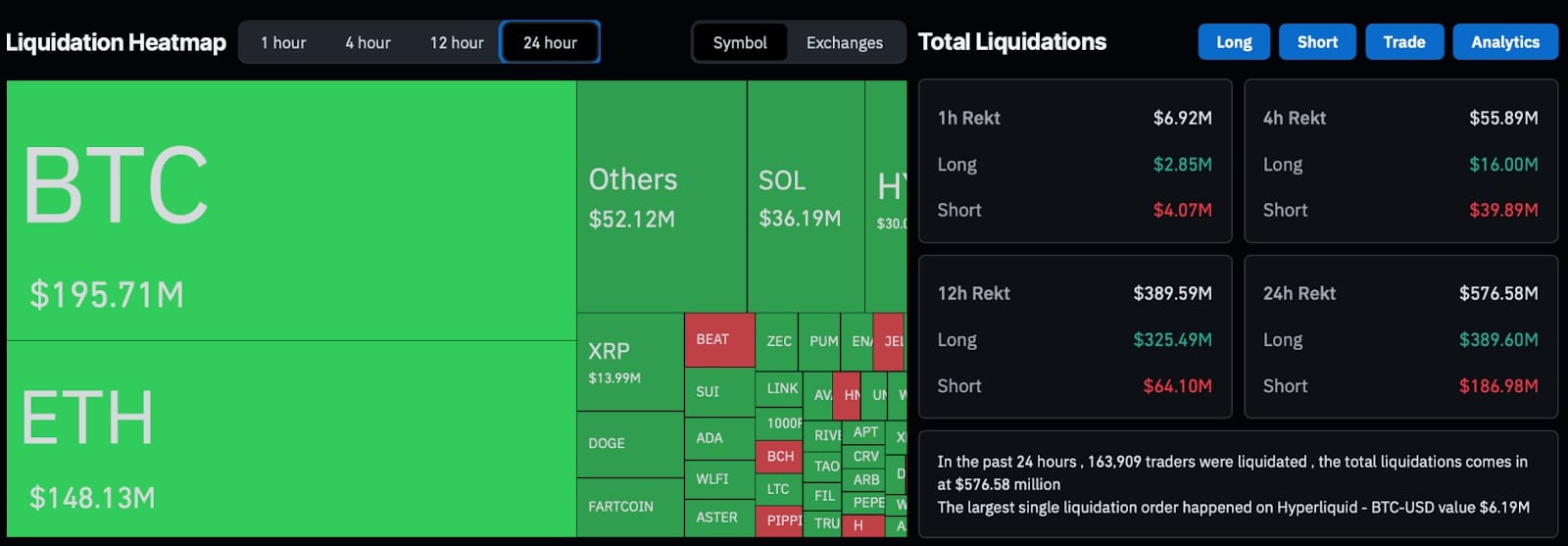
Source: https://www.coinglass.com/LiquidationData
What the current market reflects is a prolonged absence of sustained bullish participation, the kind that typically pulls retail attention back into crypto. During similar periods in previous cycles, gaming has served as a stabilizing force for the industry by maintaining consistent activity even as price action stalled. Players continued engaging with on-chain systems, earning tokens and converting them into larger assets or stablecoins to extract value independently of broader market momentum.
ChainPlay data has previously shown that gaming has drawn more users into crypto than direct exposure to flagship assets based solely on their investment appeal. Games have also served as an onboarding mechanism for non-crypto-native users, providing a practical way to become familiar with wallets, tokens, and on-chain interactions.
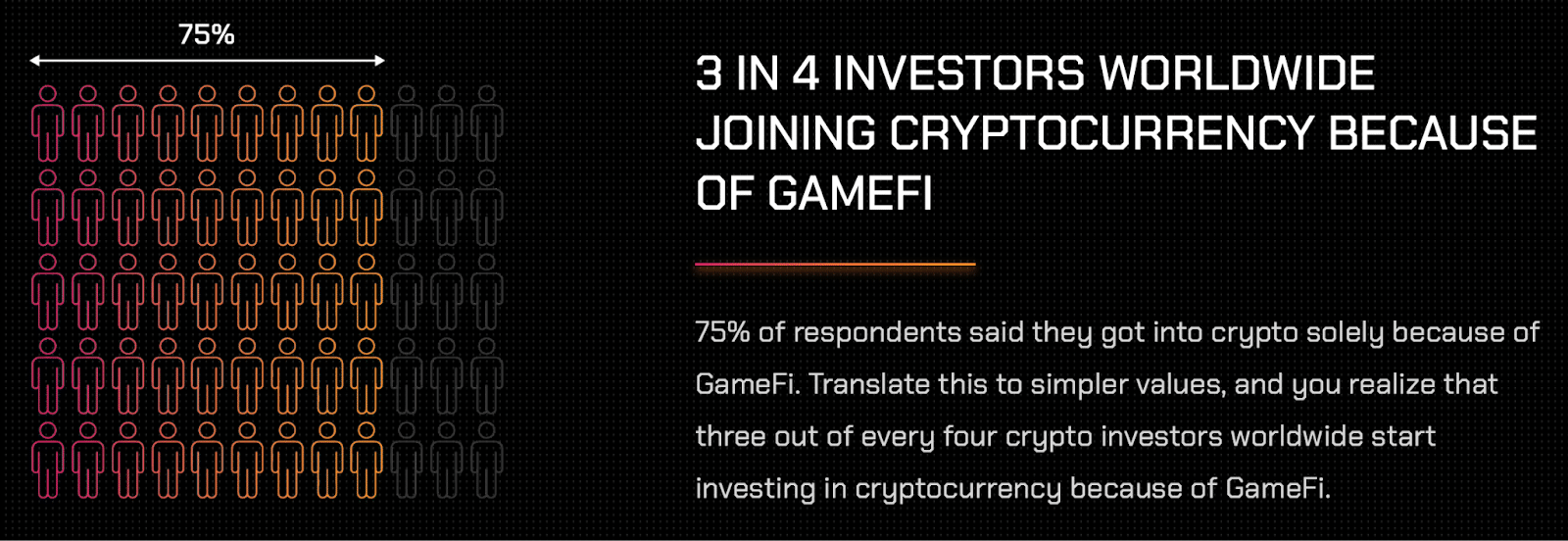
Source: https://chainplay.gg/state-of-gamefi-2022/
The Philippines illustrates this dynamic clearly. The country currently ranks eighth globally in crypto adoption, with projections suggesting that nearly ten percent of the population, or approximately 12.8 million people, could become adopters by next year. Much of that early exposure was driven by the spread of Axie Infinity during the 2020 lockdowns, when gameplay provided a viable source of income for households confined to their homes.
More recently, the Philippine Senate passed the Citizen Access and Disclosure of Expenditures for National Accountability Act, advancing plans to place government budget records on a blockchain to improve transparency.
Taken together, these patterns show how gaming has consistently brought users into crypto during periods of market stress. However, the collapse of earlier GameFi economies also demonstrated that engagement alone is not enough, making sustainability and economic design the defining requirements for the next phase of the sector.
It is within that context that P2E 3.0 has begun to take shape, with projects such as PepeNode attempting to address the structural weaknesses that undermined earlier generations of crypto games.
Play to Earn Finally Hit Its Epoch: Broken Retail Traders Are Desperate to Earn Crypto
Before exploring why PepeNode represents a shift in crypto gaming, it is helpful to clarify what the P2E 3.0 era aims to address. That requires examining closely how earlier play-to-earn models actually functioned and where they fell short.
Games like Axie Infinity drew massive audiences because the loop was simple and predictable. Players battled daily to earn SLP tokens, either through PvE modes against AI opponents or PvP matches against other players. Those tokens could then be used to breed new Axies, which were sold to incoming players or recycled to farm more SLP.
The weakness in that system became obvious over time. The incentive to cash out was always stronger than the incentive to reinvest. As token prices rose, players rationally chose to sell for real income rather than keep capital locked inside the game, which caused the entire loop to depend on a steady flow of new entrants.
A similar dynamic played out with StepN. Players earned GST tokens by walking or running, then spent those tokens on better sneakers to earn more GST. The loop was circular, and once token prices peaked, reinvestment made less sense than extracting value, leading to the same outcome under different branding.
Hamster Kombat took a different approach by removing the token layer altogether at the start. There were no NFTs to buy and no upfront cost, allowing anyone to join, tap, and accumulate points with the expectation of a future token distribution. The model leaned heavily on virality and deferred rewards rather than immediate payouts.
When the HMSTR token was eventually introduced, it did not fundamentally change the loop. Points were converted into a token, the token was sold, and attention moved on. The sequence of earn, sell, and exit remained intact, only delayed rather than redesigned.
This is the gap P2E 3.0 is attempting to close. The goal is not to eliminate earnings or defer them indefinitely, but to correct failures in both gameplay and token design so that reinvestment and retention make sense even when prices are flat, and growth slows.
What Really Changes With PepeNode Crypto Gaming?
PepeNode tackles the gameplay problem head-on. At its core, it is a mine-to-earn meme coin game, the first of its kind in the crypto space, built as a simulation of real-world mining rather than a surface-level abstraction.
Instead of relying on repetitive actions, PepeNode is structured as a strategy-driven game. Players are required to manage facilities, plan expansions, and select and combine nodes in ways that meaningfully affect output, mirroring the trade-offs found in actual mining operations rather than reducing gameplay to rote activity.
Over time, the game is expected to introduce additional layers that push the simulation closer to reality. These may include power usage, electricity costs, cooling constraints, and other operational decisions that force players to balance efficiency against expansion, rather than optimizing blindly.
While the game is premised on earning tokens, progress is not driven by constant grinding. Players are rewarded for making better decisions, allocating resources intelligently, and refining their setup over time, since inefficient management directly reduces mining output.
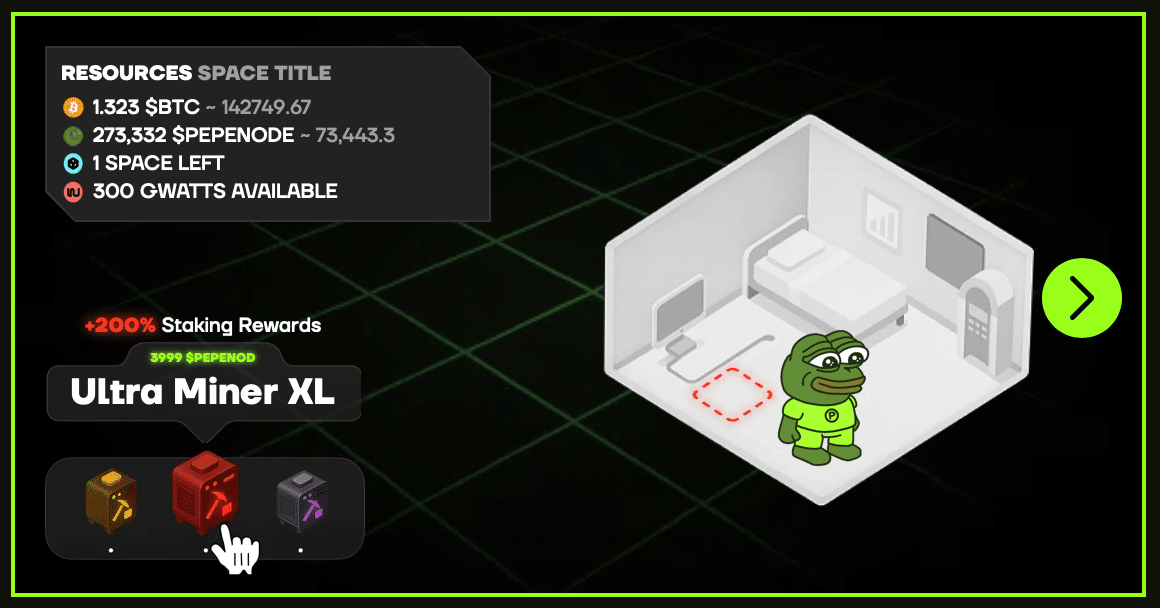
Mining, by nature, introduces continuous token emissions, and PepeNode does not attempt to hide that reality. Where it diverges from earlier models is in how that supply is constrained. PEPENODE has a fixed total supply of 210 billion tokens, similar in principle to Bitcoin’s capped issuance. On top of that, 70% of tokens used for in-game upgrades are permanently burned, steadily reducing circulating supply and introducing deflationary pressure as participation increases.
Game mechanics also incorporate a halving-style system, reducing token emissions over time rather than maintaining constant output.
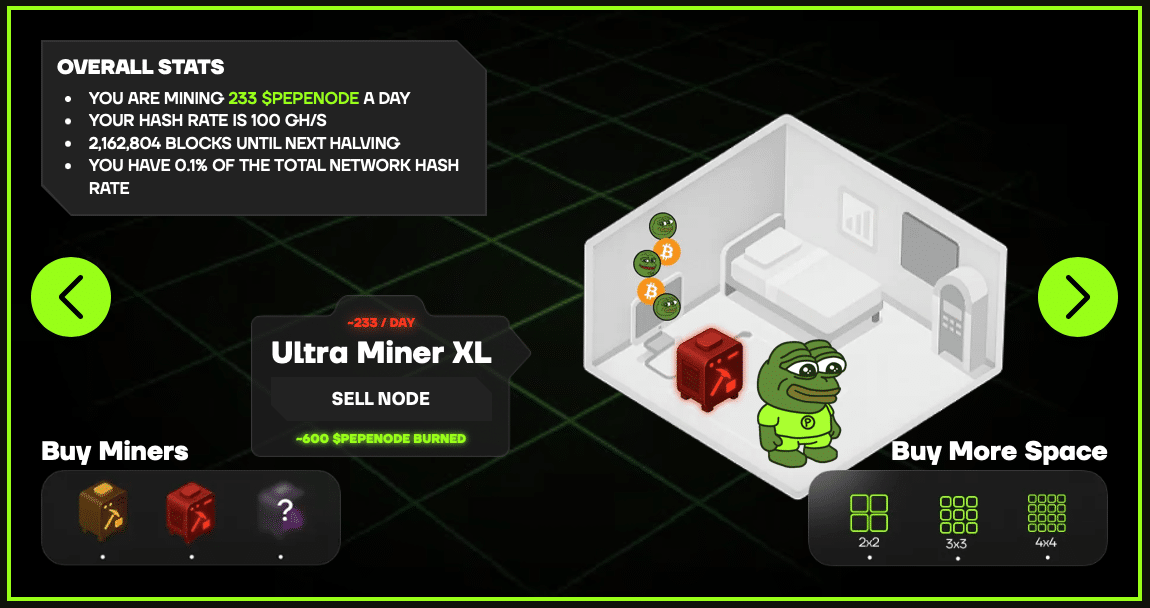
To sustain engagement beyond the native token, PepeNode introduces additional reward assets, including established meme coins such as Pepe (PEPE) and Fartcoin (FARTCOIN). This creates a feedback loop where spending PEPENODE inside the game increases access to higher-value rewards, reinforcing its utility rather than encouraging immediate extraction.
Taken together, PepeNode addresses two of the core failures that defined earlier play-to-earn cycles. Gameplay is designed to be engaging on its own terms, while tokenomics are tied directly to in-game spending and constraints rather than unchecked emissions.
If this balance holds, the combination of system-driven gameplay and disciplined supply mechanics could allow PepeNode to function during depressed market conditions while scaling more sustainably as participation grows, offering a template for how P2E 3.0 games may be built going forward.
How To Get Early Access to PepeNode?
PepeNode is still in development, with its core gameplay and economic systems actively taking shape.
To support its progress, visit the PepeNode website to purchase tokens using ETH, BNB, USDT (ERC-20 and BEP-20), as well as credit or debit cards.
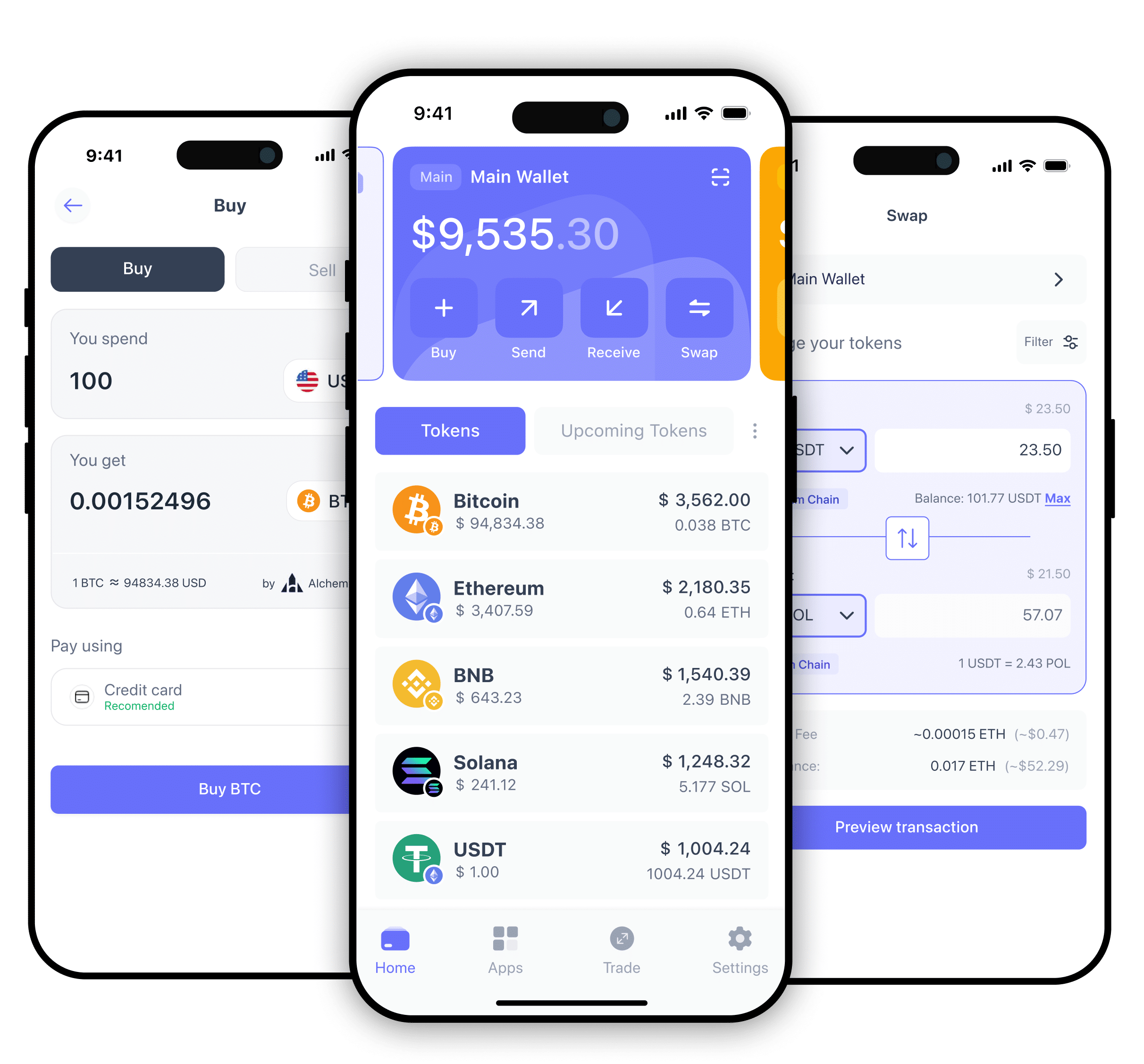
Buyers can connect using their preferred wallet, such as Best Wallet, which is widely regarded as the best crypto and Bitcoin wallet on the market. PepeNode is listed on Best Wallet’s new project screening tool, Upcoming Tokens, so you can buy, track and claim once the project is live.
PepeNode’s smart contract has been audited by Coinsult, providing early adopters with peace of mind regarding the security of its code.
Follow the project on X and Telegram for the latest updates.
Visit PepeNode HereRELATED: Best Solana Meme Coins Right Now
Join The 99Bitcoins News Discord Here For The Latest Market Updates

Why you can trust 99Bitcoins
Established in 2013, 99Bitcoin’s team members have been crypto experts since Bitcoin’s Early days.
Weekly Research
100k+Monthly readers
Expert contributors
2000+Crypto Projects Reviewed