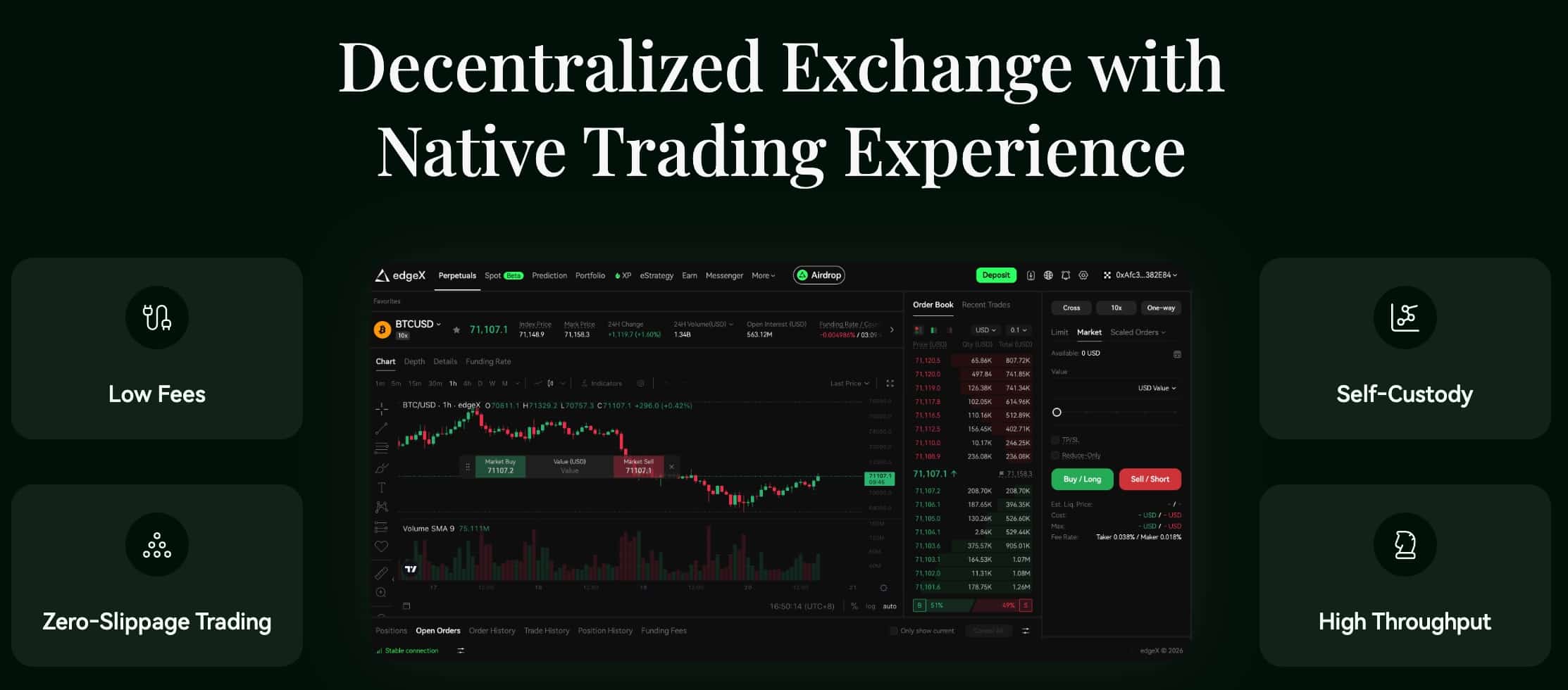






Crypto as a whole is working as a unified market, but the reality is that Bitcoin does Bitcoin stuff, Ethereum runs most DeFi, and Solana dominates in terms of speed. Meanwhile, users are stuck chasing liquidity, paying fees, waiting for confirmations, and dealing with bridging risk that can be extremely expensive.
That’s where LiquidChain ($LIQUID) can make a difference. It’s a project introducing the first Layer-3 network designed to coordinate liquidity and execution across Bitcoin, Ethereum, and Solana. Instead of replacing existing chains, LiquidChain provides a unified execution layer that applications can plug into, connecting liquidity to a single platform rather than bridging it across multiple chains.
Why This Narrative Shows Up Now
Multi-chain has become the norm these days, but it still faces challenges that make it inflexible and complex. All traders want is fast execution and clean routing. Developers would also prefer to deploy once and not worry about three stacks and three liquidity strategies. LiquidChain wants to change that for good, promising deeper liquidity, faster trading, and smoother cross-chain flow, unifying the otherwise fragmented market.
LiquidChain’s Architecture: Coordinate, Don’t compete
Instead of launching a new L1 in the hope of widespread adoption, LiquidChain bypasses major players by focusing on routing and execution.
Two details matter here:
- A high-performance execution environment. LiquidChain says it uses a Solana-class VM to handle real-time applications across chains, drastically increasing processing throughput.
- Parallelism as a feature, not a vibe. The project focuses on parallel execution and a transaction flow that processes multiple updates at once while preserving atomic finalization.
That combination is the thesis: keep settlement roots intact while improving how value flows and executes across ecosystems. It’s a unique solution that could make a big difference to your ROI when trading crypto, making Liquidchain one of the top crypto presales in 2026.

What Unified Liquidity Looks Like in Practice
LiquidChain’s model manages assets across Bitcoin, Ethereum, and Solana on its Layer-3 to create deeper markets. Its goal is to reduce the friction of moving capital between networks, which remains one of the biggest challenges for investors.
It eliminates the standard approval management, wrapped assets, delays, or bridge risk, allowing traders to complete trades much faster and cheaper through a single layer, a feature that appeals to all crypto investors everywhere.
Here’s how the new approach should work in practice:
- Deploy once instead of maintaining separate deployments on multiple chains
- Access broader liquidity without splitting into isolated pools
- Simplify the user journey so users don’t manually hop between chains
LiquidChain aims to remove the “multi-chain tax” that most apps and users pay today. That alone makes it a crypto project worth keeping an eye on, and if it delivers on its promises, it could give users a significant edge over their competition in terms of ROI, transaction speed, and lower fees.
Tokenomics: what LIQUID is supposed to do
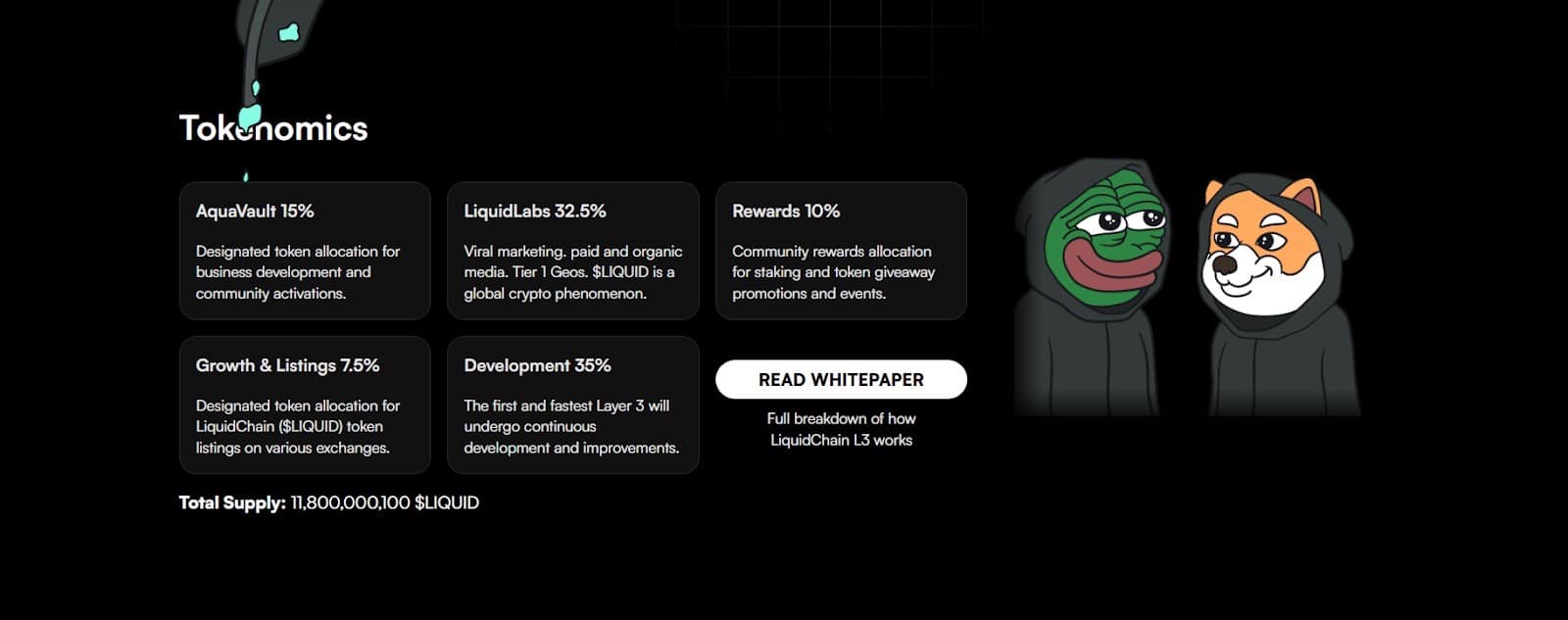
LiquidChain positions its native $LIQUID token at the center of the ecosystem, powering participation and sustainable, long-term growth. It lists a fixed total supply of 108 billion $LIQUID tokens, along with a clear allocation model that allocates large portions to development and ecosystem expansion, plus separate amounts for rewards, listing support, and treasury-style reserves. Here’s a quick overview of the allocation:
- AquaVault – 15%
- Liquid Labs – 32.5%
- Rewards – 10%
- Growth and Listings – 7.5%
- Development – 35%
In plain terms, LIQUID is designed for network participation and incentives, not just to sit on the sidelines as a ticker symbol. It gets value from adoption, and if the project works as intended, it could become the go-to option for daily traders, investors, and crypto users everywhere.
Crypto Presale and Staking: What’s Live Right Now
LiquidChain is running a public presale, promoting staking as a key early-participation that allows users to earn free $LIQUID tokens even before the first listing.
It’s essential to understand that big APYs percentages are just estimates; they are not guaranteed yields. As more tokens are staked, the estimated return rate typically drops because rewards are spread across a larger pool, which is a standard practice among crypto presales in the past few years.
Here’s a simple way to think about it:
- Early staking incentives can look huge because participation starts small
- As participation grows, the estimated percentage tends to drop significantly, often below 100%
- Staking incentives are usually there to increase user engagement rather than to provide long-term yield expectations
LiquidChain Reduces Trading Costs
LiquidChain is trying to make multi-chain feel less like a wild goose chase and more like a single experience that could have a massive impact on crypto adoption.
If its unified execution layer concept works in practice, it could become meaningful for traders who care about routing efficiency and for dApp devs who want to deploy their products on multiple chains without constant overhead.
It’s still early. In crypto, “early”, so we’ll have to see where things go in the upcoming months. However, the sensible move is to treat it as a high-risk, high-upside infrastructure bet. Make sure to keep an eye on the project’s adoption and how the ecosystem actually uses it. If everything checks out, you could turn a small investment into significant profits in the long run.
Learn more about LiquidChain:
Website: https://liquidchain.com/
Social: https://x.com/getliquidchain

Why you can trust 99Bitcoins
Established in 2013, 99Bitcoin’s team members have been crypto experts since Bitcoin’s Early days.
Weekly Research
100k+Monthly readers
Expert contributors
2000+Crypto Projects Reviewed