







Bitcoin (BTC) has broken critical support at $85,000, which could potentially open the door for a dip toward $75,000 as bearish momentum takes hold of the market. However, long-term Bitcoin bulls recognize this volatility as a symptom of a market where BTC’s demand remains tied to a single, speculative narrative. To address this, some investors are quietly accumulating Bitcoin Hyper (HYPER) because they see the project as a structural play designed to break the erratic four-year boom-and-bust cycle for good.
So far, they have raised $31.1 million to support the development of Bitcoin Hyper, which aims to become the fastest Layer-2 solution on Bitcoin. Powered by the Solana Virtual Machine (SVM) and anchored to Bitcoin for settlement, the network is designed to support applications that combine Solana-level speed with Bitcoin-grade security.
And in this environment, BTC can finally function as the high-velocity currency it was always meant to be. If Bitcoin Hyper successfully builds a robust ecosystem of dApps that lock and utilize large amounts of BTC, it could act as a counter-cyclical hedge, offering a buffer against current market volatility.
The native token, HYPER, is expected to grow in tandem with this vision, serving as the primary utility asset that early participants have been snapping up in the presale as the network nears its launch. In the current presale round, HYPER is priced at $0.013655 per token, with the price set to increase in the next round in 10 hours.
Is Crypto’s ‘Year 2’ Chill Here?
Bitcoin’s price action over the past 24 hours has been anything but friendly. The sell-off intensified after the Federal Reserve held interest rates steady on Wednesday but adopted a hawkish tone, effectively dampening hopes for a rate cut in early 2026.
Adding to the pressure is the growing speculation over the next Fed Chair; Kevin Warsh has emerged as the frontrunner, and his pro-dollar reputation is widely seen as a headwind for risk assets.
BTC plummeted from $89,000 on Thursday to an intraday low of $81,047 on Friday, with a major catalyst for this acceleration being the breach of multi-week support at $85,000 that triggered a massive wave of forced liquidations. Over $1 billion in leveraged long positions were wiped out in 24 hours, creating a mechanical sell-off that pushed prices to two-month lows.
Technically, the drop below $85,000 also forced BTC under its 100-week moving average, currently situated near $87,250. This breakdown signals significant bearish momentum, with traders now eyeing the $75,000 level (a price point not seen since April of last year) as the next major line of defense.
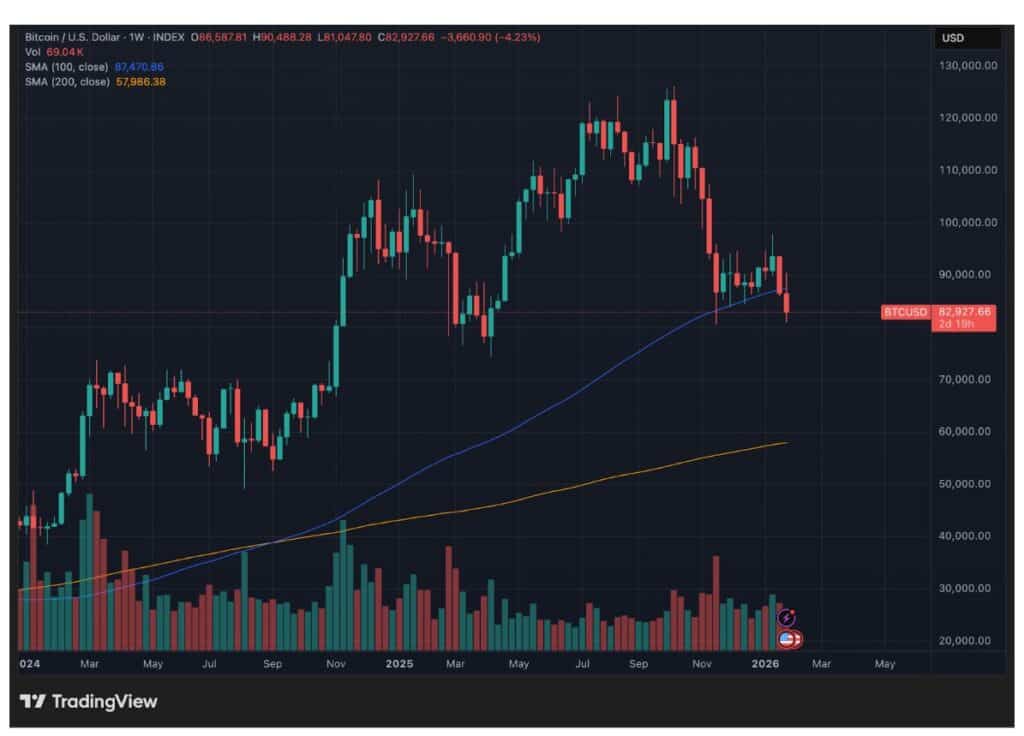
Source: TradingView
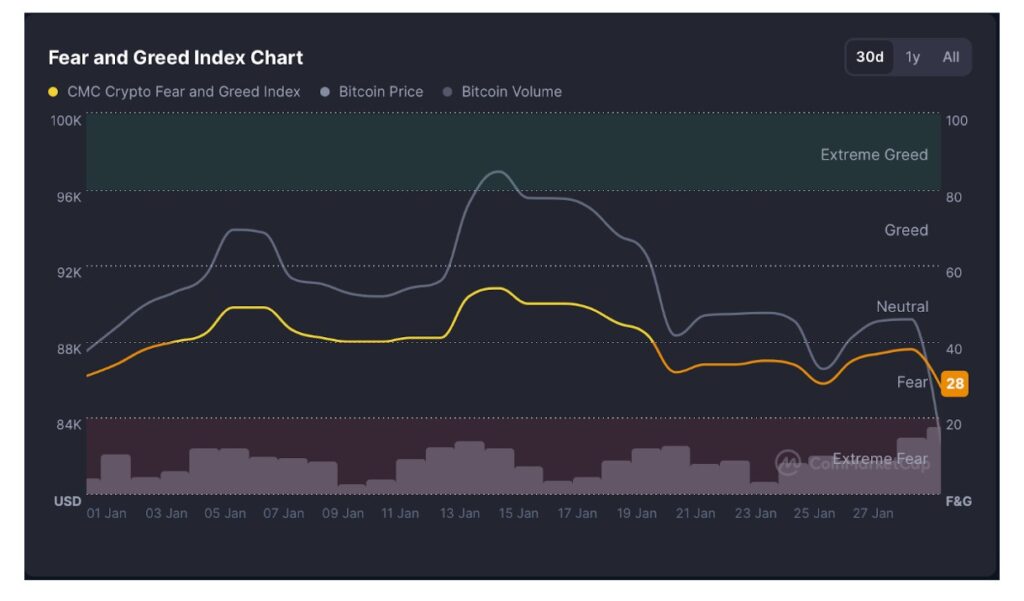
This erratic movement has pushed market sentiment toward extreme fear, echoing the historical four-year cycle where the second year after the halving year often serves as a cooling period before a deeper bear market.
However, prominent voices like Bitwise CIO Matt Hougan and Standard Chartered’s Geoffrey Kendrick have argued that this cycle is effectively dead. And with that argument, views a massive 80% drawdown seen in 2014, 2018, and 2022 as unlikely in 2026, as institutional participation and corporate treasury holdings have locked up a significant portion of the supply.
Even so, a slide toward $75,000 – or the 200-week SMA currently under $60,000 – would undeniably shake the confidence of many holders. That’s where Bitcoin Hyper comes in – offering a new use case for BTC that could help maintain constant demand, even during times like this.
The New BTC Use Case Enabled by Bitcoin Hyper Canonical Bridge
As mentioned, Bitcoin Hyper is a Layer-2 solution powered by the SVM and anchored to the Bitcoin blockchain. This architecture transforms BTC into a high-velocity currency; every application within the ecosystem respects BTC as the primary unit of account. That means whether you are utilizing a dApp for payment or interacting with a DeFi protocol, the network’s internal economy is fueled by Bitcoin.
But how does Bitcoin’s base-chain asset enter this high-performance environment? The solution is a canonical bridge that securely locks native BTC on the mainnet, triggering the minting of an SVM-compatible version on Bitcoin Hyper. This process unlocks a level of transactional throughput and cost-efficiency for BTC that the Bitcoin network, in its current form, simply cannot achieve on its own.
While the bridging mechanism is the engine, the true breakthrough lies in Bitcoin Hyper’s pursuit of “trust-minimized interoperability” in its most recent developer update. The project is moving away from the traditional social trust model, where users are forced to rely on the honesty of a small group of validators, and is instead implementing a cryptographic proof model.
Interoperability isn’t just about moving assets; it defines trust. Bitcoin Hyper looks beyond bridges, prioritizing verifiable, trust-minimized cross-network interaction over fast but fragile connections. The goal isn’t maximum connectivity, but credible, auditable… pic.twitter.com/ozJWh6DXLi
— Bitcoin Hyper (@BTC_Hyper2) January 29, 2026
In this new framework, the network moves from merely observing to actively verifying. Rather than taking a bridge’s word for it, Bitcoin Hyper’s state-aware design allows it to independently confirm mainnet events.
By utilizing Zero-Knowledge (ZK) proofs, the security of the asset no longer depends on a bridge’s reputation, but on mathematical certainty that makes it physically impossible to fake or manipulate a transaction.
The Billion Dollar Capture
The projection is that, if Bitcoin Hyper succeeds in driving the development of hybrid applications within its ecosystem, BTC will gain a new, use-case-driven source of demand, rooted in its role as a medium of exchange.
In this context, Bitcoin Hyper stands out as the only project currently positioned to unlock a range of addressable markets for Bitcoin, potentially capturing billions of dollars in value.
For example, payments could be significantly improved through applications processing transactions at speeds never seen before.
Thanks to Solana’s Firedance validator, which is now also available to other SVM chains, Bitcoin Hyper has a theoretical capacity of processing 1 million transactions per second. This far exceeds the capacity of Visa and Mastercard combined. Additionally, developing decentralized social media platforms and data-heavy applications could benefit from such fast processing speeds.
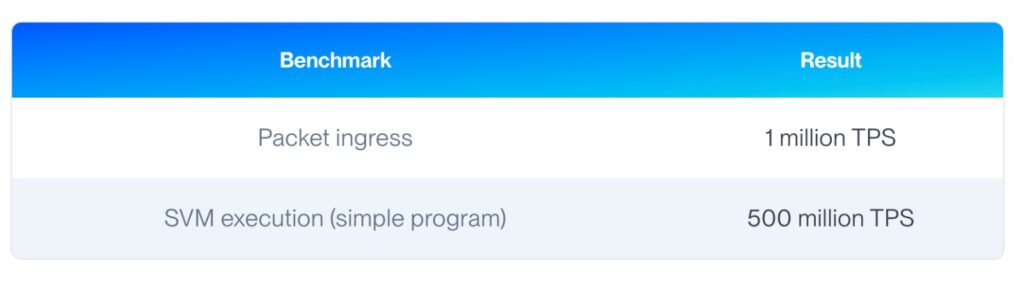
Source: https://www.alchemy.com/overviews/what-is-the-solana-virtual-machine
This glimpse of Bitcoin Hyper’s potential highlights how BTC could evolve from a static asset to an active currency, helping to buffer its price against volatile dips, such as a possible drop to $75,000. As new use cases for BTC emerge, a steady climb toward new all-time highs – driven by both its store-of-value characteristics and increasing utility demand – becomes more likely.
The HYPER token could also benefit as the Bitcoin Hyper ecosystem grows. Serving as the primary medium for transaction fees, staking, and governance, HYPER plays a key role in the network’s operations.
So as the ecosystem expands and new use cases for BTC emerge, the demand for HYPER is likely to rise in tandem, driving its value alongside the broader growth of the network.
Not Too Late To Buy Bitcoin HYPER Tokens
If you want to be part of Bitcoin Hyper’s ongoing development, you can join the presale and secure your HYPER token allocation. Visit the Bitcoin Hyper website and purchase using SOL, ETH, USDT, USDC, BNB, or even a credit card.
Bitcoin Hyper recommends connecting using Best Wallet, widely regarded as the best crypto and Bitcoin wallet available. HYPER is already listed in Best Wallet’s “Upcoming Tokens” section, making it easy to buy, track, and claim once the token is live.
Be part of the Bitcoin Hyper community on Telegram and X.
DISCOVER: 16+ New and Upcoming Binance Listings in 2026

Why you can trust 99Bitcoins
Established in 2013, 99Bitcoin’s team members have been crypto experts since Bitcoin’s Early days.
Weekly Research
100k+Monthly readers
Expert contributors
2000+Crypto Projects Reviewed