






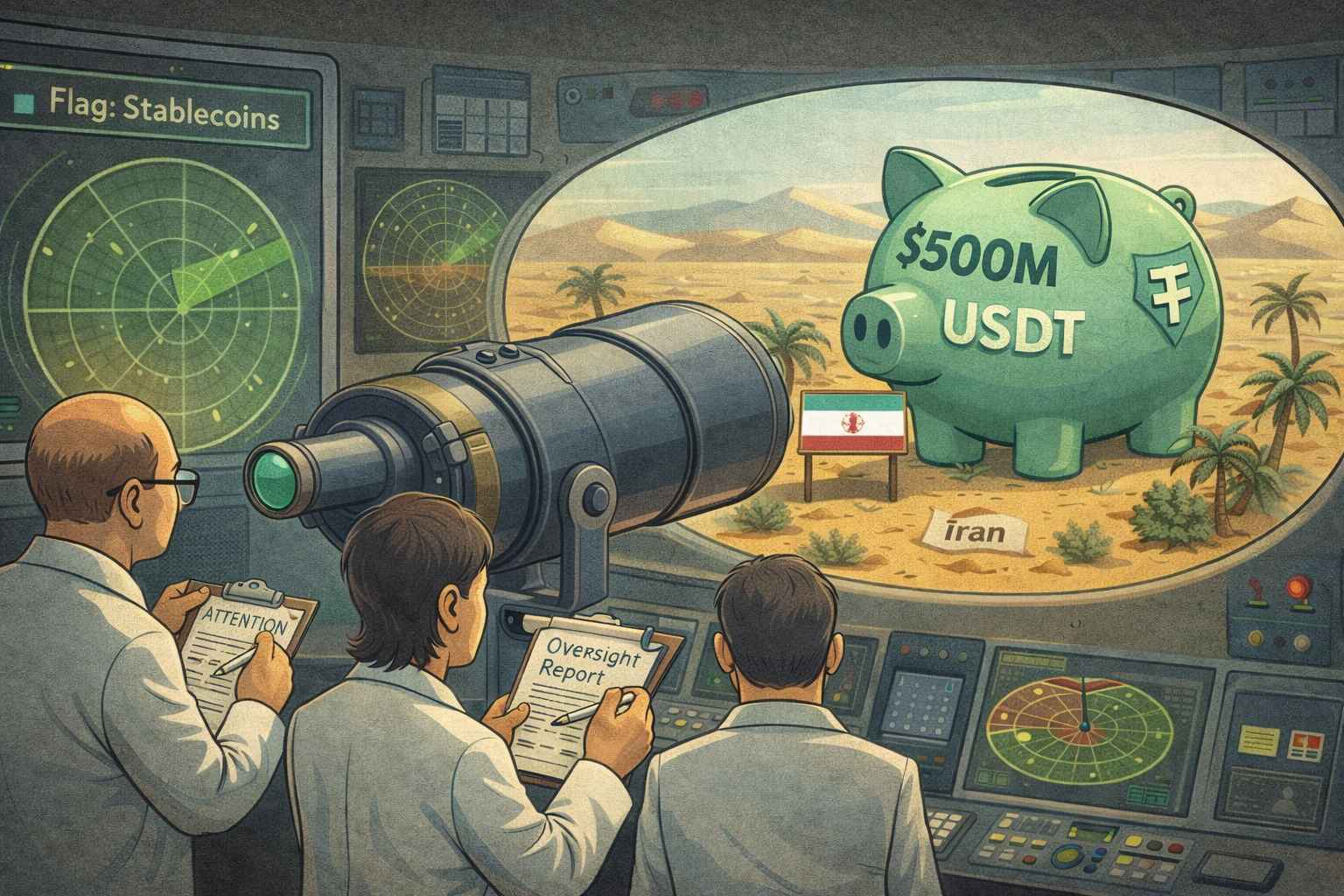
Iran reportedly built up more than $500 million in USDT, according to blockchain-tracking firm Elliptic. This happened while Bitcoin remained near recent highs and the total supply of stablecoins barely changed, suggesting traders are still using dollar-pegged tokens as a place to park money rather than as a trading asset. At the same time, governments and regulators are paying closer attention to stablecoins as part of global finance, not just another corner of crypto.
USDT, also known as Tether, closely tracks the US dollar and rarely swings in price. That steady value helps explain why sanctioned countries keep turning to it. For regular users, stories like this point to tighter oversight around how stablecoins move and where they end up.
Elliptic says the funds were linked to efforts to support Iran’s local currency and pay for international trade. This fits a familiar pattern where countries cut off from the banking system look for other ways to move money.
What Iran’s USDT Buying Shows
A stablecoin is a crypto token built to stay close to one dollar. You can think of it as a digital version of cash that can be sent online without using a bank. USDT is the biggest of these and is widely accepted on exchanges and payment platforms.
BREAKING:
🇮🇷 Central Bank of Iran has bought over $500 million in USDT to support its currency and its trade, per Elliptic. pic.twitter.com/VnSxhvcuyO
— Ash Crypto (@AshCrypto) January 21, 2026
Iranian groups collected USDT to pay for imports and handle trade flows. When banks refuse to process wires, stablecoins often fill the gap. For Iran, that means faster payments and fewer places where transactions can be blocked.
For readers, this highlights how stablecoins are now part of international politics, not just tools for trading on apps like Binance or Coinbase.
DISCOVER: Best New Cryptocurrencies to Invest in 2026
Why Stablecoins Are Drawing More Attention From Lawmakers
This report comes as governments already debate tougher rules for stablecoins. US officials have sanctioned crypto networks linked to Iranian oil sales, including transfers totaling more than $100 million, according to AP News.
Investigators have also tracked nearly $1 billion in USDT moving through exchanges registered in the UK on behalf of Iran’s Revolutionary Guard, mainly on the Tron network, according to a Washington Post report. Tron is popular for this kind of activity because transfers are cheap and fast, which helps when large sums move around.
This pressure helps explain why companies like Tether built tools that can freeze certain wallets, and why US lawmakers keep adding new rules for stablecoins.
Why Everyday Users Should Care
When governments connect stablecoins to sanctions and illegal trade, exchanges react. They tighten checks, freeze addresses, and sometimes block users in certain regions. That can affect how easily people move money or which networks stay supported.
At the same time, demand outside trading continues to grow. Payment companies and banks are building systems that use stablecoins for cross-border transfers, and many apps report stablecoin payment growth across borders
The benefit is clear. Stablecoins make sending money across borders cheaper and quicker. The trade-off is more monitoring.
DISCOVER: 9+ Best High-Risk, High-Reward Crypto to Buy in October2026
A Simple Risk Check
If regulators push too hard, access can narrow. Smaller exchanges often feel this first, and users in uncertain regions can face sudden account freezes.
That is why beginners should see stablecoins as tools, not places to store long-term savings. Stick to well-known platforms, keep records, and do not assume a digital dollar works the same way everywhere.
Stories like this are likely to keep coming. Stablecoins now sit where crypto, global trade, and politics overlap, and that attention is not fading anytime soon.
DISCOVER: 20+ Next Crypto to Explode in 2025
Follow 99Bitcoins on X for the Latest Market Updates and Subscribe on YouTube for Daily Expert Market Analysis

Why you can trust 99Bitcoins
Established in 2013, 99Bitcoin’s team members have been crypto experts since Bitcoin’s Early days.
Weekly Research
100k+Monthly readers
Expert contributors
2000+Crypto Projects Reviewed