







The crypto market opened today with stories pulling attention in different directions. On one side, Coinbase CEO Brian Armstrong stepped away from backing a Senate draft tied to the crypto bill. On the other hand, the Ethereum price kept doing what it has done for weeks now, moving sideways and testing our patience, even with slight pumps in between, just like what happened yesterday.
Regulatory tension from Coinbase’s withdrawal from the crypto bill is rising just as the Ethereum price continues walking near the same range it has held for more than two months now. While price action feels boring on the surface, history tells us that these quiet periods usually reward holders.
Armstrong didn’t mince words when explaining why Coinbase pulled support. According to him, the current crypto bill draft backed by lawmakers introduces restrictions that could suffocate DeFi and tokenized assets. For Coinbase, supporting a harmful bill simply to “have regulation” isn’t worth the trade-off.
One sticking point is how the crypto bill shifts power away from the CFTC and toward the SEC. Another is language that could effectively kill stablecoin rewards, pushing users back toward traditional banks. From Coinbase’s perspective, such a framework punishes innovation while protecting legacy finance.
After reviewing the Senate Banking draft text over the last 48hrs, Coinbase unfortunately can’t support the bill as written.
There are too many issues, including:
– A defacto ban on tokenized equities
– DeFi prohibitions, giving the government unlimited access to your financial…— Brian Armstrong (@brian_armstrong) January 14, 2026
Coinbase, Crypto Bill Debate, and Ethereum Price Reality
The Senate Banking Committee’s decision to delay the bill followed shortly after Armstrong’s criticism, picturing just how fragile the legislative process still is. Coinbase’s stance puts it firmly in line with crypto-native firms asking for smarter rules, even if we need to wait.
I’m actually quite optimistic that we will get to the right outcome with continued effort. We will keep showing up and working with everyone to get there.” – Brian Armstrong on his X post
Meanwhile, the Ethereum price barely reacted, especially in a bad way. Despite 62 days of tight range trading between $2,900 and $3,400, Ethereum’s on-chain data keeps improving. New wallet creation recently hit a record, pushing total non-empty wallets to 173 million.
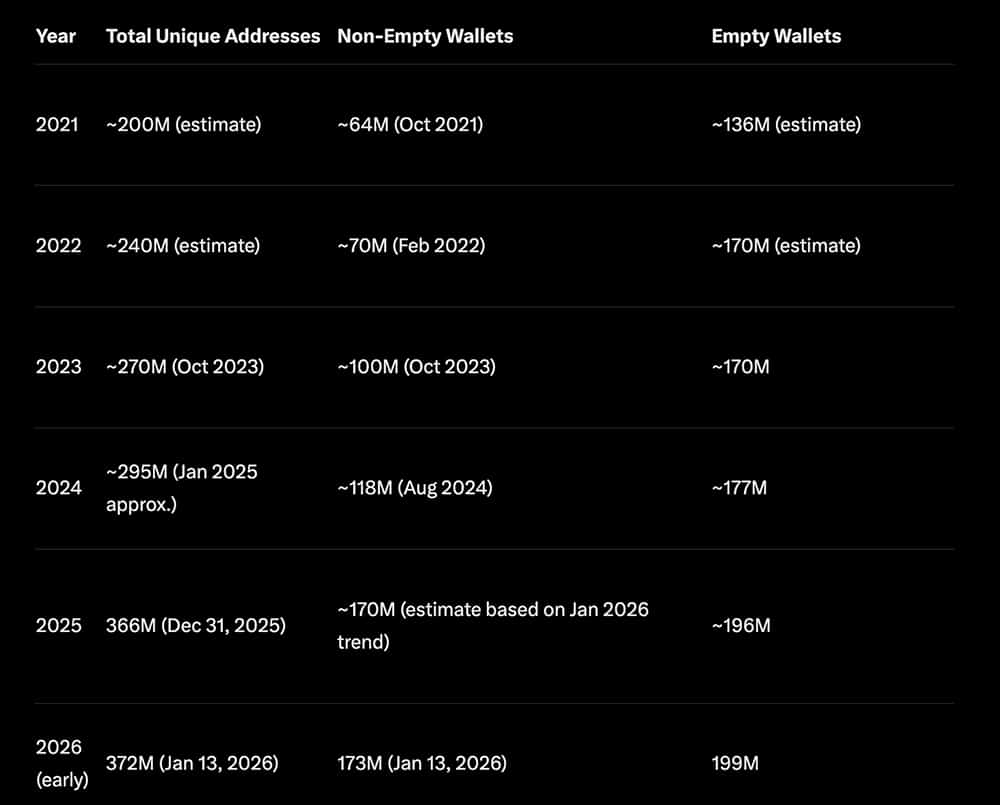
Institutions are clearly watching beyond the short-term Ethereum price chart. Bitmine’s latest move added over 154,000 ETH to its staking pile, from a total holdings of 2,133 million Ethereum worth more than $7 billion at the current price. If Bitmine is bullish, so am I.
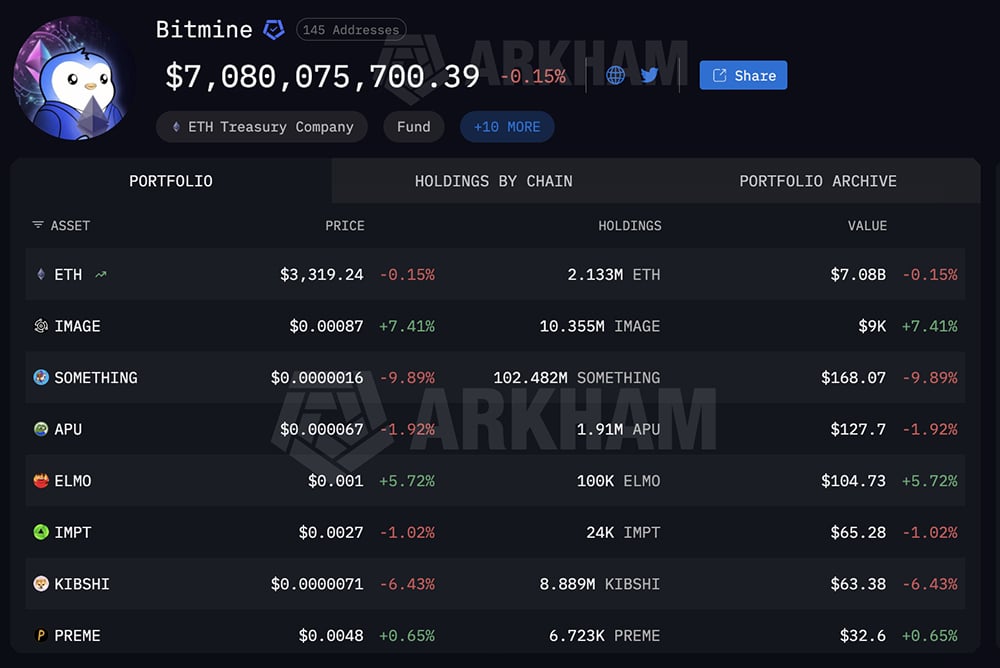
(source – Arkham)
DISCOVER: 10+ Next Crypto to 100X In 2026
What Comes Next?
Ethereum still controls over 60% of the stablecoin and tokenization market, a dominance that is yet to be cracked despite hundreds of new competitors. ETF flows went positive again, with over $175 million moving into ETH-focused funds from firms like BlackRock and Fidelity, bringing 3 days of green flows.
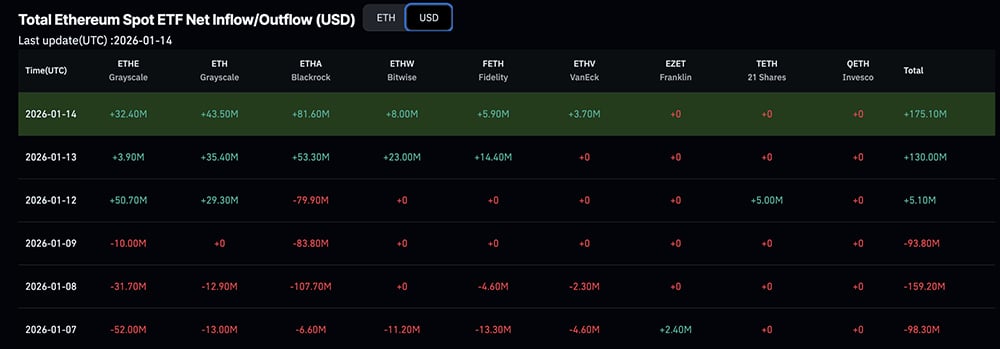
(source – Coinglass)
Past cycles show similar Ethereum price consolidations that acted as launchpads for altcoin rallies. If ETH clears resistance at $3,450, momentum could build quickly toward $4,000. Failure there likely means more chop.
Either way, Coinbase is still pushing for a fix from a “flawed” crypto bill, and Ethereum is building strength. Good things come to those who wait.
DISCOVER:
Follow 99Bitcoins on X For the Latest Market Updates and Subscribe on YouTube For Daily Expert Market Analysis.
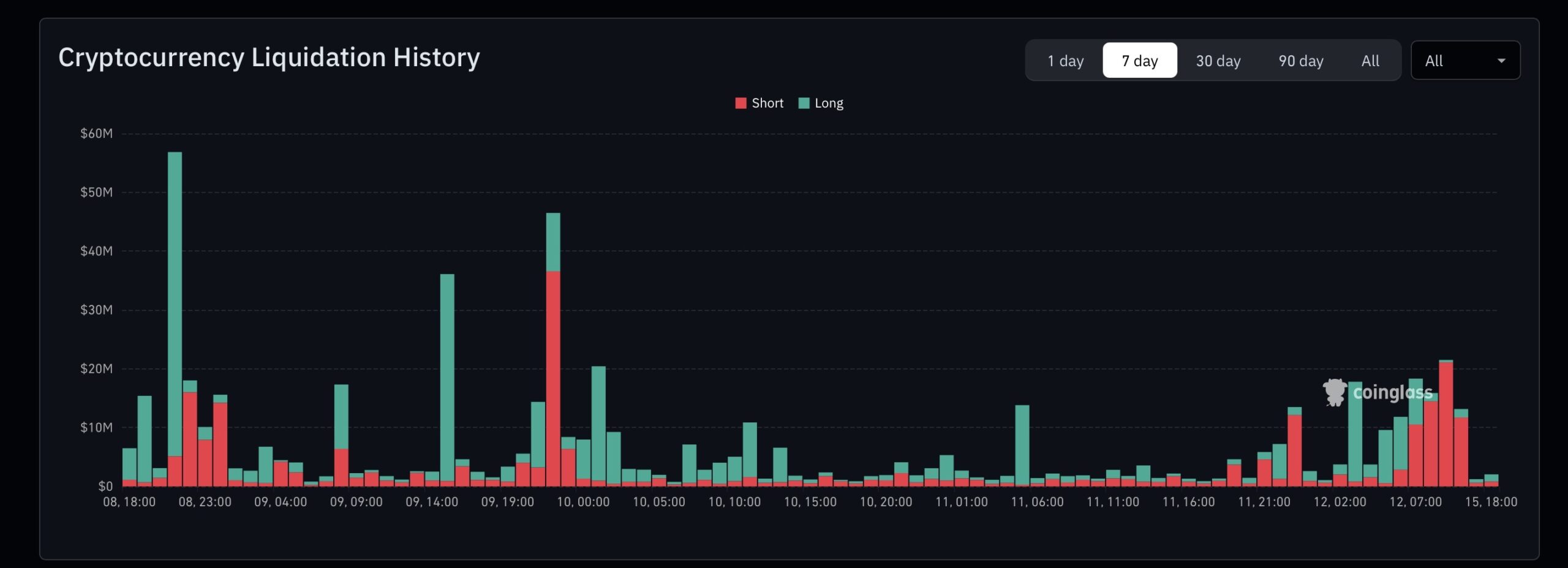
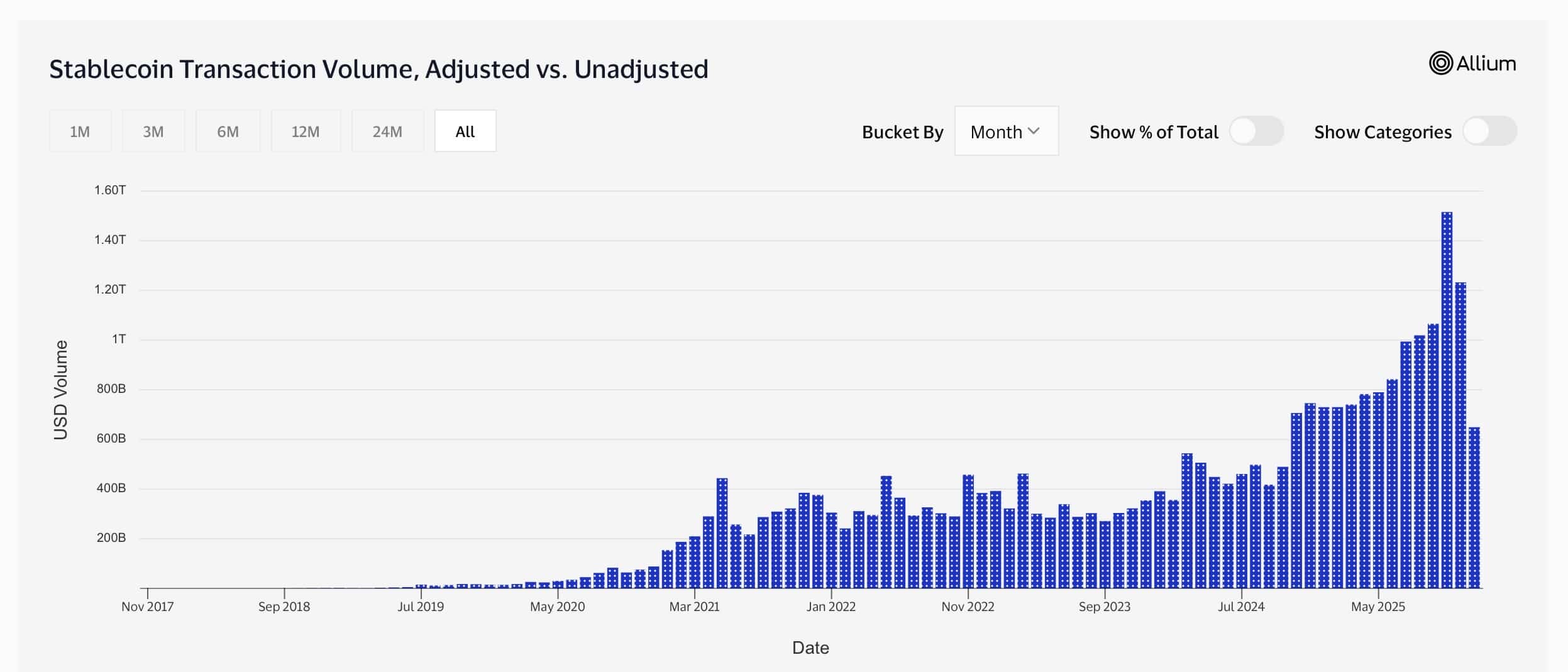
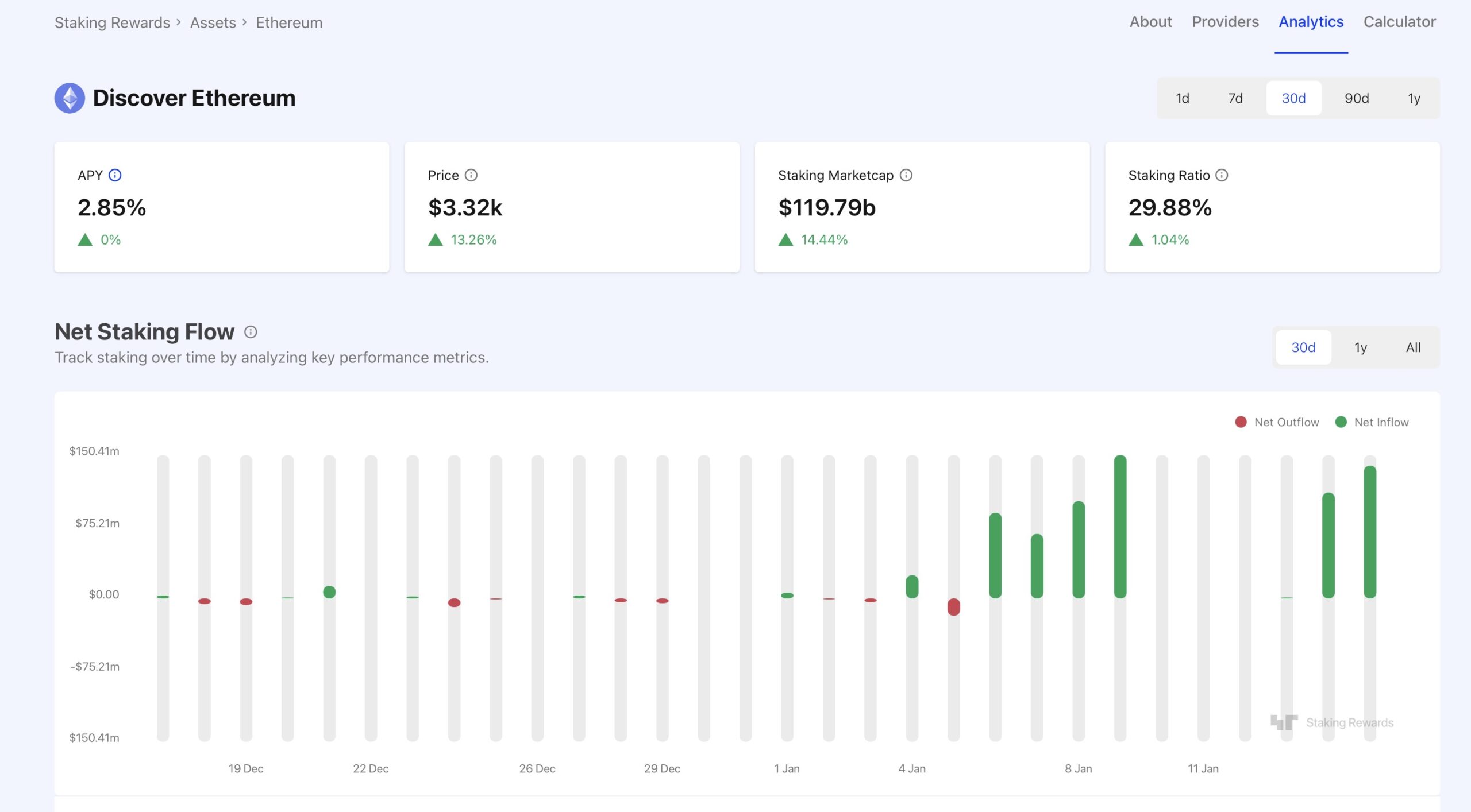
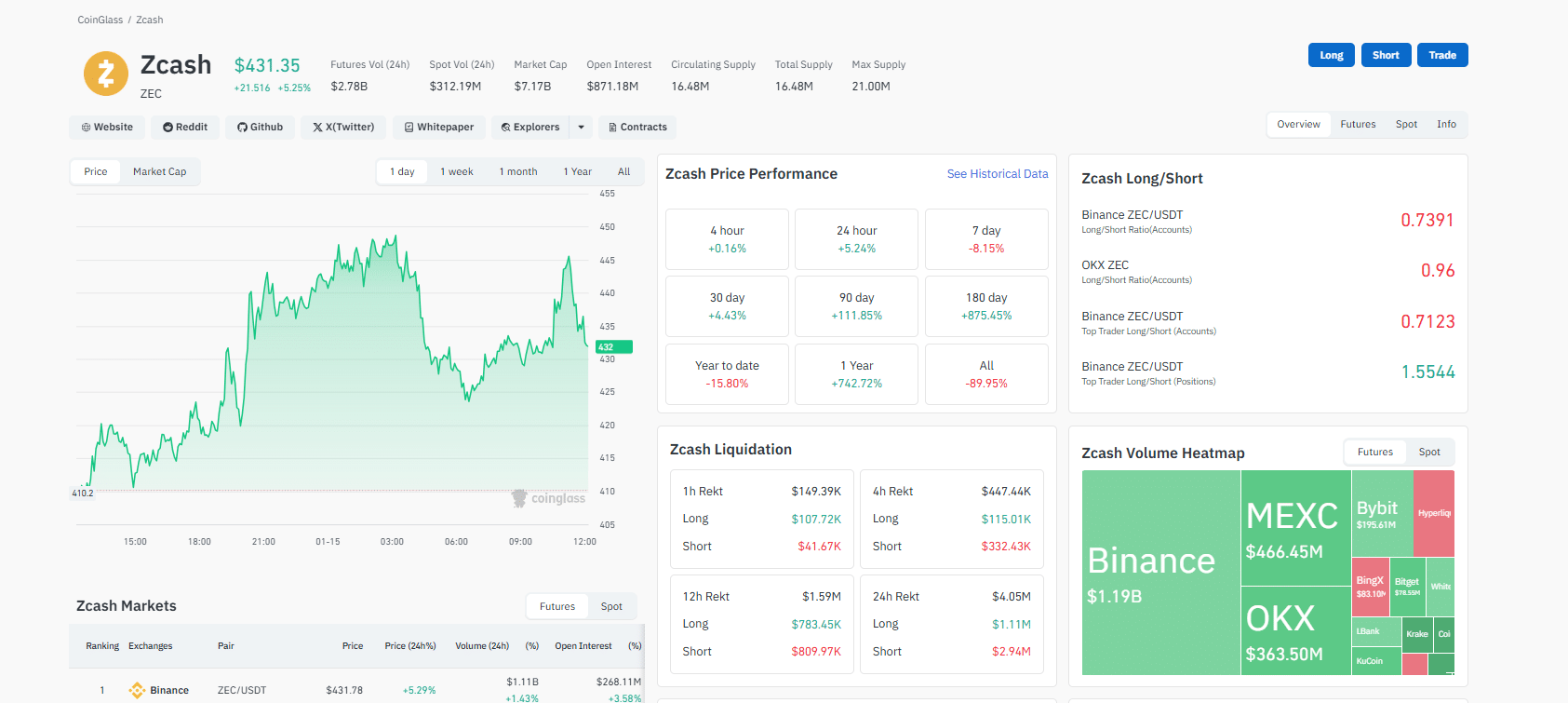
Bitcoin depends on the community to survive. Without the web of miners and developers, the mainnet is good as dead. Privacy purists and developers driven by the ideals of decentralization and censorship-resistance might be the only few people willing to contribute without earning anything. For the majority of “fans”, they are always jostling for that piece of satoshi. The industry has grown so much so that entire mining farms are in operation, competing with ordinary folks for block rewards. While Bitcoin mining pools like Foundry USA and Antpool dominate, regularly receiving block rewards, sometimes the script is changed and ordinary folks win. Recently, a solo Bitcoin miner hit the jackpot, earning the full 3.125 BTC block reward and fees associated with the block. If the miner HODLs, the stash is now worth northwards of $300,000. "solo mining is dead" "you'll never find a block" "it's a waste of electricity" tell that to these people who've mined a block with solo-miners connected to @Public_Pool_BTC on their umbrel stay humble. run your own node. solo-mine on your own pool. pic.twitter.com/s0uEgjbatW — Umbrel ☂️ (@umbrel) December 22, 2025 Given this handsome reward, it is no wonder why this feat is going viral, reigniting talk about whether home miners still stand a chance. This debate makes sense. As mentioned earlier, Bitcoin mining is now more industrial and expensive, pushing small players to the margins. The good news is that this is not the first time a solo miner is winning. If anything, the real surprise is that people misunderstand why it happens at all. Read the full story here. This time, bulls are not the ones crying watching their portfolio. Bitcoin price surged above $95,000 this week, triggering a chain reaction that wiped out nearly $700 million in crypto liquidations. BTC pushed as high as $97,800 (+3.5%), while Ethereum jumped past $3,300 and gained 5% in a single day. What happened? Well, bears did what bears do best: bet on Bitcoin to fall. Unfortunately (for them, not for bulls this time), when prices went up instead, exchanges stepped in and closed those trades automatically. That meant the traders had to buy back Bitcoin and Ethereum at the new, higher levels, pushing the BTC price higher. That’s a short squeeze. About $380 million of those liquidations hit Bitcoin shorts, with another $250 million tied to Ethereum. That buying pressure pushed prices even higher. (Source: Coinglass) The Bitcoin price reportedly had a new countdown clock added after a social media personality claiming the world’s highest IQ said BTC would hit $100,000 within 24 hours. BTC hovered near $96,700, up nearly +8% on the week, but never made the vertical jump the post promised. This comes as crypto sentiment flipped to “greed” for the first time in months, a shift that often changes how people behave with their money. https://twitter.com/yhbryankimiq/status/2011785571900006424 Big predictions grab attention fast in crypto and are a common tactic from influencers and ‘Crypto Twitter’ traders, but they also test whether investors are reacting to data or dopamine. While the Bitcoin price has yet to hit $100,000 today as promised by a particular influencer, the market is holding strong, with the combined crypto market cap surpassing $3.36 trillion following a +1.2% overnight pump. Read the full story here. Russia reportedly plans to introduce a new law that would allow individuals to buy crypto under a clear legal framework. Traders are still digesting the regulatory signal, but the move fits a broader global pattern in which governments are shifting from opposing crypto to regulating it. Bitcoin traded near $97,000 as the news broke, up +1.8% in the past 24 hours and continuing its strong start to 2026. A $100,000 retest seems inevitable as ongoing global tensions in the US, Iran, Greenland, Israel, and Ukraine are seemingly unable to kill the momentum. Read our coverage here. Will DATs drive Bitcoin and crypto prices as they did in 2025? It may be too early to call, but as of mid-January, there are hints that 2026 might yet be another DAT-driven year. Yesterday, Strive locked in shareholder approval to acquire Semler Scientific, instantly boosting its Bitcoin stash to 12,797.9 BTC. The all-stock deal marks a merger that is, by any measure, a landmark event in the “Bitcoin Treasury” movement, marking the first time one publicly traded company with a Bitcoin-centered balance sheet has acquired another. Strive, Inc. and @SemlerSci Announce Shareholder Approval for Acquisition of Semler Scientific • As part of the all-stock transaction, Strive will acquire Semler’s 5,048.1 Bitcoin. • Strive also announces the purchase of 123 additional Bitcoin for its corporate treasury. •… — Strive (@strive) January 13, 2026 The Bitcoin price traded steadily near recent highs as the news landed, showing institutions are still buying even after a strong run. Notably, BTC USDT is firm above December 2025 highs, building on the wave of buying that defined the first half of the week. The local floor is at $94,000, and if buyers double down their efforts, the next feasible target will be $100,000, a psychological round number. Read more about it here. Visa has launched a new pilot with UK-based payments firm BVNK, allowing businesses to send stablecoin payouts through Visa Direct. The move comes as stablecoins continue to process trillions of dollars in transactions each year, showing how digital dollars are becoming part of mainstream payment systems rather than niche crypto tools. Visa already processes more than $4.5 billion in annualized stablecoin settlement volume, pointing to growing demand for faster settlement. (Source: visaonchainanalytics) Under the program, selected enterprise clients can pre-fund payouts using stablecoins and send U.S. dollar–pegged tokens directly to recipients’ crypto wallets. Stablecoins function as digital representations of the U.S. dollar, enabling money to move online at any time. BVNK provides the infrastructure that connects wallets, blockchains, and compliance checks. The payouts run on Visa Direct, Visa’s real-time transfer network. Unlike traditional bank rails, Visa Direct operates continuously, including weekends and holidays. Read the full story here. Ethereum crypto is usually the laggard. Case in point: In late 2023, when Bitcoin was ripping weeks before the approval of the first batch of spot Bitcoin ETFs, ETH USDT struggled. They also underperformed in 2024-2025, and never really extended gains above all-time highs. This underwhelming and disappointing price action occurs even when Ethereum remains the home of DeFi and the next 100X coins. The Ethereum price might be back above the $3,000 mark in January 2026, but unless there is a wave of bullish action lifting ETH USDT above $3,500, downside risks remain. At press time, the psychological floor remains at $3,000, and this, according to some analysts, could be the floor of even more gains in 2026. Standard Chartered analysts are convinced 2026 will be “the year of Ethereum,” arguing ETH will beat Bitcoin as real-world crypto use grows. Bitcoin is evolving to become a store of value, a digital gold, while Ethereum is the home of DeFi and tokenization. The call lands as banks, ETFs, and stablecoins pull crypto closer to traditional finance. https://twitter.com/DeItaone/status/2011063115664732196 Read the full story here. Germany’s second-largest lender, DZ Bank, secured a MiCA license, clearing a legal hurdle to run regulated crypto services across its cooperative banking network. MiCA stands for Markets in Crypto-Assets, the EU’s new rulebook for crypto companies. Think of it like a single driver’s license that works across Europe, rather than 27 separate permits, and DZ Bank now holds that license. Zoom out, and this fits into a broader European push to bring crypto into familiar, regulated banking channels. Latest: DZ Bank takes a giant leap as it secures MiCA license from BaFin! Retail crypto trading is now available in Germany via the newly launched platform, meinKrypto. Embrace the currency of the digital age. 🚀#Cryptocurrency #GermanyDZBank pic.twitter.com/xdR9fqqvCr — CoinLaw (@coinlaw_io) January 14, 2026 Bitcoin held above $96,000 during the announcement and is up +1.4% overnight, indicating that markets treated this as slow-burn infrastructure news rather than a trigger for a large price spike. The broader crypto market is holding up extremely well despite rising tensions in Iran and Greenland, with U.S. forces reportedly poised to deploy ground forces in both countries. The combined crypto market cap stands at $3.34 trillion, up +0.5% over the past 24 hours. Read the full coverage here. Ethereum staking just hit an all-time high, with roughly 36 million ETH, almost 30% of the total supply, now locked up securing the network. Launched in 2015 by Vitalik Buterin and a team of developers, ETH has evolved from a proof-of-work consensus mechanism, similar to Bitcoin’s mining process, to proof-of-stake following the Merge upgrade in September 2022. This shift allows participants to secure the network by staking ETH rather than using energy-intensive hardware, making the system more efficient and environmentally sustainable. Staking is like putting your ETH into a savings account that helps run Ethereum. You lock up ETH, and in return, you earn rewards for helping validate transactions. Right now, that base reward usually sits around 3–5% a year. One out of every three ETH coins is now locked and unavailable for quick selling. Less liquid supply often reduces selling pressure. (Source: Staking Rewards) This milestone reflects growing confidence in the platform’s long-term viability, as stakers contribute to transaction validation while earning rewards. The staked amount equates to over $119.79 billion at current market values. Read the full story here. The US Securities and Exchange Commission (SEC) used to terrorize crypto firms under Gary Gensler during the Biden administration so much so that it was pointless for founders to innovate. Lawsuits used to pile up and enforcements remain the order the day. Donald Trump took over, promised to end the nightmare, and he did, and now, the era of regulation through enforcement is over. Under Trump and Paul Atkins, the current SEC chair, lawsuits against top crypto firms like Coinbase and Uniswap have been settled or withdrawn altogether. Therefore, it came as no surprise when the regulator officially closed its 2023 investigation into Zcash, a privacy-focused cryptocurrency, without recommending enforcement action. We are pleased to announce that the SEC has concluded its review and informed us that it does not intend to recommend any enforcement action or other changes against Zcash Foundation regarding this matter. https://t.co/zjxfh3mmst — Zcash Foundation 🛡️ (@ZcashFoundation) January 14, 2026 ZEC crypto, which is undoubtedly one of the top cryptos to consider in this cycle, reacted calmly, holding its recent range after months of pressure tied to regulatory fear. ZEC USDT is firm above $400, and remains one of the top performers, standing out from the thousands of coins. On Coinglass, nearly $3M of ZEC crypto shorts were also liquidated prices briefly jumped. (Source: Coinglass) Read our full coverage here.Solo Bitcoin Miners Beat 1-in-Millions Odds: Here’s Why It Keeps Happening

Bitcoin Rally Triggers $700 Million in Crypto Liquidations
Bitcoin Price to $100K Today?
Russia Signals Crypto Shift as Retail Investors Get Green Light
Strive Jumps Past Tesla With 12,798 Bitcoin Treasury Move: Will BTC USD Breeze Past $100,000?
Visa Stablecoin Payments Move Forward With BVNK Pilot
Standard Chartered Calls 2026 ‘Ethereum’s Year’: Will ETH USDT Reclaim $5,000?
DZ Bank Gets MiCA License: Crypto Trading Moves Into German Banks
ATH for Ethereum Staking: Nearly 30% of ETH Is Now Locked
SEC Drops Zcash Probe: Rare Clarity for Privacy Coins, ZEC Crypto To $1,000?

Why you can trust 99Bitcoins
Established in 2013, 99Bitcoin’s team members have been crypto experts since Bitcoin’s Early days.
Weekly Research
100k+Monthly readers
Expert contributors
2000+Crypto Projects Reviewed